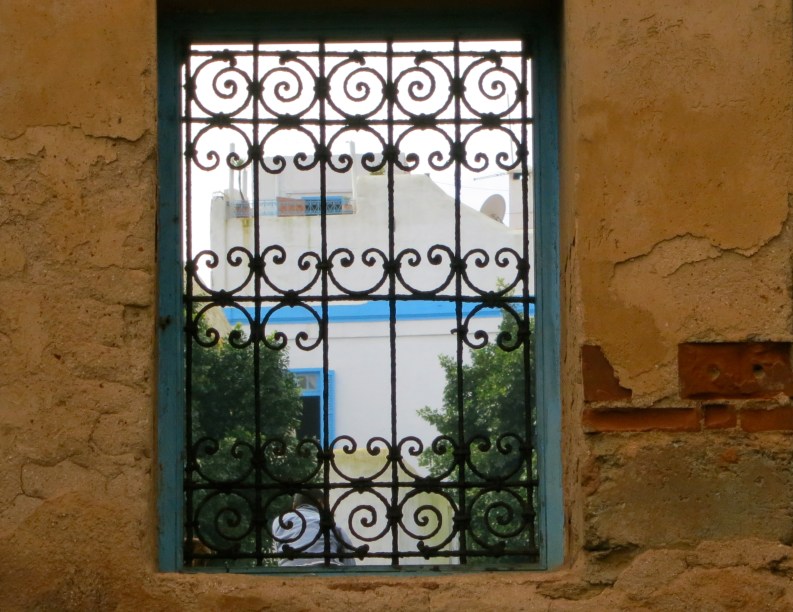
A window in a wall inside the Kasbah in Rabat, Morocco.
More photos in this Window on the World series:
For more interpretations on the Weekly Photo Challenge theme: Window, click here.
"There is some good in this world…and it's worth fighting for." ~ J.R.R. Tolkien

A window in a wall inside the Kasbah in Rabat, Morocco.
More photos in this Window on the World series:
For more interpretations on the Weekly Photo Challenge theme: Window, click here.

A woman watches the world go by from her window in the village of Sankhu in Nepal.
For more interpretations on the Weekly Photo Challenge theme: Window, click here.
More in this Window on the World photo series:
“For last year’s words belong to last year’s language
And next year’s words await another voice.
And to make an end is to make a beginning.”
~T.S. Eliot
From Little Gidding (1942), the final poem in T.S. Eliot’s Four Quartets
Landfall on Sullivan’s Island, South Carolina.

There are little plastic rubber bands all over our house. On my way upstairs this morning, I noticed them strewn on the stair treads like colorful flower petals after a spring storm. That’s because my 11 year-old son spent more than an hour yesterday at the top of the stairs, “where the light is good”, perfecting his starburst bracelet on the Rainbow Loom. Technically, it’s his 8 year-old sister’s, but his Rainbow Loom will be arriving tomorrow via Amazon Prime. He used some of his Christmas money to buy one for himself.
Anyone with kids in elementary or middle school will understand what I’m talking about, but this is something worth talking about even if you don’t have kids. The Rainbow Loom has been popular for months. What is striking for me as a parent, however, is that this is a toy that is equally popular with both boys and girls. Of the more than $3 million in sales since August, almost half of the Rainbow Looms reportedly were purchased for boys.
I first noticed the Rainbow Loom’s gender-neutral popularity last month at a PeeWee hockey tournament. Since the tournament was out-of-town, the team and their families were all staying at the same hotel. I noticed that all of the younger siblings – especially the boys – were prodigious Rainbow Loomers. A group of younger brothers, all 9 and 10, were Rainbow Looming by the pool. Later that night, they were Rainbow Looming at the rink before the game.
“Do the guys on your team like to Rainbow Loom, too?” I asked my son. He’s one of the youngest on his PeeWee team; most of the boys are already 12.
“Sure,” he said. “But we didn’t have much time for it this weekend. You know, because we had to focus on hockey.”
Before my oldest son was born 14 years ago, I thought I could raise my kids in a gender-neutral way. I had a wide range of toys on hand for him to choose from, including a baby doll. But he and his younger brother showed no interest at all in playing with dolls or stuffed animals or Barbies or anything like that. When I caught them drop-kicking the doll, I finally gave it away to a more loving home. By the time our daughter was born, we had no toys left that could be characterized as stereotypically female. That is, until the day that I found her cradling a Darth Vader action figure. She was kneeling next to a bowling pin that she had put to bed with a Kleenex for a blanket. The premise of my nurture v. nature theory having been blown out of the water, I took her to Target and let her pick out a baby doll. At eight, she is still taking excellent care of her “family”.
The bigger lesson for me was that kids will choose to play with what is interesting to them. My kids inherited a substantial Hotwheels collection from my brother, but the boys never played with them much. My daughter has always enjoyed playing with the cars, although she often plays with them differently. Sometimes I’ll find them all lined up by color, for example. Instead of making car noises like “Vroom! Vroom!”, the conversations I’ve overheard coming out her room are about relationships. “Oh, Baby car! Are you lonely? Do you want to park by Mommy car?”
Toy choice is the single most sex-typed behavior that children display. Sure, my daughter chooses the stereotypical feminine toy most of the time.But the point is that she should be able to play with any toy and in any way that she wants to, regardless of what our society traditionally dictates as the appropriate gender-based toys. And that goes for her brothers, too.
This holiday season, my daughter and I talked a lot about the gender-based marketing of toys. It’s especially noticeable in the toy section – some stores even have aisles blatantly identified with pink for girls and blue for boys. On the same toy aisle where she picked out her first baby doll, we noticed a ultra-pink display for “Lego Friends”. My daughter, unimpressed at this new line of Legos marketed to girls, observed that, “I don’t get it. It seems like they should just sell all the Legos in the same aisle.”
Which brings me back to the Rainbow Loom, a toy that has grown tremendously popular without much marketing at all. Rainbow Loom is popular because of word of mouth and YouTube. Kids decided it is cool and fun to Rainbow Loom, and they shared that information (along with the colorful, plastic bracelets) with each other.
I witnessed something similar last summer when my son and the other boys at camp were obsessed with fingerweaving. I have a mental picture of a group of them, all 11 and 12 years old, sitting around and fingerweaving during their free time. In the middle of the circle was a huge mound – yards and yards and yards – of their collective fingerweaving. Every once in a while, someone would call out, “I need more yarn!” and someone else would make a run for the craft room. Fingerweaving was cool and fun in their social context and everyone, regardless of sex, was doing it.
I see the same phenomenon with the Rainbow Loom. When tween boys are making jewelry at the hockey rink, you know it is not a popularity bogged down by gender-stereotypes.
“Why do you like to make things on your Rainbow Loom?” I asked my daughter. “Because it is creative and fun!” she replied.
When I asked my son the same question, he replied, “Because it’s fun. And creative.”
That pretty much says it all. In a gender-biased world, they found a gender-neutral toy that they both love for the same reasons. So I ordered them each a new package of 1800 colorful little rubber bands. I won’t even mind picking them up off the floor.
The Rainbow Loom – and the kids that have made it wildly popular – give me hope. Hope that this generation will keep our society moving, slowly but surely, towards gender equality.

This post is a response to the Weekly Photo Challenge theme One.

The Acropolis, perched on a rocky hilltop above the bustle of Athens, is one of the grandest historical sites that I have had to opportunity to visit. I’m sharing a few photos from my 2012 visit in response to the Weekly Photo Challenge: Grand. If you have never had the opportunity to experience the grandeur of the Acropolis, you can take a virtual tour here. Happy Sunday!



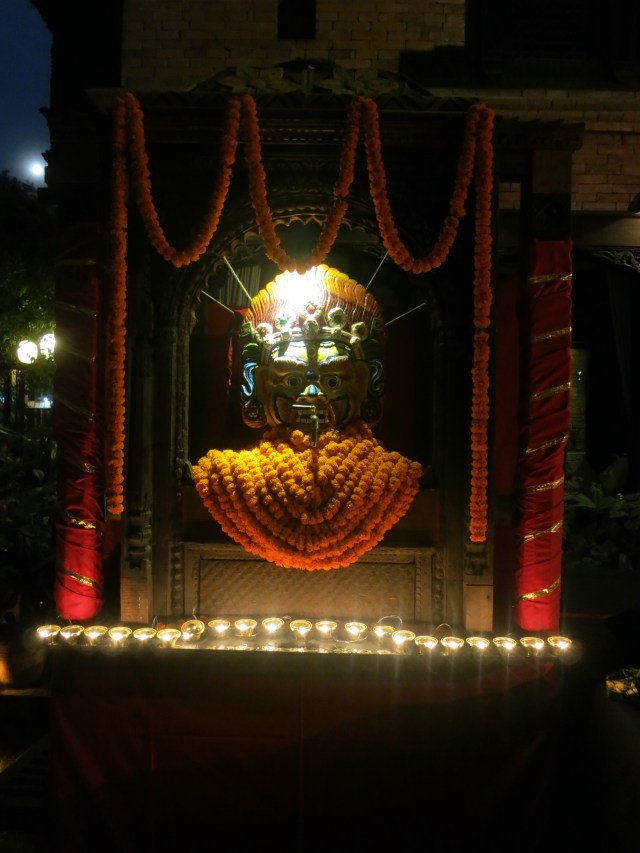
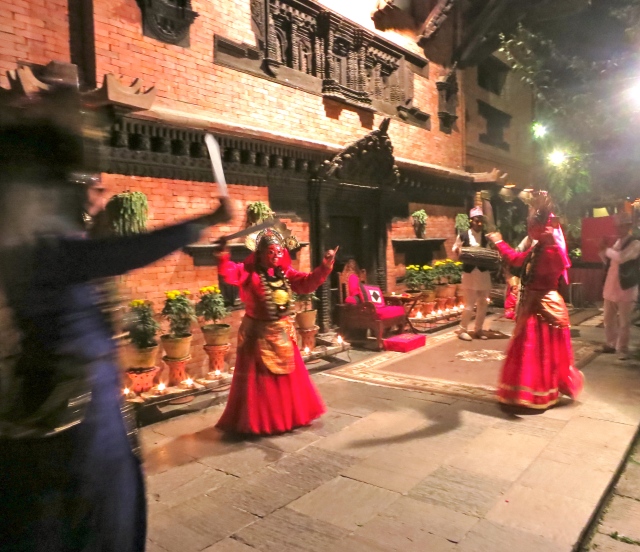
This post is a response to the Weekly Photo Challenge: Let There Be Light!
 My daughter discovered this unexpected “Munchkin Village” in our backyard last spring. There’s so much beauty in the imagination of a child!
This photo reminds me of something Henry David Thoreau once wrote,
“It’s not what you look at that matters, it’s what you see.”
This post is a response to the Weekly Photo Challenge: Unexpected.
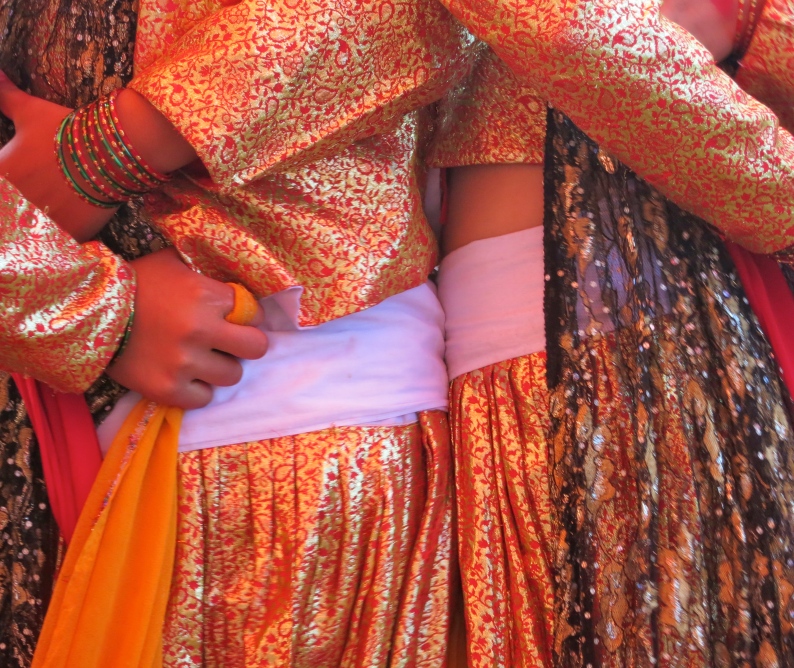
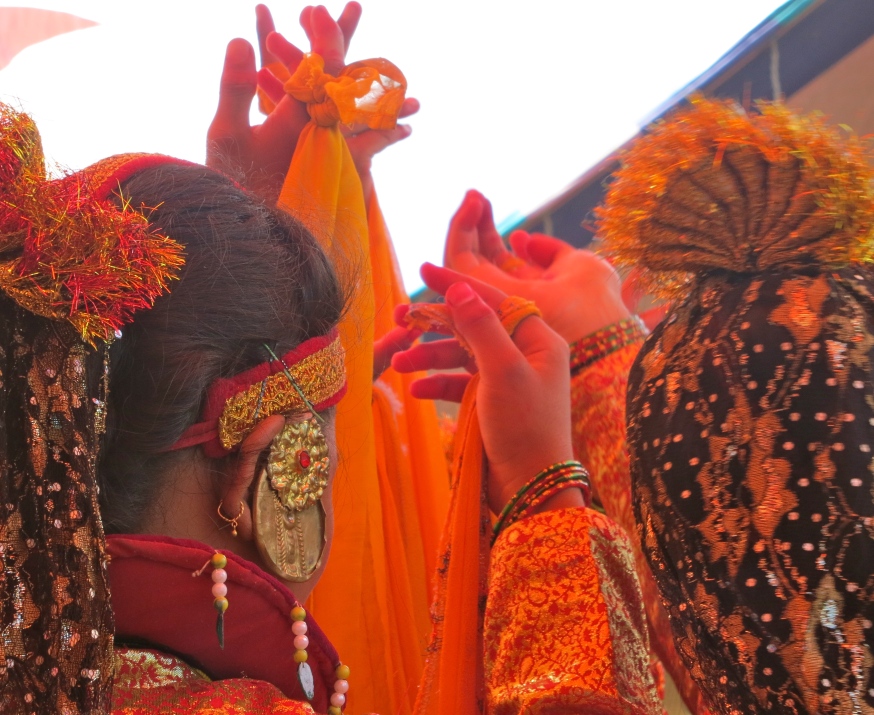
When the Weekly Photo Challenge theme Layers was announced today, I immediately thought of a series of photos I recently took in Nepal of dancers performing a traditional dance. It was mesmerizing to watch them, their colorful costumes so rich in detail and contrast, their bodies flowing gracefully through the complicated dance steps. These young Nepali dancers produced gorgeous layers of color and movement that these photographs cannot truly capture.
I couldn’t decide which photo to use for the Challenge, but I did succeed in narrowing it down to two.
Which photo would you have picked?
“I’ve been coming here since the beginning,” he said conspiratorially, leaning towards me from the stool next to mine.
I had noticed the white haired gentleman earlier, as he was shouldering his way through the Sunday brunch crowd at Beauty’s Luncheonette. He took a seat on the chrome-and-blue pleather stool next to me. As he carefully placed his folded Montreal Gazette on the formica countertop, he caught the server’s eye. “Hi hon!” she sang out as she filled his coffee cup.
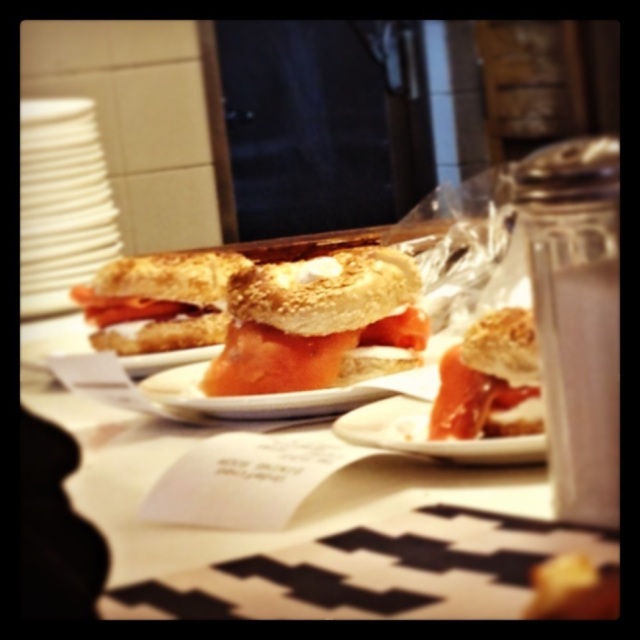
He didn’t even have to place his order. In a matter of minutes, “the usual” was set in front of him. Side of home fries, black coffee, and a Beauty’s Russian Black Special. Most people who come to Beauty’s get the Beauty’s Special – smoked salmon, cream cheese, tomato, and onion on the infamous Montreal sesame bagel. But The Regular clearly prefers the Special on on a Russian rye bread so black that it looks like it is made of dark chocolate.
“You’ve been coming here since 1942?” I asked.
“Sure, I went to high school just down the street. I used to buy my school supplies here back when it was a stationary shop. There was always a poker game going on back in the back room.”
He pointed towards an open door behind the kitchen to a small room where they now store the mops and brooms and cleaning supplies. (You can see it in the background of the photo above.)
“They won’t tell you THAT in the history.”
He gestured vaguely towards the blue and white menu, which contains a detailed history of Beauty’s. How newlyweds Hymie and Freda Sckolnick bought the shop on the corner of Mont Royal and St. Urbain and started serving lunch to the garment workers from the factories in the neighborhood. The name “Beauty” came from Hymie’s bowling nickname. It grew so popular that the workers started bringing their families on the weekend. “And the Montreal brunch was born,” to quote the menu. Indeed, there was no mention of the poker game in the back room.
“I’m in my 80s,” he confided, “so Hymie must be into his 90s. You met him when you came in, right?”
I had indeed met Hymie. He was guarding the door when we arrived – literally standing in the inner doorway and quizzing the groups of Montreal hipsters queued up outside. Since we only had two in our party, we scored an immediate seating at the lunch counter. “I like American money,” Hymie told me as he resettled, ever vigilant, on his perch by the door.
“Hymie opened up this morning,” The Regular told me. “That’s the son, Larry.” He waved dismissively at a white-haired man with black frame glasses who was dashing about with a pot of coffee. “He just showed up now.”
We talked for a few minutes. He told me how he grew up to be a lawyer and a politician. He represented the neighborhood for a number of years before returning to private practice. He lives downtown now, but he made it very clear that he is not retired.
“What’s your practice area?” I asked. Corporate, I thought.
“Immigration,” he said. “There’s always work and it’s interesting.”
“I know,” I said. “I’m a human rights lawyer at a non-profit, but I started out practicing asylum law. We always look to Canada as the better asylum system. Even now in the debate about immigration reform, we are using Canada as the example of why we should provide counsel for indigent asylum seekers.”
“Well,” he replied, “It was a hell of a lot better before the Conservatives took over. Now I’m not sure we’re a model for anyone anymore.”
As he paid his bill and gathered up his car keys and his black leather gloves, he asked, “What are you going to do today?”
“We’re thinking of going up to the top of Mont-Royal.”
“Mount Royal? How are you going to get there? Do you have a car?”
“No, we’re planning to bike,” I said.
He looked at me for a few seconds, as if assessing whether I was truly insane. Then he moved on.
“Well, you’re going to want to go to Schwartz’s Deli, so here’s a tip. Don’t bother with the line. Go across the street to Main Deli. It’s just as good, but without the wait. We call it “smoked meat” here. There’s no such thing as “pastrami” here in Canada,” he said emphatically.
“Thanks for the tip,” I said. As a vegetarian, my interest in cured meat – whatever you call it – is minimal.
It struck me later that, based on the facts that he dropped, I could easily pin a name and full bio on this guy. It would just take a couple of quick internet searches. But I have not chosen to do that.
As he said good-bye, I felt I had been privileged with a small glimpse into not just a life, but also into a unique time and place and people in this city’s history. I saw in a flash the habits of a lifetime, traces of a distinctive community. The institution of Beauty’s Luncheonette will certainly continue, but someday in the relatively near future it will be without Hymie and the others who were there from the beginning. On this, my first visit to Montreal, The Regular had given me a rare, small gift.
He put on his long, black wool coat and headed for the door, threading his way through throngs of young people – young people of all races and backgrounds, chatting energetically and switching effortlessly between French and English. In the midst of this microcosm of contemporary Montreal, The Regular turned back, eyes twinkling, and winked at me.
“My wife is in Florida. Don’t tell her I was here.”

 The Human Rights Warrior
You must be logged in to post a comment.