A Change Is Gonna Come

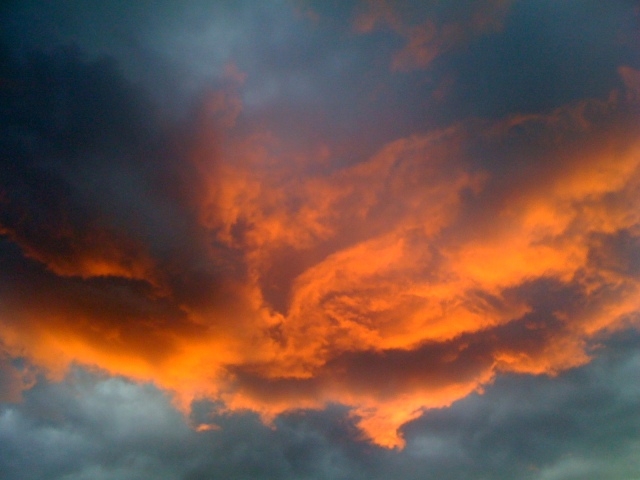
Sunset after a storm in the Sandwich Ridge mountains, New Hampshire
Sunset after a storm in the Sandwich Ridge Mountains, New Hampshire

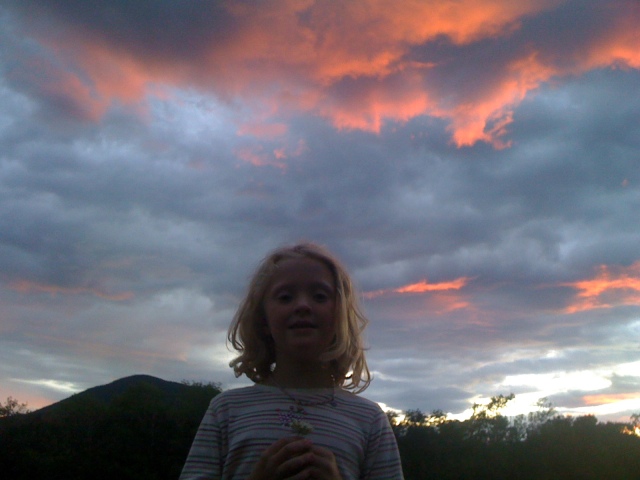
I took this photo last year during a family vacation in Center Sandwich, New Hampshire.  A thunderstorm raged all afternoon, but just as we were finishing dinner the storm suddenly ended.  Three generations of extended family went out into the still-damp field to watch the sunset reflected on the lifting storm clouds.  As often happens in the mountains, it was a dramatic change.  At the time, and ever since, the play of setting sun on passing thunderheads makes me think of Sam Cooke and “A Change is Gonna Come“.  Recorded in January 1964, the song became one of the greatest anthems of the Civil Rights Movement.

A Change is Gonna Come

I was born by the river in a little tent.
Ohh and just like the river,
I’ve been running ev’r since.
It’s been a long time, a long time coming
But I know a change gonna come, oh yes it will
It’s been too hard living, but I’m afraid to die
‘Cause I don’t know what’s up there, beyond the sky
It’s been a long, a long time coming
But I know a change gonna come, oh yes it will.
I go to the movie and I go downtown.
Somebody keep tellin’ me don’t hang around.
It’s been a long, a long time coming
But I know a change gonna come, oh yes it will.
Then I go to my brother
And I say brother help me please.
But he winds up knockin’ me
Back down on my knees, ohh
There have been times that I thought
I couldn’t last for long
But now I think I’m able to carry on
It’s been a long, a long time coming
But I know a change is gonna come, oh yes it will.

A singer who blurred the lines between gospel, R&B and pop, Cooke was reportedly inspired to write “A Change is Gonna Come” by Bob Dylan and “Blowin’ In The Wind”.  While on tour in October 1963, Cooke and his band were turned away from a “whites only” motel in Shreveport, Louisiana where they had a reservation. When they protested,  they were arrested and thrown in jail for disturbing the peace.   Not long after, Sam Cooke wrote “A Change is Gonna Come”
“Sam as a writer saw himself almost as a reporter,” said biographer Peter Guralnick said in one interview.  “He took all of those experiences[of racism],” Guralnick says, “but he enlarged upon them and he broadened them to the point that the song… becomes a statement of what a generation had had to endure.”
The song was only a modest commercial success and Sam Cooke only performed it live once.   Yet “A Change Is Gonna Come” has become an iconic symbol of triumph over adversity.  It has been called Sam Cooke’s legacy and “heralded as his magnus opum”.  In 2005, it was voted number 12 in Rolling Stone magazine’s 500 Greatest Songs of All Time.  It has also been selected National Public Radio (NPR) as one of the 300 most important songs.  In 2007, it was added by the Library of Congress to the National Recording Registry.  Bettye LaVette performed “A Change Is Gonna Come” with Jon Bon Jovi, at the Lincoln Memorial during the first inaugural concert for President Obama, introducing a new generation to Sam Cooke.   (Watch the video here .)
Sam Cooke died on December 11, 1964 in a shooting at a Los Angeles motel. He was 33 years old.
***
Today is a gray and cold day where I live – a day on the tipping point between winter and spring.   To fight the doldrums, I took my two youngest children swimming at the our local YMCA pool.  As I looked at all the kids laughing and playing in the pool, the splashing water sparkling on skin that was black and white and every shade in between, I realized that this was a scene that wasn’t even possible in most of the United States when Sam Cooke wrote “A Change Is Gonna Come” in 1964.  And while we still have a ways to go, Sam Cooke was correct.  The storm clouds will pass and the sun will come out.
“But I know a change is gonna come, oh yes it will.”
IMG_0365
This post is a response to the Weekly Photo Challenge: Change.  You can see more responses here.

Weekly Photo Challenge: The Colors of Cameroon

Deciding on just one photo for this week’s Photo Challenge theme COLOR was a real challenge.

Deciding on just one COUNTRY was even harder!

Here is my second response to the challenge.

Enjoy the warm and vibrant colors of Cameroon!

Bonus!

The bright colors of a primary school in a town near Yaounde.

Some of my more colorful Weekly Photo Challenge posts:

Weekly Photo Challenge: Color in the Kathmandu Valley

One Day in Zanzibar

Weekly Photo Challenge: Home

Weekly Photo Challenge: Geometry/γεωμετρία


Weekly Photo Challenge: Color In The Kathmandu Valley

Offerings
Offerings at Pashupatinath Temple, one of the most significant Hindu temples of Lord Shiva

Deciding on a photo for this week’s Photo Challenge theme COLOR was a real challenge.  Nepal is one place where, in my experience, color continually surprises.  Nepalis often clothe themselves in bright colors, which continually provides the eye with pops of unexpected color. Color in the Kathmandu Valley particularly surprises because of the tremendous contrast between the duns and browns of polluted, urban Kathmandu and the bright, rich colors of the surrounding countryside.  Sometimes you see things better – appreciate things more – through contrast.  Today I’m sharing a gallery of photos, taken in Kathmandu and the Kathmandu Valley, that show the contrast of color.  Enjoy!

One Day in Zanzibar

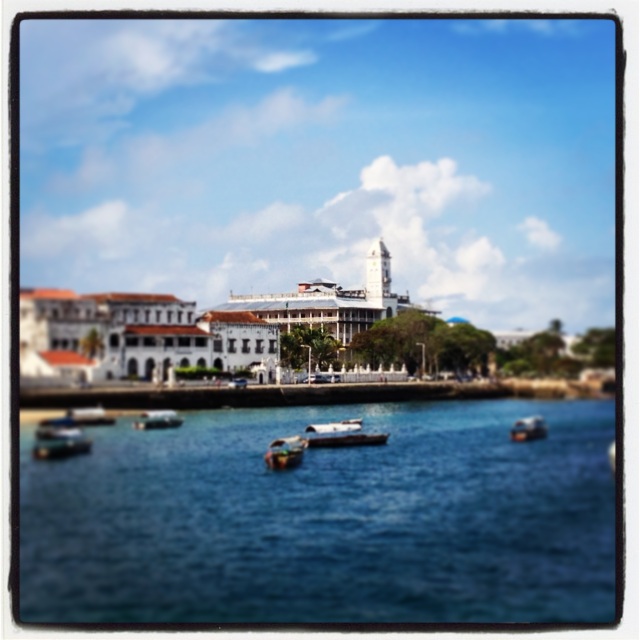
House of Wonders and Stone Town waterfront, Zanzibar

A little more than 10 years ago, I had a rare moment of clarity.  I was sitting with my second child, who was 9 months old, on my lap while my 2-year-old danced and swayed around me.  Everyone else in the Mommy and Me class was singing – with gusto – the Barney song “I Love You”.  Glancing at the clock, I realized that the week before – at exactly this time – I was being interviewed live on national TV in Peru about that country’s truth and reconciliation commission.

The stark contrast made me realize that I had chosen a life in which there might never really be a “typical” day.   Setting aside the insipidity of Barney, I realized that these small moments with my young sons were as important and valuable as the other, more high-profile moments of my career, which often takes me to exotic locales.  I learned not to compare my days.  Not to sift through the experiences of each day and measure the worth of one against another, but to see them all as a whole.  To acknowledge that each endeavor for work and for family gives me strength for the other. To realize that I am fortunate to have these varied experiences, which, woven together form the rich tapestry of my life.

So for the Weekly Photo Challenge: A Day in the Life, I am choosing to share one day that I recently spent in Zanzibar for work.  As I write this, my daughter is sitting beside me, looking at the photos and talking about them with me.  One day in Zanzibar, one day of spring break at home. Days and experiences, knitted together – so many days to be thankful for!


(See more Weekly Photo Challenge entries here.)

A Mother In A Refugee Camp

Photo by my colleague Rosalyn Park, taken during our trip to Sierra Leone in 2004

Nelson Mandela read Chinua Achebe when he was in prison and reportedly described him as a writer “in whose company the prison walls fell down.”  I read Chinua Achebe’s Things Fall Apart in college, three decades after it was written, required reading on a syllabus that only included one African author.  I read his other books later, as well as some of his essays.  The obituaries describe him as an African Literary Titan and a “towering man of letters”.  True words, but he was more than that.  Much has and will be written about Chinua Achebe as the writer that wrested writing about Africa – that vast and varied Africa, as if one writer could ever represent it – back from the West.

There is one poem by Chinua Achebe that has stayed with me for many years, not because it captures the global themes of colonialism or tradition v. Western values, but because it captures so perfectly the small moments of heartbreak and love that I myself have seen in the refugee camps I have visited in Sierra Leone and Ghana.  That Chinua Achebe could capture the small moments of human connection along with the global themes was a mark of his genius.  Upon reading the news of Chinua Achebe’s passing today, I read A Mother In A Refugee Camp again.  I share it now, my own way of  saying thank you, “like putting flowers on a tiny grave”.

A Mother In A Refugee Camp

No Madonna and Child could touch
Her tenderness for a son
She soon would have to forget. . . .
The air was heavy with odors of diarrhea,
Of unwashed children with washed-out ribs
And dried-up bottoms waddling in labored steps
Behind blown-empty bellies. Other mothers there
Had long ceased to care, but not this one:
She held a ghost-smile between her teeth,
And in her eyes the memory
Of a mother’s pride. . . . She had bathed him
And rubbed him down with bare palms.
She took from their bundle of possessions
A broken comb and combed
The rust-colored hair left on his skull
And then—humming in her eyes—began carefully to part it.
In their former life this was perhaps
A little daily act of no consequence
Before his breakfast and school; now she did it
Like putting flowers on a tiny grave.

—Chinua Achebe

16 November 1930 – 22 March 2013

Weekly Photo Challenge: Lunchtime

Dar es Salaam, TanzaniaMarch 2013
Dar es Salaam, Tanzania
March 2013

This week’s WordPress Photo Challenge theme is “Lunchtime”.  Since it’s also phonoegraphy month, I’d like to share a series of memorable food/menu photos that I have taken with my iPhone 4.  To quote the menu at the Red Onion Restaurant in Dar es Salaam, “Bone Appetite”!

Scrumbled Egg or Egg Porch for breakfast?  Decisions…

New Delhi, IndiaJanuary 2012
New Delhi, India
January 2012

I think I’ll have the cheeken burger.

Yaounde, CameroonFebruary 2013
Yaounde, Cameroon
February 2013

Thirsty?

Kathmandu, NepalSeptember 2012
Kathmandu, Nepal
September 2012

This sugar is not just pure.  It is DHAM pure!

New Delhi, IndiaSeptember 2012
New Delhi, India
September 2012

UMMMM …Deep Fried Squid Feelers!

Dar es Salaam, TanzaniaMarch 2013
Dar es Salaam, Tanzania
March 2013

Jupped Rabbit? Magret Duck? Toulouse Poele?

I can’t even understand the English translation.

Douala, CameroonFebruary 2013
Douala, Cameroon
February 2013

No. Just no.

Dar es Salaam, TanzaniaMarch 2013
Dar es Salaam, Tanzania
March 2013

The secret of Cajun cooking – revealed!

Stone Town, ZanzibarMarch 2013
Stone Town, Zanzibar
March 2013

Should have bought a case of these!

Dar es Salaam, TanzaniaMarch 2013
Dar es Salaam, Tanzania
March 2013
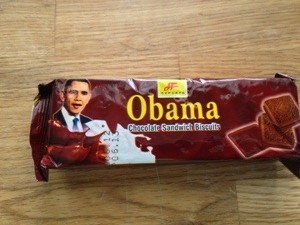
(Made in Pakistan)

Phoneography Challenge: My Neighborhood

Taken from the southeast shore of Lake Harriet with Instagram on my iPhone 4s.

I live in Minneapolis, the City of Lakes.  The story is that the first schoolteacher named the city after mni, the Dakota Sioux word for water, and polis, the Greek word for city.  The city is aptly named, with wetlands, creeks and the Mississippi river in addition to twenty-two lakes within the city limits. Truly, a wonderful blend of nature and urbanity.

Of course, most of this water is still frozen at this time of year in Minneapolis.  I took this photo of my neighborhood lake – Lake Harriet – while I was out on a run a couple of evenings ago. Enjoy!

Forward Movement: LGBT Rights in Cameroon

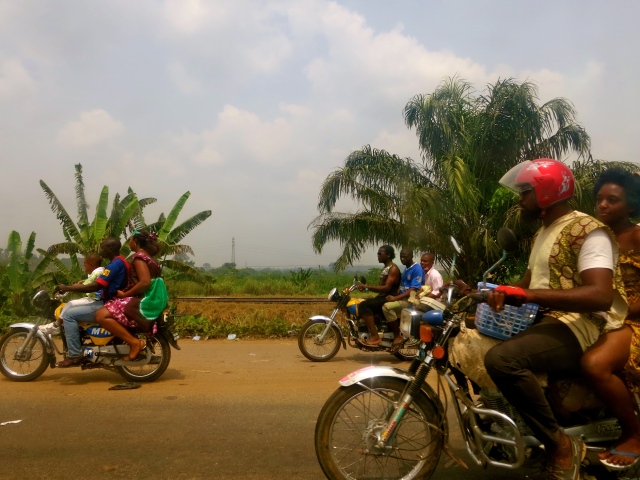
Motorcycle taxis speed toward Douala, Cameroon's major port and commercial center
Motorcycle taxis speed toward Douala, Cameroon’s major port and commercial center

In response to this week’s Photo Challenge: Forward, I thought I would simply post this photo, taken two weeks ago today, of motorcycle taxis speeding towards Douala, Cameroon.  But there is another kind of movement going on right now in Douala, one that is attempting to move the country forward towards acceptance of the rights of LGBT persons.  These courageous activists, who are risking their lives to end discrimination and persecution based on sexual orientation or gender identity in Cameroon, deserve more than a photo.  They deserve to have their stories told.

In Cameroon, people who are LGBT face pervasive societal stigma, discrimination,and  harassment.  They also face the possibility of imprisonment – Article 347 of the Cameroonian penal code criminalizes “sexual relations with a person of the same sex”.  At least 28 people have been prosecuted under the law since 2010. One of them is Roger Jean-Claude Mbede, who was arrested and convicted of homosexuality in March 2011 after sending another man a text message reading, “I’ve fallen in love with you.”  In December 2012, the Cameroonian court of appeals upheld the conviction and sentenced him to three years in prison.

Gay, lesbian, bisexual, and transgender people have a high risk of HIV/AIDS infection.  They are often rejected by their families, who force them out of the home.  When targeted by law enforcement, they have more difficulty in obtaining legal protection.Due to the social stigma and intense climate of fear, most LGBT people are forced to live out their lives in secrecy.  Yet there are several impressive non-governmental organizations  – Alternatives-Cameroun, the Association for the Defense of Gay and Lesbian Rights (ADEFHO), Cameroonian Foundation for AIDS (CAMFAIDS), and Evolve, to name a fewwhich are working hard to raise awareness about and provide services to the LGBT community.

When I was in Douala, I was able to visit Alternatives-Cameroun.  Security is, understandably, a big concern.  There is no sign that marks their center on boulevard de la Liberté, and when you arrive, you have to sign in and show your ID.  Alternatives-Cameroun has one doctor at the center who provides HIV/AIDS treatment and medical services to approximately 75 patients.  In addition, Alternatives-Cameroun provides a small community pharmacy, as well as safe, confidential and free HIV testing.  In 2012, they provided 720 HIV tests.

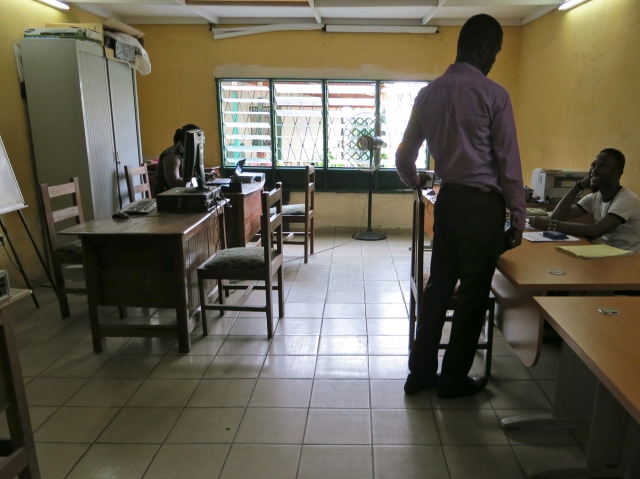
Staff at Alternatives-Cameroun centre in Douala

Equally important are the services provided by a psychologist and two social workers.  Alternatives-Cameroun also provides public education and outreach, both at the center and through peer educators.  On the day I visited, all of the peer educators were at work out “in the field” in Douala.

What touched me most, though, was the real sense of community that is provided by Alternatives-Cameroun.  I saw a small group of young people sitting on plastic chairs around a table in “William’s Hall” (named after one of the organization’s founders, who died in the Kenya Air plane crash).  I could feel that they were providing each other with comfort and support, a feeling so strong that I could see the connection between them almost as clearly as I could see the young man holding the hand of the woman beside him.

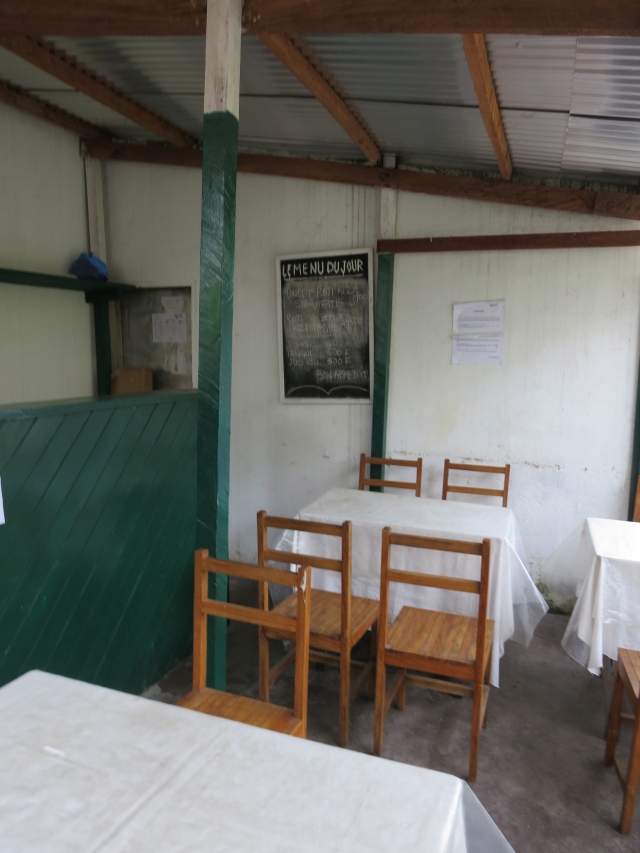
As a way to join the community and to connect with the neighbors around them, Alternatives-Cameroun started a small restaurant that serves a very inexpensive daily lunch. This anti-discriminatory gambit has paid off; the neighbors now come to the restaurant to eat and talk together with the staff and patients.  Often the patients are very poor, so the restaurant means they can offer them a meal or two a day.  The restaurant also provides meals for LGBT detainees in prison.  Prison conditions in Cameroon are notoriously bad, with severe overcrowding and inadequate food.  Most detainees rely on family members to bring them meals.  As LGBT detainees have often been rejected by their families, they have no other access to food.

Restaurant

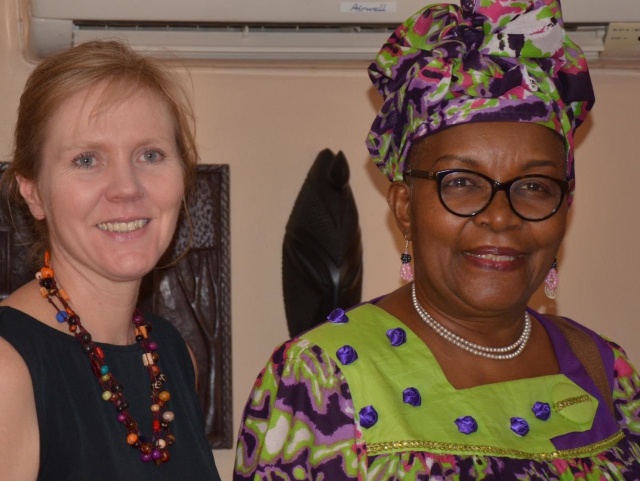
Activists working on LGBT issues in Cameroon told me that one of their main needs is for more lawyers. One of the very few Cameroonian lawyers who is willing to take on these “homosexuality” cases is Alice Nkom.  The first black woman admitted to the Cameroonian bar, Alice has been courageously fighting for the rights of LGBT Cameroonians for many years.  In spite of serious death threats, Alice Nkom continues her work.  “Threats like these show us that the fight must continue,” said Nkom.

with alice in douala

Cameroon has been receiving a lot of criticism recently from the international community, particularly the European Union. The issues of LGBT rights will certainly come up again at the Human Rights Council’s Universal Periodic Review of Cameroon this spring.  On January 31, Cameroonian President Paul Biya told reporters that attitudes are changing in his country about the criminalisation of homosexuality.  “Now I can say that discussions are under way. People are talking, minds can change one way or another but currently it’s a crime.”  

The government of Cameroon must do more than discuss.  The government must protect the rights of all Cameroonians, regardless of sexual orientation or identity. And when things do change, as they will one day, the credit will go to the brave men and women who have put their heart and souls – not to mention their lives – into moving their country forward on LGBT rights.

To read more about LGBT rights in Cameroon:

Human Rights Watch, Criminalizing Identities (2010)

Joint Stakeholder Submission on LGBT Rights for the Universal Periodic Review of Cameroon (2012)

International Gay & Lesbian Human Rights Commission, Cameroon

Weekly Photo Challenge: Home

IMG_0205

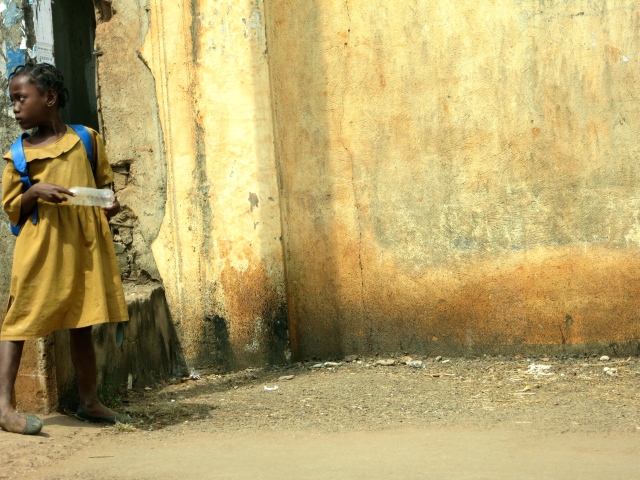
Girl walking home from school

Yaoundé, Cameroun

February 3, 2013

IMG_0183

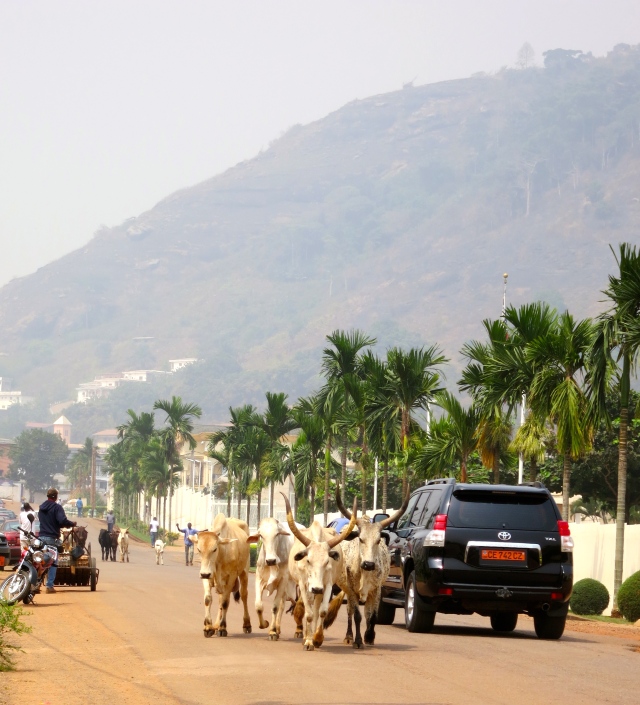
Cattle head home past the US Embassy

Avenue Rosa Parks, Yaoundé, Cameroun

February 4, 2013

IMG_0269

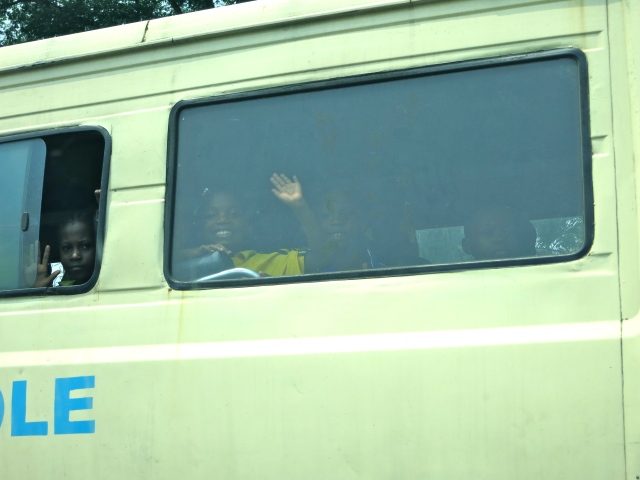
Incredibly unsafe school bus (NO SEATS!) brings school kids home

Douala, Cameroun

February 8, 2013

IMG_0309

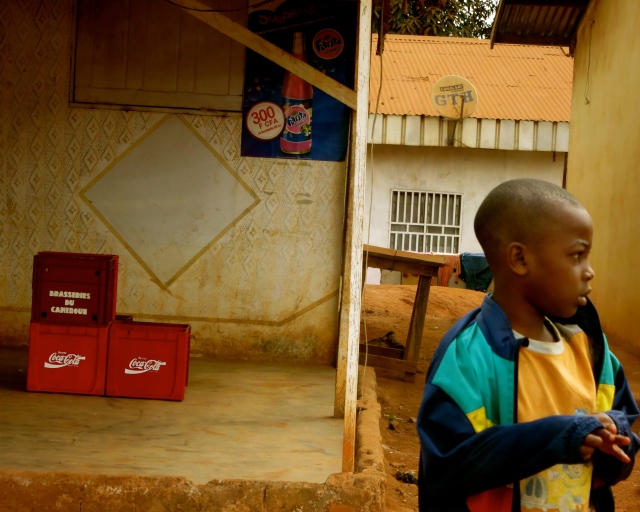
A young boy plays in front of his home, which has a small shop on the front porch

Nkolfoulou, Cameroun

February 9, 2013

IMG_1168

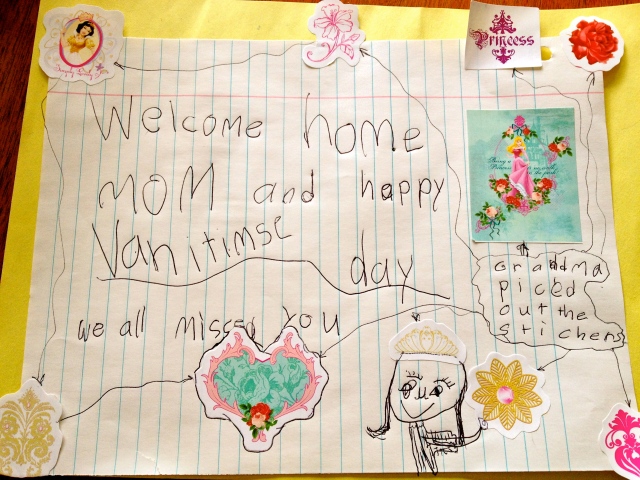
Welcome home (and happy Vanitimse day)!

Minneapolis, MN

February 10, 2013

This week’s Photo Challenge calls for photos that evoke “home”.  See more Weekly Photo Challenge: Home posts.

Weekly Photo Challenge: Illumination

It’s been pretty quiet over here on The Human Rights Warrior.  I’ve got a long trip coming up soon, so haven’t had much time to devote to non-essentials (sadly, that includes blogging).  I felt I just had to respond, however, to the Weekly Photo Challenge with some of the images and words that mean “Illumination” to me.

Darkness cannot drive out darkness; only light can do that. Hate cannot drive out hate; only love can do that.  -Rev. Dr. Martin Luther King, Jr.

IMG_0543

On July 3, 1776, John Adams wrote to his wife Abigail about how future generations of Americans should celebrate the anniversary of the signing of the Declaration of Independence:

It ought to be solemnized with Pomp and Parade, with Shews, Games, Sports, Guns, Bells, Bonfires and Illuminations from one End of this Continent to the other from this Time forward forever more.

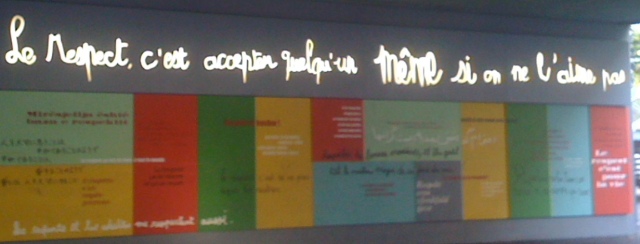
Le respect, c’est accepter quelqu’un même si on ne l’aime pas. Respect is accepting someone even if you don’t like him. (Discovered this on the wall of a school in the Pâquis neighborhood in Geneva, Switzerland)

IMG_0490-2

It’s been a long, a long time coming.

But I know a change gonna come, oh yes it will.

– Sam Cooke

Sun after storm in the Sandwich Ridge mountains, New Hampshire
The sun comes out after a storm in the Sandwich Range, New Hampshire