Weekly Photo Challenge: Layers

Photo taken in Nepal
September 2013

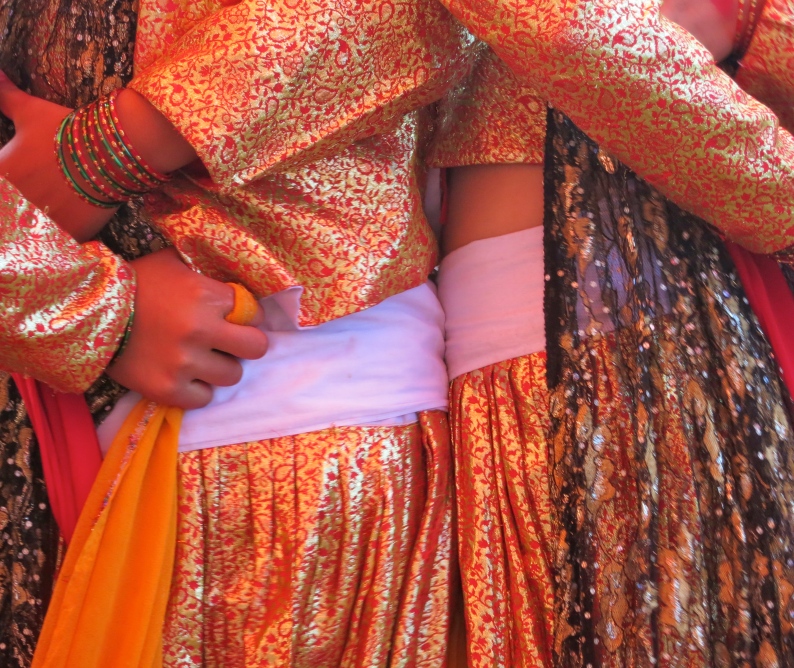
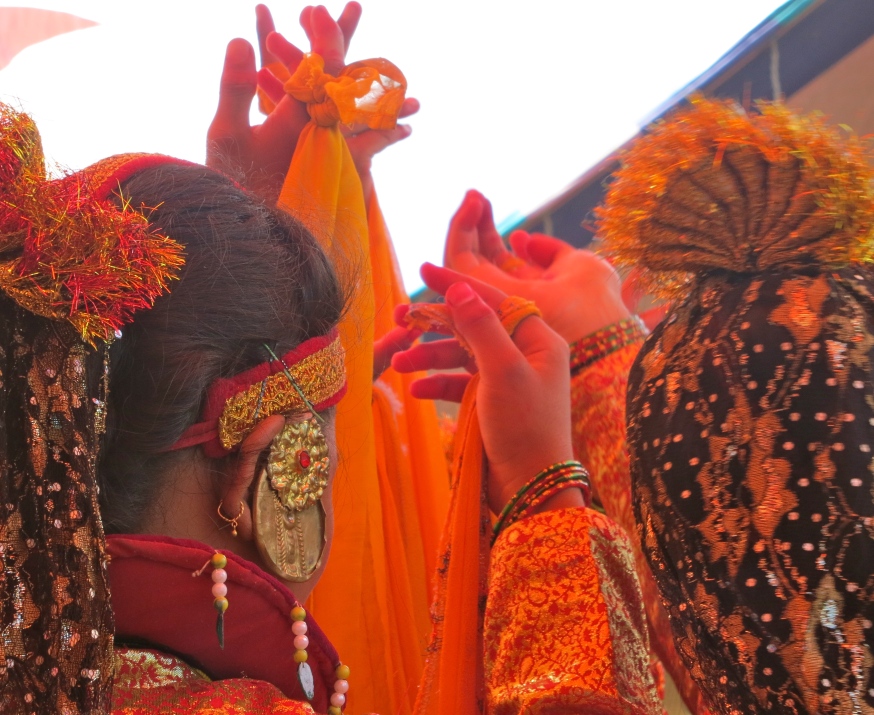
When the Weekly Photo Challenge theme Layers was announced today, I immediately thought of a series of photos I recently took in  Nepal of dancers performing a traditional dance.  It was mesmerizing to watch them, their colorful costumes so rich in detail and contrast, their bodies flowing gracefully through the complicated dance steps.  These young Nepali dancers produced gorgeous layers of color and movement that these photographs cannot truly capture.

I couldn’t decide which photo to use for the Challenge, but I did succeed in narrowing it down to two.

Which photo would you have picked?

IMG_0634
Nepal, September 2013

“U Have To Struggle More”: A Poem for International Day of the Girl

Kanchi Photo - Young

Last year on the International Day of the Girl, I wrote about a girl named Kanchi and her determination to overcome all obstacles and obtain an education in rural Nepal.  The first in her family to go to school, Kanchi is now studying horticulture in university. She also writes poetry in her spare time and asked me to share the following poem that she wrote about her life.

It is a poem that seems particularly fitting on this,  the second  International Day of the Girl.

When I was born in small hut,

i’d be a heavy load,

i’d be a heavy load,

Anyhow i have to accept all the things

which were asked by father & mother

because i’m a daughter,

because i’m a daughter.

Father& Mother always used to say

that i don’t have any right to read & write

because 1 day i have to leave birth place

& i have to be someone’s wife,

i have to be someone’s wife.

They says that i cannot do anything in my life because

my life is like an egg which can

Creak at anytime if it falls,

Which never be join back,

which never be join back.

They say that to do household work,

that’s my big property &

during the time of my marriage

when i get more dowry,

during the time of my marriage

when i get more dowry.

These heart pinches words

collided in my ear,

my heart nearly go to burst,

,my heart nearly go to burst.

At that time my 1 heart says

that u have to leave this selfish world.

But another heart says that don’t get tired

to achieve goal u have to struggle more,

u have to struggle more.

INTERNATIONAL DAY OF THE GIRL:  KANCHI’S STORY

Originally published October 11, 2012 on The Advocates Post.

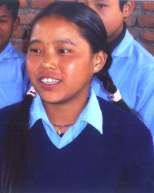
Every morning when I come into work, I am greeted by the smiling face of a young girl. Her hair is pulled neatly back into two braids, glossy black against her pink hairbands.  Her eyes, dark and alert, shine at me – I swear I can see them twinkle.

She wears the blue uniform of her school, the Sankhu-Palubari Community School in rural Nepal.  The Advocates for Human Rights supports the school to provide the right to education to the most disadvantaged kids in the area and to prevent them from becoming involved in child labor.  Photographs from the school hang on the walls of our office, reminders to us of the lives that we impact with our human rights work.

Even though I see her every day, until last month I had never met this cheerful young girl, a girl whose smile – even in a photo – comes from her core, seems to light her entire being. Until last month, I did not know that her name was Kanchi.  And I had never heard her incredible story.

*****

In 1999, Kanchi was six years old.  She lived with her family in a village in the Kathmandu Valley.  Her parents were poor farmers; they had only a little land and some cattle and they struggled to feed their family.  Kanchi was the youngest of six sisters.  She and her sisters (and also her  brother) had to help their parents in the fields and with household chores.  Kanchi’s job was also to take the cattle to the forest to graze.   Kanchi did not go to school.   There were many children in Nepal that did not go to school at that time, but girls, like Kanchi, were more likely than boys to work rather than go to school – particularly in rural areas like the Suntole district where she lived.

Kanchi was a very smart and determined little girl.  She wanted to go to school.   So when she heard that a new school was opening in the Sankhu-Palubari community – a school for kids who were not able to go to school because they couldn’t pay or were discriminated against – she was very excited.  She rushed off to tell her parents.  But her parents, who had never themselves been educated, were not as excited as Kanchi.  Why should they let her go to school?  Who would help feed the family? Why should they send her to school if she was only going to get married in a few years anyway?

Kanchi says that she cried for a month and begged her parents to let her go to school.  One day, teachers from the new school came to visit Kanchi’s parents to talk to them about the school. The teachers explained that it would help THEM if Kanchi could read and write.  They explained why it was important for all children to go to school, even girls.  They told them that all children – even the poorest, the lowest-caste, members of indigenous groups – had a right to education.

Kanchi’s older sisters, who had never had the opportunity to go to school, took her side. Instead getting an education, they had all married young and were working in the fields.  Kanchi’s sisters argued that Kanchi should go to school, take this opportunity for a life that would be different from theirs.  Finally, their parents agreed to let Kanchi go to school.

Kanchi started at the Sankhu-Palubari Community School in 1999, one of 39  students in the first kindergarten class.  To get to school, Kanchi had to walk one and a half hours each way.  There were many other obstacles along the way, too.  At various times, her parents wanted her to stop school and help them with farming.  But she stayed in school and worked hard. She told her parents,  “I want to do something different from the others.”

Kanchi liked her teachers and felt supported by them.  She felt that the best thing about the school was the teaching environment.  She stayed in school and was one of only two girls in the first class to graduate from 8th grade.  She continued on to high school and completed 12th grade at  Siddhartha College of Banepa in 2012.  The first in her family to go to school, Kanchi is also the first girl from the Sankhu-Palubari Community School to graduate from 12th grade.

I met Kanchi for the first time in September.  Almost exactly 13 years after this brave little girl started kindergarten, she is a lovely young woman who is preparing for her university entrance exams.  She plans to study agriculture  starting in January.   Her parents are proud of her and they are happy now – she has chosen the family profession – but Kanchi is interested in learning more about organic farming so she can bring techniques back to her village.  “I want to live a healthy life and give a healthy life to others,” she says.

Sitting in the principal’s office at Sankhu-Palubari Community School, I asked her what the school meant to her.  Kanchi said, “I gained from this school my life.  If I hadn’t learned to read and write, I would be a housewife.”  When asked about her sisters, she told me that they had made sure to send their own children to school.

In her free time, Kanchi likes to sing and dance and make handicrafts to decorate her room.  She likes to play with her sisters’ children.  She has a smile that lights the whole world.  She told me her nickname, Himshila.  She smiled when she told me it means “mountain snow, strong rock”.  Strong rock.  That seems just about right.

*****

October 11, 2012 is the first International Day of the Girl Child.  The United Nations has designated this day to promote the rights of girls, highlight gender inequalities and the challenges girls face, and address discrimination and abuse suffered by girls around the globe.  In many ways, the story of Kanchi and her sisters reflects the experience of girls in many countries throughout the world.  All over the world, girls are denied equal access to education, forced into child labor, married off at a young age, pressured to drop out of school because of their gender.

There are many good reasons to ensure access to education for girls like Kanchi, however. Educating girls is one of the strongest ways to improve gender equality.  It is also one the best ways to reduce poverty and promote economic growth and development.

“Investing in girls is smart,” says World Bank President, Robert Zoellick. “It is central to boosting development, breaking the cycle of intergenerational poverty, and allowing girls, and then women—50 percent of the world’s population—to lead better, fairer and more productive lives.”

The International Day of the Girl is a day to recommit ourselves to ensuring that girls like Kanchi have the chance to live their lives to their fullest possible potential.  To redouble our efforts to promote the rights of girls wherever they live in the world.   This first International Day of the Girl is also a day to honor girls like Kanchi.  A day to take the story of her success in one tiny corner of Nepal and shout it out, an inspiration for girls all around the world.  Girls like Kanchi with the strength, the bravery, the determination to change the world, but who  just need the opportunity.

Silent Sunday 10.6.13

IMG_0243

Silent Sunday. One photo. No words.

Weekly Photo Challenge: Good Morning!

Morning in Kathmandu, Nepal September 2013
Morning in Kathmandu, Nepal
September 2013


This photo is a response to Good Morning!, the  Wordpress Weekly Photo Challenge theme this week.

Weekly Photo Challenge: Saturated

Woman harvesting rice in the Kathmandu Valley, Nepal

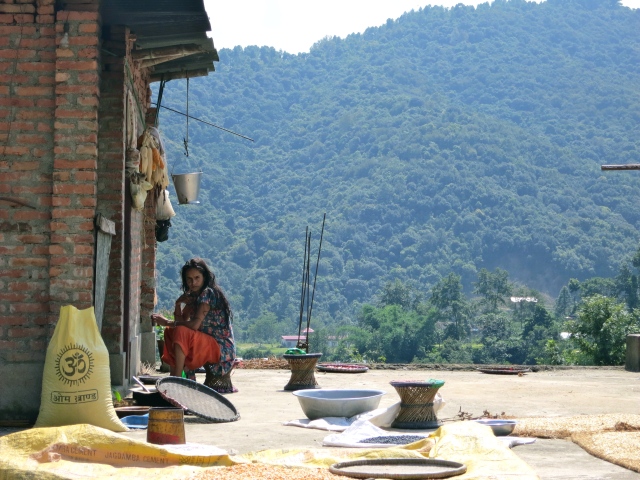
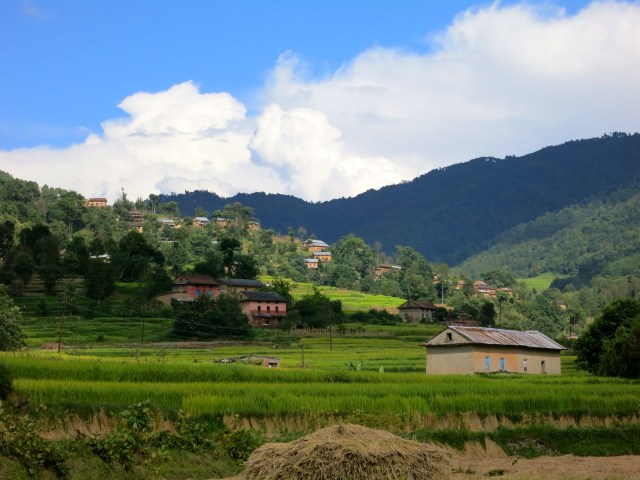
I took this photo last week in the Kathmandu Valley, near the village of Palubari, in Nepal.  The monsoon season has just ended in Nepal, so the colors of the vegetation are especially vibrant right now.  And the people of Nepal are always vibrant, both in their personalities and their dress.

IMG_0495

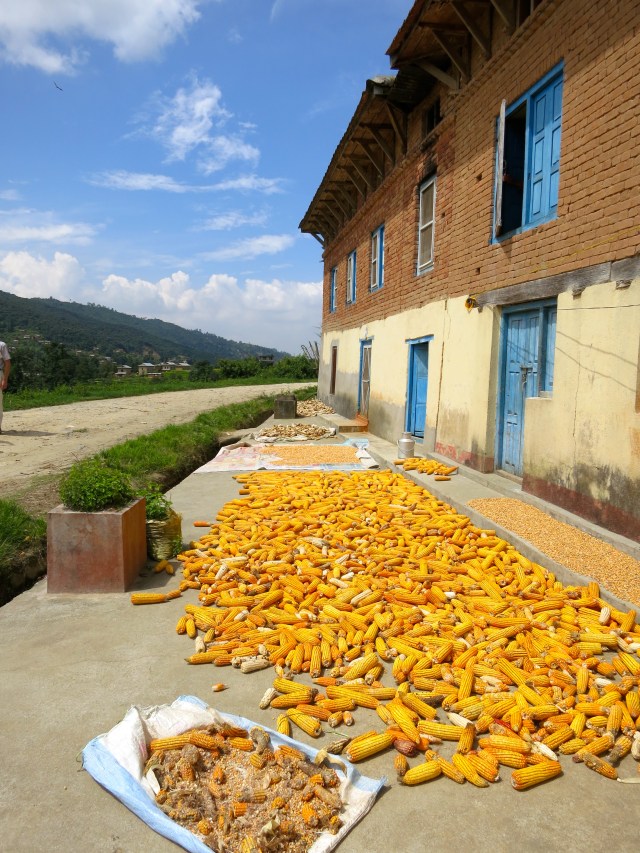
Palubari took its name for the ginger that was once grown here, but this area in the eastern end of the Kathmandu Valley is fertile enough to grow rice, maize (corn), wheat, potatoes and many other vegetable crops.

IMG_0661

The corn crops have been harvested already, the cobs and kernels drying in the sun along the roads that run through the valley.

Corn drying in the sun.

Now the rice crop must be brought in.  All the harvesting is done by hand (you can see the scythe in the hand of the woman in the first picture).  It is hard, labor intensive work and it must all be done before the major festivals next month of Dashain and Tihar.

IMG_0486

This post is a response to the Weekly Photo Challenge: Saturated.

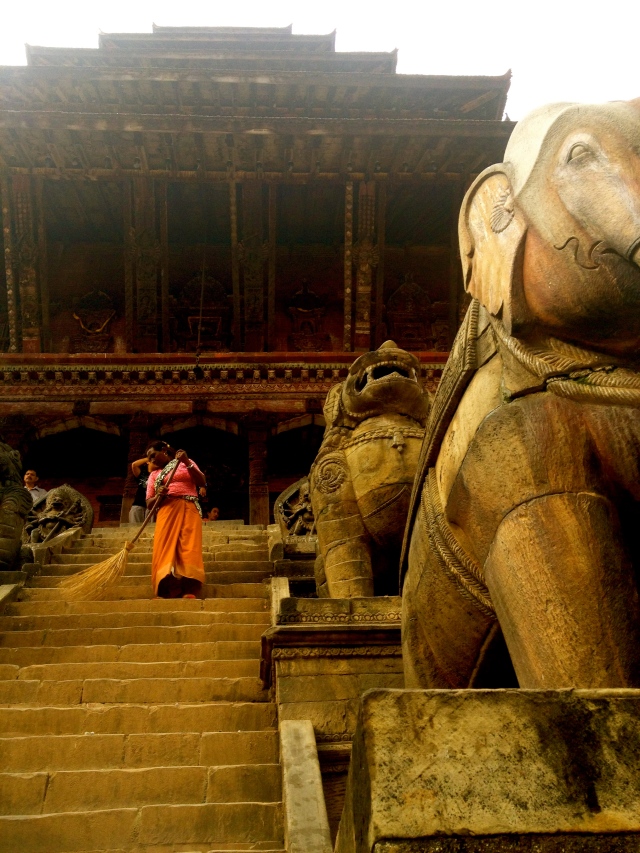
Silent Sunday 9.8.13 – Bhaktapur

IMG_0772

End Child Labor: An Estimated 215 Million Children Still Need Alternatives

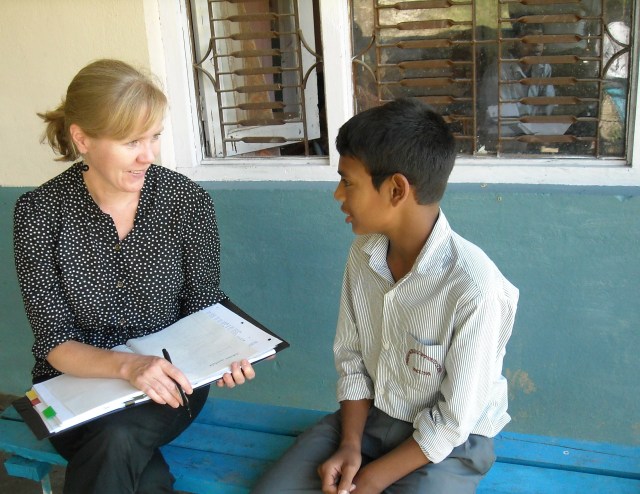
September:  Interviewing students at the Sankhu-Palubari Community School in Nepal
September: Interviewing students at the Sankhu-Palubari Community School in Nepal

What do you say to a child who has experienced child labor? I found myself in this position in Nepal recently. I was interviewing a teenager, who I will call Shree.  He described how as a little boy he had worked with his parents in the brick factories of Bhaktapur, rising at 1 a.m. to carry mud and mix bricks. Luckily, when he was 7, a school opened in in his community to provide Shree and other children at risk of child labor a free education, as well as the chance for a childhood and a promising future.

The Sankhu-Palubari Community School (SPCS) was launched in 1999 by The Advocates for Human Rights, a nonprofit organization based in the Twin Cities, to provide an alternative to child labor. Now, 14 years later, about 350 students are enrolled in grades pre-K through 10 at the school, which is located about an hour from the capital city of Kathmandu. Many of the students are from families that are low-caste, indigenous, or other marginalized groups.

The International Labour Organization (ILO) estimates that 215 million girls and boys around the world are swept up into child labor, some into human trafficking. Children, like Shree, are engaged in work that not only deprives them of their rights and an adequate education, but also is hazardous to their health and commits them to a life of poverty.

The ILO launched the first World Day Against Child Labour in 2002 to highlight the plight of these children. Observed on June 12, the day works as a catalyst for the growing worldwide movement against child labor.

When in his final year at Sankhu-Palubari, Shree, one of the best students in the area, passed his 10th grade School Leaving Certificate exam with distinction. When I met him recently, he was in his his last year of high school.  He likes to write poetry and listen to music. In the afternoons, he volunteers at SPCS, the school that changed the course of his life and where his two younger brothers now study instead of working in the brick factories. He helps the teachers in the classroom and encourages the students to study hard. When they get discouraged, he tells them, “Choose the road that makes your future very bright.”

The bright future Shree envisions for himself is to continue his education after high school and become a math and science teacher to work in rural Nepal with children who, without a school and teachers, would most likely work instead of learn.

So, what do you say to the young girl beading blouses with tiny fingers in a suffocating textile sweatshop in India? What do you say to the little boy in Gambia working in an auto-repair garage or selling items on the street? What do you say to the young girl who is working as a petite bonne (domestic servant) in Morocco?  To the child  sold into human trafficking?

Through his deeds and goals, Shree is telling these children that he is working to break this cycle of abuse.

For you and me, I say that we speak with a loud, unified voice today and proclaim, “We are committed to protecting you, the world’s children, by ending child labor.”

Then, we put our words into action.

Originally published in MinnPost on June 12, 2013.

Weekly Photo Challenge: The Sign Says

The WordPress Weekly Photo Challenge: The Sign Says this week hit right smack dab on one of my favorite hobbies.  Wherever I go in the world, I take pictures of interesting signs that I see. Here is a sampling of my collection:

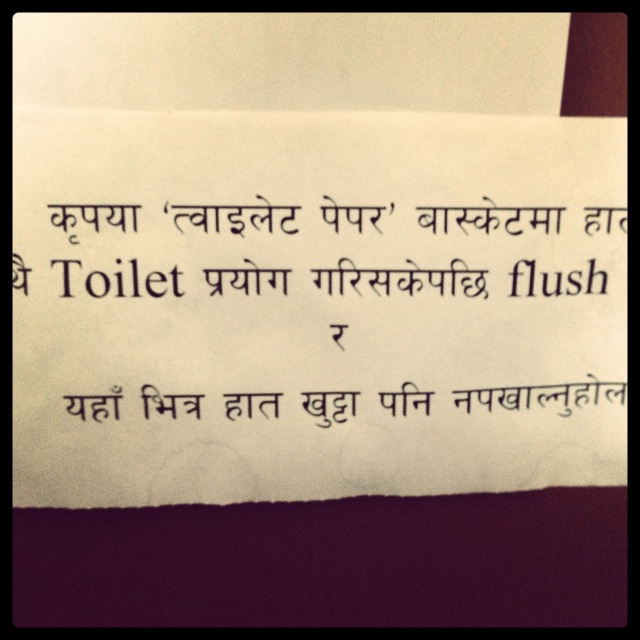
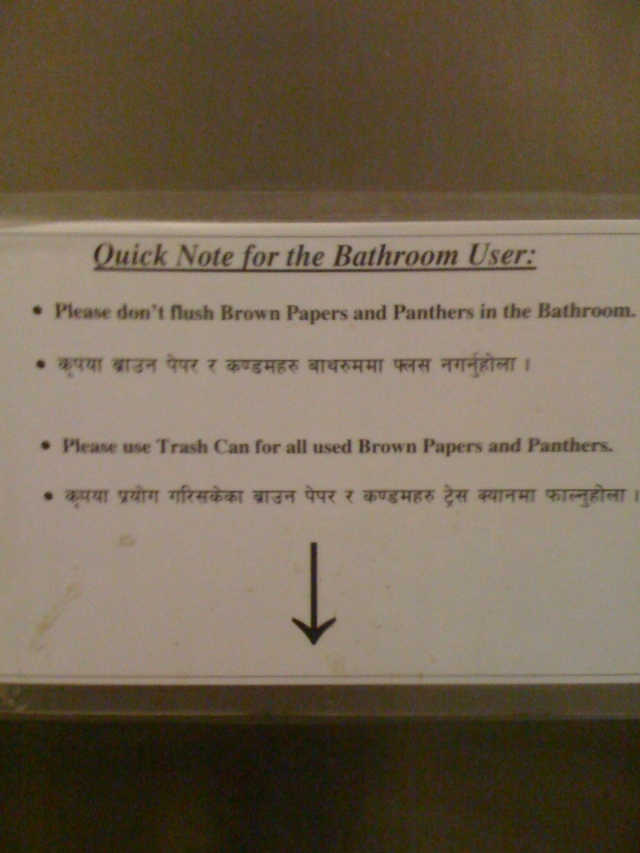
Some are hilarious signs I have spotted in bathrooms.  (And it’s worth noting that I have been accidentally locked in a bathroom on every continent but Australia and Antarctica.)

Question:  To flush or not to flush?

To flush or not to flush?  That is the question.
To flush or not to flush? That is the question.
Kathmandu, Nepal

Answer:  DO NOT FLUSH!  DO NOT FLUSH! PANTHERS IN THE BATHROOM!

IMG_0207
Kathmandu, Nepal

USE THE TRASH CAN FOR ALL PANTHERS! I REPEAT:

Taj Mahal, India (the less glamorous part of the Taj Mahal, that is)

At times, signs can be very clear and direct.

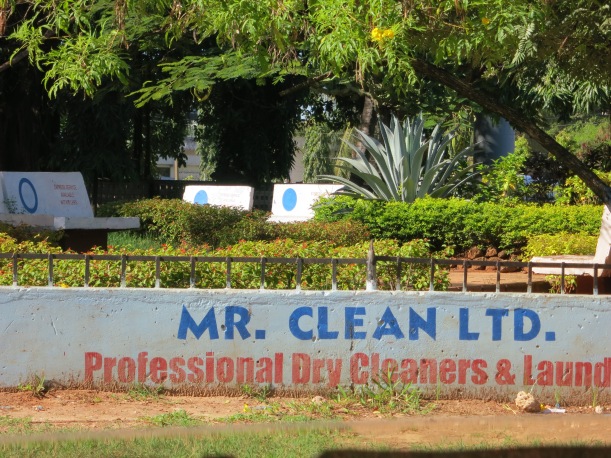
Dar es Salaam, Tanzania
You do want your clothes to be CLEAN, right?
Dar es Salaam, Tanzania

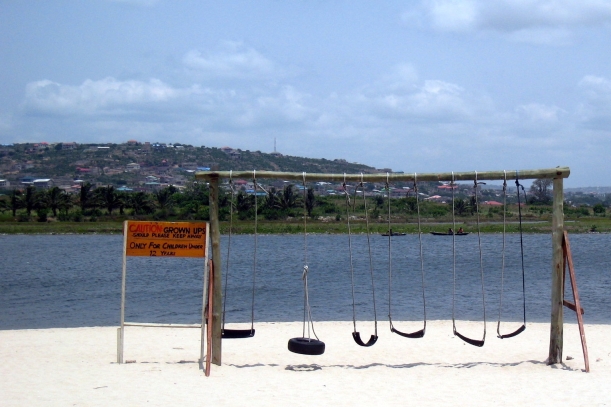
No Grown Ups! Accra, Ghana

CAUTION!  GROWN UPS!

Accra, Ghana

IMG_0404

Relax.

Minneapolis, MN USA

 Other times?  Well, everyone could use a good editor.

What does this even mean? Zanzibar, Tanzania
What does that even mean?
Zanzibar, Tanzania
Monrovia, Liberia
Monrovia, Liberia
Indira Ghandi Airport Delhi, India
Indira Ghandi Airport
Delhi, India

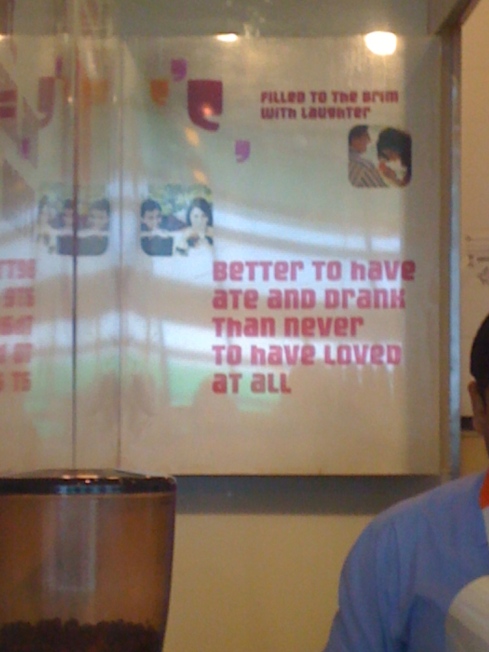
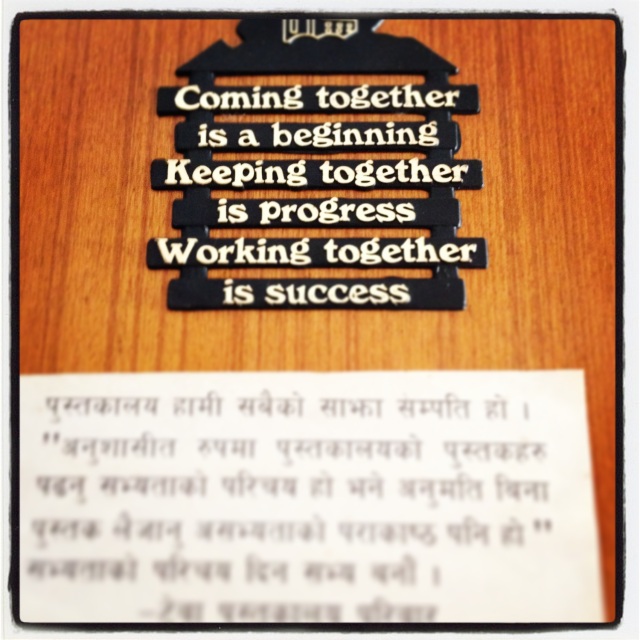
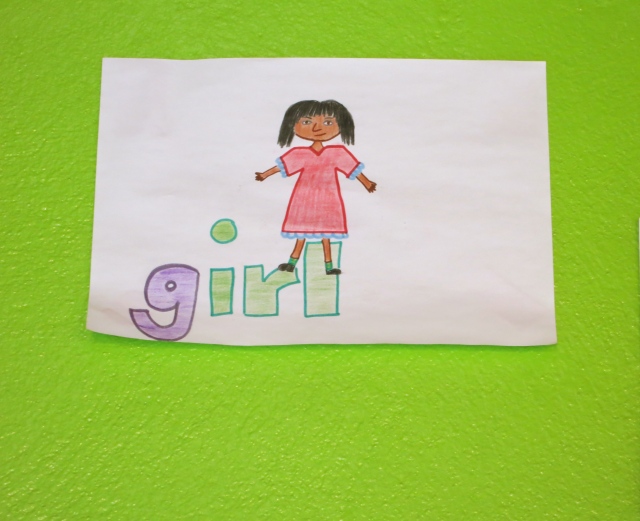
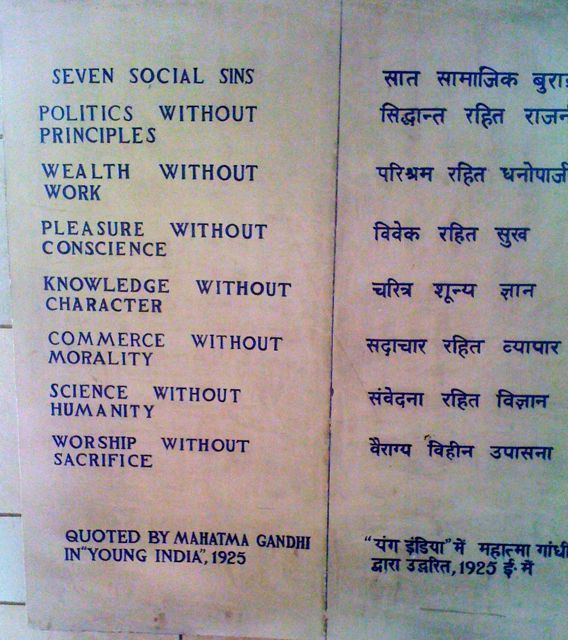
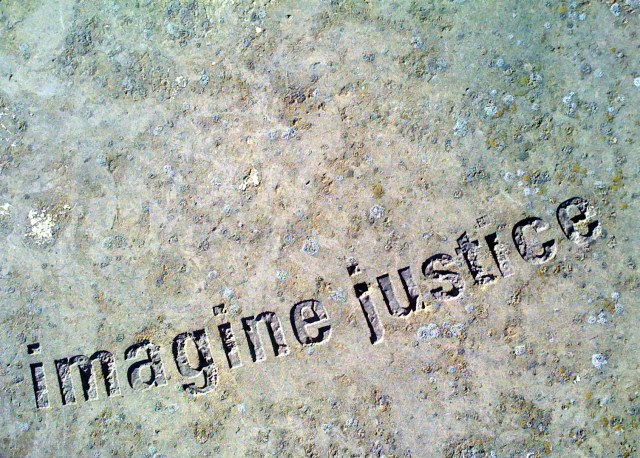
But my favorite signs are those that inspire me.

Kathmandu, Nepal
In the library of a women’s empowerment organization
Kathmandu, Nepal


In the pre-kindergarten classroom of a schoolYaounde, Cameroon
In the pre-kindergarten classroom of a school
Yaounde, Cameroon
Raj Ghat Ghandi Memorial New Delhi, India
Raj Ghat Gandhi Memorial
New Delhi, India
Minneapolis, MN USA
Minneapolis, MN USA

Weekly Photo Challenge: Color In The Kathmandu Valley

Offerings
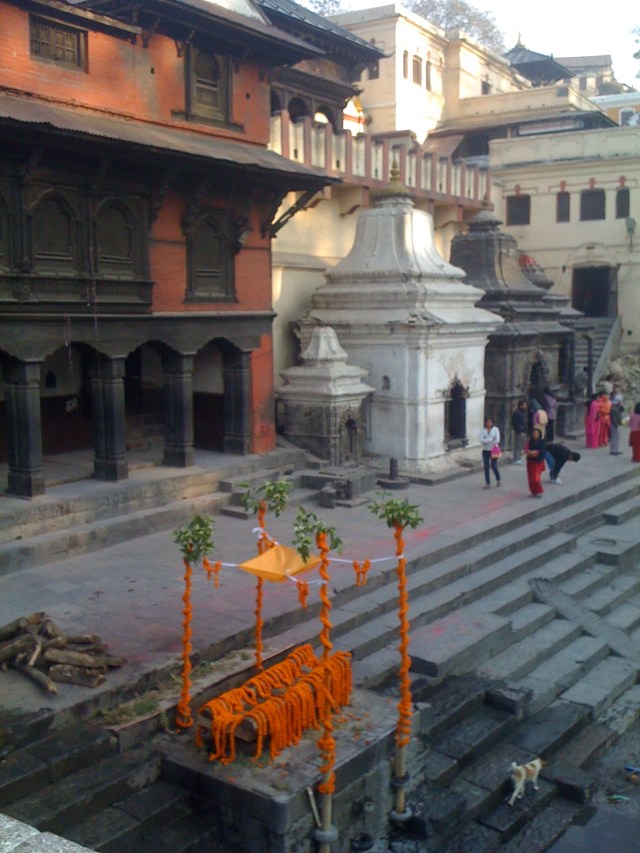
Offerings at Pashupatinath Temple, one of the most significant Hindu temples of Lord Shiva

Deciding on a photo for this week’s Photo Challenge theme COLOR was a real challenge.  Nepal is one place where, in my experience, color continually surprises.  Nepalis often clothe themselves in bright colors, which continually provides the eye with pops of unexpected color. Color in the Kathmandu Valley particularly surprises because of the tremendous contrast between the duns and browns of polluted, urban Kathmandu and the bright, rich colors of the surrounding countryside.  Sometimes you see things better – appreciate things more – through contrast.  Today I’m sharing a gallery of photos, taken in Kathmandu and the Kathmandu Valley, that show the contrast of color.  Enjoy!

Weekly Photo Challenge: Changing Seasons in Kathmandu

himalayas
The clouds suddenly cleared, showing the towering Himalayas over the Kathmandu skyline.

When I arrived in Kathmandu in mid-September, I was surprised to find that it was still the monsoon season.  (Truthfully, up until a few years ago, I would never have guessed that this landlocked, mountainous country even HAD a rainy season.)  In Kathmandu, the hot and wet monsoon season is in the summer – usually between June and August.  This year, however, it lingered into the third week of September.  I asked numerous Nepalis if this extended monsoon season was a common occurrence and I always got the same response.  “No, it is not common. This is the result of global warming.”

After several days of slogging about in the steady rain, I resigned myself to the fact that monsoon season might outlast my visit to Nepal. But unlike my previous visits, which had been during the dry season in winter, I marveled that everything was so beautifully and luxuriantly verdant.  Much of the green could be attributed to the rice paddies that were everywhere, even tucked into vacant lots in the suburbs of Kathmandu.  It was time for the rice to be harvested, but it was impossible to do so in the rain.

Suddenly one  evening, near sunset, there was a change.  The dense clouds, which had hung low and heavy over the city, suddenly began to lift and separate, like cotton candy being pulled apart by unseen hands.  Watching the Kathmandu skyline, I realized that what I had thought was just another cloudbank was in reality the snow-covered Himalayas that ring the city!  “Ah,” said a Nepali at the TEWA Centre where I was staying in Lalitpur, “the seasons are finally changing.”

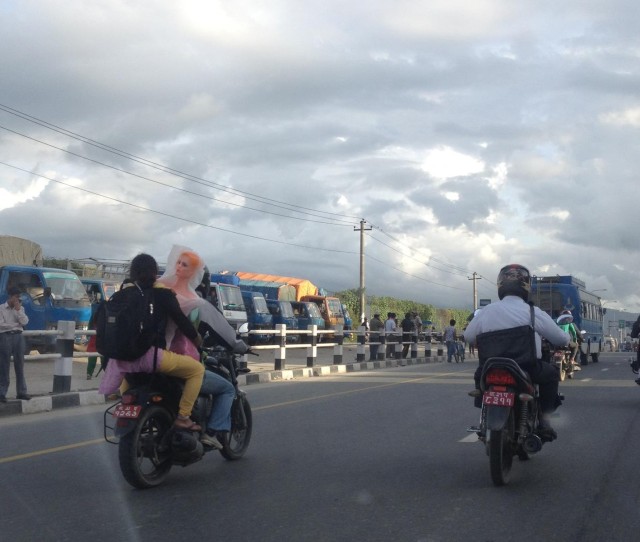
The seasons are changing for the city of Kathmandu, as well. In the photo above , you can see the many housing construction projects being built in this area on the outskirts of the city.  The Kathmandu population grew during the conflict as internally displaced persons fled the Maoist rebels in the countryside. The population has continued to grow due to the country’s high unemployment.  People come to the capital looking for work.  There are now 3 million people living in the Kathmandu valley, driving too many cars and motorcycles on streets that were designed for oxcarts.  Traffic is a huge problem, making it difficult to get anywhere.  The air is polluted and many people wear masks over their lower faces. Traffic accidents are common. Many Nepalis ride motorcycles as they are cheaper than cars and easier to maneuver in traffic.  From goats to refrigerators, you never know what you might see people carrying on one!

motorcycle

Nepal is peaceful now. The violence has ended and the Maoists have been in a power-sharing coalition government since 2008.  But the coalition government is gridlocked.  In May 2012, Nepal’s political parties failed to reach an agreement on a new constitution before the deadline. (Nepalis have been waiting more than four years for a new constitution. When the committee drafting the constitution gets paid by the month, where is the incentive to finish the job?)  The Constituent Assembly, the members of which had been serving under extensions after their terms expired in 2010, was dissolved, creating a political crisis. Most of the basic civic and municipal functions have now essentially ground to a halt.

President Ram Baran Yadav of Nepal gave the parties a deadline of November 29, 2012 to come up with an agreement on how the (long overdue) elections should be conducted.  When they failed to meet that deadline, he extended it for one more week.

Nepalis are still waiting for the political season to change.  In the meantime, much of daily life goes on as it has for centuries.

A woman looks out her window near Sankhu, in the Kathmandu Valley
Preparations for a cremation ceremony at Pashupatinath

IMG_0763

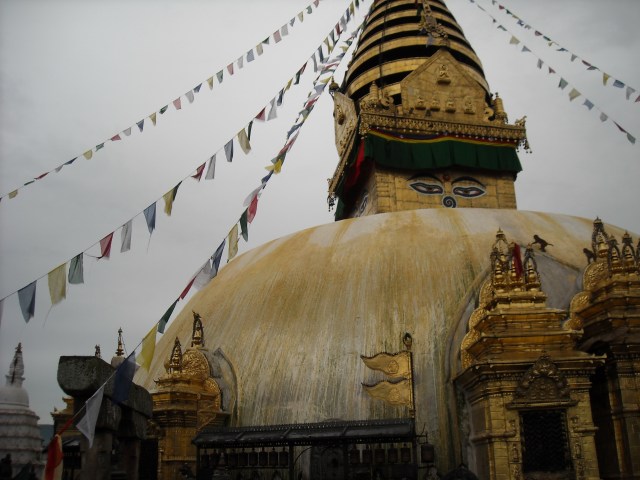
Swayambhunath
IMG_0792
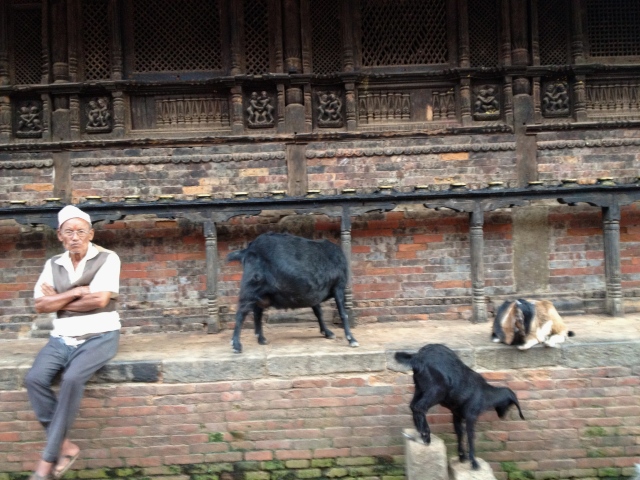
Goats abound in Nepal, even in the city (and particularly before festivals like Dashian)

Here’s hoping that the sun comes out soon for Nepal’s political situation.

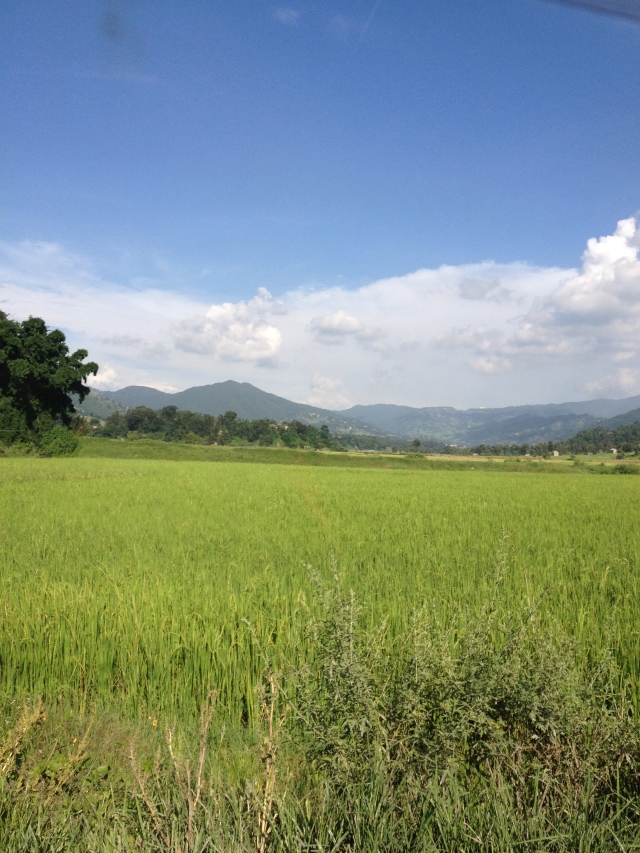
Rice fields in the Kathmandu Valley
Rice fields ready for harvest in the Kathmandu Valley

For more about life in Kathmandu, read my post on Family Life in Kathmandu.

This post is a contribution to the Weekly Photo Challenge: Changing Seasons.  Too see more contributions, click here.