Universal Children’s Day Photo Essay

Nepal
Children in Nepal

Today, November 20,  is Universal Children’s Day!  In 1954, the United Nations General Assembly established Universal Children’s Day to encourage all countries to take action to actively promote the welfare of the world’s children.   On November 20, 1959 the United Nations adopted the Declaration of the Rights of the Child.

Thirty years later, on November 20, 1989, the United Nations adopted the Convention on the Rights of the Child.  The Convention on the Rights of the Child is the first legally binding international instrument to incorporate the full range of human rightscivil, cultural, economic, political and social rights.  The Convention on the Rights of the Child has been acceded to or ratified by 193 countries –  more countries than any other international treaty.

One of the objectives of Universal Children’s Day is to raise awareness about the Convention on the Rights of the Child.  The Convention sets out the basic human rights that every child should have to develop to their fullest human potential, regardless of  where they live in the world. The four core principles of the Convention are non-discrimination; promoting the best interests of the child; the right to life, survival and development; and respect for the views of the child.  The Conventionalso protects children’s rights by setting standards that governments should provide in the areas of health care, education, and legal, civil and social services.

In honor of Universal Children’s Day 2013, I’m sharing a few of the rights guaranteed by the Convention along with photos of children I have taken around the world.

Article 1: “A child means every human being below the age of 18 years.”
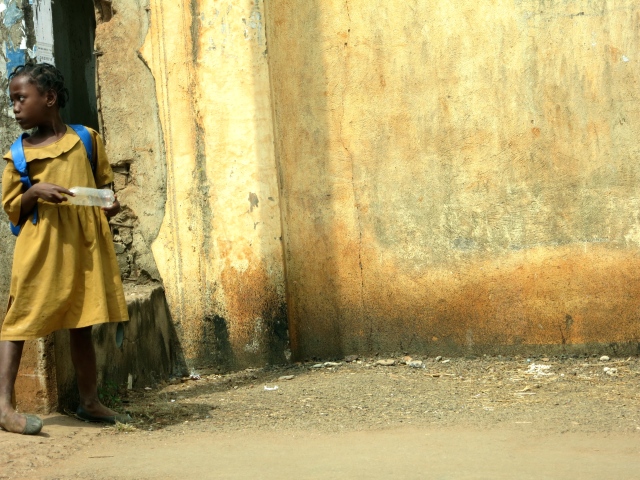
Yaounde, Cameroun
A child in Cameroon

Article 2:  Children must be treated “ … without discrimination of any kind, irrespective of … race, colour, sex, language, religion, political or other opinion, national, ethnic or social origin, property, disability, birth or other status.” 

A child in Zanzibar

Article 3: “In all actions concerning children … the best interests of the child shall be a primary consideration.”
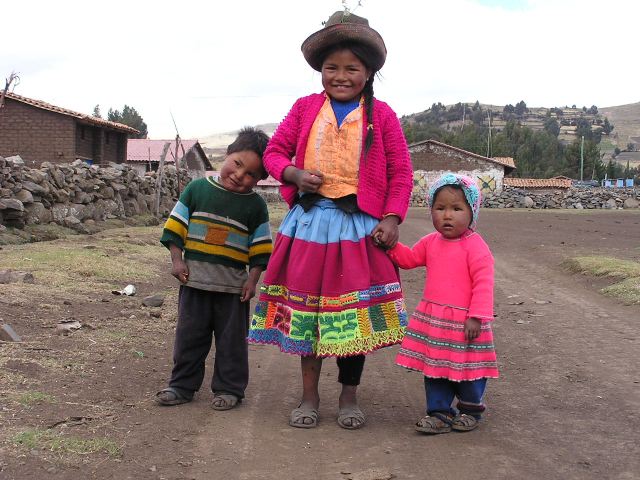
Peru
Children in Peru

Articles 5 & 18: State signatories must “… respect the … rights and duties of parents … [and recognize that] both parents have common responsibilities for the upbringing … of the child.”
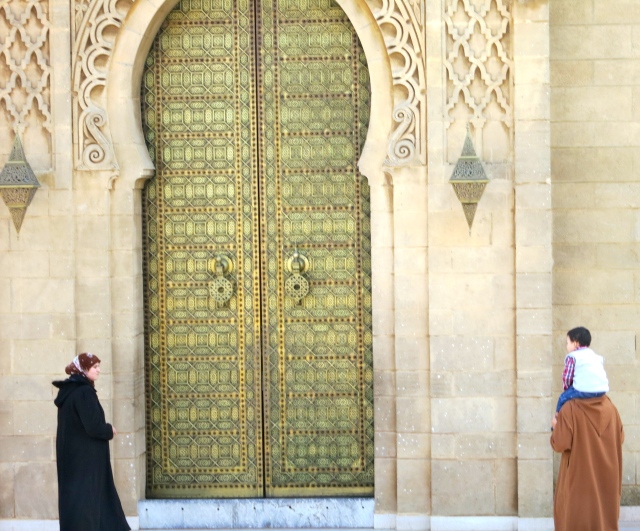
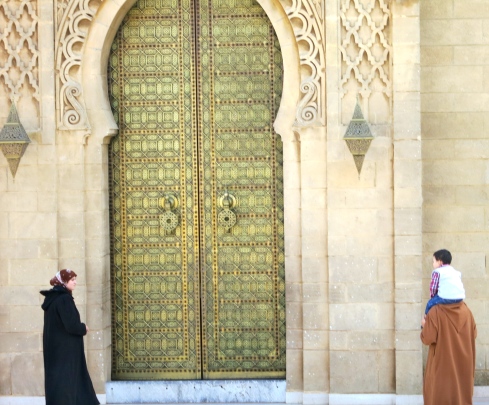
A family in Morocco
A family in Morocco

Articles 12-14: “… the child who is capable of forming his or her own views [has] the right to express those views [and] the right to freedom of … thought, conscience and religion.”
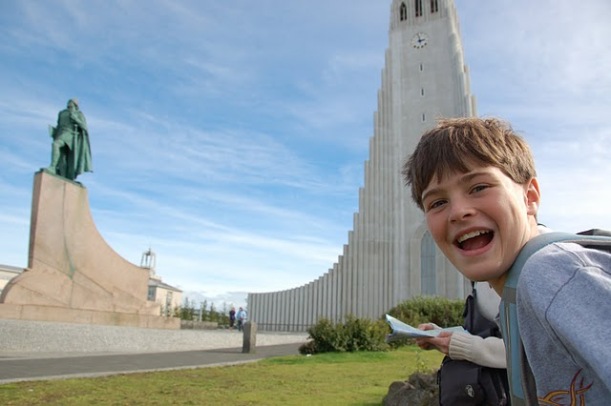
A child in Iceland

Article 19: Children must be protected from “… injury or abuse … including sexual abuse, while in the care of parents … or any other person….”
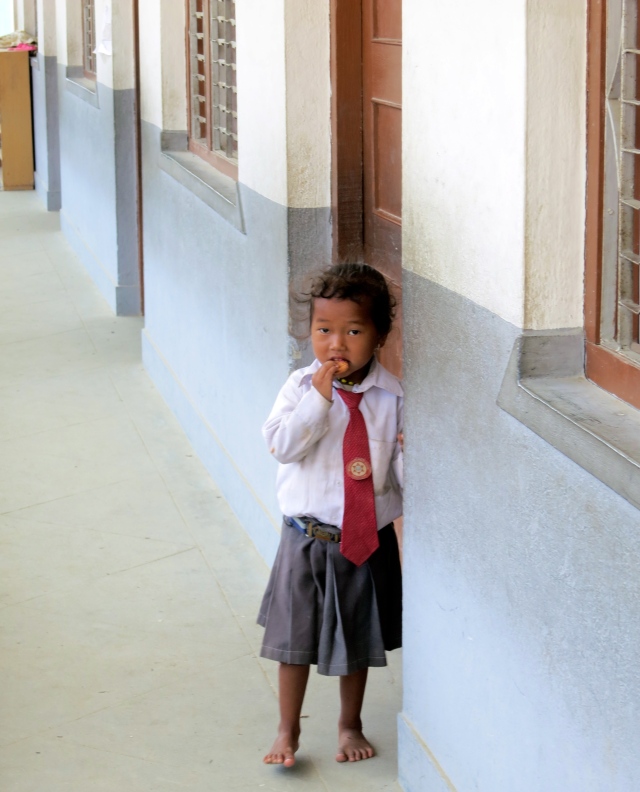
A child in Nepal
A child in Nepal

Article 22: “… a child who is seeking refugee status or who is … a refugee … [shall] receive appropriate protection and humanitarian assistance ….”
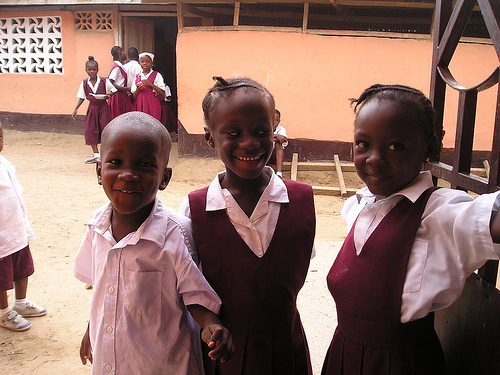
Buduburam, Ghana
Children in Buduburam Refugee Settlement in Ghana
 

Article 23: The State recognizes “… the right of the disabled child to special care” and the right to “… enjoy a full and decent life in conditions which ensure dignity ….”
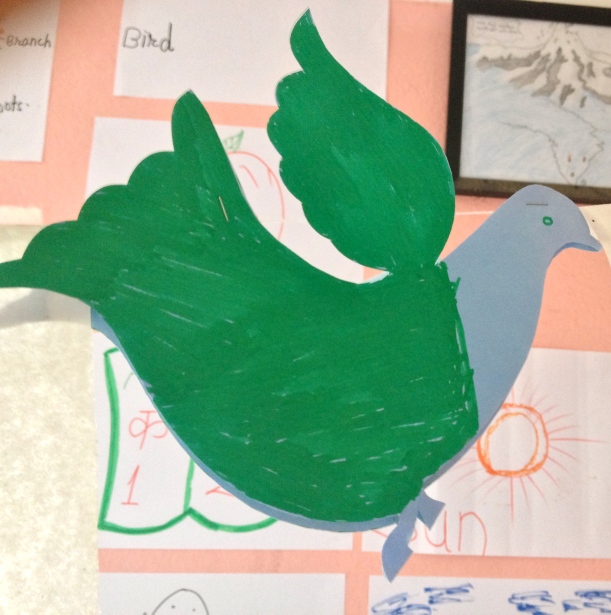
IMG_1800

Article 24: All children have the right to “the highest attainable standard of health … [including access to] primary health care … nutritious foods and clean drinking-water.” 
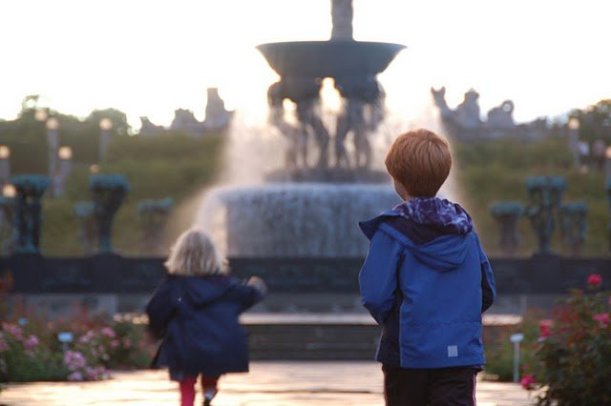
Children in Norway

Article 27:  Every child has “the right to a standard of living adequate for [her/his] physical, mental, spiritual, moral and social development.”
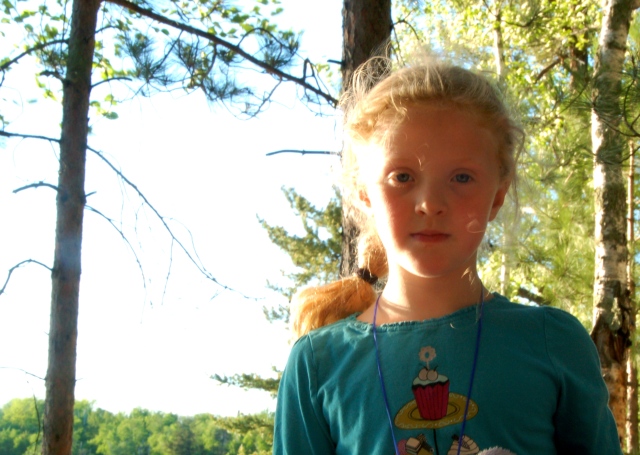
A child in the USA
A child in the USA

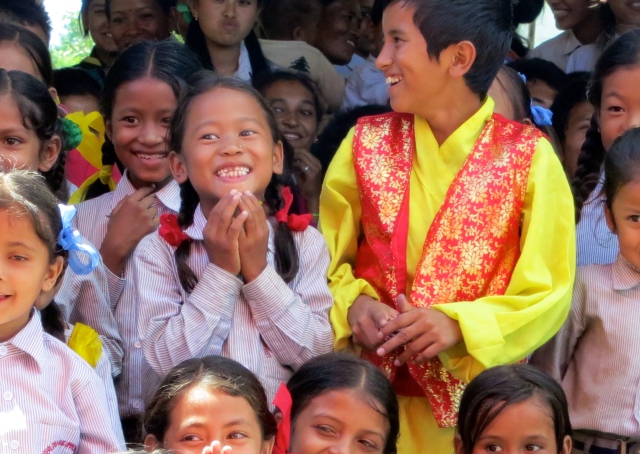
Articles 28 & 29:  State signatories must “recognize the right of a child to education…[that develops] the child’s personality, talents, mental and physical abilities.” 
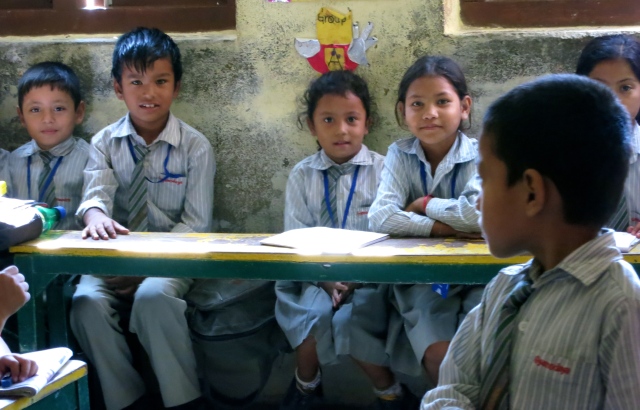
Children in  Nepal
Children in Nepal

Articles 32 & 36:   Children must be “protected from economic exploitation … and from [hazardous] work [and] all other forms of exploitation. 
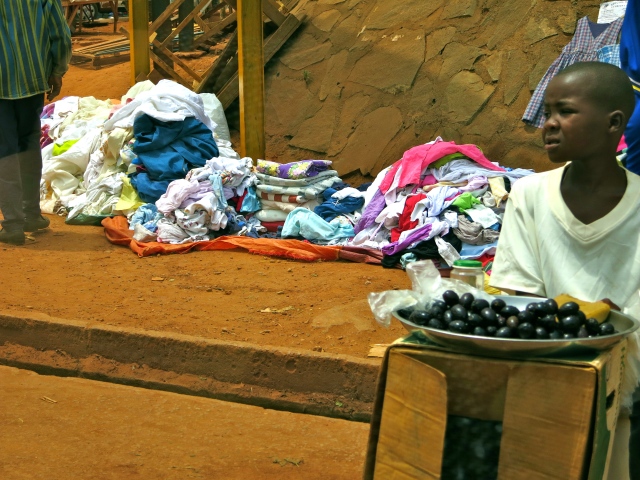
A child in Cameroon
A child in Cameroon

These are just some of the rights set forth in the Convention.  You can read the full text of the Convention on the Rights of the Child here.  

So on Universal Children’s Day 2013 (and every  other day), remember to:
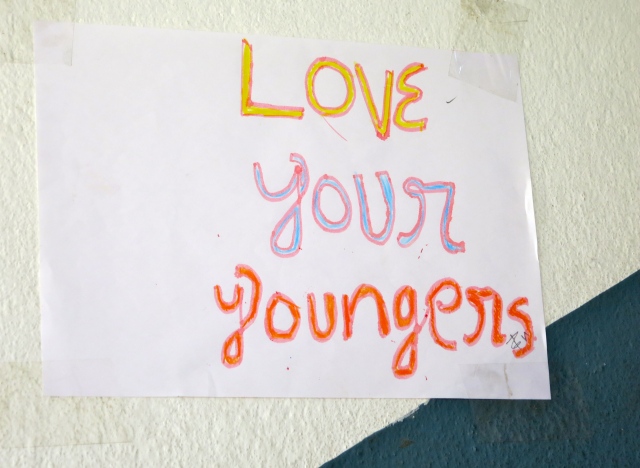
Love your youngers!  (Sign posted on the wall of a school in Nepal.)

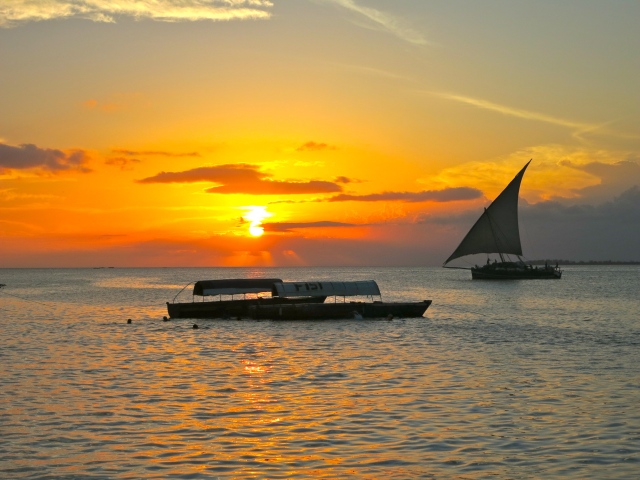
Sunset in Zanzibar

Zanzibar sunset
Sunset over the Indian Ocean in Stone Town, Zanzibar

This post is a response to Weekly Photo Challenge: Horizon.

Weekly Photo Challenge: Sea

20130904-134927.jpg
A “legelege” fishing boat rests on the shore of the Atlantic Ocean in Ghana. The sea is very powerful off the coast of Ghana, yet Ghanaian fishermen battle the powerful currents and mighty breakers day after day in their small, wooden boats. They often personalize their boats with inspirational sayings.

“But man is not made for defeat,” he said.

“A man can be destroyed but not defeated. ”

― Ernest Hemingway, The Old Man and the Sea 

This post is a response to the theme “Sea”.  Follow the link to see more entries in the Weekly Photo Challenge: Sea.

Weekly Photo Challenge: The Sign Says

The WordPress Weekly Photo Challenge: The Sign Says this week hit right smack dab on one of my favorite hobbies.  Wherever I go in the world, I take pictures of interesting signs that I see. Here is a sampling of my collection:

Some are hilarious signs I have spotted in bathrooms.  (And it’s worth noting that I have been accidentally locked in a bathroom on every continent but Australia and Antarctica.)

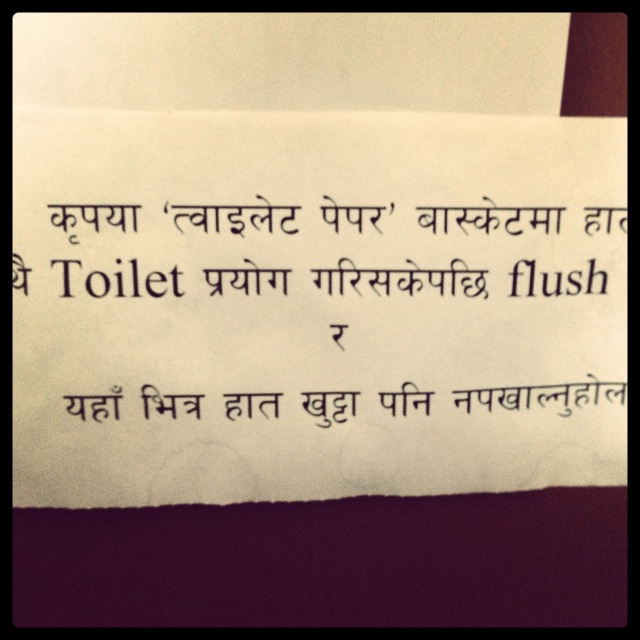
Question:  To flush or not to flush?

To flush or not to flush?  That is the question.
To flush or not to flush? That is the question.
Kathmandu, Nepal

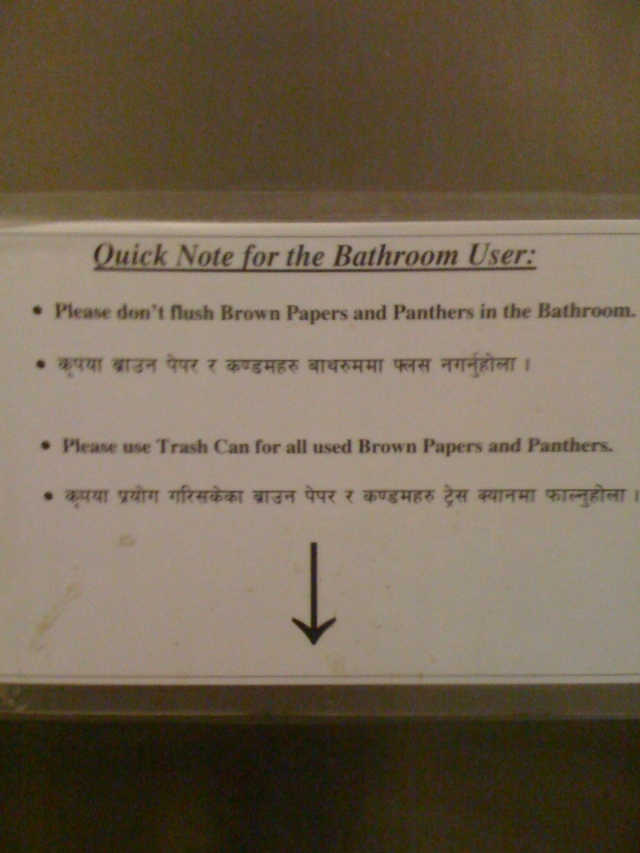
Answer:  DO NOT FLUSH!  DO NOT FLUSH! PANTHERS IN THE BATHROOM!

IMG_0207
Kathmandu, Nepal

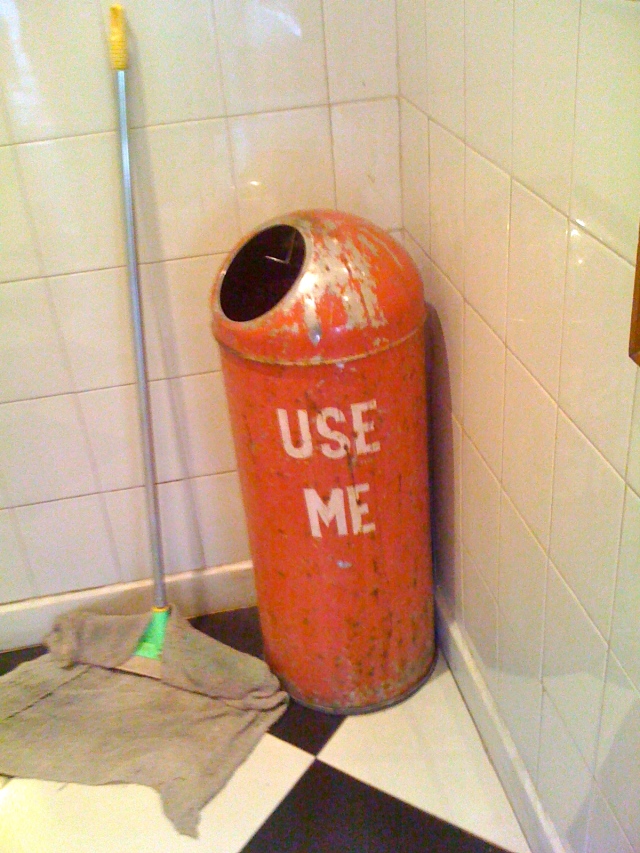
USE THE TRASH CAN FOR ALL PANTHERS! I REPEAT:

Taj Mahal, India (the less glamorous part of the Taj Mahal, that is)

At times, signs can be very clear and direct.

Dar es Salaam, Tanzania
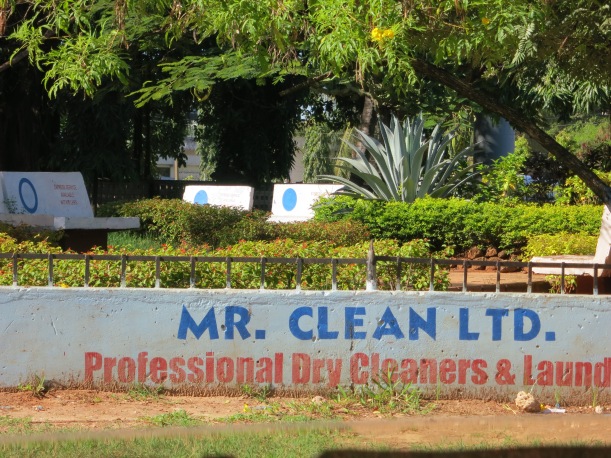
You do want your clothes to be CLEAN, right?
Dar es Salaam, Tanzania

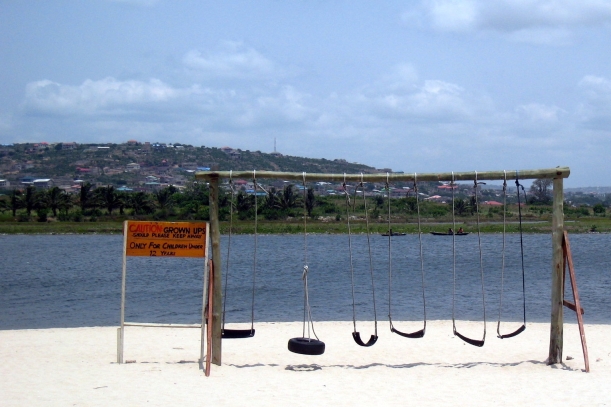
No Grown Ups! Accra, Ghana

CAUTION!  GROWN UPS!

Accra, Ghana

IMG_0404

Relax.

Minneapolis, MN USA

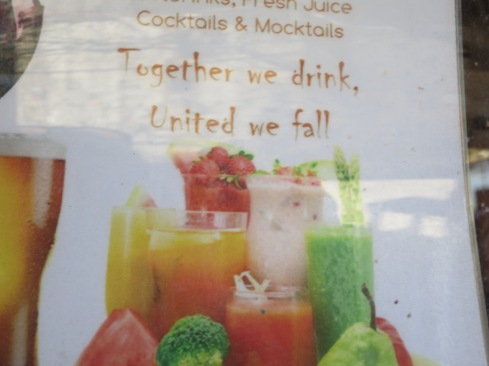
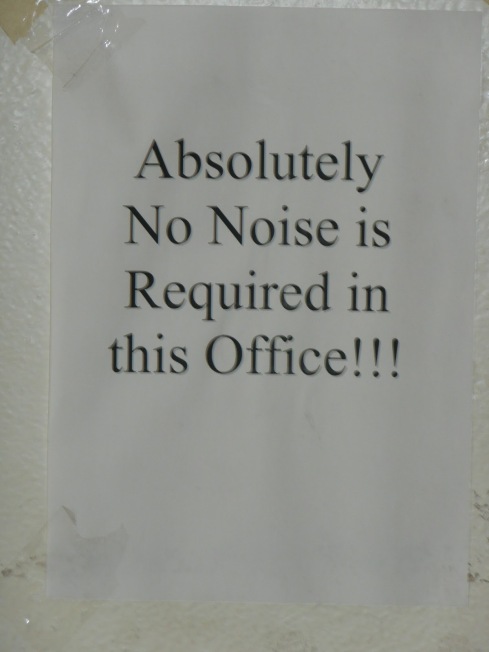
 Other times?  Well, everyone could use a good editor.

What does this even mean? Zanzibar, Tanzania
What does that even mean?
Zanzibar, Tanzania
Monrovia, Liberia
Monrovia, Liberia
Indira Ghandi Airport Delhi, India
Indira Ghandi Airport
Delhi, India

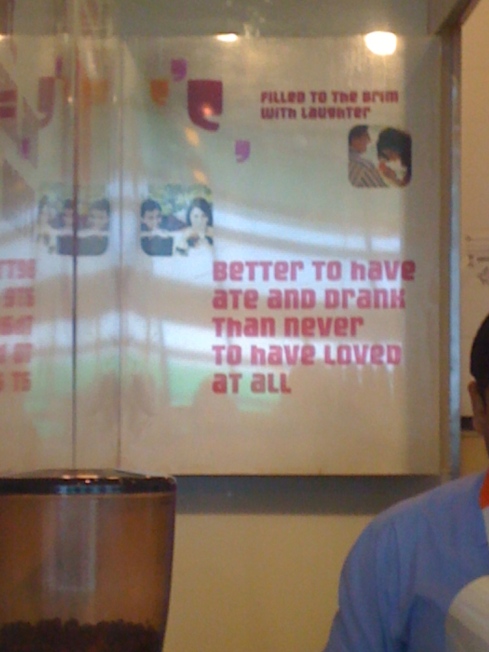
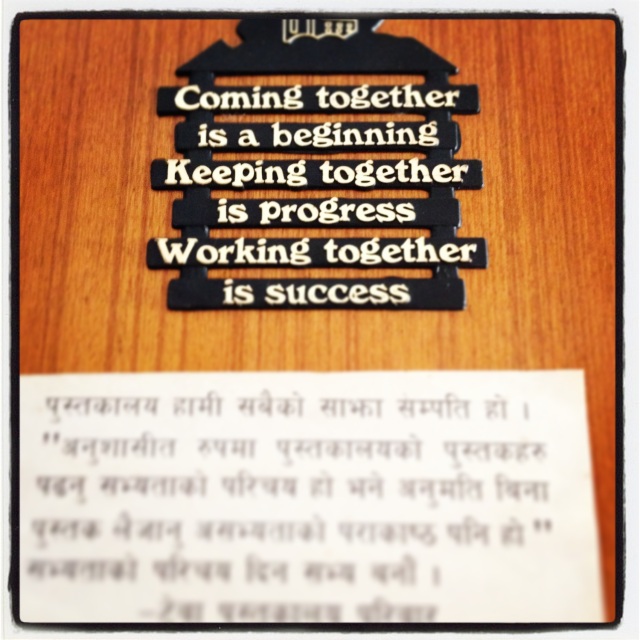
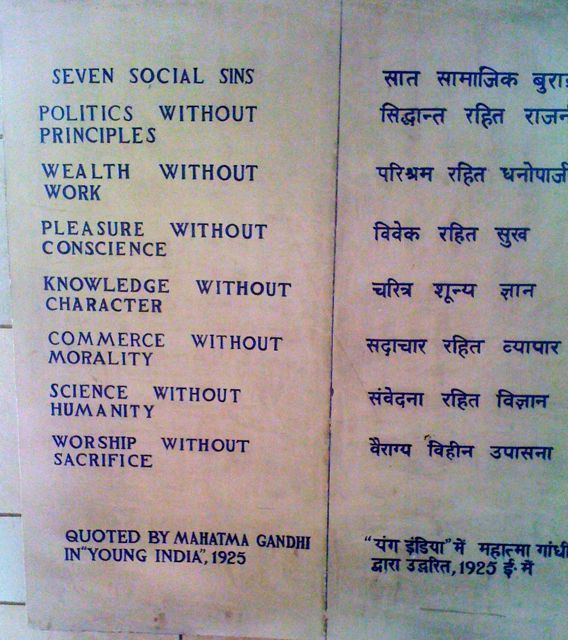
But my favorite signs are those that inspire me.

Kathmandu, Nepal
In the library of a women’s empowerment organization
Kathmandu, Nepal


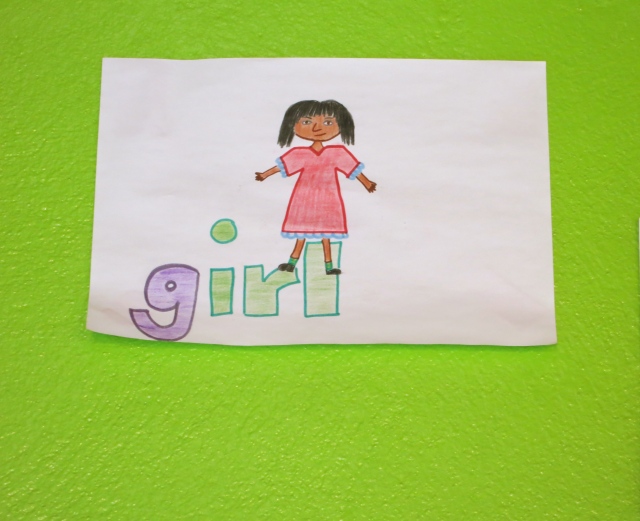
In the pre-kindergarten classroom of a schoolYaounde, Cameroon
In the pre-kindergarten classroom of a school
Yaounde, Cameroon
Raj Ghat Ghandi Memorial New Delhi, India
Raj Ghat Gandhi Memorial
New Delhi, India
Minneapolis, MN USA
Minneapolis, MN USA

Regrets

A couple of days ago, my  daughter asked me, “Do you ever have regrets?”

She asked me this in the bathroom, as I was drying my hair.  No matter what I am doing, my two youngest kids seem to hover around me, fluttering like moths to a flame.  The lack of privacy – not to mention personal space – doesn’t really bother me anymore.  And often, as on this particular morning, it provides the opportunity to talk about whatever is bubbling to the surface of  their young minds.

I weighed my possible responses. My daughter just turned eight. What could a second-grader possibly know about regret?  In the end, I answered that, in general, my regrets were not about things that I had done but rather about things that I had NOT done.

“Do YOU have any regrets?” I asked.

After a pause, she admitted, “Sometimes I’m not so nice to some kids at school.”

“But recognizing that you aren’t always nice means that you can do something about it,” I pointed out.  “Right?”

She shrugged and wandered off with her American Girl doll.  Maybe the message would sink in.

But for me,  a question remained, left hanging in the humid, post-shower bathroom air.

What do you do when you have regrets but you know that there is not a thing in the world that you can do about them?

The truth is that my daughter’s question brought me back to a conversation that I had in a very different context.  Several years ago, I spent some time in the Buduburam Refugee Settlement in Ghana. I was with a team taking statements from Liberian refugees for the Truth and Reconciliation Commission of Liberia.  It was almost exactly six years ago – May 2007 – and it was grueling, emotional work.  I interviewed more than 40 people that week and every single one of them  had suffered multiple layers of trauma and unimaginably tragic loss.  One after another, in family groups and as individuals, they sat before me in a small, cramped office.  Sometimes there was power for the ceiling  fan to move the hot, heavy air; sometimes there was not.  Each one of them was a survivor of horror, a testifier to the nightmare of war.  (I’ve written about some of them before in Talking To My Kids About Death.)

Even though they had left their homeland of Liberia, what they had experienced was still very much with them.  Even if they could push it down deep during the day, the terrors they witnessed would return to haunt their dreams.   Many people I interviewed told me of how the nightmares startled them awake at night, sweating and crying.  Many more told me of hearing others screaming in the night, neighbors who were trapped in their own PTSD- induced nightmares. There is no privacy in a refugee camp.

There was one woman who has always stayed with me.  She was middle-aged, calm and collected.  She told me her story in detail, almost scientifically exact.  Clearly, she had relived the events many times over.  She told me of her life before the war, the fighting and chaos that separated her from her husband and some of her children, the desperate weeks when she, her youngest children, and their neighbors hid in the bush, the treacherous journey to the border. The years – more than a decade- of limbo in this refugee camp.

At the end of any interview, I always ask, “Is there anything else you would like to tell me?”

This woman told me of that the only true regret that she had, the only regret of her life, was about something that she had not been able to do. What she told me went something like this:

We were hiding in the bush and the rebels passed close by.  They attacked a village there.  They didn’t see us, but we saw them.   They killed a lot of people.  We were too afraid to move, so afraid they would hear us.  There was a baby crying; they must have killed the mother.  The baby kept crying and crying and crying.  I wanted to go get that baby, but what could I do?  I knew the baby’s crying would give us all away to the rebels. The baby kept crying and crying and crying, all night long.  And then it stopped.  I knew that the baby had died.  In the morning, we saw that the rebels had moved on and we left our hiding place.  Now I hear that poor baby crying every night in my dreams.

Most people will never be put in a position like this, this untenable Hobson’s Choice.  Most of us will never be faced with having to make the choice between our own life -and that of our children and neighbors – and that of an innocent baby.  Many of us would like to assume that we would find a way to not make the choice; that we would find a way to save that baby.

I knew I could not save that baby.  I wanted to, so much, but I knew I could not.  Even so, I have always felt bad about it. I have never told anyone – not one single person – about this before. Just telling you now – it makes me feel better.

I don’t have any answers here, just as I had nothing to say to this woman other than “I am so sorry.”  I can’t change the world.   I can’t promise my daughter that she won’t experience pain or sorrow or guilt or regret.  I don’t even have an image to go along with this post.

But if there is one thing that I took away from that hot, cramped interview room in that refugee camp in Ghana, it is that there is a value in bearing witness.  I had worked with refugees and torture survivors for years, but it took this one woman to bring that point home to me.  There is a value in simply listening,  and in confirming for someone who suffered injustice that, “It is not right and I’m sorry that this happened to you.”

It may seem insignificant, but it is not.  And it is a reminder that when you come in contact with someone who is suffering, in either a big or a small way, there is always something that you can do. You can listen.

So do it.

Weekly Photo Challenge: The Colors of Cameroon

Deciding on just one photo for this week’s Photo Challenge theme COLOR was a real challenge.

Deciding on just one COUNTRY was even harder!

Here is my second response to the challenge.

Enjoy the warm and vibrant colors of Cameroon!

Bonus!

The bright colors of a primary school in a town near Yaounde.

Some of my more colorful Weekly Photo Challenge posts:

Weekly Photo Challenge: Color in the Kathmandu Valley

One Day in Zanzibar

Weekly Photo Challenge: Home

Weekly Photo Challenge: Geometry/γεωμετρία


One Day in Zanzibar

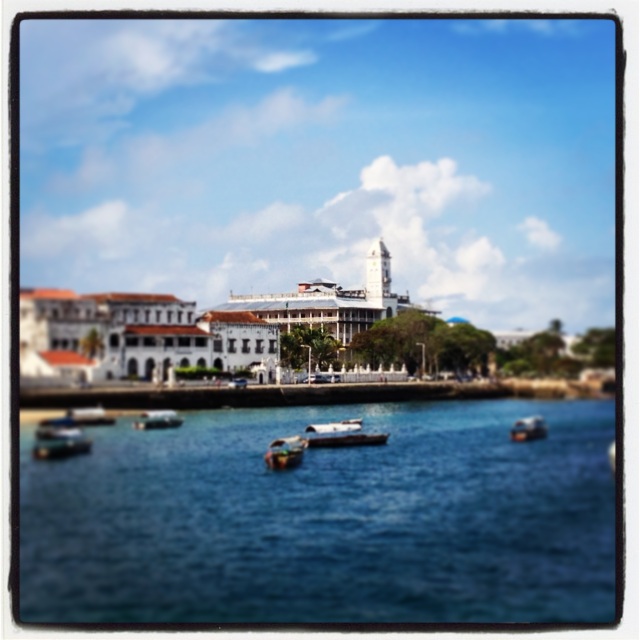
House of Wonders and Stone Town waterfront, Zanzibar

A little more than 10 years ago, I had a rare moment of clarity.  I was sitting with my second child, who was 9 months old, on my lap while my 2-year-old danced and swayed around me.  Everyone else in the Mommy and Me class was singing – with gusto – the Barney song “I Love You”.  Glancing at the clock, I realized that the week before – at exactly this time – I was being interviewed live on national TV in Peru about that country’s truth and reconciliation commission.

The stark contrast made me realize that I had chosen a life in which there might never really be a “typical” day.   Setting aside the insipidity of Barney, I realized that these small moments with my young sons were as important and valuable as the other, more high-profile moments of my career, which often takes me to exotic locales.  I learned not to compare my days.  Not to sift through the experiences of each day and measure the worth of one against another, but to see them all as a whole.  To acknowledge that each endeavor for work and for family gives me strength for the other. To realize that I am fortunate to have these varied experiences, which, woven together form the rich tapestry of my life.

So for the Weekly Photo Challenge: A Day in the Life, I am choosing to share one day that I recently spent in Zanzibar for work.  As I write this, my daughter is sitting beside me, looking at the photos and talking about them with me.  One day in Zanzibar, one day of spring break at home. Days and experiences, knitted together – so many days to be thankful for!


(See more Weekly Photo Challenge entries here.)

A Mother In A Refugee Camp

Photo by my colleague Rosalyn Park, taken during our trip to Sierra Leone in 2004

Nelson Mandela read Chinua Achebe when he was in prison and reportedly described him as a writer “in whose company the prison walls fell down.”  I read Chinua Achebe’s Things Fall Apart in college, three decades after it was written, required reading on a syllabus that only included one African author.  I read his other books later, as well as some of his essays.  The obituaries describe him as an African Literary Titan and a “towering man of letters”.  True words, but he was more than that.  Much has and will be written about Chinua Achebe as the writer that wrested writing about Africa – that vast and varied Africa, as if one writer could ever represent it – back from the West.

There is one poem by Chinua Achebe that has stayed with me for many years, not because it captures the global themes of colonialism or tradition v. Western values, but because it captures so perfectly the small moments of heartbreak and love that I myself have seen in the refugee camps I have visited in Sierra Leone and Ghana.  That Chinua Achebe could capture the small moments of human connection along with the global themes was a mark of his genius.  Upon reading the news of Chinua Achebe’s passing today, I read A Mother In A Refugee Camp again.  I share it now, my own way of  saying thank you, “like putting flowers on a tiny grave”.

A Mother In A Refugee Camp

No Madonna and Child could touch
Her tenderness for a son
She soon would have to forget. . . .
The air was heavy with odors of diarrhea,
Of unwashed children with washed-out ribs
And dried-up bottoms waddling in labored steps
Behind blown-empty bellies. Other mothers there
Had long ceased to care, but not this one:
She held a ghost-smile between her teeth,
And in her eyes the memory
Of a mother’s pride. . . . She had bathed him
And rubbed him down with bare palms.
She took from their bundle of possessions
A broken comb and combed
The rust-colored hair left on his skull
And then—humming in her eyes—began carefully to part it.
In their former life this was perhaps
A little daily act of no consequence
Before his breakfast and school; now she did it
Like putting flowers on a tiny grave.

—Chinua Achebe

16 November 1930 – 22 March 2013

In Morocco

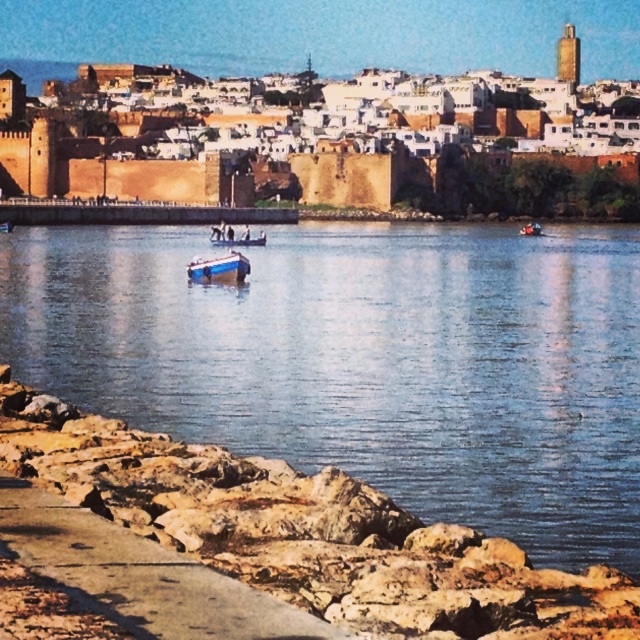
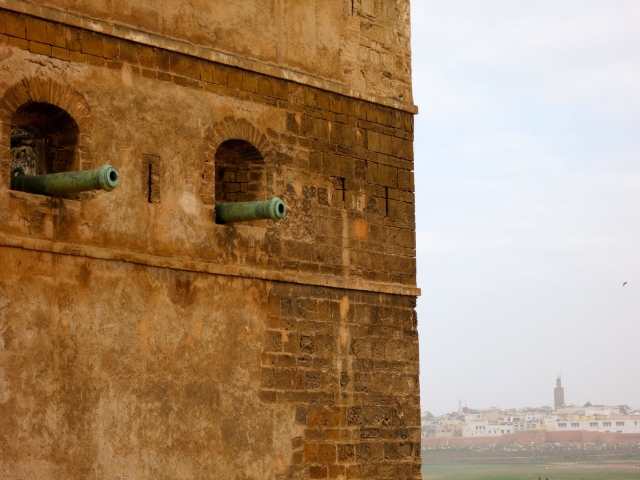
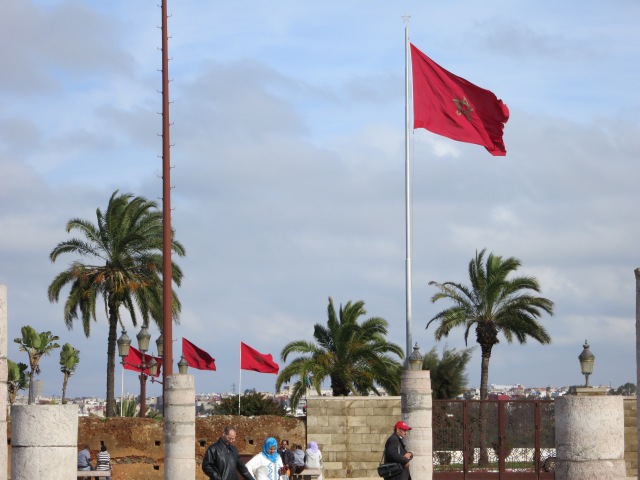
View of the Kasbah in Rabat
January 2013

There is no guidebook to Morocco, and no way of knowing, once one has left Tangier behind, where the long trail over the Rif is going to land one, in the sense understood by any one accustomed to European certainties.  The air of the unforeseen blows on one from the roadless passes of the Atlas.

I recently visited the Kingdom of Morocco for the first time.  Looking for reading material before my trip, I discovered a book about Morocco by Edith Wharton.  This came as a deep surprise to me, a longtime Wharton fan.  I thought that I had read every Edith Wharton publication in print, from her ghost stories right down to her interior design book (I wrote a paper on that one in college).  I knew, of course, that she had written some travel books; I had even read some of them.  But until I saw it listed as a free title on Kindle, I had never heard of In Morocco.  

Published in 1920 (the same year as Age of Innocence), In Morocco is widely considered the first travel guide to Morocco.  (Wharton certainly thought so, as she states, “Having begun my book with the statement that Morocco still lacks a guide-book, I should have wished to take a first step toward remedying that deficiency.”)

I’ve always admired Wharton’s  highly descriptive style, which lends itself exceptionally well to travel writing.  In Morocco is the account of Wharton’s motor trip across Morocco in the fall of 1917, at the tail end of the First World War.  Much of Morocco had become a French protectorate in 1912, so she made the trip at the invitation of the French Resident-General Hubert Lyautey.  It is no secret that Wharton was a committed supporter of French imperialism (she described herself as a “rabid imperialist”) and this comes across strongly in In Morocco.  (Unless you want read a love letter to colonialism, skip the chapter on Gen. Lyautey’s Work In Morocco.)  Equally hard to take is her paternalistic attitude towards and use of  racist terminology to describe Moroccans and their culture.

In spite of this, I enjoyed the historical perspective provided by In Morocco. More than anything,  In Morocco is a series of sketches of a place where past and present are intermingled, at a moment when the country was on the verge of change.  Wharton was very cognisant of the fact that post-war tourism would alter Morocco forever.

IMG_0111

Morocco is too curious, too beautiful, too rich in landscape and architecture, and above all too much of a novelty, not to attract one of the main streams of spring travel as soon as Mediterranean passenger traffic is resumed.

Visiting Morocco nearly 100 years after Wharton, I found it interesting to read her admiring documentation of this specific moment in time, which she has preserved in prose as solidly as if in amber.

To see Morocco during the war was therefore to see it in the last phase of its curiously abrupt transition from remoteness and danger to security and accessibility …

IMG_0112

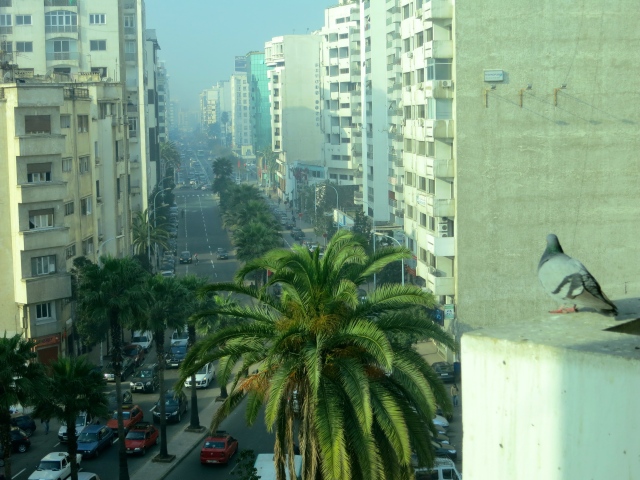
Yet I also found the Morocco of 2013 to be a place where the boundaries between past and present are still slightly blurred.  Visiting many of the same places that Wharton had visited nearly a century before, I discovered that her descriptions were, in many cases, still brilliantly apt. The following photographs were taken by me but the words were written by Edith Wharton.

Tangier

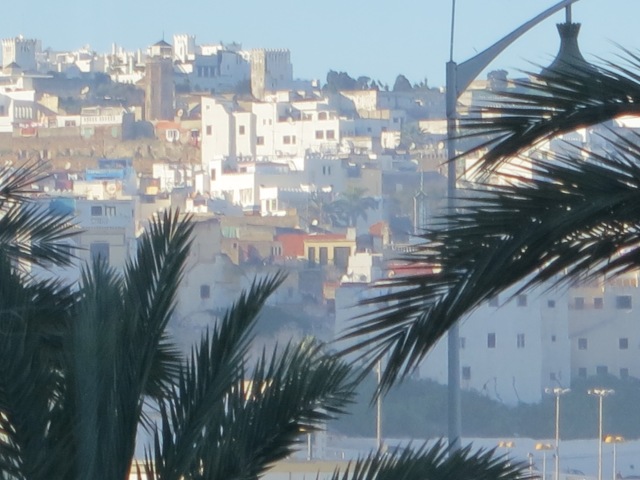
View of the Medina in Tangier

This feeling of adventure is heightened by the contrast between Tangier – cosmopolitan, frowsy, familiar Tangier, that every tourist has visited for the last forty years – and the vast unknown just beyond.

 Rabat

IMG_0099

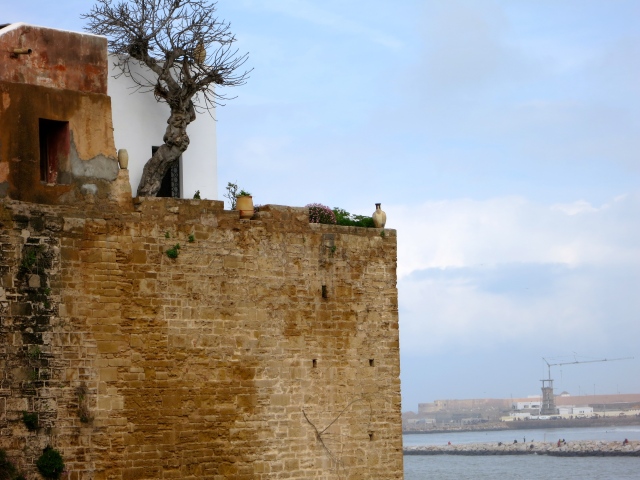
The European town of Rabat, a rapidly developing community, lies almost wholly outside of the walls of the old Arab city.  The latter, founded in the twelfth century by the great Almohad conqueror of Spain, Yacoub-el-Mansour, stretches its mighty walls to the river’s mouth.  Thence they climb the cliff to enclose the Kasbah of the Oudayas…. Great crenallated ramparts, cyclopean, superb, follow the curve of the cliff.

Kasbah of Rabat
Kasbah of Rabat

Salé the white and Rabat the red frown at each other over the foaming bar of the Bou-Regreg, each walled, terraced, minareted, and presenting a singularly complete picture of the two types of Moroccan town, the snowy and the tawny.  To the gates of both, the Atlantic breakers roll in with the boom of northern seas, and under a misty northern sky.

Kasbah in Rabat
View of Salé from the Kasbah in Rabat

It is one of the surprises of Morocco to find the familiar African pictures bathed in this unfamiliar haze. Even the fierce midday sun does not wholly dispel it – the air remains thick, opalescent, like water slightly clouded by milk.

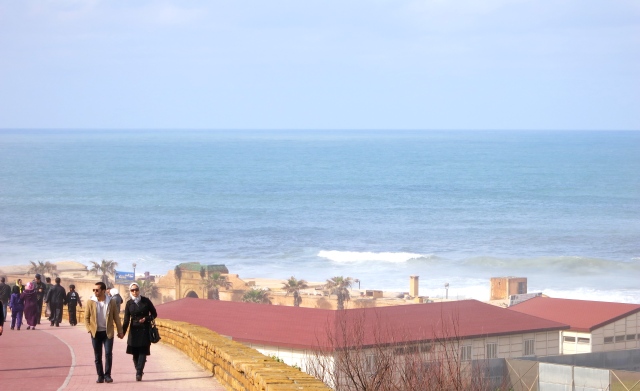
Seawalk in Rabat
Seawalk in Rabat

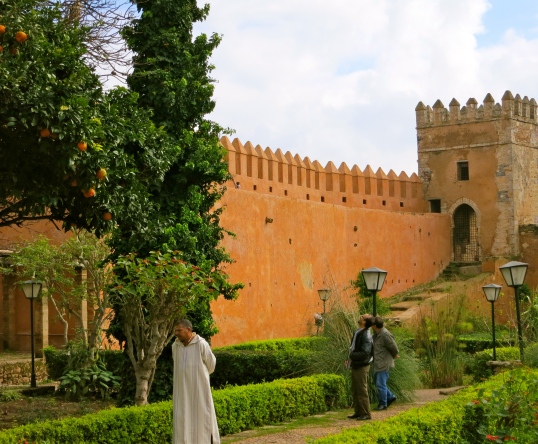
Kasbah of the Oudayas

Garden of the Oudayas

Inside the gate of the Kasbah one comes on more waste land and on other walls – for all Moroccan towns are enclosed in circuit within circuit of battlemented masonry.  Then, unexpectedly, a gate in one of the inner walls lets one into a tiled court enclosed in a traciered clositer and overlooking an orange-grove that rises out of a carpet of roses.  This peaceful and well-ordered place is the interior of the Medersa (the college) of the Oudayas.

IMG_0098

IMG_0094

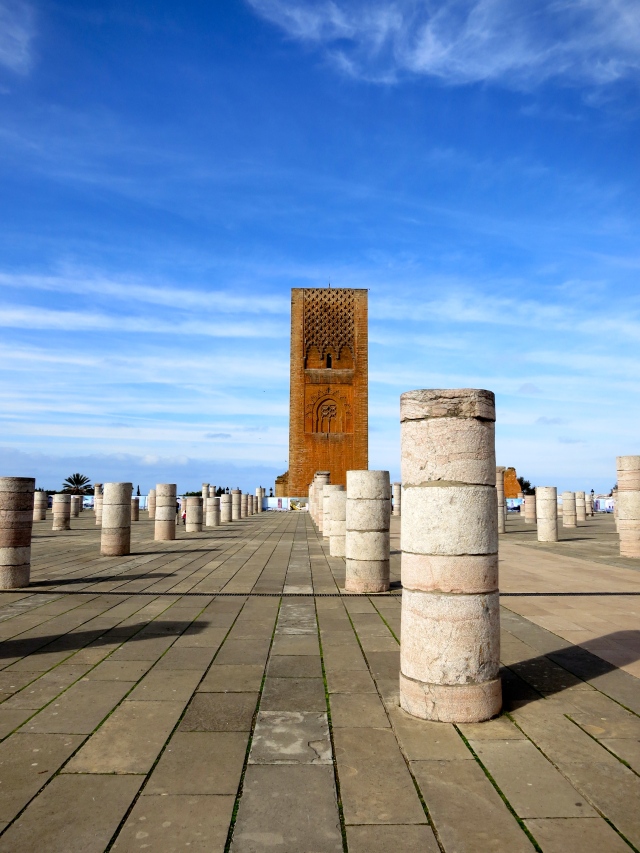
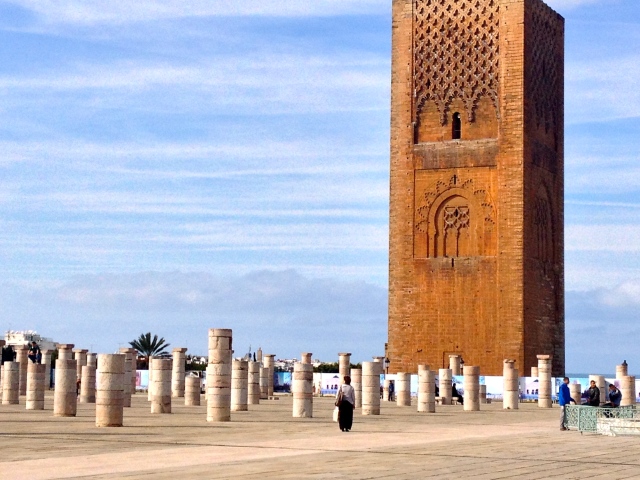
The Tower of Hassan

Tower of Hassan, Rabat

The “Tower of Hassan,” as the Sultan’s tower is called, rised from the plateau above old Rabat, overlooking the steep cliff that drops down to the last winding of the Bou-Regreg. Truncated at half its height, it stand on the edge of a cliff, a far-off beacon to travellers by land and sea.  It is one of the world’s great monuments, so sufficient in strength and majesty that until one its fellow, the Koutoubya of Marrakech, one wonders if the genius of the builder could have carried such perfect balance of massive wall-spaces and traceried openings to a triumphant conclusion.

IMG_1158

Near the tower, the red-brown walls and huge piers of the mosque built at the same time stretch their roofless alignment beneath the sky. This mosque, before it was destroyed, must have been one of the finest monuments of Almohad architecture in Morocco: now, with its tumbled red masses of masonry and vast cisterns overhung by clumps of blue aloes, it still forms a ruin of Roman grandeur.

IMG_0115

The founder of Rabat, the great Yacoub-el-Mansour, called it, in memory of the battle of Alarcos, “The Camp of Victory” (Ribat-el-Path), and the monuments he bestowed on it justified the name in another sense, by giving it the beauty that lives when battles are forgotten.

Casablanca

On the west coast, especially, where the Mediterranean peoples, from the Phenicians to the Portuguese, have had trading-ports for over two thousand years, the harm done to such seaboard towns as Tangier, Rabat and Casablanca is hard to estimate.  The modern European colonist apparently imagined that to plant his warehouses, cafes, and cinema-palaces within the walls which for so long had fiercely excluded him was the most impressive way of proclaiming his domination.

Casablanca
Casablanca

These are just a few of the words and images I found on my recent trip to Morocco.  I was in Morocco for work, however, so my own version of In Morocco will not be a guidebook or travelogue. My version of In Morocco will be a series of sketches, too, but it will the stories of people who are working to improve human rights in their country.  I am not a writer with Edith Wharton’s powers of description, but these are stories that can and should be told.

IMG_0108

Letter from Liberia

Great post by my colleague Amy Bergquist on the pro bono needs assessment work we are doing this winter through our Africa Advocacy Project in four countries: Liberia, Morocco, Cameroon and Tanzania. Amy writes about the first country our team visited – Liberia.