Weekly Photo Challenge: Companionable

Bunadsparade
photo by Katharine “Ingeborg” Spencer

This week’s WordPress Photo Challenge invites us to share a picture of a”companion” with an explanation of the choice.  In encouraging bloggers to interpret the theme broadly, the WordPress editor writes:

You might think “companion” refers to a person with whom you share experiences, but the definition is much broader:

  • A person who is frequently in the company of, associates with, or accompanies another.
  • A mate or match for something.
  • A handbook or guide.
  • A member of the lowest rank in an order of knighthood.

(The Weekly Challenge also states: If your companion is actually a low-ranking knight, you win.)

I chose this photo of myself with four (I include my daughter, even though only her blonde curls can be seen in the lower right corner) of my favorite companions.  A dear friend since childhood and former roommate, who has accompanied me though each stage of my life.  The daughter of another dear friend and my own daughter, a new generation seeking guidance as they grow into the women that they will one day be.  Another longtime friend, a leader and mentor to hundreds if not thousands of young people over the past 30 years – who just happens to also be a knight*.

These are all companions who I have met through Skogfjorden, Concordia Language Villages‘ Norwegian immersion program. This is my fourteenth summer and my ninth on staff.  As we sing in Norwegian, “Vi er kompiser på Skogfjorden!” (We are companions at Skogfjorden). This photo captures that spirit of companionship for me.

*In 2009, Tove Irene Dahl, the dean of Skogfjorden, was named a Knight (Ridder) of the First Class of the Royal Norwegian Order of Merit by His Majesty King Harald V of Norway for the advancement of Norwegian language and culture in the United States.

The Order of Merit is lower than the Order of St. Olav – does that count as a low-ranking knight?

If so, what do I win?
Weekly Photo Challenge: Rosemaling

DSC_0371

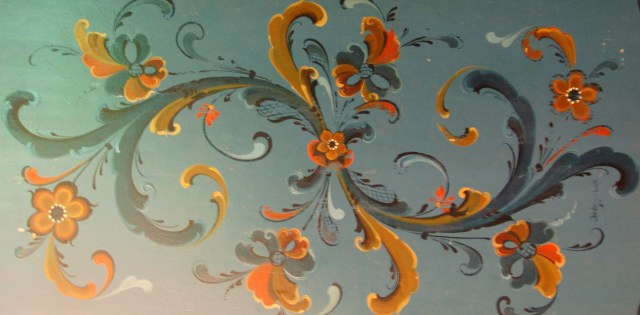
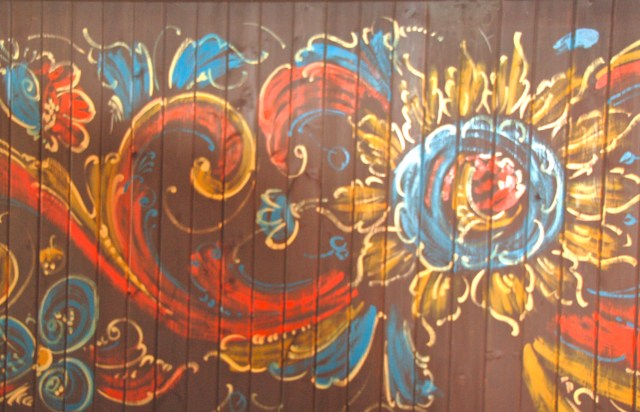
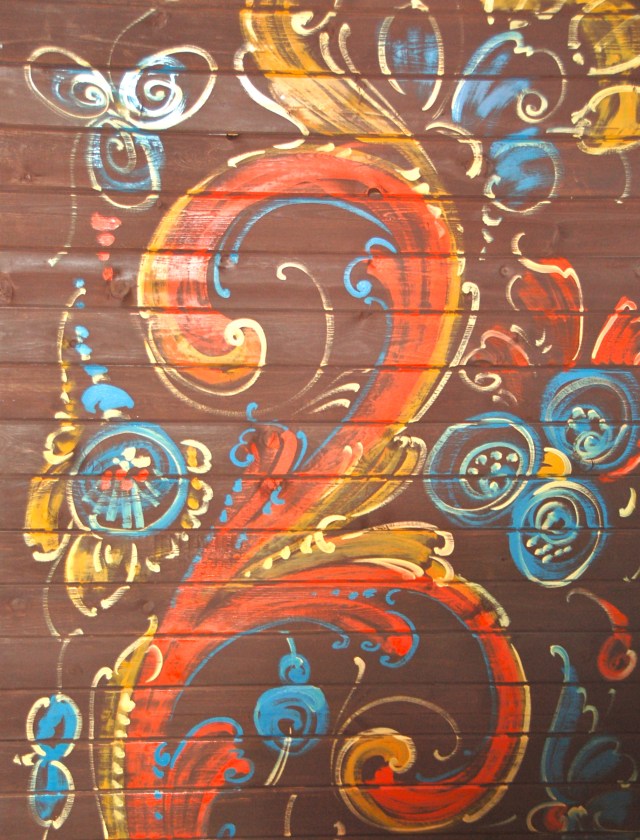
Rosemaling, the decorative folk painting of Norway, began in the low-land areas of eastern Norway about 1750.  Persons who rosemaled for their livelihood would not have been land owners but poor, city dwellers. After being trained within a “guild” they would travel from county to county painting churches and/or the homes of the wealthy for a commission of either money or merely room and board. Thus rosemaling was carried over the mountains and toward Norway’s western coast. Once farther away from the influence of the guilds, these artists tried new ideas and motifs.

DSC_0373

Soon strong regional styles developed. The Telemark and Hallingdal valleys became especially known for their fine rosemaling.Upon their exposure to rosemaling, rural folk would often imitate this folk art. Not having been taught in an urban guild, the amateur became spontaneous and expressive in his work on smaller objects such as drinking vessels and boxes.

DSC_0387

Rosemaling went out of style in about 1860-1870. Rosemaling experienced it’s revival in America in the 20th century when Norwegian-Americans gave attention to the painted trunks and other objects brought to America by their ancestors.

DSC_0370

The rosemaling pictured above were painted by Sigmund Aarseth.

They decorate the walls and ceiling of Gimle (the dining hall) at Skogfjorden,Concordia College’s Norwegian Language Village in Minnesota.

History from Rosemaling.org

To see other interpretations of the theme Curves, click here.

Weekly Photo Challenge: The Sign Says

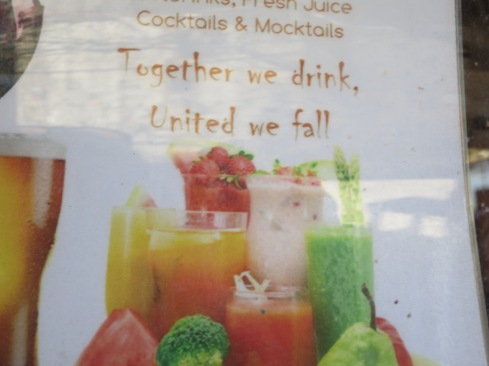
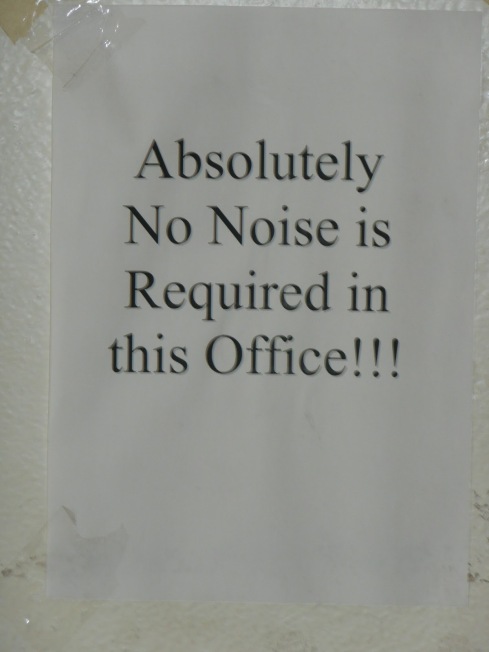
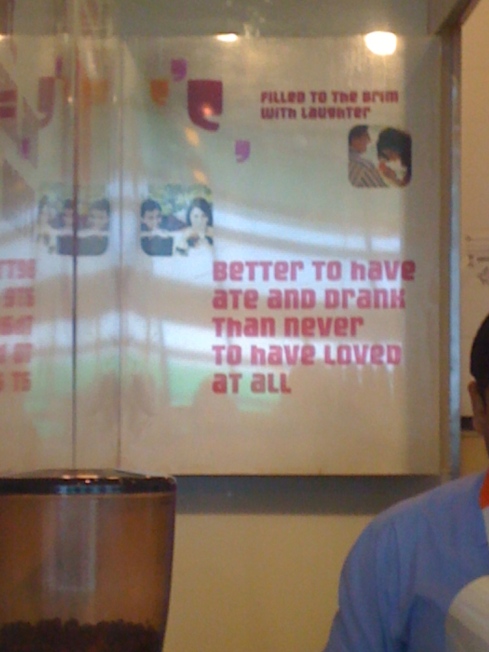
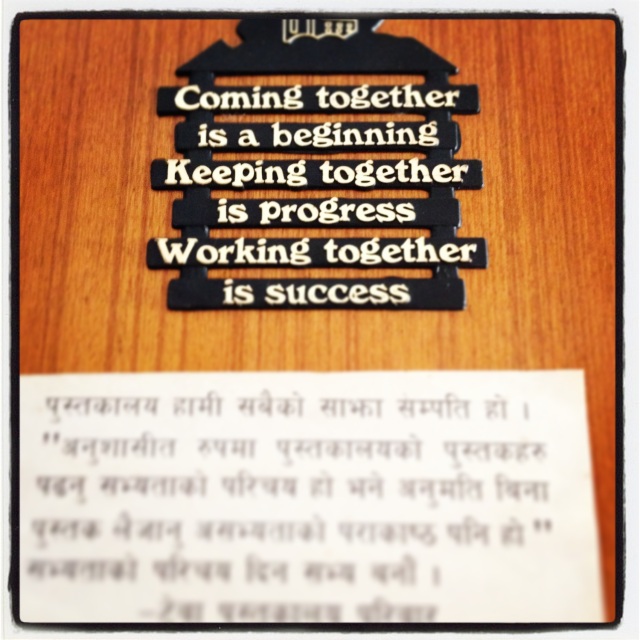
The WordPress Weekly Photo Challenge: The Sign Says this week hit right smack dab on one of my favorite hobbies.  Wherever I go in the world, I take pictures of interesting signs that I see. Here is a sampling of my collection:

Some are hilarious signs I have spotted in bathrooms.  (And it’s worth noting that I have been accidentally locked in a bathroom on every continent but Australia and Antarctica.)

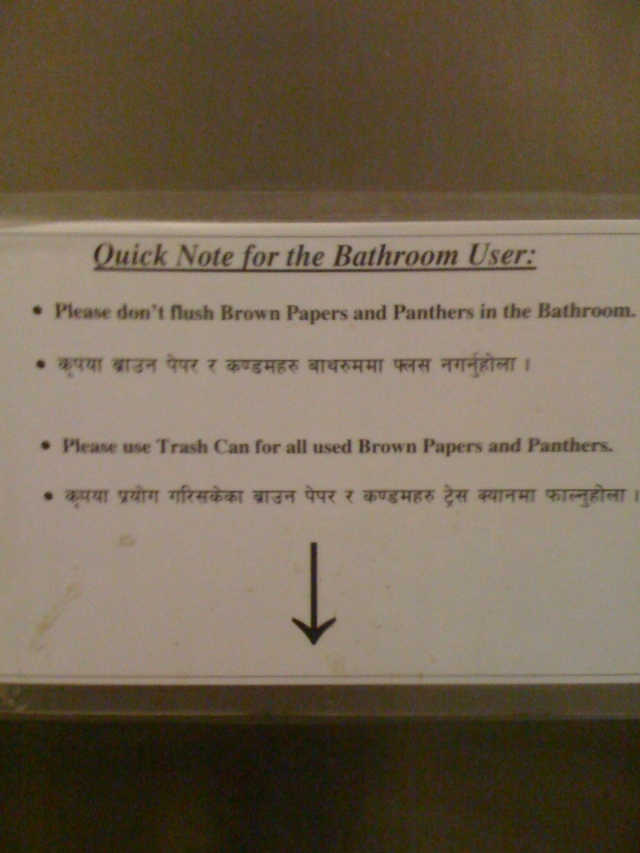
Question:  To flush or not to flush?

To flush or not to flush?  That is the question.
To flush or not to flush? That is the question.
Kathmandu, Nepal

Answer:  DO NOT FLUSH!  DO NOT FLUSH! PANTHERS IN THE BATHROOM!

IMG_0207
Kathmandu, Nepal

USE THE TRASH CAN FOR ALL PANTHERS! I REPEAT:

Taj Mahal, India (the less glamorous part of the Taj Mahal, that is)

At times, signs can be very clear and direct.

Dar es Salaam, Tanzania
You do want your clothes to be CLEAN, right?
Dar es Salaam, Tanzania

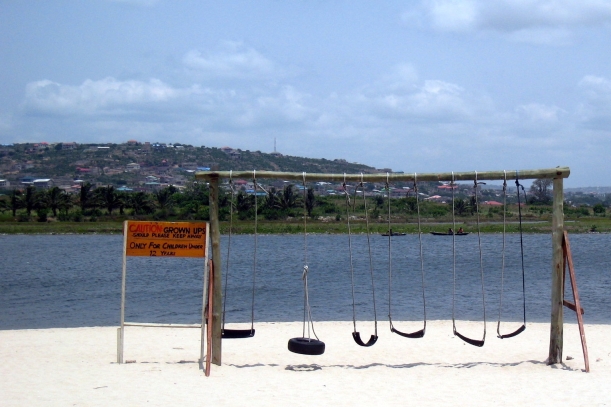
No Grown Ups! Accra, Ghana

CAUTION!  GROWN UPS!

Accra, Ghana

IMG_0404

Relax.

Minneapolis, MN USA

 Other times?  Well, everyone could use a good editor.

What does this even mean? Zanzibar, Tanzania
What does that even mean?
Zanzibar, Tanzania
Monrovia, Liberia
Monrovia, Liberia
Indira Ghandi Airport Delhi, India
Indira Ghandi Airport
Delhi, India

But my favorite signs are those that inspire me.

Kathmandu, Nepal
In the library of a women’s empowerment organization
Kathmandu, Nepal


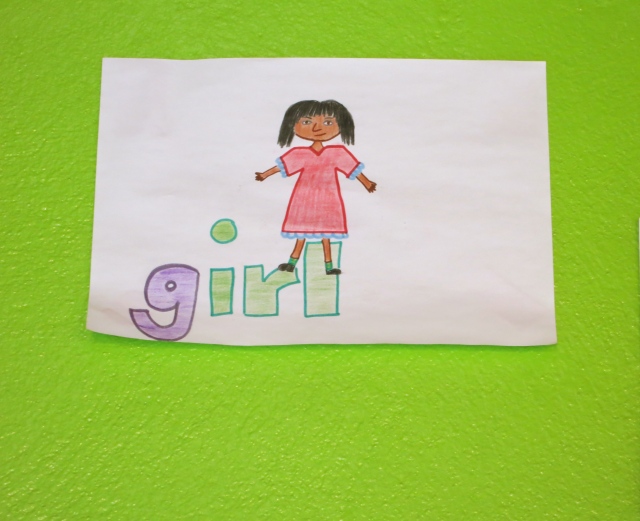
In the pre-kindergarten classroom of a schoolYaounde, Cameroon
In the pre-kindergarten classroom of a school
Yaounde, Cameroon
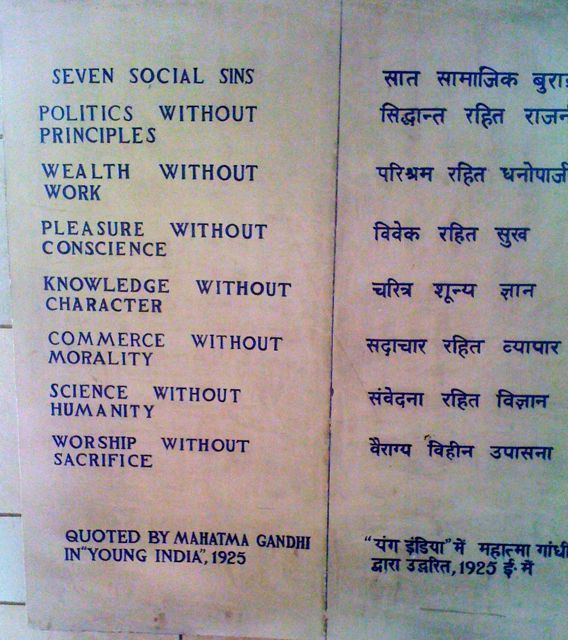
Raj Ghat Ghandi Memorial New Delhi, India
Raj Ghat Gandhi Memorial
New Delhi, India
Minneapolis, MN USA
Minneapolis, MN USA

Escape to Hydra

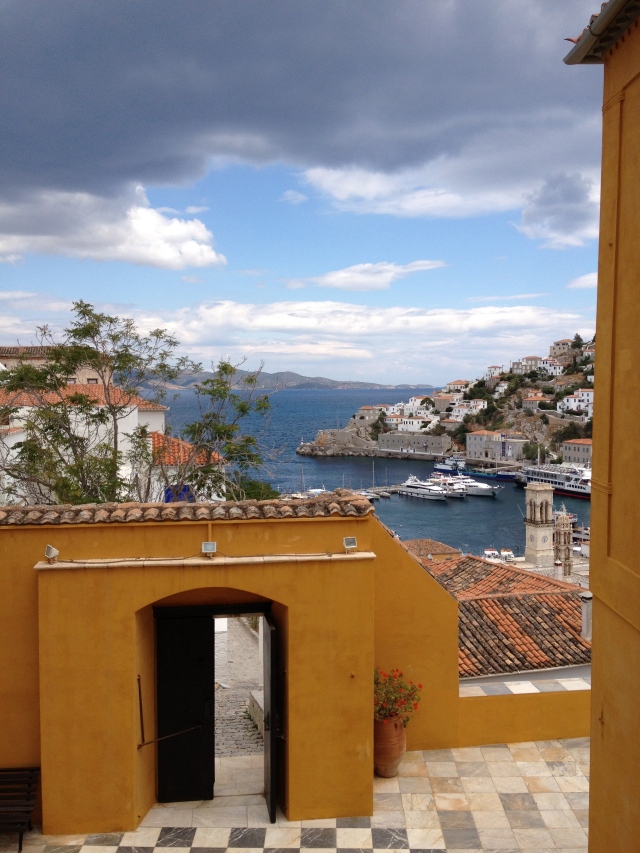
Looking down at Hydra Port, Greece
Looking down at Hydra Port from the Koundouriotis mansion.

One year ago today, I stepped off the ferry from Athens to spend a long weekend on the island of Hydra with my parents, brother and sister-in-law. No kids, no work – it was a true escape! Yδρα, pronounced [ˈiðra] in modern Greek) is one of the Saronic Islands of Greece, located in the Aegean Sea between the Saronic Gulf and the Argolic Gulf. It is separated from the Peloponnese by narrow strip of water. It’s an easy ferry ride, only a couple of hours from Athens. The island has a storied maritime tradition and became a center of power and wealth in the 18th century due to the shipping industry. Hydra played a major role in the Greek Revolution against the Ottoman Empire in 1821.

IMG_0245
The flag of Hydra (on the right) reflects the maritime history of the island.

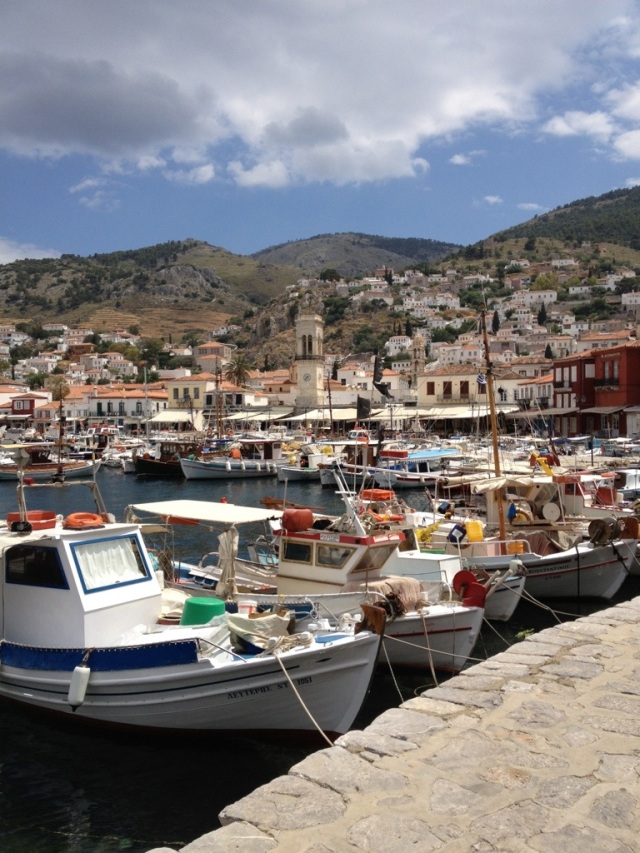
There is one main town, known simply as Hydra Port, with a population just shy of 2,000.  Tourists generally arrive by cruise ship, ferry or yacht. Most only come for the day and don’t venture far from the shops and restaurants on the harbor.

Harbor at Hydra Port

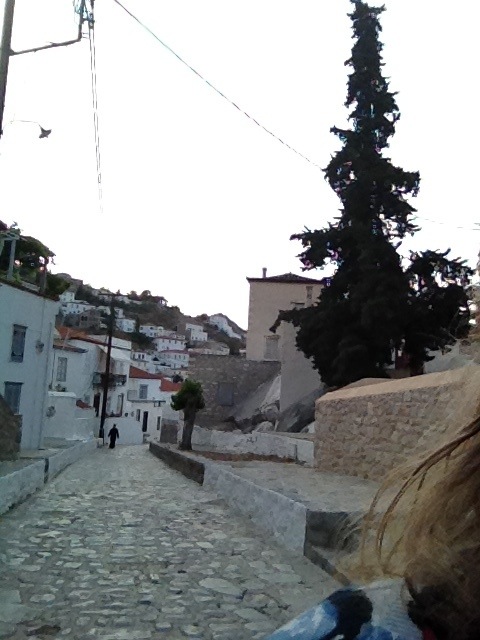
Steep stone streets lead up and outwards from the harbor area. Most of the local residences on the island are located on these streets.

20130517-191507.jpg
Sneaky shot of the priest walking behind me up the street.

I was told that the only motorized vehicle on the island is the town’s garbage truck.Instead of cars, the locals use donkeys. My parents spotted donkeys hauling everything from a refrigerator to a coffin. (This guy was eating his lunch.)

20130517-191405.jpg

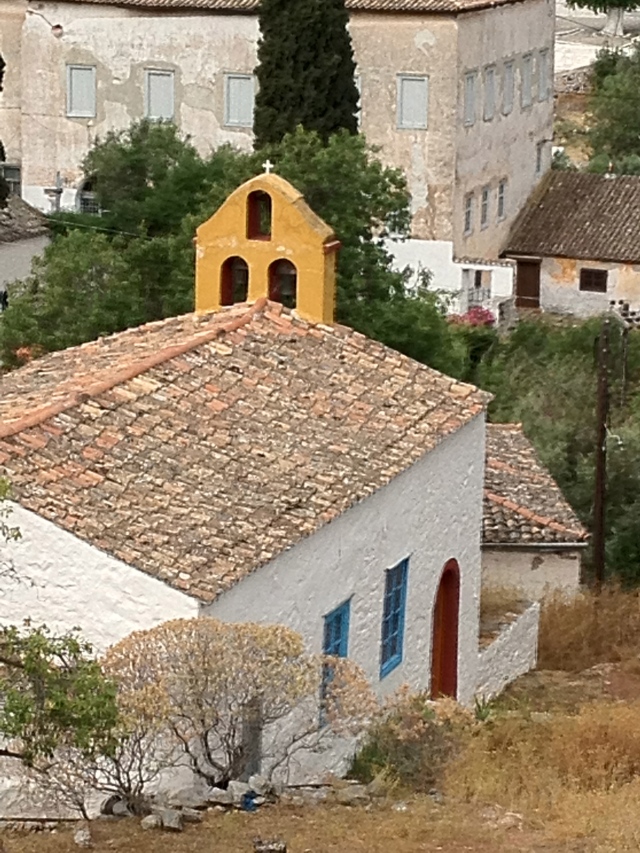
There are many churches and monasteries on Hydra.  Unfortunately, I visited a few weeks too late to celebrate the Greek Orthodox Easter.  I loved the colors on this little church, which I could see from the window of the house we stayed in.

IMG_0237

I thought perhaps that the island was named after the Hydra in Greek myths, the gigantic monster with nine heads that grew back when you cut them off. The destruction of Hydra was one of the 12 Labors of Hercules, but it turns out that it has no relation to the island. In ancient times, the island was known as Hydrea (Υδρέα, derived from the Greek word for “water”), which was a reference to the springs on the island. Ironically, the springs have dried up and water now arrives by ship to supplement the rainfall captured in cisterns.

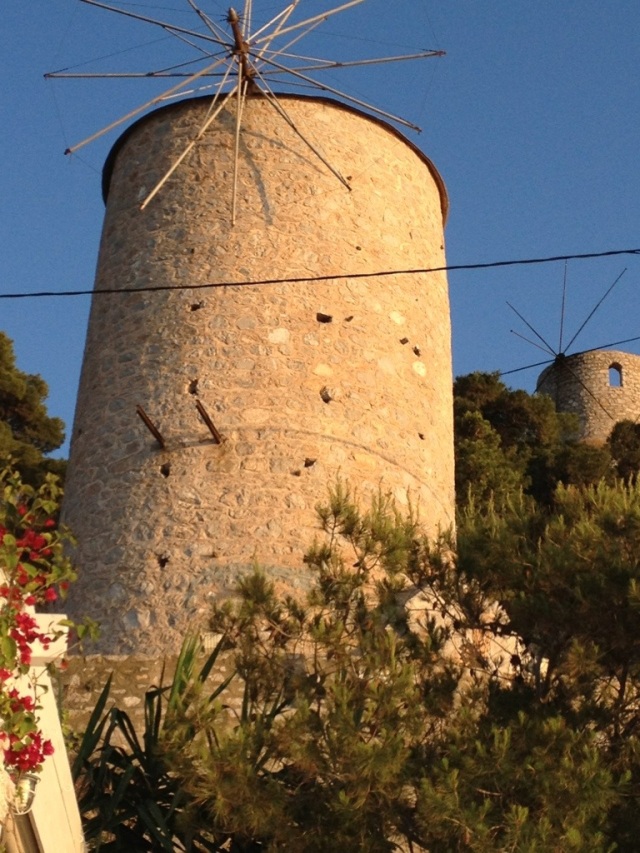
Hydra is knownfor its windmills.

Ancient windmill on Hydra

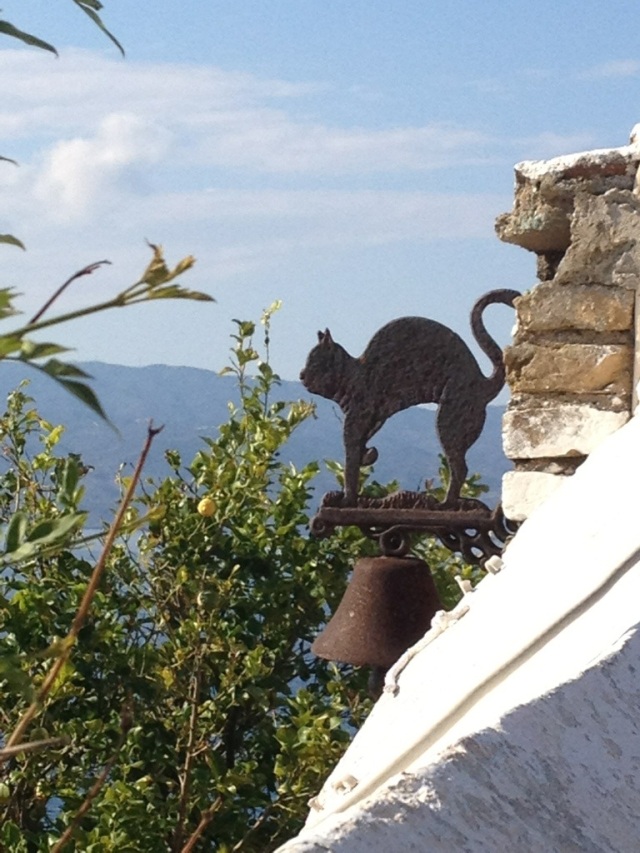
Hydra is also known for its large population of feral cats.

20130517-174026.jpg

A point of pride, I presume!

20130517-191320.jpg

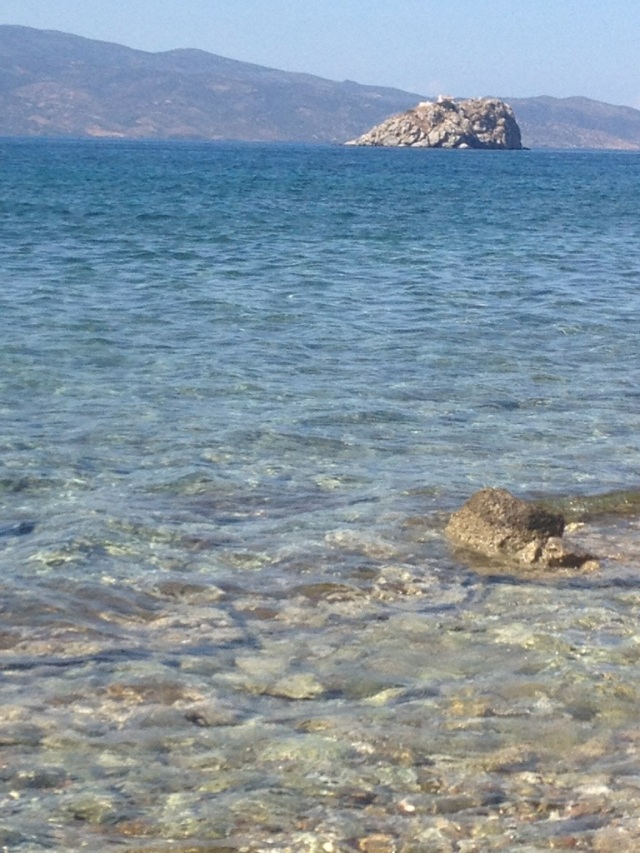
One thing that Hydra is not known for is its beaches. The travel sites all say there is only one decent beach on the island.  While it’s true that the beaches are rocky, it also means that the water is crystalline; snorkeling is fantastic on Hydra!  Just a few yards from shore, the ground drops away dramatically and you can see amazing fish, sea urchins, and other sea creatures.

Rocky shores mean crystal clear water for snorkeling.

Going to a new place and learning about its history and people – that’s my idea of a great escape!

This post is a response to the Weekly Photo Challenge: Escape. Read more entries here!

(I also wrote a post about human rights in Greece.  Check it out! The Other Greek Crisis: Xenophobia and Mass Detention.

Weekly Photo Challenge: From Above

20130503-154859.jpg

I know up on top you are seeing great sights,

But down here on the bottom,

We too should have rights.

                                                                                                           – Dr. Seuss, Yertle the Turtle  

This post is in response to the WordPress Weekly Photo Challenge: From Above.  Click on the link to see more!

Weekly Photo Challenge: UP

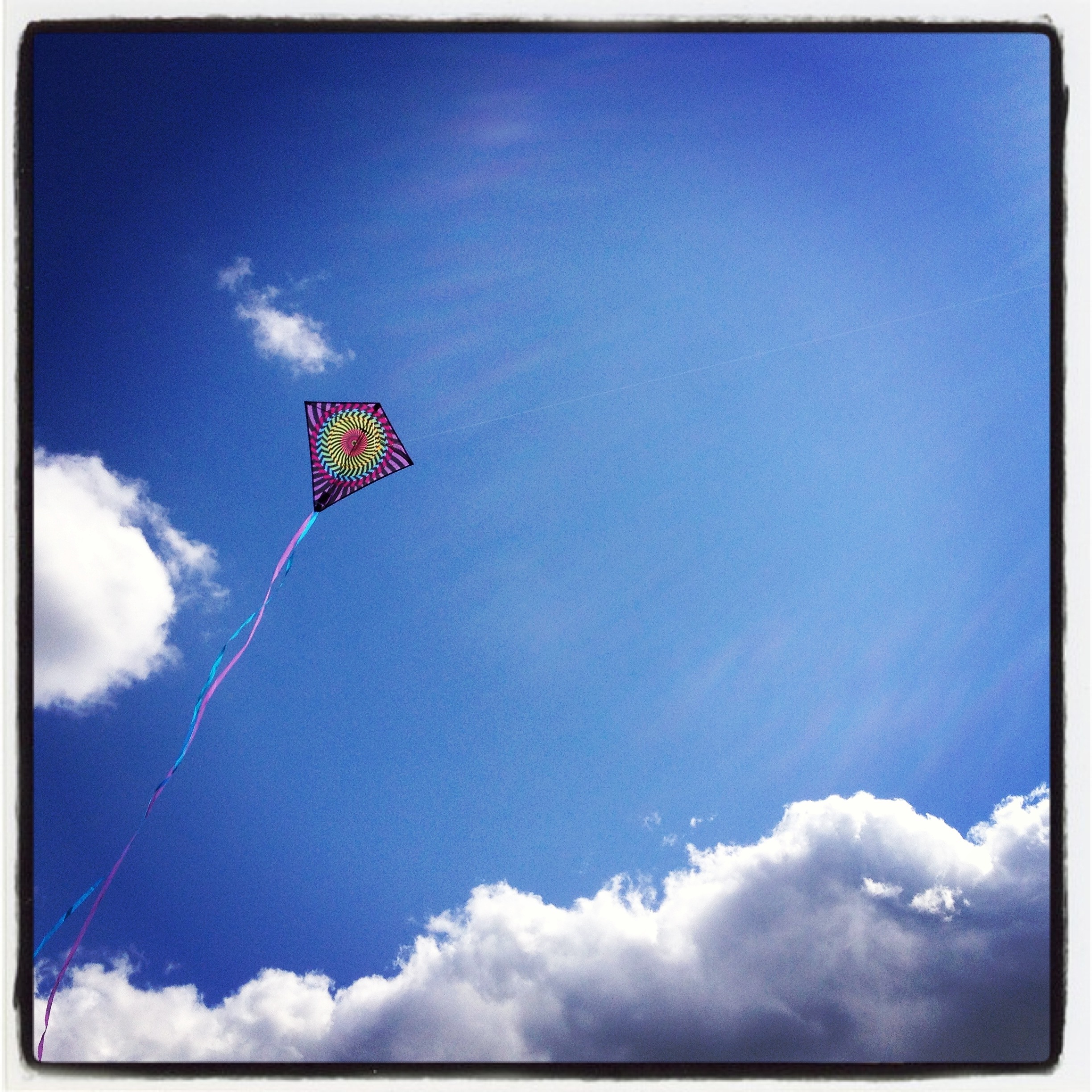
20130419-112213.jpg

“True courage is like a kite;

a contrary wind raises it higher.”

-John Petit-Senn

Swiss poet and satirist

(1792–1870)

See more photos from the challenge theme UP here.

A Change Is Gonna Come

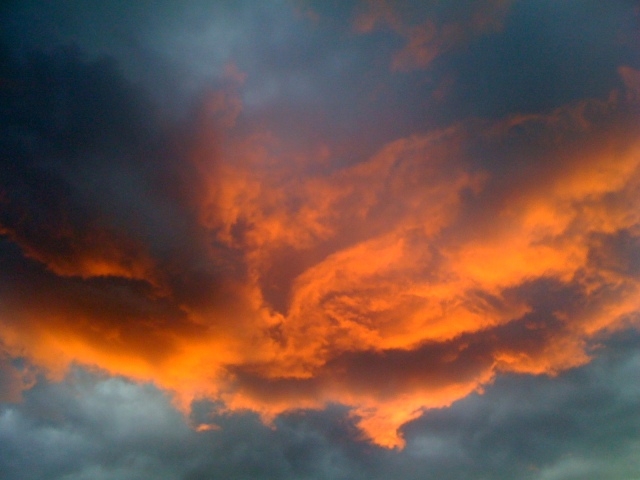
Sunset after a storm in the Sandwich Ridge mountains, New Hampshire
Sunset after a storm in the Sandwich Ridge Mountains, New Hampshire

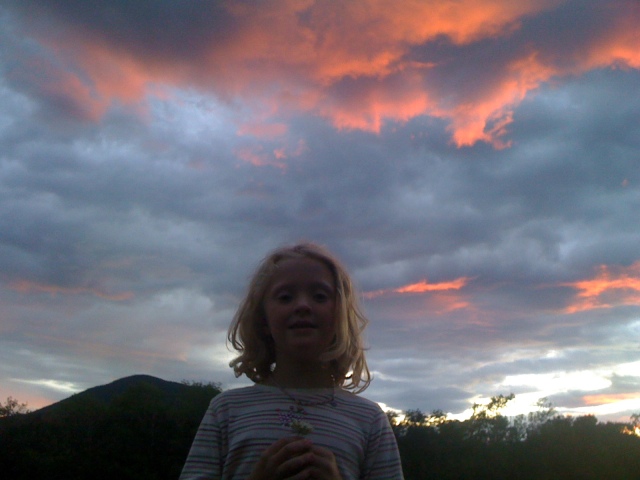
I took this photo last year during a family vacation in Center Sandwich, New Hampshire.  A thunderstorm raged all afternoon, but just as we were finishing dinner the storm suddenly ended.  Three generations of extended family went out into the still-damp field to watch the sunset reflected on the lifting storm clouds.  As often happens in the mountains, it was a dramatic change.  At the time, and ever since, the play of setting sun on passing thunderheads makes me think of Sam Cooke and “A Change is Gonna Come“.  Recorded in January 1964, the song became one of the greatest anthems of the Civil Rights Movement.

A Change is Gonna Come

I was born by the river in a little tent.
Ohh and just like the river,
I’ve been running ev’r since.
It’s been a long time, a long time coming
But I know a change gonna come, oh yes it will
It’s been too hard living, but I’m afraid to die
‘Cause I don’t know what’s up there, beyond the sky
It’s been a long, a long time coming
But I know a change gonna come, oh yes it will.
I go to the movie and I go downtown.
Somebody keep tellin’ me don’t hang around.
It’s been a long, a long time coming
But I know a change gonna come, oh yes it will.
Then I go to my brother
And I say brother help me please.
But he winds up knockin’ me
Back down on my knees, ohh
There have been times that I thought
I couldn’t last for long
But now I think I’m able to carry on
It’s been a long, a long time coming
But I know a change is gonna come, oh yes it will.

A singer who blurred the lines between gospel, R&B and pop, Cooke was reportedly inspired to write “A Change is Gonna Come” by Bob Dylan and “Blowin’ In The Wind”.  While on tour in October 1963, Cooke and his band were turned away from a “whites only” motel in Shreveport, Louisiana where they had a reservation. When they protested,  they were arrested and thrown in jail for disturbing the peace.   Not long after, Sam Cooke wrote “A Change is Gonna Come”
“Sam as a writer saw himself almost as a reporter,” said biographer Peter Guralnick said in one interview.  “He took all of those experiences[of racism],” Guralnick says, “but he enlarged upon them and he broadened them to the point that the song… becomes a statement of what a generation had had to endure.”
The song was only a modest commercial success and Sam Cooke only performed it live once.   Yet “A Change Is Gonna Come” has become an iconic symbol of triumph over adversity.  It has been called Sam Cooke’s legacy and “heralded as his magnus opum”.  In 2005, it was voted number 12 in Rolling Stone magazine’s 500 Greatest Songs of All Time.  It has also been selected National Public Radio (NPR) as one of the 300 most important songs.  In 2007, it was added by the Library of Congress to the National Recording Registry.  Bettye LaVette performed “A Change Is Gonna Come” with Jon Bon Jovi, at the Lincoln Memorial during the first inaugural concert for President Obama, introducing a new generation to Sam Cooke.   (Watch the video here .)
Sam Cooke died on December 11, 1964 in a shooting at a Los Angeles motel. He was 33 years old.
***
Today is a gray and cold day where I live – a day on the tipping point between winter and spring.   To fight the doldrums, I took my two youngest children swimming at the our local YMCA pool.  As I looked at all the kids laughing and playing in the pool, the splashing water sparkling on skin that was black and white and every shade in between, I realized that this was a scene that wasn’t even possible in most of the United States when Sam Cooke wrote “A Change Is Gonna Come” in 1964.  And while we still have a ways to go, Sam Cooke was correct.  The storm clouds will pass and the sun will come out.
“But I know a change is gonna come, oh yes it will.”
IMG_0365
This post is a response to the Weekly Photo Challenge: Change.  You can see more responses here.

Weekly Photo Challenge: The Colors of Cameroon

Deciding on just one photo for this week’s Photo Challenge theme COLOR was a real challenge.

Deciding on just one COUNTRY was even harder!

Here is my second response to the challenge.

Enjoy the warm and vibrant colors of Cameroon!

Bonus!

The bright colors of a primary school in a town near Yaounde.

Some of my more colorful Weekly Photo Challenge posts:

Weekly Photo Challenge: Color in the Kathmandu Valley

One Day in Zanzibar

Weekly Photo Challenge: Home

Weekly Photo Challenge: Geometry/γεωμετρία


Weekly Photo Challenge: Color In The Kathmandu Valley

Offerings
Offerings at Pashupatinath Temple, one of the most significant Hindu temples of Lord Shiva

Deciding on a photo for this week’s Photo Challenge theme COLOR was a real challenge.  Nepal is one place where, in my experience, color continually surprises.  Nepalis often clothe themselves in bright colors, which continually provides the eye with pops of unexpected color. Color in the Kathmandu Valley particularly surprises because of the tremendous contrast between the duns and browns of polluted, urban Kathmandu and the bright, rich colors of the surrounding countryside.  Sometimes you see things better – appreciate things more – through contrast.  Today I’m sharing a gallery of photos, taken in Kathmandu and the Kathmandu Valley, that show the contrast of color.  Enjoy!

One Day in Zanzibar

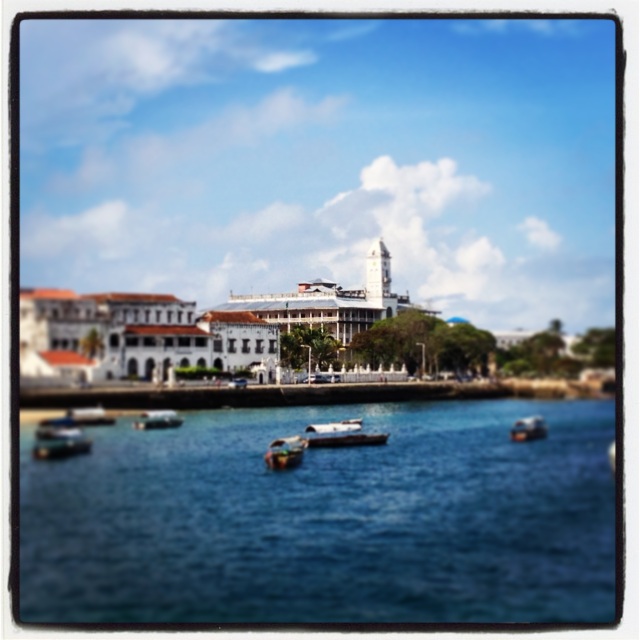
House of Wonders and Stone Town waterfront, Zanzibar

A little more than 10 years ago, I had a rare moment of clarity.  I was sitting with my second child, who was 9 months old, on my lap while my 2-year-old danced and swayed around me.  Everyone else in the Mommy and Me class was singing – with gusto – the Barney song “I Love You”.  Glancing at the clock, I realized that the week before – at exactly this time – I was being interviewed live on national TV in Peru about that country’s truth and reconciliation commission.

The stark contrast made me realize that I had chosen a life in which there might never really be a “typical” day.   Setting aside the insipidity of Barney, I realized that these small moments with my young sons were as important and valuable as the other, more high-profile moments of my career, which often takes me to exotic locales.  I learned not to compare my days.  Not to sift through the experiences of each day and measure the worth of one against another, but to see them all as a whole.  To acknowledge that each endeavor for work and for family gives me strength for the other. To realize that I am fortunate to have these varied experiences, which, woven together form the rich tapestry of my life.

So for the Weekly Photo Challenge: A Day in the Life, I am choosing to share one day that I recently spent in Zanzibar for work.  As I write this, my daughter is sitting beside me, looking at the photos and talking about them with me.  One day in Zanzibar, one day of spring break at home. Days and experiences, knitted together – so many days to be thankful for!


(See more Weekly Photo Challenge entries here.)