12 1/2 Clichés I Want My Kids to Live By

IMG_2110

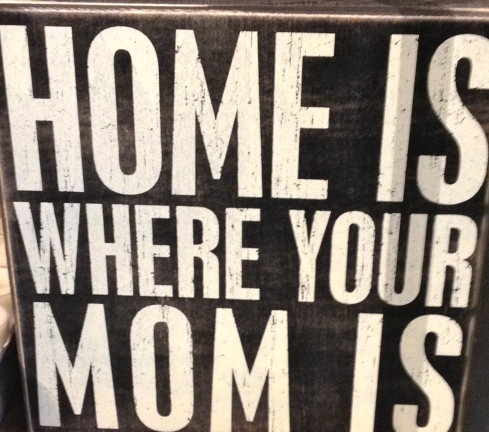
You’ve heard ’em all before. Clichés are a popular form of expression used throughout the world.  There are many sayings that are so overused that we barely even notice them anymore.  I started to think about clichés recently because of The Loud Talking Salesman guy who works in the office next to mine.  He seems to speak entirely in clichés. The wall must be thin, because all day long I hear him on the phone with clients telling them that “at the end of the day” “it’s a win-win situation” etc etc.   (I’ve never met him, but if I ever do, I’ve already planned what I’m going to say:  “Working hard?”  To which he will most certainly reply, “Hardly working!”)

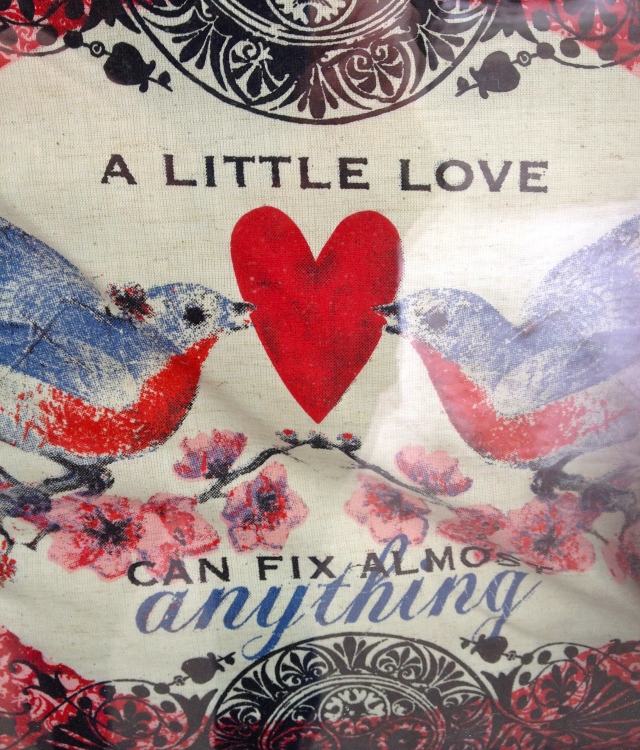
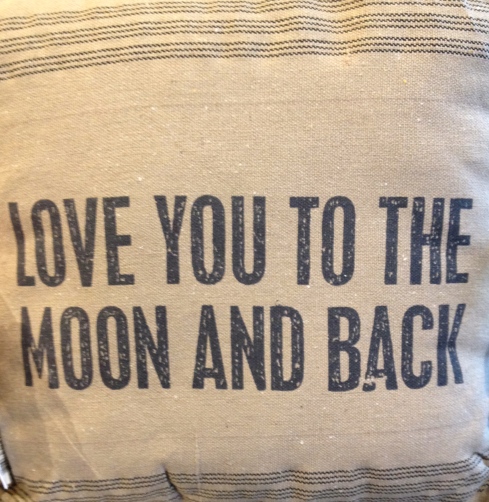
Once I started actually paying attention clichés, I noticed that we are not only constantly verbally but also visually blasted with them.  Clichés are plastered all over the place, on everything from bumper stickers to throw pillows to Pintrest. Some clichés are silly or sappy or just plan wrong.  But if you stop and think about it, some of them make a whole lot of sense.

Many clichés are, in fact, the moral equivalent of Tootsie Pops – they have a sweet, chewy truth at their center.  Some of them are actually pithy, shorthand statements of deep wisdom.   Some clichés embody true lessons about living an ethical, fulfilling, righteous and joyful life in community with other humans.  In some ways, these clichés are shorthand for the life lessons that I am trying to teach my children so that they will grow up to be citizens of the world, fully empowered to exercise both their rights and their responsibilities.

So on the theory that “The way we talk to our children becomes their inner voice,” I decided to write down some of the clichés that I want my kids to actually remember and use when I’m no longer around to nag them.

“From those to whom much is given, much is expected.” 

One of the most misquoted sayings of all time, I’ve seen this clichés attributed to everyone from Voltaire to Bill Gates’s mom.  While  John F. Kennedy did say,  “For of those to whom much is given, much is required,” the saying actually comes from the Parable of the Faithful Servant (Luke 12:48) in the Bible.  “To whomever much is given, of him will much be required; and to whom much was entrusted, of him more will be asked.”

The point for my children is this – you have been blessed with intelligence, a loving family, comfortable home, health and so much more.  You each have different talents and strengths.  It is your responsibility to use  your gifts not just for your own benefit, but also to help others.

“You are what you eat.”

If you eat garbage, you feel like garbage.  I’m serious – eat your fruits and veggies, kids!
IMG_0475

“Think before you speak.”

Or send an email or post something through social media.  Count to 10 in your mind before you open your mouth.   Write it out, but wait until the morning to send that email.  Hurtful words, once said, are hard to take back.  Of course, the corollaries to this cliché are:

“If you can’t say something nice about someone, don’t say anything at all.”

and  

“If you are thinking something nice about someone, go ahead and say it.”

OK, that last one is technically not a cliché since it is not overused.  I count it as half cliché since I made it up myself when I was 18.  I was a camp counselor and I lived in a cabin with another counselor that I didn’t get along with particularly well.  But one day, when I was brushing my teeth, I heard her singing in the shower.  She had a beautiful voice that I had never noticed.  As I brushed my teeth, I remember thinking that I should just tell her.  Why keep those nice thoughts to myself just because I we didn’t like each other?  It was hard for me, but I did tell her.  I was surprised how appreciative she was at the compliment.  And while we never became friends, we did get along fine for the rest of the summer.

“Be the change you want to see in the world.”  

Don’t just sit around wishing or waiting for things to change things.  YOU can create change yourself through your own actions.  (This quote is usually attributed to Mahatma Gandhi, although there is no reliable evidence that he actually  said it.  Gandhi did say “If we could change ourselves, the tendencies in the world would also change. As a man changes his own nature, so does the attitude of the world change towards him. … We need not wait to see what others do.”)

It’s worth pointing out that Dr. Seuss wrote the same thing more directly in The Lorax: “Unless someone like you cares a whole awful lot, Nothing is going to get better. It’s not.”

“Don’t Postpone Joy”  

No, I don’t mean the “go ahead and buy those really expensive shoes to make yourself happy” kind of joy (although it is important to treat yourself somtimes.  I mean the “Daddy quit his job and moved to Minneapolis to be with me”  kind of joy.   Because your Daddy did do that.  He didn’t have a dramatic boombox scene like Lloyd Dobler in Say Anything, but it was the same kind of going after love and joy thing. (This reminds me to add Say Anything to my list of Movies I Want My Kids to See.)

And while we are on the subject:

‘Tis better to have loved and lost, Than never to have loved at all.  

I know that this one is often up for debate, but I think it is true.  Even if your heart ends up getting broken in the end, the experience of loving another is worth it.  It is worth taking a risk.
IMG_2117

“The best way out is always through.”

Robert Frost is credited with this one.  Rather than avoiding a problem,  it is always best to confront it directly.  You can spend more energy fretting about it than it would take to just deal with it.  In the long run, it is less painful to just do what you need to do to get through it.

“A good laugh and a long sleep are the two best cures for anything.”

I don’t have much to say about this one other than I believe it in, deep down in my bones.  The same goes the the next one:

“Speak the truth, even if your voice shakes.”

speak

“Better late than never.”

It’s never to late to fix past wrongs.  Remember Darth Vader and what happens at the end of Star Wars Episode VI?  Redemption.  But it is also never to late to go down a different path.  Every day has the potential to be a fresh start.  As George Eliot wrote,  “It is never too late to be what you might have been.”

“Always look on the bright side of life.”

It’s been my experience that a positive attitude really does help you in life.  Everyone gets down and has rough patches; that’s perfectly understandable.  You don’t have to be cheerful all the time.  But in the macro sense, try to be an optimist.  It’s a worldview that will get your farther in the long run.  As Sir Winston Churchill once said, “A pessimist sees the difficulty in every opportunity.  An optimist sees the opportunity in every difficulty.

 TO BE CONTINUED …

I’ve got more clichés I want my kids to live by, but I’d love to hear from others about clichés that hold important life lessons for them.   I will end with, not a cliché, but a quote from A. A. Milne.  Christopher Robin is talking to Winnie-the-Pooh and he says (in your mother’s voice):

“Promise me you’ll always remember:

You’re braver than you believe,

and stronger than you seem,

and smarter than you think.

P.S. Also remember:

IMG_2113

Rainbow Looming Our Way To Gender Equality

IMG_0820

There are little plastic rubber bands all over our house.  On my way upstairs this morning, I noticed them strewn on the stair treads like colorful flower petals after a spring storm.  That’s because my 11 year-old son spent more than an hour yesterday at the top of the stairs, “where the light is good”, perfecting his starburst bracelet on the Rainbow Loom.   Technically, it’s his 8 year-old sister’s, but his Rainbow Loom will be arriving tomorrow via Amazon Prime.  He used some of his Christmas money to buy one for himself.

Anyone with kids in elementary or middle school will understand what I’m talking about, but this is something worth talking about even if you don’t have kids.   The Rainbow Loom has been popular for months. What is striking for me as a parent, however, is that this is a toy that is equally popular with both boys and girls.  Of the more than $3 million in sales since August, almost half of the Rainbow Looms reportedly were purchased for boys.

I first noticed the Rainbow Loom’s gender-neutral popularity last month at a PeeWee hockey tournament.  Since the tournament was out-of-town, the team and their families were all staying at the same hotel.  I noticed that all of the younger siblings – especially the boys – were prodigious Rainbow Loomers.   A group of younger brothers, all 9 and 10, were Rainbow Looming by the pool.  Later that night, they were Rainbow Looming at the rink before the game.

“Do the guys on your team like to Rainbow Loom, too?”  I asked my son.  He’s one of the youngest on his PeeWee team; most of the boys are already 12.

“Sure,” he said.  “But we didn’t have much time for it this weekend. You know, because we had to focus on hockey.”

Before my oldest son was born 14 years ago, I thought I could raise my kids in a gender-neutral way.  I had a wide range of toys on hand for him to choose from, including a baby doll.  But he and his younger brother showed no interest at all in playing with dolls or stuffed animals or Barbies or anything like that. When I caught them drop-kicking the doll, I finally gave it away to a more loving home.   By the time our daughter was born, we had no toys left that could be characterized as stereotypically female.   That is, until the day that I found her cradling a Darth Vader action figure.  She was kneeling next to a bowling pin that she had put to bed with a Kleenex for a blanket.   The premise of my nurture v. nature theory having been blown out of the water, I took her to Target and let her pick out a baby doll.  At eight, she is still taking excellent care of her “family”.

The bigger lesson for me was that kids will choose to play with what is interesting to them.   My kids inherited a substantial Hotwheels collection from my brother, but the boys never played with them much.   My daughter has always enjoyed playing with the cars, although she often plays with them differently.   Sometimes I’ll find them all lined up by color, for example.  Instead of making car noises like “Vroom! Vroom!”, the conversations I’ve overheard coming out her room are about relationships.  “Oh, Baby car!  Are you lonely? Do you want to park by Mommy car?”

Toy choice is the single most sex-typed behavior that children display.   Sure, my daughter chooses the stereotypical feminine toy most of the time.But the point is that she should be able to play with any toy and in any way that she wants to, regardless of what our society traditionally dictates as the appropriate gender-based toys.  And that goes for her brothers, too.

This holiday season, my daughter and I talked a lot about the gender-based marketing of toys.  It’s especially noticeable in the toy section – some stores even have aisles blatantly identified with pink for girls and blue for boys.   On the same toy aisle where she picked out her first baby doll, we noticed a ultra-pink display for “Lego Friends”.  My daughter, unimpressed at this new line of Legos marketed to girls, observed that,  “I don’t get it. It seems like they should just sell all the Legos in the same aisle.”

Which brings me back to the Rainbow Loom, a toy that has grown tremendously popular without much marketing at all. Rainbow Loom is popular because of word of mouth and YouTube.  Kids decided it is cool and fun to Rainbow Loom, and they shared that information (along with the colorful, plastic bracelets) with each other.

I witnessed something similar last summer when my son and the other boys at camp were obsessed with fingerweaving.  I have a mental picture of a group of them, all 11 and 12 years old, sitting around and fingerweaving during their free time.  In the middle of the circle was a huge mound – yards and yards and yards – of their collective fingerweaving.  Every once in a while, someone would call out, “I need more yarn!” and someone else would make a run for the craft room.  Fingerweaving was cool and fun in their social context and everyone, regardless of sex, was doing it.

I see the same phenomenon with the Rainbow Loom.  When tween boys are making jewelry at the hockey rink, you know it is not a popularity bogged down by gender-stereotypes.

“Why do you like to make things on your Rainbow Loom?”  I asked my daughter.   “Because it is creative and fun!” she replied.

When I asked my son the same question, he replied,  “Because it’s fun.  And creative.”

That pretty much says it all.   In a gender-biased world, they found a gender-neutral toy that they both love for the same reasons.   So I ordered them each a new package of 1800 colorful little rubber bands.  I won’t even mind picking them up off the floor.

The Rainbow Loom – and the kids that have made it wildly popular – give me hope.  Hope that this generation will keep our society moving, slowly but surely,  towards gender equality.

Best of My 2013 Facebook Status Updates

20131231-140413.jpg
And when I came downstairs this morning (after a second night of being up half the night with a sick child), THIS is what I saw when I turned on the light.

December 31 – the last day of the year. Time to take a few moments to reflect on the highlights of 2013.  Some technologically forced reflections have been available for weeks to help with this task.  This, for example, appeared on my Facebook timeline:

2013

Jennifer Prestholdt

A look at your 20 biggest moments on Facebook.

Learn more.
Share Your Year.

Frankly, it looked suspiciously like 2012, but with more directives and a slightly larger font (and now in United Nations baby blue, I might add).

Year in Review
Jennifer Prestholdt
A look at your 20 biggest moments from the year including life events, highlighted posts and your popular stories.

But this Year in Review app most certainly does not accurately reflect  my “20 biggest moments from the year”.   Some of the pictures were not even from 2013!  So, in what has become an annual tradition, I’m taking charge of my Year in Review and creating my own”Best of My Facebook Status Updates”of some of the funniest moments for me in 2013.  (And if you like this post, you can also check out Best of My 2012 Facebook Status Updates and Best of My 2011 Status Updates.)

Best of My 2013 Facebook Status Updates

#25      The fifth graders are studying puberty, so the dinner conversation was interesting. It was a spectacularly unfortunate coincidence that we grilled tonight – and tubular meat products were on the menu.

#24      Some families set a place for Elijah. Our family apparently sets a place for Trouble.

Photo: Some families set a place for Elijah. Our family apparently sets a place for Trouble.

#23:

Eliza (age 8):  “Are you drinking barf?”
Me: “Yes. I threw up in the smoothie machine and added a banana. Now I’m drinking it.”
(Pause)
Eliza: “Is this called ‘sarcasm’?”

#22  I’m helping my 7th grader study for his Tom Sawyer test. So I showed him the classic Rush video. To which he responded, “Mom, this is not really helping.”

#21       In 5 minutes, I have to give a lecture on international human rights mechanisms to a class at the U of Iowa Law School. Unfortunately, I just figured out that since it is via Skype, they will all see how messy my office is. Gotta go stuff some documents in the closet and sweep some files under the rug…

#20     “When in doubt, add cheese.” This is the kind of advice I give to my daughter.

#19     Positive things about below zero weather: I stuck the tragically unchilled bottle of wine outside for 5 minutes. Now it is cold (and DE-licious!)

#18

Mom, when I grow up – if I’m a teacher – on the first day of school I’ll pull down a map of Europe and say “I see London. I see France.”And I’ll be wearing, like, really bright pink boxers or something and I’ll have my jeans low.

So then I’ll turn my back to the class and pull down another map and say, “Class, what else do you see?” And the kids that raise their hands and say, “Mr. ___, I see your…”

Well, that’s how I’ll know who the troublemakers are.

#17     Note to self:  Be careful doing laundry this week.  Very, VERY careful!

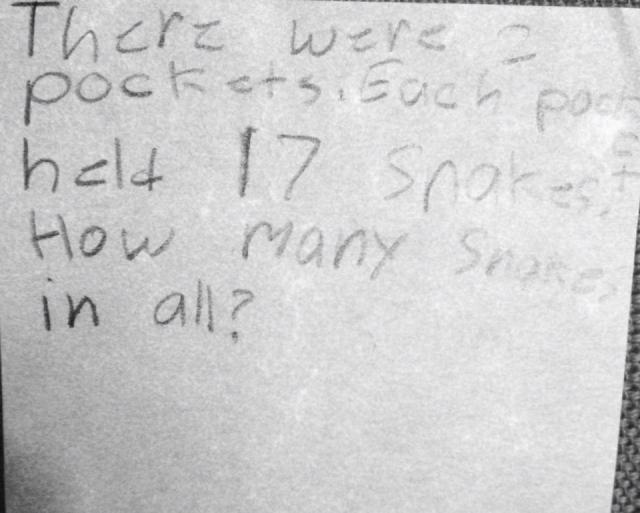
34 snakes
There were 2 pockets. Each pocket held 17 snakes. How many snakes in all?

#16    My flight out of Delhi was cancelled, so I was re-routed through Paris. Perhaps the only major airport in the world that smells of fresh-baked croissants at 6 am in the morning!

#15

“Simon, turn off the TV.”

“I can’t, Mom! Everything I need to know about life is on Dr. Who!”

#14     Home! And, as always when I return from the developing world, I am feeling so thankful for clean air, hot water, high-speed internet, urban planning and traffic control – and a democratic system of government that is not perfect, but which functions smoothly and provides us with services without corruption. Perspective is a valuable thing.

#13     Lady behind me at the grocery store:  “Girl!  You’ve either got a big family or you’re done shopping for 2013!

#12      First week back at school update:

Eliza (grade 3):  “What’s the difference between fiction and non-fiction again?”

Simon (grade 6): “Non-fiction is real. Like Facebook.”

Eliza: “So what is fiction?”

Simon: “It’s fantasy, it’s not real. Like Facebook.”

#11   The Polly Pockets were willing to sacrifice their heads for the opportunity to skydive off our back balcony.

Photo: The Polly Pockets were willing to sacrifice their heads for the opportunity to skydive off our back balcony.

#10

“Mom, do you have a name for our toilet?”
“No.” (pause) “But something tells me you might.”
“Yeah. Our toilet is named Bob.”

#9     (The next day)   I have been informed that the gender of our upstairs toilet “Bob” has been reassigned. Depending on who you ask, she is now either “Tina” or “Betsy”.

#8     Well, at the request of one of my sons, I bought ramen noodles for the first time in 25 years. Still the same price – 29 cents. The way I figure, it’s never too early to prepare them for college.

#7

 Eliza: “Hannah says that when I grow up, I should be a doctor.”
Me: “I concur.”
Eliza: “An American Girl doctor.”
Me: “I retract my previous statement.”

#6     Still life with retainer.

Photo: Still life with retainer.

#5     I could have done without these 6th grade boys and their dinner discussion. All you need to know about it is that their creation myth involves the planet “Poopiter” and explains why there is so much cosmic gas in the universe.

#4     I made the mistake of taking my 11-year-old son with me when I was shopping for bras. With having to yell so many times, “Don’t touch that!” and “Stop squishing it!”, I ended up accidentally buying a nursing bra.

#3     I sent my 13yo son to camp with two pairs of shoes.   Somehow, he managed to come home with just one.   One shoe, that is.

#2     I very much appreciated that the employees stocking shelves at the downtown Target let me participate in their “Churchill-off”. I only made it two rounds (they were still going when I went to check out) but I got to use the only two Churchill quotes that I can ever manage to remember:

        1. We make a living by what we get, but we make a life by what we give.

        2. Lady Astor: “Sir, if you were my husband, I would give you poison.”

            Churchill: “If I were your husband, I would take it.”

#1      It’s just not a holiday in our family until someone gets a pie in the face.

Photo: It's just not a holiday in our family until someone gets a pie in the face.

Thanks for reading The Human Rights Warrior!  See you in 2014!

Happy New Year from Sullivan's Island, South Carolina!
Happy New Year from Sullivan’s Island, South Carolina!

Human Rights Day Activities To Do With Your Kids

This post was originally written for World Moms Blog.

IMG_1800Every December 10, people around the world celebrate Human Rights Day.  The date was chosen to honor the United Nations General Assembly‘s adoption on 10 December 1948 of the Universal Declaration of Human Rights (UDHR), the first global statement of international human rights principles.  As we have done on World Moms Blog before (see 10 Things to Do With Your Kids on Human Rights Day), we’re sharing some ideas for simple yet meaningful ways for your family to celebrate the rights and responsibilities that we all share as human beings.

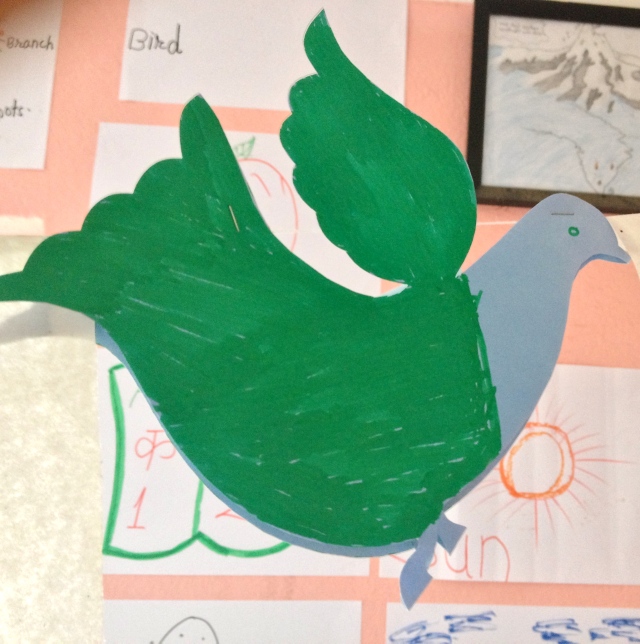
1.  Make a World Wishes Dove with your family.  Cut feathers from white paper or colored construction paper.  Have everyone in the family decorate and write their wish for the world on a feather.    Cut out the body of a dove or other bird and glue all the feathers on it.  Once decorated, your bird will be a beautiful and hopeful expression of your family’s hopes for our world.

Template for a doveImage Source
Template for a dove
Image Source
2.  Play a game that helps kids understand human rights.  Blind Trust (from ABC – Teaching Human Rights):  In pairs, have one child blindfold the other and have the sighted member of the pair lead the “blind” one about for a few minutes. Make sure the leading child is not abusing the power to lead, since the idea is to nurture trust, not to destroy it. The “leader” of the pair should try to provide as wide a variety of experiences as possible, such as hav- ing the “blind” partner feel things with his or her feet or fingers, leading with vocal directions or even playing a game. After a few minutes have the children reverse the roles and repeat the process so that the “leader” is now the led, and the “blind” partner is now the sighted one.

Once the activity is over, allow the children to talk about what happened. Discuss how they felt – not just as “blind” partners but their feelings of responsibility as “leaders” too. This can lead not only to a greater awareness of what life is like for people with sight (or hearing) disabilities, but to a discussion of the importance of trust in the whole community. This can lead in turn to a discussion of world society, how it works and how it can fail to work too.  (teaches about Universal Declaration of Human Rights article 28; Convention on the Rights of the Child articles 3, 23)

3.  Learn about how children live in other countries.  For example, you can learn what kinds of food children in East Africa grow and eat from the Lessons from Africa resource created by the British non-governmental organization Send A Cow (also check out their website http://www.cowforce.com).  You can download the  powerpoint  about typical East African food.   You can also print out some of the recipes for things like chapatis and pepper soup to make and try for yourself.

4.  Find out what kids and teens can do to help stop child labor.  The ILO’s Youth in Action against Child Labour campaign has ideas, information,  videos and other resources to help young people take action to end child labor.

5.  Play Human Rights Twister to teach about cooperation, respect and inclusion.   Make a “Twister” game in which kids spell out key human rights words using their feet and hands.  Draw a grid with 6 columns and 5 rows with marker on a  large piece of cloth (like an old sheet) or plastic (like a plastic tablecloth). You can also use chalk to draw it on the ground. Write the following letters in the grid:

(blank) W X Y Z(blank)


Q R S T U V

K L M N O P

E F G H I J

(blank space)A B C D(blank)

Ask the children to name some rights and list them on a large piece of paper or whiteboard. Underline a key word in each right from this list of rights in one word:

Dignity            Education            Equality             Food            Freedom            Home            Love (from parents)            Name

Nationality          Opinion          Participation (in decisions that affect us)          Play          Protection          Religion

When you have listed at least 3 or 4 rights, have the children spell out the key word in the human right from the list by placing their hands and feet on the  appropriate letters of the “Twister” game.  When 1 child’s hands and feet are in place and the word is not yet completed, ask another child to join in  to complete the word. If the hand or foot of another  child already covers a letter, the player just has to touch the child that is on that letter.  When a letter is too far to reach, invite another child to join in.  (This activity and dozens of others to teach about human rights values and peaceful conflict resolution are available for free download in the Canadian organization EquitasPlay It Fair Toolkit. )

6.  Make toys and play games that children play in other countries.  Many kids throughout the world live in poverty and don’t have money to buy toys and games.  They make their own toys out of recycled materials that they find.  Your kids can try making a football (soccer ball) out of recycled plastic bags or a toy car made from a plastic bottle.

http://vimeo.com/39763894

You can also  make and play the Sudanese game “Dala” (the Cow Herder Game).  In many parts of the world, games mimic everyday life; this game mimics the Sudanese practice of bull herding.  Sudanese people play it on the ground, using sticks to make the lines and pebbles or seeds as “bulls”.

7.  Ask the question “What Does a Child Need?”  Have your child lie down on a large piece of paper and trace their outline on the paper.  Ask your child(ren) to name this paper child. Discuss and decide on the mental, physical, spiritual and character qualities they want this ideal child to have as an adult (e.g. good health, sense of humour, kindness) and write these qualities inside the outline. They might also make symbols on or around the child to represent these ideal qualities (e.g. books to represent education). Talk about what human and material resources the child will need to achieve these qualities (e.g. if the child is to be healthy, it will need food and health care); write them down on the paper outside of the outline.  You can also read a simplified version of the Convention on the Rights of the Child (available in English, French, Spanish, Russian, German, etc.)  When children hear an article that guarantees a child each of the needs they have listed, they can write the number of the articles next to that item. Circle any needs identified but not covered by the Convention.

DSC_0599


8.  Read some books with strong female characters.   Non-discrimination and equality are key concepts in international human rights law.  Yet girls and women are generally not been portrayed as equals to boys and men in literature.  A Mighty Girl has compiled several great lists of girl-empowering books, including Top Read Aloud Books Starring Mighty Girls,  Top 100 Mighty Girl Picture BooksTop Graphic Novels Starring Mighty Girls, and Top Mighty Girl Books & Films on Women’s History.

9.   Get creative and enter your work in a contest with a human rights theme.   Local, regional or international contests are powerful activities for getting youth involved and learning about human rights.  Take action by entering some of the contests listed here on the Youth For Human Rights website.  (You can also learn more on the website about their educational programs, projects, awareness campaigns and human rights outreach campaigns.)

10.  Make a Human Rights Day card.  You can give the card to a friend or member of your family.  Or you can make multiple cards to decorate your house.   My eight year old daughter (that’s her self-portrait in the background) made this card for all the children of the world.

IMG_1502


ADDITIONAL RESOURCES:  You’re on your way to a great Human Rights Day!  If you are a classroom teacher or homeschooling your kids (or if you just want to dig deeper), you can find tons more ideas through the following resources:

My past posts on Human Rights Day activities:

United Nations Cyber Schoolbus – human rights activities and information about the United Nations’ work

ABC – Teaching Human Rights – practical activities in English, French, Russian, Arabic, Chinese, and Spanish from the UN Office of the High Commissioner for Human Rights

The Advocates for Human Rights’ Discover Human Rights Institute – human rights education lesson plans and curriculum

Human Rights Here and Now  – human rights lesson plans and resources

Raising Children With Roots, Rights and Responsibilities – activities for preschool and young elementary children

UNRIC’s Human Rights Education website –  great source for multimedia on human rights!

Haikus With My Daughter III: Girls Rights

My heart yearns for you

To live – equal – to your full

human potential.

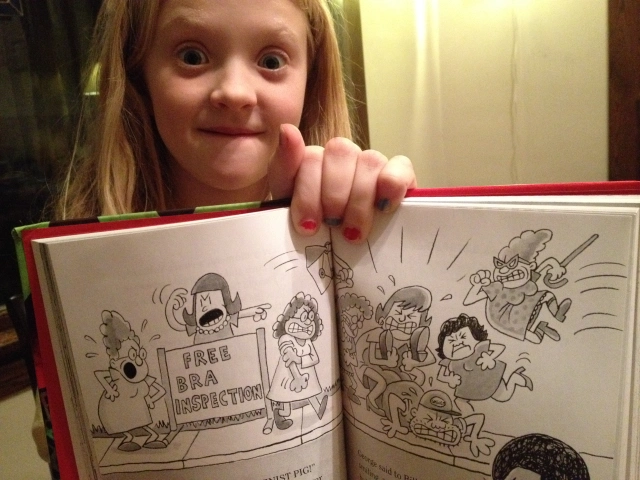
It’s a challenge to raise a daughter in a society that innundates us with countless hidden messages about how girls should look and act, who they should be.    My daughter and I have been talking about this a lot lately, with the holiday marketing of “girls toys” and “boys toys” so in our faces.   So I was pleasantly surprised this week when she found a women’s rights message hidden in Captain Underpants and The Terrifying Return of Tippy Tinkletrousers.

IMG_1964

Captain Underpants.

The bully battle begins!

(Secret feminism.)

You go, girl! You just go and go and GO!

This post, Haikus With My Daughter , Haikus With My Daughter II  and Thanksgiving are a response to the WordPress Weekly Writing Challenge.

Thanksgiving

DSC_0384
Thanksgiving Day


Less than some, yet more

Than most have I. For this, I

Am truly thankful. 

This post,  Haikus With My Daughter  and Haikus With My Daughter II  are a response to the WordPress Weekly Writing Challenge.

Haikus With My Daughter II

DSC_0405

“I wrote a poem about you today,” I said.  “Well, just a haiku.  But actually, I wrote two.”

This caught my 8 year-old daughter’s attention.  She put down her Monster High doll, the one she just bought with money hard-earned from chores like scooping the cat’s litterbox.

“What’s a haiku?” she asked.  Apparently, they hadn’t yet covered this in her third grade class.

“It’s a kind of short Japanese poem.  It has three lines, with a total of only seventeen syllables.  The first line is five syllables, the second is seven and the third is five.”

As she read my haikus, I said,  “I wrote about you, but  usually haikus are about nature.”

“Like about animals?”

“Sure.  ‘Animals’ is three syllables, so you need two more for the first line.  Then seven, then five.”

“Syllables, like beats in music?”

“Exactly.”

She didn’t even pause to think.  She launched right in.

“Animals live in …”

“You’re doing it!  You’re writing your very own haiku!  Now seven syllables. Where do animals live?”

“Jungle, forest and…”   She counted out the syllables on the five fingers of her right hand.   Then two more on the fingers of her left hand.  She had painted her fingernails in an alternating pattern with red and blue nail polish.  Red, blue, red, blue, red, blue, red, blue, red blue.

“City? Ocean?”

“That’s great!  Which one?  Ocean or city?”

“Nature everywhere.”

“You did it!  You wrote your own haiku!”

She smiled – a small, proud smile – and then she picked up her doll again.

“That was really good.  Let me write it down.   Can you say it again?”

She shrugged, engrossed in brushing the doll’s hair.

“I forgot it already,” she said.

“But I’m your mom and I will always remember,”  I thought.

Haiku by Eliza

Animals live in

Jungle, forest and city.    (or ocean)

Nature around us!

This post, Haikus With My Daughter , Thanksgiving and Haikus With My Daughter III: Girls Rights are in response to the WordPress Weekly Writing Challenge.

Haikus With My Daughter

IMG_0449I haven’t written a poem since I was in elementary school.

But today I wrote tw0- not one, but TWO! – haikus in response to the WordPress Weekly Writing Challenge.

My eight year old daughter was the inspiration for the first.

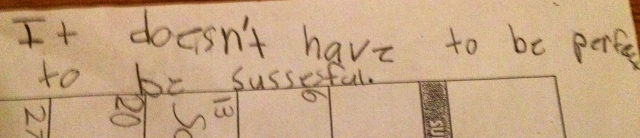
It doesn't have to be perfect to be sussesful.
It doesn’t have to be perfect to be sussesful.

Marginalia

Cleaning her backpack,

I found …my daughter’s wise words,

Scrawled  in the  margins.

She was also the inspiration for the second haiku of the day:

IMG_1770

To My Daughter, Who Is 8

Eight years old, full of

Joy and bold discovery.

Stay this kind and strong!


Next up – my daughter writes her very first haiku!  Haikus With My Daughter II

CALL OF (Parental) DUTY: Part IV Gaming for A Good Cause

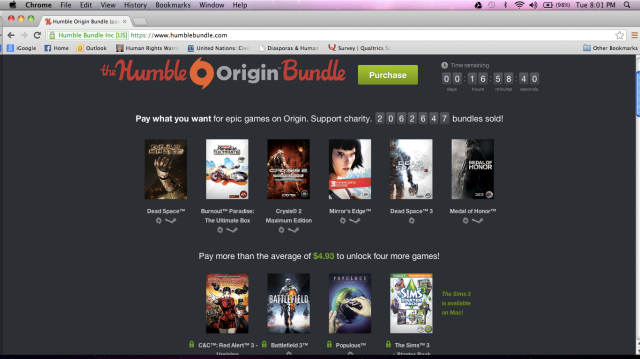
Humble bundle Screen shot 2013-08-27 at 8.01.19 PM

If you have following my CALL OF (Parental) DUTY series of posts, you will know that my 13-year-old son and I are in an ongoing dialogue about video gaming.  It began last October when he asked for CALL OF DUTY: Black Ops II for his birthday – and did not receive it.  (You can read more about that in the post Part I Introduction.)  Over the past year, his father and I have stood by our decision not to allow our son to play violent M-rated games in our home.  We feel that it is our own duty as parents to draw that line as to what is appropriate for our son to play.  While we have reached a truce on the subject of Black Ops II and other M-rated games, we continue to have discussions about the pros and cons of gaming.   Not surprisingly, Sevrin is more dedicated than I am to finding and sharing the pros of gaming.

Recently, Sevrin shared with me information about a charitable giving initiative in the gaming community through the Humble Bundle. I’ll let him describe it.

I originally learned about the Humble Bundle when I was on vacation, talking with my cousin Aidan. We were talking about one of the most common things known to teenage boys: video games. He mentioned an event going on in the gaming community where people donate as much as they want to charity and in return get 10 games. When I went home I decided to see what this whole thing was about. I was touched. Some parents do not approve of their kids playing video games for many reasons. Some think its a waste of time, others just straight up hate them. Then there are those who don’t see the point of buying them because they feel like it doesn’t benefit anybody. Well, for those people I introduce The Humble Bundle. The Humble Bundle is an organization that partners with game developers to help raise money for charity.

Basically, The Humble Bundle is a collection or (“bundle”) of digital games or media that are sold and distributed online at a price determined by the purchaser. This “pay what you  want” model has proven very popular, and there have been Humble Bundles for music and eBooks as well as video games.  With the Humble Origin Bundle, which launched on August 14, 2013, there was a twist:  all sales from the bundle went to charity.  Instead of “pay what you want”, it was “donate what you want”.

Here is Sevrin’s description

The best part of The Humble Bundle is that the choice is up to the buyer. You can donate as low as $1.01 to get the games. You can also choose what charity you are donating to. Best of all is, unlike most charities, YOU choose if you want to make a donation to the Humble Bundle organization or not. Personally, I found the whole idea ingenious. It’s beneficial to everybody involved in it. The organization itself gets the money to do these sales more often, the game developers involved get more publicity, the buyers get great deals on some of the best games of the time and the greatest part is that people get the satisfaction of knowing that all of the money they spend goes directly to charity.

And so, for the first time in my life, I bought a video game.  A bundle of video games, that is.   The only problem was that the Humble Origin Bundle contains some games that are M-rated and therefore not allowed in our house.  Since there was no way to separate out the inappropriate games, Sevrin agreed that he would only play the games he is allowed to play.  I agreed to trust him to keep his promise.

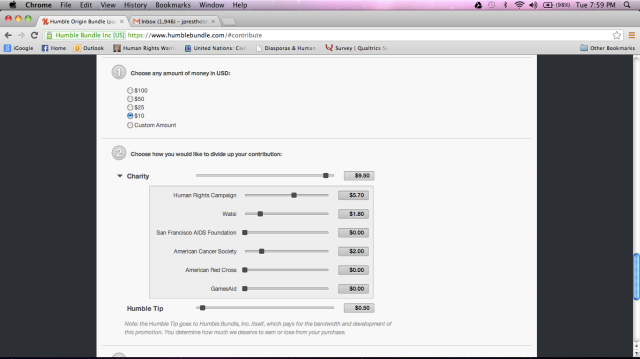
After talking it through with Sevrin, I decided that I would make a $10 donation for the bundle and let him choose which charities to support.  He did some research into the charities and choose the following:

Charitable giving Screen shot 2013-08-27 at 7.59.45 PM

This provided a good opportunity to talk about charitable giving.  (Since I work at a non-profit, I feel that this is an important thing to teach my kids about.) Sevrin chose to give the largest percentage of his donation to the Human Rights Campaign because equality and LGBT rights are issues that he cares about.   He also chose to support Watsi, an organization that provides a global crowdfunding platform for medical care.  What he liked about Watsi was that 100% of the donation directly supports medical treatment.  The American Red Cross was so giant (number one on Charity Navigator’s 10 Super-Sized Charities list) and therefore must have so much administrative overhead that he decided not to support it.  GameAid just didn’t grab him.  But he thought it was reasonable to give Humble Bundle 50 cents of the $10 so they can keep up the good work.

The Humble Origin Bundle raised more than $3.5 million within a day of going live in August.   As of August 28, 2013, the Humble Bundle has raised more than $22.5 million dollars for charity.   

The current bundle sale is the Humble Comedy Bundle.  With this bundle, however, you can support artists, charities or both.   If you like standup comedy, you may want to check it out.  But you have to hurry – as I write this, there are 5 days and 13 minutes remaining.

While we are not changing our policy on video gaming because of the Humble Bundle, it is good to see that the industry is taking steps to make a difference in the real world.   I’m surprised that this kind of creativity in charitable giving has not been reported more widely in the mainstream media.  So I will say it again:

Humble Bundle has raised more than $22.5 million dollars for charity!  

Good on you Humble Bundle. That is truly gaming for a good cause!  

Other posts in the CALL OF (Parental) DUTY series:

Part I  Introduction

Part II “Freedom to Game is Important”   – my son shares his point of view

Part III This Is Your Brain On Video Games – research on the impact of violent video games on brain function

The Human Rights Lesson

20130525-083050.jpg

I spent some time in my daughter’s classroom last week talking to the second graders about human rights.  I’ve been a guest speaker in all of my kids’ classrooms and have done this presentation (a kind of human rightsy mash-up of show-and-tell and career day) pretty much every year since my oldest was in second grade.  But this time was different.  I discovered the night before I was scheduled to speak in her class that my daughter, who just turned 8, was planning to do the presentation on human rights WITH me.

I have a more-or-less standard routine and she knew it well.  (I wrote a post called Same and Different about doing this human rights lesson in my sons’ classrooms.)  First, I do an activity that I call Same and Different.  I have several photos from West Africa that I had blown up and mounted on foamcore.  I show the kids a photo and have them point out what they see in the picture that is the same in their lives and what is different.  It always generates great discussion and often the kids see things in the photos and make connections that I never did.  Hopefully, by showing that all humans have similarities in spite of our differences, it also plants some seeds of respect and tolerance.

When I got to her classroom, my daughter brought her small plastic chair to the front of the class and set it down firmly right next to mine.  After introducing me (with the class microphone), she sat down beside me.  She had assigned herself the assistant’s job of holding the photos for all to see while I led the discussion.  A couple of times I had to remind her to hold the photo out so that all the kids could see, but overall she did a great job.

The next activity I do is to pass around a selection of items that I have picked up on my travels for work.  As we pass them around so that everyone gets a chance to touch them, we again discuss what is the same and different in our lives.  This time, I didn’t gather a thing for the activity; my daughter collected everything the night before our presentation.  A yak wool blanket from Nepal, a wooden statue of  a traditional palava hut from Liberia, coins and bills from Cameroon – all went into a bag I had brought her from Ghana.  She even added her pink beaded pointy-toed slippers from Morocco.  When I reminded her that she would have to share and let everyone touch them and try them on,  she hesitated for a moment.  In the end, though, her slippers went into the bag.

To close out the presentation, I usually read a children’s book or two about human rights.  I have a couple of favorites.  For Every Child, A Better World by Kermit the Frog is one that we own two copies of, but of course we couldn’t find either when we needed it.  I went to library to check out a copy and discovered shelved right beside it I Have the Right to Be a Child by Alain Serres.  This beautifully illustrated book presents the concept of human rights, especially those of children as set out in the UN Convention on the Rights of the Child.

When I brought the books home from the library, I asked my daughter,

“Which do you want me to read to your class?”

“I want to read them both,” she said.

She did a beautiful job of reading both books to the class.  I was so proud that I teared up, right there in front of all the second graders and their teacher.

In some ways, it is easier to talk to kids about human rights than adults.  Because children generally see things in terms of black and white, right and wrong, it is easy for them to understand that we all have rights – the right to voice our opinions, to go to school, to be free from violence.  The right to have food and shelter and clean air and water.  The thing about kids is that they have a very strong natural sense of justice (as it applies to them, at least) they understand the inequities of a world where not everyone is able to access those rights.

One girl  came up and hugged me after the human rights lesson.

“It makes me sad,” she said, “to think that not all kids have enough to eat.”

“What you are feeling is empathy,” said the teacher.  “And that’s good.”

Knowing about the problem – caring about it and wanting to do something about it – is the first step towards change.

The last thing I heard as I left the classroom was another little girl saying,

“I think I am going to write a letter to President Obama and ask him why we are not part of the Convention on the Rights of the Child.”

There are a lot of things about working in human rights that are not easy, but this was a very  good day!

More ideas for human rights activities to do with children:

10 Things to Do With Your Kids on Human Rights Day

10 More Things to Do With Your Kids on Human Rights Day

Same and Different