CALL OF (Parental) DUTY: Part IV Gaming for A Good Cause

Humble bundle Screen shot 2013-08-27 at 8.01.19 PM

If you have following my CALL OF (Parental) DUTY series of posts, you will know that my 13-year-old son and I are in an ongoing dialogue about video gaming.  It began last October when he asked for CALL OF DUTY: Black Ops II for his birthday – and did not receive it.  (You can read more about that in the post Part I Introduction.)  Over the past year, his father and I have stood by our decision not to allow our son to play violent M-rated games in our home.  We feel that it is our own duty as parents to draw that line as to what is appropriate for our son to play.  While we have reached a truce on the subject of Black Ops II and other M-rated games, we continue to have discussions about the pros and cons of gaming.   Not surprisingly, Sevrin is more dedicated than I am to finding and sharing the pros of gaming.

Recently, Sevrin shared with me information about a charitable giving initiative in the gaming community through the Humble Bundle. I’ll let him describe it.

I originally learned about the Humble Bundle when I was on vacation, talking with my cousin Aidan. We were talking about one of the most common things known to teenage boys: video games. He mentioned an event going on in the gaming community where people donate as much as they want to charity and in return get 10 games. When I went home I decided to see what this whole thing was about. I was touched. Some parents do not approve of their kids playing video games for many reasons. Some think its a waste of time, others just straight up hate them. Then there are those who don’t see the point of buying them because they feel like it doesn’t benefit anybody. Well, for those people I introduce The Humble Bundle. The Humble Bundle is an organization that partners with game developers to help raise money for charity.

Basically, The Humble Bundle is a collection or (“bundle”) of digital games or media that are sold and distributed online at a price determined by the purchaser. This “pay what you  want” model has proven very popular, and there have been Humble Bundles for music and eBooks as well as video games.  With the Humble Origin Bundle, which launched on August 14, 2013, there was a twist:  all sales from the bundle went to charity.  Instead of “pay what you want”, it was “donate what you want”.

Here is Sevrin’s description

The best part of The Humble Bundle is that the choice is up to the buyer. You can donate as low as $1.01 to get the games. You can also choose what charity you are donating to. Best of all is, unlike most charities, YOU choose if you want to make a donation to the Humble Bundle organization or not. Personally, I found the whole idea ingenious. It’s beneficial to everybody involved in it. The organization itself gets the money to do these sales more often, the game developers involved get more publicity, the buyers get great deals on some of the best games of the time and the greatest part is that people get the satisfaction of knowing that all of the money they spend goes directly to charity.

And so, for the first time in my life, I bought a video game.  A bundle of video games, that is.   The only problem was that the Humble Origin Bundle contains some games that are M-rated and therefore not allowed in our house.  Since there was no way to separate out the inappropriate games, Sevrin agreed that he would only play the games he is allowed to play.  I agreed to trust him to keep his promise.

After talking it through with Sevrin, I decided that I would make a $10 donation for the bundle and let him choose which charities to support.  He did some research into the charities and choose the following:

Charitable giving Screen shot 2013-08-27 at 7.59.45 PM

This provided a good opportunity to talk about charitable giving.  (Since I work at a non-profit, I feel that this is an important thing to teach my kids about.) Sevrin chose to give the largest percentage of his donation to the Human Rights Campaign because equality and LGBT rights are issues that he cares about.   He also chose to support Watsi, an organization that provides a global crowdfunding platform for medical care.  What he liked about Watsi was that 100% of the donation directly supports medical treatment.  The American Red Cross was so giant (number one on Charity Navigator’s 10 Super-Sized Charities list) and therefore must have so much administrative overhead that he decided not to support it.  GameAid just didn’t grab him.  But he thought it was reasonable to give Humble Bundle 50 cents of the $10 so they can keep up the good work.

The Humble Origin Bundle raised more than $3.5 million within a day of going live in August.   As of August 28, 2013, the Humble Bundle has raised more than $22.5 million dollars for charity.   

The current bundle sale is the Humble Comedy Bundle.  With this bundle, however, you can support artists, charities or both.   If you like standup comedy, you may want to check it out.  But you have to hurry – as I write this, there are 5 days and 13 minutes remaining.

While we are not changing our policy on video gaming because of the Humble Bundle, it is good to see that the industry is taking steps to make a difference in the real world.   I’m surprised that this kind of creativity in charitable giving has not been reported more widely in the mainstream media.  So I will say it again:

Humble Bundle has raised more than $22.5 million dollars for charity!  

Good on you Humble Bundle. That is truly gaming for a good cause!  

Other posts in the CALL OF (Parental) DUTY series:

Part I  Introduction

Part II “Freedom to Game is Important”   – my son shares his point of view

Part III This Is Your Brain On Video Games – research on the impact of violent video games on brain function

Weekly Photo Challenge: Sea

20130904-134927.jpg
A “legelege” fishing boat rests on the shore of the Atlantic Ocean in Ghana. The sea is very powerful off the coast of Ghana, yet Ghanaian fishermen battle the powerful currents and mighty breakers day after day in their small, wooden boats. They often personalize their boats with inspirational sayings.

“But man is not made for defeat,” he said.

“A man can be destroyed but not defeated. ”

― Ernest Hemingway, The Old Man and the Sea 

This post is a response to the theme “Sea”.  Follow the link to see more entries in the Weekly Photo Challenge: Sea.

Back to School

I haven’t been able to do much blogging this summer.  This photo may help explain why:

photo(1)

Today is the first day of school for my kids.  We had a great summer, but – clearly –  it is time for them to go back to to school!  Hopefully it also means that I will have a little more time to myself to think and write and post to The Human Rights Warrior.

In the meantime, here is a repost on The Importance of Educating Girls that I originally wrote for World Moms Blog in 2012.  The first day of school always makes me so thankful that my children, especially my daughter, are able to access their right to education.

The Importance of Educating Girls

Fifth grade class in Chuchoquesera, Peru

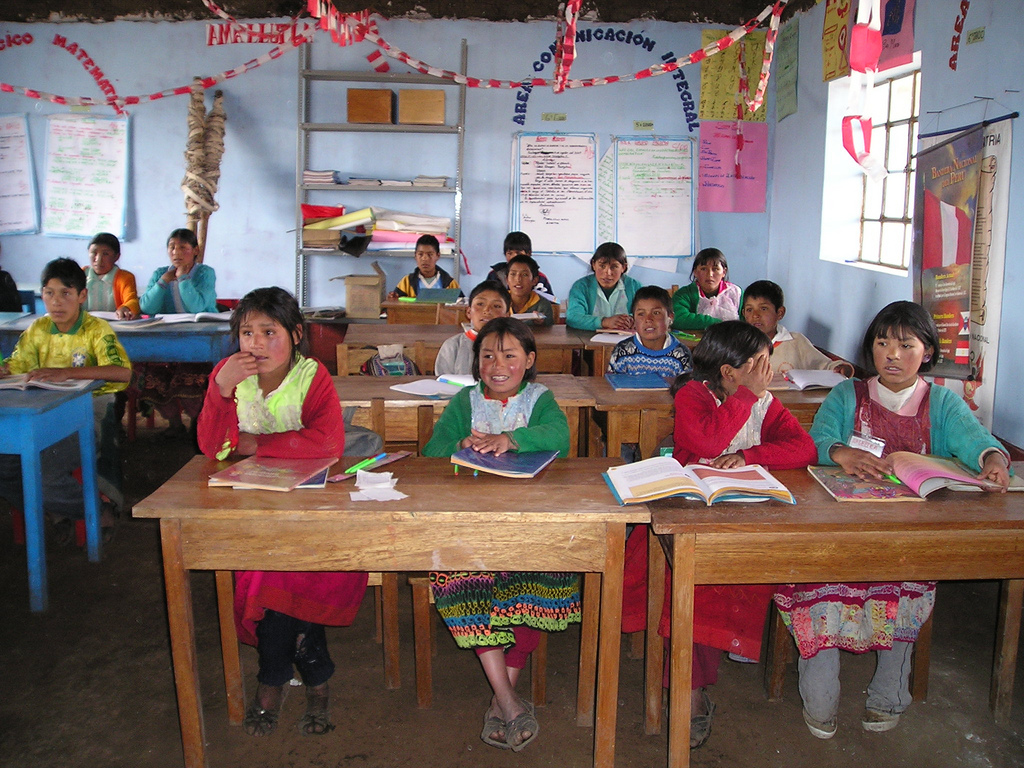
When I visited the classroom pictured above in the Peruvian highlands back in 2004, I noticed that slightly more than half of the students were girls. I remarked on this fact to the human rights activist who was giving us the tour of this Quechua-speaking indigenous community.  He smiled sadly and said, “Yes, but this is fifth grade.  In sixth grade, children go to a lower secondary school that is farther away.  Most of the girls won’t go.  It takes too long to walk there and they are needed to help at home, so the parents won’t let them go.  Besides, most of them will be married soon.” Unfortunately, this is a situation that is repeated throughout the world

In the United States, where education is both compulsory and free, we often forget that the right to education is not meaningfully available in many parts of the world – especially for girls.  The UN estimates that there were more than 67 million primary school-age and 73 million lower secondary school-age children out of school worldwide in 2009.  In addition, an estimated 793 million adults lack basic literacy skills. The majority of them are women.

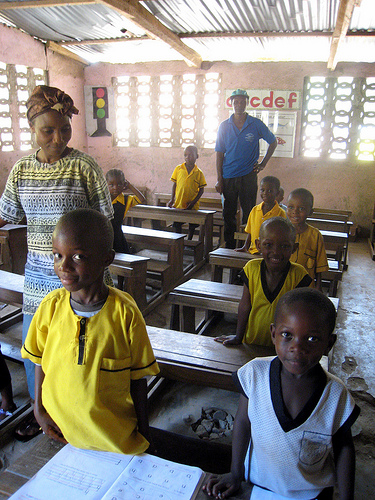
Since then, I have visited classrooms and asked questions about girls’ access to education in countries on several continents.  This is a photo I took at Buduburam Refugee Settlement in Ghana.

Kindergarten class, Buduburam Refugee Settlement, Ghana

Boys far outnumbered girls in this classroom, illustrating one of the problems for girls in accessing education.  When resources are scarce, parents will often choose to spend the money on school fees for their sons rather than their daughters.

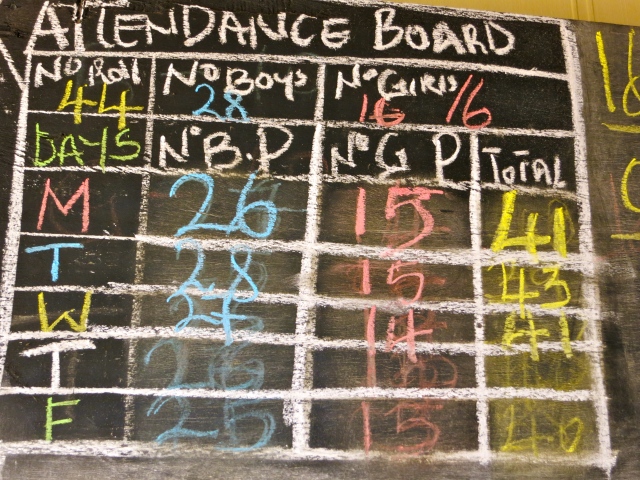
Boys also outnumbered girls at this school that I visited outside of Yaounde, Cameroon.

IMG_0327

Attendance Board in primary grade class in a school outside of Yaounde, Cameroon

There are many good reasons to ensure access to education for girls, however. Educating girls is one of the strongest ways to improve gender equality.  It is also one the best ways to promote economic growth and development.

“Investing in girls is smart,” says World Bank President, Robert Zoellick. “It is central to boosting development, breaking the cycle of intergenerational poverty, and allowing girls, and then women—50 percent of the world’s population—to lead better, fairer and more productive lives.”

Ensuring equal access to education for all girls by 2015 is part of the United Nations’ Millennium Development Goals, making this issue a major focus of work by the United Nations (for more info, check out the UN Girls’ Education Initiative site), the World Bank and many international non-governmental organizations.   October 11 has been designated as the International Day of the Girl Child to draw attention to the topic.
 
 
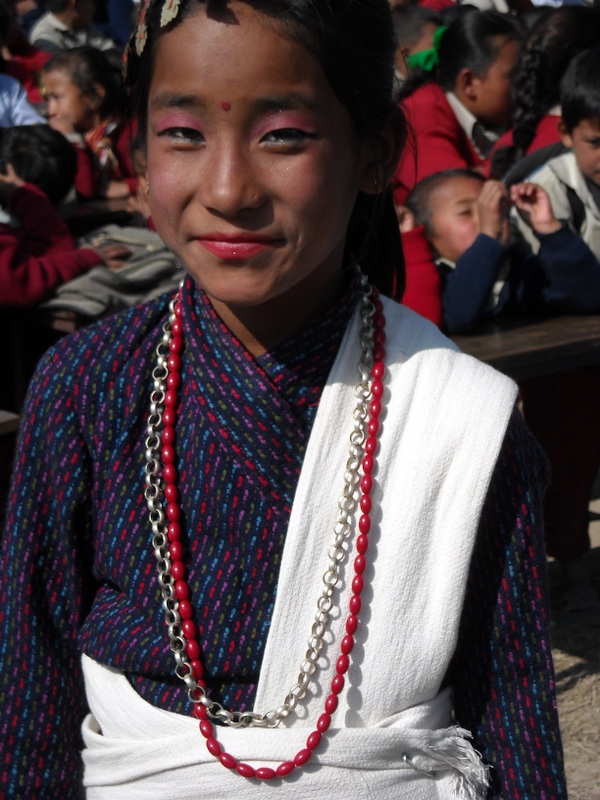
Fourth grade student at Sankhu-Palubari Community School wearing Newari traditional dress
 
On a much smaller scale, the Sankhu-Palubari Community School in Nepal is doing its part to encourage gender parity in education and  increase literacy rates.  The school works in partnership with The Advocates for Human Rights (the non-profit where I work) to prevent child labor and improve the lives and well-being of the neediest children in this community in the Kathmandu Valley. I travelled there in January for our annual monitoring visit.
 
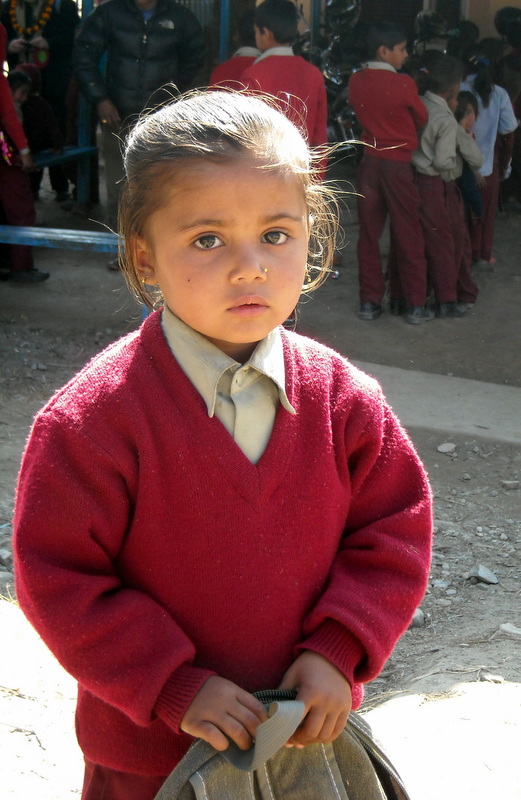
Pre-K student at Sankhu-Palubari Community School, Nepal

This year, the school has successfully met goals for gender parity among students in both the primary and lower secondary grades. For the 2011-2012 school year, 147 of the 283 students in pre-school through eighth grade are girls. Additionally, and perhaps more significantly, 15 of the 31 students in ninth and tenth grade are young women.
 
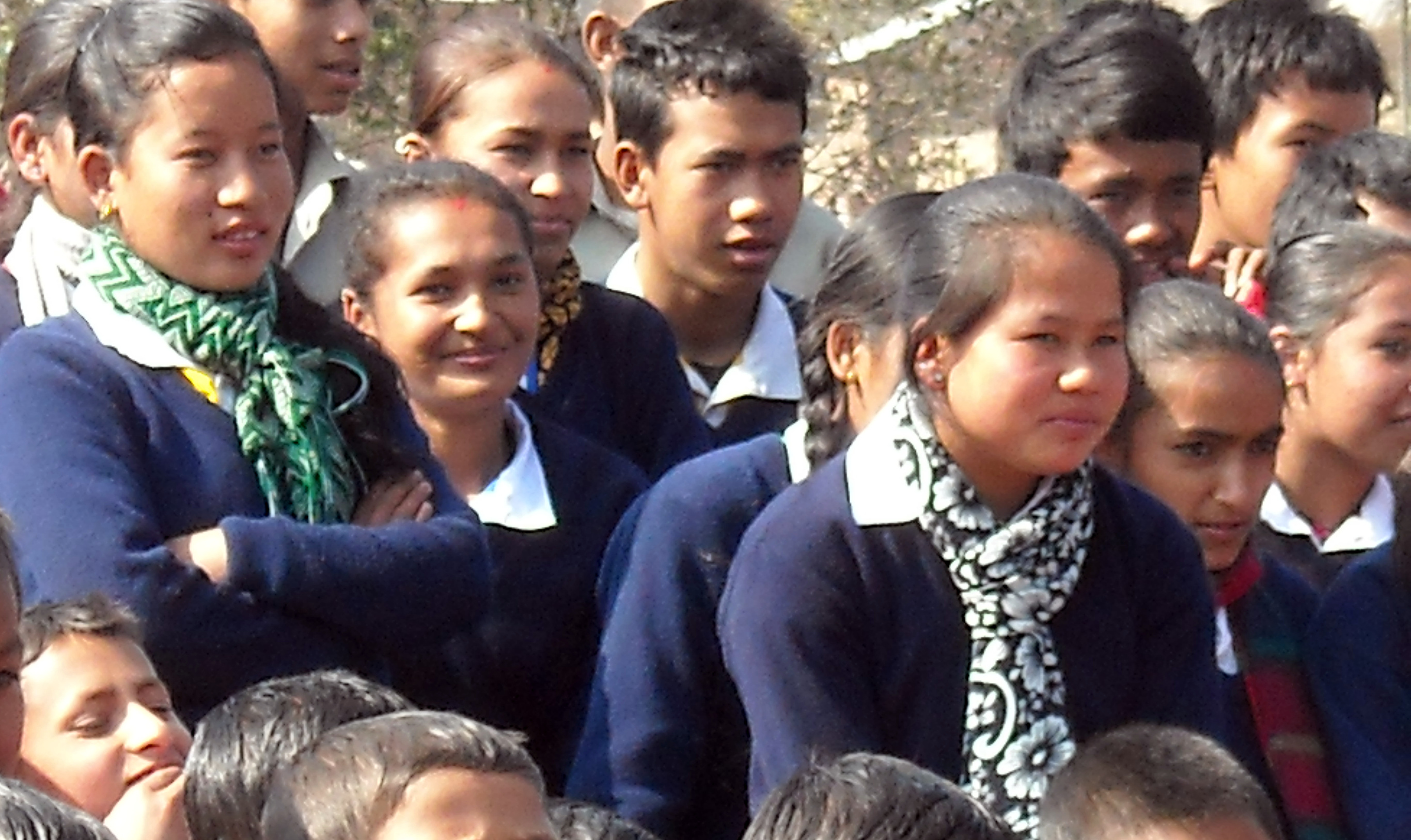
9th Grade students at SPCS
 
Most of the students’ families work in agriculture.  They are farmers with little or no money to spare on school fees, uniforms and supplies.   Many of them are from disadvantaged groups such as the Tamang and Newari.  Indigenous group with their own cultures and languages, the indigenous students must learn Nepali as well as English when they come to school.  Frequently, the adults in the family are illiterate.
 
How has the teaching staff managed this success at keeping girls in school?  Since the school’s founding in 1999, the teachers have conducted outreach to parents and worked hard to encourage female students to attend and stay in school in spite of societal pressure to get married or enter domestic work. It took more than 10 years, but their efforts have paid off.  While girls worldwide generally are less likely to access, remain in, or achieve in school, 52% of the students in K-8th grades at the Sankhu-Palubari Community School this year are girls. And a girl is at the top of the class in most of the grades at SPCS.
 
The impact of the school both on the individual students and on the community over the past 12 years has been profound.  When I was there in March of 2011, we interviewed approximately 60% of the parents of SPCS students.  It was clear to me that parents value the education that their children are receiving and, seeing the value, have ensured that the younger siblings are also enrolled in school rather than put to work.  Twelve years ago, there were many students in the area out of school but now most are attending school. I could also see the physical benefits that the students derived from attending school when they stood next to their parents.  Even the 5th grade girls towered over their parents, illustrating the simple cause-and-effect of adequate nutrition, wellness checkups, and not having to work in the fields from a very young age.
 
The Sankhu-Palubari Community School may be a small school in a remote valley, but it is a place where the human right to education is alive and well, providing a better future for these children.  In particular, the effect that these girls have on their community, their country and – hopefully, the world – will be thrilling to watch.
 
I’ll be heading back to Nepal to visit the Sankhu-Palubari Community School in just a few weeks. Stay tuned!
 
Yaounde, Cameroon
Pre-K classroom at a school near Yaounde, Cameroon
 

Passing By Washington Square Park

The Washington Arch, Washington Square Park New York City

When I travel to other countries, I find that I am almost always on hyper-alert lookout for the interesting, the beautiful, the unique, the historical. Sadly, it is not always so in my own country.  I can walk past a masterpiece a dozen times without truly seeing it.  Take, for example, Washington Square Park.  I’ve been to Washington Square Park dozens of times, but it wasn’t until this very week that I stopped and looked and truly saw the beauty in the Washington Arch.

It was a beautiful summer evening this past Wednesday, the city just beginning to breathe easy again after  long hot spell.  The park, green and shady under the towering old elms and sycamores, seemed especially cool and refreshing as I hurried past along Washington Square North.  There’s a fountain at the heart of the park, and its dancing water was catching the rays of the setting sun.  The cheerful sound of splashing water mingled with joyful shouts of children in the nearby play area.

Maybe it was those co-mingled sounds, filtering down through all the other sounds of traffic and people and city, that caught my attention as I hurried from West Village to East.  Whatever it was, something made me stop and turn just past Fifth Avenue.  Looking back, I pulled out my phone and caught the above view of the Washington Arch.  For which, I am eternally grateful.

With no people in the photo, the Washington Arch seems almost timeless.  It made me think of all the millions of humans who have spent time on this small patch of island – and curious to learn its history.   It turns out that, as with so many places in our world, the history of Washington Square Park contains a human rights narrative.  Native Americans lived here in the early 17th century before the Dutch attacked them and drove them out.  The Dutch farmed the land, on both sides of the brook called Minetta that once ran through area. Later, the Dutch gave the land to freed slaves to create a kind of human buffer zone between the Native Americans and the white colonial settlements.  The area that is now Washington Square Park was in possession of African-Americans from 1643-1664; at the time, it was called “The Land of the Blacks”.  (See the New-York Historical Society of Manhattan for more history of slavery in New York.)

It remained farmland until 1797, when the Common Council of New York purchased some of the farmland (which was still outside city limits) for a new potter’s field to bury unknown or indigent persons.  Most of those who died from yellow fever during New York’s epidemics of the early 19th century were also buried here.  The public cemetery was closed in 1825 and the City bought the rest of the land shortly after, turning the area into a military parade grounds. To this day, the remains of more than 20,000 bodies rest under Washington Square Park. 

By the time the City reworked the parade grounds into a park in 1849-1850, the streets around the park had already become one of New York’s most desirable residential areas.   The park underwent several improvements, including the addition of the first fountain in 1852. To celebrate the centennial of George Washington‘s inauguration as president of the United States in 1889, a large plaster and wood Memorial Arch was erected over Fifth Avenue just north of the park.  It proved so popular that a permanent arch, designed by architect Stanford White, was commissioned.  Made of Tuckahoe marble and modeled after the Arc de Triomphe, this is the Washington Arch that I know today.  It was dedicated 1895. In 1918,  two statues of George Washington were added. You see one of them – George Washington At War – in my photo.

Washington Square Park has also been the site of countless protests, testaments to the right of freedom of assembly and expression.  The first labor march in New York took place there in 1834 when stonecutters protested New York University’s decision to use cheap prison labor from Sing Sing instead of professional stonecutters to build a university building along the park. In 1912, approximately 20,000 workers (including 5,000 women) marched to the park to commemorate the Triangle Shirtwaist Factory fire, which had killed 146 workers the year before. By some reports, more than 25,000 people marched on the park demanding women’s suffrage in 1915.  Beginning around the end of World War II, the park became a gathering area for the Beat generation, folk, and Hippie movements.  On April 9, 1961, about 500 folk musicians and supporters gathered in the park and sang songs without a permit, then held a procession from the park beginning at the Washington Arch.  The New York Police Department Riot Squad, sent in response to this “Beatnik Riot”, attacked civilians with billy clubs and arrested ten people.

And yes, even the tireless human rights advocate Eleanor Roosevelt has a connection to the area.  Around the time that she was helping to draft the Universal Declaration for Human Rights, she was a resident of Washington Square Park West.

Like so many others, I was just passing by Washington Square Park on a recent evening past.  But I’m glad I took the time to stop and look. And to learn.

The inscription on the Washington Arch reads:

Let us raise a standard to which the wise and the honest can repair. The event is in the hand of God. — Washington

For more information about Washington Square Park:

City of New York Parks & Recreation

Washington Square Park Blog

Washington Square Association

This post is a response to the Weekly Photo Challenge: Masterpiece.  See more entries here.

The Golden Hour

DSC_0124
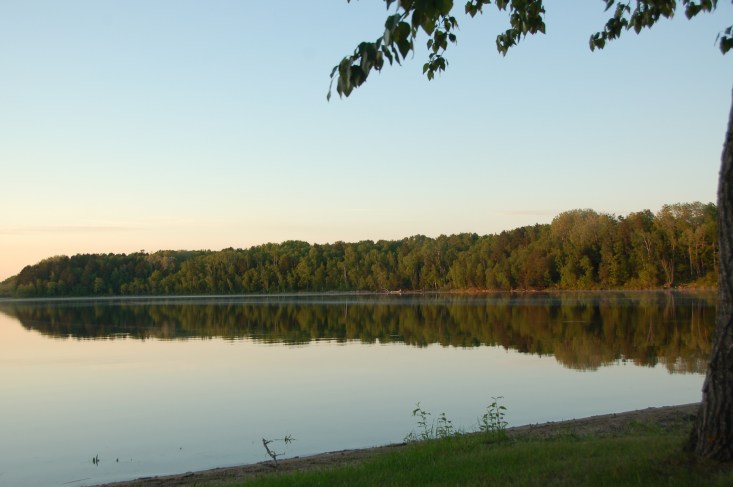
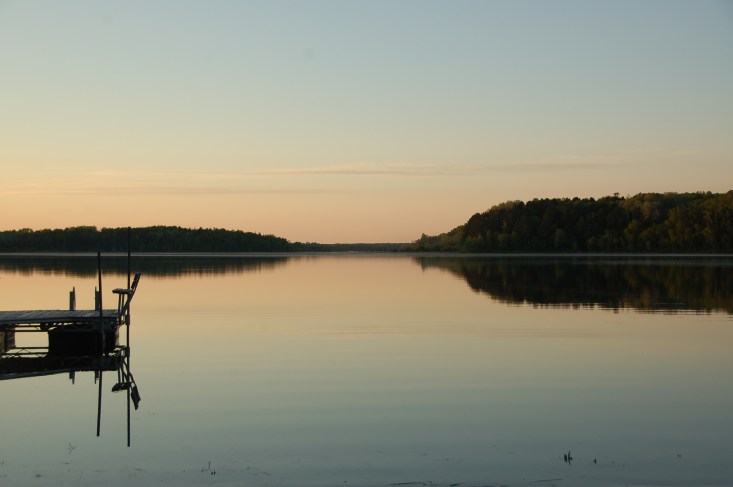
The Golden Hour on Turtle River Lake
Bemidji, Minnesota USA

E.B. White once said:

“I arise in the morning torn between a desire to improve the world and a desire to enjoy the world.  This makes it hard to plan the day.”

Note that he didn’t say that it was impossible to balance these seemingly competing impulses, but rather that it creates some planning challenges.  As a human rights lawyer, I believe that is is crucial to find that balance on a daily basis.  I try to show my kids that every day you can find a way to improve the world, in big ways and small.  It may not seem like much, but when you say something nice instead of something mean or share your lunch with a friend who forgot his, you really are making an affirmative choice to improve the world around you.

At the same time, it is important to look for beauty in the world around you.   It’s there, we just sometimes forget to look. Or listen.  I pulled up short during my run the other day to listen to a robin.  The robins have been back for months, so I usually don’t even hear their songs, but this particular robin was balanced on a telephone wire over an alley,  stretching her (or his – I guess I can’t tell) body high to belt out a string of clear whistles. “Cheer up! Cheer up! Cheer up!” sang this avian Aretha Franklin.  Beautiful!

When I was 11 or 12, one of my favorite books was Never Miss A Sunset by Jeannette Gilge.   Told from the perspective of a 13-year-old girl, it is part of a series about a large family struggling to survive on a homestead in the early 1900s.  It has been decades since I read it, but I still follow the advice of the father.  No matter how hard the day’s work has been, you should take a moment every day to enjoy the sunset.  For me, it is not so much the sunset that I try to take time to enjoy, but The Golden Hour before the sun sets.

Maybe E.B. White had trouble planning his day, but there is a fixed moment on my daily schedule to enjoy the world.  For the Weekly Photo Challenge this week, I am sharing some photos of The Golden Hour that I took in northern Minnesota recently.

Sunset at Bukkesjøen Bemidji, Minnesota USA
Sunset at Bukkesjøen near Bemidji, Minnesota USA
The path to Bukkesjøen
The Golden Hour at Bukkesjøen
My daughter dances with friends from her cabin. Skogfjorden Norwegian Language Village, Bemidji Minnesota USA
DSC_0169
Sunset on Turtle River Lake
Bemidji, Minnesota USA
DSC_0170
Turtle River Lake
Bemidji, Minnesota


Weekly Photo Challenge: Companionable

Bunadsparade
photo by Katharine “Ingeborg” Spencer

This week’s WordPress Photo Challenge invites us to share a picture of a”companion” with an explanation of the choice.  In encouraging bloggers to interpret the theme broadly, the WordPress editor writes:

You might think “companion” refers to a person with whom you share experiences, but the definition is much broader:

  • A person who is frequently in the company of, associates with, or accompanies another.
  • A mate or match for something.
  • A handbook or guide.
  • A member of the lowest rank in an order of knighthood.

(The Weekly Challenge also states: If your companion is actually a low-ranking knight, you win.)

I chose this photo of myself with four (I include my daughter, even though only her blonde curls can be seen in the lower right corner) of my favorite companions.  A dear friend since childhood and former roommate, who has accompanied me though each stage of my life.  The daughter of another dear friend and my own daughter, a new generation seeking guidance as they grow into the women that they will one day be.  Another longtime friend, a leader and mentor to hundreds if not thousands of young people over the past 30 years – who just happens to also be a knight*.

These are all companions who I have met through Skogfjorden, Concordia Language Villages‘ Norwegian immersion program. This is my fourteenth summer and my ninth on staff.  As we sing in Norwegian, “Vi er kompiser på Skogfjorden!” (We are companions at Skogfjorden). This photo captures that spirit of companionship for me.

*In 2009, Tove Irene Dahl, the dean of Skogfjorden, was named a Knight (Ridder) of the First Class of the Royal Norwegian Order of Merit by His Majesty King Harald V of Norway for the advancement of Norwegian language and culture in the United States.

The Order of Merit is lower than the Order of St. Olav – does that count as a low-ranking knight?

If so, what do I win?

Love Is The Law: The DOMA Decision and Binational Same-Sex Marriage

20130626-152500.jpgLike so many, I was excited to hear of the decision by the United States Supreme Court to strike down the Defense of Marriage Act this morning. This decision in United States v. Windsor, along with the end result of the Prop 8 decision, was what I had definitely hoped for, mostly expected but slightly feared would not happen. Historical and far-reaching as these decisions are, however, the first thing I thought of was the tremendous impact it will have on the lives of tens of thousands of LGBT Americans who are married to non-US citizens. Today’s ruling that Section 3 of DOMA, which prohibited the federal government from conferring benefits to married same-sex couples, is unconstitutional sets the stage for a major change in family-based immigration – the cornerstone of US immigration policy. Today, the Supreme Court opened the door for US citizens to be able for the first time to apply for permanent resident visas for their same-sex spouses.

When I heard the decision this morning, what flashed through my head were the faces of all of the LGBT persons in binational same-sex relationships who have consulted with me over the years about their legal options – for staying together and avoiding separation by deportation. When I first started practicing back in 1996, I had to tell them that their options were limited. I remember helping “George” seek and obtain asylum based on his LGBT status. “George” had fled his country in Central Africa. He met blond-haired, blue-eyed “Larry” when they were both doing volunteer work at a community center. Larry encouraged George to seek legal assistance. Asylum was the only  option, but I knew they deserved more.  Larry came to every interview with George, holding his hand as George talked about the persecution that he had experienced in his home country due to his refusal to hide his sexuality. Tears in his own eyes as he listened silently to George’s account of violence and stigmatization, Larry would hand George tissues, make him take calming deep breaths or take a drink of water. Help him go on with saying what had to be told. George was granted asylum, allowing him to stay permanently in the US. By that time, he had a job and he and Larry had moved in together. It has been more than 10 years since I last saw George and Larry, but I wouldn’t be surprised to hear that they had tied the knot.

But same-sex marriage wasn’t an option in the US back in 1996. Or 2001, for that matter, when “Hans” and his husband “Rick” asked for advice. Hans was Dutch and Rick was from the Caribbean (Jamaica, I think). They met while working in the US and married in Amsterdam after the Dutch government legalized same-sex marriage. But Rick’s US work authorization ended and he could no longer stay legally with Hans in the US, even though they were legally married and Hans still had authorization to be here . In the end, Hans chose to transfer to a job back to The Netherlands so that Rick could legally immigrate and they could be together.

When Massachusetts and other US states started legalizing same-sex marriage, I heard from others frustrated by the lack of equality between the way same-sex and traditional marriages are treated in US immigration policy. “Dan” told me that he and his partner “Ernesto”, a professor and a Mexican national, had been commuting between Mexico City and Minneapolis for years but now hoped that they could marry and live together permanently. Unfortunately, I had to tell them that the federal government would not recognize their marriage for immigration purposes.”We love each other, we are committed to each other, we want to get married. Why won’t my country allow us to be together?” Dan fumed.

In practice, the Obama administration has for the past two years refrained from carrying out deportations of immigrants in same-sex marriages, but without providing a legal status that is comparable to the permanent resident (“green card”) status that US citizens in traditional marriages are eligible to apply for for their spouses.

The Supreme Court’s decision today changes everything for people like Dan and Ernesto, Hans and Rick, George and Larry, and all of the other LGBTQ Americans who love nationals of other countries.  I truly, truly rejoice for them and for our country. While some procedural changes will have to take place before the implementation in practice of today’s decision, June 26 should be a day remembered and celebrated by all of us who believes in the right of EVERY family to be together.

“The federal statute is invalid, for no legitimate purpose overcomes the purpose and effect to disparage and injure those whom the State, by its marriage laws, sought to protect in personhood and dignity. By seeking to displace this protection and treating those persons as living in marriages less respected than others, the federal statute is in violation of the Fifth Amendment.” ~ Justice Anthony M. Kennedy

For more information about the process for applying for permanent resident status for same-sex spouses, see Immigration Equality’s FAQ and The Doma Project’s FAQ.

UPDATED:  On July 29, 2013 – just two days after the US Supreme Court struck down Section 3 of DOMA –  gay couple in Florida received the first approval of a same-sex marriage-based permanent resident petition.  Wow, that was fast!  Congratulations to Julian Marsh and Traian Popov! And kudos to the US Immigration & Customs Enforcement Service for implementing the  decision so quickly.

End Child Labor: An Estimated 215 Million Children Still Need Alternatives

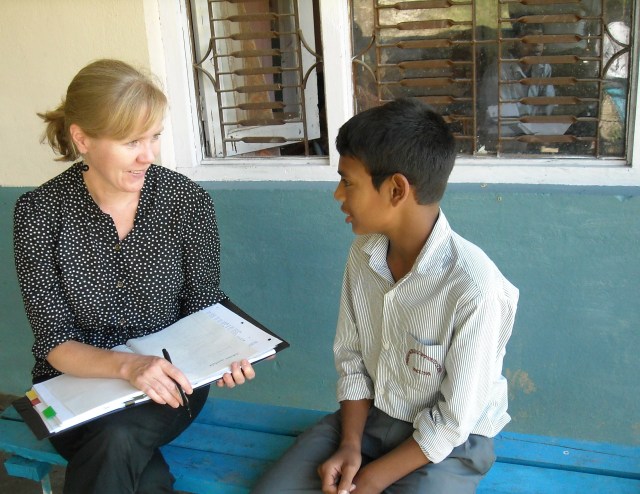
September:  Interviewing students at the Sankhu-Palubari Community School in Nepal
September: Interviewing students at the Sankhu-Palubari Community School in Nepal

What do you say to a child who has experienced child labor? I found myself in this position in Nepal recently. I was interviewing a teenager, who I will call Shree.  He described how as a little boy he had worked with his parents in the brick factories of Bhaktapur, rising at 1 a.m. to carry mud and mix bricks. Luckily, when he was 7, a school opened in in his community to provide Shree and other children at risk of child labor a free education, as well as the chance for a childhood and a promising future.

The Sankhu-Palubari Community School (SPCS) was launched in 1999 by The Advocates for Human Rights, a nonprofit organization based in the Twin Cities, to provide an alternative to child labor. Now, 14 years later, about 350 students are enrolled in grades pre-K through 10 at the school, which is located about an hour from the capital city of Kathmandu. Many of the students are from families that are low-caste, indigenous, or other marginalized groups.

The International Labour Organization (ILO) estimates that 215 million girls and boys around the world are swept up into child labor, some into human trafficking. Children, like Shree, are engaged in work that not only deprives them of their rights and an adequate education, but also is hazardous to their health and commits them to a life of poverty.

The ILO launched the first World Day Against Child Labour in 2002 to highlight the plight of these children. Observed on June 12, the day works as a catalyst for the growing worldwide movement against child labor.

When in his final year at Sankhu-Palubari, Shree, one of the best students in the area, passed his 10th grade School Leaving Certificate exam with distinction. When I met him recently, he was in his his last year of high school.  He likes to write poetry and listen to music. In the afternoons, he volunteers at SPCS, the school that changed the course of his life and where his two younger brothers now study instead of working in the brick factories. He helps the teachers in the classroom and encourages the students to study hard. When they get discouraged, he tells them, “Choose the road that makes your future very bright.”

The bright future Shree envisions for himself is to continue his education after high school and become a math and science teacher to work in rural Nepal with children who, without a school and teachers, would most likely work instead of learn.

So, what do you say to the young girl beading blouses with tiny fingers in a suffocating textile sweatshop in India? What do you say to the little boy in Gambia working in an auto-repair garage or selling items on the street? What do you say to the young girl who is working as a petite bonne (domestic servant) in Morocco?  To the child  sold into human trafficking?

Through his deeds and goals, Shree is telling these children that he is working to break this cycle of abuse.

For you and me, I say that we speak with a loud, unified voice today and proclaim, “We are committed to protecting you, the world’s children, by ending child labor.”

Then, we put our words into action.

Originally published in MinnPost on June 12, 2013.

Weekly Photo Challenge: Rosemaling

DSC_0371

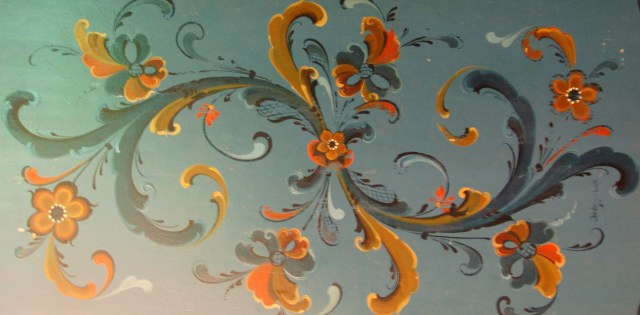
Rosemaling, the decorative folk painting of Norway, began in the low-land areas of eastern Norway about 1750.  Persons who rosemaled for their livelihood would not have been land owners but poor, city dwellers. After being trained within a “guild” they would travel from county to county painting churches and/or the homes of the wealthy for a commission of either money or merely room and board. Thus rosemaling was carried over the mountains and toward Norway’s western coast. Once farther away from the influence of the guilds, these artists tried new ideas and motifs.

DSC_0373

Soon strong regional styles developed. The Telemark and Hallingdal valleys became especially known for their fine rosemaling.Upon their exposure to rosemaling, rural folk would often imitate this folk art. Not having been taught in an urban guild, the amateur became spontaneous and expressive in his work on smaller objects such as drinking vessels and boxes.

DSC_0387

Rosemaling went out of style in about 1860-1870. Rosemaling experienced it’s revival in America in the 20th century when Norwegian-Americans gave attention to the painted trunks and other objects brought to America by their ancestors.

DSC_0370

The rosemaling pictured above were painted by Sigmund Aarseth.

They decorate the walls and ceiling of Gimle (the dining hall) at Skogfjorden,Concordia College’s Norwegian Language Village in Minnesota.

History from Rosemaling.org

To see other interpretations of the theme Curves, click here.

Petites Bonnes: Child Domestic Labor in Morocco

Today, on the World Day Against Child Labour, I am sharing this post that I wrote for World Moms Blog. Moroccan flag

While millions of tourists visit Morocco every year, very few are aware of  a hidden human rights abuse that is occurring behind closed doors in Morocco’s cities.   Morocco has one of the worst child domestic labor problems in North Africa.  The International Labour Organization (ILO) has estimated that between 66,000 and 88,000 children between the ages of 7 and 15 – 70% of whom are under age 12 –  are working as domestic servants in Morocco.

These children work long hours for little pay and often suffer physical and other forms of abuse. Because domestic work is “women’s work” in Morocco, the virtually all of these child domestic workers are girls. In Morocco (a country with a French colonial history), these child domestic workers are called petites bonnes or “little maids”.

I had the opportunity to learn more about the petites bonnes issue during a recent trip to Morocco.  The United States Department of Labor’s Bureau of International Labor Affairs describes the problem like this:

Young girls are sent to work as live-in domestic servants, often before they reach age 10. Parents sell their daughters or receive payment of wages in exchange for their daughters’ service. These petites bonnes (little maids) often face conditions of involuntary servitude, including long hours without breaks; physical, verbal and sexual abuse; withheld wages and even restrictions on their movement. Frequently, they are sent from rural villages to more urban areas, and find it difficult to make their way home. Most petites bonnes are denied an education, and illiteracy rates are high among this population.

The Difficult Life of a Petite Bonne

The situation of petites bonnes in Morocco results from a combination of poverty, gender inequality and lack of access to education.   Girls – some as young as my own  8-year-old daughter – are sent to work as petites bonnes to generate income to support their families.  They come from poor rural areas to work in cities such as Casablanca, Rabat, Marrakech, Tangiers, Agadir, and Fes.  Intermediaries generally broker the arrangement, receiving a fee from the employer. Petites bonnes interviewed by Human Rights Watch reported that their employers frequently beat and verbally abused them, denied them the chance to go to school, and sometimes even refused to provide them with adequate food and sleeping facilities.

In a strange city, separated from their families and often speaking a Berber language instead of the Arabic spoken by a majority of Moroccans, many petites bonnes are extremely isolated and vulnerable.  The isolation, along with the privacy of the homes, increases the chance of sexual abuse by male members of their employers’ household.  In fact, several studies have found that many unwed young mothers in shelters in Morocco were petites bonnes when they became pregnant.

The difficult life of a petite bonne sometimes ends tragically.  The widely reported story of little Khadija, an 11-year-old petite bonne who was beaten to death by her employer in July 2011, raised calls for the government to take action on the issue.  In January 2013, a 17 year old petite bonne in Casablanca attempted suicide by jumping from the fourth floor of her employers’ home.  Amateur video of the suicide attempt circulated on the internet shocked Moroccans.  Most recently, on March 24, 2013, a young domestic worker was taken to the hospital in Agadir with third degree burns on multiple parts of her body.  Only 14 years old, she died from the injuries allegedly inflicted by her employers, prompting a UN representative in Morocco to decry child domestic labor by girls as “one of the worst forms of child exploitation” and call on the government to take action.  Yet thousands of petites bonnes in Morocco continue to suffer in silence.

Gaps in Legal Protection

According to NGOs working to help petites bonnes in Morocco, part of the problem relates to gaps in and difficulties with implementation of Moroccan laws.   While Moroccan law prohibits employment of children under the age of 15,  Morocco’s Labor Code does not apply to domestic work.  Therefore, the Labor Codes’ protections for workers regarding hours worked (44 hours per week) and pay (2,333 dirhams or approximately $261 per month) do not apply. Human Rights Watch has documented that petites bonnes work long hours, often seven days a week.  They earn an average of 545 dirhams (approximately $61) per month, but some earn as little as 100 dirhans (approximately $11).

In addition, Morocco ratified the Convention on the Rights of the Child (CRC) in 1993 and the ILO Convention No 182 on the Worst Forms of Child Labor.  Both international treaties prohibit economic exploitation and employment of children in work that is likely to be hazardous, interfere with their education, or harm their health, safety or development.  Unfortunately, neither have been implemented in a way that provides adequate protection to the petites bonnes.

Some Progress

There is some indication that things are starting to change in Morocco.  The government and international human rights organizations report that the number of girls working as petites bonnes is declining.  This is due in part to the fact that public awareness about the problems faced by petites bonnes has been raised because of increased media attention to the issue and public education campaigns undertaken by the Moroccan government, NGOs, and United Nations agencies.   The Moroccan government has also taken steps to increase school enrollment and this has helped reduce the number of children engaged in child labor.

Yet still more needs to be done.  Since 2006, the government has been working on a draft law on domestic work that would for the first time establish a legal framework to better protect petites bonnes, secure rights such as a weekly day of rest and annual leave, and impose sanctions on employers.  The Moroccan government has said that the draft Law on Domestic Workers is one of its priorities, but the bill has not yet been considered and passed by Parliament.

Take Action on June 12 – World Day Against Child Labour!

The problem of child domestic workers is not unique to Morocco.  In fact, there are an estimated 15.5 million child domestic workers worldwide.  The widespread use of children as domestic servants is one of the most hidden forms of child labor.  The exploitation of children, particularly girl domestic workers like petites bonnes, is a serious violation of children’s rights.  It perpetuates inequality and inter-generational poverty, and deprives girls of their right to education, health, participation and protection.  It also prevents children from acquiring the life skills and education necessary to improve their future.

To draw attention to the issue of child labor, the United Nations has recognized June 12 as the World Day Against Child Labour.  In 2013, the focus is on child domestic workers like the petites bonnes of Morocco.  On the 2013 World Day Against Child Labour, the international community is calling for legislative and policy reforms to ensure the elimination of child labor in domestic work and the provision of decent work conditions and appropriate protection to young workers in domestic work who have reached the legal working age.  In Morocco, the government should:

•    Strictly enforce the minimum age of 15 for all employment (including domestic work) and ensure that all children (particularly girls) enjoy the right to free and compulsory basic education;

•    Adopt a domestic worker law that ensures compliance with the 2011 ILO Convention 189 on decent work for domestic workers

•    Create an effective system for identifying, removing and rehabilitating child domestic workers from illegal or abusive employment; and

•    Criminally prosecute individuals responsible for violence or other criminal offenses against child domestic workers.

In addition, the World Day Against Child Labour provides the opportunity for all of us to take action to build the worldwide movement against child labor.

Take Action to end child labor.  Learn what you can do to inform yourself and raise awareness in your community.  The ILO’s SCREAM (Supporting Children’s Rights through Education, the Arts and Media) programme has factsheets, presentations, postcards, poems, and more. The SCREAM education pack is available in multiple languages.

Join the 12to12 to End Child Labour community.  Learn more about the issue and join the 12to12 Community Portal, which provides a common platform for experience and knowledge sharing on research, activities and events  related to the World Day Against Child Labour.

Find out what kids and teens can do to help.  The ILO’s Youth in Action against Child Labour campaign has ideas, information,  videos and other resources to help young people take action to end child labor.

Make a pinwheel with your kids.  The pinwheel has become the symbol of the international fight against child labor.  The pinwheel campaign to raise awareness about child labor began in Brazil in 2004. The five blades of the pinwheel represent the different continents of the world and the wind that makes the pinwheel spin is the will to act and to pass on the message until all countries take adequate measures to end child labor. Download a kit to make a pinwheel to keep the movement going!