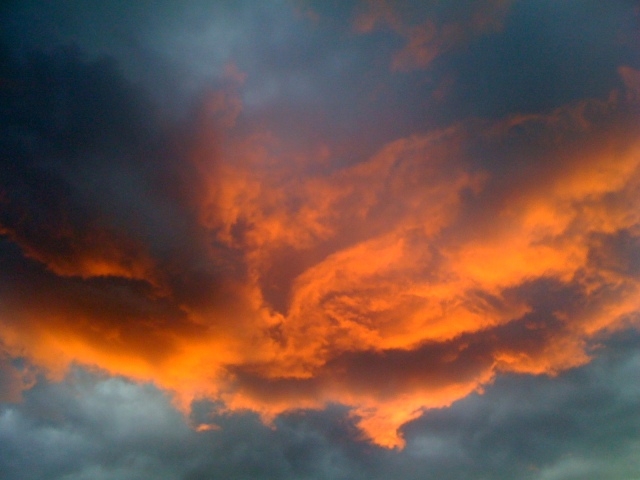
Sunset after a storm in the Sandwich Ridge Mountains, New Hampshire
I took this photo last year during a family vacation in Center Sandwich, New Hampshire. A thunderstorm raged all afternoon, but just as we were finishing dinner the storm suddenly ended. Three generations of extended family went out into the still-damp field to watch the sunset reflected on the lifting storm clouds. As often happens in the mountains, it was a dramatic change. At the time, and ever since, the play of setting sun on passing thunderheads makes me think of Sam Cooke and “A Change is Gonna Come“. Recorded in January 1964, the song became one of the greatest anthems of the Civil Rights Movement.
A Change is Gonna Come
I was born by the river in a little tent.
Ohh and just like the river,
I’ve been running ev’r since.
It’s been a long time, a long time coming
But I know a change gonna come, oh yes it will
It’s been too hard living, but I’m afraid to die
‘Cause I don’t know what’s up there, beyond the sky
It’s been a long, a long time coming
But I know a change gonna come, oh yes it will.
I go to the movie and I go downtown.
Somebody keep tellin’ me don’t hang around.
It’s been a long, a long time coming
But I know a change gonna come, oh yes it will.
Then I go to my brother
And I say brother help me please.
But he winds up knockin’ me
Back down on my knees, ohh
There have been times that I thought
I couldn’t last for long
But now I think I’m able to carry on
It’s been a long, a long time coming
But I know a change is gonna come, oh yes it will.
“Sam as a writer saw himself almost as a reporter,” said biographer Peter Guralnick said in one interview. “He took all of those experiences[of racism],” Guralnick says, “but he enlarged upon them and he broadened them to the point that the song… becomes a statement of what a generation had had to endure.”
Sam Cooke died on December 11, 1964 in a shooting at a Los Angeles motel. He was 33 years old.
***
Today is a gray and cold day where I live – a day on the tipping point between winter and spring. To fight the doldrums, I took my two youngest children swimming at the our local YMCA pool. As I looked at all the kids laughing and playing in the pool, the splashing water sparkling on skin that was black and white and every shade in between, I realized that this was a scene that wasn’t even possible in most of the United States when Sam Cooke wrote “A Change Is Gonna Come” in 1964. And while we still have a ways to go, Sam Cooke was correct. The storm clouds will pass and the sun will come out.
“But I know a change is gonna come, oh yes it will.”
This post is a response to the Weekly Photo Challenge: Change. You can see more responses here.
Offerings at Pashupatinath Temple, one of the most significant Hindu temples of Lord Shiva
Deciding on a photo for this week’s Photo Challenge theme COLOR was a real challenge. Nepal is one place where, in my experience, color continually surprises. Nepalis often clothe themselves in bright colors, which continually provides the eye with pops of unexpected color. Color in the Kathmandu Valley particularly surprises because of the tremendous contrast between the duns and browns of polluted, urban Kathmandu and the bright, rich colors of the surrounding countryside. Sometimes you see things better – appreciate things more – through contrast. Today I’m sharing a gallery of photos, taken in Kathmandu and the Kathmandu Valley, that show the contrast of color. Enjoy!
Funeral preparations, Bagmati River, Pashupatinath Temple
Image on a compound wall in Battisputali neighborhood, Kathmandu
Bhaktapour
Swayambhunath Temple, Kathmandu
World Peace Site
Teachers meet in a rice field behind their school in the Kathmandu Valley
Freshly colored wool drying in the sun on the roof of a rug factory in the Kathmandu Valley
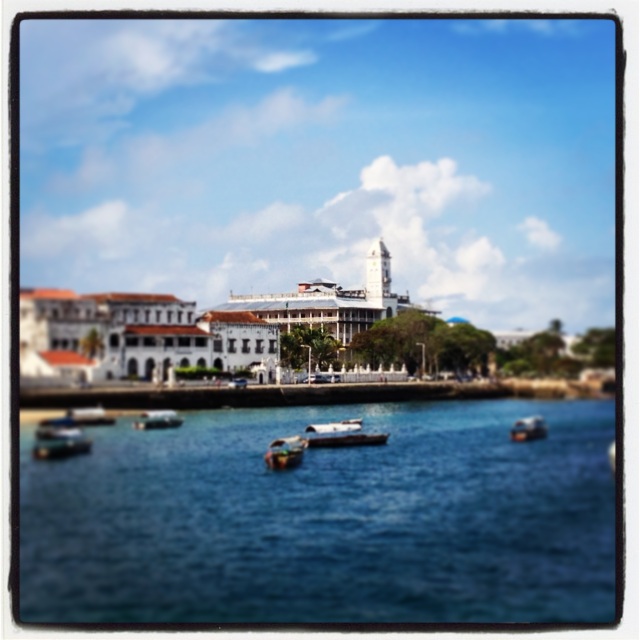
House of Wonders and Stone Town waterfront, Zanzibar
A little more than 10 years ago, I had a rare moment of clarity. I was sitting with my second child, who was 9 months old, on my lap while my 2-year-old danced and swayed around me. Everyone else in the Mommy and Me class was singing – with gusto – the Barney song “I Love You”. Glancing at the clock, I realized that the week before – at exactly this time – I was being interviewed live on national TV in Peru about that country’s truth and reconciliation commission.
The stark contrast made me realize that I had chosen a life in which there might never really be a “typical” day. Setting aside the insipidity of Barney, I realized that these small moments with my young sons were as important and valuable as the other, more high-profile moments of my career, which often takes me to exotic locales. I learned not to compare my days. Not to sift through the experiences of each day and measure the worth of one against another, but to see them all as a whole. To acknowledge that each endeavor for work and for family gives me strength for the other. To realize that I am fortunate to have these varied experiences, which, woven together form the rich tapestry of my life.
So for the Weekly Photo Challenge: A Day in the Life, I am choosing to share one day that I recently spent in Zanzibar for work. As I write this, my daughter is sitting beside me, looking at the photos and talking about them with me. One day in Zanzibar, one day of spring break at home. Days and experiences, knitted together – so many days to be thankful for!
Sunrise in Dar es Salaam
St. Joseph Cathedral, on the waterfront in Dar es Salaam
View from my in Dar es Salaam
On the ferry, waiting for it to leave Zanzibar Gate
Birds over the harbor
Commuters at the Kigamboni Ferry Terminal
Early March – on the brink of rainy season – brings sudden, dramatic rain that quickly ends.
Rainbow over Dar es Salaam Bay
Stone Town waterfront
View of Stone Town harbor from hotel terrace.
On the ferry to Zanzibar
Stone Town rooftops
Looking down on the roofs of Stone Town, Zanzibar
Old Fort in Stone Town, a World Heritage Site
Stone Town, Zanzibar
On the way to Zanzibar Town, the capital of Zanzibar.
Zanzibar is a semi-autonomous part of Tanzania with its own government – known as the Revolutionary Government of Zanzibar. A proposal to amend Zanzibar’s constitution to allow rival parties to form governments of national unity was adopted by 66.2 percent of voters on 31 July 2010.
Interviews with non-governmental organizations (NGOs)
This poster is part of a campaign to end Violence Against Women in Zanzibar
Coconut tree at the office of an NGO in Zanzibar Town
Children’s rights
Back to Stone Town
Lunch. A new discovery – Stoney Tangawizi, a most delicious East African ginger beer!
There is no guidebook to Morocco, and no way of knowing, once one has left Tangier behind, where the long trail over the Rif is going to land one, in the sense understood by any one accustomed to European certainties. The air of the unforeseen blows on one from the roadless passes of the Atlas.
I recently visited the Kingdom of Morocco for the first time. Looking for reading material before my trip, I discovered a book about Morocco by Edith Wharton. This came as a deep surprise to me, a longtime Wharton fan. I thought that I had read every Edith Wharton publication in print, from her ghost stories right down to her interior design book (I wrote a paper on that one in college). I knew, of course, that she had written some travel books; I had even read some of them. But until I saw it listed as a free title on Kindle, I had never heard of In Morocco.
Published in 1920 (the same year as Age of Innocence), In Morocco is widely considered the first travel guide to Morocco. (Wharton certainly thought so, as she states, “Having begun my book with the statement that Morocco still lacks a guide-book, I should have wished to take a first step toward remedying that deficiency.”)
I’ve always admired Wharton’s highly descriptive style, which lends itself exceptionally well to travel writing. In Morocco is the account of Wharton’s motor trip across Morocco in the fall of 1917, at the tail end of the First World War. Much of Morocco had become a French protectorate in 1912, so she made the trip at the invitation of the French Resident-GeneralHubert Lyautey. It is no secret that Wharton was a committed supporter of French imperialism (she described herself as a “rabid imperialist”) and this comes across strongly in In Morocco. (Unless you want read a love letter to colonialism, skip the chapter on Gen. Lyautey’s Work In Morocco.) Equally hard to take is her paternalistic attitude towards and use of racist terminology to describe Moroccans and their culture.
In spite of this, I enjoyed the historical perspective provided by In Morocco. More than anything, In Morocco is a series of sketches of a place where past and present are intermingled, at a moment when the country was on the verge of change. Wharton was very cognisant of the fact that post-war tourism would alter Morocco forever.
Morocco is too curious, too beautiful, too rich in landscape and architecture, and above all too much of a novelty, not to attract one of the main streams of spring travel as soon as Mediterranean passenger traffic is resumed.
Visiting Morocco nearly 100 years after Wharton, I found it interesting to read her admiring documentation of this specific moment in time, which she has preserved in prose as solidly as if in amber.
To see Morocco during the war was therefore to see it in the last phase of its curiously abrupt transition from remoteness and danger to security and accessibility …
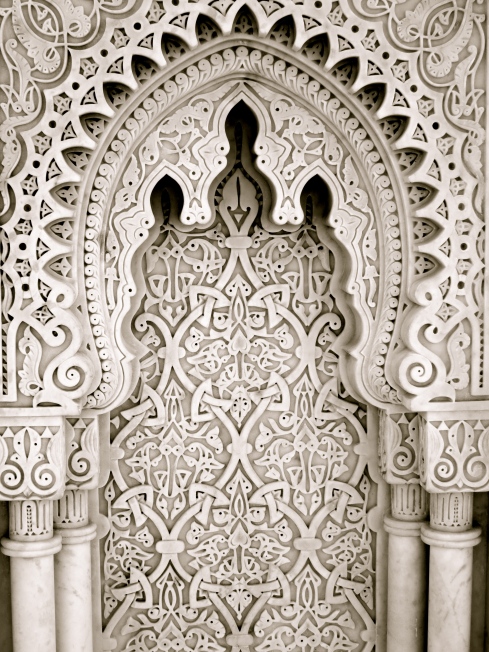
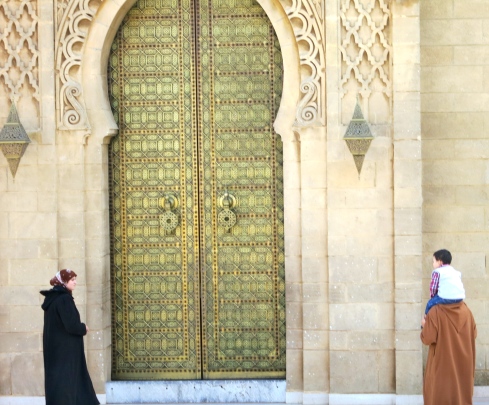
Yet I also found the Morocco of 2013 to be a place where the boundaries between past and present are still slightly blurred. Visiting many of the same places that Wharton had visited nearly a century before, I discovered that her descriptions were, in many cases, still brilliantly apt. The following photographs were taken by me but the words were written by Edith Wharton.
Tangier
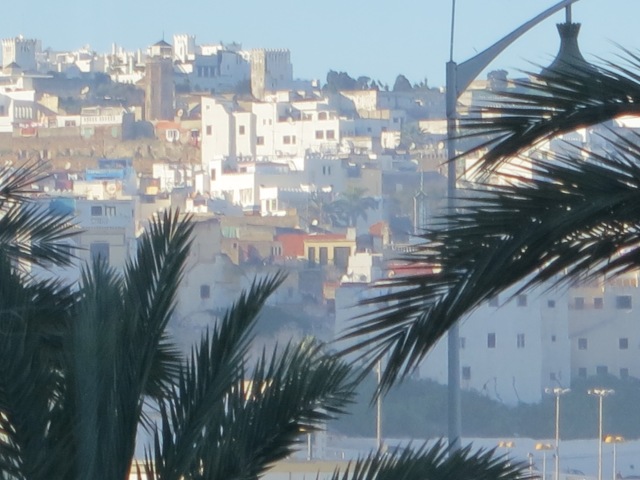
View of the Medina in Tangier
This feeling of adventure is heightened by the contrast between Tangier – cosmopolitan, frowsy, familiar Tangier, that every tourist has visited for the last forty years – and the vast unknown just beyond.
Rabat
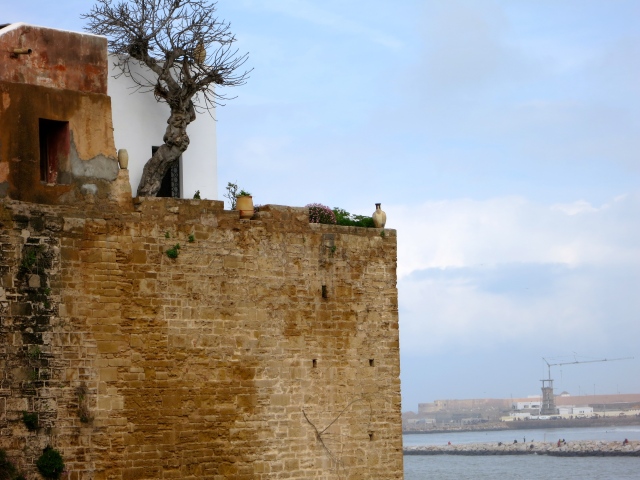
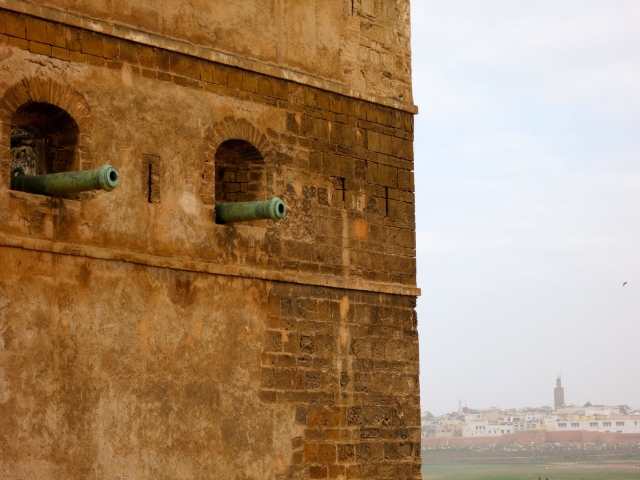
The European town of Rabat, a rapidly developing community, lies almost wholly outside of the walls of the old Arab city. The latter, founded in the twelfth century by the great Almohad conqueror of Spain, Yacoub-el-Mansour, stretches its mighty walls to the river’s mouth. Thence they climb the cliff to enclose the Kasbah of the Oudayas…. Great crenallated ramparts, cyclopean, superb, follow the curve of the cliff.
Kasbah of Rabat
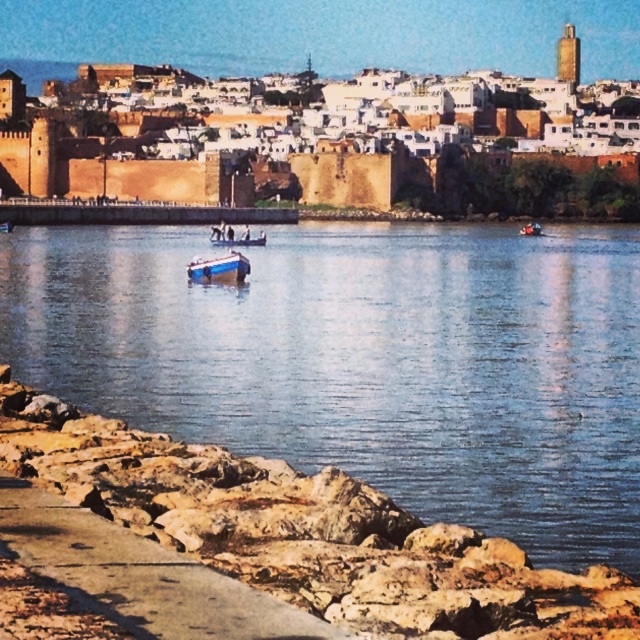
Salé the white and Rabat the red frown at each other over the foaming bar of the Bou-Regreg, each walled, terraced, minareted, and presenting a singularly complete picture of the two types of Moroccan town, the snowy and the tawny. To the gates of both, the Atlantic breakers roll in with the boom of northern seas, and under a misty northern sky.
View of Salé from the Kasbah in Rabat
It is one of the surprises of Morocco to find the familiar African pictures bathed in this unfamiliar haze. Even the fierce midday sun does not wholly dispel it – the air remains thick, opalescent, like water slightly clouded by milk.
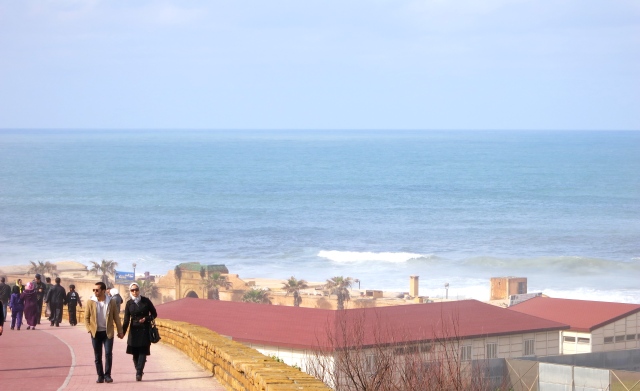
Seawalk in Rabat
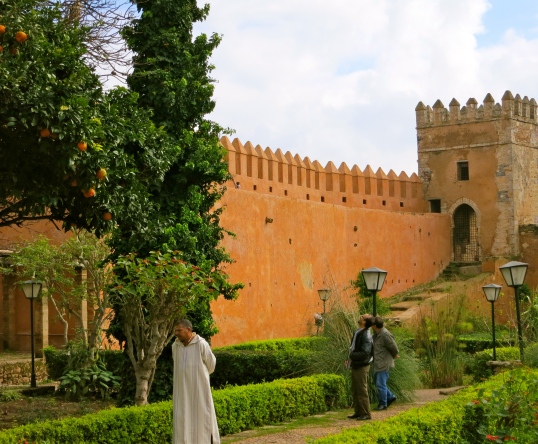
Kasbah of the Oudayas
Inside the gate of the Kasbah one comes on more waste land and on other walls – for all Moroccan towns are enclosed in circuit within circuit of battlemented masonry. Then, unexpectedly, a gate in one of the inner walls lets one into a tiled court enclosed in a traciered clositer and overlooking an orange-grove that rises out of a carpet of roses. This peaceful and well-ordered place is the interior of the Medersa (the college) of the Oudayas.
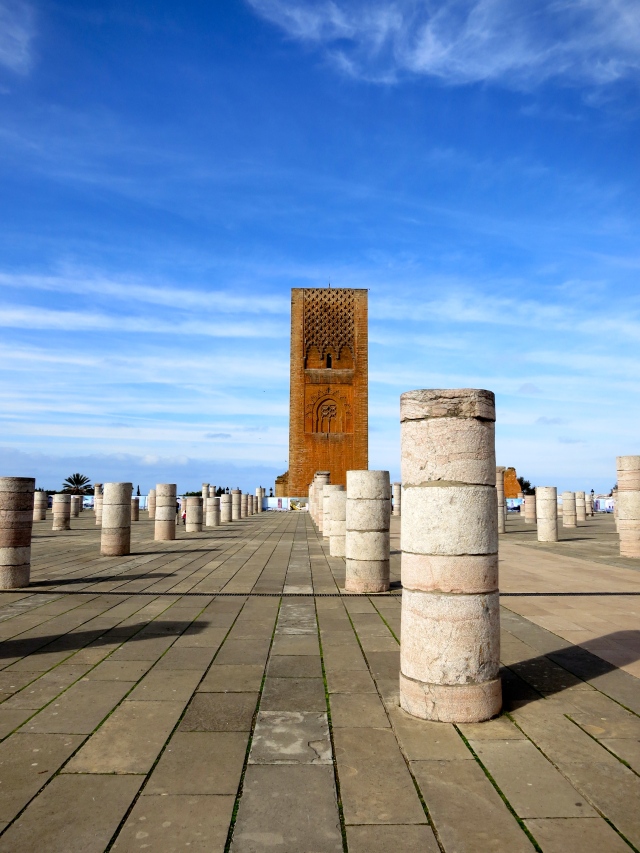
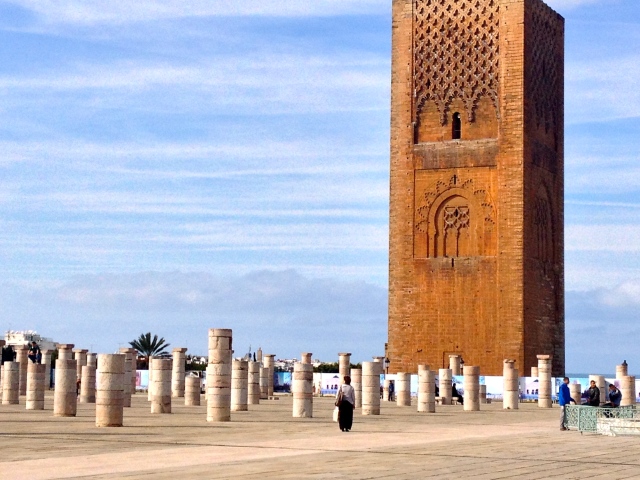
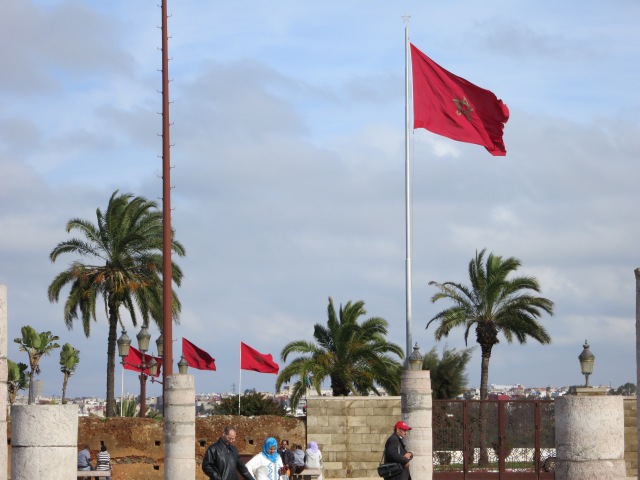
The Tower of Hassan
Tower of Hassan, Rabat
The “Tower of Hassan,” as the Sultan’s tower is called, rised from the plateau above old Rabat, overlooking the steep cliff that drops down to the last winding of the Bou-Regreg. Truncated at half its height, it stand on the edge of a cliff, a far-off beacon to travellers by land and sea. It is one of the world’s great monuments, so sufficient in strength and majesty that until one its fellow, the Koutoubya of Marrakech, one wonders if the genius of the builder could have carried such perfect balance of massive wall-spaces and traceried openings to a triumphant conclusion.
Near the tower, the red-brown walls and huge piers of the mosque built at the same time stretch their roofless alignment beneath the sky. This mosque, before it was destroyed, must have been one of the finest monuments of Almohad architecture in Morocco: now, with its tumbled red masses of masonry and vast cisterns overhung by clumps of blue aloes, it still forms a ruin of Roman grandeur.
The founder of Rabat, the great Yacoub-el-Mansour, called it, in memory of the battle of Alarcos, “The Camp of Victory” (Ribat-el-Path), and the monuments he bestowed on it justified the name in another sense, by giving it the beauty that lives when battles are forgotten.
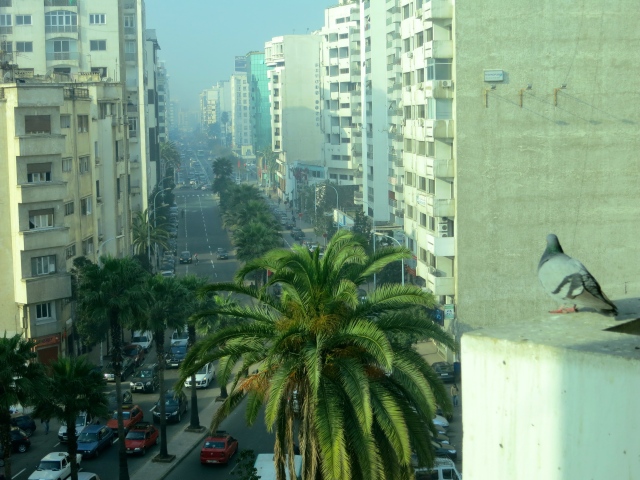
Casablanca
On the west coast, especially, where the Mediterranean peoples, from the Phenicians to the Portuguese, have had trading-ports for over two thousand years, the harm done to such seaboard towns as Tangier, Rabat and Casablanca is hard to estimate. The modern European colonist apparently imagined that to plant his warehouses, cafes, and cinema-palaces within the walls which for so long had fiercely excluded him was the most impressive way of proclaiming his domination.
Casablanca
These are just a few of the words and images I found on my recent trip to Morocco. I was in Morocco for work, however, so my own version of In Morocco will not be a guidebook or travelogue. My version of In Morocco will be a series of sketches, too, but it will the stories of people who are working to improve human rights in their country. I am not a writer with Edith Wharton’s powers of description, but these are stories that can and should be told.
Taken from the southeast shore of Lake Harriet with Instagram on my iPhone 4s.
I live in Minneapolis, the City of Lakes. The story is that the first schoolteacher named the city after mni, the Dakota Sioux word for water, and polis, the Greek word for city. The city is aptly named, with wetlands, creeks and the Mississippi river in addition to twenty-two lakes within the city limits. Truly, a wonderful blend of nature and urbanity.
Of course, most of this water is still frozen at this time of year in Minneapolis. I took this photo of my neighborhood lake – Lake Harriet – while I was out on a run a couple of evenings ago. Enjoy!
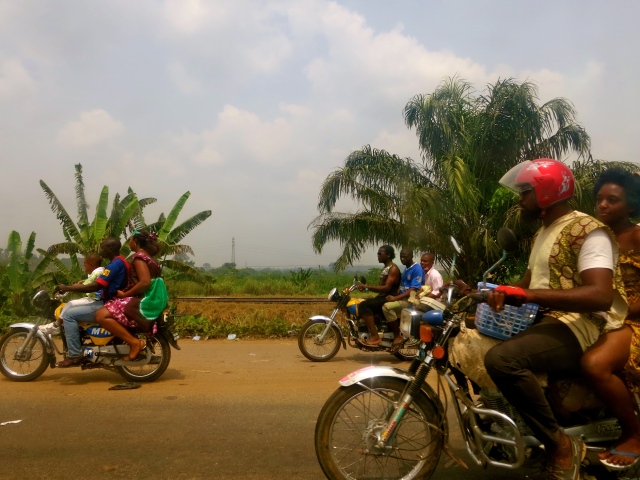
Motorcycle taxis speed toward Douala, Cameroon’s major port and commercial center
In response to this week’s Photo Challenge: Forward, I thought I would simply post this photo, taken two weeks ago today, of motorcycle taxis speeding towards Douala, Cameroon. But there is another kind of movement going on right now in Douala, one that is attempting to move the country forward towards acceptance of the rights of LGBT persons. These courageous activists, who are risking their lives to end discrimination and persecution based on sexual orientation or gender identity in Cameroon, deserve more than a photo. They deserve to have their stories told.
In Cameroon, people who are LGBT face pervasive societal stigma, discrimination,and harassment. They also face the possibility of imprisonment – Article 347 of the Cameroonian penal code criminalizes “sexual relations with a person of the same sex”. At least 28 people have been prosecuted under the law since 2010. One of them is Roger Jean-Claude Mbede, who was arrested and convicted of homosexuality in March 2011 after sending another man a text message reading, “I’ve fallen in love with you.” In December 2012, the Cameroonian court of appeals upheld the conviction and sentenced him to three years in prison.
Gay, lesbian, bisexual, and transgender people have a high risk of HIV/AIDS infection. They are often rejected by their families, who force them out of the home. When targeted by law enforcement, they have more difficulty in obtaining legal protection.Due to the social stigma and intense climate of fear, most LGBT people are forced to live out their lives in secrecy. Yet there are several impressive non-governmental organizations – Alternatives-Cameroun, the Association for the Defense of Gay and Lesbian Rights (ADEFHO), Cameroonian Foundation for AIDS (CAMFAIDS), and Evolve, to name a few – which are working hard to raise awareness about and provide services to the LGBT community.
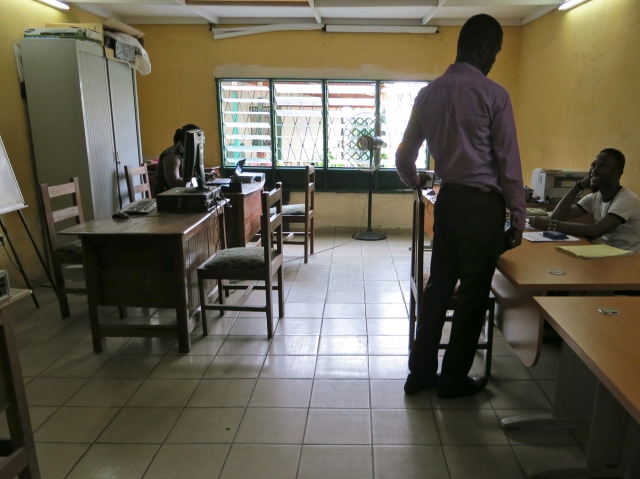
When I was in Douala, I was able to visit Alternatives-Cameroun. Security is, understandably, a big concern. There is no sign that marks their center on boulevard de la Liberté, and when you arrive, you have to sign in and show your ID. Alternatives-Cameroun has one doctor at the center who provides HIV/AIDS treatment and medical services to approximately 75 patients. In addition, Alternatives-Cameroun provides a small community pharmacy, as well as safe, confidential and free HIV testing. In 2012, they provided 720 HIV tests.
Staff at Alternatives-Cameroun centre in Douala
Equally important are the services provided by a psychologist and two social workers. Alternatives-Cameroun also provides public education and outreach, both at the center and through peer educators. On the day I visited, all of the peer educators were at work out “in the field” in Douala.
What touched me most, though, was the real sense of community that is provided by Alternatives-Cameroun. I saw a small group of young people sitting on plastic chairs around a table in “William’s Hall” (named after one of the organization’s founders, who died in the Kenya Air plane crash). I could feel that they were providing each other with comfort and support, a feeling so strong that I could see the connection between them almost as clearly as I could see the young man holding the hand of the woman beside him.
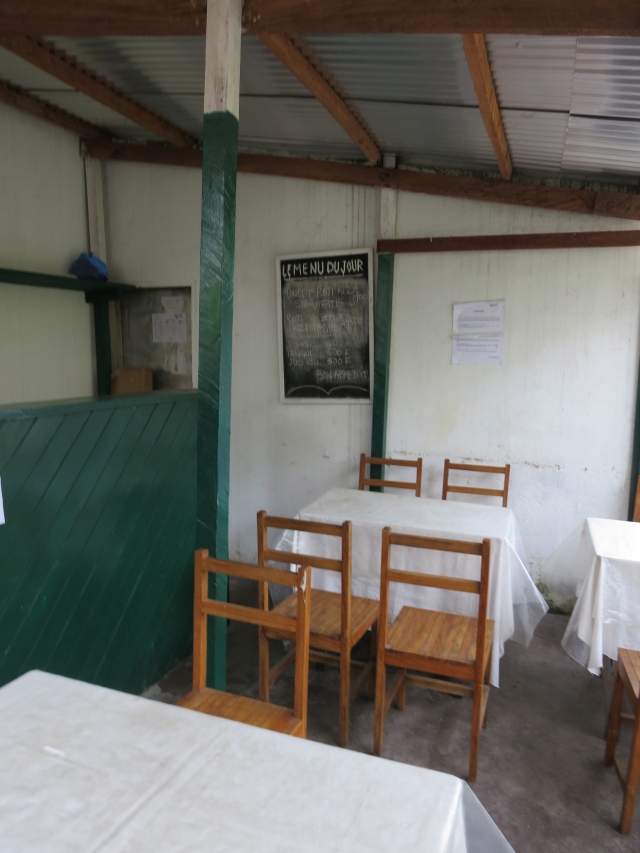
As a way to join the community and to connect with the neighbors around them, Alternatives-Cameroun started a small restaurant that serves a very inexpensive daily lunch. This anti-discriminatory gambit has paid off; the neighbors now come to the restaurant to eat and talk together with the staff and patients. Often the patients are very poor, so the restaurant means they can offer them a meal or two a day. The restaurant also provides meals for LGBT detainees in prison. Prison conditions in Cameroon are notoriously bad, with severe overcrowding and inadequate food. Most detainees rely on family members to bring them meals. As LGBT detainees have often been rejected by their families, they have no other access to food.
Activists working on LGBT issues in Cameroon told me that one of their main needs is for more lawyers. One of the very few Cameroonian lawyers who is willing to take on these “homosexuality” cases is Alice Nkom. The first black woman admitted to the Cameroonian bar, Alice has been courageously fighting for the rights of LGBT Cameroonians for many years. In spite of serious death threats, Alice Nkom continues her work. “Threats like these show us that the fight must continue,” said Nkom.
Cameroon has been receiving a lot of criticism recently from the international community, particularly the European Union. The issues of LGBT rights will certainly come up again at the Human Rights Council’s Universal Periodic Review of Cameroon this spring. On January 31, Cameroonian President Paul Biya told reporters that attitudes are changing in his country about the criminalisation of homosexuality. “Now I can say that discussions are under way. People are talking, minds can change one way or another but currently it’s a crime.”
The government of Cameroon must do more than discuss. The government must protect the rights of all Cameroonians, regardless of sexual orientation or identity. And when things do change, as they will one day, the credit will go to the brave men and women who have put their heart and souls – not to mention their lives – into moving their country forward on LGBT rights.
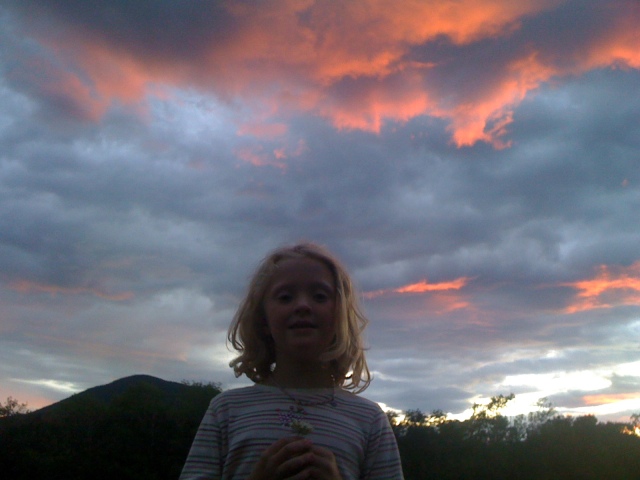
One of the things that I love about this photo of my daughter is the background. While it looks like the sky, it is actually the reflection of the sunset in the still waters of a lake. Sky and water, no boundaries, no borders. Just one great beyond.
I don’t know what she was thinking as she gazed into the beyond, but this picture symbolizes my hope for her future: that she will always have know the feeling that “Everything is possible.”
See more photos of the Weekly Photo Challenge theme Beyond here.







 The Human Rights Warrior
You must be logged in to post a comment.