End Child Labor: An Estimated 215 Million Children Still Need Alternatives

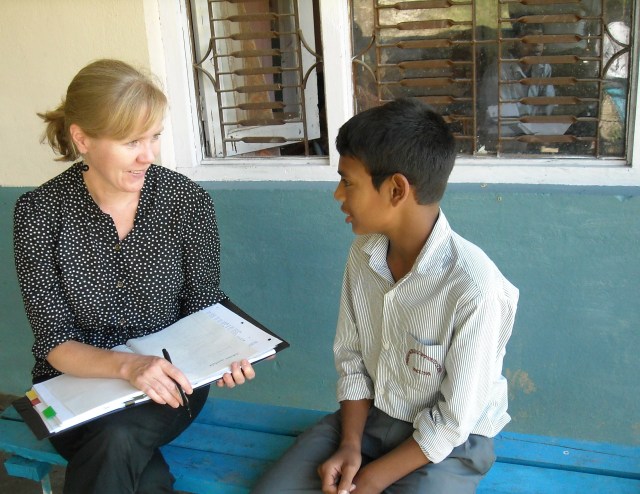
September:  Interviewing students at the Sankhu-Palubari Community School in Nepal
September: Interviewing students at the Sankhu-Palubari Community School in Nepal

What do you say to a child who has experienced child labor? I found myself in this position in Nepal recently. I was interviewing a teenager, who I will call Shree.  He described how as a little boy he had worked with his parents in the brick factories of Bhaktapur, rising at 1 a.m. to carry mud and mix bricks. Luckily, when he was 7, a school opened in in his community to provide Shree and other children at risk of child labor a free education, as well as the chance for a childhood and a promising future.

The Sankhu-Palubari Community School (SPCS) was launched in 1999 by The Advocates for Human Rights, a nonprofit organization based in the Twin Cities, to provide an alternative to child labor. Now, 14 years later, about 350 students are enrolled in grades pre-K through 10 at the school, which is located about an hour from the capital city of Kathmandu. Many of the students are from families that are low-caste, indigenous, or other marginalized groups.

The International Labour Organization (ILO) estimates that 215 million girls and boys around the world are swept up into child labor, some into human trafficking. Children, like Shree, are engaged in work that not only deprives them of their rights and an adequate education, but also is hazardous to their health and commits them to a life of poverty.

The ILO launched the first World Day Against Child Labour in 2002 to highlight the plight of these children. Observed on June 12, the day works as a catalyst for the growing worldwide movement against child labor.

When in his final year at Sankhu-Palubari, Shree, one of the best students in the area, passed his 10th grade School Leaving Certificate exam with distinction. When I met him recently, he was in his his last year of high school.  He likes to write poetry and listen to music. In the afternoons, he volunteers at SPCS, the school that changed the course of his life and where his two younger brothers now study instead of working in the brick factories. He helps the teachers in the classroom and encourages the students to study hard. When they get discouraged, he tells them, “Choose the road that makes your future very bright.”

The bright future Shree envisions for himself is to continue his education after high school and become a math and science teacher to work in rural Nepal with children who, without a school and teachers, would most likely work instead of learn.

So, what do you say to the young girl beading blouses with tiny fingers in a suffocating textile sweatshop in India? What do you say to the little boy in Gambia working in an auto-repair garage or selling items on the street? What do you say to the young girl who is working as a petite bonne (domestic servant) in Morocco?  To the child  sold into human trafficking?

Through his deeds and goals, Shree is telling these children that he is working to break this cycle of abuse.

For you and me, I say that we speak with a loud, unified voice today and proclaim, “We are committed to protecting you, the world’s children, by ending child labor.”

Then, we put our words into action.

Originally published in MinnPost on June 12, 2013.

Petites Bonnes: Child Domestic Labor in Morocco

Today, on the World Day Against Child Labour, I am sharing this post that I wrote for World Moms Blog. Moroccan flag

While millions of tourists visit Morocco every year, very few are aware of  a hidden human rights abuse that is occurring behind closed doors in Morocco’s cities.   Morocco has one of the worst child domestic labor problems in North Africa.  The International Labour Organization (ILO) has estimated that between 66,000 and 88,000 children between the ages of 7 and 15 – 70% of whom are under age 12 –  are working as domestic servants in Morocco.

These children work long hours for little pay and often suffer physical and other forms of abuse. Because domestic work is “women’s work” in Morocco, the virtually all of these child domestic workers are girls. In Morocco (a country with a French colonial history), these child domestic workers are called petites bonnes or “little maids”.

I had the opportunity to learn more about the petites bonnes issue during a recent trip to Morocco.  The United States Department of Labor’s Bureau of International Labor Affairs describes the problem like this:

Young girls are sent to work as live-in domestic servants, often before they reach age 10. Parents sell their daughters or receive payment of wages in exchange for their daughters’ service. These petites bonnes (little maids) often face conditions of involuntary servitude, including long hours without breaks; physical, verbal and sexual abuse; withheld wages and even restrictions on their movement. Frequently, they are sent from rural villages to more urban areas, and find it difficult to make their way home. Most petites bonnes are denied an education, and illiteracy rates are high among this population.

The Difficult Life of a Petite Bonne

The situation of petites bonnes in Morocco results from a combination of poverty, gender inequality and lack of access to education.   Girls – some as young as my own  8-year-old daughter – are sent to work as petites bonnes to generate income to support their families.  They come from poor rural areas to work in cities such as Casablanca, Rabat, Marrakech, Tangiers, Agadir, and Fes.  Intermediaries generally broker the arrangement, receiving a fee from the employer. Petites bonnes interviewed by Human Rights Watch reported that their employers frequently beat and verbally abused them, denied them the chance to go to school, and sometimes even refused to provide them with adequate food and sleeping facilities.

In a strange city, separated from their families and often speaking a Berber language instead of the Arabic spoken by a majority of Moroccans, many petites bonnes are extremely isolated and vulnerable.  The isolation, along with the privacy of the homes, increases the chance of sexual abuse by male members of their employers’ household.  In fact, several studies have found that many unwed young mothers in shelters in Morocco were petites bonnes when they became pregnant.

The difficult life of a petite bonne sometimes ends tragically.  The widely reported story of little Khadija, an 11-year-old petite bonne who was beaten to death by her employer in July 2011, raised calls for the government to take action on the issue.  In January 2013, a 17 year old petite bonne in Casablanca attempted suicide by jumping from the fourth floor of her employers’ home.  Amateur video of the suicide attempt circulated on the internet shocked Moroccans.  Most recently, on March 24, 2013, a young domestic worker was taken to the hospital in Agadir with third degree burns on multiple parts of her body.  Only 14 years old, she died from the injuries allegedly inflicted by her employers, prompting a UN representative in Morocco to decry child domestic labor by girls as “one of the worst forms of child exploitation” and call on the government to take action.  Yet thousands of petites bonnes in Morocco continue to suffer in silence.

Gaps in Legal Protection

According to NGOs working to help petites bonnes in Morocco, part of the problem relates to gaps in and difficulties with implementation of Moroccan laws.   While Moroccan law prohibits employment of children under the age of 15,  Morocco’s Labor Code does not apply to domestic work.  Therefore, the Labor Codes’ protections for workers regarding hours worked (44 hours per week) and pay (2,333 dirhams or approximately $261 per month) do not apply. Human Rights Watch has documented that petites bonnes work long hours, often seven days a week.  They earn an average of 545 dirhams (approximately $61) per month, but some earn as little as 100 dirhans (approximately $11).

In addition, Morocco ratified the Convention on the Rights of the Child (CRC) in 1993 and the ILO Convention No 182 on the Worst Forms of Child Labor.  Both international treaties prohibit economic exploitation and employment of children in work that is likely to be hazardous, interfere with their education, or harm their health, safety or development.  Unfortunately, neither have been implemented in a way that provides adequate protection to the petites bonnes.

Some Progress

There is some indication that things are starting to change in Morocco.  The government and international human rights organizations report that the number of girls working as petites bonnes is declining.  This is due in part to the fact that public awareness about the problems faced by petites bonnes has been raised because of increased media attention to the issue and public education campaigns undertaken by the Moroccan government, NGOs, and United Nations agencies.   The Moroccan government has also taken steps to increase school enrollment and this has helped reduce the number of children engaged in child labor.

Yet still more needs to be done.  Since 2006, the government has been working on a draft law on domestic work that would for the first time establish a legal framework to better protect petites bonnes, secure rights such as a weekly day of rest and annual leave, and impose sanctions on employers.  The Moroccan government has said that the draft Law on Domestic Workers is one of its priorities, but the bill has not yet been considered and passed by Parliament.

Take Action on June 12 – World Day Against Child Labour!

The problem of child domestic workers is not unique to Morocco.  In fact, there are an estimated 15.5 million child domestic workers worldwide.  The widespread use of children as domestic servants is one of the most hidden forms of child labor.  The exploitation of children, particularly girl domestic workers like petites bonnes, is a serious violation of children’s rights.  It perpetuates inequality and inter-generational poverty, and deprives girls of their right to education, health, participation and protection.  It also prevents children from acquiring the life skills and education necessary to improve their future.

To draw attention to the issue of child labor, the United Nations has recognized June 12 as the World Day Against Child Labour.  In 2013, the focus is on child domestic workers like the petites bonnes of Morocco.  On the 2013 World Day Against Child Labour, the international community is calling for legislative and policy reforms to ensure the elimination of child labor in domestic work and the provision of decent work conditions and appropriate protection to young workers in domestic work who have reached the legal working age.  In Morocco, the government should:

•    Strictly enforce the minimum age of 15 for all employment (including domestic work) and ensure that all children (particularly girls) enjoy the right to free and compulsory basic education;

•    Adopt a domestic worker law that ensures compliance with the 2011 ILO Convention 189 on decent work for domestic workers

•    Create an effective system for identifying, removing and rehabilitating child domestic workers from illegal or abusive employment; and

•    Criminally prosecute individuals responsible for violence or other criminal offenses against child domestic workers.

In addition, the World Day Against Child Labour provides the opportunity for all of us to take action to build the worldwide movement against child labor.

Take Action to end child labor.  Learn what you can do to inform yourself and raise awareness in your community.  The ILO’s SCREAM (Supporting Children’s Rights through Education, the Arts and Media) programme has factsheets, presentations, postcards, poems, and more. The SCREAM education pack is available in multiple languages.

Join the 12to12 to End Child Labour community.  Learn more about the issue and join the 12to12 Community Portal, which provides a common platform for experience and knowledge sharing on research, activities and events  related to the World Day Against Child Labour.

Find out what kids and teens can do to help.  The ILO’s Youth in Action against Child Labour campaign has ideas, information,  videos and other resources to help young people take action to end child labor.

Make a pinwheel with your kids.  The pinwheel has become the symbol of the international fight against child labor.  The pinwheel campaign to raise awareness about child labor began in Brazil in 2004. The five blades of the pinwheel represent the different continents of the world and the wind that makes the pinwheel spin is the will to act and to pass on the message until all countries take adequate measures to end child labor. Download a kit to make a pinwheel to keep the movement going!


The Human Rights Lesson

20130525-083050.jpg

I spent some time in my daughter’s classroom last week talking to the second graders about human rights.  I’ve been a guest speaker in all of my kids’ classrooms and have done this presentation (a kind of human rightsy mash-up of show-and-tell and career day) pretty much every year since my oldest was in second grade.  But this time was different.  I discovered the night before I was scheduled to speak in her class that my daughter, who just turned 8, was planning to do the presentation on human rights WITH me.

I have a more-or-less standard routine and she knew it well.  (I wrote a post called Same and Different about doing this human rights lesson in my sons’ classrooms.)  First, I do an activity that I call Same and Different.  I have several photos from West Africa that I had blown up and mounted on foamcore.  I show the kids a photo and have them point out what they see in the picture that is the same in their lives and what is different.  It always generates great discussion and often the kids see things in the photos and make connections that I never did.  Hopefully, by showing that all humans have similarities in spite of our differences, it also plants some seeds of respect and tolerance.

When I got to her classroom, my daughter brought her small plastic chair to the front of the class and set it down firmly right next to mine.  After introducing me (with the class microphone), she sat down beside me.  She had assigned herself the assistant’s job of holding the photos for all to see while I led the discussion.  A couple of times I had to remind her to hold the photo out so that all the kids could see, but overall she did a great job.

The next activity I do is to pass around a selection of items that I have picked up on my travels for work.  As we pass them around so that everyone gets a chance to touch them, we again discuss what is the same and different in our lives.  This time, I didn’t gather a thing for the activity; my daughter collected everything the night before our presentation.  A yak wool blanket from Nepal, a wooden statue of  a traditional palava hut from Liberia, coins and bills from Cameroon – all went into a bag I had brought her from Ghana.  She even added her pink beaded pointy-toed slippers from Morocco.  When I reminded her that she would have to share and let everyone touch them and try them on,  she hesitated for a moment.  In the end, though, her slippers went into the bag.

To close out the presentation, I usually read a children’s book or two about human rights.  I have a couple of favorites.  For Every Child, A Better World by Kermit the Frog is one that we own two copies of, but of course we couldn’t find either when we needed it.  I went to library to check out a copy and discovered shelved right beside it I Have the Right to Be a Child by Alain Serres.  This beautifully illustrated book presents the concept of human rights, especially those of children as set out in the UN Convention on the Rights of the Child.

When I brought the books home from the library, I asked my daughter,

“Which do you want me to read to your class?”

“I want to read them both,” she said.

She did a beautiful job of reading both books to the class.  I was so proud that I teared up, right there in front of all the second graders and their teacher.

In some ways, it is easier to talk to kids about human rights than adults.  Because children generally see things in terms of black and white, right and wrong, it is easy for them to understand that we all have rights – the right to voice our opinions, to go to school, to be free from violence.  The right to have food and shelter and clean air and water.  The thing about kids is that they have a very strong natural sense of justice (as it applies to them, at least) they understand the inequities of a world where not everyone is able to access those rights.

One girl  came up and hugged me after the human rights lesson.

“It makes me sad,” she said, “to think that not all kids have enough to eat.”

“What you are feeling is empathy,” said the teacher.  “And that’s good.”

Knowing about the problem – caring about it and wanting to do something about it – is the first step towards change.

The last thing I heard as I left the classroom was another little girl saying,

“I think I am going to write a letter to President Obama and ask him why we are not part of the Convention on the Rights of the Child.”

There are a lot of things about working in human rights that are not easy, but this was a very  good day!

More ideas for human rights activities to do with children:

10 Things to Do With Your Kids on Human Rights Day

10 More Things to Do With Your Kids on Human Rights Day

Same and Different

Regrets

A couple of days ago, my  daughter asked me, “Do you ever have regrets?”

She asked me this in the bathroom, as I was drying my hair.  No matter what I am doing, my two youngest kids seem to hover around me, fluttering like moths to a flame.  The lack of privacy – not to mention personal space – doesn’t really bother me anymore.  And often, as on this particular morning, it provides the opportunity to talk about whatever is bubbling to the surface of  their young minds.

I weighed my possible responses. My daughter just turned eight. What could a second-grader possibly know about regret?  In the end, I answered that, in general, my regrets were not about things that I had done but rather about things that I had NOT done.

“Do YOU have any regrets?” I asked.

After a pause, she admitted, “Sometimes I’m not so nice to some kids at school.”

“But recognizing that you aren’t always nice means that you can do something about it,” I pointed out.  “Right?”

She shrugged and wandered off with her American Girl doll.  Maybe the message would sink in.

But for me,  a question remained, left hanging in the humid, post-shower bathroom air.

What do you do when you have regrets but you know that there is not a thing in the world that you can do about them?

The truth is that my daughter’s question brought me back to a conversation that I had in a very different context.  Several years ago, I spent some time in the Buduburam Refugee Settlement in Ghana. I was with a team taking statements from Liberian refugees for the Truth and Reconciliation Commission of Liberia.  It was almost exactly six years ago – May 2007 – and it was grueling, emotional work.  I interviewed more than 40 people that week and every single one of them  had suffered multiple layers of trauma and unimaginably tragic loss.  One after another, in family groups and as individuals, they sat before me in a small, cramped office.  Sometimes there was power for the ceiling  fan to move the hot, heavy air; sometimes there was not.  Each one of them was a survivor of horror, a testifier to the nightmare of war.  (I’ve written about some of them before in Talking To My Kids About Death.)

Even though they had left their homeland of Liberia, what they had experienced was still very much with them.  Even if they could push it down deep during the day, the terrors they witnessed would return to haunt their dreams.   Many people I interviewed told me of how the nightmares startled them awake at night, sweating and crying.  Many more told me of hearing others screaming in the night, neighbors who were trapped in their own PTSD- induced nightmares. There is no privacy in a refugee camp.

There was one woman who has always stayed with me.  She was middle-aged, calm and collected.  She told me her story in detail, almost scientifically exact.  Clearly, she had relived the events many times over.  She told me of her life before the war, the fighting and chaos that separated her from her husband and some of her children, the desperate weeks when she, her youngest children, and their neighbors hid in the bush, the treacherous journey to the border. The years – more than a decade- of limbo in this refugee camp.

At the end of any interview, I always ask, “Is there anything else you would like to tell me?”

This woman told me of that the only true regret that she had, the only regret of her life, was about something that she had not been able to do. What she told me went something like this:

We were hiding in the bush and the rebels passed close by.  They attacked a village there.  They didn’t see us, but we saw them.   They killed a lot of people.  We were too afraid to move, so afraid they would hear us.  There was a baby crying; they must have killed the mother.  The baby kept crying and crying and crying.  I wanted to go get that baby, but what could I do?  I knew the baby’s crying would give us all away to the rebels. The baby kept crying and crying and crying, all night long.  And then it stopped.  I knew that the baby had died.  In the morning, we saw that the rebels had moved on and we left our hiding place.  Now I hear that poor baby crying every night in my dreams.

Most people will never be put in a position like this, this untenable Hobson’s Choice.  Most of us will never be faced with having to make the choice between our own life -and that of our children and neighbors – and that of an innocent baby.  Many of us would like to assume that we would find a way to not make the choice; that we would find a way to save that baby.

I knew I could not save that baby.  I wanted to, so much, but I knew I could not.  Even so, I have always felt bad about it. I have never told anyone – not one single person – about this before. Just telling you now – it makes me feel better.

I don’t have any answers here, just as I had nothing to say to this woman other than “I am so sorry.”  I can’t change the world.   I can’t promise my daughter that she won’t experience pain or sorrow or guilt or regret.  I don’t even have an image to go along with this post.

But if there is one thing that I took away from that hot, cramped interview room in that refugee camp in Ghana, it is that there is a value in bearing witness.  I had worked with refugees and torture survivors for years, but it took this one woman to bring that point home to me.  There is a value in simply listening,  and in confirming for someone who suffered injustice that, “It is not right and I’m sorry that this happened to you.”

It may seem insignificant, but it is not.  And it is a reminder that when you come in contact with someone who is suffering, in either a big or a small way, there is always something that you can do. You can listen.

So do it.

A Change Is Gonna Come

Sunset after a storm in the Sandwich Ridge mountains, New Hampshire
Sunset after a storm in the Sandwich Ridge Mountains, New Hampshire

I took this photo last year during a family vacation in Center Sandwich, New Hampshire.  A thunderstorm raged all afternoon, but just as we were finishing dinner the storm suddenly ended.  Three generations of extended family went out into the still-damp field to watch the sunset reflected on the lifting storm clouds.  As often happens in the mountains, it was a dramatic change.  At the time, and ever since, the play of setting sun on passing thunderheads makes me think of Sam Cooke and “A Change is Gonna Come“.  Recorded in January 1964, the song became one of the greatest anthems of the Civil Rights Movement.

A Change is Gonna Come

I was born by the river in a little tent.
Ohh and just like the river,
I’ve been running ev’r since.
It’s been a long time, a long time coming
But I know a change gonna come, oh yes it will
It’s been too hard living, but I’m afraid to die
‘Cause I don’t know what’s up there, beyond the sky
It’s been a long, a long time coming
But I know a change gonna come, oh yes it will.
I go to the movie and I go downtown.
Somebody keep tellin’ me don’t hang around.
It’s been a long, a long time coming
But I know a change gonna come, oh yes it will.
Then I go to my brother
And I say brother help me please.
But he winds up knockin’ me
Back down on my knees, ohh
There have been times that I thought
I couldn’t last for long
But now I think I’m able to carry on
It’s been a long, a long time coming
But I know a change is gonna come, oh yes it will.

A singer who blurred the lines between gospel, R&B and pop, Cooke was reportedly inspired to write “A Change is Gonna Come” by Bob Dylan and “Blowin’ In The Wind”.  While on tour in October 1963, Cooke and his band were turned away from a “whites only” motel in Shreveport, Louisiana where they had a reservation. When they protested,  they were arrested and thrown in jail for disturbing the peace.   Not long after, Sam Cooke wrote “A Change is Gonna Come”
“Sam as a writer saw himself almost as a reporter,” said biographer Peter Guralnick said in one interview.  “He took all of those experiences[of racism],” Guralnick says, “but he enlarged upon them and he broadened them to the point that the song… becomes a statement of what a generation had had to endure.”
The song was only a modest commercial success and Sam Cooke only performed it live once.   Yet “A Change Is Gonna Come” has become an iconic symbol of triumph over adversity.  It has been called Sam Cooke’s legacy and “heralded as his magnus opum”.  In 2005, it was voted number 12 in Rolling Stone magazine’s 500 Greatest Songs of All Time.  It has also been selected National Public Radio (NPR) as one of the 300 most important songs.  In 2007, it was added by the Library of Congress to the National Recording Registry.  Bettye LaVette performed “A Change Is Gonna Come” with Jon Bon Jovi, at the Lincoln Memorial during the first inaugural concert for President Obama, introducing a new generation to Sam Cooke.   (Watch the video here .)
Sam Cooke died on December 11, 1964 in a shooting at a Los Angeles motel. He was 33 years old.
***
Today is a gray and cold day where I live – a day on the tipping point between winter and spring.   To fight the doldrums, I took my two youngest children swimming at the our local YMCA pool.  As I looked at all the kids laughing and playing in the pool, the splashing water sparkling on skin that was black and white and every shade in between, I realized that this was a scene that wasn’t even possible in most of the United States when Sam Cooke wrote “A Change Is Gonna Come” in 1964.  And while we still have a ways to go, Sam Cooke was correct.  The storm clouds will pass and the sun will come out.
“But I know a change is gonna come, oh yes it will.”
IMG_0365
This post is a response to the Weekly Photo Challenge: Change.  You can see more responses here.

Ode to Shel Silverstein

IMG_1348

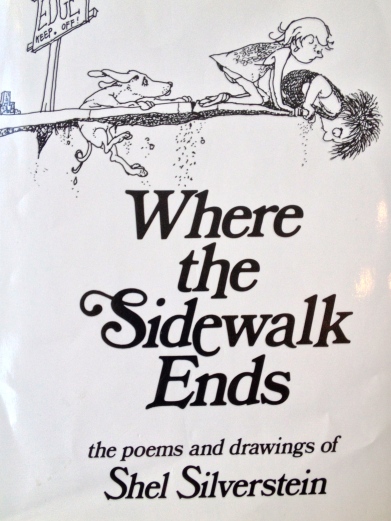
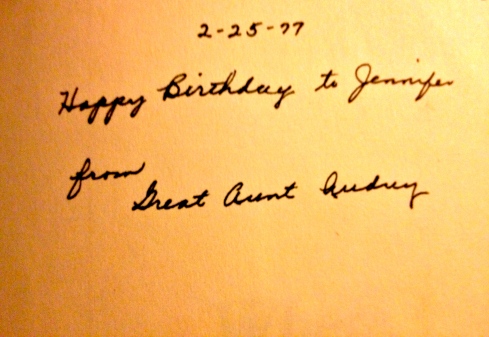
April is National Poetry Month and one of the “30 Ways to Celebrate”  is to revisit a poem that you loved when you were young.  So tonight I pulled out the Shel Silverstein‘s classic Where The Sidewalk Ends.  We have all of Shel Silverstein’s books, even the posthumous Everything On It. I actually have two copies of Where The Sidewalk Ends. My first copy was a gift I received for my birthday from my great-aunt Audrey.

IMG_1346

There is so much humor and sense and joy in these poems! If I read the opening line, I can close my eyes and recite many of the shorter ones. Flipping through the pages and familiar illustrations, one of my favorite poems jumped out at me.  Perhaps it influenced me more as a child than I realized.

LISTEN TO THE MUSTN’TS

Listen to the MUSTN’TS, child,

Listen to the DON’TS

Listen to the SHOULDN’TS

The IMPOSSIBLES, the WON’TS

Listen to the NEVER HAVES

Then listen close to me–

Anything can happen, child,

ANYTHING can be.

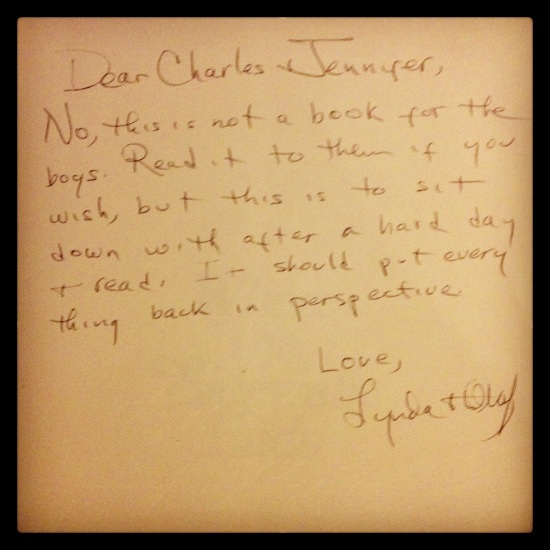
In the second of my two copies of Where The Sidewalk Ends, I re-discovered this dedication from my Grandpa Olaf (I have written about his secrets to a long and happy life before) and my step-grandmother Lynda:

Dedication

My grandpa signed it, but this dedication was clearly written by Lynda.  Both have been gone for a couple of years now.   The book was given to us perhaps 10 years ago; I am certain that I have read the dedication before.  But reading it again was a like a familiar touch on the shoulder.  An unexpected blessing.

So I, for one, will be embracing the expected – and unexpected – richness of the National Month of Poetry.

***

Two more poems from Where The Sidewalk Ends and one bit of trivia:

HUG O’ WAR

I will not play at tug o’ war.

I’d rather play at hug o’ war,

Where everyone hugs

Instead of tugs,

Where everyone giggles

And rolls on the rug,

Where everyone kisses,

And everyone grins,

And everyone cuddles,

And everyone wins.

Hug o' War
On the way to school in Minneapolis, USA

NO DIFFERENCE

Small as a peanut,

Big as a giant,

We’re all the same size

When we turn off the light.

Rich as a sultan,

Poor as a mite,

We’re all worth the same

When we turn out the light.

Red, black or orange,

Yellow or white,

We all look the same

When we turn out the light.

So maybe the way to make

Everything right

Is for God to just reach out

And turn out the light!

IMG_0202
On the way home from school in Yaounde, Cameroon

Here is the Trivia bit:  Shel Silverstein also wrote the lyrics to the Johnny Cash song “A Boy Named Sue”. (It’s true!)

More about  Shel Silverstein’s poetry and illustrations – and activities, too – can be found on www.shelsilverstein.com.

***

For National Poetry Month, here are more of my posts with poems:

A Mother In A Refugee Camp by Chinua Achebe

April Rain Song by Langston Hughes

Dust of Snow by Robert Frost

Marriage Equality, Through the Eyes of a 10-Year-Old

20130328-160336.jpg

With the Supreme Court hearing arguments in two cases related to same-sex marriage, much has been written – and said and thought – this week about marriage equality in the United States. No matter how these particular nine justices rule (and there is speculation that, unlike the Warren Court which in 1967 issued a sweeping ruling on the unconstitutionality of state bans on interracial marriage, this court might actually punt), I am convinced that it is only a matter of time before same-sex marriage is a recognized as a right in this country.

This week, I re-read Hockey Moms, a post I wrote last summer about my 10-year-old son and his discussions with his hockey team about marriage equality. It was a lesson to me at the time about the importance of engaging people in the conversation about same-sex marriage. In re-reading it, however, I am struck by how much forward movement there has been in just the past six months. Not only was the proposed amendment (which would have defined marriage as between one man and one woman in the Minnesota state constitution) that Simon was lobbying against defeated last November, but it was defeated handily. In fact, it went down in flames. Even my 98 year-old grandmother voted NO! In a huge reversal, this year there is a real chance that our Minnesota state legislature will pass legislation legalizing same-sex marriage. The number of states with same-sex marriage jumped on election day in November when three states – Maryland, Maine and Washington – legalized same-sex marriage through popular vote. Recently, it seems like politicians have been “coming out” in favor of marriage equality on a daily basis.

The momentum in favor of same-sex marriage appears to be increasingly rapidly and there are signs that the trend will not be reversed. I asked my 13-year-old what he thought about the recent ABC/Washington Post poll that found that 81% of Americans aged 18-29 supported legal same-sex marriage, he said, “Well ,that makes sense. Although I am disappointed in the 20%. At my school, there are only two kids who oppose same-sex marriage.” They didn’t poll Americans under the age of 18, but anecdotally at least, support for marriage equality may be even higher among his peer group.

My kids are part of a generation which, although it doesn’t have an official name yet, is already saying, “Of course same-sex marriage should be legal. Why was this even an issue?” They have grown up with favorite teachers, beloved camp counselors, trusted neighbors, friends and classmates who are openly LGBT. They go to school and church with kids from families with parents who are in same-sex relationships, some but not all legally sanctioned by state law. Men kissing men, men kissing women, women kissing women – my kids don’t care. Frankly, it is disgusting to them when ANY adults kiss!

I’m sharing an excerpt from Hockey Moms to illustrate my kids’ perspective on marriage equality, a peek into the future.

***

My 10-year-old son comes out of the ice arena, swaggering despite the heavy hockey bag that he carries like a giant backpack. His hockey stick and water bottle he wields before him like a rod and staff. I’m sitting on a picnic table in the sun and, yes, I am facebooking on my iPhone. His cheeks are flushed, his bright ginger hair is damp-dark with sweat. He has an announcement to make.

“I’ve got everyone but one kid on my team to be in favor of same-sex marriage.

AND two of the coaches.”

He beams at me. I can feel my jaw as it drops.

I’ll be the first to admit that I’m a terrible hockey mom. I hate almost everything about the sport. I’ve got two sons who play, so I did put a decent amount of effort into learning the basic rules and terminology. My biggest problem is that I grew up in the Deep South, so my natural impulse when winter strikes is to hibernate. The whole concept of driving (in the cold) to sit (in the cold) to watch a sport played (on ice, in the cold) boggles my mind.

Going inside to watch hockey on a cold winter day is one thing. Going inside to watch hockey on a beautiful summer day is completely inconceivable to me. But here in Minnesota, hockey is a year round sport. Serious players play AAA from March to September and, unlike the regular season, players are not required to play where they live. There are kids on my 10-year-old’s team from throughout the Twin Cities Metro and even some kids who travel here for the weekend practices and tournaments from as far away as Florida and Texas.

But my two sons are way, way into hockey. They LOVE this sport! I respect that, so I suck it up and wash their stinky gear and drive them to the rink.

Until last winter, I went into the locker room when I took my boys to hockey – even though I have been banned from years from tying their skates because I (quote, unquote) “don’t do it right.” When my oldest son moved up to PeeWees, however, there was an unfortunate incident. I burst into the locker room, my 6-year-old daughter (wearing a pink jacket and sparkle ballet flats) in tow, only to find a gaggle of 12 year-olds in their underwear listening to loud music and talking trash. “Mom!” my son hissed. “I’m good.”

Given my locker room banishment, I was completely floored to hear that the hockey team was having a discussion about same-sex marriage while putting on their pads and breezers. Here is the story, from the perspective of my 10 year old: “One kid brought it up. He said it was gross, a man with a man or a woman with a woman.” So I said,

“ARE YOU CRAZY? That’s their choice who they love. It doesn’t affect you. Why does it matter to you? No one can tell you who to love.”

That launched the discussion which later led to the purported locker room conversions. It is a timely discussion in Minnesota, where there is a proposed constitutional amendment on the November ballot: “Shall the Minnesota Constitution be amended to provide that only a union of one man and one woman shall be valid or recognized as marriage in Minnesota?” VOTE NO signs have sprouted throughout our neighborhood; they line the roads on the way to the hockey rink.

Simon had been late getting to practice (my fault – more evidence for the Worst Hockey Mom title). A coach came in to hurry along the stragglers and Simon asked, “You’re voting NO on the marriage amendment, right?” “I don’t know yet,” he admitted. Simon laid out his arguments again, to which the coach responded, “You make a good point. I think I probably will vote No. Now get out on the ice.”

My son can be like a dog with a bone, so he brought it up again at the next practice. This time he was on time, so when he brought it up in the locker room, everyone on the team was there. One kid, a player who Simon describes as a “tough guy” got really upset when the other kid described same-sex marriage as “gross”. He stood up, half his gear on, and said,

“That’s my family you are talking about! I have two moms and they are married. It hurts my feelings when you say that my family is gross!”

Well, that sure got the team’s attention. According to Simon, he was too emotional to say much more but Simon was able to pick up where he left off.

See? He’s got two moms. So what? Why should his family be treated any differently than yours?

***

The US Supreme Court justices, who appear to be gnashing their teeth about the appropriate timing of a ruling on marriage equality, could benefit from the point of view of my 10 year-old.

People are just people; we are all equal. People love each other and benefit from loving, committed relationships.

We should all be able to marry who we love. Families should all be treated the same.

Marriage equality, through the eyes of a 10-year-old, is just not complicated.

Love

As the United States Supreme Court considers cases related marriage equality, you can read more – including the Top 100 Marriage Equality Blogs – here.

Forward Movement: LGBT Rights in Cameroon

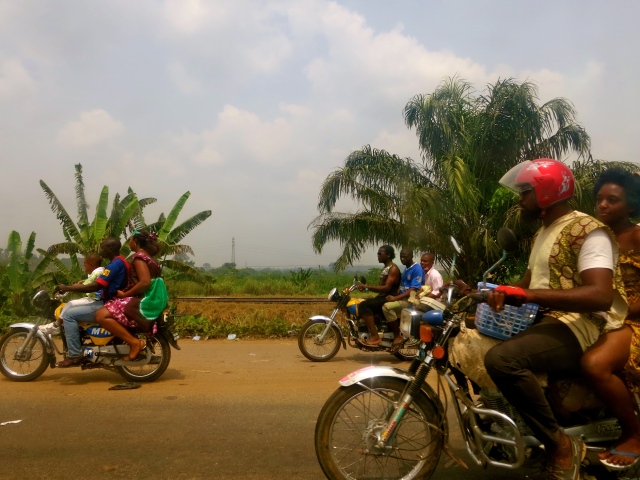
Motorcycle taxis speed toward Douala, Cameroon's major port and commercial center
Motorcycle taxis speed toward Douala, Cameroon’s major port and commercial center

In response to this week’s Photo Challenge: Forward, I thought I would simply post this photo, taken two weeks ago today, of motorcycle taxis speeding towards Douala, Cameroon.  But there is another kind of movement going on right now in Douala, one that is attempting to move the country forward towards acceptance of the rights of LGBT persons.  These courageous activists, who are risking their lives to end discrimination and persecution based on sexual orientation or gender identity in Cameroon, deserve more than a photo.  They deserve to have their stories told.

In Cameroon, people who are LGBT face pervasive societal stigma, discrimination,and  harassment.  They also face the possibility of imprisonment – Article 347 of the Cameroonian penal code criminalizes “sexual relations with a person of the same sex”.  At least 28 people have been prosecuted under the law since 2010. One of them is Roger Jean-Claude Mbede, who was arrested and convicted of homosexuality in March 2011 after sending another man a text message reading, “I’ve fallen in love with you.”  In December 2012, the Cameroonian court of appeals upheld the conviction and sentenced him to three years in prison.

Gay, lesbian, bisexual, and transgender people have a high risk of HIV/AIDS infection.  They are often rejected by their families, who force them out of the home.  When targeted by law enforcement, they have more difficulty in obtaining legal protection.Due to the social stigma and intense climate of fear, most LGBT people are forced to live out their lives in secrecy.  Yet there are several impressive non-governmental organizations  – Alternatives-Cameroun, the Association for the Defense of Gay and Lesbian Rights (ADEFHO), Cameroonian Foundation for AIDS (CAMFAIDS), and Evolve, to name a fewwhich are working hard to raise awareness about and provide services to the LGBT community.

When I was in Douala, I was able to visit Alternatives-Cameroun.  Security is, understandably, a big concern.  There is no sign that marks their center on boulevard de la Liberté, and when you arrive, you have to sign in and show your ID.  Alternatives-Cameroun has one doctor at the center who provides HIV/AIDS treatment and medical services to approximately 75 patients.  In addition, Alternatives-Cameroun provides a small community pharmacy, as well as safe, confidential and free HIV testing.  In 2012, they provided 720 HIV tests.

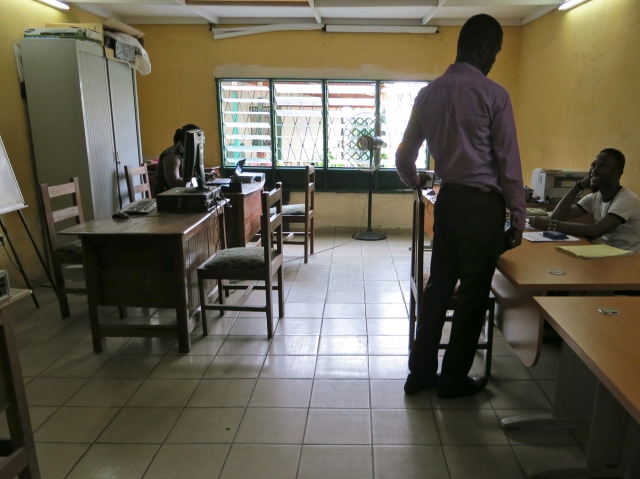
Staff at Alternatives-Cameroun centre in Douala

Equally important are the services provided by a psychologist and two social workers.  Alternatives-Cameroun also provides public education and outreach, both at the center and through peer educators.  On the day I visited, all of the peer educators were at work out “in the field” in Douala.

What touched me most, though, was the real sense of community that is provided by Alternatives-Cameroun.  I saw a small group of young people sitting on plastic chairs around a table in “William’s Hall” (named after one of the organization’s founders, who died in the Kenya Air plane crash).  I could feel that they were providing each other with comfort and support, a feeling so strong that I could see the connection between them almost as clearly as I could see the young man holding the hand of the woman beside him.

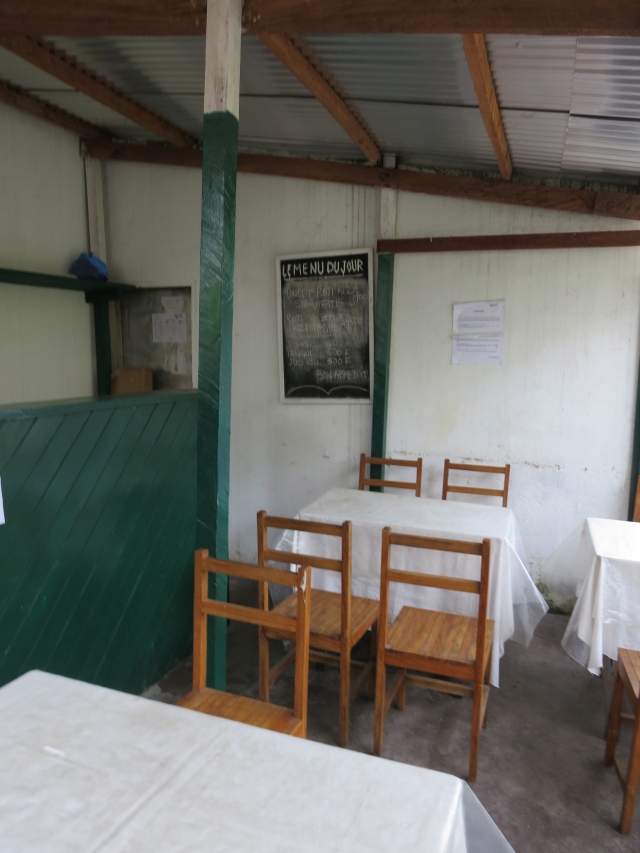
As a way to join the community and to connect with the neighbors around them, Alternatives-Cameroun started a small restaurant that serves a very inexpensive daily lunch. This anti-discriminatory gambit has paid off; the neighbors now come to the restaurant to eat and talk together with the staff and patients.  Often the patients are very poor, so the restaurant means they can offer them a meal or two a day.  The restaurant also provides meals for LGBT detainees in prison.  Prison conditions in Cameroon are notoriously bad, with severe overcrowding and inadequate food.  Most detainees rely on family members to bring them meals.  As LGBT detainees have often been rejected by their families, they have no other access to food.

Restaurant

Activists working on LGBT issues in Cameroon told me that one of their main needs is for more lawyers. One of the very few Cameroonian lawyers who is willing to take on these “homosexuality” cases is Alice Nkom.  The first black woman admitted to the Cameroonian bar, Alice has been courageously fighting for the rights of LGBT Cameroonians for many years.  In spite of serious death threats, Alice Nkom continues her work.  “Threats like these show us that the fight must continue,” said Nkom.

with alice in douala

Cameroon has been receiving a lot of criticism recently from the international community, particularly the European Union. The issues of LGBT rights will certainly come up again at the Human Rights Council’s Universal Periodic Review of Cameroon this spring.  On January 31, Cameroonian President Paul Biya told reporters that attitudes are changing in his country about the criminalisation of homosexuality.  “Now I can say that discussions are under way. People are talking, minds can change one way or another but currently it’s a crime.”  

The government of Cameroon must do more than discuss.  The government must protect the rights of all Cameroonians, regardless of sexual orientation or identity. And when things do change, as they will one day, the credit will go to the brave men and women who have put their heart and souls – not to mention their lives – into moving their country forward on LGBT rights.

To read more about LGBT rights in Cameroon:

Human Rights Watch, Criminalizing Identities (2010)

Joint Stakeholder Submission on LGBT Rights for the Universal Periodic Review of Cameroon (2012)

International Gay & Lesbian Human Rights Commission, Cameroon

Letter from Liberia

Great post by my colleague Amy Bergquist on the pro bono needs assessment work we are doing this winter through our Africa Advocacy Project in four countries: Liberia, Morocco, Cameroon and Tanzania. Amy writes about the first country our team visited – Liberia.

Celebrating Rosa Parks’ 100th on Avenue Rosa Parks in Yaounde, Cameroon

IMG_0179

This morning, I had a meeting at the US Embassy in Yaounde to discuss human rights in Cameroon.  The US Embassy, it turns out, is located on Avenue Rosa Parks.  Past security, in the lobby where visitors wait for their escort, the walls were hung with photos and text documenting the life of Rosa Parks, a true American hero.

I realized later in the day that today is Rosa Parks birthday.  If she were alive, she would be 100 years old today.  Could she have imagined the impact – wide and deep – that her actions would have, not only in her country but around the world?  Or that one day there would be streets named after her in places like Yaounde?

I met Rosa Parks once, on the Ellis Island ferry.  I wrote about it last February and am reposting it here in celebration of her 100th birthday.

Me and Rosa Parks on the Ellis Island Ferry

(Image source)

My oldest son is studying the life of Rosa Parks in his 6th grade history class.  “I actually met Ms. Rosa Parks once,” I say.  He’s already halfway up the stairs, heading back to the sanctuary of his room. “Did I ever tell you about that?”  On the cusp of his teens, he has no interest in being trapped by a pontificating mother.  “Yes,” he replies.  He pauses, half-turned towards me, left leg on a higher step, poised for flight.  I see my opening and I take it.

***

In 1986, my grandfather Orville Prestholdt was recognized with an Ellis Island Medal of Honor for his contributions as a “Norwegian activist”.  I was a sophomore in college and I took a Metro North train down to New York to meet my grandparents the night before for the gala event.   The honorees were staying at a fancy hotel, one those midtown landmarks that is long on history but short on space in the guestrooms.  As I entered the lobby, I walked straight into the sonic boom of Lee Iaccoca (chair of the Statue of Liberty-Ellis Island Foundation, honorary medal recipient).  If I remember correctly, I next walked straight into the back of Donald Trump (Scottish-German).  Fortunately, “The Donald” was engaged in animated conversation with Mr. Iacocca and didn’t notice my faux pas.

Established in 1986 by the National Ethnic Coalition of Organizations, the Ellis Island Medals of Honor “pay tribute to the ancestry groups that comprise America’s unique cultural mosaic”.   Walter Cronkite (Dutch), Jacqueline Kennedy Onassis (French-Irish), Joe DiMaggio (Italian) – the Ellis Island medalists were a veritable Who’s Who of American immigration.  Of course, this was back in the Reagan era when Americans still celebrated the fact that we are a nation of immigrants.   The 80 inaugural Ellis Island Award winners had been selected from more than 15,000 nominations following the controversy over the Medals of Liberty. Announced in the spring of 1986, the Medals of Liberty had honored 12 naturalized citizens, including  Bob Hope (English), I.M. Pei (Chinese), Irving Berlin (Russian) and Elie Wiesel (Romanian).   Numerous ethnic groups had objected that they were not represented among the winners of the Medals of Liberty, however, and had threatened protests during the “Liberty Weekend” (July 4, 1986) award festivities.  So the Ellis Island Medals were created more or less as a compromise.

That’s when they went looking for the lesser-knowns with more obscure national origins.  People  like my grandfather, who had changed his name from Olaf to Orville when he immigrated from Norway in order to “be more American”.  My grandfather had charted a successful political career in the Sons of Norway, from lodge president to International Board of Directors.  He got his Ellis Island Medal for his “contributions in preserving  Norwegian- American culture”.  Too late for “Liberty Weekend”, the Ellis Island awards were to be presented on the actual 100th anniversary of the dedication of the Statue of Liberty in late October of 1986.  That date fell on a Monday, but I figured it was worth skipping one day of classes to be a small part of history.

Having finally located my grandparents among the honorees at the reception, we headed to the elevator to go up to their room to drop off my bag and change for dinner.  Muhammad Ali (African) was in the elevator with some family members; they held the elevator door for us.  Mr. Ali tapped me on the shoulder and, when I turned, began performing a magic trick with a polka-dot silk scarf.  At the time, I didn’t know that he had Parkinson’s.  Or maybe I had heard he had Parkinson’s, but I didn’t really know what that meant.  In any event, I watched in horror as the man – who had been such an icon in the 70s when I was a kid – struggled, with trembling hands, to slowly stuff the scarf into a fake plastic thumb.  That’s how I found out how they do that disappearing scarf trick.  No kidding – Muhammad Ali!  The fake plastic thumb was several shades different from the color of his skin and looked dangerously close to falling off his real thumb, but he was focused like a laser on making that scarf disappear.  I remembered playing chase at recess on the playground at Magnolia Woods Elementary School.  The one who was  “it” would yell,  “Float like a butterfly, sting like a bee! I am the mighty Muhammed Ali!”  As “The Greatest” slowly performed his magic trick for me, I watched the single, crystalline drop of drool that hung suspended from the corner of his mouth.   I thought for sure I was going to cry.

My grandfather handled the whole thing much better than I did.  Maybe he was just feeling pretty good after a couple of highballs and a chat with Victor Borge (Danish), but he clapped his hands when the scarf finally disappeared and chortled with glee. “Woo-hee-hoo-hoo!!!”  He may have danced a little jig in that elevator, too – he was that kind of guy. But I can’t be sure because I had gotten really good at ignoring him when he did that kind of thing in public.  At 19, I saw only the weaknesses, the frailties, the embarrassments of my elders in that elevator.  Now I see that I missed the courage, the determination, the encouragement, the shared joy in the accomplishment of a difficult task.

That night, as I lay in my narrow rollaway bed listening to my grandparents snore a few feet away from me, I thought about who I might meet the next day.  I hoped to see  John Denver (German) and Cesar Chavez (Mexican).  Maybe also Gregory Peck (English) and Andy Williams (Welsh).  Bob Hope was going to be there, too, as his wife Dolores (Irish-Italian) was receiving an award.  But the person I most wanted to meet was Ms. Rosa Parks (African-American).

Rosa Parks had been a larger than life figure for me growing up in the post-Jim Crow South.  The East Baton Rouge Parish school system underwent court-ordered desegregation when I was in high school, so I had some sense of the courage it must have taken her to do what she did.  I thought she was an American hero.

(Image source)

The awards ceremony was to take place on Ellis Island, so in the morning we were all bussed down to Battery Park and the chartered ferry.  Most people stayed up on deck for the short ferry ride, cameras at the ready to take photos of the Statue of Liberty.  About halfway through the ride, I went inside to look around.  And there she was!  A tiny, birdlike woman with large glasses sitting alone on a bench by the window.  In my mind’s eye, she is wearing a hat, coat and gloves but I can’t be sure I haven’t borrowed that memory from other images.  She sat prim and erect, her hands folded on her purse in her lap, looking straight ahead. It is exactly how I always pictured her on the bus. I walked over and asked, “Can I sit here?”  She looked up at me and nodded briefly and I sat down.  Then my courage failed me.  I can’t think of what to say next.  As we approached the Statue of Liberty, she turned for a better view out the window so, of course, I did, too.  “She’s smaller than she looks in pictures,” remarked Rosa Parks to me. Or maybe just to herself, but I smiled and nodded anyway.  Then we approached Ellis Island and her family came to collect her.  I went back up on deck to look for my grandparents.

***

“Maybe a famous person like Rosa Parks didn’t really want to talk to you.  You were a stranger,” my son speculates.

“Maybe,” I say.  “But I wasn’t thinking about that. I was just sitting there, trying to think of what to say to her and how I was wasting my one chance to talk to her.  It was like I was frozen.  I never did say anything else to her, other than ‘Can I sit here’?”

“So what would you have wanted to ask her on the ferry?”  my son wonders.

“Well, I guess I would have asked what it was like to ride that bus.”

Twenty-five years later, I realize that Rosa Parks was probably asked some variation of that question nearly every day of her long and beautiful life.  She was probably asked it more times than she could count.  Asked and answered; you can google it.

“I don’t recall that I felt anything great about it,” Ms. Parks remembered in an interview with the Montgomery Advertiser. “It didn’t feel like a victory, actually. There still had to be a great deal to do.”

This conversation with my son made me realize that I didn’t need to ask her anything that one time I met her.  I didn’t waste my one chance to talk to Ms. Rosa Parks.  It was enough to be able  to sit quietly in her presence for a few minutes. An African-American and a Norwegian-American, sitting side by side on the ferry and gazing together at the Statue of Liberty.

***