In Small Places, Close to Home

This is my first original post on World Moms Blog

Eleanor Roosevelt once said,

“Where, after all, do universal human rights begin? In small places, close to home – so close and so small that they cannot be seen on any maps of the world.”

She knew what she was talking about.  Eleanor Roosevelt was the chair of the UN Human Rights Commission and even wrote part of the text of the Universal Declaration of Human Rights (adopted by the UN General Assembly on December 10, 1948).  Eleanor Roosevelt was also the mother of six children.

Mothers have an important role to play in making the world a better place for all children.   This is not to minimize the roles of fathers or grandparents or guardians or anyone charged with the responsibility of raising children. But I do believe wholeheartedly that mothers have a special role.  It is our job to change the world, one kid at a time.

Often mothers are the most vocal advocates for the rights of their children.  This is true whether you are a mom trying to get your special needs child the services she deserves or trying to get your child out of arbitrary detention in Iran (like Shane Bauer’s mom).  There are many examples of mom/human rights advocates-  Mothers of the Disappeared in Argentina, Mothers of Soldiers in Russia .

I personally have had the chance to meet and interview mothers involved with the organization ANFASEP in Ayacucho, Peru.  These are mothers whose sons were disappeared during the long, violent conflict in Peru.   For nearly 30 years, these women have been trying to find out what happened to their family members and where their remains are.  One of the women we talked to had four family members who were disappeared.  She wants to know where they are and who killed them.  “We’re looking for justice,” she said, “and we want to know the truth.”  As Mama Angelica Mendoza, President of ANFASEP, told us, “We’ll never forget about all the killings.  We’ll fight to the end.”
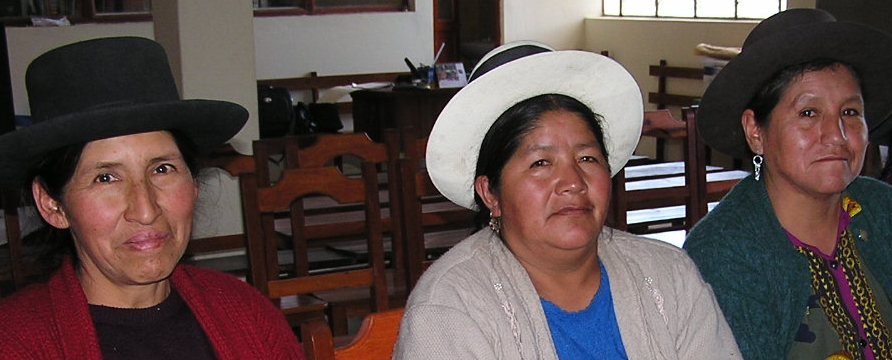
Mothers of the disappeared (ANFASEP) in Peru.As Eleanor Roosevelt implied more than 50 years ago, the most important place for human rights to begin is at home.

Human rights are the standards that allow all people – each and every one of the 7 billion of us on this planet- to live with dignity, freedom, equality, justice and peace.

Aren’t these the principles that govern the way we want our children to be treated?  And, in a nutshell, aren’t these also the core values that every parent wants to instill in their children?

The secret to a better world is not only protecting our children from human rights abuses inflicted on them by others, but also by making them better citizens of the world.  Caring about others, judging right from wrong, standing up against bullying or racist comments or sexist jokes. These are the human rights that are essential to the full development of each child as an individual, as well as to the community in which they live. This is the human rights work that changes the world.

Here are my three reasons to work for human rights.  I’d love to see and hear about yours!

Raising Boys Not To Be Total Jerks

At some level, I’ve known since before my oldest son was born that this moment would come.  But when it did, it took me utterly and completely off guard.  I was driving a car full of boys home from a soccer tournament last week when my 9-year-old son piped up from the back,

“Hey mom! I’ve got a funny joke.  I’ll ask you a question and you say, ‘Ketchup and rubber buns'”.  “I’ve heard this one,” chuckled my 12-year-old son.  Snickers all around from the soccer players.  

Apparently, I was the only one who didn’t know what was coming next.

“What did you have for breakfast?”  “Oatmeal and ketchup and rubber buns.”

“No! Mom!  Just say ketchup and rubber buns.”

“What did  you have for breakfast?” “Ketchup and rubber buns.”

“What did you have for lunch?”  “What did you have for dinner?”  Etc. etc.  And then we get to the punchline:

“What do you do when you see a hot chick? You catch up and rub her buns!”     Peals of laughter from the boys.

To my very great credit, I did not run the station wagon off the road and into the ditch.  I kept driving – silent, hands gripping the wheel, looking straight ahead.  It was a perfect autumn day.  The sky was brilliant blue and the afternoon sun was catching the full color of the orange and yellow leaves on the trees along the highway.   It was a beautiful, perfect day but inside I was angry. I was mortified. I was disappointed.  I was desperately struggling to think of what I should say.

Every once in a while, though, it is helpful to have gone to law school.  “I don’t think that joke is funny.  You know, if you actually ran after a woman and touched her in an offensive way like that, it would be called “assault and battery”. It is a crime.  You could be arrested.”

“You could be arrested for THAT?”  “Yes.  Plus, the woman could also sue you.”

Silence descends.

“Also, I’ve actually had that happen to me. How do you think it feels to have a stranger grab your butt?”

“WHAT? That actually happened to YOU?”

“Sure. More than once. Usually at parties.”

“That’s kind of  making me feel sick,” said the 12-year-old.

More silence.

From the 9-year-old:  “I remember you saying that you didn’t like running past construction sites because the construction workers whistled and yelled things at you.”

I didn’t remember telling them that, but it’s true.  When I was a teenager, I used to go way off my normal running routes just to avoid running past a construction site.  Good, they were listening.

“So what are you going to say the next time you hear someone tell a joke like that?”        “Stop, Mom! We get it, ok?”

Teachable moment: ended.  I decided just to leave it there  – for now.  These are intelligent boys, good kids who love and respect their mom and their sister, their grandmothers, their female friends and teachers.   But they, like other young Americans, are deeply impacted by the culture that they live in. Children are exposed to an estimated 16,000 images every day.  They are powerfully influenced by their peers (I know they didn’t hear THAT joke at home).   How can that not impact the way that they view girls and women?  And isn’t it only going to get worse as they move through middle and high school?

The Ketchup Joke was a call to action for me.  I need to do more to raise these boys to recognize the problem and, hopefully one day, to speak up when they hear someone tell a sexist joke.    Thankfully, there are a lot of resources out there – research, organizations, websites.   The Advocates for Human Rights has developed a Challenge the Media workshop and resource list.   And I know that other parents have successfully managed to raise their sons not to be total jerks, but to be men who respect and treat women as equals.

I’ll report back periodically on what I have found.  In the meantime, I would welcome hearing about what others have learned.    But first, I’ve got a date with my sons.  We are going to see Miss Representation.

We've still got a long way to go, but we've taken the first step.

Så Heldig Jeg Er (How Lucky I Am)

Simon and me in our bunads
I’ve often been asked how I ended up as a human rights lawyer. It would be inaccurate to say that any one event made me decide to go into the human rights field.  Many little, meandering creeks had to come together to make this river flow.  Without a doubt, though, one reason for my career choice was my longstanding interest in all things international. That interest was nurtured during my childhood summers in northern Minnesota at Skogfjorden, the Concordia Language Villages’ Norwegian language camp. It would be hard to deny that the Concordia Language Villages, the mission of which “is to prepare young people for responsible citizenship in our global community,” had a big impact on my life.  (For more on the Concordia Language Villages, check out www.concordialanguagevillages.org)

Here is something that I wrote last year when I went back on staff after 22 years of life in the “real world”. I’m reposting on this blog as Sevrin, Simon and I are leaving shortly for two weeks at the Skog, but also because one of the things that I have learned from doing human rights work is that I am so incredibly lucky.  I am lucky to have my health, my family, my home.  I have plenty of food to eat and good healthcare.  I am lucky to be able to say whatever I want and associate with whomever I want without fear of arrest and imprisonment.  Even though I am a woman, I had the opportunity to get a good education and to make my own decisions about my career.  Nothing reminds you of how lucky you are like spending time with people who don’t have these rights and opportunities.  And I feel so privileged and lucky to be able to do the work that I do.

Så Heldig Jeg Er 

When I hung up my stabsjakke (staff jacket) for the last time in 1988, I fully expected to someday drive up Thorsenveien with a minivan full of kids bound for Skofjorden.  I never imagined that I would park that minivan and spend two weeks here WITH my kids.  But here I am, wearing a navnskilt (nametag), living with the girls in Tromsø, and sharing the Skogfjorden experience with my 10 and 8 year old sons.   

There have been some changes in the 22 years since I was last on staff.  The first thing I noticed was how much taller the trees are in front of Utgard.  The circular staircases are gone, as are the woodburning, metal mid-century modern fireplaces in the hytter (cabins).  There are new places – Fagertun, Låven, Mine’s Brønn – as well as some new names for old places.  There are new hand movements for songs I once knew and a whole lot of new songs.  The schedule has changed a bit, so sometimes I feel like a villager myself, “What happens next?  Where am I supposed to be now?”

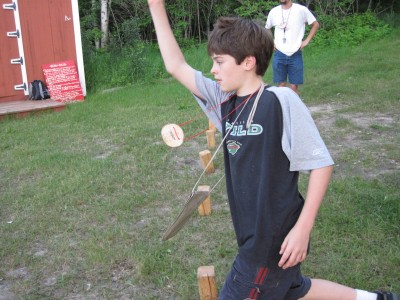
Sev playing kubb (that’s a navnskilt/nametag)
As a parent, I can say that I feel that Skogfjorden is even better than when I was a villager or on staff.  It’s a safer place, both in terms of physical plant and safety policies, and staff members receive better and more comprehensive training. I see every day how hard the lederer (counselors) here work, with patience and good humor, to give our kids the best possible experience.  More than ever, this is a place that supports and encourages all levels of learning and abilities. Staff are as creative and energetic as they were in my day, but they do a better job of making this a total Norwegian immersion experience.

One thing that has not changed is that Skogfjorden is a place where kids learn and grow and have fun.  LOTS of fun.  It’s a joy to watch my kids singing their hearts out at allsang (singing) and to eat middag (lunch) with them and hear about what they did during kretser (an activity that was new for me, too).

One of the new songs that I learned this week captures my feelings about this session exactly.  The refrain of the song is, “Å så heldig jeg er, som kan være her med deg.”  “Oh, so lucky I am to be here with you.”  Å så heldig we parents are to be able to give our children the Skogfjorden experience.

Beste hilsen,

Jenni


Same and Different

Each February, my kids’ schools have special programming for National African American Parent Involvement Day.  The activities are different every year, but in 2008 there was a parent-led component that involved reading the class a book and facilitating a classroom discussion about diversity.  I signed up to be the parent volunteer in Simon’s kindergarten and Sevrin’s second grade class.  I had a great picture book (by no less than Kermit the Frog!) about children’s rights that I had picked up at the UN bookstore years before; my kids liked it, so their classmates probably would.  Easy peasy, right?  But that’s where, brakes squealing, I slammed head-on into a solid brick wall. 


I just had no idea how to facilitate the discussion or talk about human rights in a way that was simple enough for them to understand.  Fortunately, I got some help from people who are smarter than me about things like this – teachers.  You could never in a million years get a lawyer to summarize an argument in just three words, but teachers can and do.  Thanks to my sons’ classroom teachers and Kathy Seipp from our Education Program, the theme for my parent-led discussion was “Same and Different”.  


In February 2008, I had just returned from Liberia, a West African country emerging from more than a decade of violent conflict. I picked a few photos of people and scenes from Liberia and had them blown up and mounted on foam core.  The plan was that I would hold up a photo and have the kids point out what they saw in the picture that was the same in their lives and what was different.   


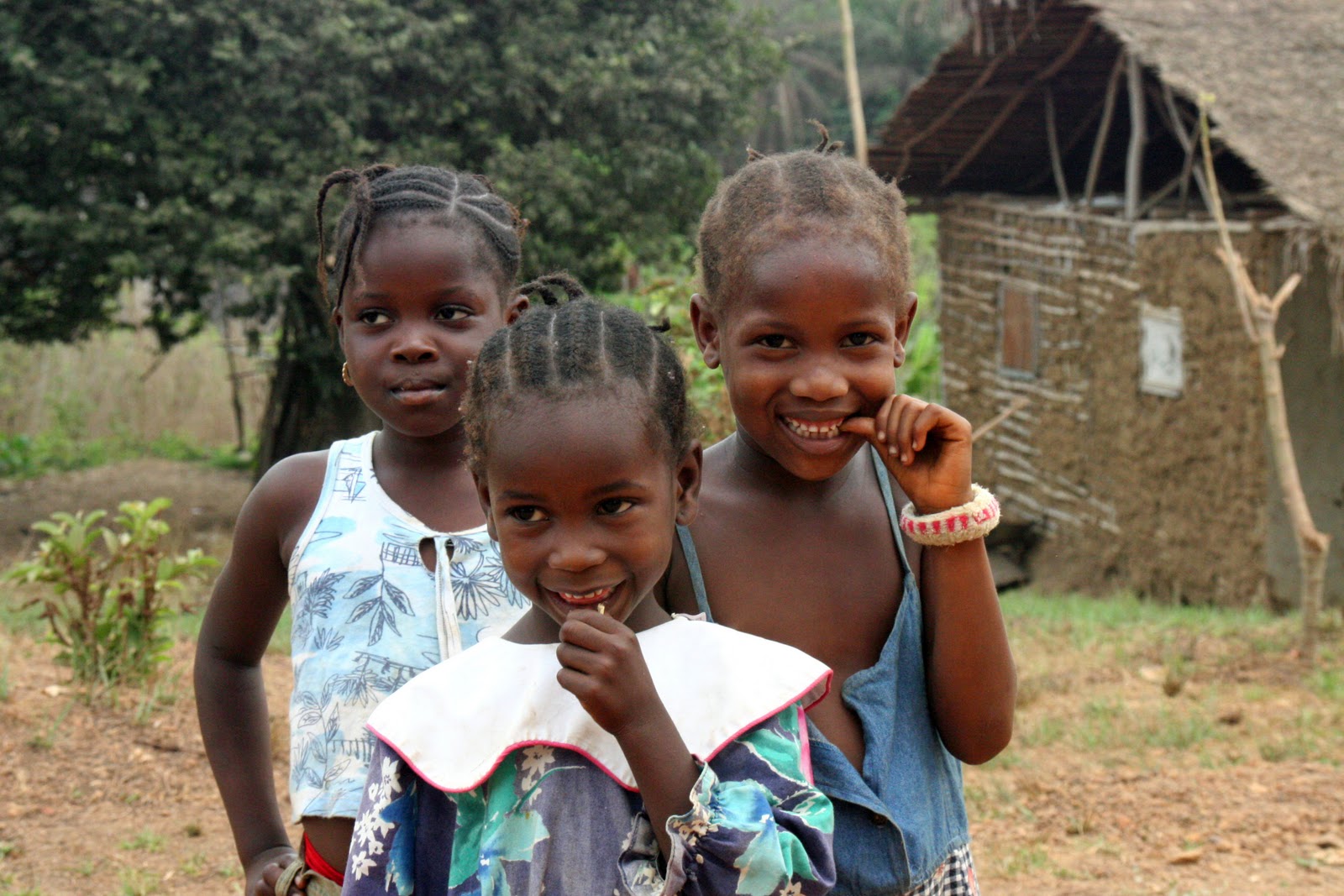
It was really and truly amazing to hear what the kids had to say.  But before I tell you, take a look at the picture and think about what you see that is the same and different from your own life: 

photo by Dulce Foster

Here are some of the things the kids said:  “I like that bracelet.”  “I sometimes wear my hair in braids, too.” “They have dark skin and I have white skin.”  “We have different trees here, like conifers.”  “We have snow here right now.”  “Is that corn growing behind them?  Because I LOVE to eat corn, too.”  “Is that a house? It’s not like my house.”  “You couldn’t live in that house in Minnesota.  You would get too cold.”


Here is another one:  

photo by Dulce Foster

“I think they are brothers and sisters who love each other.”  “I think they are cousins.  I love my cousins, too.”  “It must be very hot there. We can only wear clothes like that in summer.”  “Do they have seasons?” “Hey! I have flip flops just like that!”


One more time:

street scene in Monrovia, 2008

“How do they carry those big things on their heads?  We can’t do that!”  “There is a lot of trash on the street.”  “We have that same blue cooler.  We take it with us when we go camping.” “We have windows, too, but there is no glass in their windows.”  “They have electric wires like we do.”  “That’s so funny that they are using the wheelbarrows to carry things.  We only use our wheelbarrow in the garden.”


Each picture offered many more opportunities to talk about “same and different” than I had imagined.  For example, “I have flip flops just like that” (same) but those may be the only pair of shoes the kid owns (different).  The “no glass in the windows” comment led to a discussion of mosquitos (same) and malaria (different).  They do have power lines like us, but there is no electricity running through them.  At the time, only a  tiny area of Monrovia had electric power; the rest of the country relied on generator power – at best.  I told them about seeing the the dozens of kids huddled around the bases of the 5 or 6 working streetlights in Monrovia, doing their homework.  “Just like Abraham Lincoln,” breathed one particularly precocious second grader. 

The book I read is called For Every Child, A Better World.  It’s a UN Publication/Muppet Press collaboration which is now out of print but you can still find used copies online. If you follow the link  For Every Child, A Better World, you’ll see the format:  “Every child needs food to eat, but sometimes there isn’t enough to go around.”  I’ve done this “Same and Different” presentation several times now in kindergarten, 1st and 2nd grade classrooms. Every time, I walk away surprised by how these very young kids are able to understand and express the concept of basic human rights.  If they get it so completely, what is wrong with us adults?


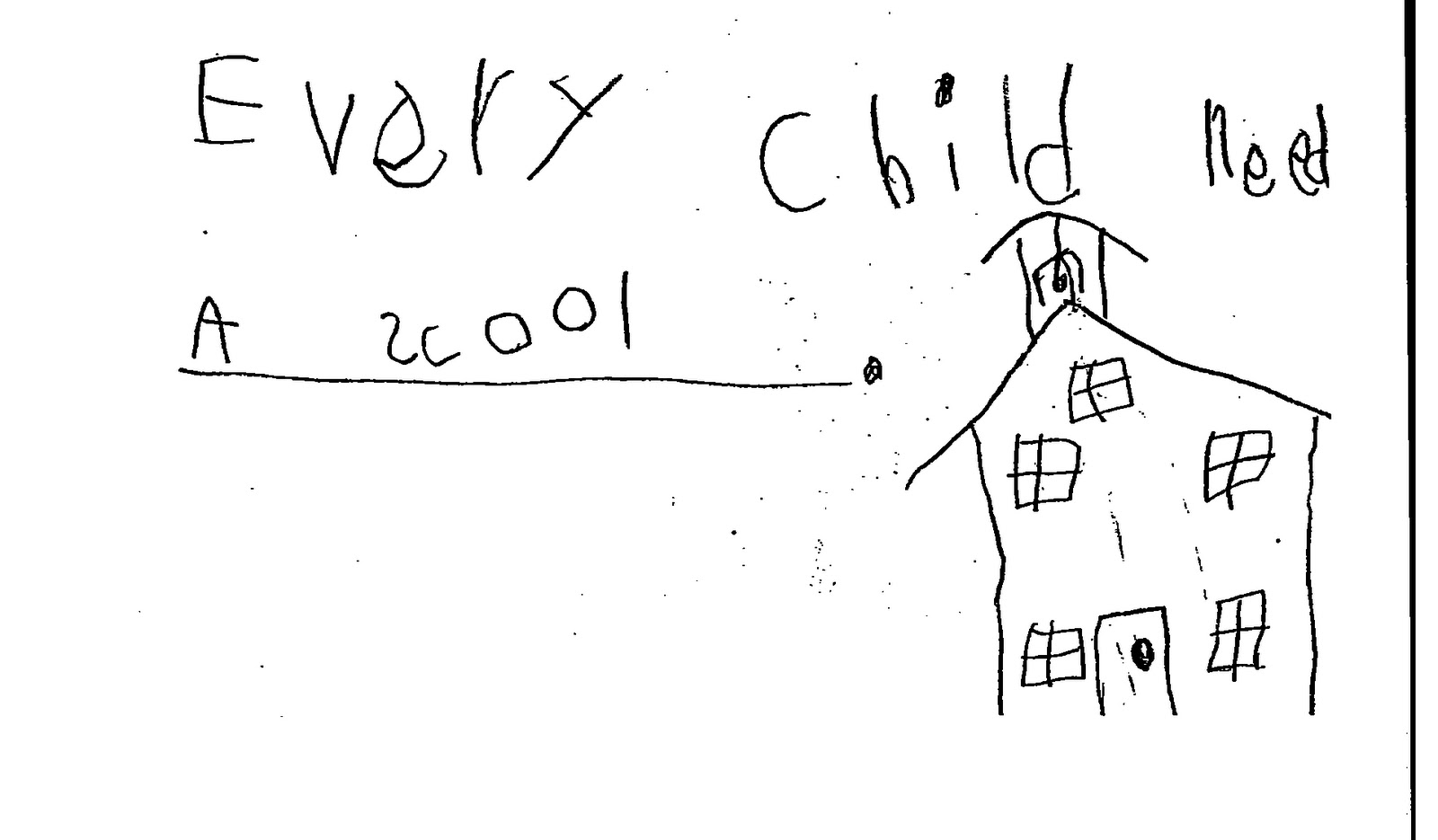
Simon’s kindergarten teacher, however, really took the “Same and Different” theme to the next level.  For several weeks, she incorporated “Same and Different” into various classroom activities, including one assignment to draw and write about something that they thought that every child needs.  She sent me copies of all of the drawings so I’ll end with a few.  Of course, my favorite is the one I posted at the top of this blog entry: “Every child needs peace.”  

So … What Exactly Is It That You Do Again?

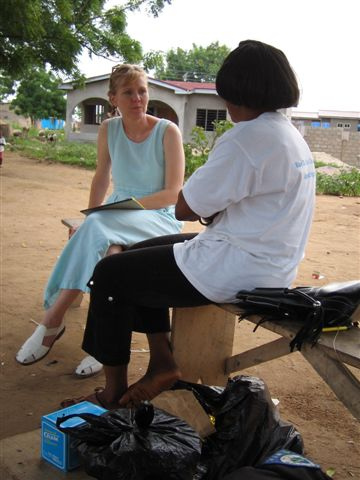
Interviewing refugees in Ghana
It all began, as so many things do, with a misunderstanding.  I was putting my son Simon to bed one night when he said, “Mommy … What’s it like to be a human rights warrior?”  “But I’m not a human rights warrior. I’m a human rights lawyer.”  He waited a couple of seconds – this kid has an uncanny sense of comedic timing – before wrinkling up his little nose and saying skeptically, “What’s a LAWYER?”     
I may never know what kind of weapons he thought I was secretly carrying in my briefcase because my description of my actual job put him right to sleep. But this bedtime exchange got me thinking.  For 15 years – more if you count my student experiences – I’ve worked with survivors of human rights abuses, documenting stories of unbearable loss from every corner of the world.  I have observed the absolute worst aspects of human nature, the dark side in each of us that we would rather not acknowledge.
You might think that this would make me pessimistic about the world in general and Homo sapiens in particular, but the impact has been quite the opposite.  It has been my privilege to bear witness to the very best characteristics of humanity – our capacity to overcome adversity, to hope, to forgive.  I’ve heard inspiring acts of courage; seen the precious gift of faith. 
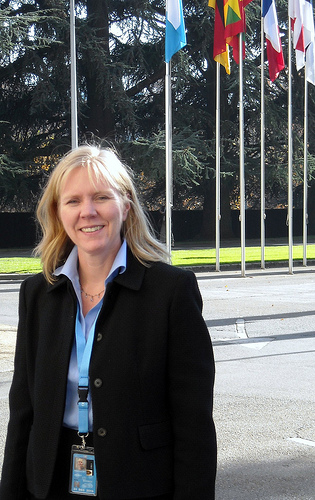
At the UN in Geneva
While I have many stories from my experiences in human rights work, I realize as I write this that most of them have never been shared with anybody.  Stories of human rights abuses don’t exactly lend themselves to cocktail party conversation.  How do you convey the complex political and social conditions that lead to human rights abuses, honor the victims, and avoid grossing people out with the horrible details – all in a two-minute elevator speech? And how do you even stop talking about injustice once you start?
As a parent, however, I am challenged to distill these experiences into something that Simon – along with his brother Sevrin and his sister Eliza – can understand and profit from.  My goal in writing this is to think more intentionally about what I’ve learned from my work in human rights so that I may one day pass these lessons along to my kids.  Perhaps these reflections will be interesting or inspiring to others as well. 
While I am proud to be the Deputy Director of The Advocates for Human Rights, this blog reflects my personal views rather than those of the organization.