Forgiveness

I am just about the last person who should be lecturing on the subject of forgiveness.  I’ve always tended to savor the little niggling injustices in my life, holding onto them and working them over the way you worry a sore spot in your mouth with your tongue.

I’ve noticed that my children are constantly denying responsibility for wrongdoings.  Or, to state it more accurately, they are always claiming innocence and then laying the blame on someone else.  All three of them will pipe up with “I didn’t do it! It was (fill in the blank)!” in response to questions about who left the door open, who spilled the milk, who left gum on the floor, who threw that bread at me (just to give some examples from the last 20 minutes).

That says something to me about human nature. Our first instinct is to shift the blame, deny responsibility.  Admitting you are wrong is one of the most difficult things you can do.  It’s so much easier to deny or make excuses or pretend like you didn’t know what was going on.  And while it takes a lot to acknowledge blame, it takes even more to ask for forgiveness.

What does it take to really, truly grant forgiveness to someone who did something that hurt you?  My son came home from Sunday School with one of those sheets where you have to decode the hidden message, which turned out to be Colossians 3:13  “If someone does wrong to you, then forgive him.  Forgive each other because the Lord forgave you.”  “So you should forgive your brother for eating your candy, right?” I said.  “It’s not that easy,”  he replied.
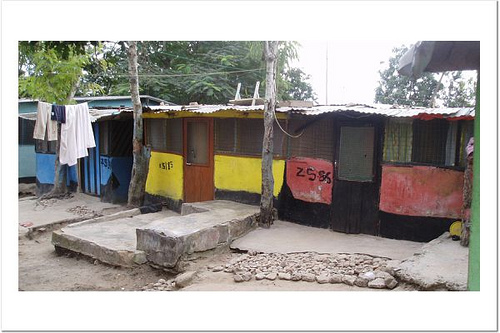

Houses at the Buduburam Refugee Settlement

No, forgiveness is NOT that easy.  But when we were working with the Truth and Reconciliation Commission of Liberia back in 2007 and 2008, I interviewed a surprising number of people who said that they had forgiven the people who had hurt them and killed their loved ones.   We made two trips to Buduburam Refugee Settlement in Ghana to take statements.  At the time, there 38,000 refugees living there, some of whom had been there for almost twenty years.  The conditions on the camp were very difficult. It was hot and crowded, with inadequate sanitation and electricity.  All the water for drinking and washing had to be purchased; most people didn’t have enough money to do both and a lot of people only ate one meal a day.  There weren’t a lot of job opportunities in Ghana, so most of the refugees relied on remittances from relatives in the U.S. or Europe.  Educational opportunities were also limited.

Also, as in many refugee situations, there were ex-combatants and perpetrators living there along with the victims of human rights abuses.  Many of the people we talked to had encountered the perpetrator their on the camp.  One woman I interviewed told me that she saw the men who had raped her every single day.  In spite of the harsh conditions of daily life at Buduburam, however, I saw firsthand not only the possibility of forgiveness, but the necessity of forgiveness.
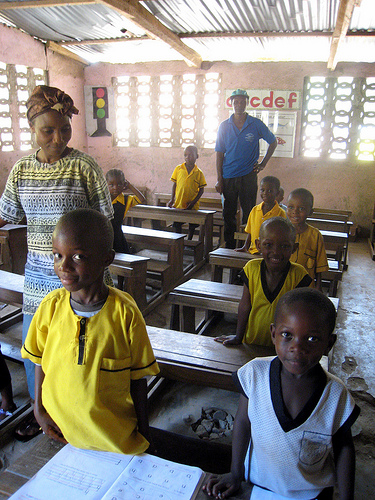
A kindergarten class at Buduburam

The TRC asked us to gather information about how statement givers felt about reconciliation so, unlike most of my work in documenting human rights abuses, I was asking questions about forgiveness in addition to questions about what happened.  Not everyone was ready to forgive and only a handful were willing to meet with the perpetrators, but many said that they had in their hearts already forgiven the perpetrators.  As one woman told me, “I had to forgive him, once I realized that if I didn’t, I would never move on with my life.”

Forgiveness does not in any way minimize the gravity of the wrong that was done.  It does not mean forgetting what happened or ignoring the need for justice.  Archbishop Desmond Tutu said, “Forgiving means abandoning your right to pay back the perpetrator in his own coin, but it is a loss that liberates the victim.”  Forgiveness, at its core, is a choice to take action.  It is something that you do for yourself, because you cannot be happy and healthy if you hold on to the anger and bitterness.  It’s kind of like eating your vegetables – sometimes you have to force yourself to do it, but you know that you are better off in the long run if you do.  Forgiveness doesn’t happen overnight. It is a process, but it is a process of change that takes you out of the role of victim and puts you in control.
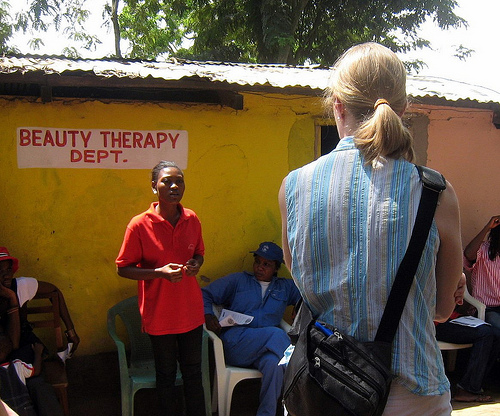
Listening to refugees tell their stories at
a skills training school at Buduburam

Recently, a woman told me this story about forgiveness.  During the war in Liberia, she witnessed the killing of her – by a neighbor who they had known for many years. She had so much anger for him for long, long time. Years later, after much praying, she decided that she needed to try to forgive him.  Eventually, again with much praying, she began to feel as if she really had truly forgiven him.

Last year she returned to Liberia for the first time.  She wasn’t sure how she would feel if she actually saw the man, but when she did, she went right up to him.  This is how I recall her describing what happened next:

“I gave him a big smile and I said, ‘Mr. ___, do you remember me?’  I want you to know that I saw what you did to my father.  But I forgive you for it. I forgive you and I’m praying for you.’  He didn’t know what to do, he couldn’t look me in the eye!  After that, if he saw me coming, he would avoid me.  Imagine that! An old man running away from me.  But now I’m out of it.  It is between him and God now.”

Three Minute Fiction

Are you familiar with MPR’s Three Minute Fiction? I was not until January 8, when I heard the announcement on Weekend All Things Considered of Round Six: Laughing and Crying.  The premise is simple:  a fictional story of 600 words, which, it turns out, actually takes closer to four minutes to read the story out loud.  Each round has a different theme and this time the celebrity author/judge mandated that one character tell a joke and that another cry.

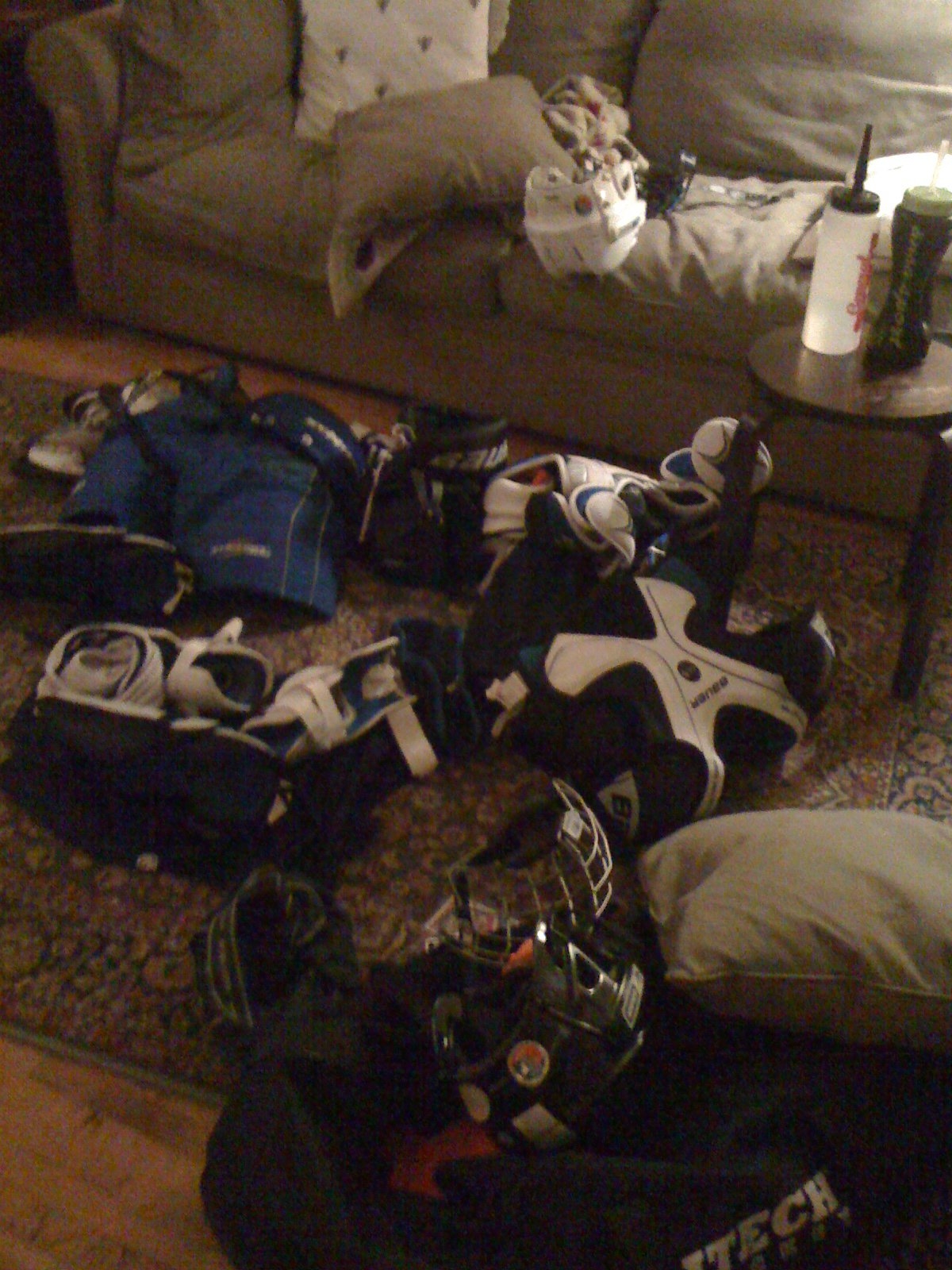
I heard the MPR piece and the following story “Why?” sprang fully-formed into my head. It did’t win (the winning story will be broadcast this weekend); it didn’t even get selected as one of the weekly “Favorites”, of which there were 22.   That wasn’t really much of a surprise since a) I haven’t written fiction since the 6th grade, b) my juvenilia is Crap! with a capital C;  c) there were 4000 entries; and d) there were apparently a disproportionate number of stories about chickens.   If I had won, though, I would have told Guy Raz all about how I wrote it (only during the minutes that my son Simon was not playing) at a hockey rink in a suburb called New Hope and how, on the way to the rink,  I had to drive in the middle of the snowy road to avoid the African refugees walking, not on the sidewalks, but in the road just like I have seen so many people do on roads in West Africa.

Why?
“Here’s a classic: Why did the chicken cross the road? Ever heard that one before?”  He was a good man, a volunteer with the resettlement agency.  He drove her to doctor appointments and to the Asian grocery store that sold palm butter.  They sat across from each other at her kitchen table, drinking tea.  He had helped her find this table at a secondhand store.  He had brought her this blood-red teapot, had showed her how to use the gas stove.  He was doing his best to help her understand America.   Today he was teaching her American jokes.
But those words…chicken ….road…brought her back to her village, back to that day.  She looked down at her hands, folded politely in front of her.  It was as if the months, the miles had evaporated. She saw it so clearly. Her little son and the chicken, in the road.  Blessing loved that chicken – a small white hen, feisty and independent.  Little Blessing loved that chicken and he worried about her, following her around much of the day as she scrabbled in the dirt.  People in the village thought it was odd, laughed at the thought of treating an animal like it was more than something to eat.  That was one of the things she had noticed that was different in America.
That day, when they heard the trucks, they had all run inside to hide.  The rebels had passed on the road many times before without stopping, but it was best to hide, to do nothing to draw their attention. That day in her village, she was on her knees on the dirt floor.  It was the rainy season and there was water on the road.  She heard the squeal of the brakes, the flat splash of water when the truck stopped.  She squeezed her eyes shut and prayed harder.  But Blessing, her little Blessing, saw his chicken crossing the road. He watched the truck stop. When one of the rebels grabbed his chicken, Blessing ran out of the house.
It was a boy who did it.  He was carrying a gun almost as big as himself.  He could not have been more than a few years older than Blessing.  In different times, he may have kicked a ball to him and laughed when Blessing ran after it on his chubby little legs.   But this was a bad time. Everything had changed when the fighting began.  The rebels took what they wanted, hurt who they wanted. That boy was carrying a gun almost as big as himself.  And it was the young ones who were the most dangerous because they were unpredictable.
She remembered everything else that had happened that day.  The bullets that blazed her temple, her leg, her arm as she ran to Blessing.  She remembered the women from her village who were raped, the men who were killed, the children who were taken to be porters and fighters.  The rebels took all their animals, all their food; they burned all their buildings.  She remembered her months in the refugee camp, her long journey to this strange, cold country.  But she had built a wall inside around that part of herself since the moment when her little Blessing had crumpled to the ground.  Until this moment, this unexpected American joke about the chicken and the road.
She saw that her hands, balled into fists now, were glistening with wet.  Another teardrop fell, rolling over her her knuckle, pulled inexorably down.  She looked up and saw that he, too, had tears in his eyes.
“I’m sorry,” she said quietly.  “Please tell me.  Why did the chicken cross the road?”

(597 words)

When I wrote this, I remember thinking that this story would also be an appropriate blog entry.   I hoped to show with this story the connection between two people who outwardly don’t have much in common.  He doesn’t know why she is crying, but still feels and bears witness to her pain.

I also hoped to show that plenty of normal-seeming people are walking around with hidden scars, pain that is kept at bay, but only just and that might be suddenly triggered and result in a full-blown flashback. This story is fiction, but I have been in situations where something I said sent a human rights victim back into a bad time and place.  Here is an example, if I gave you Coca Cola in a glass bottle, what would you think of?   I think of the Coke machine in the basement of Audubon Hall on the LSU campus.  When I visited my dad at his office, I was allowed to go down to the basement and put a quarter in the old-fashioned machine, open the door and retrieve an ice cold bottle.  So for me, a bottle of Coca Cola has entirely positive connotations.  But I had a client once who was tortured with an empty glass Coke bottle.  For her, the thought or sight of a glass bottle could cause her to panic.

It’s scary when someone suddenly begins to disassociate.  And like the guy in this story, you feel guilty when something you do triggers it.    Ideas for stories (some realistic fiction like this and some not) spring into my head all the time, but I the reason that I took the time to write this one down – in that ice arena in New Hope, MN – was because I think more people need to be aware that many of us (not just refugees) are carrying a heavy burden of memories from a painful time.  More of us should be on the lookout for how we can make that human connection.  It won’t change the world, but it might just help make it a little bit better.

My New Year’s Day Pralines

I generally cringe at the term “self-care”.  Yet I also know that in my line of work, burnout is a very real occupational hazard.  Those of us who work regularly with refugees and other survivors of trauma often experience something called “secondary” or “vicarious” traumatization. Even though we may never have had a traumatic experience ourselves, just listening to so many stories of loss and suffering can lead us to experience some of the effects of Post-Traumatic Stress Disorder.  And because secondary traumatization is a slow, cumulative process, it can sometimes be hard to detect until it’s too late and the stress has already burnt you up to a crackley crisp. 


To reduce secondary traumatization, we are advised to follow the ABCs:  Awareness, Balance and Connection.  The thing about it is that these are actually good principles to follow to reduce the stress that we all have in our lives.  Remembering the ABCs has been particularly helpful to me in performing my other job – caregiver of three children.  Parenting is long term, stressful work; I know from experience that I am better able to to that work if I invest the time in taking care of myself as well.  Here’s a brief introduction to the ABCs:


Awareness:  This means paying attention to yourself and how you are feeling.  It means acknowledging that you are not Superwoman (or whatever) and that it is OK not to be perfect.  It means identifying the signs and symptoms of stress in your life.  There is a long list of symptoms of PTSD and secondary traumatization, but I will give only a few examples of the ones I have identified in myself.  

  • Nightmares/sleep disturbance. For me, weird nightmarish dreams are the number one sign that I need to back off at work. I call it the Richard Pryor stress test. The first time I recognized this symptom was when I had a nightmare that Richard Pryor was chasing me around with a hypodermic needle, bugging out his eyes and saying “I’m gonna get you!  I’m gonna get you! I’m gonna get you!” (picture that for a moment -if you dare).  I woke up heart pounding and on the verge of screaming, but also with the crystal clear realization that I needed to take a break from doing so many asylum interview intakes. 
  • Preoccupation with safety of self and loved ones.  I am constantly and compulsively locking the front and back doors at our house when we are at home. I receive much mockery from the other household residents about this, but it just seems too easy for some baddie to walk right in.  
  • Sensitivity to violence.  I absolutely cannot watch violent movies anymore.  Unless, ironically, it is about human rights.  I guess the professional side kicks in or something. 
  • Difficulty managing emotions/strong emotional response.  I cry like a baby at movies now.  I went through half a box of Kleenex during the opening sequence of UP, but even stupid (both sappy stupid and just plain stupid) movies make me cry.  Music also makes me tear up but only when it is live and either classical or church music.  When people say nice things about me or my family, I just lose it.  The weird thing is that I usually don’t even feel sad.  I just can’t stop the waterworks.  So my coping strategy is to always wear waterproof mascara and carry a pursepack of tissues. 

Balance:  This means taking care of yourself by doing activities that provide what YOU need to be at your best mentally, physically and spiritually.  Generally, this means finding a balance of activities in your personal and work life that provide you with the opportunity to rest, play and physically or mentally escape from the stress.  It’s hard sometimes, with kids around, to find that balance but sometimes you just have to do it.  That’s exactly what I did on January 1, 2011.


On New Year’s Day, I had a bunch of overtired, bored and cranky kids hanging on me.  So I decided to make pralines.  Not necessarily logical, but I felt that it was appropriate to start off the new year doing something that I had never done before.  It’s true – I had never made pralines before!  Even though I spent the first 18 years of my life in south Louisiana.  Even though, for more than 20 years, I have owned a cookbook by the American Sugar Cane League that includes an entire section on praline recipes.  I decided that I wanted to make pralines that day, so I opened up that cookbook. There were more than 20 praline recipes made with essentially the same 5 or 6 ingredients.  I understand why now, because I ended up fiddling with the ratio of brown sugar to white sugar to come up with my very own pralines recipe.  The pralines I made (with some “assistance” from my sons) turned out great.  Most importantly, they made me really happy.  Making these New Year’s Day Pralines was something that I did for myself alone, putting some balance in what had originally had all the makings of a crappy day.  


Connection:  It is so important to have supportive relationships with friends, family, and community in your life. It is also important to communicate with others about your experiences, so that’s what I’m doing now.  My New Year’s Day Pralines recipe follows – enjoy a little “self-care”!

NEW YEAR’S DAY PRALINES
 
1 1/4 cup brown sugar (packed)                   1/4 cup butter
3/4 cup white sugar                                      2 cups pecans
1/2 cup evaporated milk                               1 teaspoon vanilla
 
Mix first five ingredients and bring to a boil on medium heat.  Let boil 3 to 5 minutes.  Add vanilla.  Remove from heat.  Beat with wooden spoon one minute (no more).  Spoon onto waxed paper.  If it gets too hard, return to heat and melt again.  Let cool and enjoy!


Same and Different

Each February, my kids’ schools have special programming for National African American Parent Involvement Day.  The activities are different every year, but in 2008 there was a parent-led component that involved reading the class a book and facilitating a classroom discussion about diversity.  I signed up to be the parent volunteer in Simon’s kindergarten and Sevrin’s second grade class.  I had a great picture book (by no less than Kermit the Frog!) about children’s rights that I had picked up at the UN bookstore years before; my kids liked it, so their classmates probably would.  Easy peasy, right?  But that’s where, brakes squealing, I slammed head-on into a solid brick wall. 


I just had no idea how to facilitate the discussion or talk about human rights in a way that was simple enough for them to understand.  Fortunately, I got some help from people who are smarter than me about things like this – teachers.  You could never in a million years get a lawyer to summarize an argument in just three words, but teachers can and do.  Thanks to my sons’ classroom teachers and Kathy Seipp from our Education Program, the theme for my parent-led discussion was “Same and Different”.  


In February 2008, I had just returned from Liberia, a West African country emerging from more than a decade of violent conflict. I picked a few photos of people and scenes from Liberia and had them blown up and mounted on foam core.  The plan was that I would hold up a photo and have the kids point out what they saw in the picture that was the same in their lives and what was different.   


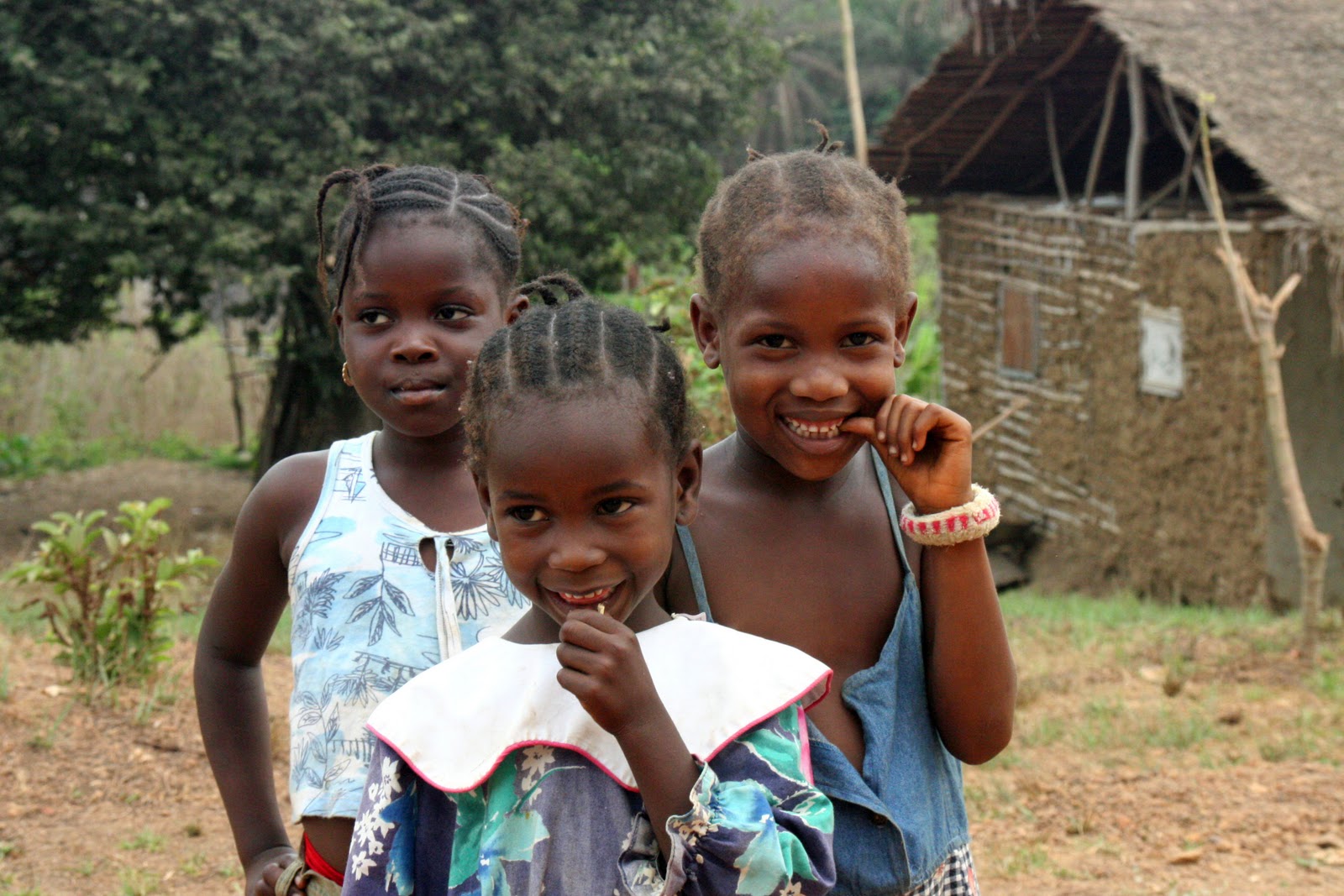
It was really and truly amazing to hear what the kids had to say.  But before I tell you, take a look at the picture and think about what you see that is the same and different from your own life: 

photo by Dulce Foster

Here are some of the things the kids said:  “I like that bracelet.”  “I sometimes wear my hair in braids, too.” “They have dark skin and I have white skin.”  “We have different trees here, like conifers.”  “We have snow here right now.”  “Is that corn growing behind them?  Because I LOVE to eat corn, too.”  “Is that a house? It’s not like my house.”  “You couldn’t live in that house in Minnesota.  You would get too cold.”


Here is another one:  

photo by Dulce Foster

“I think they are brothers and sisters who love each other.”  “I think they are cousins.  I love my cousins, too.”  “It must be very hot there. We can only wear clothes like that in summer.”  “Do they have seasons?” “Hey! I have flip flops just like that!”


One more time:

street scene in Monrovia, 2008

“How do they carry those big things on their heads?  We can’t do that!”  “There is a lot of trash on the street.”  “We have that same blue cooler.  We take it with us when we go camping.” “We have windows, too, but there is no glass in their windows.”  “They have electric wires like we do.”  “That’s so funny that they are using the wheelbarrows to carry things.  We only use our wheelbarrow in the garden.”


Each picture offered many more opportunities to talk about “same and different” than I had imagined.  For example, “I have flip flops just like that” (same) but those may be the only pair of shoes the kid owns (different).  The “no glass in the windows” comment led to a discussion of mosquitos (same) and malaria (different).  They do have power lines like us, but there is no electricity running through them.  At the time, only a  tiny area of Monrovia had electric power; the rest of the country relied on generator power – at best.  I told them about seeing the the dozens of kids huddled around the bases of the 5 or 6 working streetlights in Monrovia, doing their homework.  “Just like Abraham Lincoln,” breathed one particularly precocious second grader. 

The book I read is called For Every Child, A Better World.  It’s a UN Publication/Muppet Press collaboration which is now out of print but you can still find used copies online. If you follow the link  For Every Child, A Better World, you’ll see the format:  “Every child needs food to eat, but sometimes there isn’t enough to go around.”  I’ve done this “Same and Different” presentation several times now in kindergarten, 1st and 2nd grade classrooms. Every time, I walk away surprised by how these very young kids are able to understand and express the concept of basic human rights.  If they get it so completely, what is wrong with us adults?


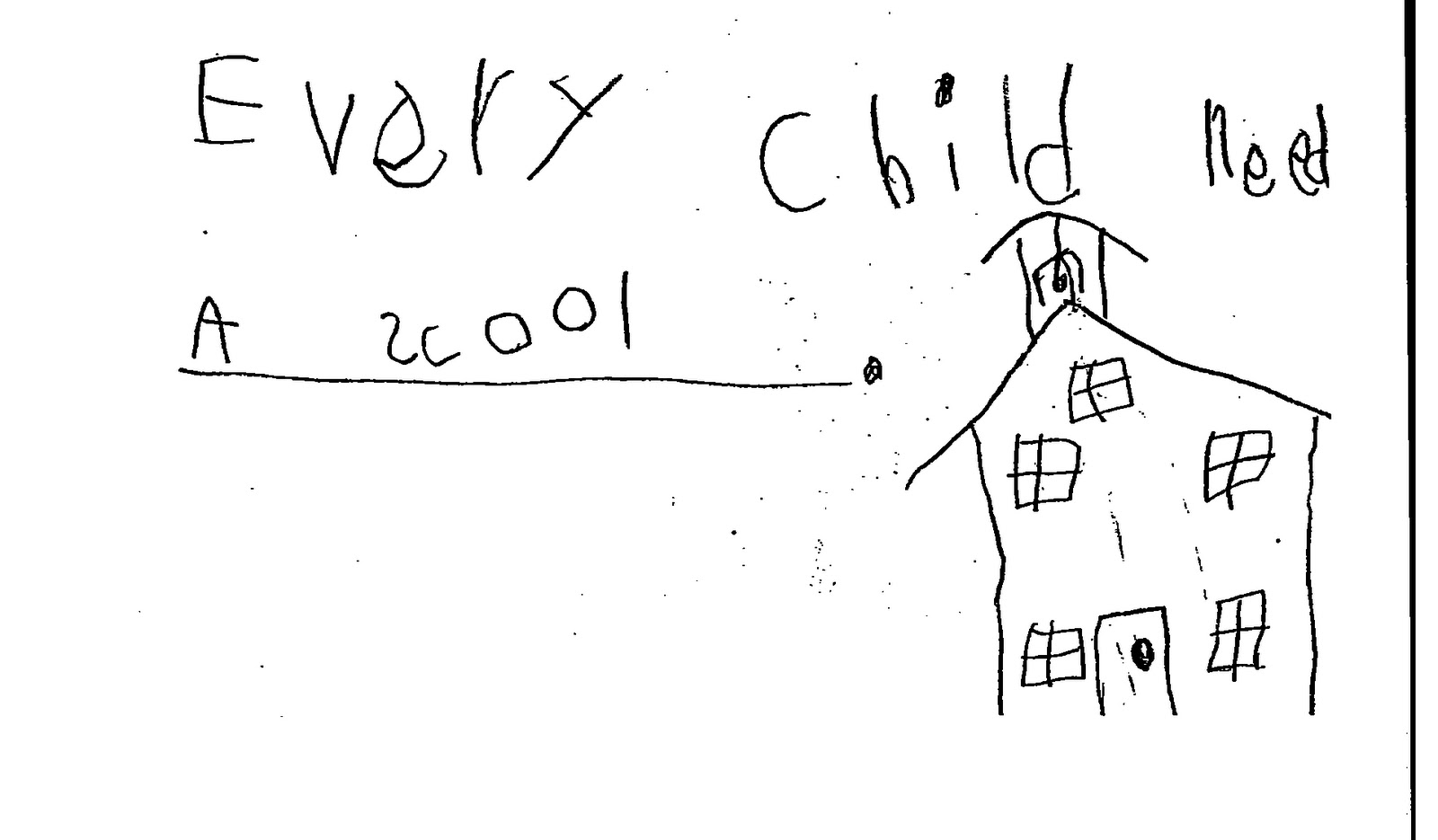
Simon’s kindergarten teacher, however, really took the “Same and Different” theme to the next level.  For several weeks, she incorporated “Same and Different” into various classroom activities, including one assignment to draw and write about something that they thought that every child needs.  She sent me copies of all of the drawings so I’ll end with a few.  Of course, my favorite is the one I posted at the top of this blog entry: “Every child needs peace.”  

You Really Can’t Make This Stuff Up – Part II

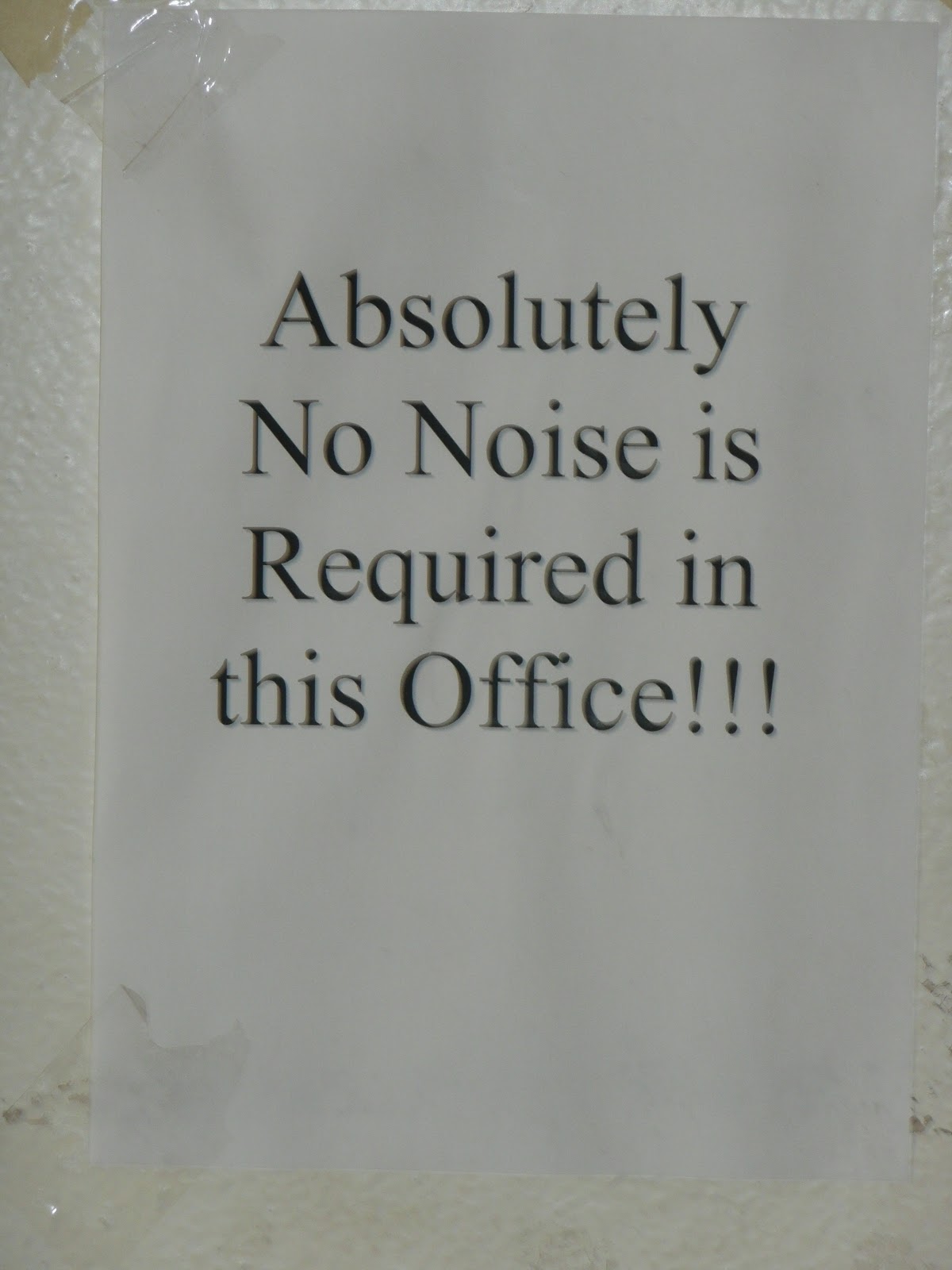
In our office, we have a mantra: “You have to laugh or else you would cry.”   Maybe working in the field of human rights exposes us to more situations where crazy and ridiculous things happen, but my hunch is – probably not.  All you have to do is read the newspaper (how about that woman who tried to mail a puppy?) or watch an episode of  “The Office” to come to a different conclusion.  The common element here is that we are all humans.  We can all be petty and mean and make a big deal about things that seem to be critically important to us at the time, but which, in the grand scheme of things, don’t really matter. We don’t always think through the consequences of our actions and we’re usually not very self-aware. That means that we cause crazy and ridiculous things to happen in our interactions with each other.  What I’ve learned – and what I’m trying to teach my kids – is that you can’t control what other people do.  But you can control how you handle your reaction to the crazy and ridiculous things that happen to you.  


Let me tell you a story about one of my asylum clients who had to deal with something crazy and ridiculous and totally out of her control.  Asylum seekers are fingerprinted as part of the asylum application process so that the fingerprint can be checked against the millions of fingerprints in the government’s electronic database.   After her asylum interview, my client was instructed to put her index finger on small pad to take an electronic fingerprint.  The asylum officer, looking at the computer monitor, got a strange look on her face.   “Try it again,” she instructed.   My client did so.  “You have to look at this,” she said to me.   

I could see that my client was getting more and more nervous by the second.  She was an older woman from a country in West Africa.   She had a valid asylum claim, but it wasn’t the strongest case in the world.  To be granted asylum in the U.S., you have to show that you have suffered past persecution or have a well-founded fear of persecution on the basis of race, religion, nationality, political opinion, or social group.   That definition comes from the 1950 Refugee Convention, and it reflects the experience of World War II rather than the modern experience of conflict.  The biggest problem I saw when I was doing asylum work was not that people were coming to the U.S. and fraudulently applying for asylum.   The biggest problem was that there were a lot of people who had experienced persecution but couldn’t show why there was a connection to one of the five grounds.  In other words, if you were a victim of random violence in a war in your home country, that isn’t enough to get you asylum in the U.S.  We had worked hard to put together a case for my client that showed that the killing of her family and the burning of her home was connected to her tribe (social group) being targeted by one of the fighting factions.  She had testified honestly and well.  And now, from her perspective, she was going to be denied the safety of staying in the U.S. because of something completely out of her control.  Something was wrong with her fingerprint.  

My client and I went around to the other side of the desk and looked at the computer screen.   There was the digital image of a fingerprint.  Right next to it was a photograph of a young, surly-looking man.  Under the photo was a caption that said,  “Guatemalan Recidivist”.   The asylum officer and I looked at each other, paused, and then just burst out laughing.   My client didn’t laugh, though.  “But that’s not me!” she insisted.   “No, of course not,” said the asylum officer.  “But that’s not me!” my client said again.   “It’s picking up only part of your fingerprint and matching you with the Guatemalan guy,” said the asylum officer.  “Sometimes that happens, especially if you’ve got dry skin.  I’ll get you some lotion and we’ll try again.”  My client looked relieved.  “OK, because if there is one thing I know, it is that I am NOT from Guatemala.”  As I was driving her back to her house, I told my client, “Sometimes you have to laugh about these things or else you would cry.”  Maybe I said it before that day, but that is the first time I remember saying it.  

As a coping strategy, humor has come in handy for me when dealing with the absurdities of parenthood.  It’s probably safe to say that having a sense of humor about the crazy and ridiculous things my children have done has saved my sanity.  I’ll close with a few examples of situations where I had to laugh or else I would cry.  


This photo of my ruined front lawn was selected for the “Sh*t My Kids Ruined” book.  I couldn’t find a photo that was high enough resolution for the publishers, so I’m not sure that it will be included.  


I posted this photo on Facebook a couple weeks ago with the caption “Sometimes I’m not sure how I’m gonna make it through the next 9 winters.”


Finally, here is a video of my family in Olso, shortly after we had to leave the Nobel Peace Prize Center because my children were fighting too much.  It’s going to come in handy if one of them ever wins the Nobel Peace Prize.


You really, really can’t make this stuff up!


You Really Can’t Make This Stuff Up – Part I

Ever notice that human rights lawyers are almost never characters in romantic comedies?  If there does happen to be a human rights lawyer character, he is portrayed as a stuffy old stick-in-the-mud like Mark Darcy in Bridget Jones’ Diary.  (There’s also the guy that Ricky Gervais is supposed to get Tea Leoni to break up with  in Ghost Town, which probably also proves that you really only even have a human rights lawyer as a character because there was a Brit involved.)  But the reality is that I would never be able to do this work if I didn’t have a sense of humor.  The subject matter may be serious, but the fact is that bizarre and funny things happen all the time to us human rights lawyers.  Here are just a couple of examples:
1.  The “Did I Accidentally Stumble Into a Comedy Sketch?” Moment.  During an interview on Sierra Leonean television, the chair I was sitting in started to fall apart.  It didn’t crash to the ground or anything, but all the parts (legs, arms, seat) just started to shift slowly towards the left.  I had to increasingly lean the other way to keep from sliding to the ground.  You try answering questions about women’s rights when you’re sitting on Fun House furniture.
2.  The “Did I Just Hear That?” Moment, a.k.a. the “What Is this, Monty Python?” Moment.  Last year, during an interview with a government official about conditions on a refugee camp, the guy suddenly stops the discussion and just randomly throws out, “So … does anyone here speak … NORWEGIAN?”  After the interview, I also learned that this guy was “the number 3 film idol in Ghana.”  Apparently, being #3 on the Ghanaian film scene doesn’t make you a big enough star to quit your day job.


I’ve learned to look for and relish the humor in every situation.  My penchant for absurdity has brought me a lot of joy. Here are a few photos from various countries in West Africa.

Caution: Grown Ups!

El Sabor del Perú

3.  The “I Can’t Believe I Brought My Breast Pump to a Prison” Moment.  I was once visiting a prison in Peru to observe the conditions of detention.  During the first part of the visit, we had been given refreshment in the form of very, VERY large glasses of Inca Kola.  We’re talking Big Gulp, Trenta sized beverages.


Never had Inca Kola before?  It is a shocking electric yellow color.  Supposedly, it is flavored with lemon verbena but to me it tastes like super-syrupy, bubblegum flavored cream soda. The Inca Kola in my very large glass on this late spring day was also very warm.   But Inka Kola is a national icon and, since it would have been rude and ungracious not to accept it, I managed to do the right thing and drink it all. Which meant, of course, that I soon had to go to the bathroom. Since this was a men’s prison, this created a pretty big problem.   Luckily, there was a private bathroom that I could use at the checkpoint to the high-security part of the prison.  When I came out of the bathroom, the guard was going through my briefcase.
Now, I spent a cumulative total of about 40 months of my life breastfeeding my 3 kids and I had this small, battery-operated breast pump for when I traveled. When I came out of the bathroom, I discovered that the guard had taken the breast pump apart.  He had all the pieces laid out and, one by one, was carefully holding them up to the light to examine them.  He was obviously trying to figure out exactly what kind of  weapon this strange object was. Could it be a bomb?   Let’s just say he had never even heard of breast pump and it took some time to explain.  Once he understood, the guard dropped the piece he was holding like it was a hot potato.  He even started blowing on his fingers.  The security check came to a speedy conclusion and we went on with our visit. By the time we came back out, though, the guard was laughing about it.  Perhaps, like me,  he is still telling that story and laughing about it to this very day. 

Making Something Out of Nothing

If you knew me in my twenties, you probably remember me as a KOW (Knitting Obsessed Woman).  I didn’t learn how to knit until I was 19, but after that I was rarely without a pair of knitting needles in my hands.  My PR is knitting a pair of mittens in 5 hours the night before Valentine’s Day as a gift for my future (and current) husband. Because I learned to knit as an adult, I distinctly remember how difficult it is.  You feel awkward as you struggle to make the needles do what you need them to do. It’s difficult to make sense of the stitches and frustrating to decipher the patterns, which seem to be written in secret code.  If you make a mistake, you have to rip out your work and start over.  But what I absolutely love about knitting is the satisfaction that comes from taking what is basically a couple of sticks and a ball of string and, through sheer effort and determination, turning a bunch of knots into something that is beautiful and useful. You are making something out of nothing.

I haven’t done much knitting in the past decade.  There are several half-finished projects at the back of my closet,  hidden behind my boots so I can’t see them and feel guilty about them.   But last weekend my friend Amy showed me some mittens that she is making for her son.  They are My Neighbor Totoro mittens and they seriously could not be cuter.  I saw them and my fingers started itching – literally – to knit them.   You can find the pattern for Totoro Mittens on Ravelry.com or by clicking on this pdf. (Special thanks to brella for allowing me use both the image and the pattern in this blog!)


For the first seven years of my career, I represented people who were fleeing persecution and seeking asylum in the U.S.  Though I may not have seen them for years, I often think about my former clients.  On the day that Amy showed me the My Neighbor Totoro mittens, I happened to think of James and Julia (not their real names). James and Julia were politically active in their native Kenya, speaking out against an oppressive government.  They had a little boy who I’ll call William.  When the police came to their house to arrest Julia, a police dog had bitten William on the head.  You could still see the wound a year later when, having left everything they owned behind to escape Kenya, they were seeking legal assistance with their asylum claim in the U.S.  

In police custody, Julia had been brutally and repeatedly raped.  Only a few times have I seen an asylum officer (specially trained federal officials who make decisions about asylum cases based on a written application and an in-person interview) actually cry during an an asylum interview.  Julia testified about her experiences in a straightforward manner and in excruciating detail, but with such poise and dignity that both the asylum officer and I were in tears.  I remember well how James sat next to her, utterly still. Anguish is the only word that could possibly describe the look on his face as he listened to her testimony.


Years later, after they got their citizenship, James and Julia had a party to say thank you to all of the people who had helped them.  In addition to their attorneys, there were people from their church and other members of the Kenyan community. They now lived in a big, new house out in the suburbs. Julia was close to graduation from nursing school  William, who I hadn’t seen since he was three, was now in middle school.  He was a straight-A student and talented musician who had just gotten braces.  They had had another child, too – a daughter born here in America.

It had taken a lot of hard work for James and Julia to get to where they were.  I’m sure that they were frustrated at times with life in this strange, new country.  But they persisted and, through sheer effort and determination, made a new life for themselves and their family.  In some ways, they had even followed a pattern – the American Dream.  It wasn’t easy, but James and Julia had done it.  They had made something out of nothing.

Note to Self: What I Learned in Peru

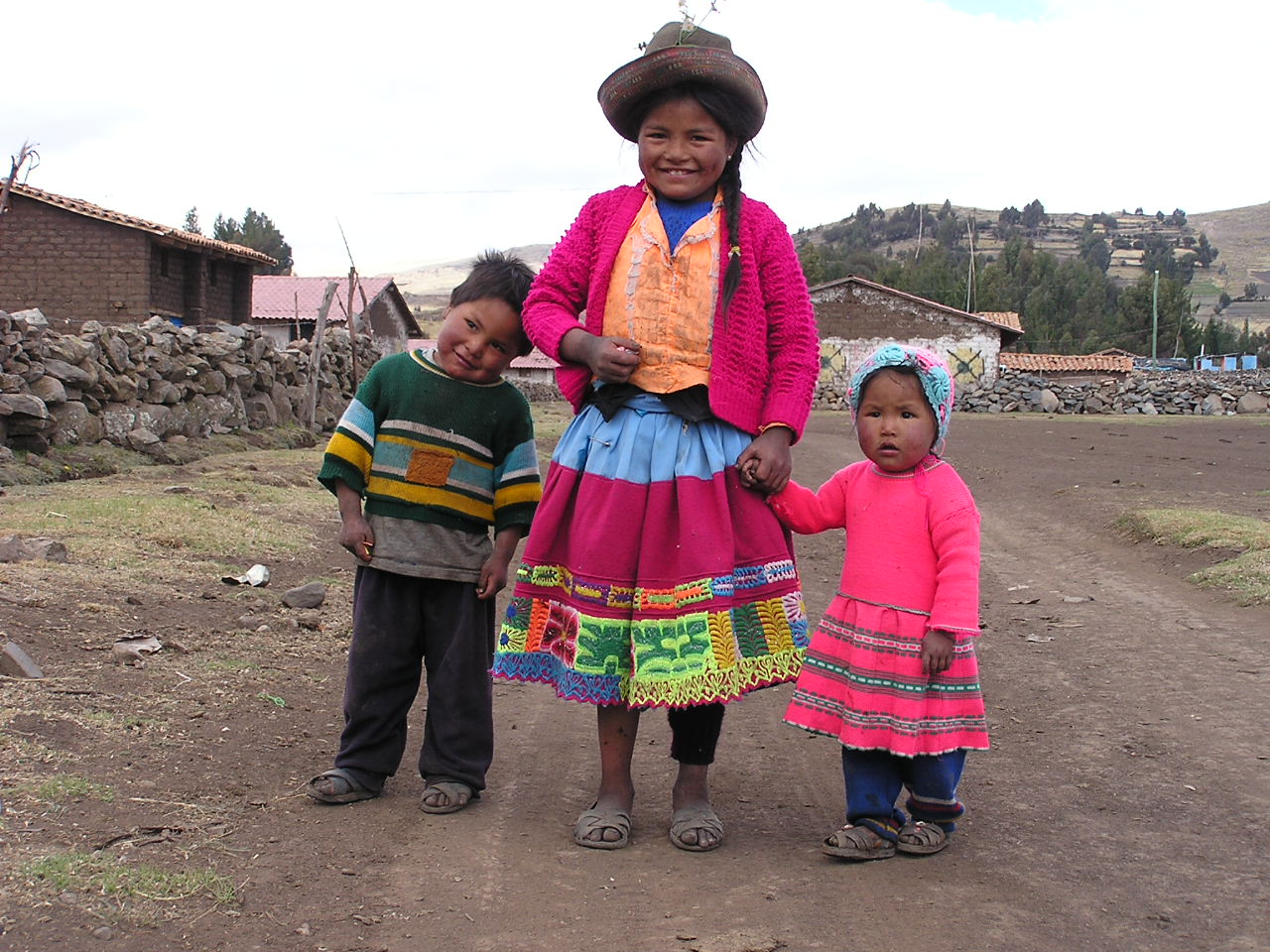
Kids in Pampamarca, Peru.  The majority
of those killed during the conflict were
from indigenous communities like this in the highlands

It was November 2002 and I was sitting in a small conference room in Lima, taking notes as a woman tearfully relayed the story of her 9 years in detention. As she spoke, low and soft, the woman (who I’ll call Lourdes) cradled a newborn baby bundled in a pink blanket.

I had left my own 9 month old baby at home to lead a volunteer team on a one week trip to Peru to monitor the work of that country’s Truth and Reconciliation Commission (Comisión de la Verdad y Reconciliación or CVR). I had just recently returned to work after an extended maternity leave and, I have to say, I count those months of being at home with a potty-training toddler and a nocturnal infant as some of the toughest of my life.

Our team was interviewing Lourdes and several other inocentes or “innocents”. Between 1980 and 2000, the conflict between the Peruvian government and the Sendero Luminoso (Shining Path) and Tupac Amaru Revolutionary Movement (MRTA) rebel groups resulted in approximately 69,000 people killed and disappeared. As many as 600,000 were internally displaced; I remember seeing the tent cities on the outskirts of Lima where thousands of people who had fled the political violence in the highlands had lived for twenty years.

Lourdes was one of more than 14,000 Peruvians who were detained, tortured, and denied a fair trial under 1992 anti-terrorism decrees. She told us about the day she was arrested in early 1993. She and her husband were students. They had a three-and-a-half year old son who had health problems, so she had left the house before daybreak to get medicine for him. As she was returning to her house, she was stopped and arrested by the National Directorate Against Terrorism. It turns out that the Shining Path had bombed a nearby part of Lima. Lourdes and four other women who also happened to be out early that morning were arrested, blindfolded and interrogated. “One police officer told us that all of us would die,” she said quietly. Two hours after they were arrested, they were exhibited to the media at a press conference. The arrest was presented as a triumph over terrorism.

For the first several months, Lourdes was detained on a military base. The conditions were very bad and she was tortured. She didn’t go into the details and we didn’t ask her to tell us more. I remember her saying that she was allowed to use the bathroom only once a day – with 3-4 soldiers pointing their rifles at her. She was only allowed to bathe once a week. Lourdes was later moved to a prison, which she described as looking “like a paradise” compared to the military base.

Lourdes’ husband, who we also interviewed that day, had been arrested a month later. His father had to go to the police station to recover their little son, who was cared for by relatives for the next 9 years. Six months later, one of Peru’s “faceless” courts (called that because a one-way mirror concealed the identity of the prosecutors and judges) found Lourdes and her husband guilty of treason and sentenced them to life in prison.

Lourdes and her husband were not allowed to see each other during their detention and their letters to each other were read. For one whole year during her detention, after her sentence was reduced to 30 years, she was not allowed to have visits from anyone. Eventually, Lourdes and her husband were able to submit their cases to a Presidential pardons panel. She was pardoned in 2001, just a few weeks before the ninth anniversary of her arrest.

The interviews went on for more than six hours, but either Lourdes or her husband held that baby for the entire time. They didn’t put her in her carrier or pass her to the others who offered to hold her. They just took turns holding her close. I remember Lourdes saying to me afterwards, “We lost so much time with our son. Now he is a teenager and we’re strangers to him.”

Lourdes’ story highlights some of the problems of a government response to terrorism that doesn’t provide adequate protections for due process and other rights in the administration of justice. The Peruvian experience with terrorism seemed strikingly relevant back in 2002, when the US human rights community was very concerned about just how far the War on Terror might go. But I also learned an important personal lesson that day.

My friend Jim once had to share an office with an extremely annoying coworker. My friend kept a yellow post-it note stuck under his desk that said, “IGNORE ANTHONY”. Whenever the guy was bugging him, he would stick his head under the desk and read that post-it note. I don’t have a post-it note, but I do have a strong visual image of interviewing Lourdes that day in Lima. Whenever I feel that parenthood is more than I bargained for (which, frankly, was twice yesterday), I pluck that image from my garden of memories and think to myself: “REMEMBER LOURDES”.

If you’d like to learn more:

  • To see photos of life in Peru, go to the photo gallery on The Advocates for Human Rights website (click here.)
  • Some background on the anti-terrorism laws and why the system produced so many inocentes (click here.)
  • There is a 9-minute video summary of the Peruvian CVR’s findings related to the inocentes and human rights abuses in the 1990s: CVR Final Report: Fujimori and the Destruction of Democracy  It provides a good overview, but be advised that it does contain some graphic images.

So … What Exactly Is It That You Do Again?

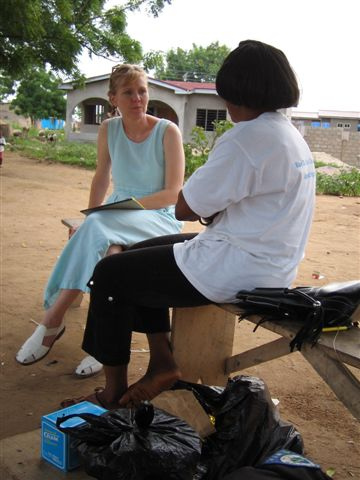
Interviewing refugees in Ghana
It all began, as so many things do, with a misunderstanding.  I was putting my son Simon to bed one night when he said, “Mommy … What’s it like to be a human rights warrior?”  “But I’m not a human rights warrior. I’m a human rights lawyer.”  He waited a couple of seconds – this kid has an uncanny sense of comedic timing – before wrinkling up his little nose and saying skeptically, “What’s a LAWYER?”     
I may never know what kind of weapons he thought I was secretly carrying in my briefcase because my description of my actual job put him right to sleep. But this bedtime exchange got me thinking.  For 15 years – more if you count my student experiences – I’ve worked with survivors of human rights abuses, documenting stories of unbearable loss from every corner of the world.  I have observed the absolute worst aspects of human nature, the dark side in each of us that we would rather not acknowledge.
You might think that this would make me pessimistic about the world in general and Homo sapiens in particular, but the impact has been quite the opposite.  It has been my privilege to bear witness to the very best characteristics of humanity – our capacity to overcome adversity, to hope, to forgive.  I’ve heard inspiring acts of courage; seen the precious gift of faith. 
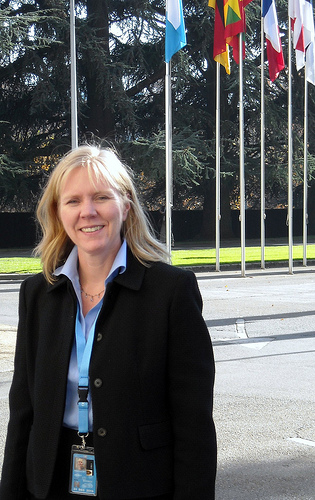
At the UN in Geneva
While I have many stories from my experiences in human rights work, I realize as I write this that most of them have never been shared with anybody.  Stories of human rights abuses don’t exactly lend themselves to cocktail party conversation.  How do you convey the complex political and social conditions that lead to human rights abuses, honor the victims, and avoid grossing people out with the horrible details – all in a two-minute elevator speech? And how do you even stop talking about injustice once you start?
As a parent, however, I am challenged to distill these experiences into something that Simon – along with his brother Sevrin and his sister Eliza – can understand and profit from.  My goal in writing this is to think more intentionally about what I’ve learned from my work in human rights so that I may one day pass these lessons along to my kids.  Perhaps these reflections will be interesting or inspiring to others as well. 
While I am proud to be the Deputy Director of The Advocates for Human Rights, this blog reflects my personal views rather than those of the organization.