Morocco: Human Rights Violations Under Article 475

Originally published on The Advocates Post

In Morocco, a 15 year old girl experienced constant harassment and threats from a 35 year old man in her town.  He waited for her each day outside of her school and on several occasions told her, “I will force you to marry me.”  One day, he abducted and raped her at knifepoint.  The victim made a complaint to the gendarmes, who arrested the man.  In his statement to the police, the rapist admitted his crime, declaring that he did it “because it was the only way I would be able to marry her.”  In order to avoid scandal, the victim dropped out of school and married him.  “I am raped now every day,” she told members of the local association that works with women survivors of domestic violence.

This tragic story is one of many included in a joint submission The Advocates for Human Rights and our Moroccan partner Mobilising for Rights Associates (MRA) made recently to the United Nations’ Committee on the Rights of the Child.  The submission  draws attention to the serious human rights violations resulting from the application of Article 475 of the Moroccan Penal Code, which  provides that whoever “abducts or deceives” a minor, without using violence, threat or fraud, can escape prosecution and imprisonment if (i) the abductor marries the victim, and (ii) those persons who have a right to request annulment of the marriage do not file a complaint.[1]

Organizations and news reports from Morocco indicate that Article 475 has been applied in cases of sexual abuse of minors in order to preserve the “honor” of the victim and her family.  Notably, this issue has received widespread coverage following the 2012 suicide of Amina Filali, a sixteen year-old girl who killed herself after being forced to marry a man – ten years older than her – who had raped her.[2] Additional news reports confirm that the use of Article 475 continues.[3]  Further, associations working at the local level in Morocco report that girls married under Article 475 continue to suffer rape and domestic violence after the marriage.

Information from our Moroccan partners illustrates the extent of the problems with the application of Article 475. One local association that works with women reported that, of 11 cases involving rape of a minor that they handled in 2013, Article 475 was raised in 6 cases; the age of the victims ranged from 14-17, while the age of the rapists ranged from 23-28.[4]  In one case, a 14 year old girl was raped by her 28 year old cousin, and she became pregnant as a result.  She sought help from the association to file a criminal complaint, and there were several court hearings.  DNA testing established that the accused was the rapist.  Under Article 475, the two families agreed on a temporary marriage between the rapist and the victim to avoid shame, with a predetermined divorce date after one month of marriage.[5]

Associations working at the local level in Morocco report that the young victims experience tremendous pressure to abandon criminal prosecution and agree to the application of Article 475  from law enforcement, justice system personnel, as well as the families of the perpetrators. Even their own families pressure them to agree to marriage under Article 475 in order to avoid shame. Because all sexual relations outside of marriage are illegal under the Moroccan Penal Code,[6] victims also fear prosecution and imprisonment under Penal Code Article 490.[7] In fact, one Moroccan association reported several cases of rape victims who filed complaints to initiate criminal prosecution but were prosecuted themselves under Article 490.[8]

In one instance, a 15 year old girl was raped by a 25 year old man.  She became pregnant as a result of the rape, which is considered proof of illicit sexual relations.  She did not want to file a criminal complaint because she feared prosecution under Article 490, so she fled her home and sought shelter through a local Moroccan association.  The rapist’s family made threats against the victim’s mother, however, and she was pressured to not file a criminal complaint and to marry the rapist under Article 475 instead.[9]

Article 475 must be understood in the context of early marriage in Morocco.  While the legal age of marriage for both men and women is now 18 in Morocco,[10]the Family Code allows the marriage of minors when “justified” and after substantial control by the Family Affairs judge.[11]Both the number of petitions for authorization to marry minors and the approval rate are high and increasing.  In 2007, 10.03% of marriages were of minors, and 86.8% of the 33,596 petitions were authorized.[12]  In 2011, the rate had risen to 11.99% of all marriages and 89.56% of 46,927 petitions for authorization to marry a minor were granted.  33.58% of petitions in 2011 were for minors ages 14-16[13].  The overwhelming majority of the minor spouses, 99.31%, were girls.[14] The Family Code provides no threshold minimum age below which authorization to marry may never be granted.  Local NGOs report marriages of girls as young as thirteen, fourteen and fifteen.[15]

In practice, judges often issue authorizations based on their own cursory visual examination of the minor girl’s physical appearance and determination that she is capable of assuming “marital responsibilities,” rather than resorting to the required expertise.[16]  Reasons advanced by judges for authorizing underage marriage include saving family honor, avoiding scandal, protecting the girl’s chastity and preventing her from debauchery.  Some even cite marriage as a solution to poverty.  At times judges do not even substantiate their decisions in writing.  Corruption among public actors and the ease by which medical certificates attesting to the minor girl’s “maturity” can be obtained are also factors allowing circumvention of the law.[17]

In spite of the reality of early and forced marriage for young Moroccan girls, the Moroccan Government made statements in recent United Nations submissions that Article 475 does not apply to, and has not been applied in, cases of sexual abuse of minors.  For example, in response to the most recent concluding observations of the Committee Against Torture, the Moroccan Government stated that Article 475 does not apply in cases of sexual abuse and that there is no statutory text in Morocco that exempts the “perpetrator of child rape from punishment when he makes the child concerned his wife, because anyone who commits rape is punished in all instances, even when he marries the victim of rape.”[19]  The Moroccan Government further stated that Article 475 “is not applicable to rape but rather to the crime of the abduction of a minor who leaves the parental home to be with someone and agrees to marry him.”[20]

In other words, in the Moroccan Government’s view and in contrast to the many reports originating from Morocco, Article 475 is intended to address situations involving marriage without the consent of the family where the prosecution for abduction of a minor can be dropped if the victim’s family withdraws the complaint to “maintain good family relations and to protect the make-up of the family if arresting the husband could lead his minor wife to lose any chance of a normal life.”[21]

On January 22, 2014, Morocco’s Parliament voted to abolish paragraph 2 of Art. 475.  While this is a positive step, and certainly a victory to be celebrated, the bill that was approved unanimously this week only abrogates the exoneration through marriage provision.   It does not change the rest of Art. 475 which provides that a man convicted of statutory rape in Morocco is still only subject to a few years in prison and a small fine.   It does nothing to impact the larger problems faced by minor girls who experience sexual abuse or early marriage in Morocco.

The Moroccan government must go further to protect the rights of women and girls.   Given the factual situation on the ground in Morocco and the clear violations of Morocco’s obligations under the Convention on the Rights of the Child, the Moroccan government must:

  • Amend Morocco’s Penal Code and Penal Procedure Code to facilitate procedures for bringing sexual abuse and rape of minors cases, including eliminating discriminatory legal provisions that require proof of actual physical injury and place heavy burdens of proof solely on the victim.
  • Amend Morocco’s Penal Code to abolish criminal prosecutions under Article 490 for “illicit sexual relations.”
  • Develop and implement a plan for educating the judiciary and public that criminal proceedings against rapists will not be terminated if they marry their victims and that Article 475 is not to be applied in cases of sexual abuse and rape of minors.
  • Penalize all acts to encourage, pressure, or threaten minors to marry, whether by public or private actors.
  • Amend Morocco’s Family Code to establish clear and objective criteria under which judicial authorizations for the marriage of minors may be granted in only exceptional cases, and in all events establish a threshold minimum age under which authorization to marry may never be granted.

Related post:  Amina Filali and Violence Against Women in Morocco


[1]Dahir n° 1-59-413 du 28 joumada II 1382 (26 novembre 1962) portant approbation du texte du code pénal, as amended, (« Penal Code »), Art. 475: 1) Quiconque, sans violences, menaces ou fraudes, enlève ou détourne, ou tente d’enlever ou de détourner, un mineur de moins de dix-huit ans (Article modifié par l’article premier de la loi n° 24-03 modifiant et complétant le code pénal, précitée), est puni de l’emprisonnement d’un à cinq ans et d’une amende de 200 (cf. supra note correspondant à l’article 111)  à 500 dirhams. 2) Lorsqu’une mineure nubile ainsi enlevée ou détournée a épousé son ravisseur, celui-ci ne peut être poursuivi que sur la plainte des personnes ayant qualité pour demander l’annulation du mariage et ne peut être condamné qu’après que cette annulation du mariage a été prononcée.

available at http://adala.justice.gov.ma/FR/Legislation/TextesJuridiques.aspx.

[3]See, e.g.,http://www.illionweb.com/larticle-475-tue-toujours/, http://www.illionweb.com/bouchra-victime-gang/, and http://www.yabiladi.com/articles/details/21035/tetouan-fille-suicide-apres-avoir.html.  In addition, one association working with MRA reported that their region of Morocco alone, three girls married under Art. 475 had recently tried to kill themselves. Written Communications to MRA and The Advocates for Human Rights from Moroccan NGOs (5 December 2013).

[4]Written Communications to MRA and The Advocates for Human Rights from Moroccan NGOs (5 December 2013).  In the same Written Communications, another association from a different region reported that Article 475 was raised in 3 of 5 rape cases that they handled where the victim was a minor.  A third association reported their experience that in 6 cases where Article 475 was raised since 2011, the average age difference between the victim and the rapist was 10 years (with victims ranging in age from 14-17 and rapists from 23-28). Id.

[5]Id.

[6]Dahir n° 1-59-413 du 28 joumada II 1382 (26 novembre 1962) portant approbation du texte du code pénal, as amended, (« Penal Code »)art. 490.

[7]Written Communications to MRA and The Advocates for Human Rights from Moroccan NGOs (5 December 2013).

[8]Id.

[9]Id.

[10] Dahir n° 1-04-22 du 12 hija 1424 (3 février 2004) portant promulgation de la loi n° 70-03 portant Code de la Famille («Family Code ») art. 19.

[11] The authorization is not subject to appeal. Id. art. 20.  Article 21 also requires the legal tutor’s (guardian’s) consent.Id. art. 21.

[13]Id.  Note that these numbers are consistent with information from the local level.  One local association that works with MRA reported that from January to November 2013, the First Instance Court in Khemisset granted 325 of 442 petitions for authorization to marry minors.  Written Communications to MRA and The Advocates for Human Rights from Moroccan NGOs (5 December 2013).

[15]Ligue démocratique de défense des droits des femmes (LDDF), Droits des femmes et code de la famille après 4 ans d’application(2007).

[16]Interviews with Local Morocco NGOs, (May 2012 – December 2013).

[17]Abdellah Ounnir, Les justiciables dans le circuit judiciaire relatif au contentieux de la famille, inLe Code de la famille: Perceptions et pratique judiciaire, pp. 89-139 (Morocco: Friedrich Ebert Stiftung, 2007);Démocratique des Femmes du Maroc(ADFM), Implementation of the CEDAW Convention: Non-Governmental Organisations’ Shadow Report to the Third and the Fourth Periodic Report of the Moroccan Government(Nov. 2007).

[18]In January 2013, the Justice Minister made a statement to the effect that he would not oppose proposed modifications to 475. A bill (sponsored by MPs) to modify and complete article 475 was adopted by the Council of the 2nd Chamber of Parliament and  transferred to the relevant Committee on legislation within that Chamber for review on January 29, 2013.  This bill would increase the penalties, eliminate the 2nd paragraph of 475, and reinforces the link between 475 and the later sexual abuse of minors articles in the Penal Code.  A second bill (sponsored by MPs) presented in the 1st Chamber would eliminate the 2nd paragraph of 475 (among other modifications to the articles on sexual abuse), but the version adopted by the legislation committee had eliminated these reforms.  Another bill (sponsored by MPs) for a VAW law in 1st chamber that would cancel 475 among its 35 articles was transferred for review to the legislation committee in February 2013.  The current status of these three bills is unknown and it is unclear what subsequent steps if any have been taken on these three bills.  A proposed VAW bill submitted by the Family Minister to the Government Council (and tabled) did not contain any modifications to Article 475. See http://www.medias24.com/POLITIQUE/5975-Benkirane-desavoue-Bassima-Hakkaoui.html.  Most recently, on January 8, 2014, the Committee on Justice, Legislation and Human Rights in on of the Parliament’s chambers voted to abolish paragraph 2 of Art. 475.  See http://www.aujourdhui.ma/maroc-actualite/societe/viol-des-mineures-au-maroc-une-loi-debattue-au-parlement-107202.html www.yabiladi.com%2Farticles%2Fdetails%2F22289%2Fviols-mineures-deputes-annulent-l-alinea.html&h=1AQFFOSTM

[19]U.N. Committee Against Torture, Consideration of Reports Submitted by States Parties Under Article 19 of the Convention, Information Received From the Government of Morocco in Response to the Concluding Observations of the Committee Against Torture, para. 111, CAT/C/MAR/CO/4/Add.1(9 September 2013).

[20]Idpara. 112.

[21]U.N. Committee Against Torture, Consideration of Reports Submitted by States Parties Under Article 19 of the Convention, Information Received From the Government of Morocco in Response to the Concluding Observations of the Committee Against Torture, para. 112, CAT/C/MAR/CO/4/Add.1(9 September 2013).

Window on the World: Stone Town, Zanzibar

20140116-125453.jpg

The last in my Window on the World response to the Weekly Photo Challenge.   The bright morning sun through this window caught my eye when I was in Stone Town last March.

More photos in this Window on the World series:

Sankhu village in Nepal

Charleston, South Carolina 

Rabat, Morocco

Gvarv in Telemark, Norway

Machu Picchu, Peru

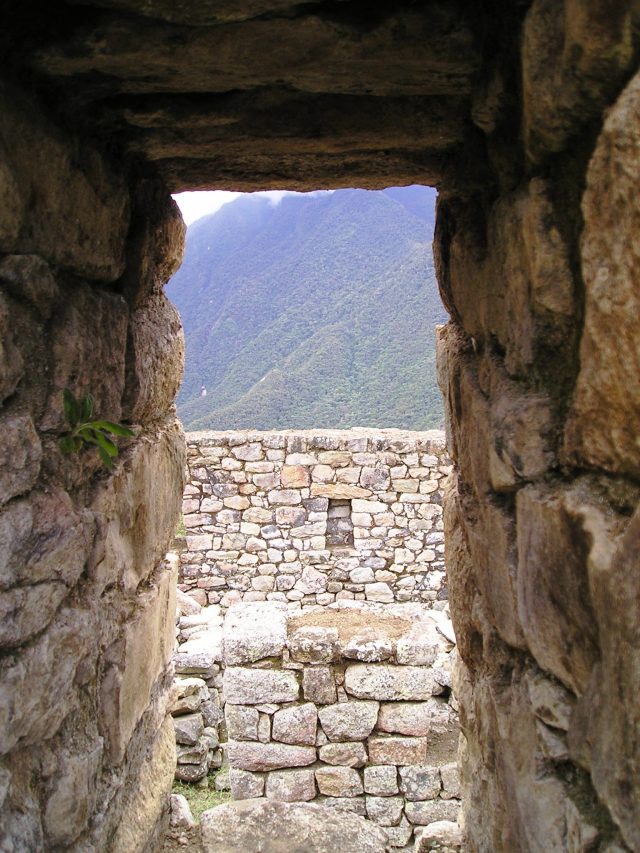
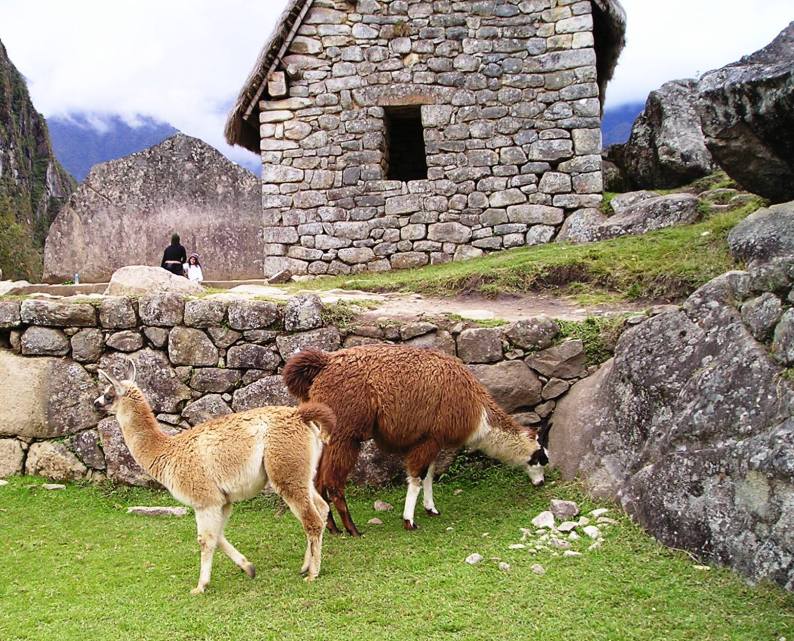
Window on the World: Machu Picchu, Peru

I’m having fun with the Weekly Photo Challenge theme Window this week!   Here is a photo that I took in what was once the residential part of Machu Picchu in Peru.  Wouldn’t it be lovely to look out your window and see these cute llamas?

More photos in this Window on the World series:

Sankhu village in Nepal

Charleston, South Carolina 

Rabat, Morocco

Gvarv in Telemark, Norway

And one more photo – taken through a window at Machu Picchu. Enjoy!

Window on the World: Gvarv, Telemark, Norway

Gvarv window

 Windows look out over farms and apple orchards.

My grandfather came from this area near the town of Gvarv in mid-Telemark, Norway.

(Photo credit to my husband Charles.)

More photos in this Window on the World series:

Sankhu village in Nepal

Charleston, South Carolina 

Rabat, Morocco

Machu Picchu, Peru

For more interpretations on the Weekly Photo Challenge theme: Window, click here.

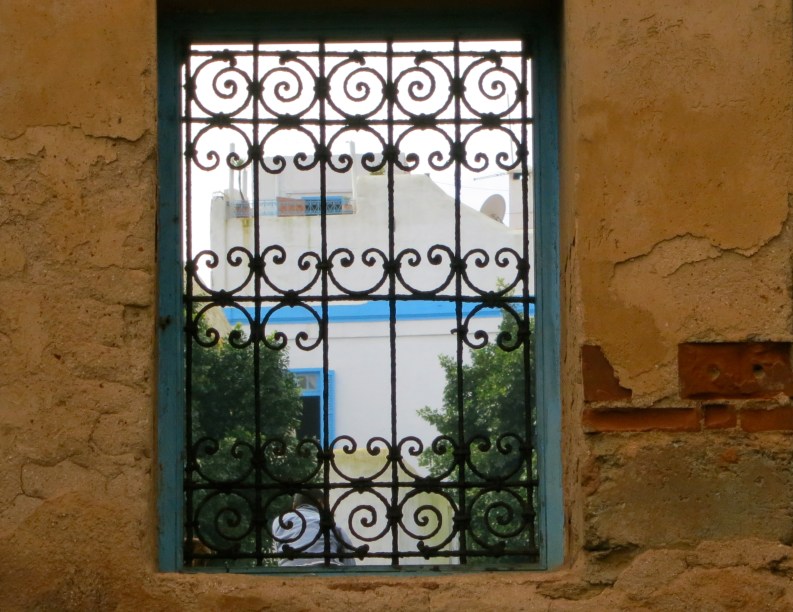
Window on the World: Rabat, Morocco

IMG_0094

A window in a wall inside the Kasbah in Rabat, Morocco.

More photos in this Window on the World series:

Sankhu village in Nepal

Charleston, South Carolina 

Gvarv in Telemark, Norway

For more interpretations on the Weekly Photo Challenge theme: Window, click here.

Window on the World: Charleston, South Carolina

IMG_0769
Catfish Row
Charleston, South Carolina

Warm light spills from a window near the entrance to Catfish Row on a late December evening. Catfish Row, the fictional location of the American folk opera Porgy & Bess, was inspired by this area (actually called “Cabbage Row”) near Church Street in downtown Charleston. 

More photos in this Window on the World series:

Sankhu village in Nepal

Rabat, Morocco

Gvarv in Telemark, Norway

For more interpretations on the Weekly Photo Challenge theme: Window, click here.

Window on the World: Sankhu, Nepal

Sanku village, Kathmandu Valley, Nepal

A woman watches the world go by from her window in the village of Sankhu in Nepal.

For more interpretations on the Weekly Photo Challenge theme: Window, click here.

More in this Window on the World photo series:

Charleston, South Carolina

Rabat, Morocco

Gvarv in Telemark, Norway

12 1/2 Clichés I Want My Kids to Live By

IMG_2110

You’ve heard ’em all before. Clichés are a popular form of expression used throughout the world.  There are many sayings that are so overused that we barely even notice them anymore.  I started to think about clichés recently because of The Loud Talking Salesman guy who works in the office next to mine.  He seems to speak entirely in clichés. The wall must be thin, because all day long I hear him on the phone with clients telling them that “at the end of the day” “it’s a win-win situation” etc etc.   (I’ve never met him, but if I ever do, I’ve already planned what I’m going to say:  “Working hard?”  To which he will most certainly reply, “Hardly working!”)

Once I started actually paying attention clichés, I noticed that we are not only constantly verbally but also visually blasted with them.  Clichés are plastered all over the place, on everything from bumper stickers to throw pillows to Pintrest. Some clichés are silly or sappy or just plan wrong.  But if you stop and think about it, some of them make a whole lot of sense.

Many clichés are, in fact, the moral equivalent of Tootsie Pops – they have a sweet, chewy truth at their center.  Some of them are actually pithy, shorthand statements of deep wisdom.   Some clichés embody true lessons about living an ethical, fulfilling, righteous and joyful life in community with other humans.  In some ways, these clichés are shorthand for the life lessons that I am trying to teach my children so that they will grow up to be citizens of the world, fully empowered to exercise both their rights and their responsibilities.

So on the theory that “The way we talk to our children becomes their inner voice,” I decided to write down some of the clichés that I want my kids to actually remember and use when I’m no longer around to nag them.

“From those to whom much is given, much is expected.” 

One of the most misquoted sayings of all time, I’ve seen this clichés attributed to everyone from Voltaire to Bill Gates’s mom.  While  John F. Kennedy did say,  “For of those to whom much is given, much is required,” the saying actually comes from the Parable of the Faithful Servant (Luke 12:48) in the Bible.  “To whomever much is given, of him will much be required; and to whom much was entrusted, of him more will be asked.”

The point for my children is this – you have been blessed with intelligence, a loving family, comfortable home, health and so much more.  You each have different talents and strengths.  It is your responsibility to use  your gifts not just for your own benefit, but also to help others.

“You are what you eat.”

If you eat garbage, you feel like garbage.  I’m serious – eat your fruits and veggies, kids!

IMG_0475

“Think before you speak.”

Or send an email or post something through social media.  Count to 10 in your mind before you open your mouth.   Write it out, but wait until the morning to send that email.  Hurtful words, once said, are hard to take back.  Of course, the corollaries to this cliché are:

“If you can’t say something nice about someone, don’t say anything at all.”

and  

“If you are thinking something nice about someone, go ahead and say it.”

OK, that last one is technically not a cliché since it is not overused.  I count it as half cliché since I made it up myself when I was 18.  I was a camp counselor and I lived in a cabin with another counselor that I didn’t get along with particularly well.  But one day, when I was brushing my teeth, I heard her singing in the shower.  She had a beautiful voice that I had never noticed.  As I brushed my teeth, I remember thinking that I should just tell her.  Why keep those nice thoughts to myself just because I we didn’t like each other?  It was hard for me, but I did tell her.  I was surprised how appreciative she was at the compliment.  And while we never became friends, we did get along fine for the rest of the summer.

“Be the change you want to see in the world.”  

Don’t just sit around wishing or waiting for things to change things.  YOU can create change yourself through your own actions.  (This quote is usually attributed to Mahatma Gandhi, although there is no reliable evidence that he actually  said it.  Gandhi did say “If we could change ourselves, the tendencies in the world would also change. As a man changes his own nature, so does the attitude of the world change towards him. … We need not wait to see what others do.”)

It’s worth pointing out that Dr. Seuss wrote the same thing more directly in The Lorax: “Unless someone like you cares a whole awful lot, Nothing is going to get better. It’s not.”

“Don’t Postpone Joy”  

No, I don’t mean the “go ahead and buy those really expensive shoes to make yourself happy” kind of joy (although it is important to treat yourself somtimes.  I mean the “Daddy quit his job and moved to Minneapolis to be with me”  kind of joy.   Because your Daddy did do that.  He didn’t have a dramatic boombox scene like Lloyd Dobler in Say Anything, but it was the same kind of going after love and joy thing. (This reminds me to add Say Anything to my list of Movies I Want My Kids to See.)

And while we are on the subject:

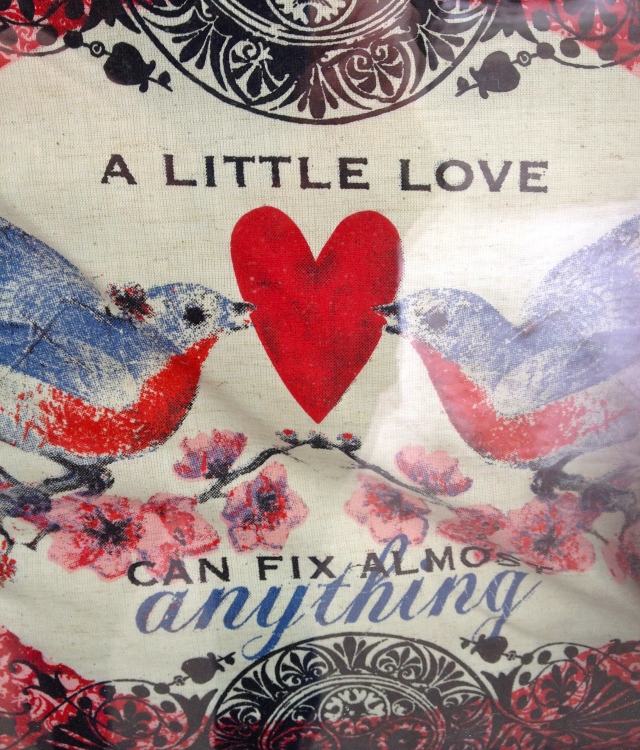
‘Tis better to have loved and lost, Than never to have loved at all.  

I know that this one is often up for debate, but I think it is true.  Even if your heart ends up getting broken in the end, the experience of loving another is worth it.  It is worth taking a risk.

IMG_2117

“The best way out is always through.”

Robert Frost is credited with this one.  Rather than avoiding a problem,  it is always best to confront it directly.  You can spend more energy fretting about it than it would take to just deal with it.  In the long run, it is less painful to just do what you need to do to get through it.

“A good laugh and a long sleep are the two best cures for anything.”

I don’t have much to say about this one other than I believe it in, deep down in my bones.  The same goes the the next one:

“Speak the truth, even if your voice shakes.”

speak

“Better late than never.”

It’s never to late to fix past wrongs.  Remember Darth Vader and what happens at the end of Star Wars Episode VI?  Redemption.  But it is also never to late to go down a different path.  Every day has the potential to be a fresh start.  As George Eliot wrote,  “It is never too late to be what you might have been.”

“Always look on the bright side of life.”

It’s been my experience that a positive attitude really does help you in life.  Everyone gets down and has rough patches; that’s perfectly understandable.  You don’t have to be cheerful all the time.  But in the macro sense, try to be an optimist.  It’s a worldview that will get your farther in the long run.  As Sir Winston Churchill once said, “A pessimist sees the difficulty in every opportunity.  An optimist sees the opportunity in every difficulty.

 TO BE CONTINUED …

I’ve got more clichés I want my kids to live by, but I’d love to hear from others about clichés that hold important life lessons for them.   I will end with, not a cliché, but a quote from A. A. Milne.  Christopher Robin is talking to Winnie-the-Pooh and he says (in your mother’s voice):

“Promise me you’ll always remember:

You’re braver than you believe,

and stronger than you seem,

and smarter than you think.

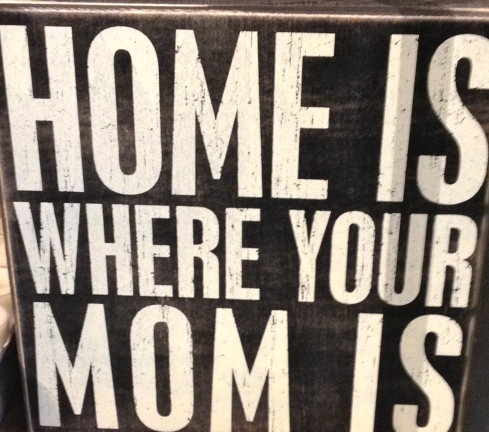
P.S. Also remember:

IMG_2113

Weekly Photo Challenge: Beginning

IMG_2034

“For last year’s words belong to last year’s language

And next year’s words await another voice.

And to make an end is to make a beginning.”

                                                                              ~T.S. Eliot

From Little Gidding (1942), the final poem in T.S. Eliot’s Four Quartets


Landfall on Sullivan’s Island, South Carolina.

See more Weekly Photo Challenge photos here.

Rainbow Looming Our Way To Gender Equality

IMG_0820

There are little plastic rubber bands all over our house.  On my way upstairs this morning, I noticed them strewn on the stair treads like colorful flower petals after a spring storm.  That’s because my 11 year-old son spent more than an hour yesterday at the top of the stairs, “where the light is good”, perfecting his starburst bracelet on the Rainbow Loom.   Technically, it’s his 8 year-old sister’s, but his Rainbow Loom will be arriving tomorrow via Amazon Prime.  He used some of his Christmas money to buy one for himself.

Anyone with kids in elementary or middle school will understand what I’m talking about, but this is something worth talking about even if you don’t have kids.   The Rainbow Loom has been popular for months. What is striking for me as a parent, however, is that this is a toy that is equally popular with both boys and girls.  Of the more than $3 million in sales since August, almost half of the Rainbow Looms reportedly were purchased for boys.

I first noticed the Rainbow Loom’s gender-neutral popularity last month at a PeeWee hockey tournament.  Since the tournament was out-of-town, the team and their families were all staying at the same hotel.  I noticed that all of the younger siblings – especially the boys – were prodigious Rainbow Loomers.   A group of younger brothers, all 9 and 10, were Rainbow Looming by the pool.  Later that night, they were Rainbow Looming at the rink before the game.

“Do the guys on your team like to Rainbow Loom, too?”  I asked my son.  He’s one of the youngest on his PeeWee team; most of the boys are already 12.

“Sure,” he said.  “But we didn’t have much time for it this weekend. You know, because we had to focus on hockey.”

Before my oldest son was born 14 years ago, I thought I could raise my kids in a gender-neutral way.  I had a wide range of toys on hand for him to choose from, including a baby doll.  But he and his younger brother showed no interest at all in playing with dolls or stuffed animals or Barbies or anything like that. When I caught them drop-kicking the doll, I finally gave it away to a more loving home.   By the time our daughter was born, we had no toys left that could be characterized as stereotypically female.   That is, until the day that I found her cradling a Darth Vader action figure.  She was kneeling next to a bowling pin that she had put to bed with a Kleenex for a blanket.   The premise of my nurture v. nature theory having been blown out of the water, I took her to Target and let her pick out a baby doll.  At eight, she is still taking excellent care of her “family”.

The bigger lesson for me was that kids will choose to play with what is interesting to them.   My kids inherited a substantial Hotwheels collection from my brother, but the boys never played with them much.   My daughter has always enjoyed playing with the cars, although she often plays with them differently.   Sometimes I’ll find them all lined up by color, for example.  Instead of making car noises like “Vroom! Vroom!”, the conversations I’ve overheard coming out her room are about relationships.  “Oh, Baby car!  Are you lonely? Do you want to park by Mommy car?”

Toy choice is the single most sex-typed behavior that children display.   Sure, my daughter chooses the stereotypical feminine toy most of the time.But the point is that she should be able to play with any toy and in any way that she wants to, regardless of what our society traditionally dictates as the appropriate gender-based toys.  And that goes for her brothers, too.

This holiday season, my daughter and I talked a lot about the gender-based marketing of toys.  It’s especially noticeable in the toy section – some stores even have aisles blatantly identified with pink for girls and blue for boys.   On the same toy aisle where she picked out her first baby doll, we noticed a ultra-pink display for “Lego Friends”.  My daughter, unimpressed at this new line of Legos marketed to girls, observed that,  “I don’t get it. It seems like they should just sell all the Legos in the same aisle.”

Which brings me back to the Rainbow Loom, a toy that has grown tremendously popular without much marketing at all. Rainbow Loom is popular because of word of mouth and YouTube.  Kids decided it is cool and fun to Rainbow Loom, and they shared that information (along with the colorful, plastic bracelets) with each other.

I witnessed something similar last summer when my son and the other boys at camp were obsessed with fingerweaving.  I have a mental picture of a group of them, all 11 and 12 years old, sitting around and fingerweaving during their free time.  In the middle of the circle was a huge mound – yards and yards and yards – of their collective fingerweaving.  Every once in a while, someone would call out, “I need more yarn!” and someone else would make a run for the craft room.  Fingerweaving was cool and fun in their social context and everyone, regardless of sex, was doing it.

I see the same phenomenon with the Rainbow Loom.  When tween boys are making jewelry at the hockey rink, you know it is not a popularity bogged down by gender-stereotypes.

“Why do you like to make things on your Rainbow Loom?”  I asked my daughter.   “Because it is creative and fun!” she replied.

When I asked my son the same question, he replied,  “Because it’s fun.  And creative.”

That pretty much says it all.   In a gender-biased world, they found a gender-neutral toy that they both love for the same reasons.   So I ordered them each a new package of 1800 colorful little rubber bands.  I won’t even mind picking them up off the floor.

The Rainbow Loom – and the kids that have made it wildly popular – give me hope.  Hope that this generation will keep our society moving, slowly but surely,  towards gender equality.