House of Wonders and Stone Town waterfront, Zanzibar
A little more than 10 years ago, I had a rare moment of clarity. I was sitting with my second child, who was 9 months old, on my lap while my 2-year-old danced and swayed around me. Everyone else in the Mommy and Me class was singing – with gusto – the Barney song “I Love You”. Glancing at the clock, I realized that the week before – at exactly this time – I was being interviewed live on national TV in Peru about that country’s truth and reconciliation commission.
The stark contrast made me realize that I had chosen a life in which there might never really be a “typical” day. Setting aside the insipidity of Barney, I realized that these small moments with my young sons were as important and valuable as the other, more high-profile moments of my career, which often takes me to exotic locales. I learned not to compare my days. Not to sift through the experiences of each day and measure the worth of one against another, but to see them all as a whole. To acknowledge that each endeavor for work and for family gives me strength for the other. To realize that I am fortunate to have these varied experiences, which, woven together form the rich tapestry of my life.
So for the Weekly Photo Challenge: A Day in the Life, I am choosing to share one day that I recently spent in Zanzibar for work. As I write this, my daughter is sitting beside me, looking at the photos and talking about them with me. One day in Zanzibar, one day of spring break at home. Days and experiences, knitted together – so many days to be thankful for!
Sunrise in Dar es Salaam
St. Joseph Cathedral, on the waterfront in Dar es Salaam
View from my in Dar es Salaam
On the ferry, waiting for it to leave Zanzibar Gate
Birds over the harbor
Commuters at the Kigamboni Ferry Terminal
Early March – on the brink of rainy season – brings sudden, dramatic rain that quickly ends.
Rainbow over Dar es Salaam Bay
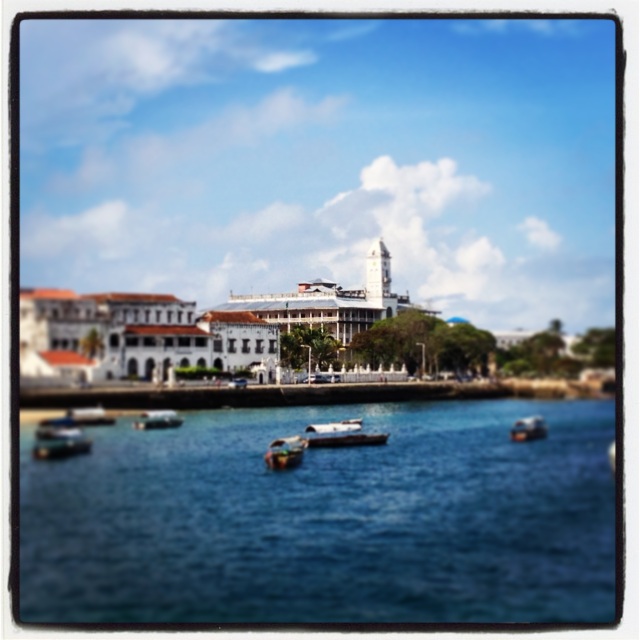
Stone Town waterfront
View of Stone Town harbor from hotel terrace.
On the ferry to Zanzibar
Stone Town rooftops
Looking down on the roofs of Stone Town, Zanzibar
Old Fort in Stone Town, a World Heritage Site
Stone Town, Zanzibar
On the way to Zanzibar Town, the capital of Zanzibar.
Zanzibar is a semi-autonomous part of Tanzania with its own government – known as the Revolutionary Government of Zanzibar. A proposal to amend Zanzibar’s constitution to allow rival parties to form governments of national unity was adopted by 66.2 percent of voters on 31 July 2010.
Interviews with non-governmental organizations (NGOs)
This poster is part of a campaign to end Violence Against Women in Zanzibar
Coconut tree at the office of an NGO in Zanzibar Town
Children’s rights
Back to Stone Town
Lunch. A new discovery – Stoney Tangawizi, a most delicious East African ginger beer!
This week’s WordPress Photo Challenge theme is “Lunchtime”. Since it’s also phonoegraphy month, I’d like to share a series of memorable food/menu photos that I have taken with my iPhone 4. To quote the menu at the Red Onion Restaurant in Dar es Salaam, “Bone Appetite”!
Scrumbled Egg or Egg Porch for breakfast? Decisions…
New Delhi, India January 2012
I think I’ll have the cheeken burger.
Yaounde, Cameroon February 2013
Thirsty?
Kathmandu, Nepal September 2012
This sugar is not just pure. It is DHAM pure!
New Delhi, India September 2012
UMMMM …Deep Fried Squid Feelers!
Dar es Salaam, Tanzania March 2013
Jupped Rabbit? Magret Duck? Toulouse Poele?
I can’t even understand the English translation.
Douala, Cameroon February 2013
No. Just no.
Dar es Salaam, Tanzania March 2013
The secret of Cajun cooking – revealed!
Stone Town, Zanzibar March 2013
Should have bought a case of these!
Dar es Salaam, Tanzania March 2013 (Made in Pakistan)
Taken from the southeast shore of Lake Harriet with Instagram on my iPhone 4s.
I live in Minneapolis, the City of Lakes. The story is that the first schoolteacher named the city after mni, the Dakota Sioux word for water, and polis, the Greek word for city. The city is aptly named, with wetlands, creeks and the Mississippi river in addition to twenty-two lakes within the city limits. Truly, a wonderful blend of nature and urbanity.
Of course, most of this water is still frozen at this time of year in Minneapolis. I took this photo of my neighborhood lake – Lake Harriet – while I was out on a run a couple of evenings ago. Enjoy!
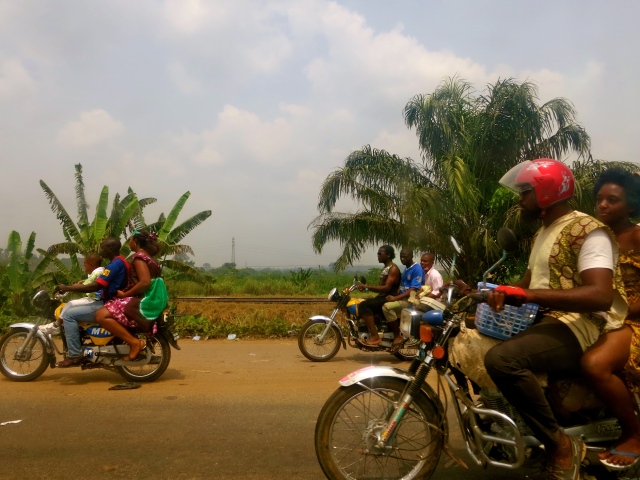
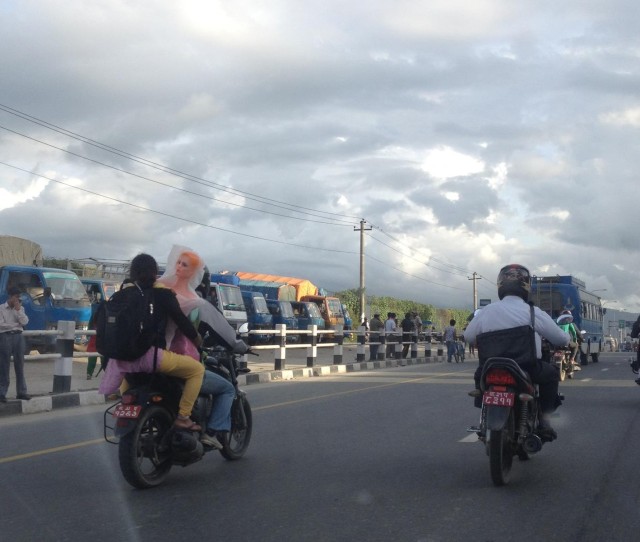
Motorcycle taxis speed toward Douala, Cameroon’s major port and commercial center
In response to this week’s Photo Challenge: Forward, I thought I would simply post this photo, taken two weeks ago today, of motorcycle taxis speeding towards Douala, Cameroon. But there is another kind of movement going on right now in Douala, one that is attempting to move the country forward towards acceptance of the rights of LGBT persons. These courageous activists, who are risking their lives to end discrimination and persecution based on sexual orientation or gender identity in Cameroon, deserve more than a photo. They deserve to have their stories told.
In Cameroon, people who are LGBT face pervasive societal stigma, discrimination,and harassment. They also face the possibility of imprisonment – Article 347 of the Cameroonian penal code criminalizes “sexual relations with a person of the same sex”. At least 28 people have been prosecuted under the law since 2010. One of them is Roger Jean-Claude Mbede, who was arrested and convicted of homosexuality in March 2011 after sending another man a text message reading, “I’ve fallen in love with you.” In December 2012, the Cameroonian court of appeals upheld the conviction and sentenced him to three years in prison.
Gay, lesbian, bisexual, and transgender people have a high risk of HIV/AIDS infection. They are often rejected by their families, who force them out of the home. When targeted by law enforcement, they have more difficulty in obtaining legal protection.Due to the social stigma and intense climate of fear, most LGBT people are forced to live out their lives in secrecy. Yet there are several impressive non-governmental organizations – Alternatives-Cameroun, the Association for the Defense of Gay and Lesbian Rights (ADEFHO), Cameroonian Foundation for AIDS (CAMFAIDS), and Evolve, to name a few – which are working hard to raise awareness about and provide services to the LGBT community.
When I was in Douala, I was able to visit Alternatives-Cameroun. Security is, understandably, a big concern. There is no sign that marks their center on boulevard de la Liberté, and when you arrive, you have to sign in and show your ID. Alternatives-Cameroun has one doctor at the center who provides HIV/AIDS treatment and medical services to approximately 75 patients. In addition, Alternatives-Cameroun provides a small community pharmacy, as well as safe, confidential and free HIV testing. In 2012, they provided 720 HIV tests.
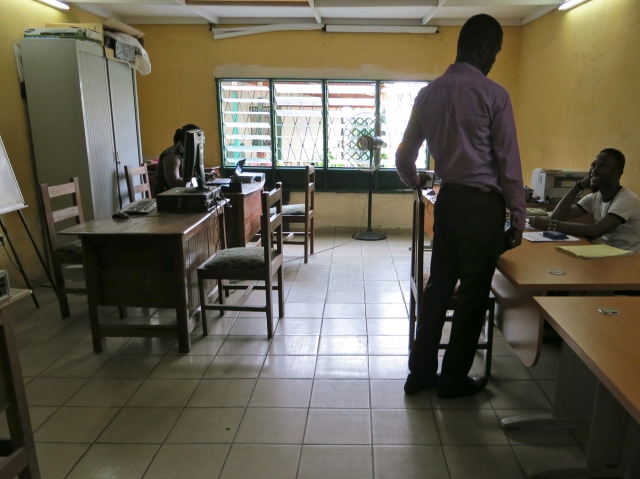
Staff at Alternatives-Cameroun centre in Douala
Equally important are the services provided by a psychologist and two social workers. Alternatives-Cameroun also provides public education and outreach, both at the center and through peer educators. On the day I visited, all of the peer educators were at work out “in the field” in Douala.
What touched me most, though, was the real sense of community that is provided by Alternatives-Cameroun. I saw a small group of young people sitting on plastic chairs around a table in “William’s Hall” (named after one of the organization’s founders, who died in the Kenya Air plane crash). I could feel that they were providing each other with comfort and support, a feeling so strong that I could see the connection between them almost as clearly as I could see the young man holding the hand of the woman beside him.
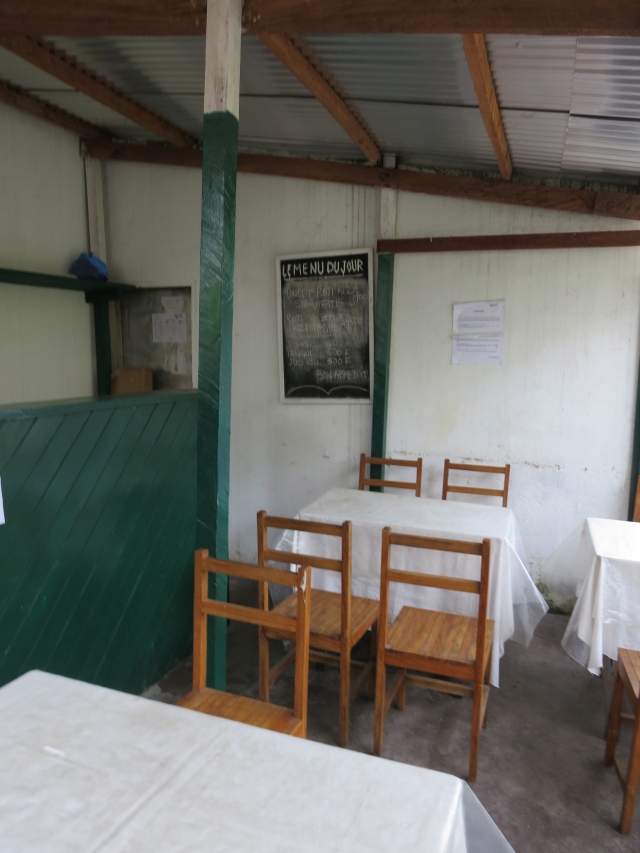
As a way to join the community and to connect with the neighbors around them, Alternatives-Cameroun started a small restaurant that serves a very inexpensive daily lunch. This anti-discriminatory gambit has paid off; the neighbors now come to the restaurant to eat and talk together with the staff and patients. Often the patients are very poor, so the restaurant means they can offer them a meal or two a day. The restaurant also provides meals for LGBT detainees in prison. Prison conditions in Cameroon are notoriously bad, with severe overcrowding and inadequate food. Most detainees rely on family members to bring them meals. As LGBT detainees have often been rejected by their families, they have no other access to food.
Activists working on LGBT issues in Cameroon told me that one of their main needs is for more lawyers. One of the very few Cameroonian lawyers who is willing to take on these “homosexuality” cases is Alice Nkom. The first black woman admitted to the Cameroonian bar, Alice has been courageously fighting for the rights of LGBT Cameroonians for many years. In spite of serious death threats, Alice Nkom continues her work. “Threats like these show us that the fight must continue,” said Nkom.
Cameroon has been receiving a lot of criticism recently from the international community, particularly the European Union. The issues of LGBT rights will certainly come up again at the Human Rights Council’s Universal Periodic Review of Cameroon this spring. On January 31, Cameroonian President Paul Biya told reporters that attitudes are changing in his country about the criminalisation of homosexuality. “Now I can say that discussions are under way. People are talking, minds can change one way or another but currently it’s a crime.”
The government of Cameroon must do more than discuss. The government must protect the rights of all Cameroonians, regardless of sexual orientation or identity. And when things do change, as they will one day, the credit will go to the brave men and women who have put their heart and souls – not to mention their lives – into moving their country forward on LGBT rights.
One of the things that I love about this photo of my daughter is the background. While it looks like the sky, it is actually the reflection of the sunset in the still waters of a lake. Sky and water, no boundaries, no borders. Just one great beyond.
I don’t know what she was thinking as she gazed into the beyond, but this picture symbolizes my hope for her future: that she will always have know the feeling that “Everything is possible.”
See more photos of the Weekly Photo Challenge theme Beyond here.
The clouds suddenly cleared, showing the towering Himalayas over the Kathmandu skyline.
When I arrived in Kathmandu in mid-September, I was surprised to find that it was still the monsoon season. (Truthfully, up until a few years ago, I would never have guessed that this landlocked, mountainous country even HAD a rainy season.) In Kathmandu, the hot and wet monsoon season is in the summer – usually between June and August. This year, however, it lingered into the third week of September. I asked numerous Nepalis if this extended monsoon season was a common occurrence and I always got the same response. “No, it is not common. This is the result of global warming.”
After several days of slogging about in the steady rain, I resigned myself to the fact that monsoon season might outlast my visit to Nepal. But unlike my previous visits, which had been during the dry season in winter, I marveled that everything was so beautifully and luxuriantly verdant. Much of the green could be attributed to the rice paddies that were everywhere, even tucked into vacant lots in the suburbs of Kathmandu. It was time for the rice to be harvested, but it was impossible to do so in the rain.
Suddenly one evening, near sunset, there was a change. The dense clouds, which had hung low and heavy over the city, suddenly began to lift and separate, like cotton candy being pulled apart by unseen hands. Watching the Kathmandu skyline, I realized that what I had thought was just another cloudbank was in reality the snow-covered Himalayas that ring the city! “Ah,” said a Nepali at the TEWA Centre where I was staying in Lalitpur, “the seasons are finally changing.”
The seasons are changing for the city of Kathmandu, as well. In the photo above , you can see the many housing construction projects being built in this area on the outskirts of the city. The Kathmandu population grew during the conflict as internally displaced persons fled the Maoist rebels in the countryside. The population has continued to grow due to the country’s high unemployment. People come to the capital looking for work. There are now 3 million people living in the Kathmandu valley, driving too many cars and motorcycles on streets that were designed for oxcarts. Traffic is a huge problem, making it difficult to get anywhere. The air is polluted and many people wear masks over their lower faces. Traffic accidents are common. Many Nepalis ride motorcycles as they are cheaper than cars and easier to maneuver in traffic. From goats to refrigerators, you never know what you might see people carrying on one!
Nepal is peaceful now. The violence has ended and the Maoists have been in a power-sharing coalition government since 2008. But the coalition government is gridlocked. In May 2012, Nepal’s political parties failed to reach an agreement on a new constitution before the deadline. (Nepalis have been waiting more than four years for a new constitution. When the committee drafting the constitution gets paid by the month, where is the incentive to finish the job?) The Constituent Assembly, the members of which had been serving under extensions after their terms expired in 2010, was dissolved, creating a political crisis. Most of the basic civic and municipal functions have now essentially ground to a halt.
President Ram Baran Yadav of Nepal gave the parties a deadline of November 29, 2012 to come up with an agreement on how the (long overdue) elections should be conducted. When they failed to meet that deadline, he extended it for one more week.
Nepalis are still waiting for the political season to change. In the meantime, much of daily life goes on as it has for centuries.
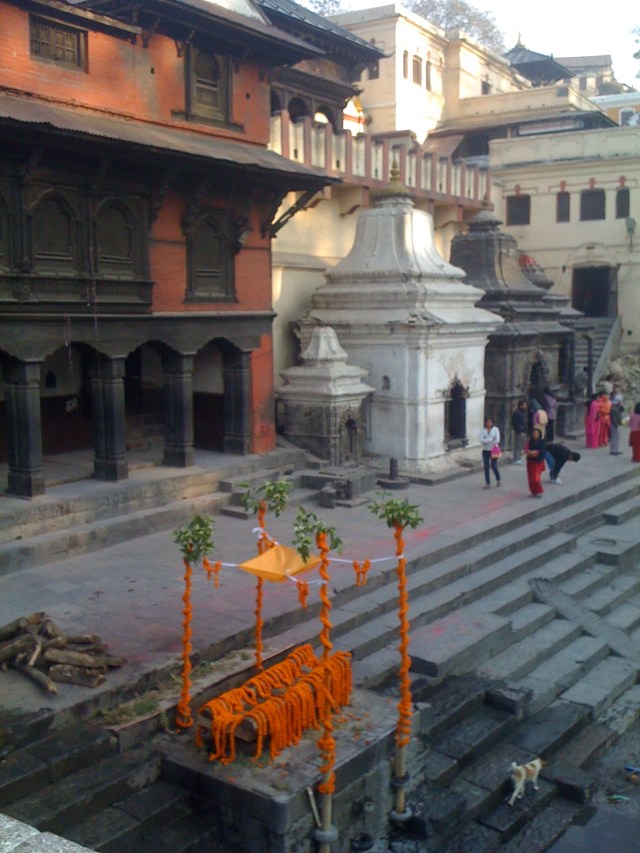
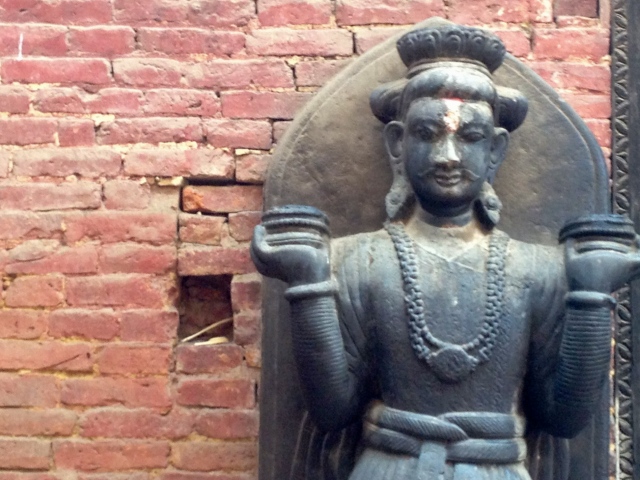
A woman looks out her window near Sankhu, in the Kathmandu ValleyPreparations for a cremation ceremony at Pashupatinath
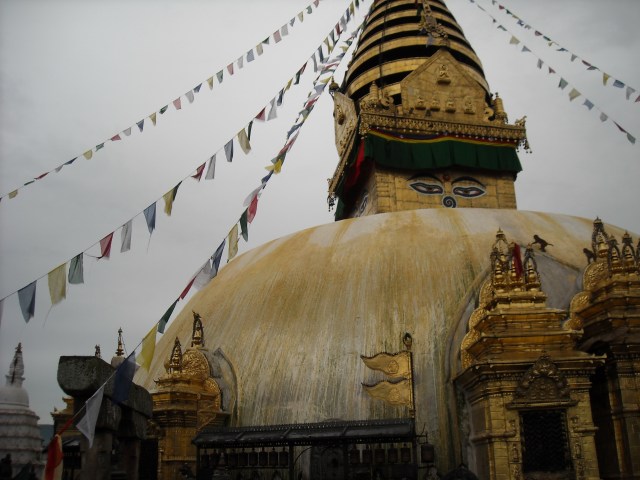
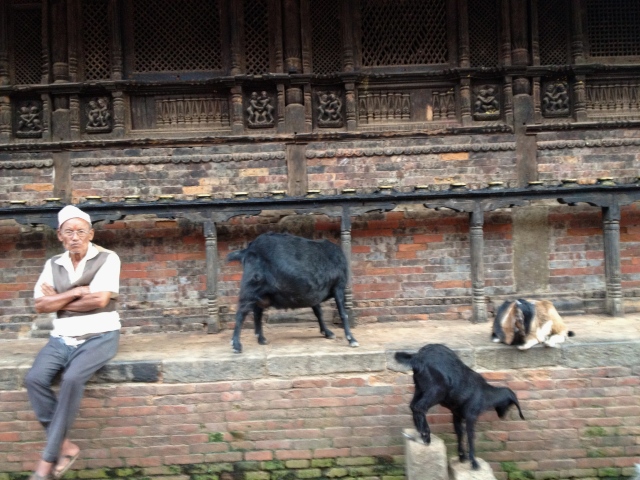
SwayambhunathGoats abound in Nepal, even in the city (and particularly before festivals like Dashian)
Here’s hoping that the sun comes out soon for Nepal’s political situation.
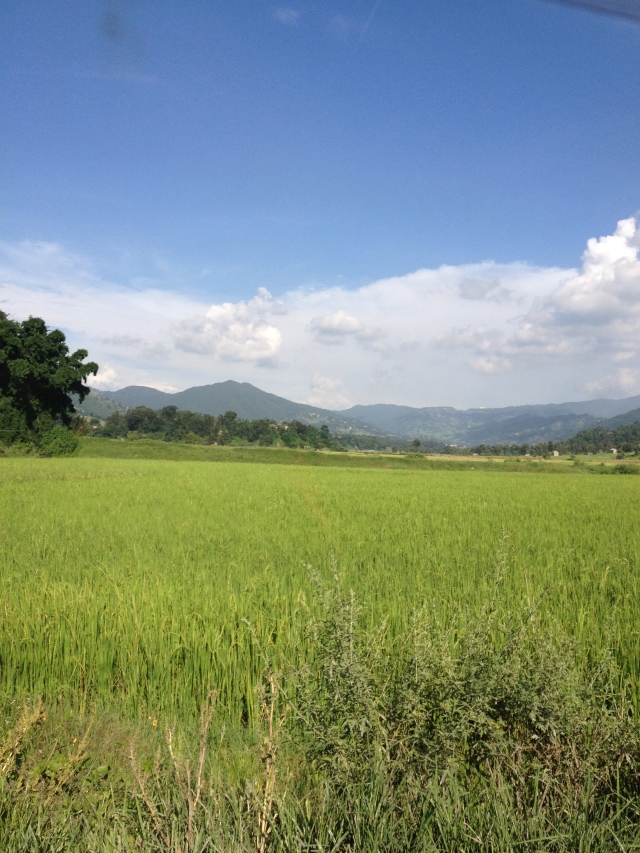
Rice fields ready for harvest in the Kathmandu Valley
It is Thanksgiving Day here in the United States. This uniquely American holiday is supposed to remind us of all that we have to be thankful for, both as individuals and as a nation, but I fear that this sometimes gets lost in our collective national appetite for overindulgence (we don’t stop eating until we feel remorse) and entertainment (Macy’s Parade, football, holiday TV specials). That we carry out these traditions in the company of our closest friends and family members is important and perhaps even the saving grace of the day, but have we lost the true spirit of Thanksgiving?
I was at my daughter’s school last week for Turkey Bingo. At this event, 25 lucky families won a turkey. We did not, although we came within a B11 of winning. As we were leaving, she grabbed my hand and said, “I want to show you something.” She led me out into the hall to a giant, colorful turkey on the wall. She explained that each of the students had written what they were thankful for on a feather.
The thoughts expressed on the feathers give a picture of the typical things for which the average American kid is thankful. I saw feathers that said things like:
“I am thankful for friends and family.” “I am thankful for my mom.” “I am thankful for my sisters.”
“I am thankful for my grandma and grandpa.” “I’m thankful for my daddy.”
Other feathers said things like:
“I’m thankful for my cat” and “I am thankful for my xBox.”
I noticed a couple of feathers, though, that said things like:
“I’m thankful to be here” and “I am thankful for America.”
“I am thankful to live in a place with no war.”
My daughter goes to a school that has a large number of English Language Learner students. Many came to this country as refugees from Somalia or other countries in East Africa, but she also has friends who came to this country as refugees from Tibet or were adopted from orphanages in China. There are also kids at her school from Central and South America.
Sometimes we forget that the Pilgrims were refugees. In England, they were persecuted on account of their religious beliefs. They took the tremendous risk of coming to this new land in order to be free to practice their own religion. And giving thanks for their freedom was a big part of the first Thanksgiving.
As I looked at that turkey on the wall of my daughter’s school, I had a moment of inspiration. When all of those individual feathers, childishly and colorfully decorated, are put together, you get a lovely image. But you also get much more. When all of those truthful and thankful thoughts are put together, you feel the true spirit of Thanksgiving.
And that is the inspiration and the spirit in which I hope to celebrate this holiday.
Happy Thanksgiving to you and yours, from me and (one of) mine!
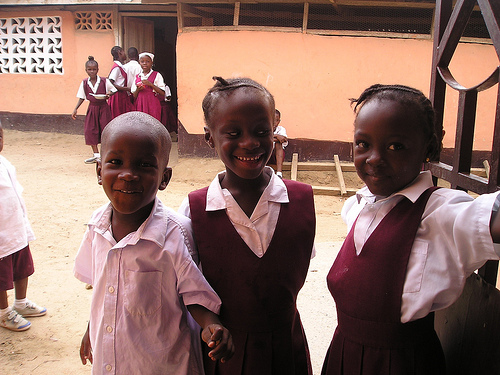
I practiced asylum law for the first seven years of my career, representing refugees who were fleeing persecution and human rights abuses in their home countries and seeking safety in the U.S. These are people who are not easy to forget and whose stories shouldn’t be forgotten. Many of their stories – the details of their lives, their losses, their dreams – have stayed with me over the years. The remarkable thing about the refugees I have known is not only their ability to survive incomprehensible losses, but also the strength and hope and determination they have to remake their lives in an entirely new country. To learn new skills, speak new languages, adapt to new cultures. To me, the refugee experience symbolizes this week’s Photo Challenge theme: Renewal
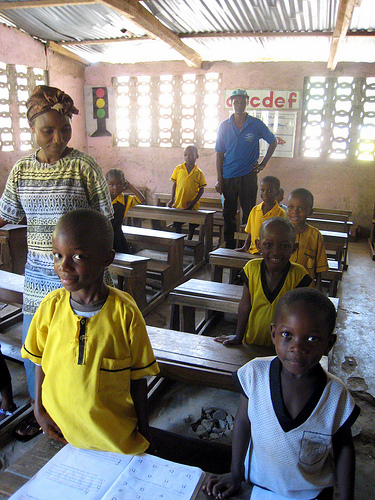
The picture above was taken in Buduburam Refugee Settlement in Ghana, which I visited three times between 2007 and 2010. Buduburam was home for 20 years to more than 30,000 Liberians who fled the bloody conflict in their West African country. Officially closed this year, Buduburam was a small, bustling Liberian city in the countryside outside of Accra. Life was hard on the camp, where refugees even had to pay for water to drink and for access to the latrines. To improve their opportunities, many of the refugees at Buduburam enrolled in skills training courses; the photo shows some of classes offered by the New Liberian Women Organization (macrame being one of them, as you can also tell by the colorful plant hangers). Even in a time of limbo, the refugees at Buduburam were striving for renewal. Those refugees who could afford it sent their children to school as education offers a chance for a new life.
I still hold many former asylum clients in my heart. I’d like to share the story of one refugee family I represented. For me, it is a parable of renewal.
James and Julia (not their real names) had been politically active in their native Kenya. Julia, in particular, had been very active in speaking out against an oppressive government. They had a young son, who I’ll call William, who had huge, solemn eyes. When the police came to their house to arrest Julia, a police dog bit William on the head. You could still see the jagged scar on his scalp more than a year later when, having left everything they owned behind to escape Kenya, they were seeking legal assistance with their asylum claim in the U.S.
In police custody, Julia had been brutally beaten. She was also repeatedly raped in custody, including with objects such as the muzzle of a rifle and a Coke bottle. This testimony was critical to the success of their asylum case, so we had worked with Julia to prepare her to tell her full story, with as much accuracy as possible and as many details as she could remember. “Just tell the truth about as much as you can remember of those weeks,” I urged. We all knew it would be painful.
Julia testified about her experiences in a straightforward manner and in excruciating detail, but with such poise and dignity that both the asylum officer and I were in tears. Asylum officers are specially trained federal officials who make decisions about asylum cases based on a written application and an in-person interview. During my time practicing asylum law, I rarely saw an asylum officer actually cry during an asylum interview.
I remember well how James sat next to her, utterly still. Not touching her, not looking at her, but supporting her as she spoke. Anguish is the only word that could possibly describe the look on his face as he listened to her testimony. I had to look away. Even in my role as their attorney, a role which requires a special intimacy, I felt the need to give their family some small space of privacy as they recalled those terrible days.
Years later, after they got their citizenship, James and Julia had a party to say thank you to all of the people who had helped them. In addition to their attorneys, there were people from their church and other members of the Kenyan community. They now lived in a big, new house out in the suburbs. Julia was close to graduation from nursing school. William, who I hadn’t seen since he was three, was now in middle school. He was a straight-A student and talented musician who had just gotten braces. They had another child, too – a daughter born here in America. She was wearing a pink tutu.
It had taken a lot of hard work for James and Julia to get to where they were. They had experienced many challenges and frustrations with adapting to life in this strange, new country. But they persisted and, through sheer effort and determination and a bit of creativity, slowly but steadily they moved forward, finding healing for themselves and building a new life for their family. It wasn’t easy, but James and Julia had managed to make something new out of nothing.
And now for something completely different. While I’ve never participated in The Weekly Photo Challenge before, the theme “Geometry” this week spoke to me. This week’s challenge “is about the shapes and rhythms that make up the geometry of our world.” This week, I have found the normal shapes and rhythms of my world disrupted. In the midst of a major storm in the East and a bitter, divisive election, we buried my grandmother this week. She was 98, so it shouldn’t have been a surprise, but it kind of was.
This week I have found myself almost longing for a bit of predictability, a return to normal patterns and rhythms. A rational ordered life; a practical science made up of points, lines and planes. I find myself searching for theorems that explain life and loss the way geometric formulas allow you to compute volume, surface and area.
Of course, contemporary geometry goes well beyond Euclidean principles, taking us into contemplation of multiple dimensions and space. This also fits with thoughts of life and death. Maybe I’ll think on that later. But in this week of turmoil and endings, I find comfort in what the early Greek mathematiciansEuclid and Archimedes called γεωμετρία. Geometry.
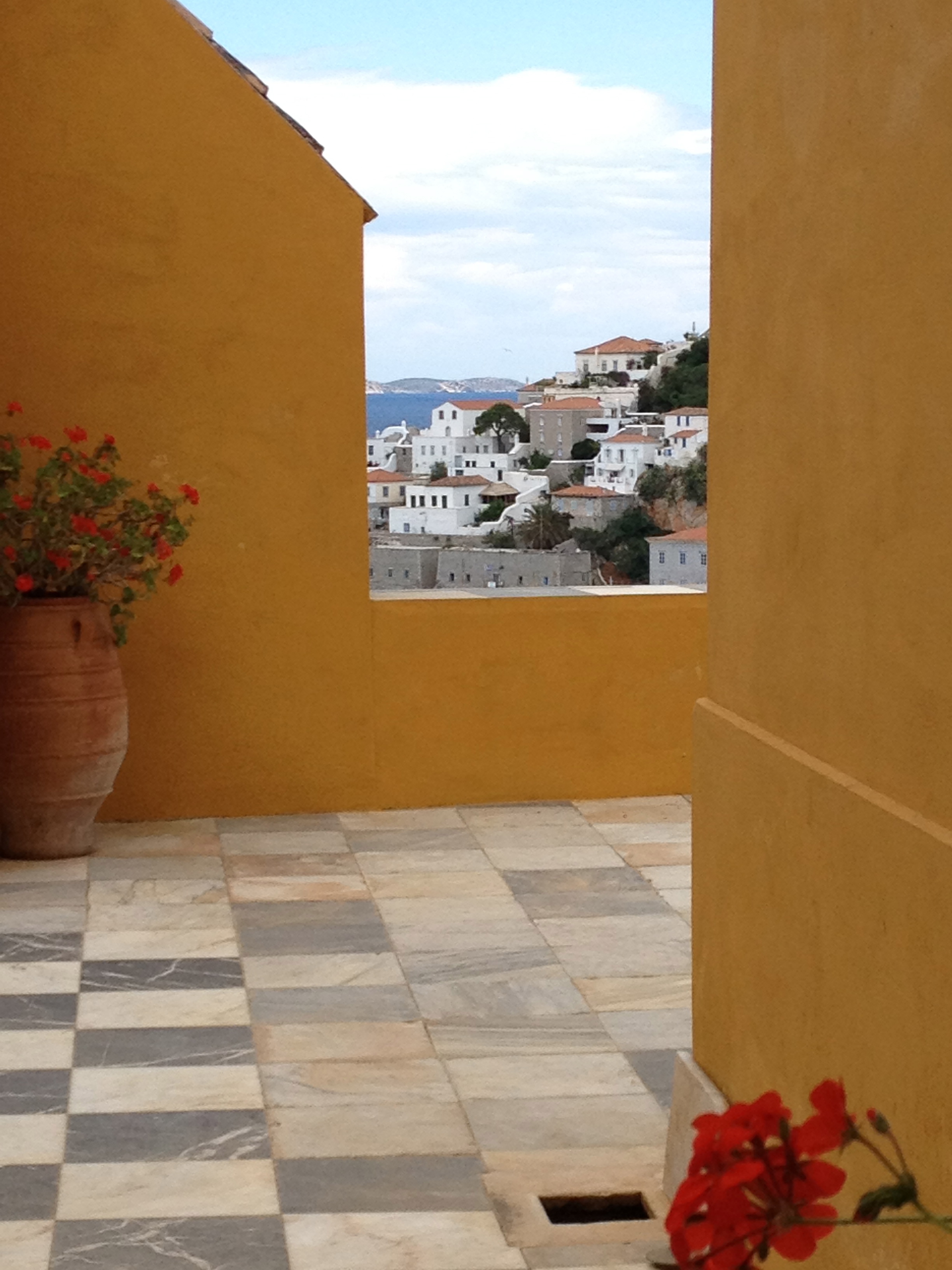
I took this picture recently on the Greek island of Hydra. When I look at it, I can’t help feeling that the early Greek geometers were right: there is some order in the world and we can figure it out. And it is all going to turn out just fine.
For more entries to this week’s challenge: Geometry click here.










 The Human Rights Warrior
You must be logged in to post a comment.