Summer Lovin’: Rattlesnake Mountain

20140726-203009-73809745.jpg

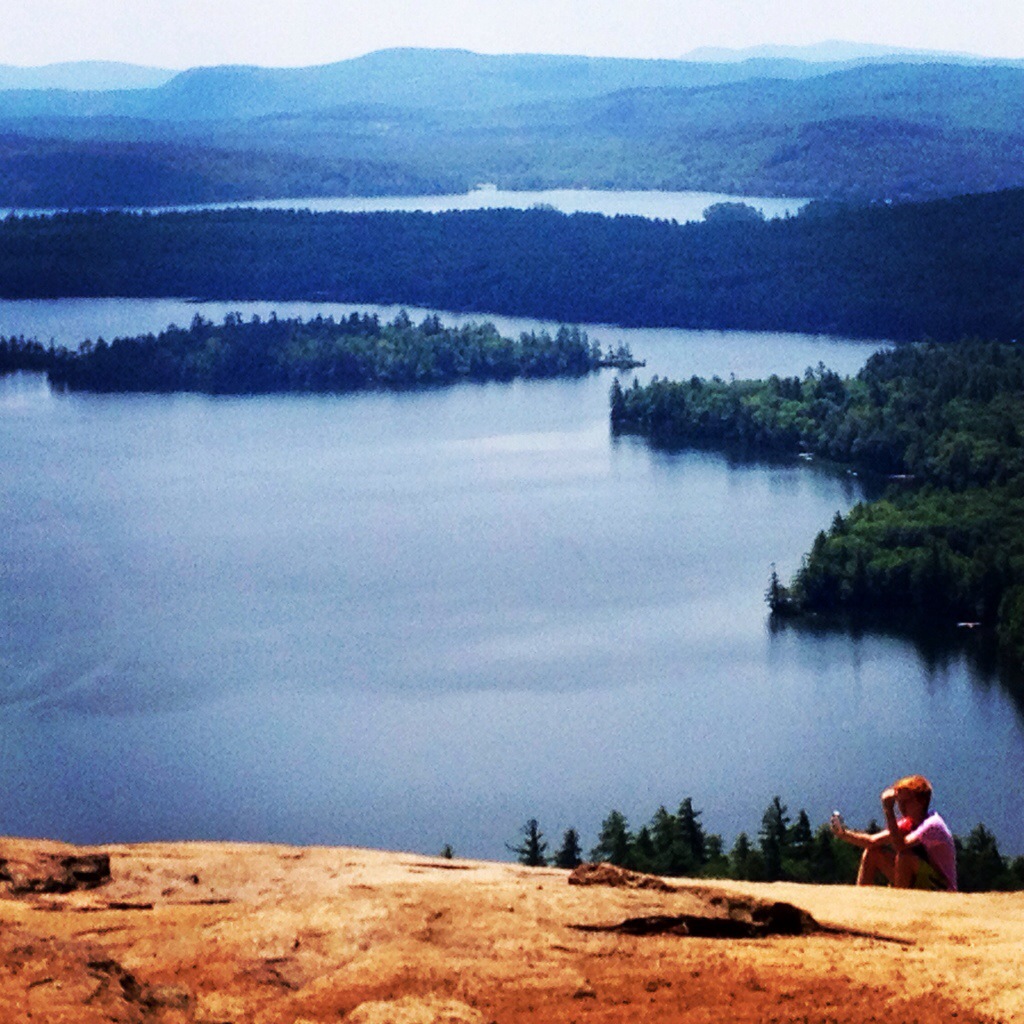
We’re on summer vacation in New Hampshire, as we do.  Last week, I climbed Rattlesnake Mountain with my son Simon and daughter Eliza. A short hike with a phenomenal view of Squam Lake (of “On Golden Pond” fame). To me, this photo of my son taking a selfie at the summit- all blues and greens and heat and sweat and joy in summiting – is all about summer.

As I told my kids, “Remember this scene in January.”

Weekly Photo Challenge: Dar es Salaam

dust bin

 Trash container in Dar es Salaam, Tanzania.

“Tupa taka hapa” is Swahili for “Dispose of waste here.”

This post is a response to the Weekly Photo Challenge: Containers.

Weekly Photo Challenge: Hydra

20130517-192441.jpg

A post box near the harbor on the Greek island of Hydra.

This post box post is a response to the Weekly Photo Challenge: Containers

Weekly Photo Challenge: Stroud

IMG_1130


A sweet tea cosy I spotted in the window of a vintage shop  on High Street in Stroud, Gloucestershire, England.

This post is a response to the Weekly Photo Challenge: Containers.

Swayambhunath: Nepal’s Monkey Temple

Swayambhunath Temple
The stupa at Swayambhunath seemed aglow on the rainy afternoon that I visited in September 2012.

Located at the top of a hill overlooking the city of Kathmandu, Swayambhunath (स्वयम्भूनाथ स्तुप) is among the oldest and most important religious sites in Nepal. The Swayambhunath complex consists of a domed stupa and a variety of shrines and temples that date back to the 5th century.  Each temple is extremely ornate and richly decorated with gold.  The complex also includes a Tibetan monastery, museum, library, and hostels for religious pilgrims.

Prayer flags flutter in the breeze, while prayer wheels in graduated sizes turn almost silently as pilgrims circle the stupa in prayer.

cropped-img_0728.jpg

This sacred pilgrimage site is also known as the Monkey Temple because it is home to HUNDREDS (maybe thousands!) of monkeys. According to legend, Manjushree, the bodhisattva of wisdom, was in the process of raising the temple hill when he let his short hair grow out and he got lice.  The lice in his hair transformed into these monkeys.

Looking down on Kathmandu, Nepla

Although it is primarily an important Buddhist site, Swayambhunath (which means “Self-Created” or “Self-Arisen”) is also considered important to Hindus.  To get to the main site of Swaymbhunath, you have to climb a looooong stairway – 365 steps!  Pratap Malla, the powerful Hindu king of Kathmandu, was responsible for the construction of this eastern stairway in the 17th century

It is definitely worth the climb, however.  Swayambhunath is perhaps the oldest Buddhist monument and well worth the trip!

This post is a response to the Weekly Photo Challenge: Monument.


Weekly Photo Challenge: Street Life

IMG_0343

Street scene in a town near Yaounde in Cameroon

For more responses to the Weekly Photo Challenge: Street Life, click here.


Inside the Apostle Islands Ice Caves

IMG_2258

My oldest son went on a school trip a few weeks ago.  The main purpose was to participate in the Barnebirkie, the children’s version of the largest cross-country ski race in North America.  It takes place in northern Wisconsin every February.   This is the twentieth year that the school has done this trip with middle grade students, so they have become experts at making it an enriching experience.  In addition to skiing in the race with more than 1,000 other kids, they spend some time doing joint educational programming at the local middle school (this year, there was some kind of amazing science theme) and have a traditional meal with a Native American tribe.  They also somehow fit swimming at the local community center into the packed agenda.

A week before the trip, a note came home in my son’s backpack that there would be a slight alternation to the schedule.  The group would be able to visit the ice caves on Lake Superior’s Apostle Islands.  For those not familiar with the Upper Midwest, the Apostle Islands National Lakeshore in northern Wisconsin is a true gem of a national park.   There are 21 islands, windswept beaches, rocky cliffs, and lighthouses.  In the summer, you can hike the 12 miles of lakeshore wilderness and paddle or boat around the islands. You can even camp on 18 of the islands, which are only accessible by water.    You can even explore by kayak the  amazing sea caves at the western end of the mainland part of the park.

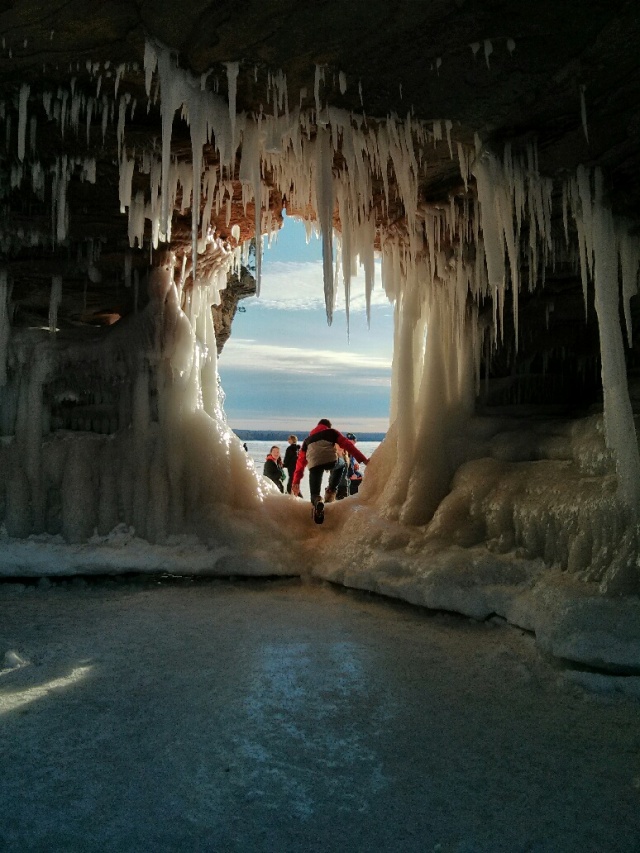
In winter, the sea caves become ice caves.  And in extremely cold winters, when Lake Superior freezes over, the national park service allows people to walk out over the ice and experience the ice caves from the inside.

IMG_2256

As I have never been to the Apostle Island ice caves, I was excited that my son had this opportunity to visit them.   It has been five years since the ice caves were last open to the public.  One of the impacts of climate change has been that Lake Superior hasn’t been frozen enough to make access possible.   Since the ice caves opened to the public on January 15, more than 125,000 people have made the two mile roundtrip trek over frozen Lake Superior to experience the  ice caves.

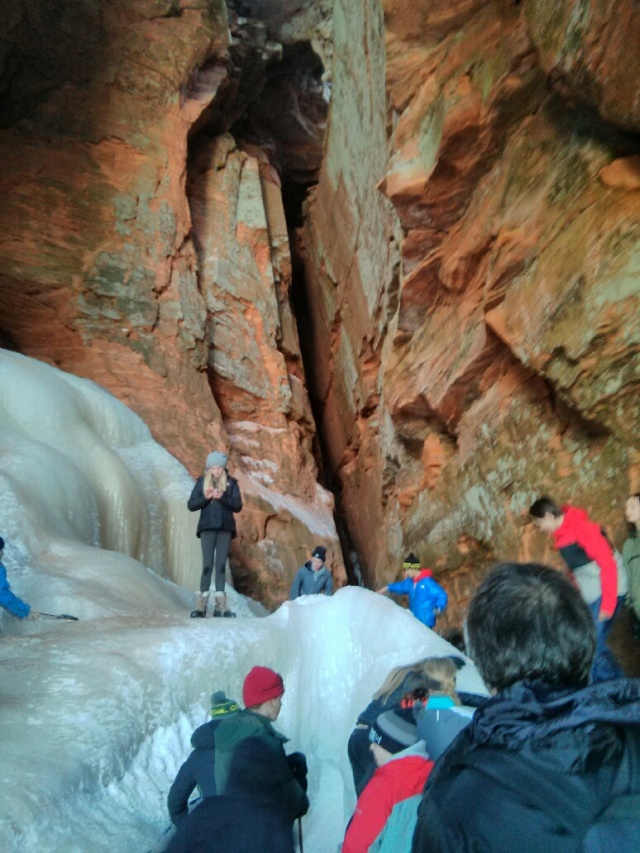
My son sent took these pictures of his visit and texted them to me.

IMG_2259

It’s an odd feeling – usually I’m the one who is traveling and sending the pictures back home to the rest of the family. But I really appreciated his willingness to share the experience of being inside the Apostle Islands ice caves with me.

IMG_2260

With warmer weather, the ice is degrading and it is becoming unsafe to be on the lake.   The National Park Service plans to close the Apostle Island ice caves to the public by 12:01 am on Monday, March 17.


IMG_2257

With special thanks to my son Sevrin for the photos!

For more responses to the Weekly Photo Challenge: Inside, click here.

International Women’s Day 2014

20140308-200557.jpg

I have a complicated relationship with International Women’s Day (IWD).  On the one hand, it vexes me greatly that we have only one day a year – designated by the United Nations General Assembly in 1977 as March 8 – to celebrate the many contributions of women around the world.  On the other hand, we still need to focus attention on the fact that women, who make up half of the world’s population, still face almost incomprehensible inequality in societies throughout the world.  Not just inequality, but inexcusable pain and violence.

One in three women in the world still experience violence (including rape and marital rape, spousal abuse, and child abuse) in their lifetime.  The numbers are closer to one in four in the West – numbers that are still shockingly high.

Even before birth, preference for male children leads to feticide and infanticide in many parts of the world. Millions of girls and women around the world face obstacles to education, access to health, freedom of choice in marriage and divorce, land ownership and political participation. Even in the West, women continue to face inequality, including professional obstacles.

The UN theme for IWD 2014 is “equality for women is progress for all”.  And there is no question that that statement is true.  As UN Secretary-General Ban Ki-moon said in a statement for IWD 2014:

“Countries with more gender equality have better economic growth. Companies with more women leaders perform better. Peace agreements that include women are more durable. Parliaments with more women enact more legislation on key social issues such as health, education, anti-discrimination and child support. The evidence is clear: equality for women means progress for all.”

IWD means different things to different people around the world.  For some, it is a day to celebrate the strength of personal relationships with mothers, grandmothers, daughters and friends.  Some choose to celebrate the overall contributions of women; in 2014, I noticed a particular interest in celebrating the “bad ass” women in our collective history (which I do applaud).  For others, it is the opportunity to highlight all that still remains to be done.

For me, IWD is all these things.  It is also about wanting a world where my daughter and my sons are treated equally without thought or legal requirement.  It is about teaching them that this is what they – both boys and girl – should expect in their future. But it is also about celebrating the strong community of women that has brought us this far.

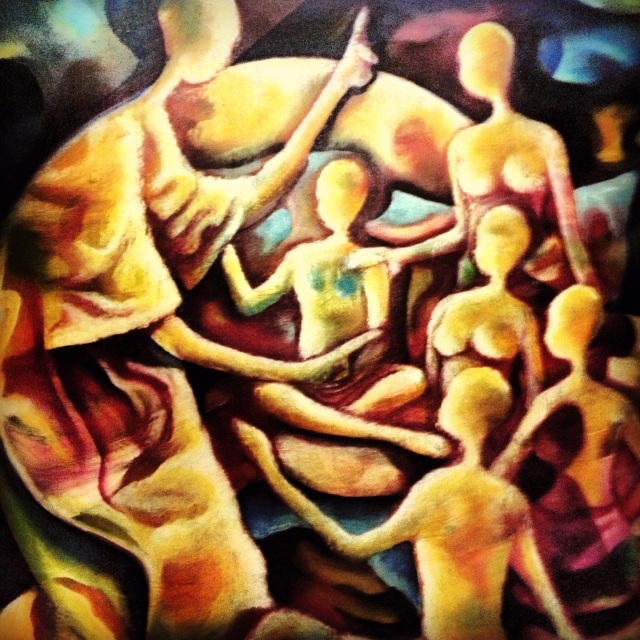
I took this photo of a painting that hung in the stairwell of a hotel I stayed in last year in Yaounde.  It was dark in the stairwell, but I paused every time I passed it.  The painting appeared original, but there was no name given to it.  No artist was listed.   But for me, it captures the spirit of International Women’s Day.  We still have a ways to go, but we are together in this effort.  We learn from each other and we support each other.  Here is my perspective on International Women’s Day 2014:

It may take us time, but when women work together, nothing can stop us.


Abandoned Buildings in Post-Conflict West Africa

hotel africaHotel Africa in Virginia, Liberia

The Hotel Africa, built in a beach resort area north of Monrovia, was once a 5-star grand hotel.  It was built to impress  as the location of the 1979  Organisation of African Unity  summit.  (The pool was made in the shape of the African continent.)  Just a few months after the Hotel Africa hosted the OAU, however,  Liberia’s President William R. Tolbert, Jr. was overthrown by  Samuel Doe.  From 1979 to 2003, Liberia was engulfed in violent conflict too complicated to detail here.

Stories about the historic Hotel Africa abound; many of them parallel the violence that was happening in the country at large.  For example, the hotel’s owner  was kidnapped in 1990 by the rebel Independent National Patriotic Front of Liberia. They allegedly murdered him by throwing him off the fourth floor balcony.

By the time I visited the Hotel Africa in 2008, it had been bombed, burned, and stripped bare of everything that could possibly have a value.

Abandoned.

burned building Sierra LeoneKono District, Sierra Leone

This is a photo of the remains of a building in the Kono district that was burned by the rebel Revolutionary United Front during the conflict in Sierra Leone. I’ve heard so many personal stories of escape and of loss that I assume this was once the private home of a family with means.  But it could just as easily have been a government building.

The conflict in Sierra Leone left so many destroyed buildings. Not to mention lives.

gas stationMonrovia, Liberia

In Monrovia, buildings destroyed in the conflict loom gloomily as people go about the process of rebuilding their lives in the midst of the rubble. This photo was taken at a gas station.  Like many resourceful Liberians, they were also selling “pure and safe drinking water”.  But the thing I like about this photo is this – if you look closely at the larger building above, you can see laundry hanging out to dry. Life springs up inexorably, like blades of grass in the spring.

In post-conflict West Africa, the abandoned buildings hold more than just memories.

Weekly Photo Challenge:  Abandoned

Weekly Writing Challenge: Threes

Weekly Photo Challenge: Object

IMG_0139

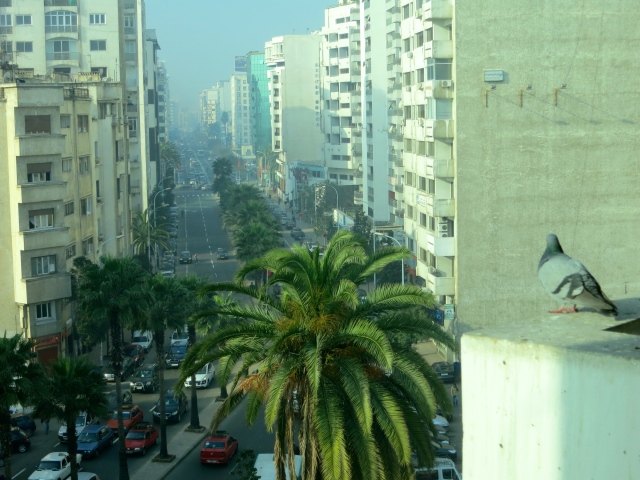
On this particular morning in Casablanca, I arrived early for a meeting with a women’s rights association.  This pigeon, basking in the sun high above the bustle of Casablanca,  kept me company while I waited for the others to arrive.   When the meeting ended, I looked  to see if my friend was still on the ledge outside the window.  The pigeon had moved on.  And so must I.

This post is a response to the Weekly Photo Challenge: Object.   To see other responses, click here.