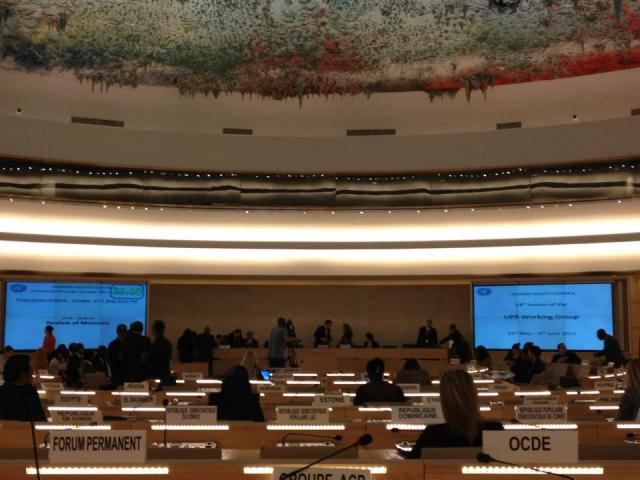
Inaugurated on 18 November, 2008 in honor of the 60th anniversary of the Universal Declaration of Human Rights, the “Human Rights and Alliance of Civilizations” room (better known as Room XX) is the home of the United Nations Human Rights Council at the Palais des Nations in Geneva. Part of my work involves advocacy at the United Nations’ human rights mechanisms, so Room XX is a place I visit regularly. (Photos are not allowed, but I snuck these photos with my phone anyway.)
At the UN Human Rights Council in Geneva, Switzerland
Spanish abstract artist Miquel Barceló created a a massive work of art for the ceiling of the room with paint composed of pigments from around the world. More than 30 tons of paint were sprayed on the 1,500-square-meter dome ceiling, with the many layers of paint creating a textured rainbow of stalactites. Depending on where you are in the room, the colors of the stalactites change based on perspective.
Barceló describes his work in this way:
“All of it is a sea upside down, but it is also a cave.
The complete union of opposites,the ocean surface of the Earth and its most concealed cavities.”
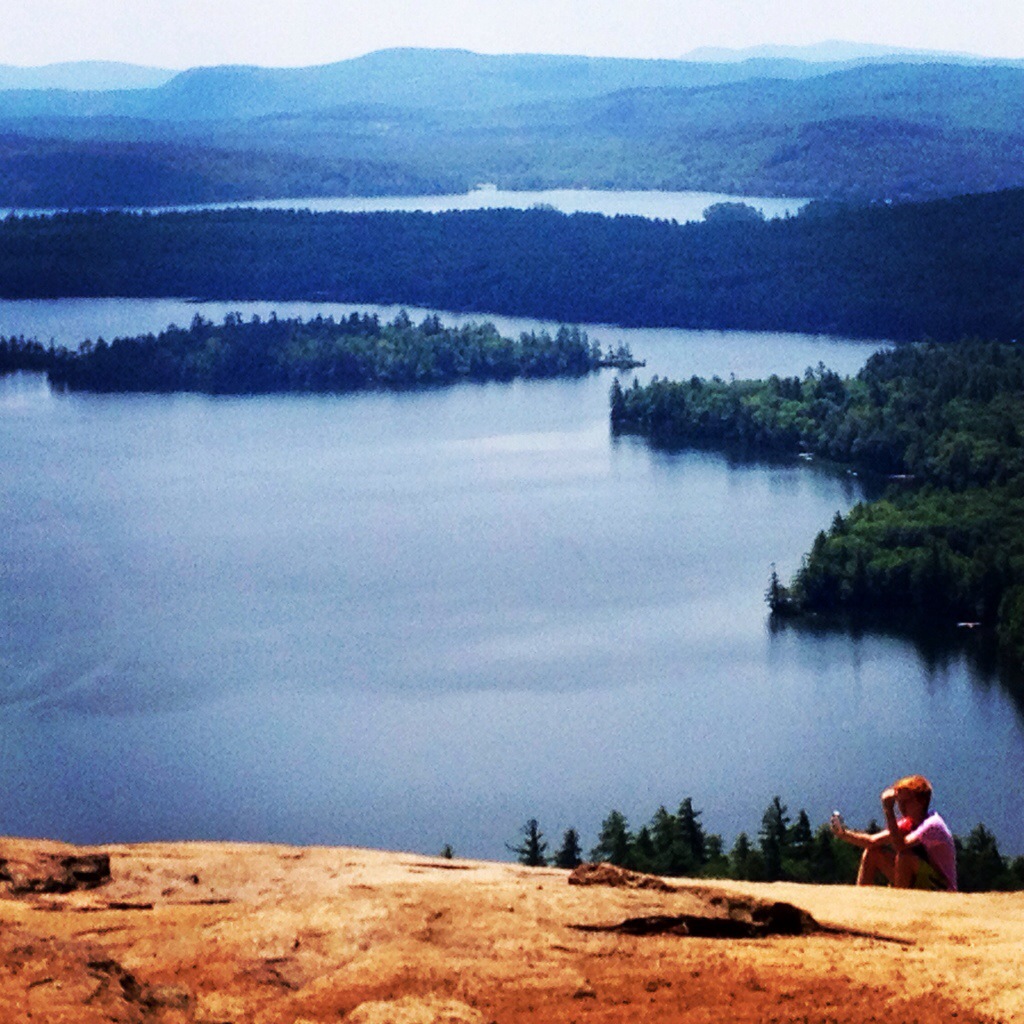
We’re on summer vacation in New Hampshire, as we do. Last week, I climbed Rattlesnake Mountain with my son Simon and daughter Eliza. A short hike with a phenomenal view of Squam Lake (of “On Golden Pond” fame). To me, this photo of my son taking a selfie at the summit- all blues and greens and heat and sweat and joy in summiting – is all about summer.
As I told my kids, “Remember this scene in January.”
The stupa at Swayambhunath seemed aglow on the rainy afternoon that I visited in September 2012.
Located at the top of a hill overlooking the city of Kathmandu, Swayambhunath (स्वयम्भूनाथ स्तुप) is among the oldest and most important religious sites in Nepal. The Swayambhunath complex consists of a domed stupa and a variety of shrines and temples that date back to the 5th century. Each temple is extremely ornate and richly decorated with gold. The complex also includes a Tibetan monastery, museum, library, and hostels for religious pilgrims.
Prayer flags flutter in the breeze, while prayer wheels in graduated sizes turn almost silently as pilgrims circle the stupa in prayer.
This sacred pilgrimage site is also known as the Monkey Temple because it is home to HUNDREDS (maybe thousands!) of monkeys. According to legend, Manjushree, the bodhisattva of wisdom, was in the process of raising the temple hill when he let his short hair grow out and he got lice. The lice in his hair transformed into these monkeys.
Although it is primarily an important Buddhist site, Swayambhunath (which means “Self-Created” or “Self-Arisen”) is also considered important to Hindus. To get to the main site of Swaymbhunath, you have to climb a looooong stairway – 365 steps! Pratap Malla, the powerful Hindu king of Kathmandu, was responsible for the construction of this eastern stairway in the 17th century
It is definitely worth the climb, however. Swayambhunath is perhaps the oldest Buddhist monument and well worth the trip!
Some people are already asking why in the world we need a day to celebrate happiness. What could an international day and a celebrity singing an upbeat song possibly do to make an impact on serious global problems?
Personally, however, I am looking forward to International Happiness Day. The way I see it, we already have more than enough aspects of our human nature to divide us. When people focus on what makes us different – our religion, our ethnicity, our skin color – it often leads to violence and conflict. Lives are shattered in big ways and small. But every human has a very basic need, not to mention a strong desire, for something very simple. We all want to be happy. We all want to see that our children and the others who who we care about have the opportunity that they deserve to be happy.
Our human capacity to feel happiness is a basic characteristic that we all share, regardless of our differences.
In my line of work, I deal with a lot of human unhappiness. So I think about these things all the time. You would expect that it would make me cynical about people in general – and particularly about something like an international day of happiness, complete with a celebrity and an upbeat hit song.
But I strongly believe that our human capacity for happiness is a strength, and one that should be nurtured and celebrated in the midst of all that is dark and dangerous and painful in our world.
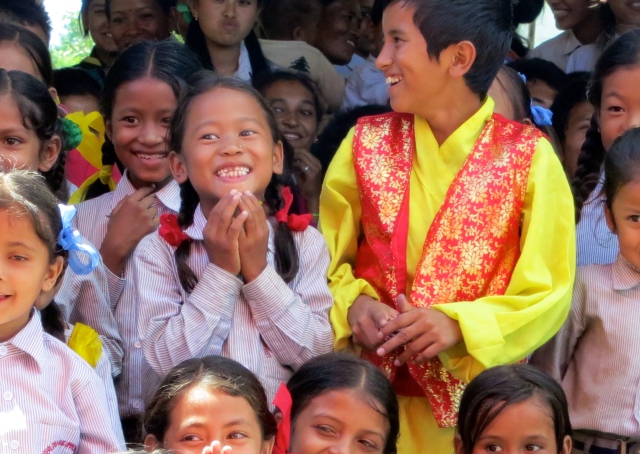
I took the photo above the last time I was in Nepal. I keep it as my screensaver to remind me every day of the simple fact that we humans all have the potential to experience intense joy. It makes me believe that our human capacity for happiness must one day trump our human proclivity to hurt each one another. And this photo reminds me every day that everyone – every single person, regardless of who they are or where they live in world – should have the opportunity to feel happiness in the way that these kids in Nepal were so clearly feeling it.
International Happy Day is also a call to action. It is a reminder that there is more that each of us can do to ensure that everyone is able to live their lives to their fullest human potential in safety, dignity, freedom, and equality. For all of us, these are the basic human prerequisites to happiness. We need to keep moving towards the concept that none of us can be truly happy, until all of us have an equally fair shot at being happy.
There are a few things in this world that are truly global: One of them is that people want to be happy. Thursday, March 20 is the International Day of Happiness, and the United Nations Foundation and Grammy Award-winning musician Pharrell Williams have teamed up to encourage people to take action to support the UN and to create a happier world for people everywhere. – See more at: http://unfoundationblog.org/international-day-of-happiness-2014/#sthash.CuzHI1xW.dpuf
So go ahead and celebrate International Happiness Day. In the United States, you don’t even have to wait until March 20. Thanks to the international time difference, #Happy Day starts in just a few hours. (And #HappyDay is already going strong on Twitter!) You can catch it all on the website 24 Hours of Happiness.com Since March 10, people around the world have been posting YouTube videos of themselves “demonstrating their happiness” to Pharrell William’s track with the hashtag #HAPPYDAY and submitting it to the website. On March 20th, Pharrell will spotlight the best submissions at noon in each time zone.
Here is the first one – from New Zealand!
See additional ways to participate here. And whatever else you do on March 20, be sure to have a
My oldest son went on a school trip a few weeks ago. The main purpose was to participate in the Barnebirkie, the children’s version of the largest cross-country ski race in North America. It takes place in northern Wisconsin every February. This is the twentieth year that the school has done this trip with middle grade students, so they have become experts at making it an enriching experience. In addition to skiing in the race with more than 1,000 other kids, they spend some time doing joint educational programming at the local middle school (this year, there was some kind of amazing science theme) and have a traditional meal with a Native American tribe. They also somehow fit swimming at the local community center into the packed agenda.
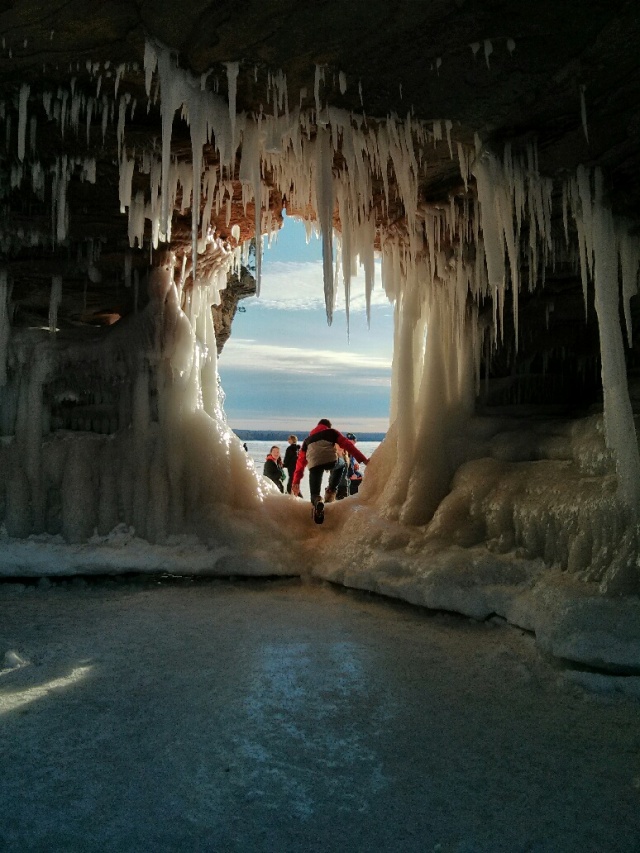
A week before the trip, a note came home in my son’s backpack that there would be a slight alternation to the schedule. The group would be able to visit the ice caves on Lake Superior’s Apostle Islands. For those not familiar with the Upper Midwest, the Apostle Islands National Lakeshore in northern Wisconsin is a true gem of a national park. There are 21 islands, windswept beaches, rocky cliffs, and lighthouses. In the summer, you can hike the 12 miles of lakeshore wilderness and paddle or boat around the islands. You can even camp on 18 of the islands, which are only accessible by water. You can even explore by kayak the amazing sea caves at the western end of the mainland part of the park.
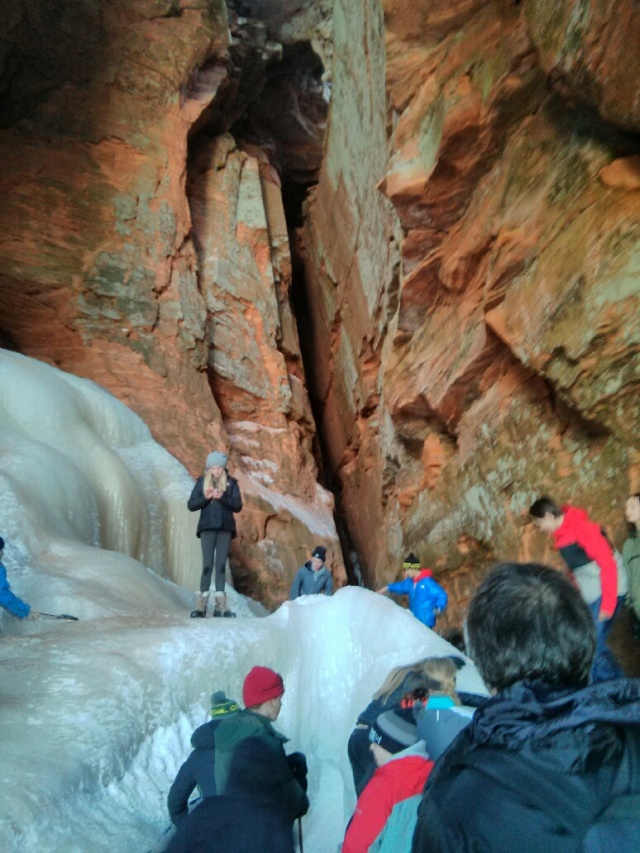
In winter, the sea caves become ice caves. And in extremely cold winters, when Lake Superior freezes over, the national park service allows people to walk out over the ice and experience the ice caves from the inside.
My son sent took these pictures of his visit and texted them to me.
It’s an odd feeling – usually I’m the one who is traveling and sending the pictures back home to the rest of the family. But I really appreciated his willingness to share the experience of being inside the Apostle Islands ice caves with me.
With warmer weather, the ice is degrading and it is becoming unsafe to be on the lake. The National Park Service plans to close the Apostle Island ice caves to the public by 12:01 am on Monday, March 17.
With special thanks to my son Sevrin for the photos!
For more responses to the Weekly Photo Challenge: Inside, click here.









 The Human Rights Warrior
You must be logged in to post a comment.