It is Thanksgiving Day here in the United States. This uniquely American holiday is supposed to remind us of all that we have to be thankful for, both as individuals and as a nation, but I fear that this sometimes gets lost in our collective national appetite for overindulgence (we don’t stop eating until we feel remorse) and entertainment (Macy’s Parade, football, holiday TV specials). That we carry out these traditions in the company of our closest friends and family members is important and perhaps even the saving grace of the day, but have we lost the true spirit of Thanksgiving?
I was at my daughter’s school last week for Turkey Bingo. At this event, 25 lucky families won a turkey. We did not, although we came within a B11 of winning. As we were leaving, she grabbed my hand and said, “I want to show you something.” She led me out into the hall to a giant, colorful turkey on the wall. She explained that each of the students had written what they were thankful for on a feather.
The thoughts expressed on the feathers give a picture of the typical things for which the average American kid is thankful. I saw feathers that said things like:
“I am thankful for friends and family.” “I am thankful for my mom.” “I am thankful for my sisters.”
“I am thankful for my grandma and grandpa.” “I’m thankful for my daddy.”
Other feathers said things like:
“I’m thankful for my cat” and “I am thankful for my xBox.”
I noticed a couple of feathers, though, that said things like:
“I’m thankful to be here” and “I am thankful for America.”
“I am thankful to live in a place with no war.”
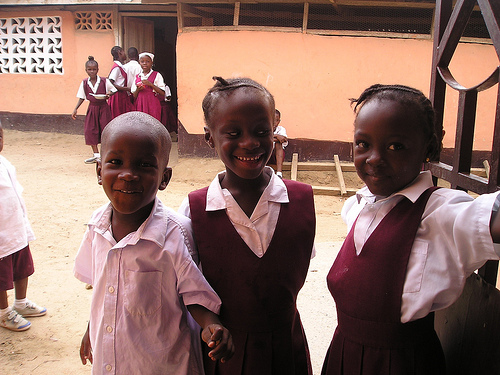
My daughter goes to a school that has a large number of English Language Learner students. Many came to this country as refugees from Somalia or other countries in East Africa, but she also has friends who came to this country as refugees from Tibet or were adopted from orphanages in China. There are also kids at her school from Central and South America.
Sometimes we forget that the Pilgrims were refugees. In England, they were persecuted on account of their religious beliefs. They took the tremendous risk of coming to this new land in order to be free to practice their own religion. And giving thanks for their freedom was a big part of the first Thanksgiving.
As I looked at that turkey on the wall of my daughter’s school, I had a moment of inspiration. When all of those individual feathers, childishly and colorfully decorated, are put together, you get a lovely image. But you also get much more. When all of those truthful and thankful thoughts are put together, you feel the true spirit of Thanksgiving.
And that is the inspiration and the spirit in which I hope to celebrate this holiday.
Happy Thanksgiving to you and yours, from me and (one of) mine!
I practiced asylum law for the first seven years of my career, representing refugees who were fleeing persecution and human rights abuses in their home countries and seeking safety in the U.S. These are people who are not easy to forget and whose stories shouldn’t be forgotten. Many of their stories – the details of their lives, their losses, their dreams – have stayed with me over the years. The remarkable thing about the refugees I have known is not only their ability to survive incomprehensible losses, but also the strength and hope and determination they have to remake their lives in an entirely new country. To learn new skills, speak new languages, adapt to new cultures. To me, the refugee experience symbolizes this week’s Photo Challenge theme: Renewal
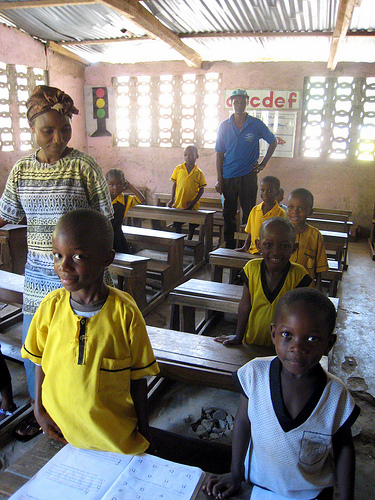
The picture above was taken in Buduburam Refugee Settlement in Ghana, which I visited three times between 2007 and 2010. Buduburam was home for 20 years to more than 30,000 Liberians who fled the bloody conflict in their West African country. Officially closed this year, Buduburam was a small, bustling Liberian city in the countryside outside of Accra. Life was hard on the camp, where refugees even had to pay for water to drink and for access to the latrines. To improve their opportunities, many of the refugees at Buduburam enrolled in skills training courses; the photo shows some of classes offered by the New Liberian Women Organization (macrame being one of them, as you can also tell by the colorful plant hangers). Even in a time of limbo, the refugees at Buduburam were striving for renewal. Those refugees who could afford it sent their children to school as education offers a chance for a new life.
I still hold many former asylum clients in my heart. I’d like to share the story of one refugee family I represented. For me, it is a parable of renewal.
James and Julia (not their real names) had been politically active in their native Kenya. Julia, in particular, had been very active in speaking out against an oppressive government. They had a young son, who I’ll call William, who had huge, solemn eyes. When the police came to their house to arrest Julia, a police dog bit William on the head. You could still see the jagged scar on his scalp more than a year later when, having left everything they owned behind to escape Kenya, they were seeking legal assistance with their asylum claim in the U.S.
In police custody, Julia had been brutally beaten. She was also repeatedly raped in custody, including with objects such as the muzzle of a rifle and a Coke bottle. This testimony was critical to the success of their asylum case, so we had worked with Julia to prepare her to tell her full story, with as much accuracy as possible and as many details as she could remember. “Just tell the truth about as much as you can remember of those weeks,” I urged. We all knew it would be painful.
Julia testified about her experiences in a straightforward manner and in excruciating detail, but with such poise and dignity that both the asylum officer and I were in tears. Asylum officers are specially trained federal officials who make decisions about asylum cases based on a written application and an in-person interview. During my time practicing asylum law, I rarely saw an asylum officer actually cry during an asylum interview.
I remember well how James sat next to her, utterly still. Not touching her, not looking at her, but supporting her as she spoke. Anguish is the only word that could possibly describe the look on his face as he listened to her testimony. I had to look away. Even in my role as their attorney, a role which requires a special intimacy, I felt the need to give their family some small space of privacy as they recalled those terrible days.
Years later, after they got their citizenship, James and Julia had a party to say thank you to all of the people who had helped them. In addition to their attorneys, there were people from their church and other members of the Kenyan community. They now lived in a big, new house out in the suburbs. Julia was close to graduation from nursing school. William, who I hadn’t seen since he was three, was now in middle school. He was a straight-A student and talented musician who had just gotten braces. They had another child, too – a daughter born here in America. She was wearing a pink tutu.
It had taken a lot of hard work for James and Julia to get to where they were. They had experienced many challenges and frustrations with adapting to life in this strange, new country. But they persisted and, through sheer effort and determination and a bit of creativity, slowly but steadily they moved forward, finding healing for themselves and building a new life for their family. It wasn’t easy, but James and Julia had managed to make something new out of nothing.
And now for something completely different. While I’ve never participated in The Weekly Photo Challenge before, the theme “Geometry” this week spoke to me. This week’s challenge “is about the shapes and rhythms that make up the geometry of our world.” This week, I have found the normal shapes and rhythms of my world disrupted. In the midst of a major storm in the East and a bitter, divisive election, we buried my grandmother this week. She was 98, so it shouldn’t have been a surprise, but it kind of was.
This week I have found myself almost longing for a bit of predictability, a return to normal patterns and rhythms. A rational ordered life; a practical science made up of points, lines and planes. I find myself searching for theorems that explain life and loss the way geometric formulas allow you to compute volume, surface and area.
Of course, contemporary geometry goes well beyond Euclidean principles, taking us into contemplation of multiple dimensions and space. This also fits with thoughts of life and death. Maybe I’ll think on that later. But in this week of turmoil and endings, I find comfort in what the early Greek mathematiciansEuclid and Archimedes called γεωμετρία. Geometry.
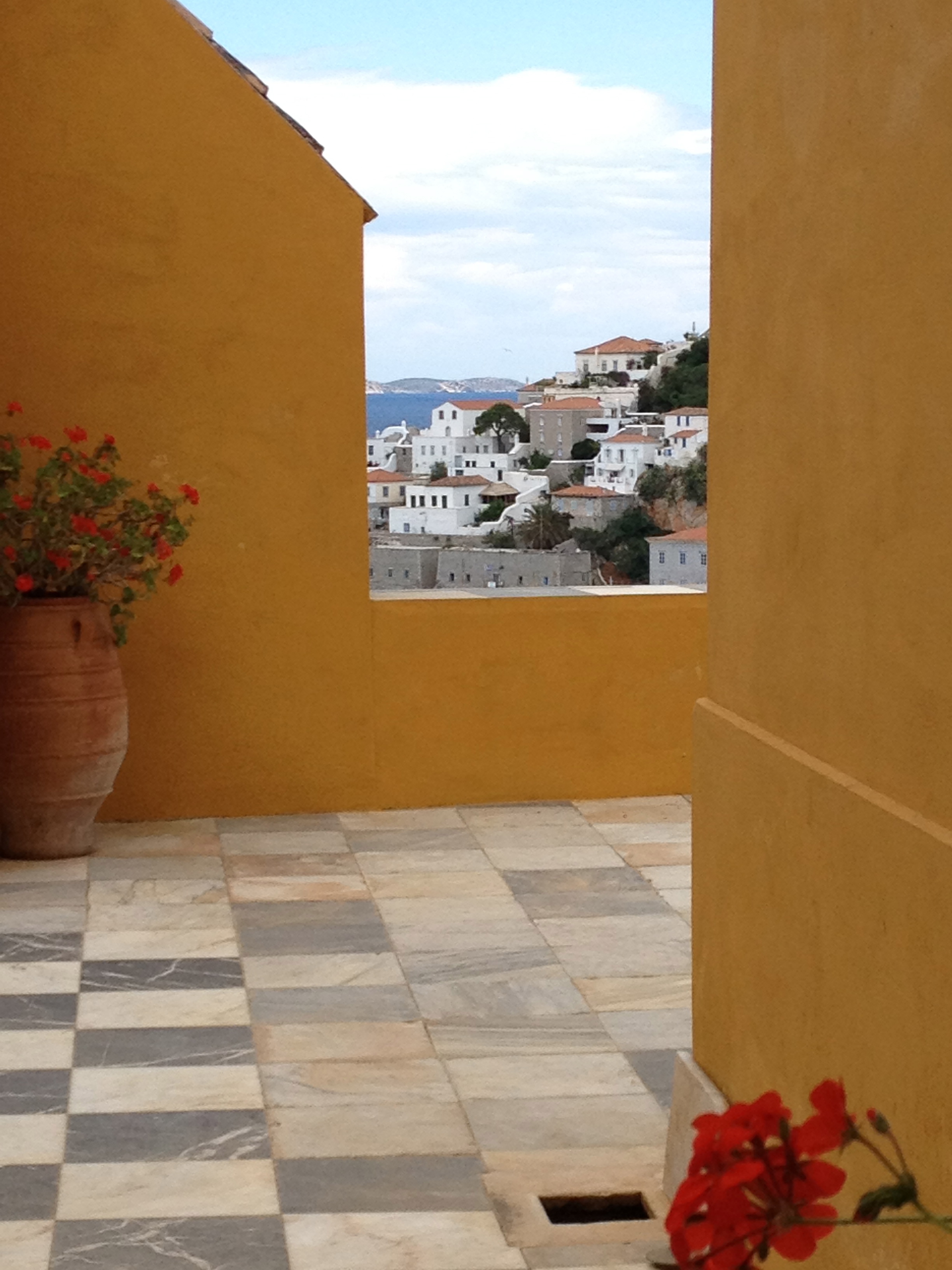
I took this picture recently on the Greek island of Hydra. When I look at it, I can’t help feeling that the early Greek geometers were right: there is some order in the world and we can figure it out. And it is all going to turn out just fine.
For more entries to this week’s challenge: Geometry click here.
The current Weekly Writing Challenge got me thinking about children in one of the most adult-oriented of all places – the workplace. Yes, I admit that I have brought each of my three children to work with me at various times, usually because of an unlucky confluence of sickness and pressing work deadlines. It certainly isn’t my first choice, but in my experience it has worked out fine for short periods of time. (Unless you count the unfortunate incident when my co-worker Peder accidentally got his finger chomped by my oldest son, who was teething. New baby teeth are razor sharp. Peder claims that he saw stars, just like in the cartoons.)
But whether or not to bring children to work is an issue that many working mothers have grappled with at one time or other. It is, in fact, the issue that has made European Parliament Member Licia Ronzulli so popular with moms like me. The photo above, taken in September 2010, of Ms. Ronzulli at work with her baby has made her a cause célèbre for working mothers around the world.
Although she doesn’t bring her daughter to the European Parliament regularly, there are other photos of Ms. Ronzulli and her daughter Vittoria. During a vote on the Eurozone debt crisis on February 15, 2012, reporters snapped several photos of Vittoria with her mom at the European Parliament.
Now two years old, Vittoria was back in Strausborg – and the European media – just this week. I think that the reasons that these photos resonate so much with moms here in America is that they symbolize so perfectly the work-family balance that all of us working moms struggle with every day. Ms. Ronzulli’s employer, the European Parliament, has rules that allow women to take their baby with them to work. Unfortunately, this is just not an option for most working moms. So we share the photos on Facebook and hope for a day when working mothers have better support.
Support such as adequate parenting leave, for example, is important. But Ms. Ronzulli herself was entitled to a parenting leave, but chose to take only 1 month of it. She makes the point that it is about personal choice. In 2010, she told The Guardian “It’s a very personal choice. A woman should be free to choose to come back after 48 hours. But if she wants to stay at home for six months, or a year, we should create the conditions to make that possible,” she said.
I think that Ms. Ronzulli is right. I think that we should create the conditions to make it possible for a woman to choose the best thing for both her family and her career. Sometimes, that might mean bringing the kids to work with her. (And yes, I think this goes for dads as well.)
This is a letter I wrote home from Kathmandu in January. It gives an interesting perspective on life in Nepal – a splash of local color – so I thought I would share it on the Human Rights Warrior.
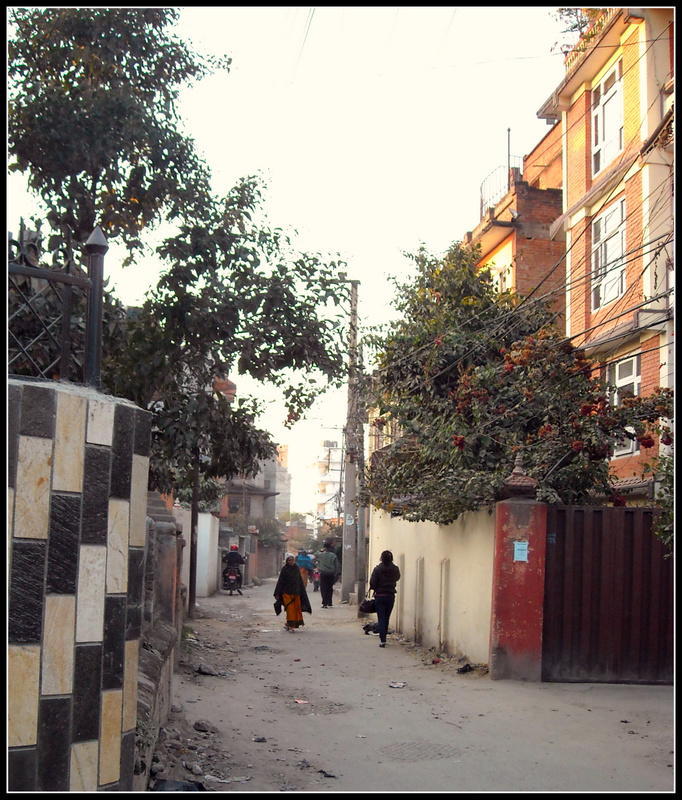
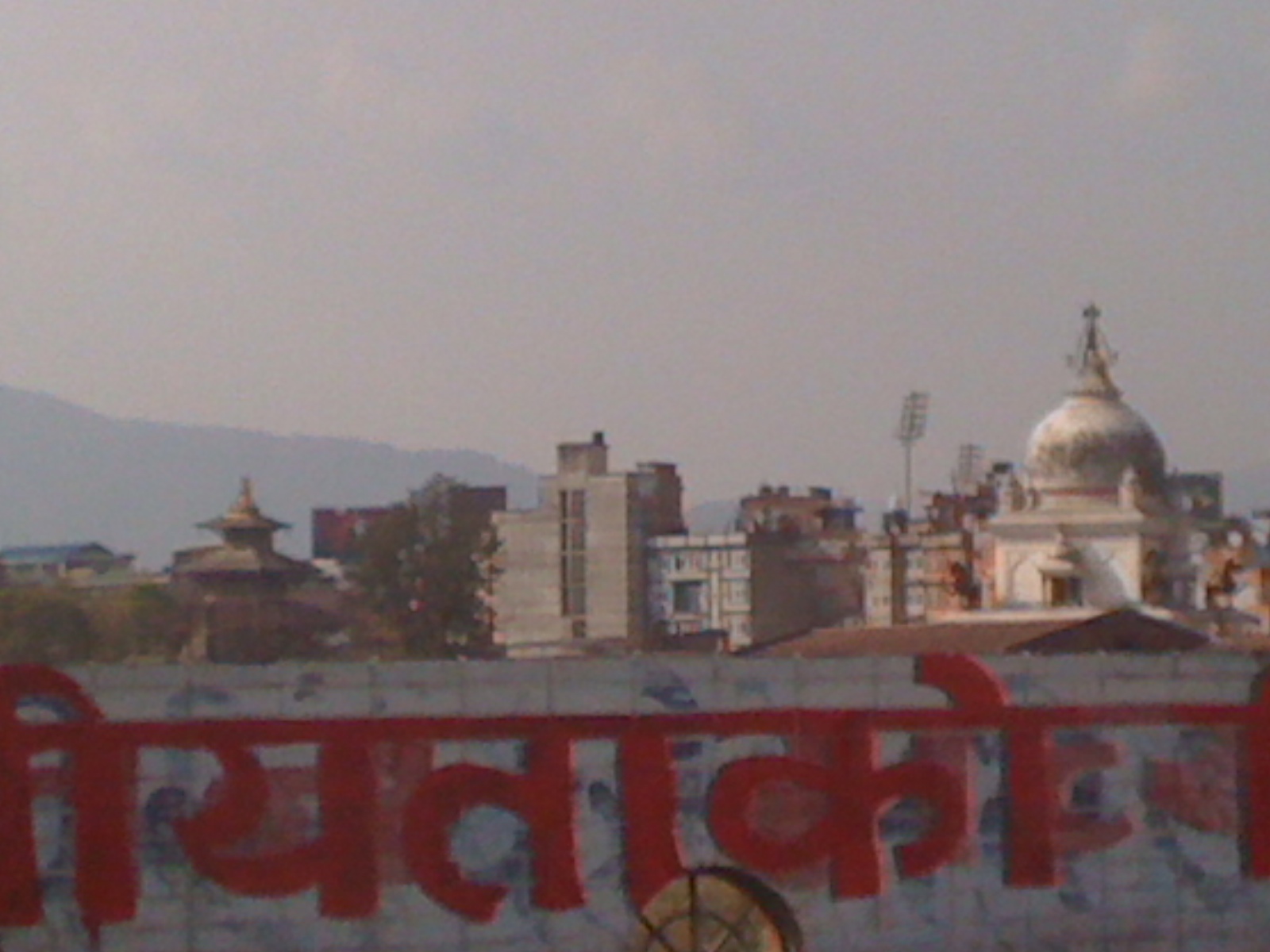
Usually, when I travel for work, I stay in a hotel. It’s different when I travel to Nepal. Here, I stay with a family at their home in Kathmandu. I could never give you directions to their house on the unnamed street in the warren of hundreds of small streets and alleys in the Battisputali neighborhood. But I could show you how to get there.
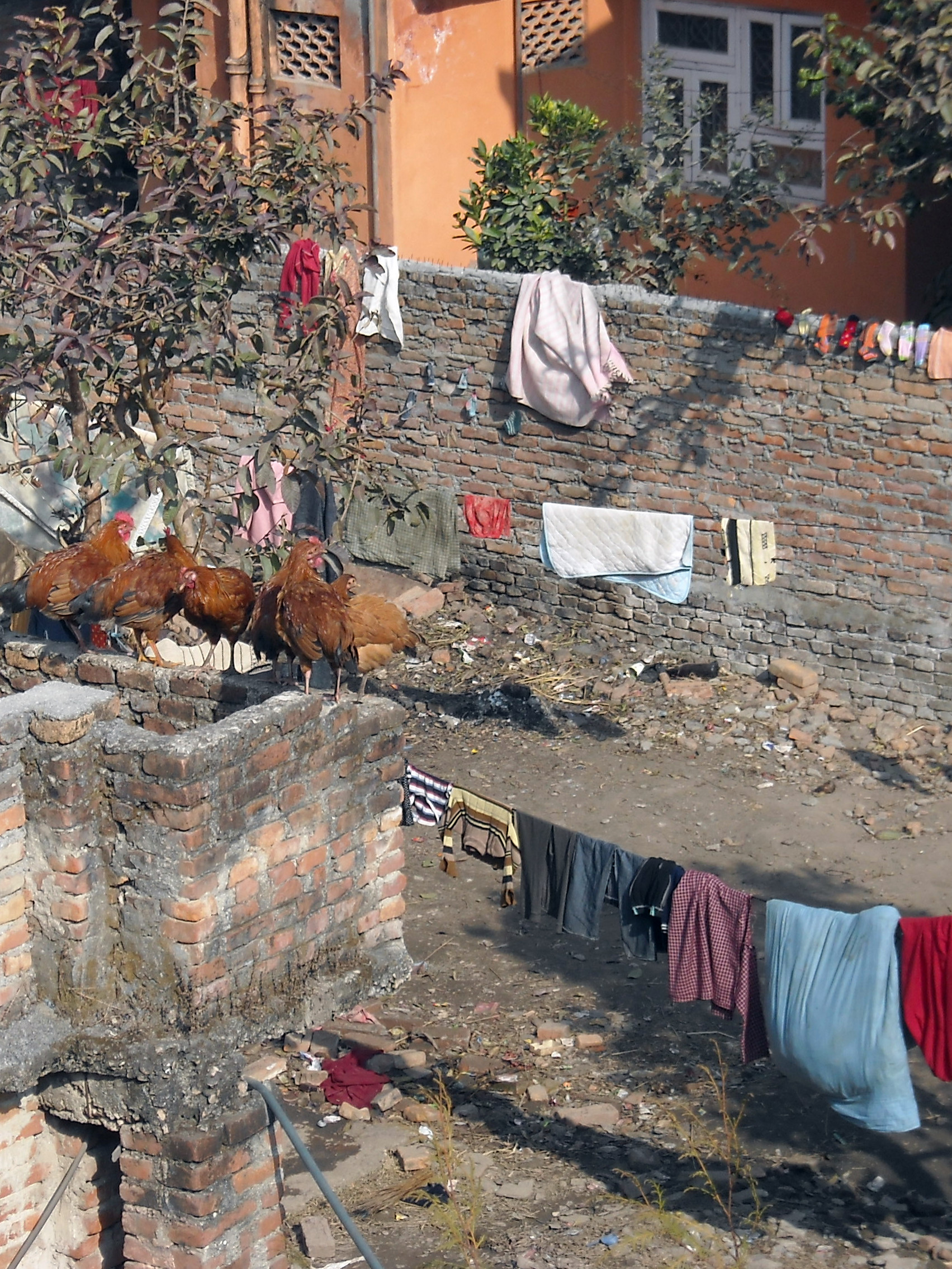
Morning noises. I lie in my bed on the third floor and listen as the house wakes up. Doors of wood and metal creak and slam. Outside, I hear the sounds of chickens, dogs, some kind of hoarse-cawing bird. Women speaking in Nepali in the kitchen building below my window at the back of the house. A man sings off-key at the top of his lungs as water sluices into his bucket from the water tap next door. Someone is whistling loudly, someone else is hawking and spitting. No need to modulate your voice – everyone here rises at dawn. All this before the rooster crows. Tinny Nepali music is playing on a transistor radio. There’s a knock on my door, followed by a cheerful “Namaste!” The tea tray is set on my bedside table. I have the first of many, many cups of tea in bed. This is how the day begins in this home in Kathmandu.
Can you see my alarm clock in this picture?
Some things have changed since I was last here in March. There is a new security gate with a buzzer, as well as a flat screen TV. Crime is a growing concern in some neighborhoods in Kathmandu.
The biggest news is the daughter has married. Like most marriages in Nepal (but unlike her parents, who made a love match), this one was arranged. Her new husband is in the Army, so the wedding procession was especially grand with a military band and an antique Nepali horse-drawn carriage. Someone told me that the only horses in Nepal are in the Army cavalry, so the only people who know how to ride are in the Army. The polo grounds in the park in central Kathmandu are, therefore, de facto used only by the cavalry. The daughter is 23 and has just finished university. Her mother thought maybe she should go to graduate school first, but she was ready to get married. Her green wedding garland, stitched in red and covered with spangles, is on the wall on the stairway to my room. It has been framed, with a wedding picture in the middle. The wedding couple wore their garlands during the three days of ceremonies. She first met her future husband about two months before the wedding. They come over for dinner and I meet her new husband. She seems happy.
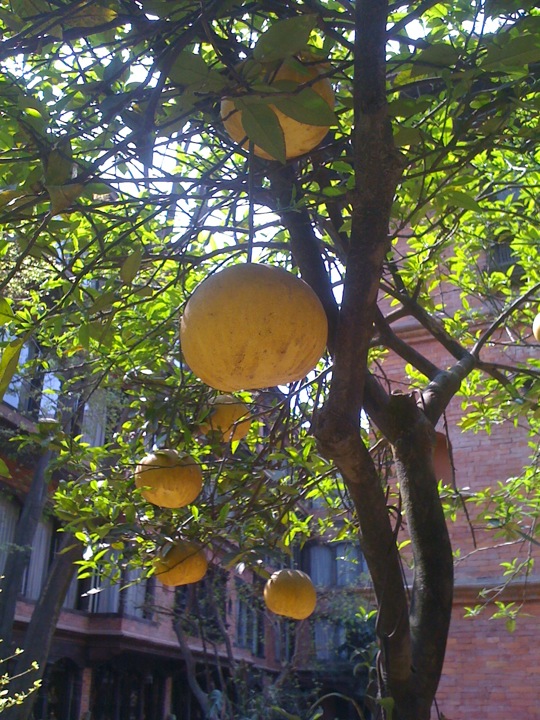
The daughter has now gone to live with her husband’s family. The family I stay with also has two adult sons who are close to my own age. They live here with their parents and their own families. The oldest son just finished building a big, new house in front of the family home. The younger son and his family live in the parents’ house, which he will inherit. Property in Kathmandu is expensive, so it is better to divide what is already in the family. There is a driveway and small courtyard in the front. In the back is a kitchen garden, flowers and fruit trees. It is a small green oasis in a dirty, dusty city.
Niches in the courtyard wall are home to animal sculptures
Three grandchildren live here, too. In the big new house, there is a grandson who is in 12th grade. His classes in college (upper secondary school) go from 6:30 to 11 am. The granddaughter, like my middle son, is in fourth grade and “running 9” (when she turns 10, she will be “9 complete”). Unlike my son, though, she spends 2 to 4 hours a night doing homework. The Nepali is very rigorous and the examinations are taken seriously. The secondary schools post billboards with pictures of their students and their scores on the national standardized exams. Another change since my last visit – the granddaughter is starting to help her mother and grandmother with cooking and serving meals. She shows me some of her sketches – Krishna and Disney Princesses – and gifts me with a sketch of Minnie Mouse.
Her little brother goes to preschool. He speaks Nepali, but understands English and also Hindi from watching Indian cartoons. Nepalis have an interesting relationship with India. In addition to enjoying Indian serials and Bollywood movies, they take the short flight to India if they need a vacation or an operation. Yet they set their clocks 15 minutes off Indian time so they don’t have to be on the same time zone as their much larger neighbor.
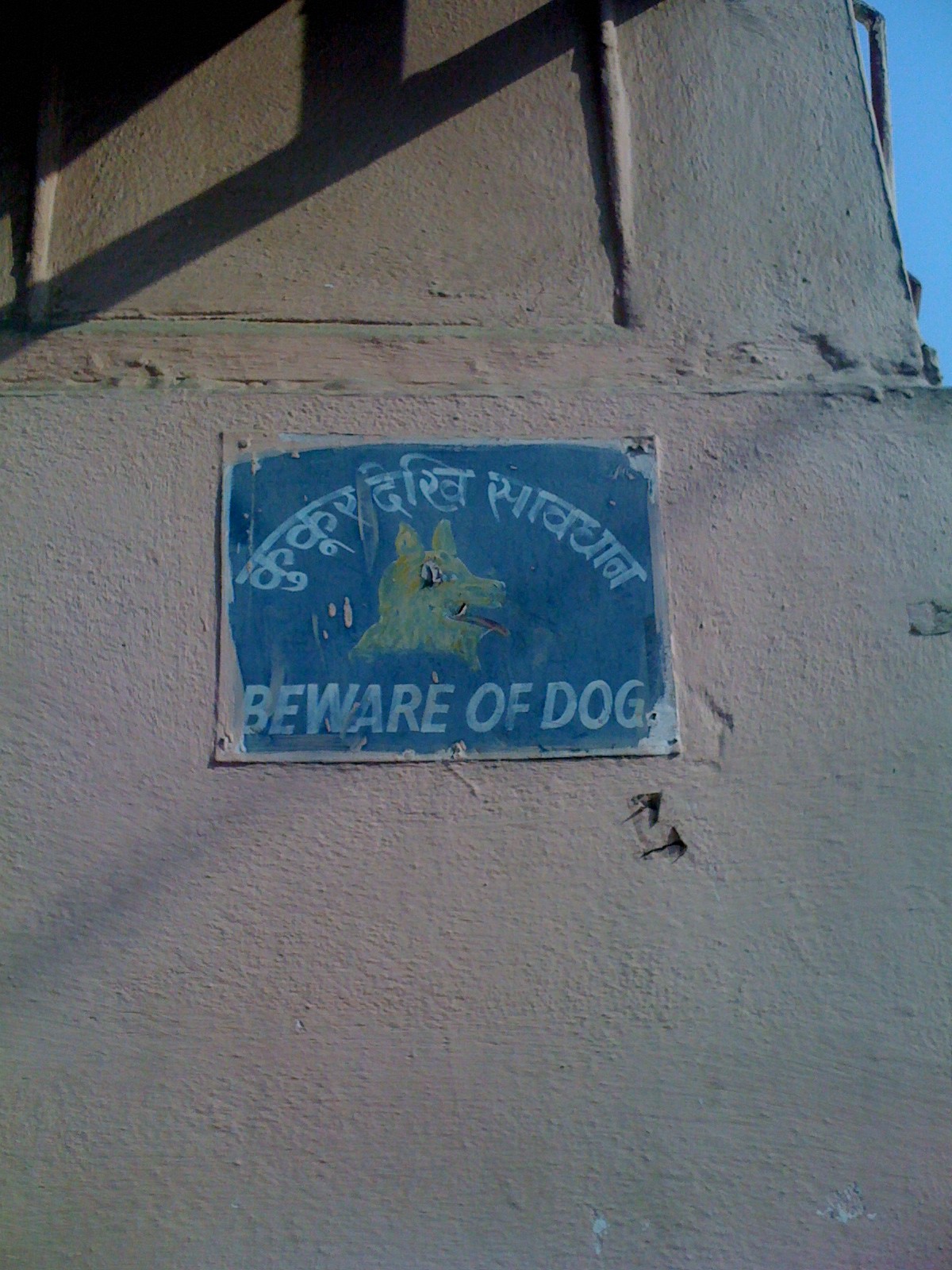
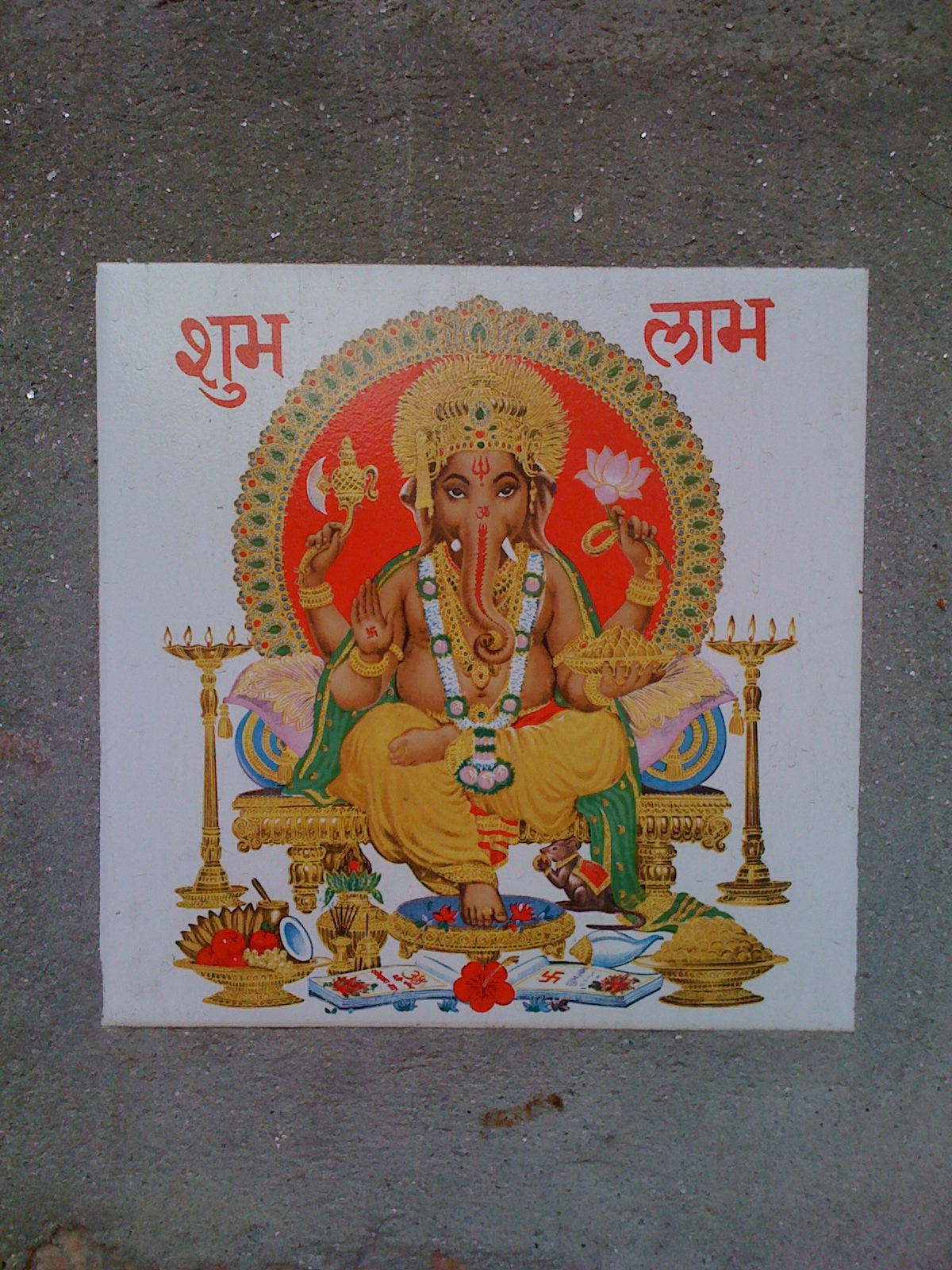
Image from a compound wall in the neighborhood.
There are others who live in this household, helping with the household chores, meal preparation, laundry, washing the cars, minding the kids. There are eight people employed on this compound by my count, but there could be more or less. People come and go in a constant swirl of activity.
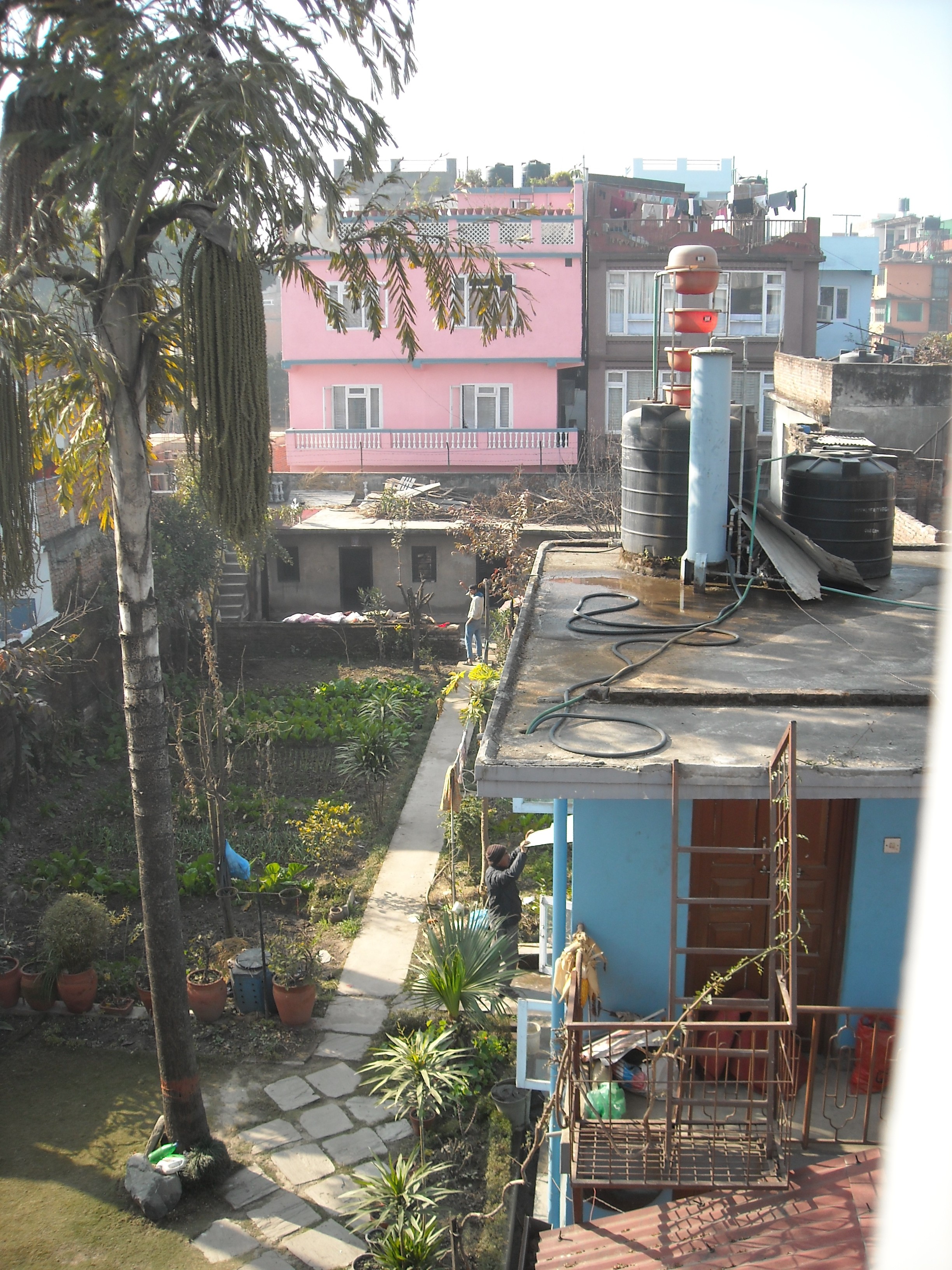
The water in the house is city water, but the water for drinking and cooking is delivered by tanker truck and pumped into the polytank on top of the kitchen building. It runs through a filtration system of three plastic basins – one with pebbles, one with sand and one with charcoal.
View of the kitchen garden and the water filtration system on the kitchen roof.
After a sunny day, there will be hot water because the water for showers is heated by solar panels. As your plane makes the approach to land in Kathmandu, you can see the sun winking off the solar panels on every roof. If the day has been overcast, though, you are out of luck and have to ask for someone to bring up a bucket of hot water for bathing.
The shortage of electricity in Nepal has resulted in load sharing in Kathmandu. Each district has electricity for 4-5 hours at a time, usually twice a day. The schedule changes every day, so you may have power from 4-8 am and 7-11 pm one day but 10 am- 1 pm and 1 – 4 am the next. The week’s schedule is on a government website somewhere, but I never know what it is. Twice already during my stay, a fluorescent light in my room has buzzed to light in the middle of the night. Our house has a backup battery, but that means that there are only lights in 4 rooms in the house. Supposedly, there are hydro-electric plants being built with the help of international community. Once these are completed, Kathmandu will have more regular electricity. Hopefully.
The power situation makes cooking difficult, but the women of the house, who share the cooking duties, somehow manage. For Nepalis, a typical meal involves dal (lentil “soup”), bhat (rice) and tarkari (vegetable curry). We usually also have at least two kinds of tarkari and sag (greens), as well as aloo (potatoes, usually fried). Often, there is also chicken but served on the side. Like my own family, this family has both vegetarians and meat-lovers in residence. I have never eaten so well. For dinner, I eat a healthy dal seasoned with turmeric and ginger that is served to women after childbirth. Punctuated by bright green scallions float, it contains fried chickpea lentils that give it a surprising crunch. At breakfast, I eat papaya from the tree in the backyard. I see grapefruits the size of my head growing there, too.
Here in Nepal, people often greet each other by asking, “Bhaat khanu bhayo?” Literally, this means, “Have you eaten rice?” but in practice it means “Have you had your meal?” Babies eat rice as their first solid food during their first rice feeding ceremony at age 5 months for girls, 6 for boys. They will eat rice just about every day of their lives.
It is winter, so the days are short in the Kathmandu Valley. Offices and schools are on winter hours, opening a little later – 10:30 instead of 10 – and closing a little earlier so people can be home by dark. There is not much nightlife in Kathmandu. During the day, if there is sun, it warms up nicely but at night it is cold. I sleep under a cotton comforter as thick as a mattress. Buildings are not insulated and floors are often marble or tile. I notice that people working in offices and stores are often wearing their coats.
Traffic is a huge problem in Kathmandu. The population grew during the conflict as internally displaced persons fled the Maoists in the countryside. Now the Maoists are in a power-sharing coalition government. The violence has ended but the coalition government is gridlocked. Nepalis have been waiting three years for a new constitution. In the newspaper today, the government promises a completion of the process within the next four months but people are skeptical. When the committee drafting the constitution gets paid by the month, where is the incentive to finish the job?
The Kathmandu population has continued to grow due to the country’s high unemployment. People come to the capital looking for work. There are now 3 million people living in the Kathmandu valley, driving too many cars and motorcycles on streets that were designed for oxcarts. The air is polluted and many people wear masks over their lower faces. Many Nepalis have gone abroad to study in India, the UK or the US or work in Malaysia and the Middle East. Every Nepali I meet has a relative somewhere in the diaspora.
Right now, in January of 2012, there is a scarcity of petrol in Nepal. I see long queues for gas and hear stories of people waiting 12-14 hours a day and still not getting to the front of the line. The government recently hiked the price of petroleum, resulting in student protests. The protesters, who are members of different political parties, called a nationwide bandh for today. Bandh, the Nepali word for “closed”, is a form of protest requiring the closing of markets and schools. It was a Maoist tactic during the conflict. Now they are in the government, but the practice continues. The headline in one newspaper is “Maoists reap the bandhs they sowed.”
No driving is allowed today. The Nepali Police, as well as the Armed Forces Police, are out in full riot gear today, but the bandh is enforced by the protesters themselves. It is strange to walk in the middle of the street, with no cars and motorcycles. There is a holiday mood, more so than yesterday – an actual public holiday. People mill around, chat, play badminton in the street. Most people support the protesters and their criticism of the government for the rising prices.
When I get back to the house, my friend waves from the second floor balcony. When we arrived last week, she was the one who opened the door and said, “Welcome home!”




 The Human Rights Warrior
You must be logged in to post a comment.