This week’s WordPress Photo Challenge theme is “Lunchtime”. Since it’s also phonoegraphy month, I’d like to share a series of memorable food/menu photos that I have taken with my iPhone 4. To quote the menu at the Red Onion Restaurant in Dar es Salaam, “Bone Appetite”!
Scrumbled Egg or Egg Porch for breakfast? Decisions…
New Delhi, India January 2012
I think I’ll have the cheeken burger.
Yaounde, Cameroon February 2013
Thirsty?
Kathmandu, Nepal September 2012
This sugar is not just pure. It is DHAM pure!
New Delhi, India September 2012
UMMMM …Deep Fried Squid Feelers!
Dar es Salaam, Tanzania March 2013
Jupped Rabbit? Magret Duck? Toulouse Poele?
I can’t even understand the English translation.
Douala, Cameroon February 2013
No. Just no.
Dar es Salaam, Tanzania March 2013
The secret of Cajun cooking – revealed!
Stone Town, Zanzibar March 2013
Should have bought a case of these!
Dar es Salaam, Tanzania March 2013 (Made in Pakistan)
Taken from the southeast shore of Lake Harriet with Instagram on my iPhone 4s.
I live in Minneapolis, the City of Lakes. The story is that the first schoolteacher named the city after mni, the Dakota Sioux word for water, and polis, the Greek word for city. The city is aptly named, with wetlands, creeks and the Mississippi river in addition to twenty-two lakes within the city limits. Truly, a wonderful blend of nature and urbanity.
Of course, most of this water is still frozen at this time of year in Minneapolis. I took this photo of my neighborhood lake – Lake Harriet – while I was out on a run a couple of evenings ago. Enjoy!
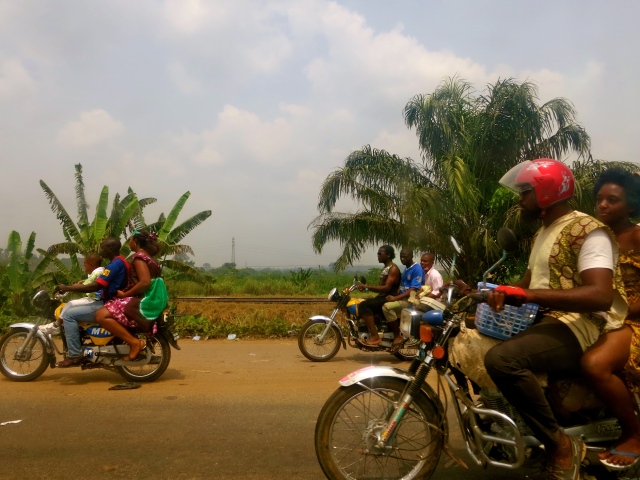
Motorcycle taxis speed toward Douala, Cameroon’s major port and commercial center
In response to this week’s Photo Challenge: Forward, I thought I would simply post this photo, taken two weeks ago today, of motorcycle taxis speeding towards Douala, Cameroon. But there is another kind of movement going on right now in Douala, one that is attempting to move the country forward towards acceptance of the rights of LGBT persons. These courageous activists, who are risking their lives to end discrimination and persecution based on sexual orientation or gender identity in Cameroon, deserve more than a photo. They deserve to have their stories told.
In Cameroon, people who are LGBT face pervasive societal stigma, discrimination,and harassment. They also face the possibility of imprisonment – Article 347 of the Cameroonian penal code criminalizes “sexual relations with a person of the same sex”. At least 28 people have been prosecuted under the law since 2010. One of them is Roger Jean-Claude Mbede, who was arrested and convicted of homosexuality in March 2011 after sending another man a text message reading, “I’ve fallen in love with you.” In December 2012, the Cameroonian court of appeals upheld the conviction and sentenced him to three years in prison.
Gay, lesbian, bisexual, and transgender people have a high risk of HIV/AIDS infection. They are often rejected by their families, who force them out of the home. When targeted by law enforcement, they have more difficulty in obtaining legal protection.Due to the social stigma and intense climate of fear, most LGBT people are forced to live out their lives in secrecy. Yet there are several impressive non-governmental organizations – Alternatives-Cameroun, the Association for the Defense of Gay and Lesbian Rights (ADEFHO), Cameroonian Foundation for AIDS (CAMFAIDS), and Evolve, to name a few – which are working hard to raise awareness about and provide services to the LGBT community.
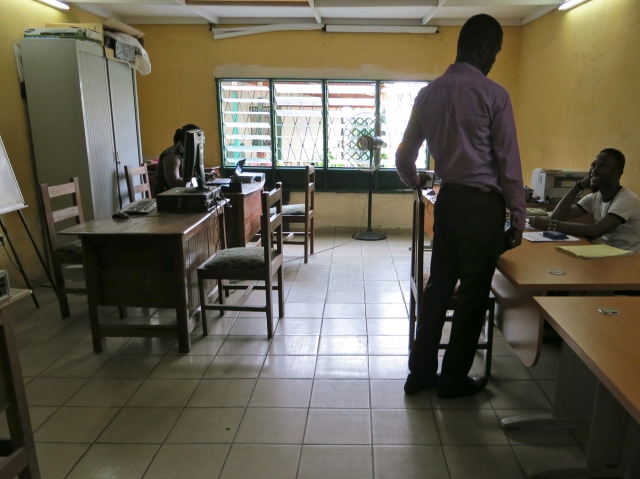
When I was in Douala, I was able to visit Alternatives-Cameroun. Security is, understandably, a big concern. There is no sign that marks their center on boulevard de la Liberté, and when you arrive, you have to sign in and show your ID. Alternatives-Cameroun has one doctor at the center who provides HIV/AIDS treatment and medical services to approximately 75 patients. In addition, Alternatives-Cameroun provides a small community pharmacy, as well as safe, confidential and free HIV testing. In 2012, they provided 720 HIV tests.
Staff at Alternatives-Cameroun centre in Douala
Equally important are the services provided by a psychologist and two social workers. Alternatives-Cameroun also provides public education and outreach, both at the center and through peer educators. On the day I visited, all of the peer educators were at work out “in the field” in Douala.
What touched me most, though, was the real sense of community that is provided by Alternatives-Cameroun. I saw a small group of young people sitting on plastic chairs around a table in “William’s Hall” (named after one of the organization’s founders, who died in the Kenya Air plane crash). I could feel that they were providing each other with comfort and support, a feeling so strong that I could see the connection between them almost as clearly as I could see the young man holding the hand of the woman beside him.
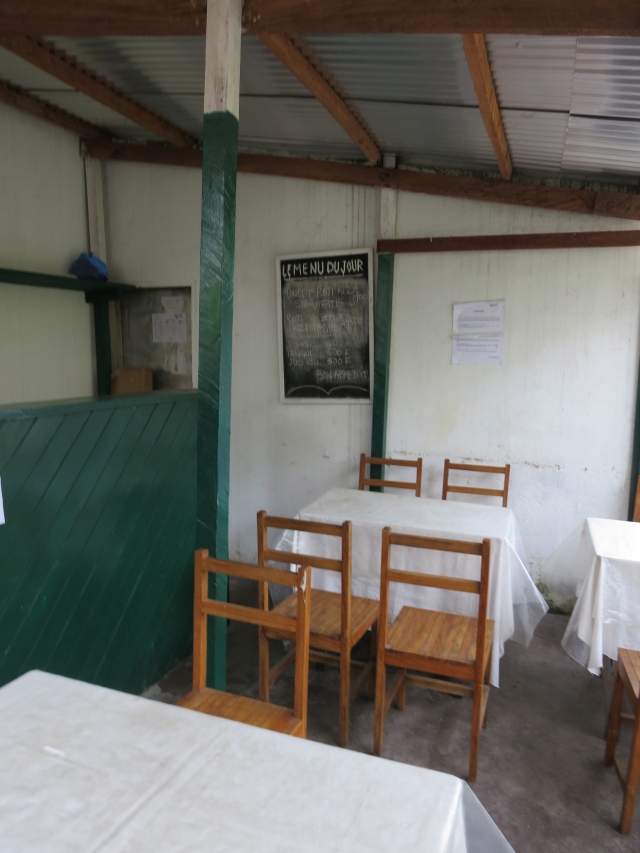
As a way to join the community and to connect with the neighbors around them, Alternatives-Cameroun started a small restaurant that serves a very inexpensive daily lunch. This anti-discriminatory gambit has paid off; the neighbors now come to the restaurant to eat and talk together with the staff and patients. Often the patients are very poor, so the restaurant means they can offer them a meal or two a day. The restaurant also provides meals for LGBT detainees in prison. Prison conditions in Cameroon are notoriously bad, with severe overcrowding and inadequate food. Most detainees rely on family members to bring them meals. As LGBT detainees have often been rejected by their families, they have no other access to food.
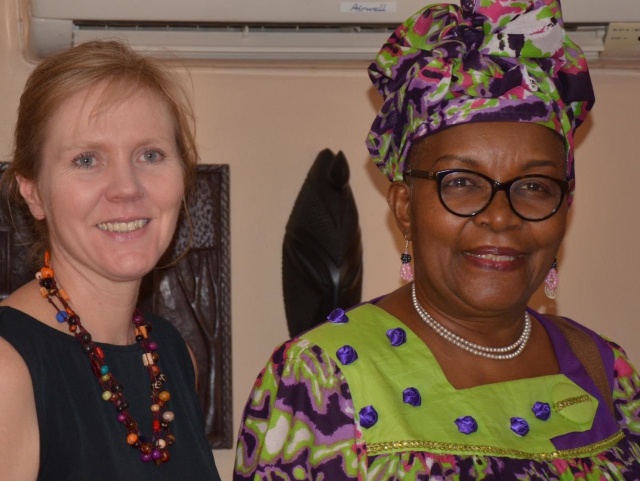
Activists working on LGBT issues in Cameroon told me that one of their main needs is for more lawyers. One of the very few Cameroonian lawyers who is willing to take on these “homosexuality” cases is Alice Nkom. The first black woman admitted to the Cameroonian bar, Alice has been courageously fighting for the rights of LGBT Cameroonians for many years. In spite of serious death threats, Alice Nkom continues her work. “Threats like these show us that the fight must continue,” said Nkom.
Cameroon has been receiving a lot of criticism recently from the international community, particularly the European Union. The issues of LGBT rights will certainly come up again at the Human Rights Council’s Universal Periodic Review of Cameroon this spring. On January 31, Cameroonian President Paul Biya told reporters that attitudes are changing in his country about the criminalisation of homosexuality. “Now I can say that discussions are under way. People are talking, minds can change one way or another but currently it’s a crime.”
The government of Cameroon must do more than discuss. The government must protect the rights of all Cameroonians, regardless of sexual orientation or identity. And when things do change, as they will one day, the credit will go to the brave men and women who have put their heart and souls – not to mention their lives – into moving their country forward on LGBT rights.
One of the things that I love about this photo of my daughter is the background. While it looks like the sky, it is actually the reflection of the sunset in the still waters of a lake. Sky and water, no boundaries, no borders. Just one great beyond.
I don’t know what she was thinking as she gazed into the beyond, but this picture symbolizes my hope for her future: that she will always have know the feeling that “Everything is possible.”
See more photos of the Weekly Photo Challenge theme Beyond here.
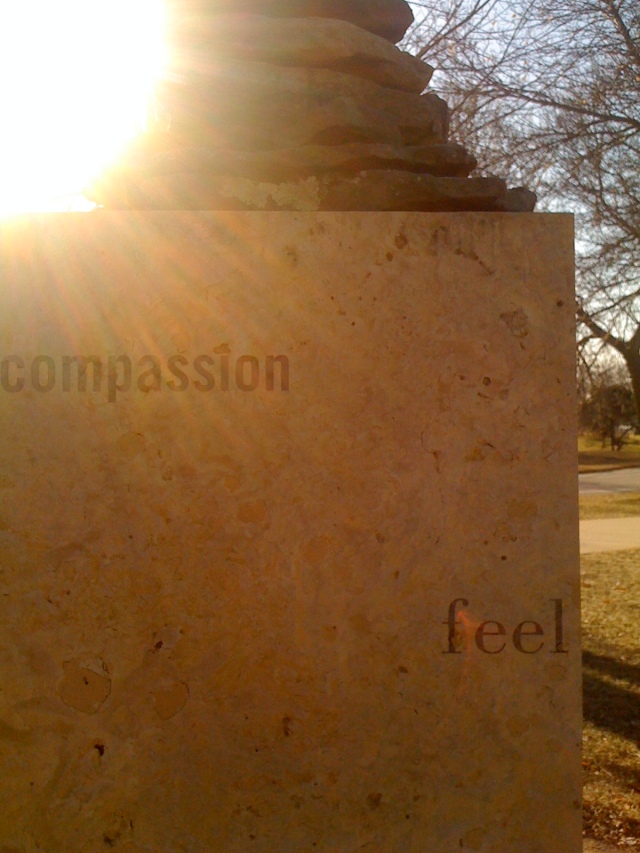
It’s been pretty quiet over here on The Human Rights Warrior. I’ve got a long trip coming up soon, so haven’t had much time to devote to non-essentials (sadly, that includes blogging). I felt I just had to respond, however, to the Weekly Photo Challenge with some of the images and words that mean “Illumination” to me.
Darkness cannot drive out darkness; only light can do that. Hate cannot drive out hate; only love can do that. -Rev. Dr. Martin Luther King, Jr.
On July 3, 1776, John Adams wrote to his wife Abigail about how future generations of Americans should celebrate the anniversary of the signing of the Declaration of Independence:
It ought to be solemnized with Pomp and Parade, with Shews, Games, Sports, Guns, Bells, Bonfires and Illuminations from one End of this Continent to the other from this Time forward forever more.
On Christmas Eve, bonfires are lit on the Mississippi River levee to help guide Papa Noel. (St. James Parish, Louisiana)
Fireworks!
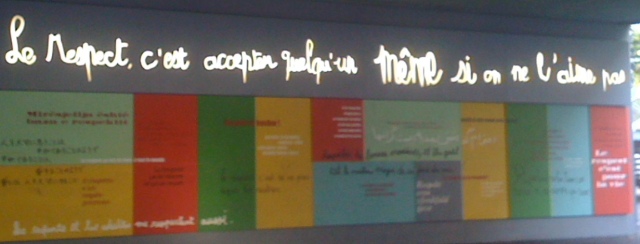
Le respect, c’est accepter quelqu’un même si on ne l’aime pas. Respect is accepting someone even if you don’t like him. (Discovered this on the wall of a school in the Pâquis neighborhood in Geneva, Switzerland)
It’s been a long, a long time coming.
But I know a change gonna come, oh yes it will.
– Sam Cooke
The sun comes out after a storm in the Sandwich Range, New Hampshire
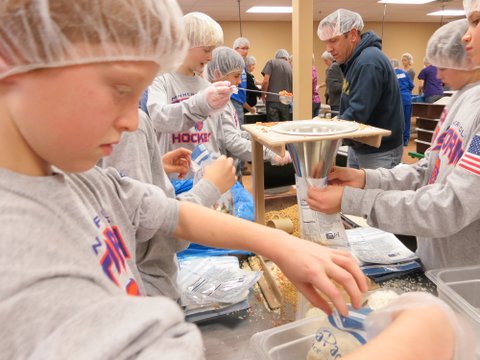
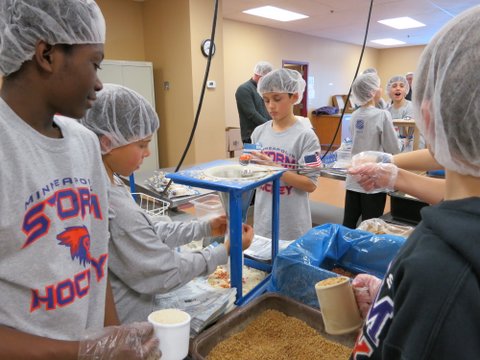
I spent the last few hours of a waning 2012 with my son Simon’s hockey team. Not on the ice, but instead in the nondescript, suburban warehouse where his Squirt hockey team was volunteering for a service project. In just a couple of hours, Simon and his teammates (and the dozens of other volunteers who were there that afternoon) packed more than 5,000 packets of meals for children in Haiti.
It was a small act, but it will have a tangible impact on the lives of some others, kids we don’t know and will never meet. On the way home, with the radio droning on about Congress and the looming fiscal cliff, Simon talked about what he had learned that afternoon about malnutrition and hunger. “Don’t you think that was a good time?” he asked. “I feel good about doing something to help out.”
“So shines a good deed in a weary world. ” ~ Willy Wonka
In looking up the quote, I realized that it in fact a reference to a line from the Merchant of Venice.
“How far that little candle throws its beams! So shines a good deed in a naughty world.” ~ William Shakespeare
I don’t usually make New Year’s resolutions. I figure if something is important enough to take action, I should just do it regardless of the time of year. But this New Year’s Eve volunteer experience with my son, while brief, makes me think that I should make a resolution for 2013. This year, I will be on the lookout for opportunities to do good deeds, both small and big, at home and abroad, acknowledged and unacknowledged. In 2013, I resolve to see how far a little candle can throw its beams.
In this, the darkest and quietest time of the year, I have taken a few moments to reflect on all that has passed in 2012. Here is a brief look at my year in pictures:
January: Palubari, Nepal
January 2012: Battisputali neighborhood, Kathmandu, Nepal
February: Backyard hockey rink.
March: The Peanut Challenge. My oldest son was diagnosed at age 1 with a peanut allergy. After blood tests determined he had outgrown it, the final test was eating peanut butter.
April: Spring break.
May: View from Ydra, Greece
May: Sunset on the Greek island of Ydra
May: At the UN Human Rights Council in Geneva, Switzerland
May: Lac Leman, Geneva, Switzerland
June: Celebrating the 50th anniversary of Skogfjorden Norwegian Language Village (Bemidji, Minnesota).
June: Bukkesjøen, Bemidji, Minnesota
July: Family reunion, Lake George, Minnesota
August: Weedfield, Center Sandwich, New Hampshire
September: Interviewing students at the Sankhu-Palubari Community School in Nepal
Sanku village, Kathmandu Valley, Nepal
September: Swayambhunath temple, Kathmadu, Nepal
October: Lake Harriet, Minneapolis, Minnesota
November: Election 2012
Each of the kids at my daughter’s school wrote what they were thankful for on a feather, creating this Thankful Turkey.
December: The things you see when you cross-country ski! Elm Creek Park Reserve, Minnesota
All in all, it has been a pretty good year. As my friend Amy described it, a mix of exotic and everyday. The perfect description of my life!
What’s in store for 2013? To begin with, I’ll be in Morocco in January, Cameroon in February and Tanzania in March. In short, the fortune cookie was right:
If you read Part II “Freedom to Game is Important” of this CALL OF (Parental) DUTY series, you know that my 13 year old son wrote a long letter articulating why he should be allowed to play violent video games like CALL OF DUTY: Black Ops II. He made some good points, I thought. But I still didn’t really know anything about violent video game play. So what was my next step? Research!
One of my concerns was the impact that violent video games might have on his brain. Maybe it is irrational, but I worry about things like that. (I can’t help it – I’m a mom! I worry about concussions in hockey and soccer, too.) I felt like I had read somewhere about the negative impacts of gaming, but couldn’t call up any facts.
I knew that there was a longstanding body of research on the negative impact that watching violence has on kids. For example:
Dr. Wayne Warburton said … that years of study across the world showed definite links between time spent watching dramatized violence and the likelihood of aggressive behavior in the young. “There are some key impacts of violent media on children that are very well demonstrated in research,” Warburton said. “They include increases in the likelihood of aggressive behavior, increases in desensitization to violence and an increase in the overall view that the world is more scary and hostile than it really is.” (Read more here.)
So it seemed likely that there would be some evidence that playing violent games would also have a negative impact. Right?
CONS: VIOLENT VIDEO GAME PLAY HAS A LONG-TERM EFFECT ON BRAIN FUNCTIONING
The study took in 22 young men, and used magnetic-resonance scanning, as well as verbal psychological tests and counting tasks. One control group played a violent shoot ’em up for 10 hours during one week, then refrained afterwards. The other group did not play any games in either week. After one week, the ‘gamers’ showed less activity in certain regions of the brain when they were scanned. (Read more here.)
According to Science Daily, the parts of the brain affected were the frontal brain regions important for controlling emotion and aggressive behavior. “These findings indicate that violent video game play has a long-term effect on brain functioning, Dr. Wang said. “These effects may translate into behavioral changes over longer periods of game play.” (Read more here.)
PROS: VIOLENT VIDEO GAME PLAY INCREASES CREATIVITY AND IMPROVES DECISION-MAKING SKILLS
Sevrin read the articles that I sent him. Then he did his own research, looking for data showing that playing violent video games can impact the brain positively. It turns out that some recent studies have actually shown an increase in creativity and in performing multiple tasks simultaneously. He sent me the following articles on the benefits of playing violent video games.
From Science Daily: “After playing the shooter game, the changes in electrical activity were consistent with brain processes that enhance visual attention and suppress distracting information,” said Sijing Wu, a PhD student in Spence’s lab in U of T’s Department of Psychology and lead author of the study.
“Studies in different labs, including here at the University of Toronto, have shown that action videogames can improve selective visual attention, such as the ability to quickly detect and identify a target in a cluttered background,” said Spence. “But nobody has previously demonstrated that there are differences in brain activity which are a direct result of playing the videogame.”
From Bloomberg (covering a report published in Current Biology): “Playing action video games primes the brain to make quick decisions and could be incorporated into training programs for surgeons or soldiers, a study found.”
The researchers tested 18- to 25-year-olds who weren’t regular video-game players. One group spent 50 hours playing the “The Sims 2,” a slow-paced strategy game published by Electronic Arts Inc. The other group took on “Call of Duty 2,” a combat game sold by Activision Blizzard Inc., or “Unreal Tournament,” a shooter game developed by Epic Games. The subjects then performed timed computer tasks, according to the report published today in the journal Current Biology.In the problem-solving exercise, the action-game players made decisions 25 percent faster than the strategy group, while answering the same number of questions correctly.
The findings suggest that games simulating stressful events or battles could be a training tool for speeding reactions in real-world situations, according to researchers at the University of Rochester in New York led by Daphne Bavelier, a cognitive scientist.“It’s not the case that the action game players are trigger-happy and less accurate: They are just as accurate and also faster,” Bavelier said in a statement. “Action game players make more correct decisions per unit time. If you are a surgeon or you are in the middle of a battlefield, that can make all the difference.”
The experiment builds on previous research by Bavelier showing that video-game players surveying a scene gather more- detailed visual information than non-gamers. The brain constantly uses sensory information to calculate probabilities. Action gamers collect visual and auditory data more efficiently than non-gamers, arriving at decisions faster, the authors said. As a result, playing fast-paced video games may improve everyday skills such as driving, tracking friends in a crowd and reading small print, the scientists concluded.
CONCLUSION?
Sevrin and I debated a bit about the relevancy of the studies (the small size of the negative brain function study, the 18+ ages of all of the study participants). But I think we both agreed that these were all interesting theories. Not necessarily inconsistent, either. It does makes sense to me that violent video game play could increase rapid decision-making skills, but still have a negative impact on other brain functions.
Even though we did not go deep into the research, it gave us a lot to think and talk about. In the end, it seems that there is still a lot that we have to learn about the impact – both positive and negative – of violent video games on the brain of young teenagers. In a sense, there is a giant, realtime experiment going on right now with millions of young participants – and no clear answers.
POSTSCRIPT: Since I wrote this, several friends and family members have sent me additional articles and websites about research into the impact of violent video games on young people. If you know of more, let me know and I’ll add them!
This is the second in my series of CALL OF (Parental) DUTY posts about the discussion we are having in our house about violent video games. Today is my 13 year-old son Sevrin’s chance to share his point of view. Below is a letter that he wrote to us (his parents) about his frustrations with not be able to get Call of Duty: Black Ops II.
I’m proud of you, Sev, for expressing your feelings so eloquently and – especially – for putting the time and effort into writing them down for us. When I read this, I remember precisely how frustrating it is to feel that you are no longer a child but yet are not allowed to make many choices for yourself. Thank you for writing this and allowing me to share it with others.
Freedom To Game Is Important
I want you to imagine, for a minute, that you are in a library. Or maybe a book store. There are rows and rows of books. Each book holds a story, unique and special in its own way. In this library filled with books you have the Fantasy row, the Action row, the Poetry row and then you come across the Childrens section. The library lady (or man) says that you are only allowed to check out books from the Childrens row because she (or he) doesn’t think that you are “ready” for the big boy books. Now I ask you, how would you feel? You have rows and rows of books and yet you are restricted to the small corner and you’ve just been told to deal with it. If you were me, you’d probably feel sad, maybe a little frustrated, and a little bit confused on why you have to read Elmo and Barbie when you could be reading Shakespeare and anything you could possibly dream of. Alas, this brings me to my point. Of course I am exaggerating when I say all I can do is read Elmo but I’m trying to make my point clear. Why is gaming any different from reading in terms of age restrictions?
If it’s because M games are too gorey then I wonder why I’m allowed to read A Long Way Gone: Memoirs of a Boy Soldier. The true horrors of war seep from that book. Kids get kidnapped, hopped up on drugs, and told to kill anybody who opposes their “Dad” (The General of the RUF). In the book, the character sees people get stabbed and shot all the time. He sees people with their fingers chopped off and the letters RUF scorched into their backs. He’s seen women running from the fight with babies on their backs, not knowing that their kin had just taken a bullet and saved their parent’s life. So now I’ve seen it too. And I know what war is like in real life. I know what war does to people and I understand how terrible it is. But I don’t see a problem with shooting a blob in the form of a human that is really just something on the screen. I’m not hurting anybody by playing an M game. That’s like saying that I can’t shoot a target at a shooting range because I might hurt the wooden carving of a person. Besides, do you really think that I’ll become some sort of stone cold killer if a kill something in a digital world?!
If you are concerned about exposing me to bad language then you’re going to have to do a lot more than not allowing me to play M games. Say we are to watch a movie like umm… let’s just go with Band of Brothers. Swearing in that series is important in the plot. It gives the viewer a really good sense of WWII and war in general. But it’s not just from movies and books, it’s also from people around me. Take you/Dad for example. If you/Dad get angry, really angry, you tend to have a fairly large potty mouth. But sometimes swearing is required to get it into my head that “Yeah, I do need to stop complaining about bedtime.” Plus, there is no doubt that there is swearing in T games, too. On top of all of that, I don’t think that just because I hear people swearing in a video game means I’m going to repeat the words I hear to other people say or mouth off at you/Dad. Like I said, I hear swearing all around me.Now, if the problem is that I’m just not old enough to be able to have the freedom to choose any game I want well, I disagree. I’m turning 13. That means I’m a teenager. I am both physically mature and mentally mature. I am shaving and my voice is dropping, no, plummeting like a giant rock. I am also taller than Mom (Mocky!) and catching you, Dad. As for mentally, I’ve been trying to keep all A’s in part because of this. I am smart and know I can handle M games but have not been given a chance for three years. I made the mistake of asking for Deus Ex. But once again, I was ten and had a squeaky voice. I need freedom and choice instead of getting advice (although, sometimes the advice is helpful). I’m asking for a chance to try it again.
The bottom line is, I think that I can take it. If I don’t get to play M games now, I will probably have to wait two or three more years! We have no solid date or age in which I can play M games and I think that 13 is the perfect time to start. I want the ability to choose what games I should and shouldn’t play. And believe me, I know what games I want to get and don’t want. I sit here and search and search and search. I research games all the time and the reason I chose Black Ops II is because I honestly think that it would be fun. I didn’t choose this game just to be with the Kewl Kids. I’m not, as you may well know, a “hop on the bandwagon” kind of guy. Maybe one of the reasons the Call of Duty franchise got so big is because people had a really good time playing them. One other thing about Call of Duty is that Treyarch is the company making BLOPS II and they are known for making a much better story than Infinity Ward and with the futuristic setting, they have opened the floodgates to creative ideas and lots of options. I hope you at least consider what I’m asking for and thank you for reading.
Read the introduction to the CALL OF (Parental) DUTY series here.
For more of the Weekly Writing Challenge: Just Do It!, click here.











 The Human Rights Warrior
You must be logged in to post a comment.