It’s pretty rare that a national debate mirrors so exactly one that is raging within my own family circle. But in the wake of the recent tragedy at Sandy Hook Elementary – and subsequent comments by National Rifle Association CEO Wayne LaPierre blaming gun violence on video game makers – a public discussion has been reopened about violent video games and their impact on society. It is the same discussion that has been going on, on a micro level, all fall in our household. Although, frankly, “discussion” is too mild a verb to capture the emotions surrounding the debate between the parents and the teenager about whether he can have CALL OF DUTY: Black Ops II.
My oldest son turned 13 years old in October. He is a great kid, the kind of kid that other parents want their own kids to hang out with. He’s smart and self-confident, has good friends and does well at school. He is, I think, exceptionally mature for his age. And he likes to play video games. He has always liked to play video games, going way back to when he would choose to play Freddi Fish rather than watch a movie for his screentime.
His father and I don’t enjoy playing video games, so we start from a position of divergence.
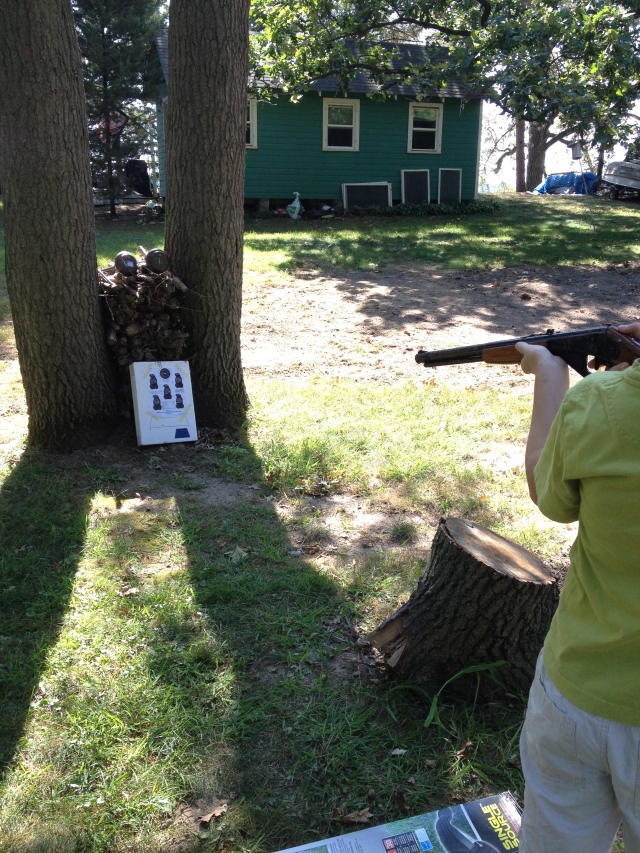
Allowing for a difference in entertainment preferences (which I do), there is a second preliminary point that we don’t see eye to eye on: I don’t understand why it is fun to shoot at things. We’ve got a couple of BB guns at the cabin, and the kids are allowed to shoot them at targets. I’ve tried target practice and found it completely boring.
When my son was born, I was very clear that we would never have toy guns in the house. Then one day, when he was about 20 months, he saw a kid at the coffee shop make a gun with his thumb and index finger. The kid pointed his finger at Sevrin and said,”Pew! Pew!” And that was all it took. Fingers, sticks, Duplo legos – it seemed like everything was turned into a “shooter”. Before long, I had caved in to the reality of nature over nurture. Over the years, I not only allowed, but I myself purchased, a vast assortment of Nerf gun products for birthday and Christmas gifts. I didn’t understand it, but I saw no harm in it. So again, I have to acknowledge that others, including my son, might find it entertaining to shoot at things.
But all of this seemed was a long way off from first person shooter video games like CALL OF DUTY: Black Ops II. So when he asked for it for his birthday, we immediately said, “NO!”
Then I realized that, my general prejudice against video games and shooting things aside, I didn’t know anything about video games. I didn’t know what standards were used for rating them or whether there were parental controls. I realized that my son is a reasonable, intelligent person, even if he is still only 13 years old. I thought that he did have a point – it wasn’t fair that we were banning the games without knowing anything about them.
So in November, I began to dig deeper. My son and I both did research on violent video games and the impact on the brain. We shared our findings with each other, emailing back and forth. I spent hours not only doing research, but also reading comments by both parents and teenagers on the pros and cons of letting your kids play violent video games.
In the end, I came to the conclusion that CALL OF DUTY: Black Ops II is not appropriate for my 13 year old. My son was bitterly disappointed, and I am truly sorry for that. Sometimes a parent has to play the ultimate trump card, but I think it is important that we went through this process together.
This week, I will be writing about our experience in a series of posts I am titling CALL OF (Parental) DUTY. I think my son deserves the opportunity to voice his opinions to a wider audience, so he will contribute his writing to the series as well. Stay tuned!
(I’ve been thinking about doing this series for some time, but it took a Weekly Writing Challenge: Just Do It – and a weeklong holiday – to get me motivated to actually do it. That, and a promise to my son that I would try to be fair and accurate.)
A look at your 20 biggest moments from the year including life events,
highlighted posts and your popular stories.
So, I checked it out. How could I resist my life events, highlighted posts and popular stories? But my 2012 Year in Review was an utter and complete disaster! I don’t know what kind of random generators are at work here, but this app most certainly does not capture my “20 biggest moments from the year”. Some of the pictures were not even from 2012! In short, Facebook Year in Review app is like the Grinch Who Stole Christmas: “The three words that describe you are as follows, and I quote: ‘STINK. STANK. STUNK.'”
These days there is precisely one thing in my life that is entirely within my control and that is my Facebook status update. So I’m taking charge of my Year in Review and creating my own”Best of My 2012 Facebook Status Updates”!
Best of My 2012 Facebook Status Updates
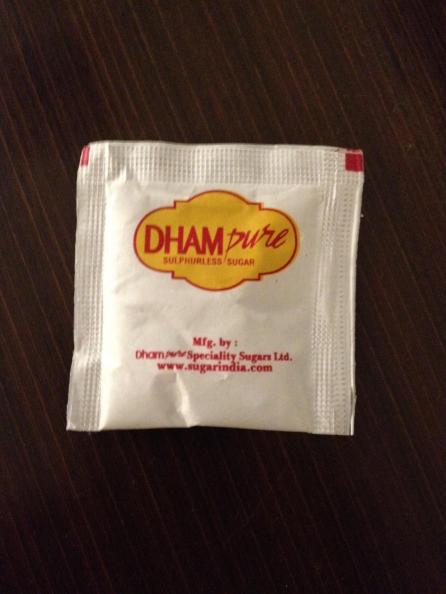
# 25 This sugar is not just pure. It’s DHAM pure!
#24 Me (to my 10 year-old): “Simon, turn off the TV. Your screen time is done.” Simon: “It doesn’t count as screen time if it is football or Barack Obama.” Well played, son. Well played!
#23 Some people have Elf on the Shelf. I have cat barf on the Playmobil nativity scene.
#22 To the gentleman crossing against the light while reading The Hitchhiker’s Guide to the Galaxy, I say, “Have you any idea how much damage that bulldozer would suffer if I just let it roll straight over you?”
#21 Chickie (my 7 year-old daughter): “Mom, do you know why we light candles at this time of year? It’s to keep the trolls out of the house. It’s true. It says so in the Bible.”
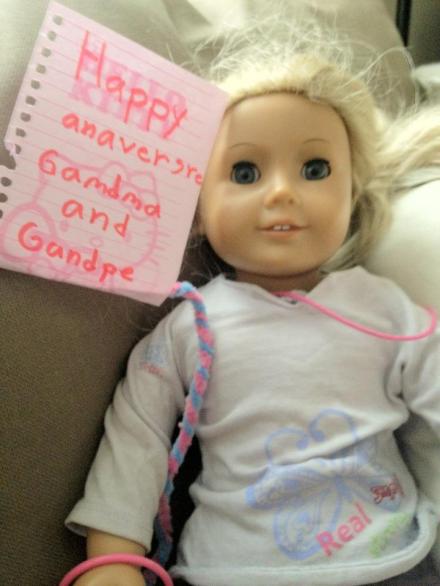
#20 I did not realize that I even had a granddaughter, much less such a thoughtful one!
#19 As I was jaunting around this morning with my bike helmet pushed back and dangling down my back like Laura Ingalls Wilder’s sunbonnet, it suddenly struck me that perhaps I did not look as fetching as I would hope.
#18 Fortunately, I left the restaurant for another meeting BEFORE my colleagues ordered the “head chips”- at Kathmandu, Nepal.
#17 Further proof of my bad hockey mom status: Packing Simon’s gear for hockey camp, I couldn’t remember what the thing that they wear on the chest is called. So I called it a “breastplate”. (I also called his nut cup a “codpiece”, but that was on purpose.)
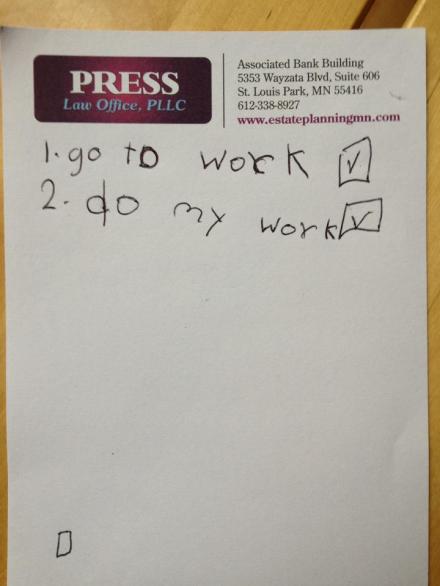
#16 Note to self:
#15 Chickie: “Where is everybody?”
Me: “They went to Sev’s hockey game.”
Chickie: “WOOHOO! Girls’ night! Let’s get into our jammies and READ!!”
#14 Went to gym. Worked out. Took shower. Realized I had forgotten to bring a towel. Dried off with my sock. Keep calm and carry on!
#13 Bonnie Tyler, reincarnated as a 10 year old boy. Turn around, bright eyes!
#12 These are the kinds of conversations that go on in my head:
Me: Why did I buy this Empire-waisted dress? I look terrible in this style?
Myself: It was only 7 dollars.
I: Ooooo! Excellent bargain shopping
#11 I keep reading the UN Millennium Development Goals – MDG – as – MGD – Miller Genuine Draft. It must be Friday!
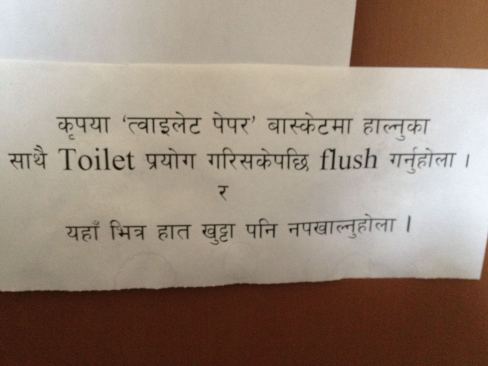
#10 To flush or not to flush. That is the question.
#9 I waited a couple of decades and read the book again. Same conclusion. Mr. Rochester is an a-hole. Run, Jane Eyre, RUN!
#8 Overheard Chickie giving a friend a tour of our house: “This is mom’s closet. Or as I call it, My Shoe Store.”
#7 Future God’s Gift to Women: “Girls don’t like AXE, they like Old Spice. Wait, no. AXE was invented by women because they like the smell. I need some AXE. Girls like AXE.”
#6 Last day of summer vacation. “What’s left on the school supply list, Chickie?” “We’ve got everything but The Lorax wipes.”
#5 My rule: You forget your lunch box at school and you get the Lunch Box of Shame the next day.
#4 7:10 am and I’ve already had to answer the questions “Is this a scalene triangle” and “Can you make me an omelette?”
#3 My Mother’s Day present: The Napoleon Dynamite Dance!
#2 Chickie: “Mommy, what is a Miley Cyrus?” Me: “It’s a person.” Chickie: “Really? I thought it was a body part. One of the private ones.”
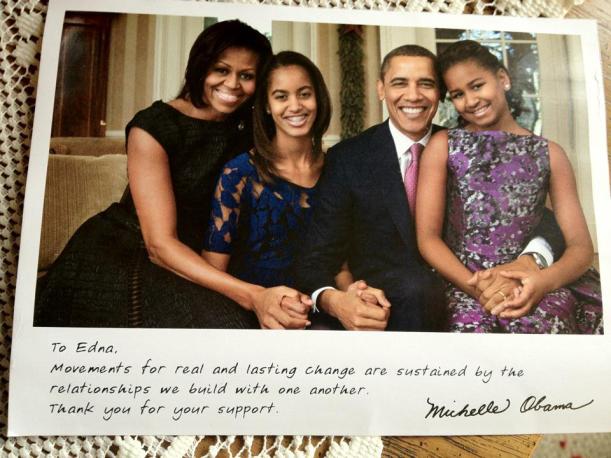
#1 I found this in my grandma’s apartment today. Also found out that she had voted absentee before she died. I don’t know if it still counts, but I’m proud that, at 98, she made sure to vote. And that she voted No on both state constitutional amendments (one that would have limited the right of same-sex couples to marry and one that would have limited the right to vote). Go Edna!
I picked up my seven-year old daughter early from school one day not too long ago. “How was your day?” I asked, as she buckled herself securely into her booster seat. The key was in the ignition, and my brain had already sent the signal to my hand to turn it, when she replied,
“OK. Except that X touched me inappropriately this morning.”
We were running late for the appointment, but I did not start the car. Instead, I turned around and looked at her. She sat placidly in the backseat, the afternoon sun backlighting her golden curls like an angel’s aura. She gazed at me innocently with her big blue eyes. She didn’t look at all upset.
“Tell me what happened,” I said.
My voice sounded much calmer than I expected. It certainly didn’t convey what I was feeling. When you are a parent, and your most important job in life is to protect your kid, it is terribly disconcerting – not to mention heartrending – to hear her say something like this. I wanted to scream, “Who in the world would have the audacity to touch MY CHILD inappropriately?!?!”
Somehow, I stayed calm and delved for facts. She answered each question fully and calmly. Here is a summary of what she told me and what I wrote in an email to her teacher later that night:
My daughter told me that X has been touching her a lot and making her feel uncomfortable. She said on Friday that he was rubbing her upper thighs and touched her briefly in the bathing suit area. She said that it is usually during circle time that this happens, so she tries not to sit near him. I told her to tell you immediately the next time it happened, but I would appreciate it if you could keep an eye out for this behavior and help her avoid it.
I did not include this in the email, but she also told me that she always asked her friends to sit around her at circle time, a perimeter of girlfriend protection.
Up until last year, I think my reaction might have been different – more anger than the deep sadness that I was feeling. But after I wrote (and Time published) the How to Raise Boys Not To Be Total Jerks piece about my reaction when my son told a sexist joke, I heard from dozens of women about their experiences with inappropriate touching, sexual harassment, and sexual abuse. Women of all ages, ethnicities and occupations, shared their experiences from all over the world. A couple of medical professionals even told me about patients who had touched them inappropriately during medical examinations. The sad truth is that these are experiences that are all too common for girls and women throughout the world. I realized, sitting there in the car with my key in the ignition, that this was only the beginning for my second grade daughter.
In those few seconds before normality returned and we drove on to the orthodontist, I saw an image of myself in the second grade. An image, like I was watching from above, of myself at the age of 7, pinned down in the dust on the playground at Magnolia Woods Elementary School by a boy who easily weighed twice as much as me. I had not thought of it in more than 30 years, but now I had a sudden, strong remembrance of the feeling of being panicked and trapped, as he sat heavily on my chest and held my wrists down on either side of my head.
I had thought that we were playing chase at recess; HE told me that we were playing kissing chase. He demanded that I hold still so he could kiss me – he caught me, so it was his right. A kiss was the price of my freedom. I remember thrashing, kicking, rolling my head and arching my back, all to no avail. A crowd of first and second graders gathered to watch. I think they were cheering him on.
The school may have taken its name from magnolia trees, but I frankly don’t remember any. There were crepe myrtle trees all along the walkway where we second graders lined up to enter our classrooms. Small tree frogs congregated there; they seemed to have no purpose in life other than to sing happily and spit down on us. A certain times in the year, the crepe myrtles’ strange, pink blossoms – which looked like something right out of Dr Seuss – covered the trees. Pink petals blanketed the sidewalk where we second graders lined up.
As I struggled to break free from this boy, oh how I longed for the crepe myrtle trees and the safety of my classroom door! I pictured myself running, as fast as I could, to that safe spot. Instead, I lay on my back, trapped, in the dust on the playground, trying not to see the boy’s face hovering inches above me. Looking instead for the freedom above me, in the bright blue of a Louisiana winter sky and a canopy of towering swamp oaks.
I have no complaints about the way my daughter’s school responded. The teacher replied within a few hours and forwarded the information on to the school principal and social worker. First thing on Monday morning, the social worker interviewed both students. By Monday afternoon, they had put place a six point plan of strategies to ensure the safety of all of the second graders. The school social worker laid it out for me:
1) I will speak to all of the 2nd grade classrooms about appropriate interactions.
2) All students will be reminded to tell an adult as soon as something happens so we will be able to address it.
3) Teachers will be vigilant and observant in the classrooms for appropriate student interactions.
4) The playground staff will closely monitor for concerning behavior.
5) Seating assignments will be made based on student needs.
6) Students who cannot follow the rules will be seated next to the teacher.
The school social worker also said, “Please acknowledge your daughter for telling you, so you could inform us.”
When my daughter got home from school the next day, she reported that all six points of this plan had already been implemented.
“I’m proud of you for telling me. It was the right thing to do,” I said.
“I know,” she sighed. “Everyone keeps telling me that! I’m getting kind of tired of hearing about it.”
But here’s the thing. Statistics on sexual abuse in children are hard to come by because the majority of cases are never reported to authorities (estimates on reporting range from between only 12% (see Hanson, 1999) and 30% of cases (Finkelhor, 2008)). Based on reporting percentages, the real number of cases of sexual abuse could be anywhere from 260,000-650,000 kids a year. To put it another way, as many as one in three girls and one in seven boys in the United States will be sexually abused at some point in their childhood.
I’m not suggesting that what my daughter (or I) experienced was sexual abuse. But it was an assault – and definitely a wake up call to my daughter’s vulnerability to the potential of something much worse. I don’t know the little boy who I call X here. I’ve also been around kids enough to know that second graders get squirrelly. Sometimes, especially in close quarters, they have trouble keeping their hands to themselves. I’m not willing to make any assumptions about this kid or speculate that his behavior is a sign that he will grow up to be a sexual predator. But research shows that 40 percent of child sex abuse is committed by other children or adolescents. In fact, as many as 50 percent of those who sexually abuse other children are under the age of 18. These are facts that I did not know before.
When the recess bell rang and that boy got off of me, I sprinted for my second grade classroom door. I got there before any of the other kids and put my face against the glass window to cool my cheeks, which were burning with shame and embarrassment. For the next week or so, I spent recess in different part of the playground, doing penny flips on the monkey bars. When I finally went back to playing chase, I made sure that I ran as fast as I could so I would never get caught. For the rest of my time at Magnolia Woods, I was careful to keep away from that boy. But I never told a single person – not my friends, not my teacher, not my parents – about him holding me down and trying to kiss me. Not even when I saw him do the same thing to other girls.
So I’m thankful that my daughter told me about what happened to her. And I’m thankful that the school took quick and decisive action, reinforcing the message for all of the kids and staff that school is a place where everyone has a right to feel safe. I’m especially thankful that something worse did not happen to my daughter, but also that this experience has left her better prepared for the future.
Child sexual abuse happens in all racial, religious, ethnic and age groups, and at all socio-economic levels. Talk to your daughters and your sons about appropriate v. inappropriate touching, as well as what to do if it happens to them – or if they see it happening to someone else. If you’ve talked to them about it once, then do it again. Kids need to hear it again as they move through their various developmental stages. If you feel uncomfortable, just remember that what you are doing is preparing your kids to protect themselves, something they will have to do for the rest of their lives.
Resources about identifying signs of and avoiding child sexual abuse can be found at Stop It Now. If you know of other good resources, please feel free to add them in the comments.
Sometimes I have trouble finding the words to talk to my kids about the violence that hear about in the news, the injustices that they see in our own community. As a human rights lawyer, it is my job is to document and expose human rights abuses. But I have always struggled with how to communicate to my kids what human rights are and why they should care about them.
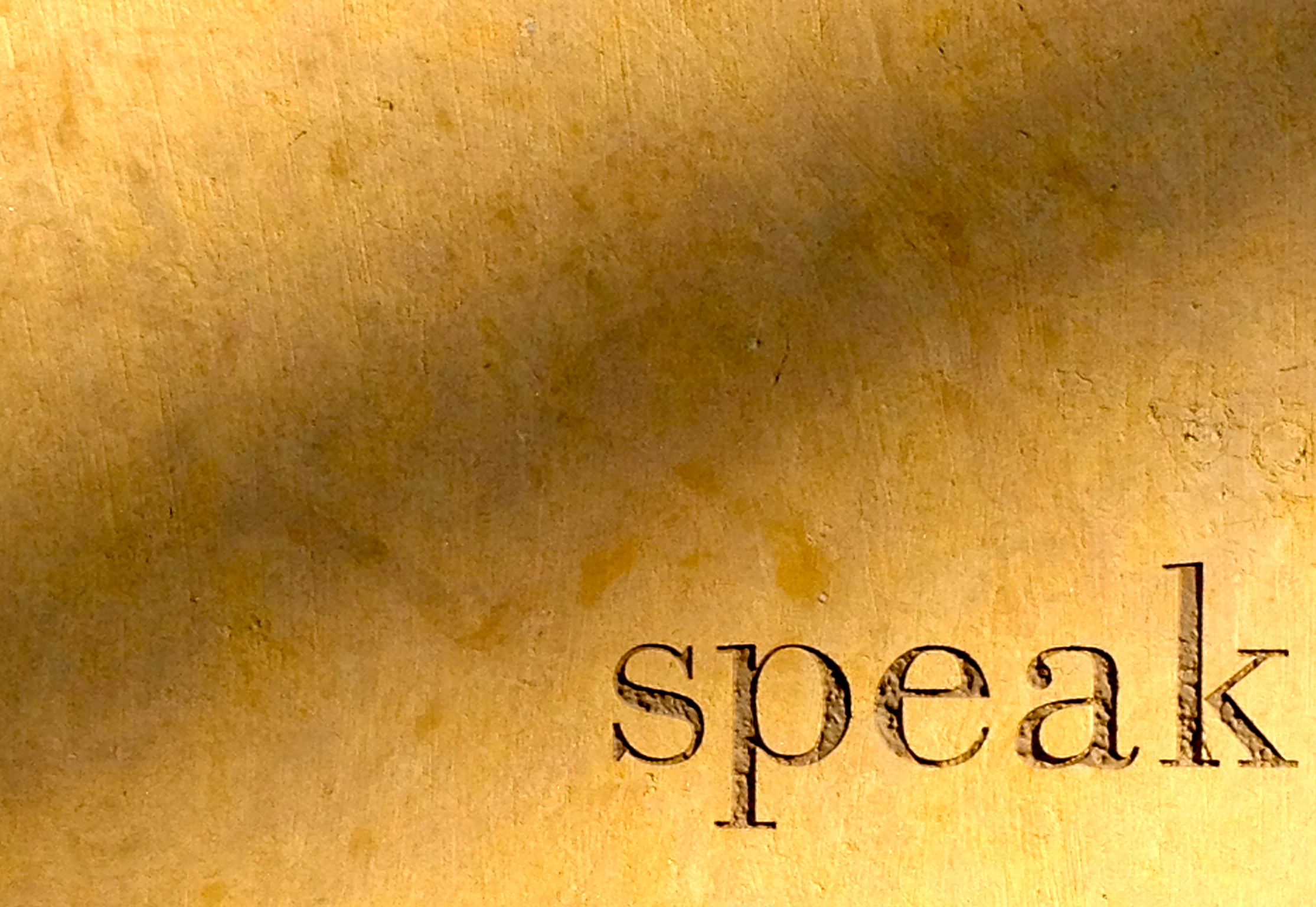
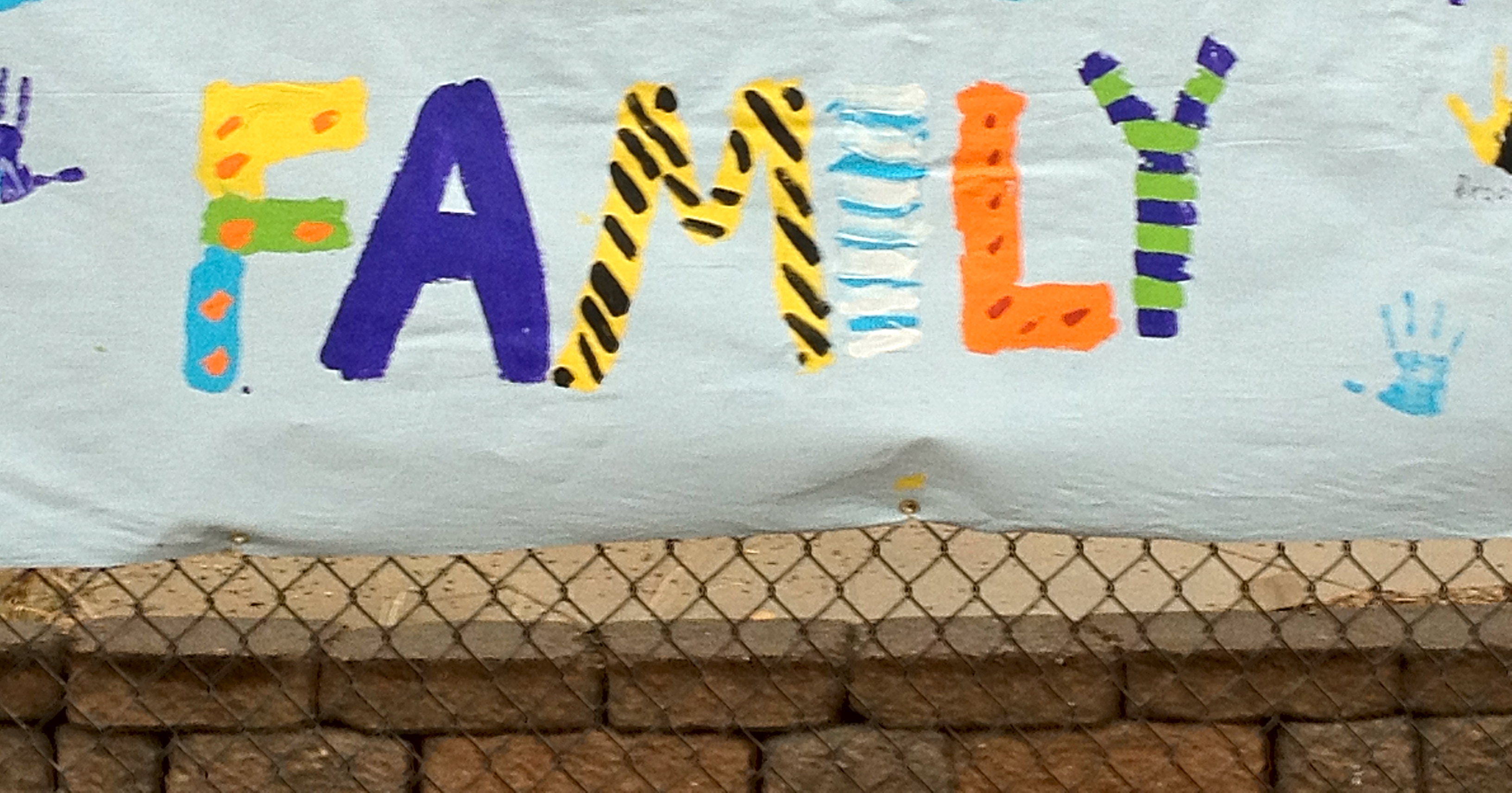
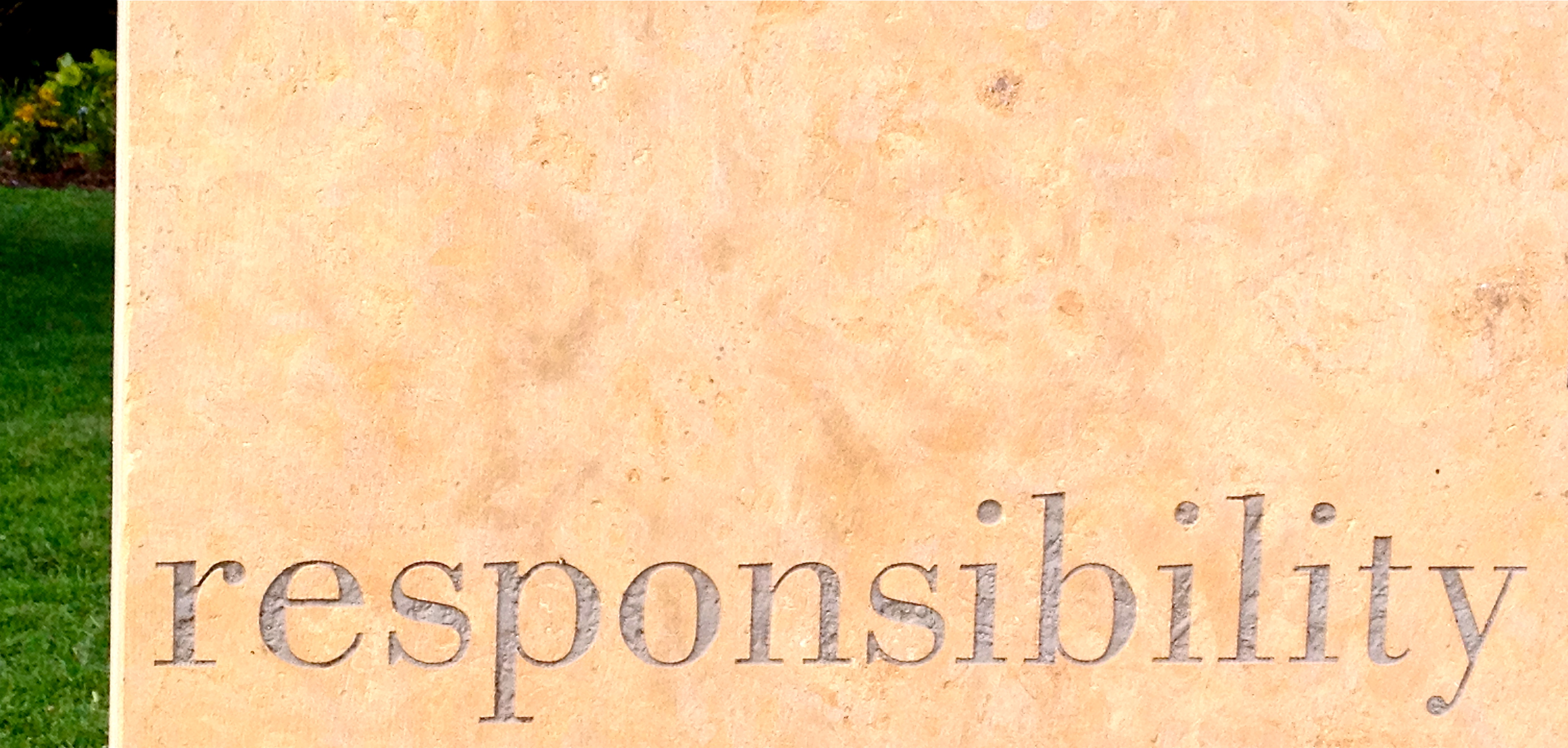
Recently, however, I was preparing for a project that involved interviewing children about their experiences. Experts advise that interviewers use simple language when speaking with children about difficult topics. “Simple language” means avoiding big words, of course, but it also means using simple, direct sentences. Straight-forward grammar – subject and predicate in sentences; basic speech parts – nouns and verbs and adjectives. I suddenly realized what I was doing wrong in talking about human rights with my kids. Rather than explaining complicated concepts, what I needed to do was break it down to the core values that everyone needs to live fully in this world. I needed to start with the basic building blocks of language: words.
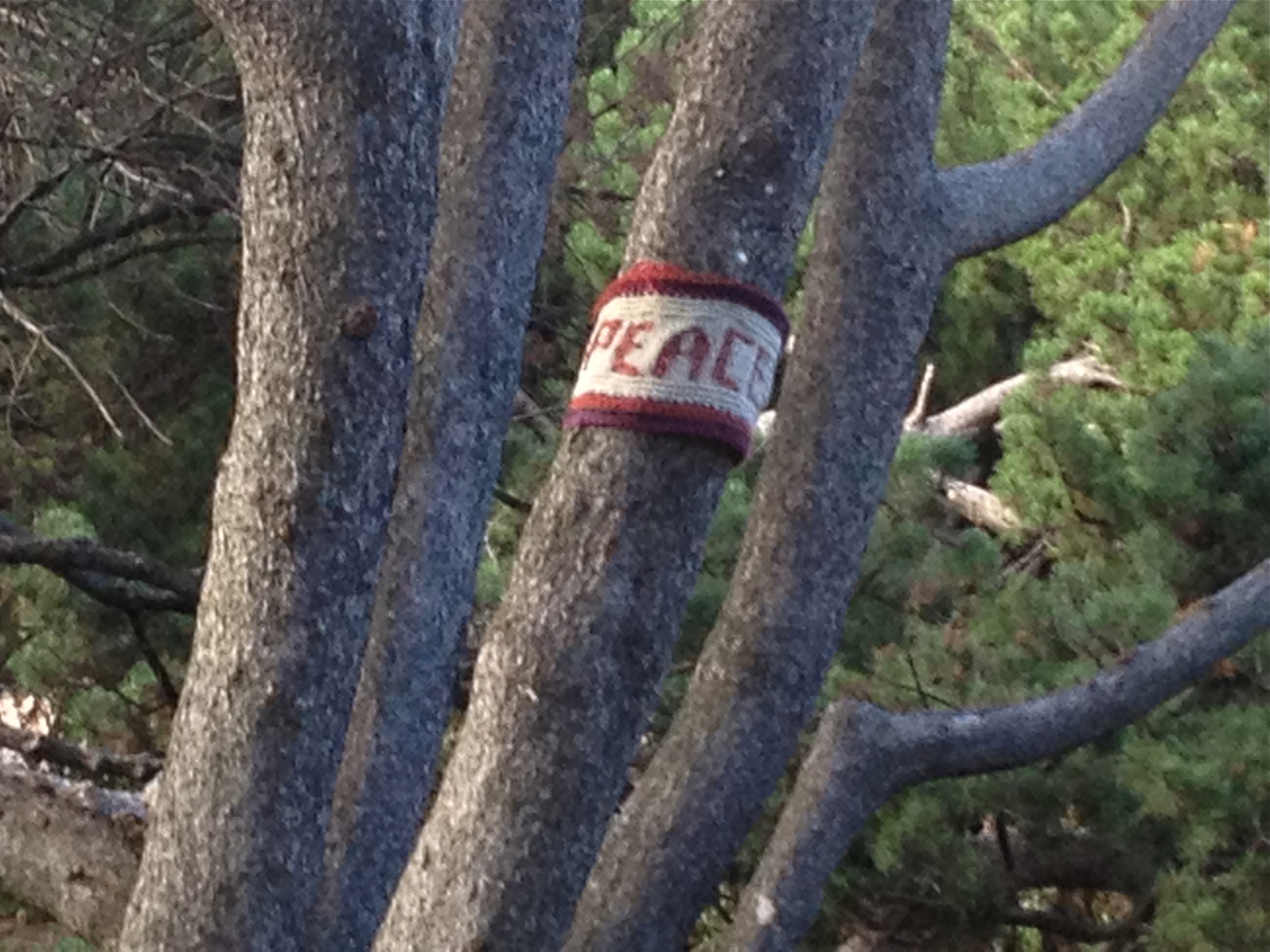
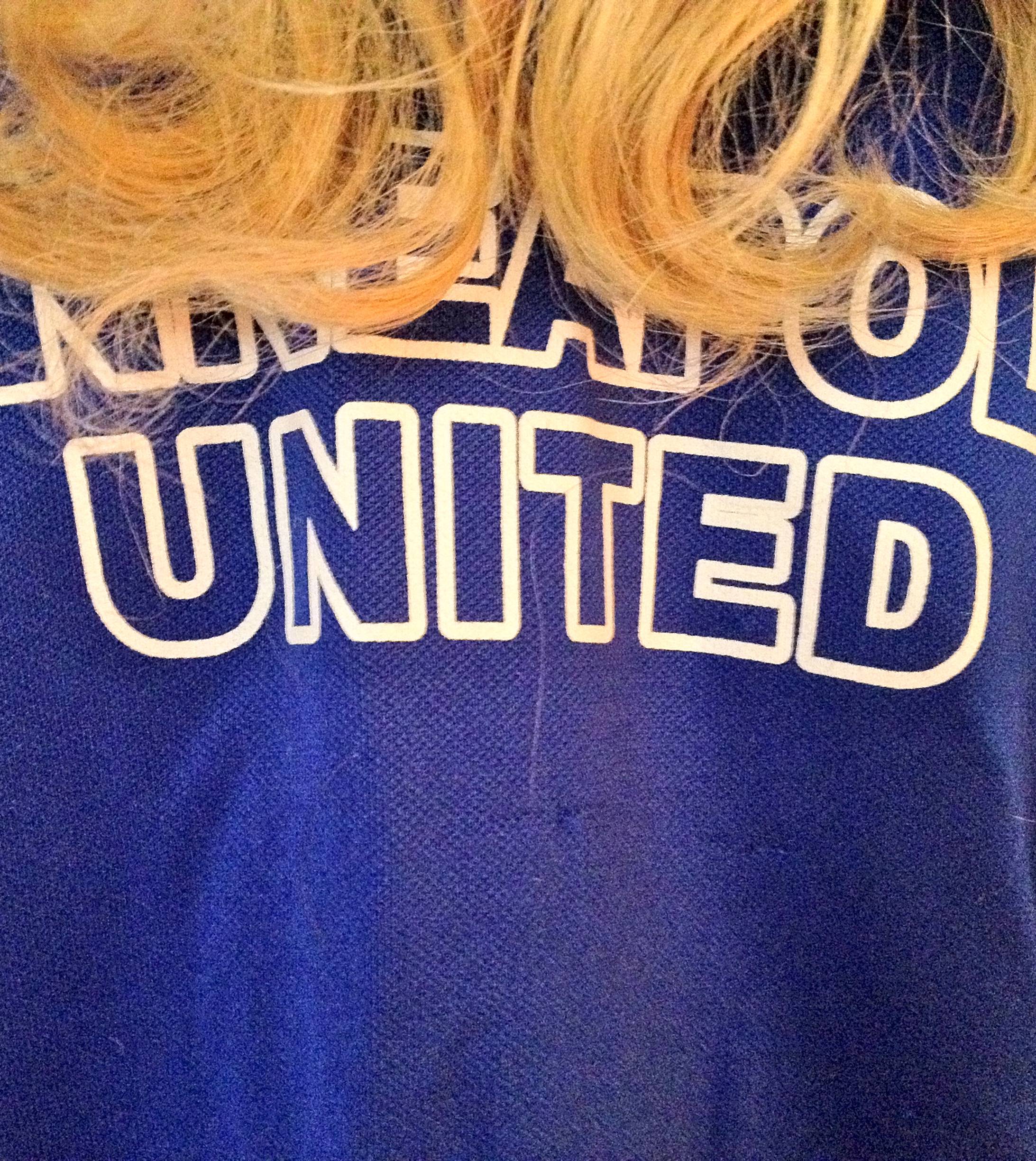
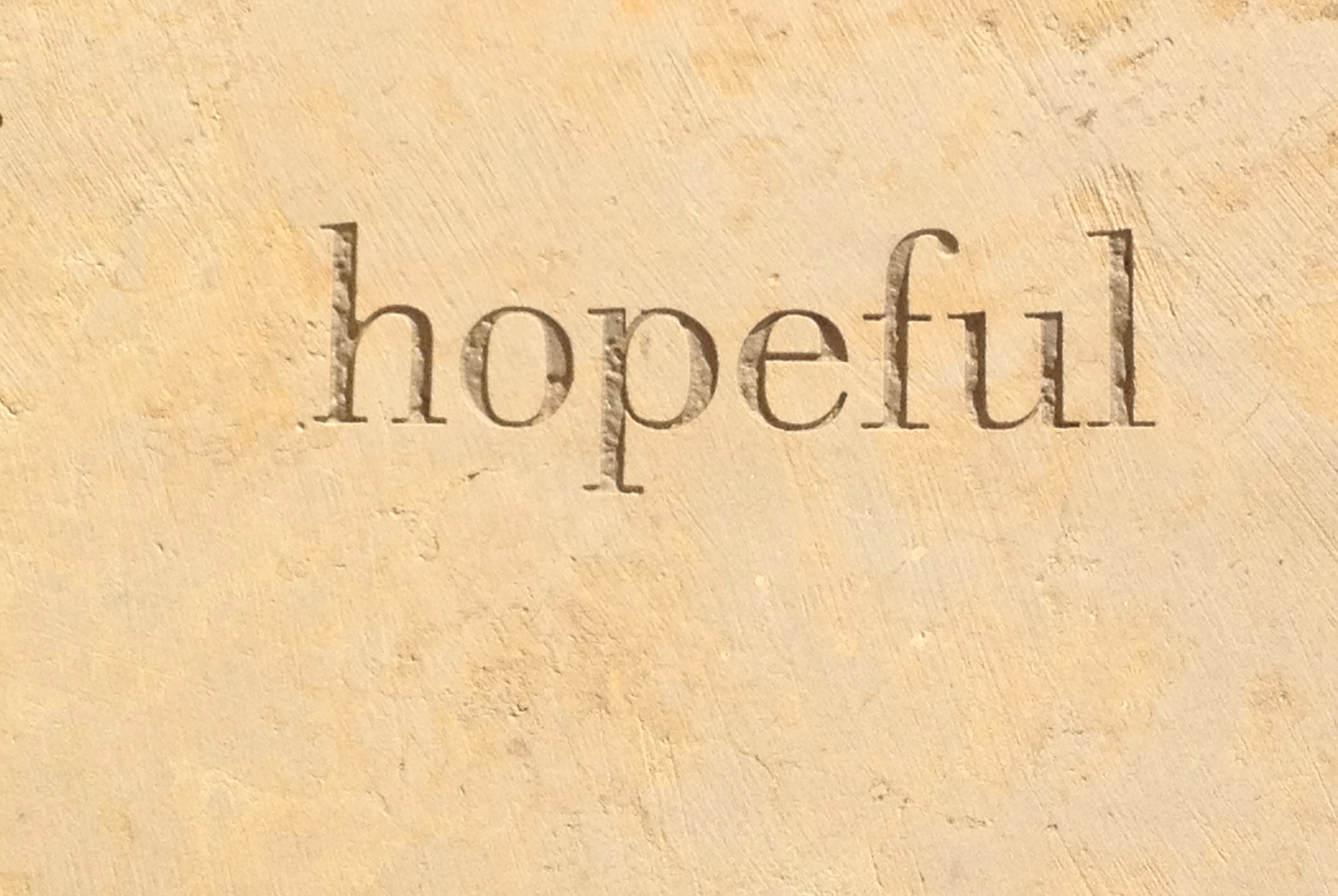
Once I realized this, I started to see human rights words all around me! Words like:
and
and
Verbs like
and
and
and
Nouns were all around me!
and
and
and
I saw adjectives, too!
and
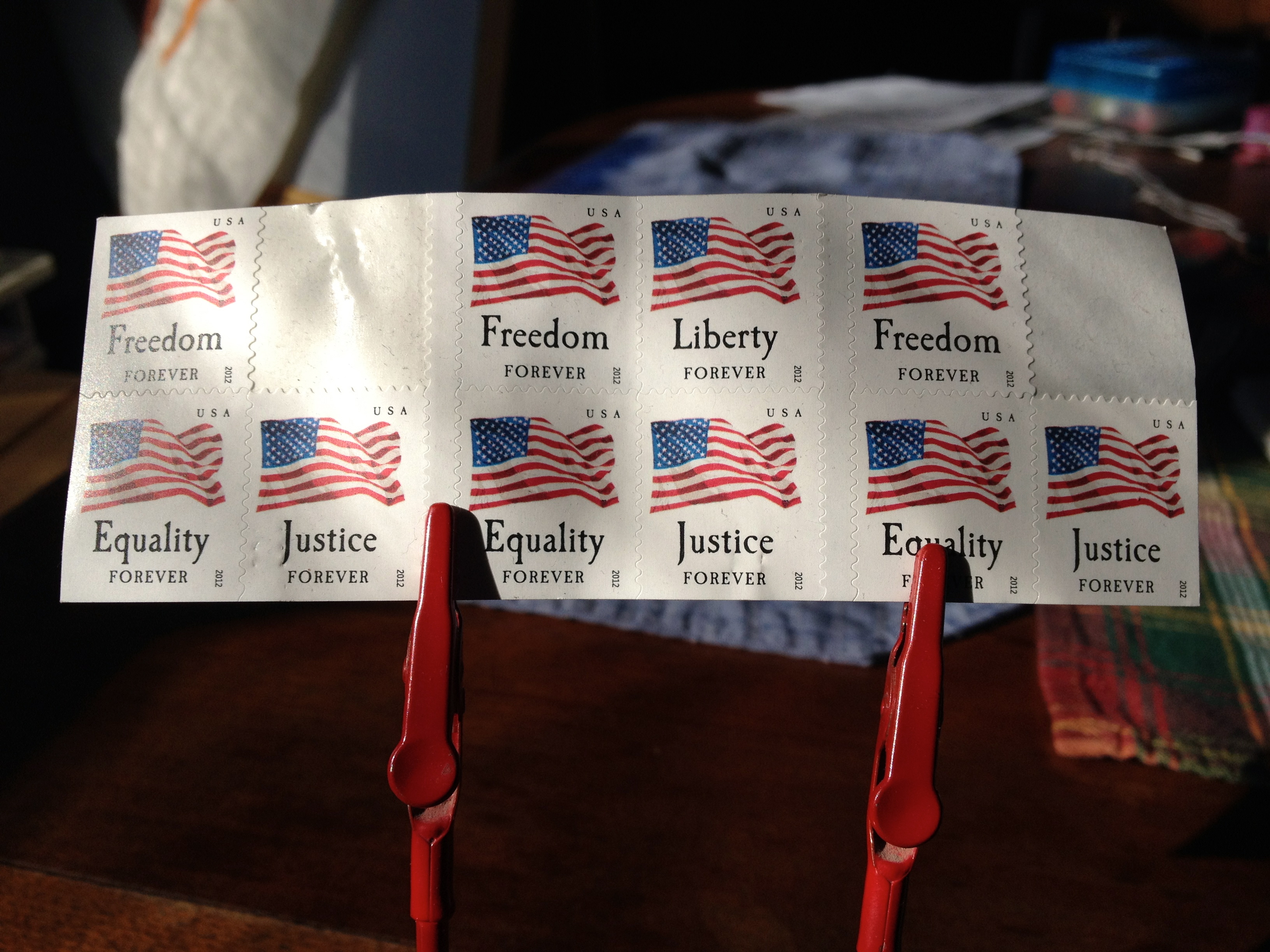
I started pointing out these words to my daughter, who is seven. Just last week, she was running past the table in the entryway where we put our mail. Suddenly, she came to a screeching halt in front of the stamps.
“Look, mommy,” she said. “The stamps are speaking the language of human rights!”
My daughter was exactly right. The stamps said: equality, justice, freedom, liberty. Powerful words that convey basic human rights concepts.
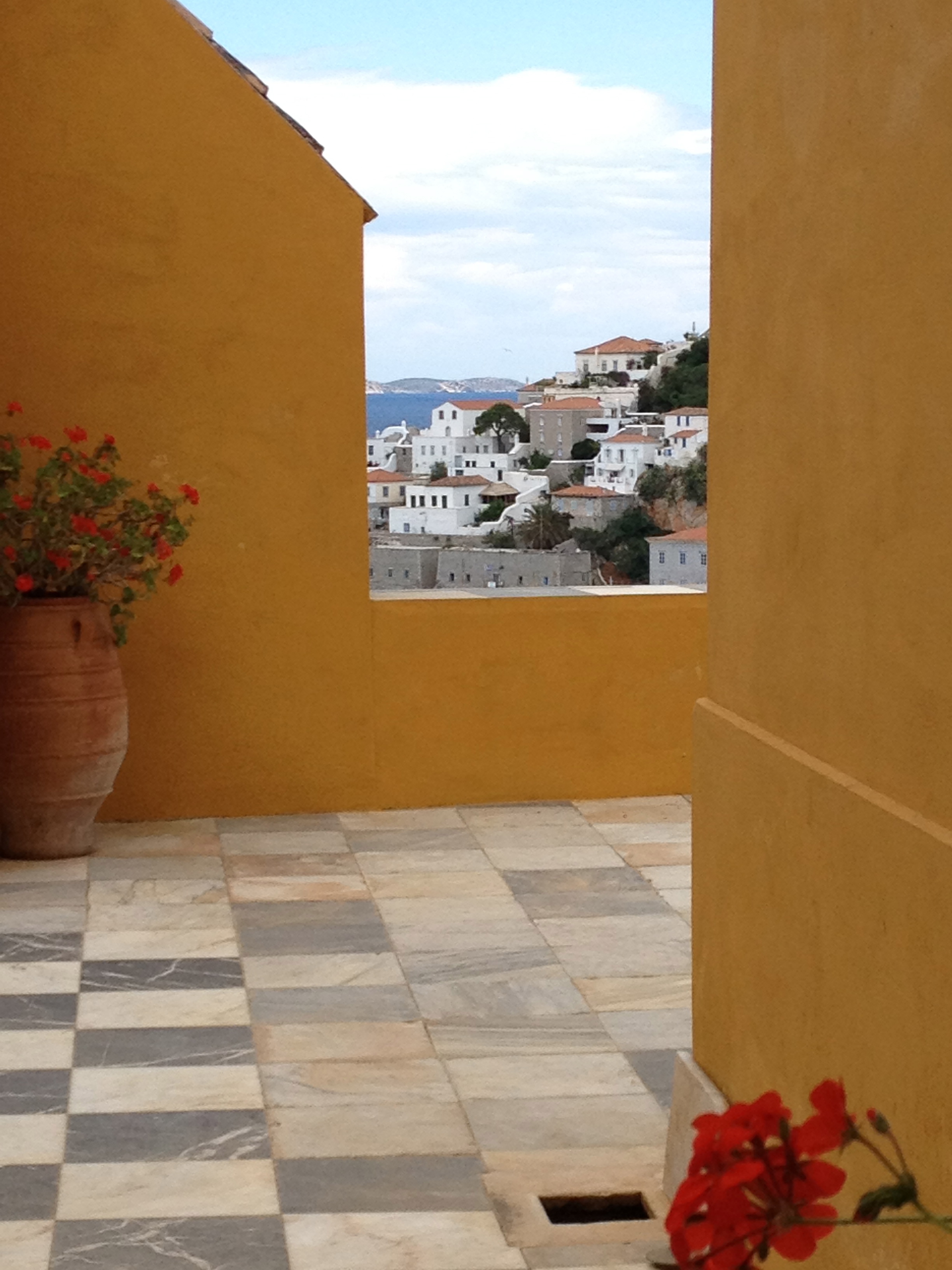
And now for something completely different. While I’ve never participated in The Weekly Photo Challenge before, the theme “Geometry” this week spoke to me. This week’s challenge “is about the shapes and rhythms that make up the geometry of our world.” This week, I have found the normal shapes and rhythms of my world disrupted. In the midst of a major storm in the East and a bitter, divisive election, we buried my grandmother this week. She was 98, so it shouldn’t have been a surprise, but it kind of was.
This week I have found myself almost longing for a bit of predictability, a return to normal patterns and rhythms. A rational ordered life; a practical science made up of points, lines and planes. I find myself searching for theorems that explain life and loss the way geometric formulas allow you to compute volume, surface and area.
Of course, contemporary geometry goes well beyond Euclidean principles, taking us into contemplation of multiple dimensions and space. This also fits with thoughts of life and death. Maybe I’ll think on that later. But in this week of turmoil and endings, I find comfort in what the early Greek mathematiciansEuclid and Archimedes called γεωμετρία. Geometry.
I took this picture recently on the Greek island of Hydra. When I look at it, I can’t help feeling that the early Greek geometers were right: there is some order in the world and we can figure it out. And it is all going to turn out just fine.
For more entries to this week’s challenge: Geometry click here.
This is a letter I wrote home from Kathmandu in January. It gives an interesting perspective on life in Nepal – a splash of local color – so I thought I would share it on the Human Rights Warrior.
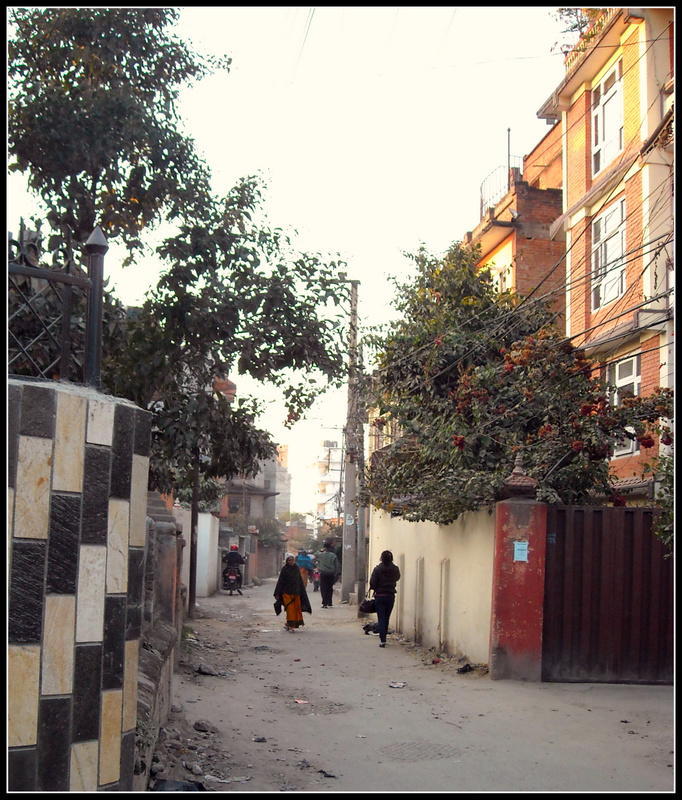
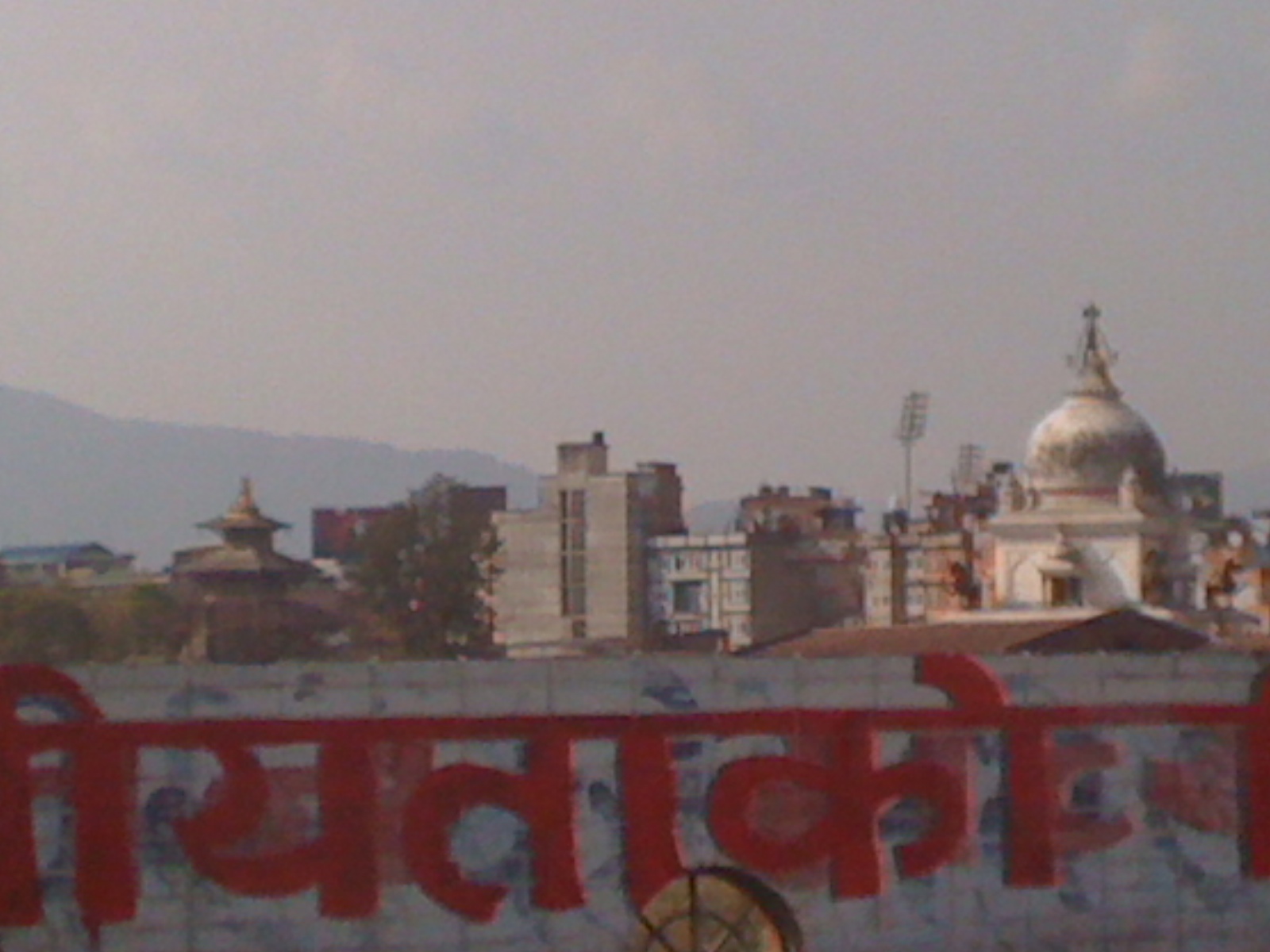
Usually, when I travel for work, I stay in a hotel. It’s different when I travel to Nepal. Here, I stay with a family at their home in Kathmandu. I could never give you directions to their house on the unnamed street in the warren of hundreds of small streets and alleys in the Battisputali neighborhood. But I could show you how to get there.
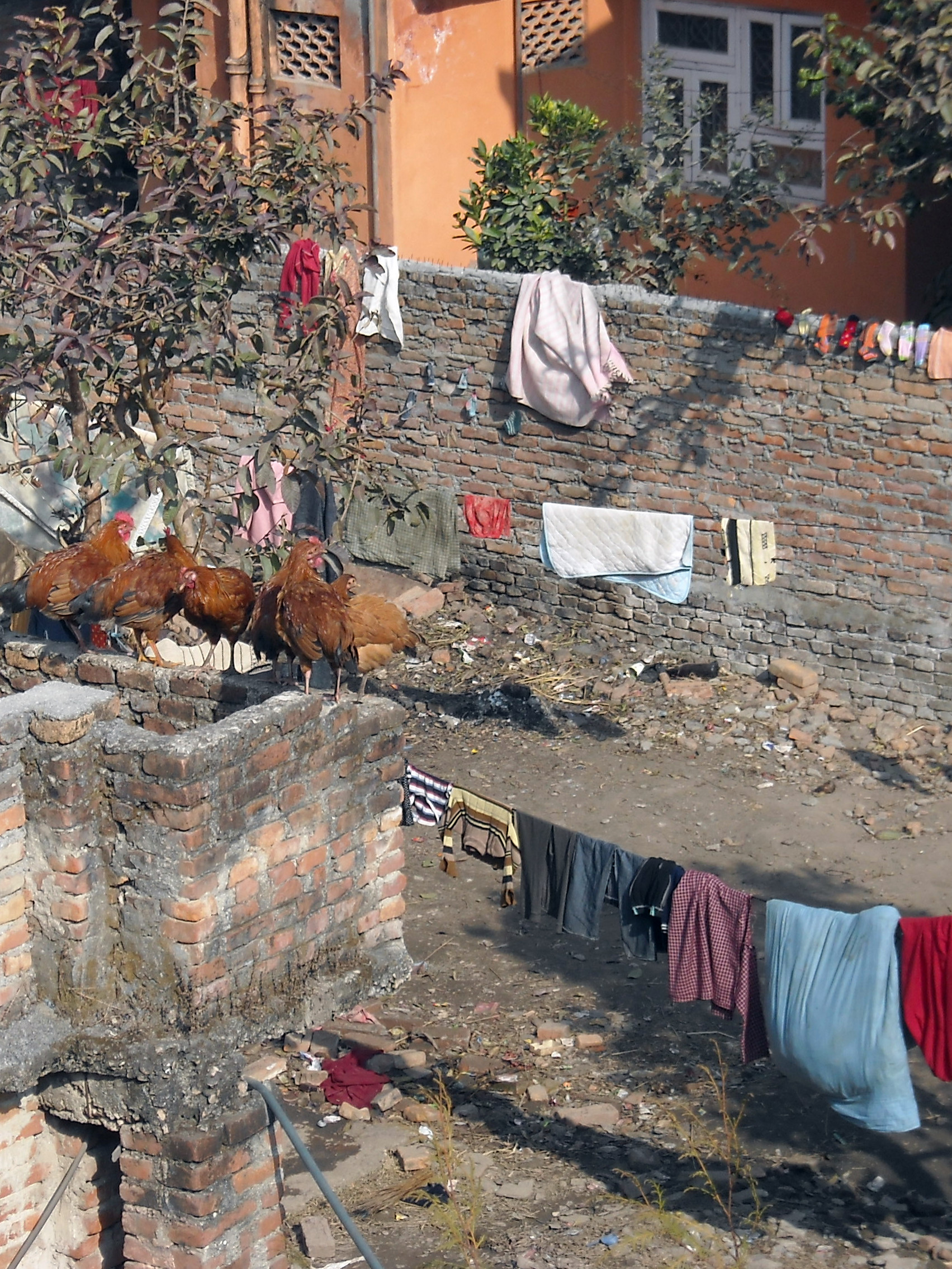
Morning noises. I lie in my bed on the third floor and listen as the house wakes up. Doors of wood and metal creak and slam. Outside, I hear the sounds of chickens, dogs, some kind of hoarse-cawing bird. Women speaking in Nepali in the kitchen building below my window at the back of the house. A man sings off-key at the top of his lungs as water sluices into his bucket from the water tap next door. Someone is whistling loudly, someone else is hawking and spitting. No need to modulate your voice – everyone here rises at dawn. All this before the rooster crows. Tinny Nepali music is playing on a transistor radio. There’s a knock on my door, followed by a cheerful “Namaste!” The tea tray is set on my bedside table. I have the first of many, many cups of tea in bed. This is how the day begins in this home in Kathmandu.
Can you see my alarm clock in this picture?
Some things have changed since I was last here in March. There is a new security gate with a buzzer, as well as a flat screen TV. Crime is a growing concern in some neighborhoods in Kathmandu.
The biggest news is the daughter has married. Like most marriages in Nepal (but unlike her parents, who made a love match), this one was arranged. Her new husband is in the Army, so the wedding procession was especially grand with a military band and an antique Nepali horse-drawn carriage. Someone told me that the only horses in Nepal are in the Army cavalry, so the only people who know how to ride are in the Army. The polo grounds in the park in central Kathmandu are, therefore, de facto used only by the cavalry. The daughter is 23 and has just finished university. Her mother thought maybe she should go to graduate school first, but she was ready to get married. Her green wedding garland, stitched in red and covered with spangles, is on the wall on the stairway to my room. It has been framed, with a wedding picture in the middle. The wedding couple wore their garlands during the three days of ceremonies. She first met her future husband about two months before the wedding. They come over for dinner and I meet her new husband. She seems happy.
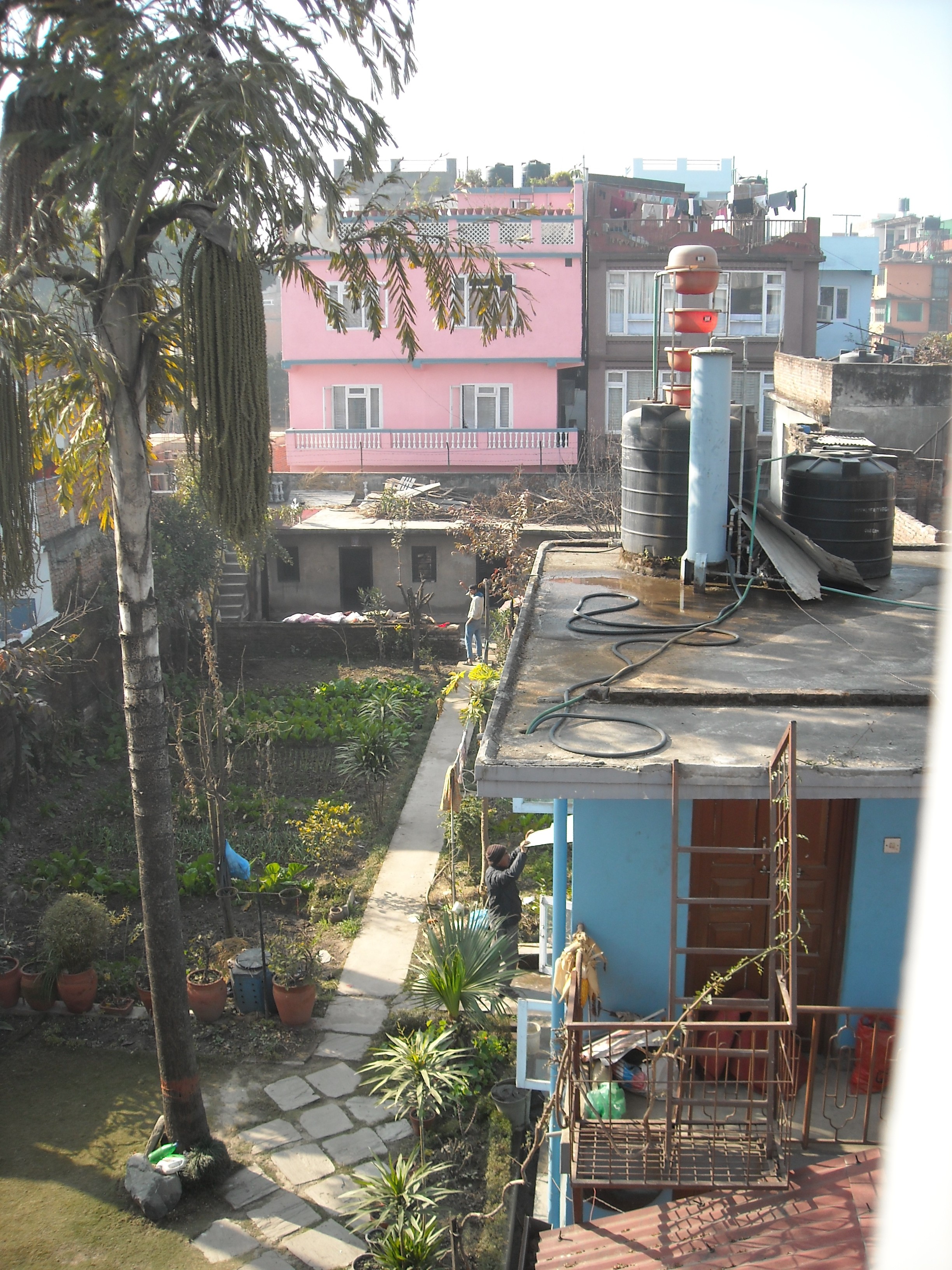
The daughter has now gone to live with her husband’s family. The family I stay with also has two adult sons who are close to my own age. They live here with their parents and their own families. The oldest son just finished building a big, new house in front of the family home. The younger son and his family live in the parents’ house, which he will inherit. Property in Kathmandu is expensive, so it is better to divide what is already in the family. There is a driveway and small courtyard in the front. In the back is a kitchen garden, flowers and fruit trees. It is a small green oasis in a dirty, dusty city.
Niches in the courtyard wall are home to animal sculptures
Three grandchildren live here, too. In the big new house, there is a grandson who is in 12th grade. His classes in college (upper secondary school) go from 6:30 to 11 am. The granddaughter, like my middle son, is in fourth grade and “running 9” (when she turns 10, she will be “9 complete”). Unlike my son, though, she spends 2 to 4 hours a night doing homework. The Nepali is very rigorous and the examinations are taken seriously. The secondary schools post billboards with pictures of their students and their scores on the national standardized exams. Another change since my last visit – the granddaughter is starting to help her mother and grandmother with cooking and serving meals. She shows me some of her sketches – Krishna and Disney Princesses – and gifts me with a sketch of Minnie Mouse.
Her little brother goes to preschool. He speaks Nepali, but understands English and also Hindi from watching Indian cartoons. Nepalis have an interesting relationship with India. In addition to enjoying Indian serials and Bollywood movies, they take the short flight to India if they need a vacation or an operation. Yet they set their clocks 15 minutes off Indian time so they don’t have to be on the same time zone as their much larger neighbor.
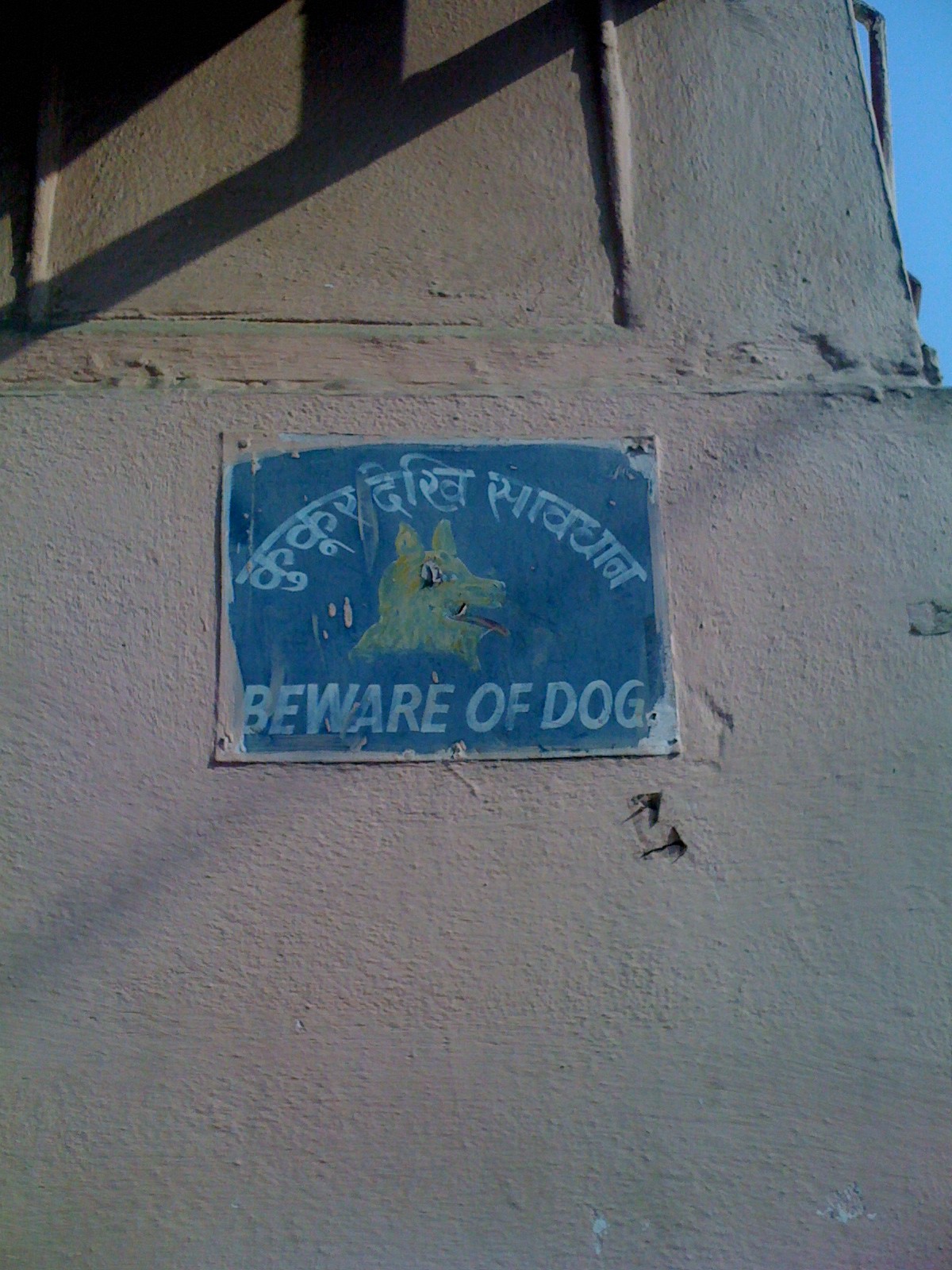
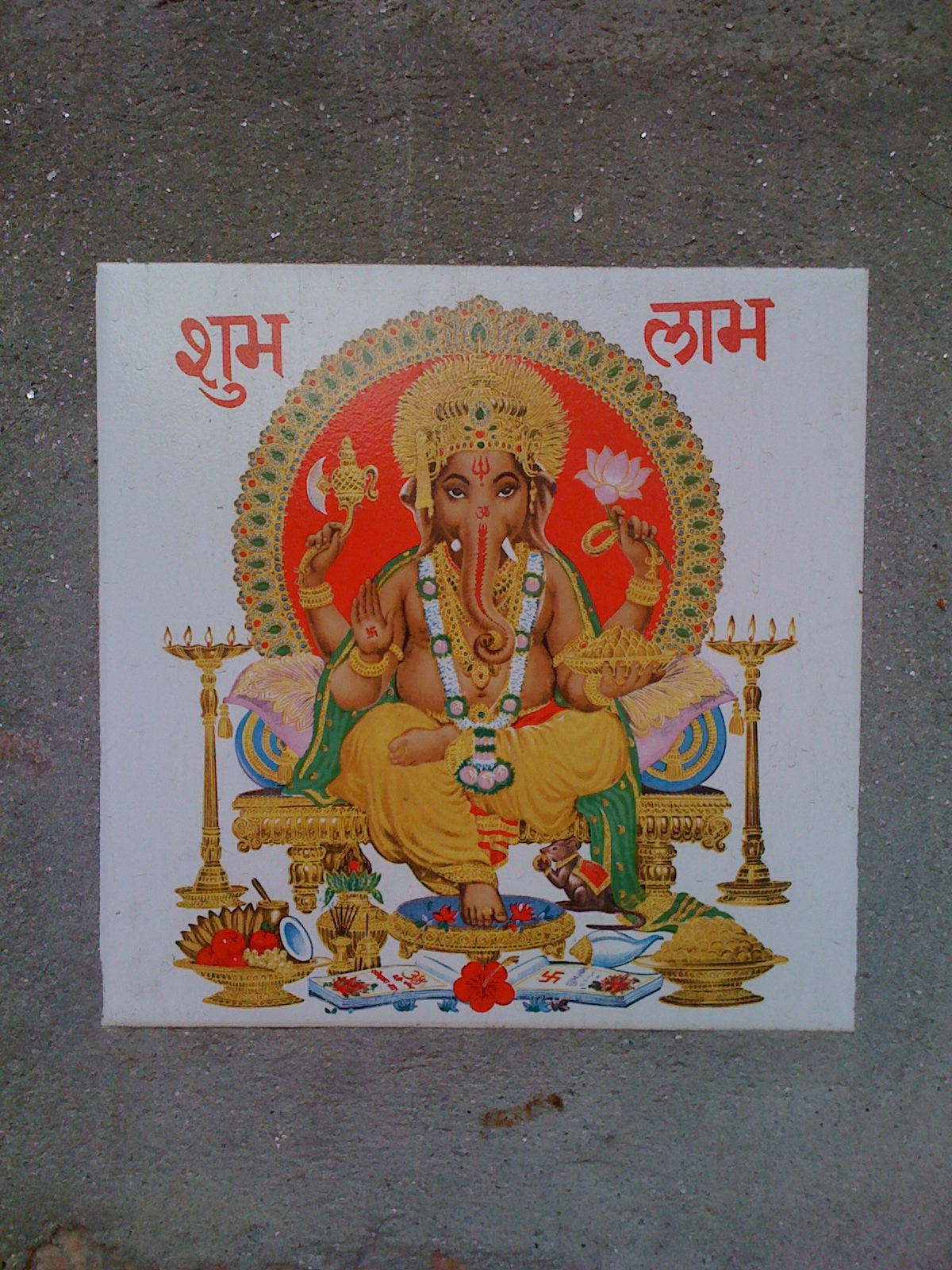
Image from a compound wall in the neighborhood.
There are others who live in this household, helping with the household chores, meal preparation, laundry, washing the cars, minding the kids. There are eight people employed on this compound by my count, but there could be more or less. People come and go in a constant swirl of activity.
The water in the house is city water, but the water for drinking and cooking is delivered by tanker truck and pumped into the polytank on top of the kitchen building. It runs through a filtration system of three plastic basins – one with pebbles, one with sand and one with charcoal.
View of the kitchen garden and the water filtration system on the kitchen roof.
After a sunny day, there will be hot water because the water for showers is heated by solar panels. As your plane makes the approach to land in Kathmandu, you can see the sun winking off the solar panels on every roof. If the day has been overcast, though, you are out of luck and have to ask for someone to bring up a bucket of hot water for bathing.
The shortage of electricity in Nepal has resulted in load sharing in Kathmandu. Each district has electricity for 4-5 hours at a time, usually twice a day. The schedule changes every day, so you may have power from 4-8 am and 7-11 pm one day but 10 am- 1 pm and 1 – 4 am the next. The week’s schedule is on a government website somewhere, but I never know what it is. Twice already during my stay, a fluorescent light in my room has buzzed to light in the middle of the night. Our house has a backup battery, but that means that there are only lights in 4 rooms in the house. Supposedly, there are hydro-electric plants being built with the help of international community. Once these are completed, Kathmandu will have more regular electricity. Hopefully.
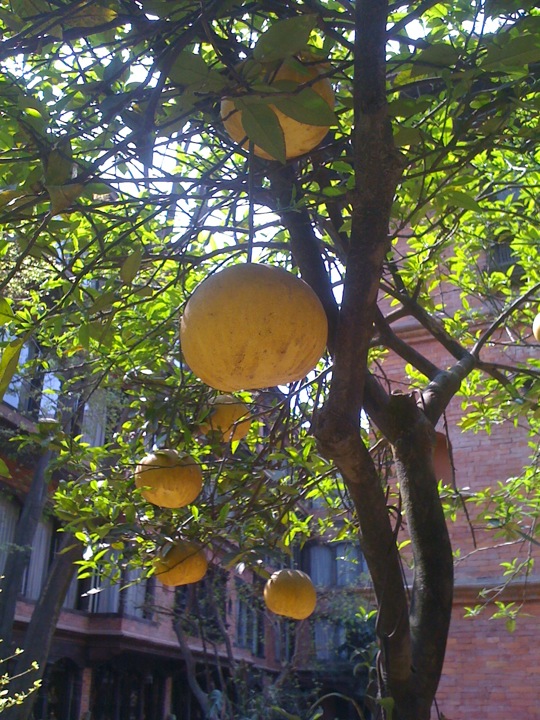
The power situation makes cooking difficult, but the women of the house, who share the cooking duties, somehow manage. For Nepalis, a typical meal involves dal (lentil “soup”), bhat (rice) and tarkari (vegetable curry). We usually also have at least two kinds of tarkari and sag (greens), as well as aloo (potatoes, usually fried). Often, there is also chicken but served on the side. Like my own family, this family has both vegetarians and meat-lovers in residence. I have never eaten so well. For dinner, I eat a healthy dal seasoned with turmeric and ginger that is served to women after childbirth. Punctuated by bright green scallions float, it contains fried chickpea lentils that give it a surprising crunch. At breakfast, I eat papaya from the tree in the backyard. I see grapefruits the size of my head growing there, too.
Here in Nepal, people often greet each other by asking, “Bhaat khanu bhayo?” Literally, this means, “Have you eaten rice?” but in practice it means “Have you had your meal?” Babies eat rice as their first solid food during their first rice feeding ceremony at age 5 months for girls, 6 for boys. They will eat rice just about every day of their lives.
It is winter, so the days are short in the Kathmandu Valley. Offices and schools are on winter hours, opening a little later – 10:30 instead of 10 – and closing a little earlier so people can be home by dark. There is not much nightlife in Kathmandu. During the day, if there is sun, it warms up nicely but at night it is cold. I sleep under a cotton comforter as thick as a mattress. Buildings are not insulated and floors are often marble or tile. I notice that people working in offices and stores are often wearing their coats.
Traffic is a huge problem in Kathmandu. The population grew during the conflict as internally displaced persons fled the Maoists in the countryside. Now the Maoists are in a power-sharing coalition government. The violence has ended but the coalition government is gridlocked. Nepalis have been waiting three years for a new constitution. In the newspaper today, the government promises a completion of the process within the next four months but people are skeptical. When the committee drafting the constitution gets paid by the month, where is the incentive to finish the job?
The Kathmandu population has continued to grow due to the country’s high unemployment. People come to the capital looking for work. There are now 3 million people living in the Kathmandu valley, driving too many cars and motorcycles on streets that were designed for oxcarts. The air is polluted and many people wear masks over their lower faces. Many Nepalis have gone abroad to study in India, the UK or the US or work in Malaysia and the Middle East. Every Nepali I meet has a relative somewhere in the diaspora.
Right now, in January of 2012, there is a scarcity of petrol in Nepal. I see long queues for gas and hear stories of people waiting 12-14 hours a day and still not getting to the front of the line. The government recently hiked the price of petroleum, resulting in student protests. The protesters, who are members of different political parties, called a nationwide bandh for today. Bandh, the Nepali word for “closed”, is a form of protest requiring the closing of markets and schools. It was a Maoist tactic during the conflict. Now they are in the government, but the practice continues. The headline in one newspaper is “Maoists reap the bandhs they sowed.”
No driving is allowed today. The Nepali Police, as well as the Armed Forces Police, are out in full riot gear today, but the bandh is enforced by the protesters themselves. It is strange to walk in the middle of the street, with no cars and motorcycles. There is a holiday mood, more so than yesterday – an actual public holiday. People mill around, chat, play badminton in the street. Most people support the protesters and their criticism of the government for the rising prices.
When I get back to the house, my friend waves from the second floor balcony. When we arrived last week, she was the one who opened the door and said, “Welcome home!”
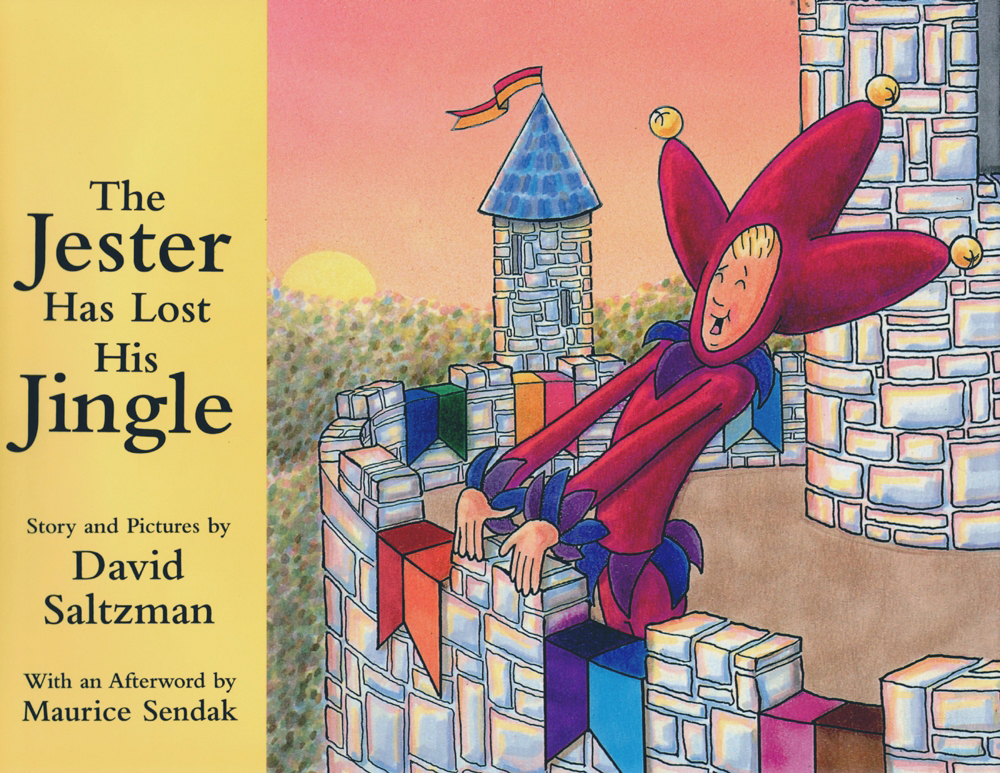
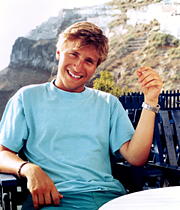
For his senior project, my talented college friend Dave Saltzman wrote and illustrated a children’s book. He did this during a time when he was being treated for cancer. Dave was diagnosed with Non-Hodgkin’s lymphoma during the fall of our senior year; he died a year and a half later, 11 days short of his 23rd birthday. Somehow, through it all, he managed to remain not just upbeat, but JOYFUL. He poured his energy, boundless even when his body was fighting cancer, into this book. The story didn’t really grab me – it seemed too facile – but the intricately detailed, jewel-toned illustrations certainly did. Later, I realized that Dave was hoping that other kids with cancer would read this story and feel hope. But at the time, it just never occurred to me that Dave would actually die.
I remember walking through the gallery at Dave’s senior art show, where the pages of his book were framed and displayed. The colorful illustrations seemed to refract off the white walls of the gallery, sparkling like an indoor rainbow. They were the sunlight of a bright young life, reflected through the jewel-toned pages of a children’s book.
Dave’s book The Jester Has Lost His Jinglewas later published with an afterword by Maurice Sendak. The two met only briefly, when Sendak came to Yale to give a presentation. Dave hung around afterwards to get his autograph. He told me about it later, but another friend, Jackie, was there. She described the meeting like this: “The two spoke and laughed and I was just thrilled to be in the presence of two such delightful and talented souls. I’ve long been a huge fan of Sendak’s work, but in my mind Dave always understood Sendak best.”
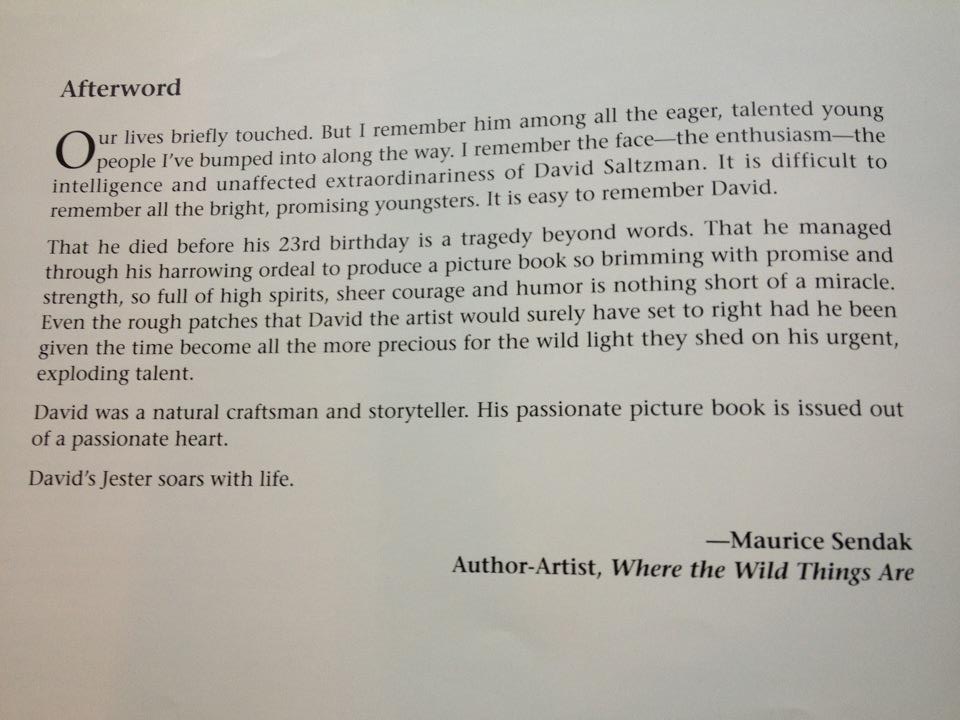
As important as Where The Wild Things Are was to my childhood – so important that it was one of the few books I brought to with me to college – Maurice Sendak was most important to me because of these words:
Afterword
Our lives briefly touched. But I remember him among all the eager,talented young people I’ve bumped into along the way. I remember the face – the enthusiasm- the intelligence and unaffected extraordinariness of David Salzman. It is difficult to remember all the bright, promising youngsters. It is easy to remember David.
That he died before his 23rd birthday is a tragedy beyond words. That he managed during his harrowing ordeal to produce a picture book so brimming with promise and strength, so full of high spirits, sheer courage and humor is nothing short of a miracle. Even the rough patches that David the artist would surely have set right had he been given the time become all the more precious for the wild light they shed on his urgent, exploding talent.
David was a natural craftsman and storyteller. His passionate picture book is issued out of a passionate heart.
David’s Jester soars with life.
– Maurice Sendak
Author-Artist, Where The Wild Things Are
When the news of Sendak’s death was announced this week, Deb (another college friend) had this to say, “I’ve been wondering what wonderful, amazing and wacko things we would have read in Dave’s obituary, had he reached the ripe old age that Sendak did.”
I’d like to think that these two talents are now together, not as the old and the young or the fame secured and the potential lost. I picture them both as equals, working together in the sunlight and collaborating on wonderful, amazing, wacko new projects.
I had a bad feeling when Adam Yauch was a no-show for the Beastie Boys‘ induction into the Rock n’ Roll Hall o’ Fame in April. So, while I was not surprised, I was saddened to learn of his death from cancer at the age of 47.
The Beastie Boys were not my favorite band growing up. (That would be The Police.) They had an impact on my generation (X), however, that is worth acknowledging. Only a few years older than me, the Beasties burst onto the national scene when I was still in high school. As girl from the suburbs of a small Southern city, whose first album was REO Speedwagon’s Hi Infidelity and first concert was the J. Geils Band (with Hall & Oates!), I found the Beastie Boys to be something of a breath of fresh air. For me, they symbolized New York and the urban, East Coast, post-racial America that I had yet to experience.
I did see the Beastie Boys once, when they toured with Madonna in 1985 on the Virgin Tour, but that was purely by accident since I was going for Madonna and didn’t even know who was opening. Quite honestly, I couldn’t really tell Beastie Boys apart. They all had dark hair and, what with the VW gold chains and sunglasses and baseball caps and hats and all, they weren’t that distinguishable. They were named either “Mike” or “Adam”, so take your pick. Sure, they had nicknames – “MCA” was Adam Yauch and “Ad-Rock” was Adam Horovitz – but unlike Sting and The Police, it didn’t really matter too much to me who was who in the Beastie Boys.
“Enough of this hip hop! Bring on the Material Girl!” That’s what I mostly remember thinking during their set.
License to Ill came out in 1986. I didn’t own it on cassette or LP but plenty of people at my college must have, because (You Gotta) Fight for Your Right (to Party) was de rigueur for dorm room parties. Along with UB40’s Red, Red Wine and Bon Jovi’s Livin’ on aPrayer, it was the soundtrack for my early college social life.I can still close my eyes and flashback through the entire MTV video, complete with the nerds saying, “We’ll invite all our friends and have soda and pie!” and “I hope no bad people come!” The Beasties’ exuberant “KICK IT!” still echoes in my head 25 years later.
Never what you would call a fan, I pretty much lost interest in the Beastie Boys after License to Ill. Frankly, pulling stunts like having girls dancing around in cages at their concerts didn’t help much.
I came back to the Beasties in the mid-1990s. But not really because of their music.
Beastie Boy Adam Yauch (MCA a.k.a. Nathanial Hörnblowér) had become a human rights activist. He started a non-profit called the Milarepa Fund in 1994 to support Tibetan independence from China. Royalties from the Beastie Boys’ 1994 songs Shambala and Bodhisattva Vow (from the Ill Communication album) were dedicated to the Milarepa Fund and the fight for freedom for Tibet. They sponsored an information tent on Tibetan human rights at Lollapalooza and performed concerts to raise money for the cause. In 1996, Yauch organized the Tibetan Freedom Concert. The largest benefit concert in the US since 1985’s Live Aid, it attracted 100,000 people and raise more than $800,000. Additional Tibetan Freedom Concerts were held on four continents in 1999.
It turns out that the Beastie Boys had principles and they were not afraid to use them. Shortly after the bombings at US Embassies in Kenya and Tanzania, Adam Yauch used his time at the microphone at the 1998 MTV Music Awards ceremony to talk about stereotyping Muslims as terrorists. “It’s kind of a rare opportunity that we get to speak to this many people at once,” he said. “So, if you guys will forgive me I just want to speak my mind for a while.” He went on – prophetically, it seems now – to speak about the U.S. government’s military aggression in the Middle East and the growing climate of racism towards Muslims and Arabic people. “The United States has to start respecting people from the Middle East in order to find a solution to the problem that’s been building up over many years.
Another issue that the Beastie Boys took on directly was the rights of women. They’ve been rapping against domestic violence (“Why you got to treat your girl like that?”) at least since Paul’s Boutique. When it was announced that Adam Yauch had died, my friends on Twitter lit up the night with lyrics like “I’m gonna say a little something that’s long overdue/The disrespect of women has got to be through/ To all our mothers and our sisters and our wives and friends/ I want to offer my love and respect to the end” (from Sure Shot). Song For The Man was written after Adam Horovitz observed the overt sexism – and blatant harassment of a woman – by a couple of guys on a train. If more men spoke out like the Beasties, the world would be a better place.
At the 1999 MTV Video Music Awards, when the Beastie Boys won the award for Best Hip Hop Video for Intergalactic, Adam Horovitz spoke about the problem of sexual assaults and rapes at Woodstock 99. He made the pitch for bands and concert venues to provide more security to better protect women.
The Beastie Boys have continued their political activism into the 2000s. After the September 11, 2001 attacks, for example, they organized and headlined the New Yorkers Against Violence Concert in October 2001. The concert proceeds went to the New York Women’s Foundation Disaster Relief Fund and the New York Association for New Americans.
Adam Yauch with his daughter at an Amnesty International Event
I’ve been thinking about the life of Adam Yauch, which ended far too soon, and have come to realize that the Beastie Boys not only helped define the formative experiences of my generation but they are also representative of many of the traits of Generation X. Wikipedia has this to say about us: “When compared with previous generations, Generation X represents a more heterogeneous generation, exhibiting great variety of diversity in such aspects as race, class, religion, ethnicity, and sexual orientation.” The Beasties, in freely crossing music boundaries between punk and hip hop and alternative, certainly are illustrative of this heterogeneity and diversity.
But I think that another of our generational traits is the ability to change. (I love this quote from Wikipedia: “Change is more the rule for the people of Generation X than the exception.[citation needed]”) The Beastie Boys were no different from many of us who were, in our youth, racist, sexist, and/or homophobic dorks. America was just a less tolerant place when we were growing up in the 70s and 80s. Not that that is an excuse for the many of us who stayed silent and went along with the crowd rather than speaking up for what was right.
Like the Beasties, however, most of us have grown up and figured out that our actions – and our inactions -have consequences. As Adam Yauch once pointed out, “Every one of us affects the world constantly through our actions.” To not take advantage of second chances would be a mistake. Like Adam Yauch and the Beasties, we should take advantage of every opportunity to take action for good.
Most of the Gen Xers I know will, like the Beastie Boys, freely acknowledge our past immaturity, our arrogance and stupidity, and accept it without embarassment. Most of us embrace change as the only way forward, even though it sometimes means also accepting criticism. Adam Horovitz has a great quote that pretty much sums up this point:
“… (Y)ou might say that the Beastie Boy ‘Fight For Your Right to Party’ guy is a hypocrite. Well, maybe; but in this f***ed up world all you can hope for is change, and I’d rather be a hypocrite to you than a zombie forever.”
That’s a pretty good lesson for anyone, regardless of what generation you come from.
The other thing that I think that Adam Yauch and the Beasties symbolize for my generation is the ability to age with nimble good humor and some small modicum of coolness. To acknowledge we are aging, to joke about it, but to still be self-confident enough to hang with the young ‘uns – this I see as a generational shift. (Nothing, by the way, in the definition of Generation X on Wikipedia mentions this particular trait.) Maybe this is just another aspect of our ability to change, but the first minute or so of this video of the Beasties playing POW and Shambala live will give you an idea of what I’m talking about:
I’m sorry that Adam Yauch, a.k.a.MCA, a.k.a. Nathaniel Hornblower, won’t be continuing this Gen X journey with the rest of us. I hope he knows that he left a legacy here on Earth that is bigger than his music. Wherever his soul resides now, I hope that Adam Yauch is still kickin’ it.
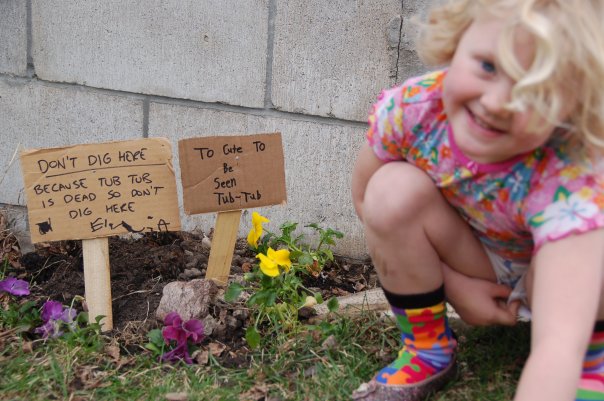
The recent demise of Fat Stanley was met with far fewer tears than that of Kevin Bacon (the gerbil) and definitely far less anguish than that of Tub-Tub, our first dearly departed rodent pet. It did however, necessitate a discussion about death with my three children. The easiest answer to the question “Where is Stanley now?” would have been to describe a dwarf hamster heaven, where Stanley roams freely among a vast surfeit of yogurt treats and well-oiled wheels. While it was somewhat tempting to give them an easy and soothing answer, I can not in good conscience pitch that pablum to my kids. You see, in my line of work, I talk to people about death all the time.
As a human rights lawyer, my job is to document human rights abuses. So there have been many days over the course of my career when I have asked people to describe to me in very precise detail how someone they loved died. In one week alone in 2007, I took statements from more than 45 Liberian refugees at Buduburam Refugee Settlement in Ghana for Liberia’s Truth and Reconciliation Commission. The very first person I interviewed at Buduburam was a teacher. The teacher was wearing a pink polo shirt that was remarkably clean and crisp, given the hot, dusty conditions on the camp. He had come into the Refugee Welfare Office, where we were piloting the interview process, to watch a football match on the TV. When I asked if he wanted to give a statement, he said, “Sure. Why not?”
It was late May and the equatorial sun had beat down relentlessly all day long. As we went into one of the private offices to do the interview, however, a pleasantly cool late afternoon breeze was coming through the barred window. I discovered later that the location of the camp was very close to the Prime Meridian, as well as the notional center of the world – 0°, 0°. The sun sets early and fast near the equator. As we talked, the shafts of light from the setting sun were low and long, glinting off the gold in his round, wire-framed glasses.
I had an interview protocol to follow and certain biographical data to collect. We talked about what he did in Liberia, where he had lived. It was going well. We established a rapport, buzzing through the facts of his life. I’ve done many similar interviews with the survivors of human rights abuses. You know immediately when a question is going to cause someone to break down. But the trigger questions are not always the obvious ones and usually you can only tell as you ask the question. As you see the pain in their eyes, the anguish in the lines of their mouth. The moment I asked the teacher if he had ever been married, I knew. I knew we would both soon be crying.
People who have experienced trauma and loss often think it is behind them, that they have put it in the past. But of course, that is never really possible. The teacher and his fiance were not yet married when the fighting came to Monrovia in July 1990. When Charles Taylor’s NPFL rebels came to their neighborhood, they separated the men from the women. She talked back. He yelled for her to hold her tongue, to just cooperate! He didn’t know if she heard him. The teacher had been herded into the back of a pick-up truck with other young men. It was from that vantage point – above and unable to help – that he saw the rebel hit her with the butt of his rifle. He knocked her to the ground, turned the gun around and shot her. The whole thing happened fast, so fast. Then the truck pulled away.
There was much more to his story. He escaped the rebels eventually, made his way onto a leaky tanker with thousands of other refugees, made it to safety in Ghana. Got a teaching job and lived in a refugee camp for 17 years. But those parts of his story came later, after he had wiped the tears from his glasses. After we took the time to honor the memory of his fiance. To dedicate his statement to her, so that her story would not be lost among all the others in the terrible Liberian civil war.
As a parent, I know there is a natural impulse to try to shield our children from the sad and terrible details of both life and death. I believe each parent has to make his or her own decision about what is best for their children, so I am not presuming to give advice. I do believe in God and the potential of an afterlife, but I have no idea what actually happens after you die. But I know that bad things – terrible things – happen all the time and, as my kids grow into their tweens and teens, I think I would be doing a disservice to them not to be honest about that. And I am absolutely certain that, like the teacher, you carry your loved ones in your heart long after they leave this life. The best thing you can do when you lose someone you love is to keep their memory close and honor them in whatever way you feel is right.
Sometime shortly after my third child was born, I gave up trying to be the perfect parent. I made peace with the fact that the best I can do is try – try as hard as possible – to do my best. I stopped obsessively reading parenting books and desperately seeking “expert” advice on how to do things like talk to my kids about serious issues like death. I started following my own parenting guidestar. For lack of a better way to put it, I started listening to my gut instincts.
So when my 9 year old son asked me to tell him a story from my work, I looked at him silently for a while as I listened to that little voice inside my head. It was telling me that he was ready to hear the story of Victoria.
Victoria was the last refugee I interviewed at Buduburam on that trip in 2007. She was a poised and intelligent young woman who rushed back to the camp from her classes at nursing school in Accra in order to give her statement. We sat outside, away from the buildings on the edge of the camp, face to face with each other on white plastic chairs set on the hard-packed red dirt. Victoria’s mother had died when she was young, so as a child in Liberia she had lived alone with her father. Her story began later than the teacher’s; two civil wars raged in Liberia between 1989 and 2003. She was only 8 or 9 – the same age as my son – when the fighting reached her house.
Her father told her to hide in the bushes by the side of the house while he went out to talk to the rebels. She lay on her belly in the bushes, saw the rebels argue with her father. She watched as they shot him in the head and he fell to the ground, unmoving. The rebels went into the house and took food and anything of value. But they didn’t find Victoria in her hiding place and eventually they lit the house on fire and left. “I didn’t know what to do,” Victoria told me. “My father never moved so I knew he was dead. I just didn’t know what to do next. So I stayed in the bushes, crying, near my father’s body all night.” The next day, as the sun rose, she kissed her father goodbye and went to a neighbor’s house. The neighbor brought Victoria with her to Ghana.
After Victoria told me her story and left for her home, I sat for a long time on that white plastic chair, on the edge of a refugee camp near the latitudinal and longitudinal center of the world. A cool breeze stirred the sweat-damp hair on the back of my neck as the sun sank rapidly. The sunset was brilliant with colors – the muted pink of an impossibly crisp polo shirt, the bright orange of my small son’s hair, the deep purple of a bruise left by a rifle butt.
My son had listened to the story quietly. I hadn’t been sure how he would react, so it was a surprise when he said. “That was interesting. I feel sorry for Victoria. It is sad that all of that happened to her. But she found a way to survive without her dad. The neighbor and other people took care of her. It kind of makes me less afraid of what would happen if you died.”
The kid makes good point. One which I hadn’t thought of before I told him about Victoria. Talking to my kids about death is also talking to them about life and how to live it.
So here’s to you, Fat Stanley.
And to you, Kevin Bacon.
I honor your memory and the time you spent with us.
“Our house was small, and when you grow up with domestic violence in a confined space you learn to gauge, very precisely, the temperature of situations. I knew exactly when the shouting was done and a hand was about to be raised – I also knew exactly when to insert a small body between the fist and her face, a skill no child should ever have to learn.”
He had me at “Tea. Earl Grey. Hot.” In my opinion, his Jean-Luc Picard is the only Star Trek captain worthy of helming the USS Enterprise; Picard makes Kirk and the others look like a pack of braggarts, whiners, and wimps. For more than 20 years, my love for Patrick Stewart has burned strong and bright, “the star to every wandering bark”. A talented Shakespearean actor, Sir Patrick nails every role he plays, from Othello to Shylock to the Seattle Opera director with a crush on Frasier. Then there’s his one-man version of Charles Dickens’ A Christmas Carol. I can’t think of another actor who I would want to see play 40+ characters. And let’s not forget the lecherous caricature of himself that he played inExtras. Good gravy, that made my heart beat faster!
My love for Patrick Stewart is sexless, as chaste and pure as that of the heroine in a Victorian novel. I feel for him what the young X-Men feel for Professor Charles Xavier – admiration, respect, passionate loyalty. It’s a love, I know, not meant to be tested in real life. Yet I can’t help myself.
I’ve never met Patrick Stewart. I know almost nothing of his personal life beyond the fact that he choses to use his fame to support human rights. He’s been a long time supporter of Amnesty International in his native UK. I’ve written recommendation letters for students applying to the internship program he endowed at Amnesty. (None of them ever got the Patrick Stewart Human Rights Scholarship, so I can’t even claim that two-degrees of separation.)
What really took me ’round the bend on Patrick Stewart was his decision five or six years ago to talk about his own experience with growing up with domestic violence.
“I experienced first-hand violence against my mother from an angry and unhappy man who was not able to control his emotions or his hands. Great harm was done by those events – and of course I mean the physical harm, the physical scars that were left, the blood that was spilled, the wounds that were exposed – but there were also other aspects of violence which have a lasting impact physiologically on family members. It is so destructive and tainting.
It’s taken me a long time to be able to speak about what happened. Then, two years ago, around the time of the launch of the Amnesty International campaign to Stop Violence Against Women all that changed. After consultation with my brothers, we all felt that it was time for me to speak out about what had happened in our childhood, and to show people that domestic violence is protected by other peoples’ silence.”
Domestic violence is a worldwide epidemic. It violates the fundamental human rights of women and often results in serious injury or death. Studies show that between one quarter and one half of all women in the world have been abused by intimate partners. Certainly men experience domestic violence as well, but women are victims of violence in approximately 95% of cases of domestic violence. (For sources and more statistics, see StopVAW.org)
It took the human rights community far too long to recognize domestic violence and other gender-based rights as human rights abuses. Because the violence is committed by private actors rather than the government in the context of family life, domestic violence was long considered to be a “private matter”. Fortunately, the international human rights law has progressed and violence against women is now considered a human rights abuse. The government has a responsiblity to prevent violence against women from taking place and to prosecute or punish the perpetrators of the violence. The UN Committee Against Torture has even clarified that violence against women, including domestic violence, can in certain circumstances be defined as torture under the Convention Against Torture.
Implementation of laws that protect women from domestic violence is, of course, the ongoing problem throughout the world.
It is never easy for survivors of human rights abuses to talk about the violence they experienced. It comes at great personal expense and sometimes that expense is just too great for people to overcome. There has been a lot of outrage recently about Rihanna and Chris Brown. I wish Rihanna would become an advocate against domestic violence – photographed holding an Amnesty International placard – but I can’t judge her or the decisions she makes about her life. It does make me think, though, that it is doubly important for male celebrities like Patrick Stewart to use their fame as a platform to raise awareness about violence against women.
I defy you to watch this video and tell my love of Patrick Stewart is wrong.
What will it take to end domestic violence worldwide? It will take more than Sir Patrick Stewart. As he says in this Amnesty video, it will take sustained government action to ensure that domestic violence is treated as a public health issue rather than a private matter. But Patrick Stewart’s decision to use his celebrity to speak out about the domestic violence experienced in his childhood home puts us one step farther along that road.
“Violence against women diminishes us all. If you fail to raise your hand in protest, then you make yourself part of the problem.”

 It’s pretty rare that a national debate mirrors so exactly one that is raging within my own family circle. But in the wake of the recent tragedy at Sandy Hook Elementary – and subsequent comments by National Rifle Association CEO Wayne LaPierre blaming gun violence on video game makers – a public discussion has been reopened about violent video games and their impact on society. It is the same discussion that has been going on, on a micro level, all fall in our household. Although, frankly, “discussion” is too mild a verb to capture the emotions surrounding the debate between the parents and the teenager about whether he can have CALL OF DUTY: Black Ops II.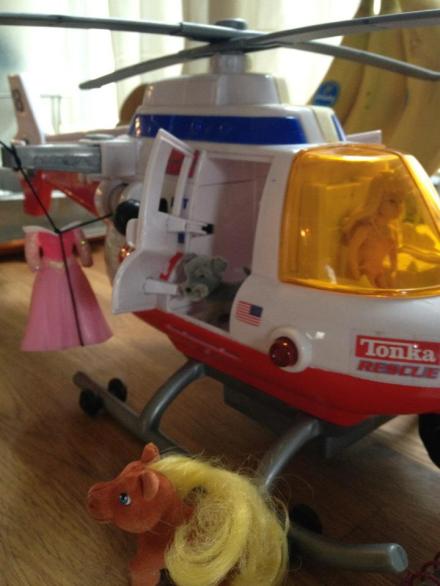











 The Human Rights Warrior

You must be logged in to post a comment.