Haikus With My Daughter II

DSC_0405

“I wrote a poem about you today,” I said.  “Well, just a haiku.  But actually, I wrote two.”

This caught my 8 year-old daughter’s attention.  She put down her Monster High doll, the one she just bought with money hard-earned from chores like scooping the cat’s litterbox.

“What’s a haiku?” she asked.  Apparently, they hadn’t yet covered this in her third grade class.

“It’s a kind of short Japanese poem.  It has three lines, with a total of only seventeen syllables.  The first line is five syllables, the second is seven and the third is five.”

As she read my haikus, I said,  “I wrote about you, but  usually haikus are about nature.”

“Like about animals?”

“Sure.  ‘Animals’ is three syllables, so you need two more for the first line.  Then seven, then five.”

“Syllables, like beats in music?”

“Exactly.”

She didn’t even pause to think.  She launched right in.

“Animals live in …”

“You’re doing it!  You’re writing your very own haiku!  Now seven syllables. Where do animals live?”

“Jungle, forest and…”   She counted out the syllables on the five fingers of her right hand.   Then two more on the fingers of her left hand.  She had painted her fingernails in an alternating pattern with red and blue nail polish.  Red, blue, red, blue, red, blue, red, blue, red blue.

“City? Ocean?”

“That’s great!  Which one?  Ocean or city?”

“Nature everywhere.”

“You did it!  You wrote your own haiku!”

She smiled – a small, proud smile – and then she picked up her doll again.

“That was really good.  Let me write it down.   Can you say it again?”

She shrugged, engrossed in brushing the doll’s hair.

“I forgot it already,” she said.

“But I’m your mom and I will always remember,”  I thought.

Haiku by Eliza

Animals live in

Jungle, forest and city.    (or ocean)

Nature around us!

This post, Haikus With My Daughter , Thanksgiving and Haikus With My Daughter III: Girls Rights are in response to the WordPress Weekly Writing Challenge.

Haikus With My Daughter

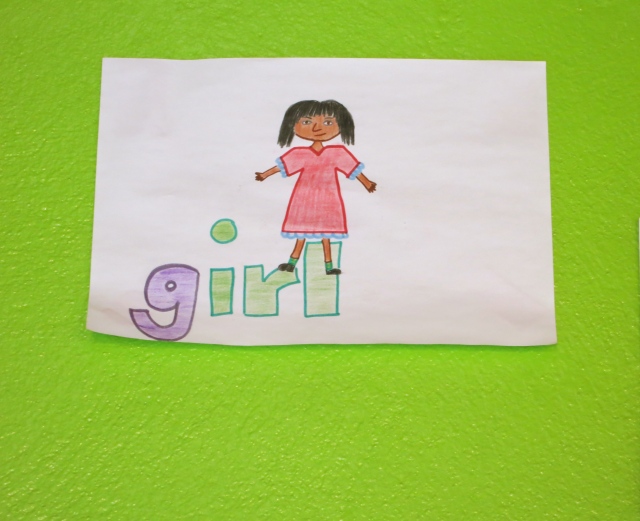
IMG_0449I haven’t written a poem since I was in elementary school.

But today I wrote tw0- not one, but TWO! – haikus in response to the WordPress Weekly Writing Challenge.

My eight year old daughter was the inspiration for the first.

It doesn't have to be perfect to be sussesful.
It doesn’t have to be perfect to be sussesful.

Marginalia

Cleaning her backpack,

I found …my daughter’s wise words,

Scrawled  in the  margins.

She was also the inspiration for the second haiku of the day:

IMG_1770

To My Daughter, Who Is 8

Eight years old, full of

Joy and bold discovery.

Stay this kind and strong!


Next up – my daughter writes her very first haiku!  Haikus With My Daughter II

Universal Children’s Day Photo Essay

Nepal
Children in Nepal

Today, November 20,  is Universal Children’s Day!  In 1954, the United Nations General Assembly established Universal Children’s Day to encourage all countries to take action to actively promote the welfare of the world’s children.   On November 20, 1959 the United Nations adopted the Declaration of the Rights of the Child.

Thirty years later, on November 20, 1989, the United Nations adopted the Convention on the Rights of the Child.  The Convention on the Rights of the Child is the first legally binding international instrument to incorporate the full range of human rightscivil, cultural, economic, political and social rights.  The Convention on the Rights of the Child has been acceded to or ratified by 193 countries –  more countries than any other international treaty.

One of the objectives of Universal Children’s Day is to raise awareness about the Convention on the Rights of the Child.  The Convention sets out the basic human rights that every child should have to develop to their fullest human potential, regardless of  where they live in the world. The four core principles of the Convention are non-discrimination; promoting the best interests of the child; the right to life, survival and development; and respect for the views of the child.  The Conventionalso protects children’s rights by setting standards that governments should provide in the areas of health care, education, and legal, civil and social services.

In honor of Universal Children’s Day 2013, I’m sharing a few of the rights guaranteed by the Convention along with photos of children I have taken around the world.

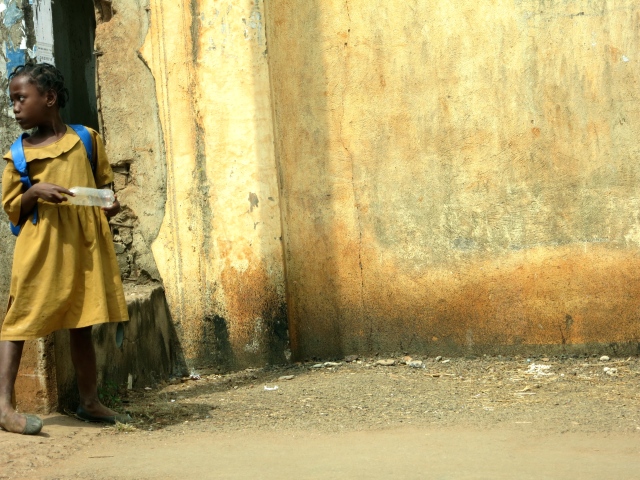
Article 1: “A child means every human being below the age of 18 years.”

Yaounde, Cameroun
A child in Cameroon

Article 2:  Children must be treated “ … without discrimination of any kind, irrespective of … race, colour, sex, language, religion, political or other opinion, national, ethnic or social origin, property, disability, birth or other status.” 

A child in Zanzibar

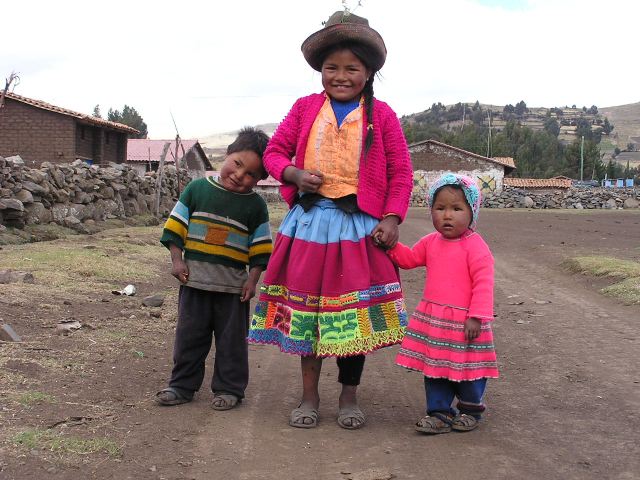
Article 3: “In all actions concerning children … the best interests of the child shall be a primary consideration.”

Peru
Children in Peru

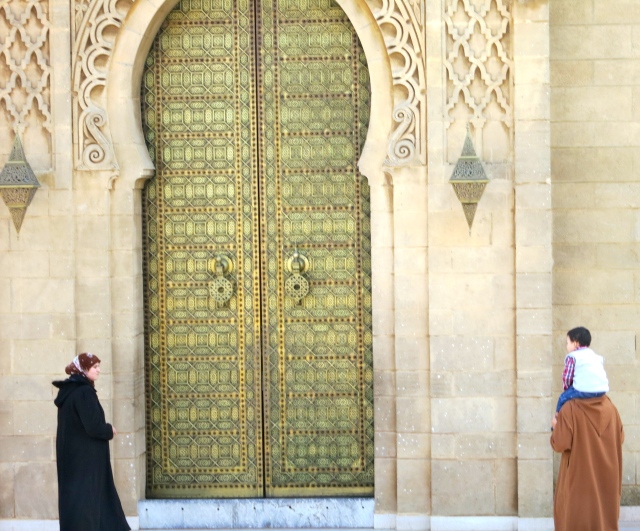
Articles 5 & 18: State signatories must “… respect the … rights and duties of parents … [and recognize that] both parents have common responsibilities for the upbringing … of the child.”

A family in Morocco
A family in Morocco

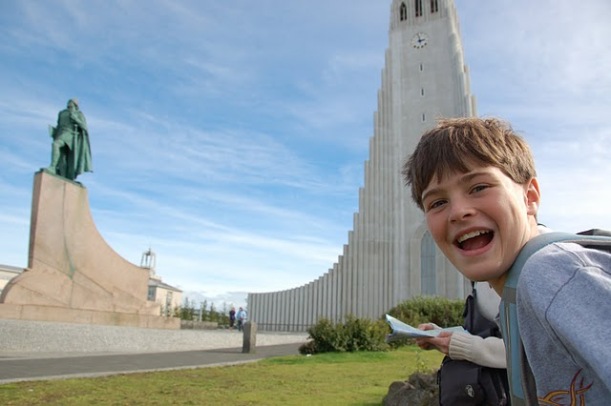
Articles 12-14: “… the child who is capable of forming his or her own views [has] the right to express those views [and] the right to freedom of … thought, conscience and religion.”

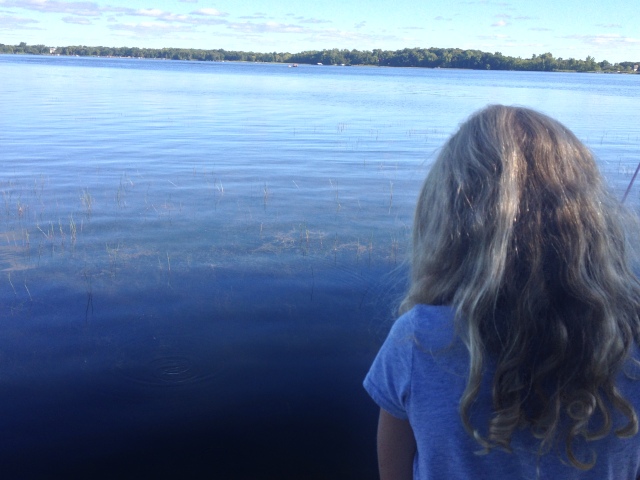
A child in Iceland

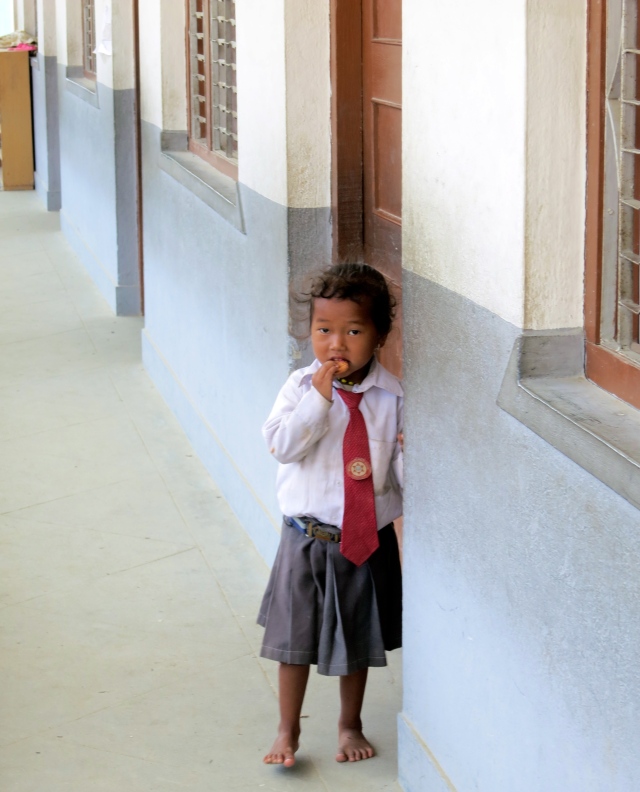
Article 19: Children must be protected from “… injury or abuse … including sexual abuse, while in the care of parents … or any other person….”

A child in Nepal
A child in Nepal

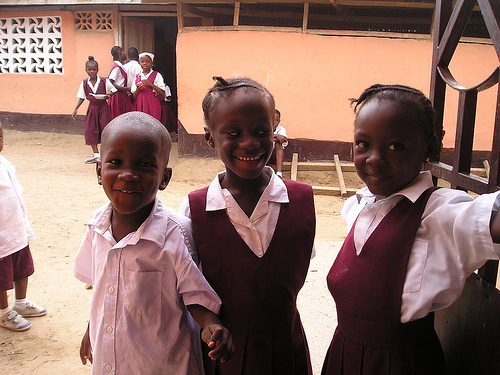
Article 22: “… a child who is seeking refugee status or who is … a refugee … [shall] receive appropriate protection and humanitarian assistance ….”

Buduburam, Ghana
Children in Buduburam Refugee Settlement in Ghana
 

Article 23: The State recognizes “… the right of the disabled child to special care” and the right to “… enjoy a full and decent life in conditions which ensure dignity ….”

IMG_1800

Article 24: All children have the right to “the highest attainable standard of health … [including access to] primary health care … nutritious foods and clean drinking-water.” 

Children in Norway

Article 27:  Every child has “the right to a standard of living adequate for [her/his] physical, mental, spiritual, moral and social development.”

A child in the USA
A child in the USA

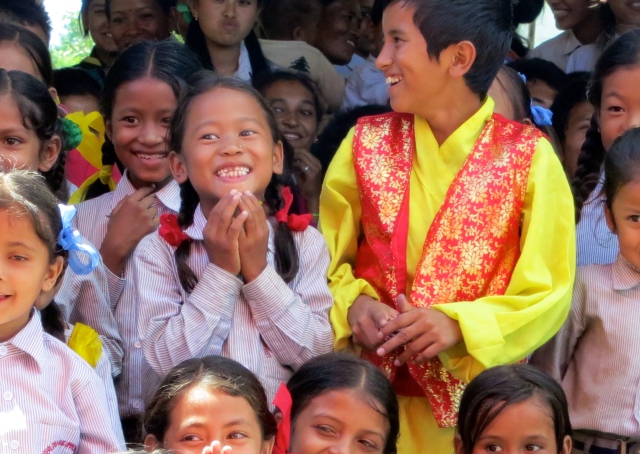
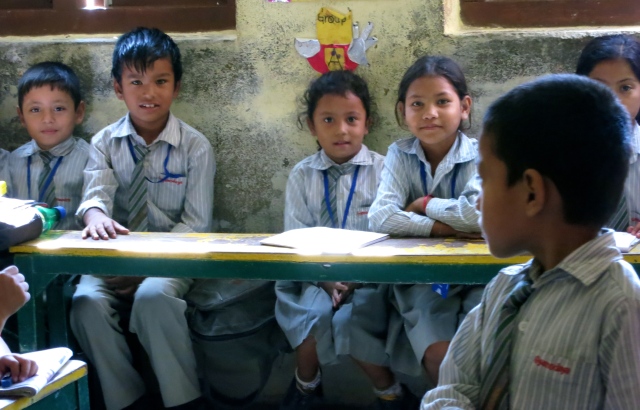
Articles 28 & 29:  State signatories must “recognize the right of a child to education…[that develops] the child’s personality, talents, mental and physical abilities.” 

Children in  Nepal
Children in Nepal

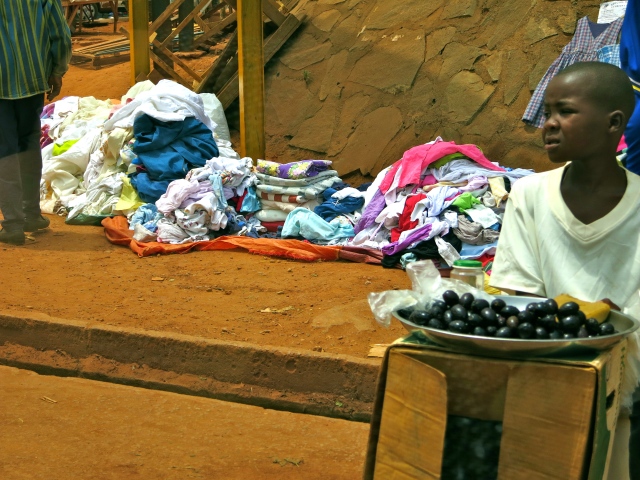
Articles 32 & 36:   Children must be “protected from economic exploitation … and from [hazardous] work [and] all other forms of exploitation. 

A child in Cameroon
A child in Cameroon

These are just some of the rights set forth in the Convention.  You can read the full text of the Convention on the Rights of the Child here.  

So on Universal Children’s Day 2013 (and every  other day), remember to:

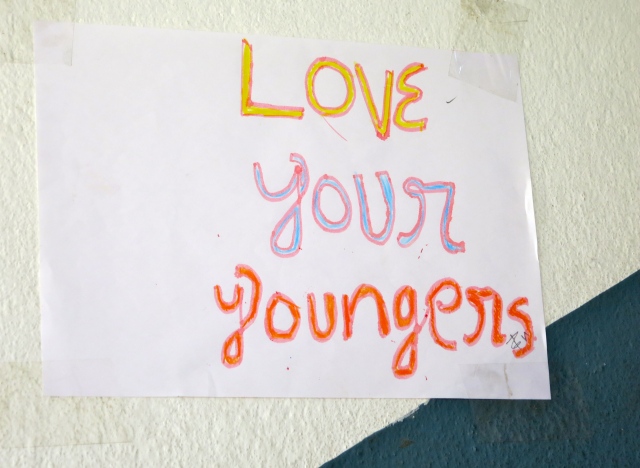
Love your youngers!  (Sign posted on the wall of a school in Nepal.)

The Regular

Beauty's Special
Order up! Beauty’s Specials at Beauty’s Luncheonette in Montreal

“I’ve been coming here since the beginning,” he said conspiratorially, leaning towards me from the stool next to mine.

I had noticed the white haired gentleman earlier, as he was shouldering his way through the Sunday brunch crowd at Beauty’s Luncheonette.  He took a seat on the chrome-and-blue pleather stool next to me. As he carefully placed his folded Montreal Gazette on the formica countertop, he caught the server’s eye.  “Hi hon!” she sang out as she filled his coffee cup.

He didn’t even have to place his order.  In a matter of minutes, “the usual” was set in front of him.  Side of home fries, black coffee, and a Beauty’s Russian Black Special.  Most people who come to Beauty’s get the Beauty’s Special – smoked salmon, cream cheese, tomato, and onion on the infamous Montreal sesame bagel.  But The Regular clearly prefers the Special on on a Russian rye bread so black that  it looks like it is made of dark chocolate.

“You’ve been coming here since 1942?” I asked.

“Sure, I went to high school just down the street. I used to buy my school supplies here back when it was a stationary shop.   There was always a poker game going on back in the back room.”

He pointed towards an open door behind the kitchen to a small room where they now store the mops and brooms and cleaning supplies.  (You can see it in the background of the photo above.)

“They won’t tell you THAT in the history.”

He gestured vaguely towards the blue and white menu, which contains a detailed history of Beauty’s.  How newlyweds Hymie and Freda Sckolnick bought the shop on the corner of Mont Royal and St. Urbain and started serving lunch to the garment workers from the  factories in the neighborhood.  The name “Beauty” came from Hymie’s bowling nickname.  It grew so popular that the workers started bringing their families on the weekend.  “And the Montreal brunch was born,”  to quote the menu.  Indeed, there was no mention of the poker game in the back room.

“I’m in my 80s,” he confided, “so Hymie must be into his 90s.  You met him when you came in, right?”

I had indeed met Hymie.  He was guarding the door when we arrived – literally standing in the inner doorway and quizzing the groups of Montreal hipsters queued up outside.  Since we only had two in our party, we scored an immediate seating at the lunch counter. “I like American money,”  Hymie told me as he resettled, ever vigilant, on his perch by the door.

“Hymie opened up this morning,” The Regular told me.  “That’s the son, Larry.”  He waved dismissively at a white-haired man with black frame glasses who was dashing about with a pot of coffee. “He just showed up now.”

We talked for a few minutes.  He told me how he grew up to be a lawyer and a politician.  He represented the neighborhood for a number of years before returning to private practice.  He lives downtown now, but he made it very clear that he is not retired.

“What’s your practice area?” I asked.  Corporate, I thought.

“Immigration,” he said.  “There’s always work and it’s interesting.”

“I know,” I said.  “I’m a human rights lawyer at a non-profit, but I started out practicing asylum law.  We always look to Canada as the better asylum system.  Even now in the debate about immigration reform, we are using Canada as the example of why we should provide counsel for indigent asylum seekers.”

“Well,” he replied, “It was a hell of a lot better before the Conservatives took over.  Now I’m not sure we’re a model for anyone anymore.”

As he paid his bill and gathered up his car keys and his black leather gloves, he asked, “What are you going to do today?”

“We’re thinking of going up to the top of Mont-Royal.”

“Mount Royal?  How are you going to get there? Do you have a car?”

“No, we’re planning to bike,” I said.

He looked at me for a few seconds, as if assessing whether I was truly insane.  Then he moved on.

“Well, you’re going to want to go to Schwartz’s Deli, so here’s a tip. Don’t bother with the line.  Go across the street to Main Deli.  It’s just as good, but without the wait.   We call it “smoked meat” here.   There’s no such thing as “pastrami” here in Canada,” he said emphatically.

“Thanks for the tip,” I said.  As a vegetarian, my interest in cured meat – whatever you call it – is minimal.

It struck me later that, based on the facts that he dropped,  I could easily pin a name and full bio on this guy.  It would just take a couple of quick internet searches.  But I have not chosen to do that.

As he said good-bye, I felt I had been privileged with a small glimpse into not just a life, but also into a unique time and place and people in this city’s history.  I saw in a flash the habits of a lifetime, traces of a distinctive community.  The institution of Beauty’s Luncheonette will certainly continue, but someday in the relatively near future it will be without Hymie and the others who were there from the beginning.  On this, my first visit to Montreal, The Regular had given me a rare, small gift.

He put on his long, black wool coat and headed for the door, threading his way through throngs of young people – young people  of all races and backgrounds, chatting energetically and switching effortlessly between French and English.  In the midst of this microcosm of contemporary Montreal, The Regular turned back, eyes twinkling, and winked at me.

“My wife is in Florida.  Don’t tell her I was here.”

The Hue of You: Choose a Job You Love

IMG_0376
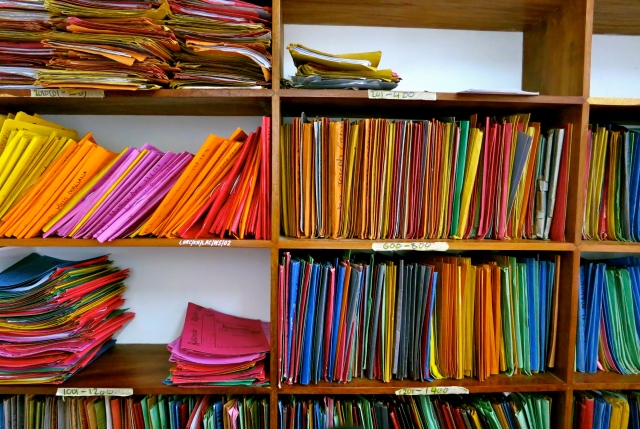
Open family law case files at the Legal and Human Rights Centre in
Dar es Salaam, Tanzania

I’m sharing this photo of hundreds of open family law case files at  at the Legal and Human Rights Centre in Dar es Salaam, Tanzania in response to the Weekly Photo Challenge: The Hue of You.  Two LHRC attorneys are responsible for all of these open cases.

The work of a human rights warrior can be hard, but it is definitely ALWAYS interesting – and colorful!

“Choose a job you love, and you will never have to work a day in your life.”

― Confucius

“U Have To Struggle More”: A Poem for International Day of the Girl

Kanchi Photo - Young

Last year on the International Day of the Girl, I wrote about a girl named Kanchi and her determination to overcome all obstacles and obtain an education in rural Nepal.  The first in her family to go to school, Kanchi is now studying horticulture in university. She also writes poetry in her spare time and asked me to share the following poem that she wrote about her life.

It is a poem that seems particularly fitting on this,  the second  International Day of the Girl.

When I was born in small hut,

i’d be a heavy load,

i’d be a heavy load,

Anyhow i have to accept all the things

which were asked by father & mother

because i’m a daughter,

because i’m a daughter.

Father& Mother always used to say

that i don’t have any right to read & write

because 1 day i have to leave birth place

& i have to be someone’s wife,

i have to be someone’s wife.

They says that i cannot do anything in my life because

my life is like an egg which can

Creak at anytime if it falls,

Which never be join back,

which never be join back.

They say that to do household work,

that’s my big property &

during the time of my marriage

when i get more dowry,

during the time of my marriage

when i get more dowry.

These heart pinches words

collided in my ear,

my heart nearly go to burst,

,my heart nearly go to burst.

At that time my 1 heart says

that u have to leave this selfish world.

But another heart says that don’t get tired

to achieve goal u have to struggle more,

u have to struggle more.

INTERNATIONAL DAY OF THE GIRL:  KANCHI’S STORY

Originally published October 11, 2012 on The Advocates Post.

Every morning when I come into work, I am greeted by the smiling face of a young girl. Her hair is pulled neatly back into two braids, glossy black against her pink hairbands.  Her eyes, dark and alert, shine at me – I swear I can see them twinkle.

She wears the blue uniform of her school, the Sankhu-Palubari Community School in rural Nepal.  The Advocates for Human Rights supports the school to provide the right to education to the most disadvantaged kids in the area and to prevent them from becoming involved in child labor.  Photographs from the school hang on the walls of our office, reminders to us of the lives that we impact with our human rights work.

Even though I see her every day, until last month I had never met this cheerful young girl, a girl whose smile – even in a photo – comes from her core, seems to light her entire being. Until last month, I did not know that her name was Kanchi.  And I had never heard her incredible story.

*****

In 1999, Kanchi was six years old.  She lived with her family in a village in the Kathmandu Valley.  Her parents were poor farmers; they had only a little land and some cattle and they struggled to feed their family.  Kanchi was the youngest of six sisters.  She and her sisters (and also her  brother) had to help their parents in the fields and with household chores.  Kanchi’s job was also to take the cattle to the forest to graze.   Kanchi did not go to school.   There were many children in Nepal that did not go to school at that time, but girls, like Kanchi, were more likely than boys to work rather than go to school – particularly in rural areas like the Suntole district where she lived.

Kanchi was a very smart and determined little girl.  She wanted to go to school.   So when she heard that a new school was opening in the Sankhu-Palubari community – a school for kids who were not able to go to school because they couldn’t pay or were discriminated against – she was very excited.  She rushed off to tell her parents.  But her parents, who had never themselves been educated, were not as excited as Kanchi.  Why should they let her go to school?  Who would help feed the family? Why should they send her to school if she was only going to get married in a few years anyway?

Kanchi says that she cried for a month and begged her parents to let her go to school.  One day, teachers from the new school came to visit Kanchi’s parents to talk to them about the school. The teachers explained that it would help THEM if Kanchi could read and write.  They explained why it was important for all children to go to school, even girls.  They told them that all children – even the poorest, the lowest-caste, members of indigenous groups – had a right to education.

Kanchi’s older sisters, who had never had the opportunity to go to school, took her side. Instead getting an education, they had all married young and were working in the fields.  Kanchi’s sisters argued that Kanchi should go to school, take this opportunity for a life that would be different from theirs.  Finally, their parents agreed to let Kanchi go to school.

Kanchi started at the Sankhu-Palubari Community School in 1999, one of 39  students in the first kindergarten class.  To get to school, Kanchi had to walk one and a half hours each way.  There were many other obstacles along the way, too.  At various times, her parents wanted her to stop school and help them with farming.  But she stayed in school and worked hard. She told her parents,  “I want to do something different from the others.”

Kanchi liked her teachers and felt supported by them.  She felt that the best thing about the school was the teaching environment.  She stayed in school and was one of only two girls in the first class to graduate from 8th grade.  She continued on to high school and completed 12th grade at  Siddhartha College of Banepa in 2012.  The first in her family to go to school, Kanchi is also the first girl from the Sankhu-Palubari Community School to graduate from 12th grade.

I met Kanchi for the first time in September.  Almost exactly 13 years after this brave little girl started kindergarten, she is a lovely young woman who is preparing for her university entrance exams.  She plans to study agriculture  starting in January.   Her parents are proud of her and they are happy now – she has chosen the family profession – but Kanchi is interested in learning more about organic farming so she can bring techniques back to her village.  “I want to live a healthy life and give a healthy life to others,” she says.

Sitting in the principal’s office at Sankhu-Palubari Community School, I asked her what the school meant to her.  Kanchi said, “I gained from this school my life.  If I hadn’t learned to read and write, I would be a housewife.”  When asked about her sisters, she told me that they had made sure to send their own children to school.

In her free time, Kanchi likes to sing and dance and make handicrafts to decorate her room.  She likes to play with her sisters’ children.  She has a smile that lights the whole world.  She told me her nickname, Himshila.  She smiled when she told me it means “mountain snow, strong rock”.  Strong rock.  That seems just about right.

*****

October 11, 2012 is the first International Day of the Girl Child.  The United Nations has designated this day to promote the rights of girls, highlight gender inequalities and the challenges girls face, and address discrimination and abuse suffered by girls around the globe.  In many ways, the story of Kanchi and her sisters reflects the experience of girls in many countries throughout the world.  All over the world, girls are denied equal access to education, forced into child labor, married off at a young age, pressured to drop out of school because of their gender.

There are many good reasons to ensure access to education for girls like Kanchi, however. Educating girls is one of the strongest ways to improve gender equality.  It is also one the best ways to reduce poverty and promote economic growth and development.

“Investing in girls is smart,” says World Bank President, Robert Zoellick. “It is central to boosting development, breaking the cycle of intergenerational poverty, and allowing girls, and then women—50 percent of the world’s population—to lead better, fairer and more productive lives.”

The International Day of the Girl is a day to recommit ourselves to ensuring that girls like Kanchi have the chance to live their lives to their fullest possible potential.  To redouble our efforts to promote the rights of girls wherever they live in the world.   This first International Day of the Girl is also a day to honor girls like Kanchi.  A day to take the story of her success in one tiny corner of Nepal and shout it out, an inspiration for girls all around the world.  Girls like Kanchi with the strength, the bravery, the determination to change the world, but who  just need the opportunity.

Weekly Photo Challenge: Saturated

Woman harvesting rice in the Kathmandu Valley, Nepal

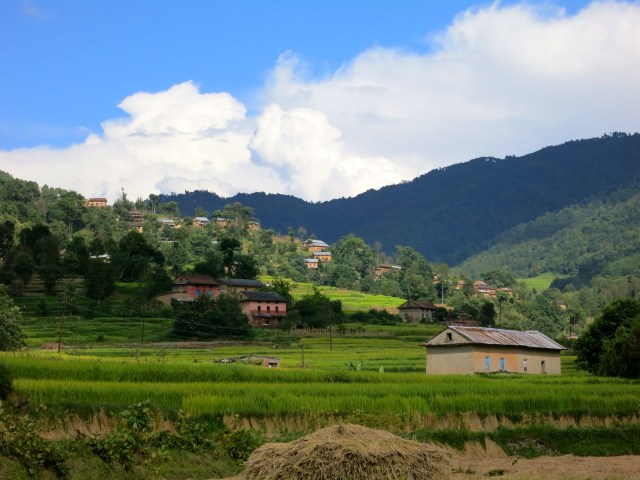
I took this photo last week in the Kathmandu Valley, near the village of Palubari, in Nepal.  The monsoon season has just ended in Nepal, so the colors of the vegetation are especially vibrant right now.  And the people of Nepal are always vibrant, both in their personalities and their dress.

IMG_0495

Palubari took its name for the ginger that was once grown here, but this area in the eastern end of the Kathmandu Valley is fertile enough to grow rice, maize (corn), wheat, potatoes and many other vegetable crops.

IMG_0661

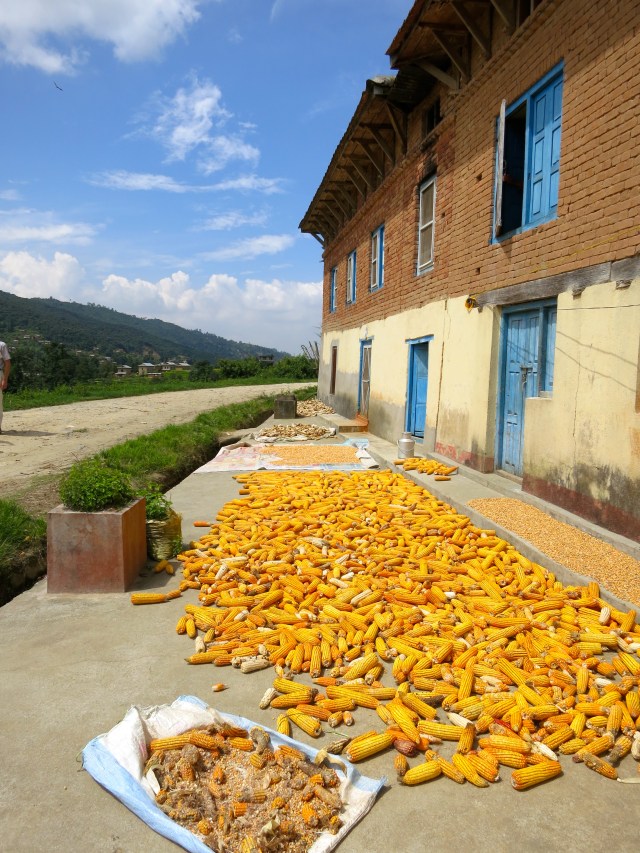
The corn crops have been harvested already, the cobs and kernels drying in the sun along the roads that run through the valley.

Corn drying in the sun.

Now the rice crop must be brought in.  All the harvesting is done by hand (you can see the scythe in the hand of the woman in the first picture).  It is hard, labor intensive work and it must all be done before the major festivals next month of Dashain and Tihar.

IMG_0486

This post is a response to the Weekly Photo Challenge: Saturated.

Back to School

I haven’t been able to do much blogging this summer.  This photo may help explain why:

photo(1)

Today is the first day of school for my kids.  We had a great summer, but – clearly –  it is time for them to go back to to school!  Hopefully it also means that I will have a little more time to myself to think and write and post to The Human Rights Warrior.

In the meantime, here is a repost on The Importance of Educating Girls that I originally wrote for World Moms Blog in 2012.  The first day of school always makes me so thankful that my children, especially my daughter, are able to access their right to education.

The Importance of Educating Girls

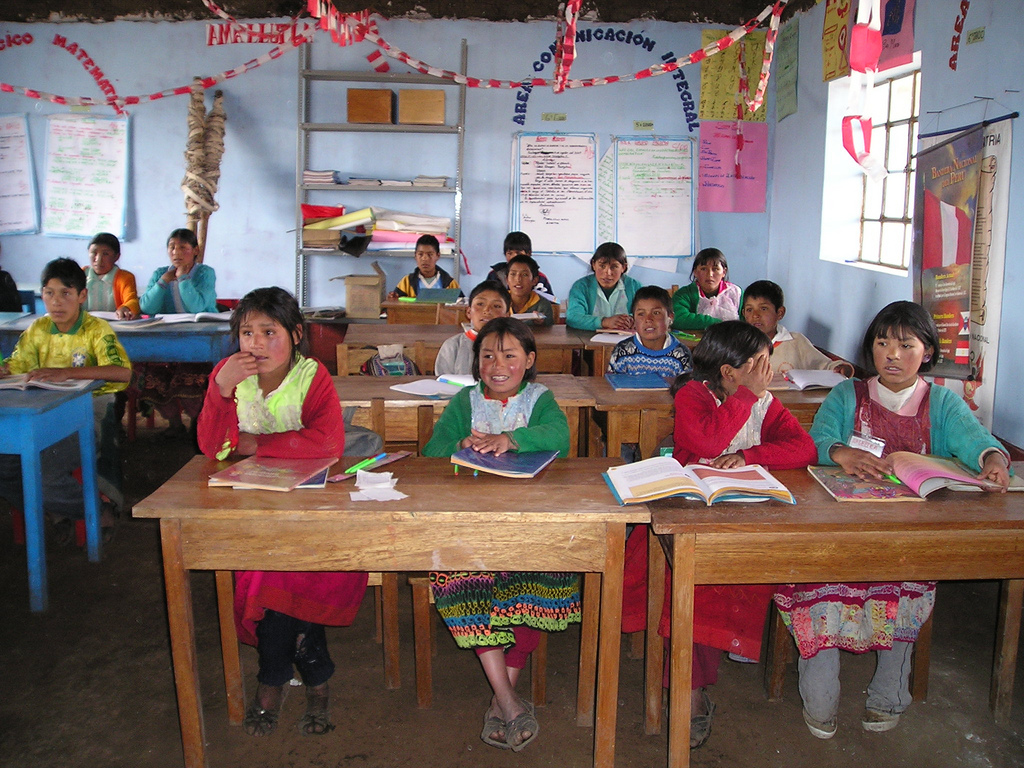
Fifth grade class in Chuchoquesera, Peru

When I visited the classroom pictured above in the Peruvian highlands back in 2004, I noticed that slightly more than half of the students were girls. I remarked on this fact to the human rights activist who was giving us the tour of this Quechua-speaking indigenous community.  He smiled sadly and said, “Yes, but this is fifth grade.  In sixth grade, children go to a lower secondary school that is farther away.  Most of the girls won’t go.  It takes too long to walk there and they are needed to help at home, so the parents won’t let them go.  Besides, most of them will be married soon.” Unfortunately, this is a situation that is repeated throughout the world
In the United States, where education is both compulsory and free, we often forget that the right to education is not meaningfully available in many parts of the world – especially for girls.  The UN estimates that there were more than 67 million primary school-age and 73 million lower secondary school-age children out of school worldwide in 2009.  In addition, an estimated 793 million adults lack basic literacy skills. The majority of them are women.

Since then, I have visited classrooms and asked questions about girls’ access to education in countries on several continents.  This is a photo I took at Buduburam Refugee Settlement in Ghana.

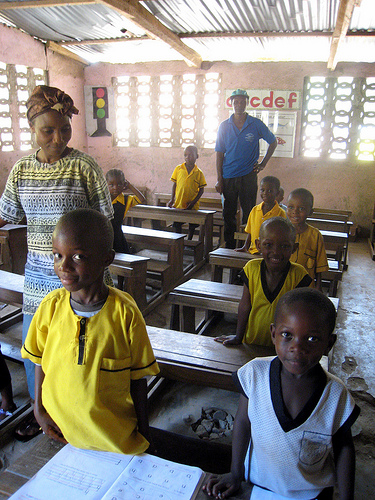
Kindergarten class, Buduburam Refugee Settlement, Ghana

Boys far outnumbered girls in this classroom, illustrating one of the problems for girls in accessing education.  When resources are scarce, parents will often choose to spend the money on school fees for their sons rather than their daughters.

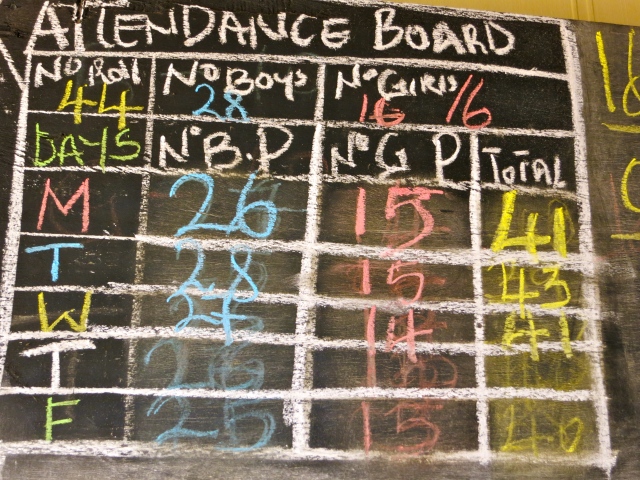
Boys also outnumbered girls at this school that I visited outside of Yaounde, Cameroon.

IMG_0327

Attendance Board in primary grade class in a school outside of Yaounde, Cameroon

There are many good reasons to ensure access to education for girls, however. Educating girls is one of the strongest ways to improve gender equality.  It is also one the best ways to promote economic growth and development.

“Investing in girls is smart,” says World Bank President, Robert Zoellick. “It is central to boosting development, breaking the cycle of intergenerational poverty, and allowing girls, and then women—50 percent of the world’s population—to lead better, fairer and more productive lives.”

Ensuring equal access to education for all girls by 2015 is part of the United Nations’ Millennium Development Goals, making this issue a major focus of work by the United Nations (for more info, check out the UN Girls’ Education Initiative site), the World Bank and many international non-governmental organizations.   October 11 has been designated as the International Day of the Girl Child to draw attention to the topic.
 
 
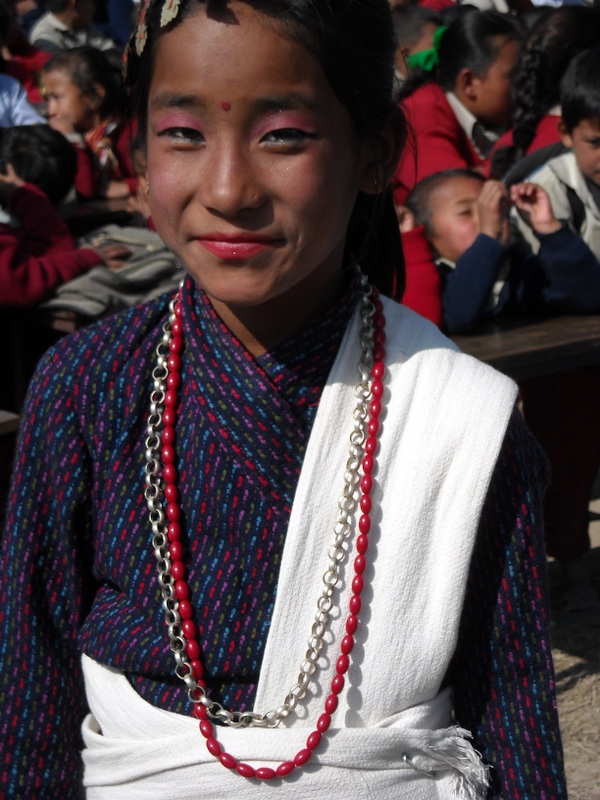
Fourth grade student at Sankhu-Palubari Community School wearing Newari traditional dress
 
On a much smaller scale, the Sankhu-Palubari Community School in Nepal is doing its part to encourage gender parity in education and  increase literacy rates.  The school works in partnership with The Advocates for Human Rights (the non-profit where I work) to prevent child labor and improve the lives and well-being of the neediest children in this community in the Kathmandu Valley. I travelled there in January for our annual monitoring visit.
 
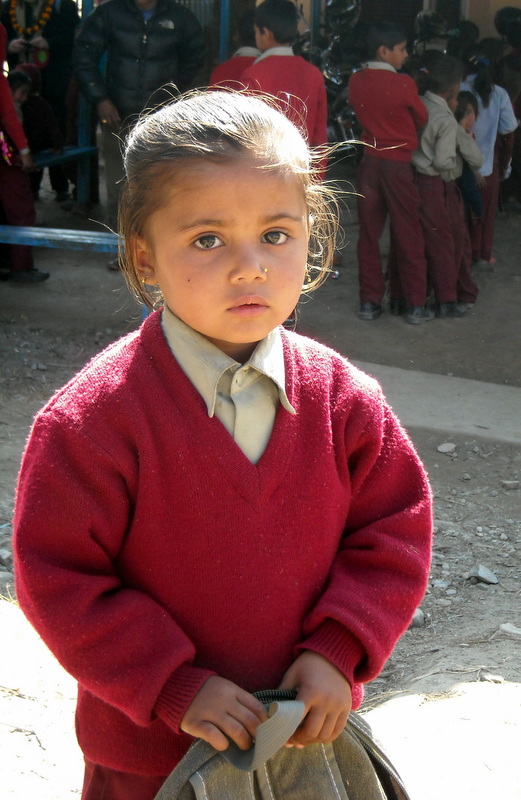
Pre-K student at Sankhu-Palubari Community School, Nepal

This year, the school has successfully met goals for gender parity among students in both the primary and lower secondary grades. For the 2011-2012 school year, 147 of the 283 students in pre-school through eighth grade are girls. Additionally, and perhaps more significantly, 15 of the 31 students in ninth and tenth grade are young women.
 
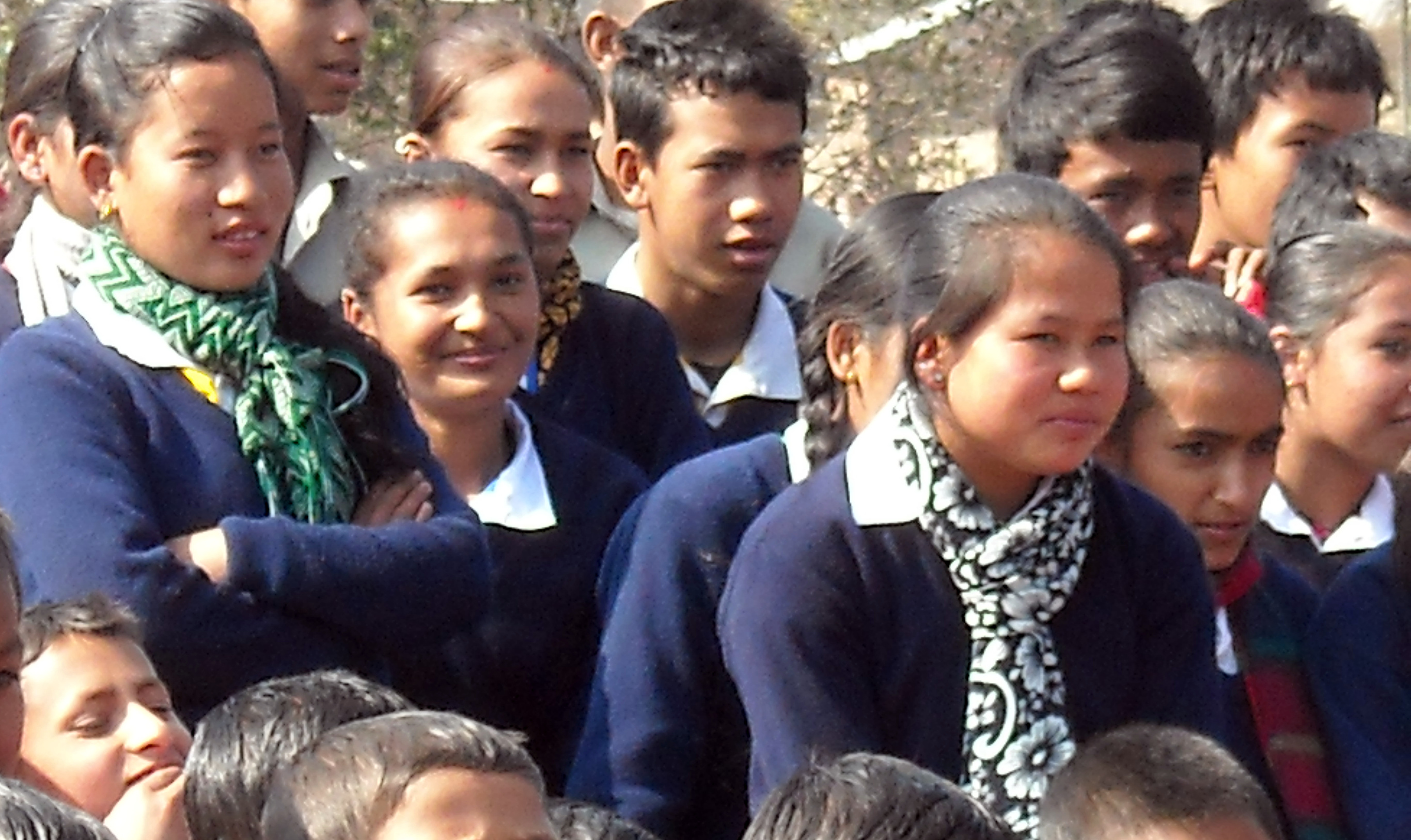
9th Grade students at SPCS
 
Most of the students’ families work in agriculture.  They are farmers with little or no money to spare on school fees, uniforms and supplies.   Many of them are from disadvantaged groups such as the Tamang and Newari.  Indigenous group with their own cultures and languages, the indigenous students must learn Nepali as well as English when they come to school.  Frequently, the adults in the family are illiterate.
 
How has the teaching staff managed this success at keeping girls in school?  Since the school’s founding in 1999, the teachers have conducted outreach to parents and worked hard to encourage female students to attend and stay in school in spite of societal pressure to get married or enter domestic work. It took more than 10 years, but their efforts have paid off.  While girls worldwide generally are less likely to access, remain in, or achieve in school, 52% of the students in K-8th grades at the Sankhu-Palubari Community School this year are girls. And a girl is at the top of the class in most of the grades at SPCS.
 
The impact of the school both on the individual students and on the community over the past 12 years has been profound.  When I was there in March of 2011, we interviewed approximately 60% of the parents of SPCS students.  It was clear to me that parents value the education that their children are receiving and, seeing the value, have ensured that the younger siblings are also enrolled in school rather than put to work.  Twelve years ago, there were many students in the area out of school but now most are attending school. I could also see the physical benefits that the students derived from attending school when they stood next to their parents.  Even the 5th grade girls towered over their parents, illustrating the simple cause-and-effect of adequate nutrition, wellness checkups, and not having to work in the fields from a very young age.
 
The Sankhu-Palubari Community School may be a small school in a remote valley, but it is a place where the human right to education is alive and well, providing a better future for these children.  In particular, the effect that these girls have on their community, their country and – hopefully, the world – will be thrilling to watch.
 
I’ll be heading back to Nepal to visit the Sankhu-Palubari Community School in just a few weeks. Stay tuned!
 
Yaounde, Cameroon
Pre-K classroom at a school near Yaounde, Cameroon
 

Passing By Washington Square Park

The Washington Arch, Washington Square Park New York City

When I travel to other countries, I find that I am almost always on hyper-alert lookout for the interesting, the beautiful, the unique, the historical. Sadly, it is not always so in my own country.  I can walk past a masterpiece a dozen times without truly seeing it.  Take, for example, Washington Square Park.  I’ve been to Washington Square Park dozens of times, but it wasn’t until this very week that I stopped and looked and truly saw the beauty in the Washington Arch.

It was a beautiful summer evening this past Wednesday, the city just beginning to breathe easy again after  long hot spell.  The park, green and shady under the towering old elms and sycamores, seemed especially cool and refreshing as I hurried past along Washington Square North.  There’s a fountain at the heart of the park, and its dancing water was catching the rays of the setting sun.  The cheerful sound of splashing water mingled with joyful shouts of children in the nearby play area.

Maybe it was those co-mingled sounds, filtering down through all the other sounds of traffic and people and city, that caught my attention as I hurried from West Village to East.  Whatever it was, something made me stop and turn just past Fifth Avenue.  Looking back, I pulled out my phone and caught the above view of the Washington Arch.  For which, I am eternally grateful.

With no people in the photo, the Washington Arch seems almost timeless.  It made me think of all the millions of humans who have spent time on this small patch of island – and curious to learn its history.   It turns out that, as with so many places in our world, the history of Washington Square Park contains a human rights narrative.  Native Americans lived here in the early 17th century before the Dutch attacked them and drove them out.  The Dutch farmed the land, on both sides of the brook called Minetta that once ran through area. Later, the Dutch gave the land to freed slaves to create a kind of human buffer zone between the Native Americans and the white colonial settlements.  The area that is now Washington Square Park was in possession of African-Americans from 1643-1664; at the time, it was called “The Land of the Blacks”.  (See the New-York Historical Society of Manhattan for more history of slavery in New York.)

It remained farmland until 1797, when the Common Council of New York purchased some of the farmland (which was still outside city limits) for a new potter’s field to bury unknown or indigent persons.  Most of those who died from yellow fever during New York’s epidemics of the early 19th century were also buried here.  The public cemetery was closed in 1825 and the City bought the rest of the land shortly after, turning the area into a military parade grounds. To this day, the remains of more than 20,000 bodies rest under Washington Square Park. 

By the time the City reworked the parade grounds into a park in 1849-1850, the streets around the park had already become one of New York’s most desirable residential areas.   The park underwent several improvements, including the addition of the first fountain in 1852. To celebrate the centennial of George Washington‘s inauguration as president of the United States in 1889, a large plaster and wood Memorial Arch was erected over Fifth Avenue just north of the park.  It proved so popular that a permanent arch, designed by architect Stanford White, was commissioned.  Made of Tuckahoe marble and modeled after the Arc de Triomphe, this is the Washington Arch that I know today.  It was dedicated 1895. In 1918,  two statues of George Washington were added. You see one of them – George Washington At War – in my photo.

Washington Square Park has also been the site of countless protests, testaments to the right of freedom of assembly and expression.  The first labor march in New York took place there in 1834 when stonecutters protested New York University’s decision to use cheap prison labor from Sing Sing instead of professional stonecutters to build a university building along the park. In 1912, approximately 20,000 workers (including 5,000 women) marched to the park to commemorate the Triangle Shirtwaist Factory fire, which had killed 146 workers the year before. By some reports, more than 25,000 people marched on the park demanding women’s suffrage in 1915.  Beginning around the end of World War II, the park became a gathering area for the Beat generation, folk, and Hippie movements.  On April 9, 1961, about 500 folk musicians and supporters gathered in the park and sang songs without a permit, then held a procession from the park beginning at the Washington Arch.  The New York Police Department Riot Squad, sent in response to this “Beatnik Riot”, attacked civilians with billy clubs and arrested ten people.

And yes, even the tireless human rights advocate Eleanor Roosevelt has a connection to the area.  Around the time that she was helping to draft the Universal Declaration for Human Rights, she was a resident of Washington Square Park West.

Like so many others, I was just passing by Washington Square Park on a recent evening past.  But I’m glad I took the time to stop and look. And to learn.

The inscription on the Washington Arch reads:

Let us raise a standard to which the wise and the honest can repair. The event is in the hand of God. — Washington

For more information about Washington Square Park:

City of New York Parks & Recreation

Washington Square Park Blog

Washington Square Association

This post is a response to the Weekly Photo Challenge: Masterpiece.  See more entries here.

Love Is The Law: The DOMA Decision and Binational Same-Sex Marriage

20130626-152500.jpgLike so many, I was excited to hear of the decision by the United States Supreme Court to strike down the Defense of Marriage Act this morning. This decision in United States v. Windsor, along with the end result of the Prop 8 decision, was what I had definitely hoped for, mostly expected but slightly feared would not happen. Historical and far-reaching as these decisions are, however, the first thing I thought of was the tremendous impact it will have on the lives of tens of thousands of LGBT Americans who are married to non-US citizens. Today’s ruling that Section 3 of DOMA, which prohibited the federal government from conferring benefits to married same-sex couples, is unconstitutional sets the stage for a major change in family-based immigration – the cornerstone of US immigration policy. Today, the Supreme Court opened the door for US citizens to be able for the first time to apply for permanent resident visas for their same-sex spouses.

When I heard the decision this morning, what flashed through my head were the faces of all of the LGBT persons in binational same-sex relationships who have consulted with me over the years about their legal options – for staying together and avoiding separation by deportation. When I first started practicing back in 1996, I had to tell them that their options were limited. I remember helping “George” seek and obtain asylum based on his LGBT status. “George” had fled his country in Central Africa. He met blond-haired, blue-eyed “Larry” when they were both doing volunteer work at a community center. Larry encouraged George to seek legal assistance. Asylum was the only  option, but I knew they deserved more.  Larry came to every interview with George, holding his hand as George talked about the persecution that he had experienced in his home country due to his refusal to hide his sexuality. Tears in his own eyes as he listened silently to George’s account of violence and stigmatization, Larry would hand George tissues, make him take calming deep breaths or take a drink of water. Help him go on with saying what had to be told. George was granted asylum, allowing him to stay permanently in the US. By that time, he had a job and he and Larry had moved in together. It has been more than 10 years since I last saw George and Larry, but I wouldn’t be surprised to hear that they had tied the knot.

But same-sex marriage wasn’t an option in the US back in 1996. Or 2001, for that matter, when “Hans” and his husband “Rick” asked for advice. Hans was Dutch and Rick was from the Caribbean (Jamaica, I think). They met while working in the US and married in Amsterdam after the Dutch government legalized same-sex marriage. But Rick’s US work authorization ended and he could no longer stay legally with Hans in the US, even though they were legally married and Hans still had authorization to be here . In the end, Hans chose to transfer to a job back to The Netherlands so that Rick could legally immigrate and they could be together.

When Massachusetts and other US states started legalizing same-sex marriage, I heard from others frustrated by the lack of equality between the way same-sex and traditional marriages are treated in US immigration policy. “Dan” told me that he and his partner “Ernesto”, a professor and a Mexican national, had been commuting between Mexico City and Minneapolis for years but now hoped that they could marry and live together permanently. Unfortunately, I had to tell them that the federal government would not recognize their marriage for immigration purposes.”We love each other, we are committed to each other, we want to get married. Why won’t my country allow us to be together?” Dan fumed.

In practice, the Obama administration has for the past two years refrained from carrying out deportations of immigrants in same-sex marriages, but without providing a legal status that is comparable to the permanent resident (“green card”) status that US citizens in traditional marriages are eligible to apply for for their spouses.

The Supreme Court’s decision today changes everything for people like Dan and Ernesto, Hans and Rick, George and Larry, and all of the other LGBTQ Americans who love nationals of other countries.  I truly, truly rejoice for them and for our country. While some procedural changes will have to take place before the implementation in practice of today’s decision, June 26 should be a day remembered and celebrated by all of us who believes in the right of EVERY family to be together.

“The federal statute is invalid, for no legitimate purpose overcomes the purpose and effect to disparage and injure those whom the State, by its marriage laws, sought to protect in personhood and dignity. By seeking to displace this protection and treating those persons as living in marriages less respected than others, the federal statute is in violation of the Fifth Amendment.” ~ Justice Anthony M. Kennedy
For more information about the process for applying for permanent resident status for same-sex spouses, see Immigration Equality’s FAQ and The Doma Project’s FAQ.

UPDATED:  On July 29, 2013 – just two days after the US Supreme Court struck down Section 3 of DOMA –  gay couple in Florida received the first approval of a same-sex marriage-based permanent resident petition.  Wow, that was fast!  Congratulations to Julian Marsh and Traian Popov! And kudos to the US Immigration & Customs Enforcement Service for implementing the  decision so quickly.