Sometimes I have trouble finding the words to talk to my kids about the violence that hear about in the news, the injustices that they see in our own community. As a human rights lawyer, it is my job is to document and expose human rights abuses. But I have always struggled with how to communicate to my kids what human rights are and why they should care about them.
Recently, however, I was preparing for a project that involved interviewing children about their experiences. Experts advise that interviewers use simple language when speaking with children about difficult topics. “Simple language” means avoiding big words, of course, but it also means using simple, direct sentences. Straight-forward grammar – subject and predicate in sentences; basic speech parts – nouns and verbs and adjectives. I suddenly realized what I was doing wrong in talking about human rights with my kids. Rather than explaining complicated concepts, what I needed to do was break it down to the core values that everyone needs to live fully in this world. I needed to start with the basic building blocks of language: words.
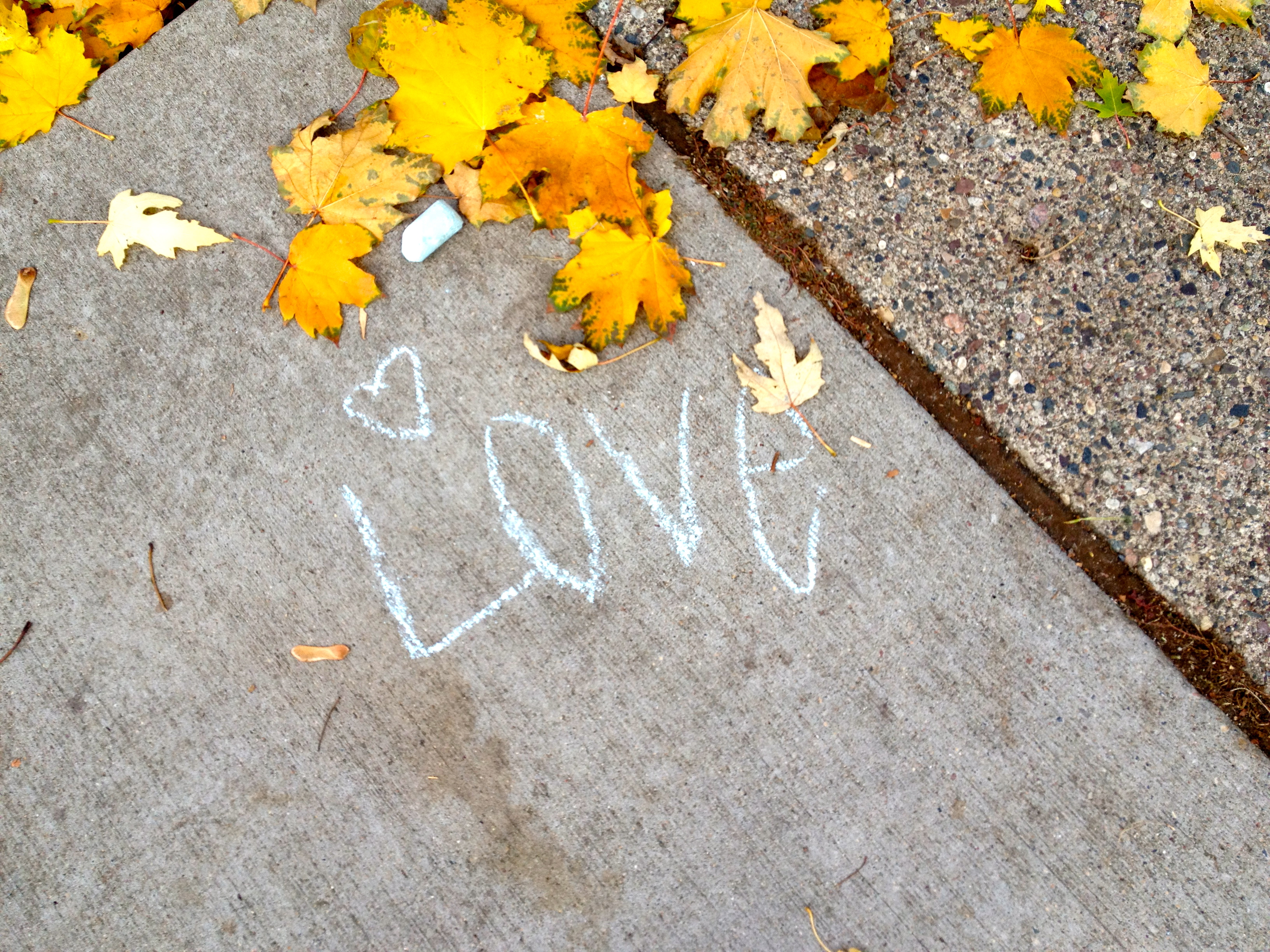
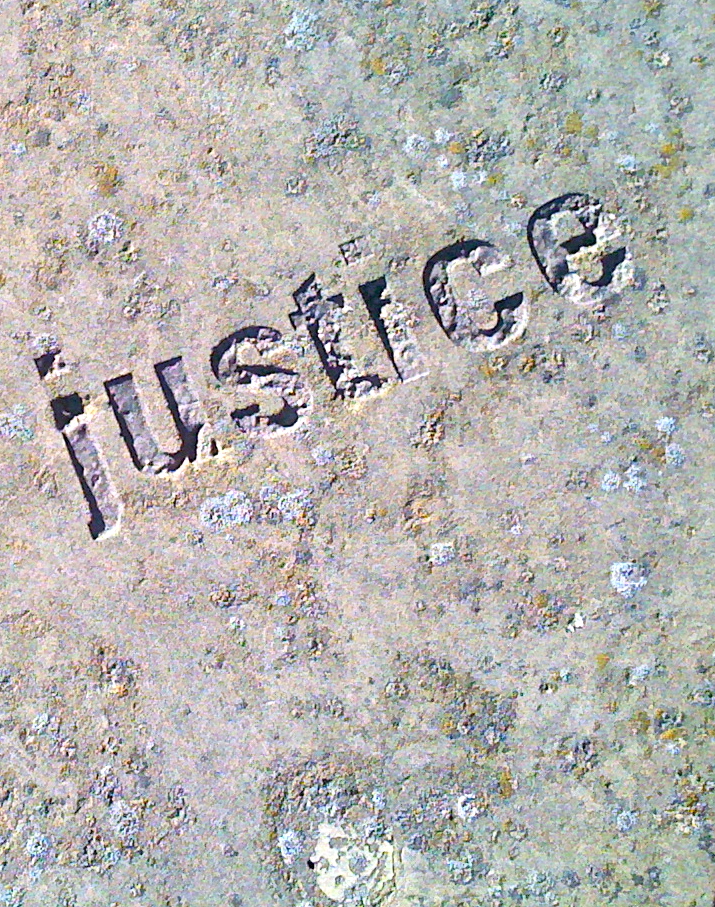
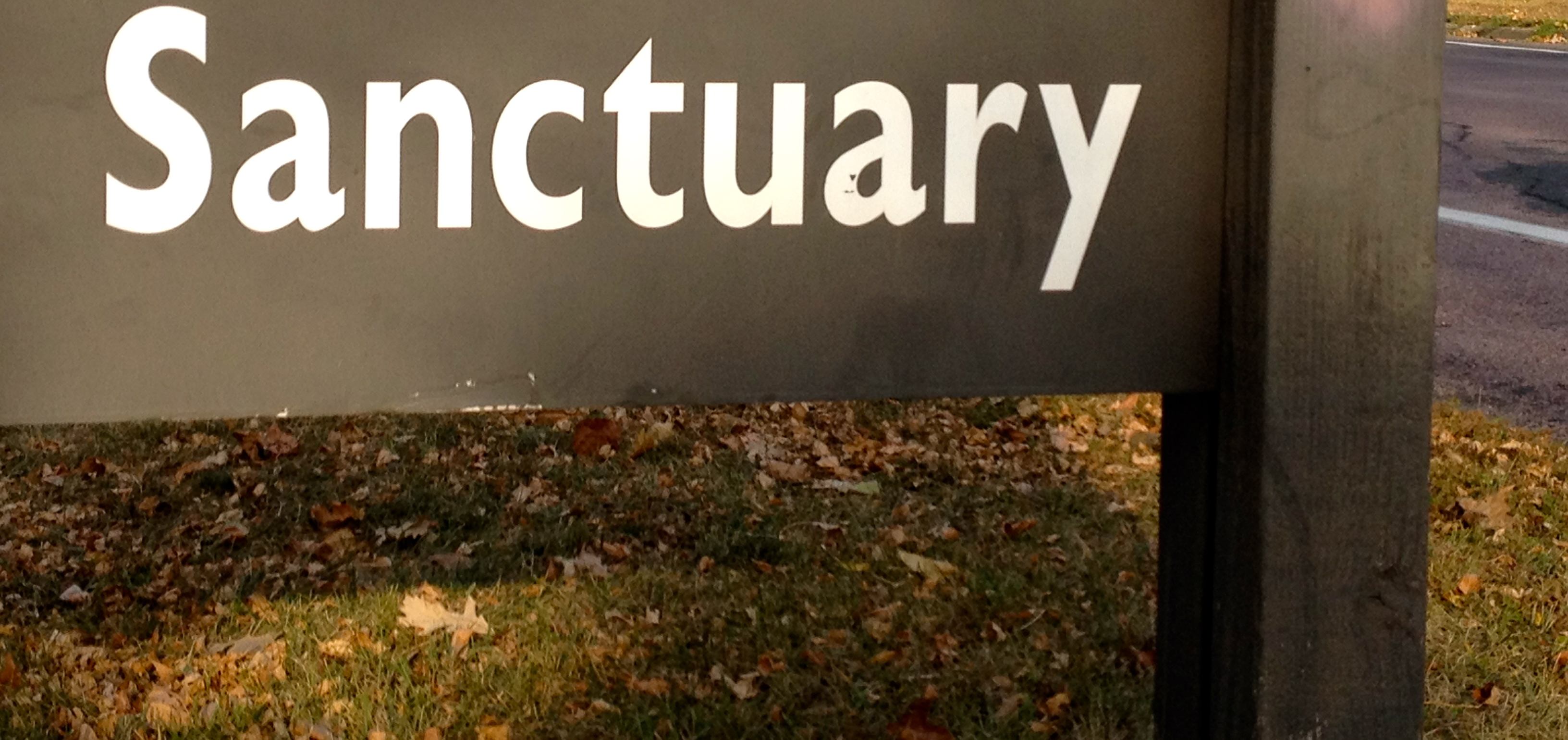
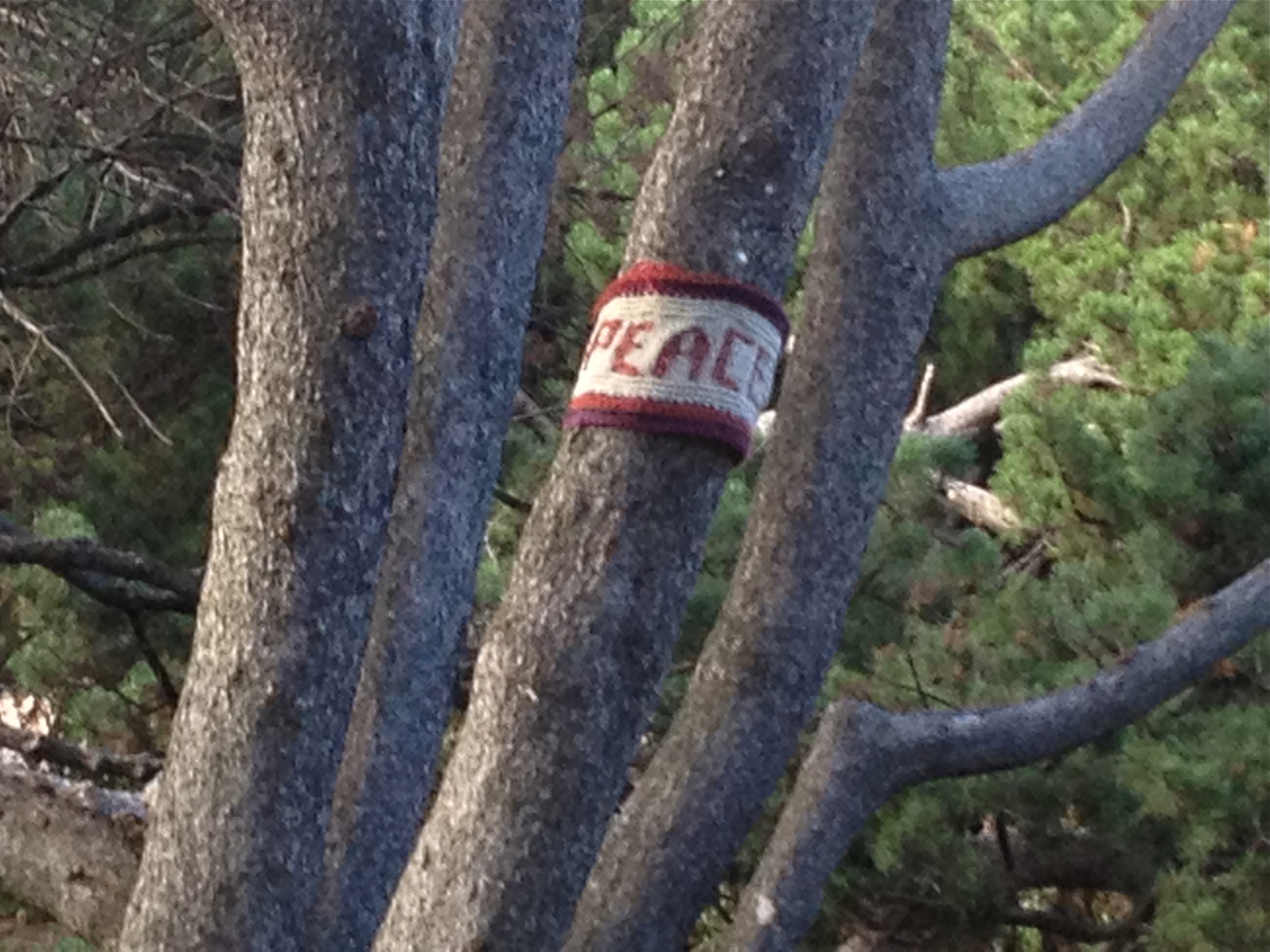
Once I realized this, I started to see human rights words all around me! Words like:
and
and
Verbs like
and
and
and
Nouns were all around me!
and
and
and
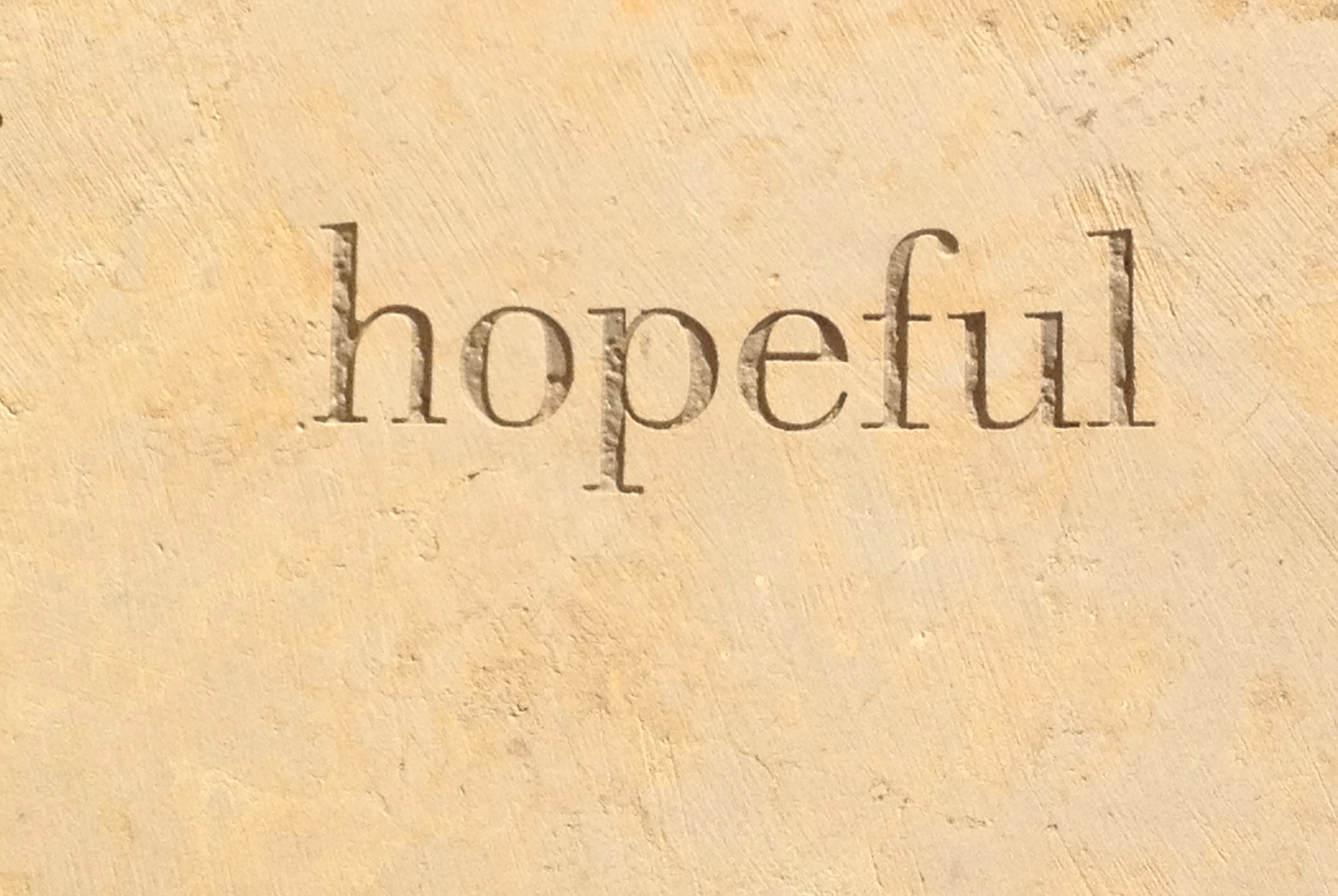
I saw adjectives, too!
and
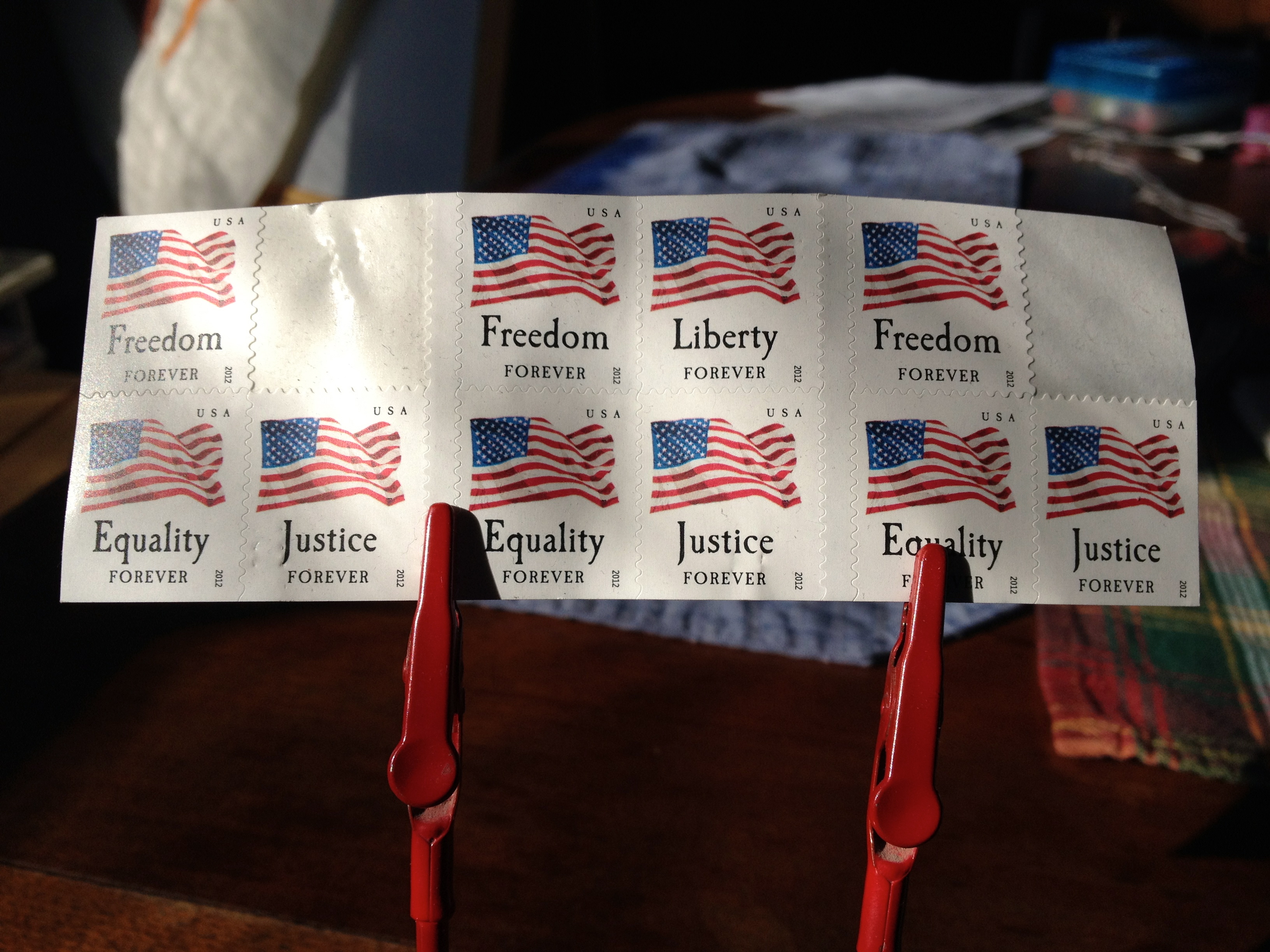
I started pointing out these words to my daughter, who is seven. Just last week, she was running past the table in the entryway where we put our mail. Suddenly, she came to a screeching halt in front of the stamps.
“Look, mommy,” she said. “The stamps are speaking the language of human rights!”
My daughter was exactly right. The stamps said: equality, justice, freedom, liberty. Powerful words that convey basic human rights concepts.
The current Weekly Writing Challenge got me thinking about children in one of the most adult-oriented of all places – the workplace. Yes, I admit that I have brought each of my three children to work with me at various times, usually because of an unlucky confluence of sickness and pressing work deadlines. It certainly isn’t my first choice, but in my experience it has worked out fine for short periods of time. (Unless you count the unfortunate incident when my co-worker Peder accidentally got his finger chomped by my oldest son, who was teething. New baby teeth are razor sharp. Peder claims that he saw stars, just like in the cartoons.)
But whether or not to bring children to work is an issue that many working mothers have grappled with at one time or other. It is, in fact, the issue that has made European Parliament Member Licia Ronzulli so popular with moms like me. The photo above, taken in September 2010, of Ms. Ronzulli at work with her baby has made her a cause célèbre for working mothers around the world.
Although she doesn’t bring her daughter to the European Parliament regularly, there are other photos of Ms. Ronzulli and her daughter Vittoria. During a vote on the Eurozone debt crisis on February 15, 2012, reporters snapped several photos of Vittoria with her mom at the European Parliament.
Now two years old, Vittoria was back in Strausborg – and the European media – just this week. I think that the reasons that these photos resonate so much with moms here in America is that they symbolize so perfectly the work-family balance that all of us working moms struggle with every day. Ms. Ronzulli’s employer, the European Parliament, has rules that allow women to take their baby with them to work. Unfortunately, this is just not an option for most working moms. So we share the photos on Facebook and hope for a day when working mothers have better support.
Support such as adequate parenting leave, for example, is important. But Ms. Ronzulli herself was entitled to a parenting leave, but chose to take only 1 month of it. She makes the point that it is about personal choice. In 2010, she told The Guardian “It’s a very personal choice. A woman should be free to choose to come back after 48 hours. But if she wants to stay at home for six months, or a year, we should create the conditions to make that possible,” she said.
I think that Ms. Ronzulli is right. I think that we should create the conditions to make it possible for a woman to choose the best thing for both her family and her career. Sometimes, that might mean bringing the kids to work with her. (And yes, I think this goes for dads as well.)
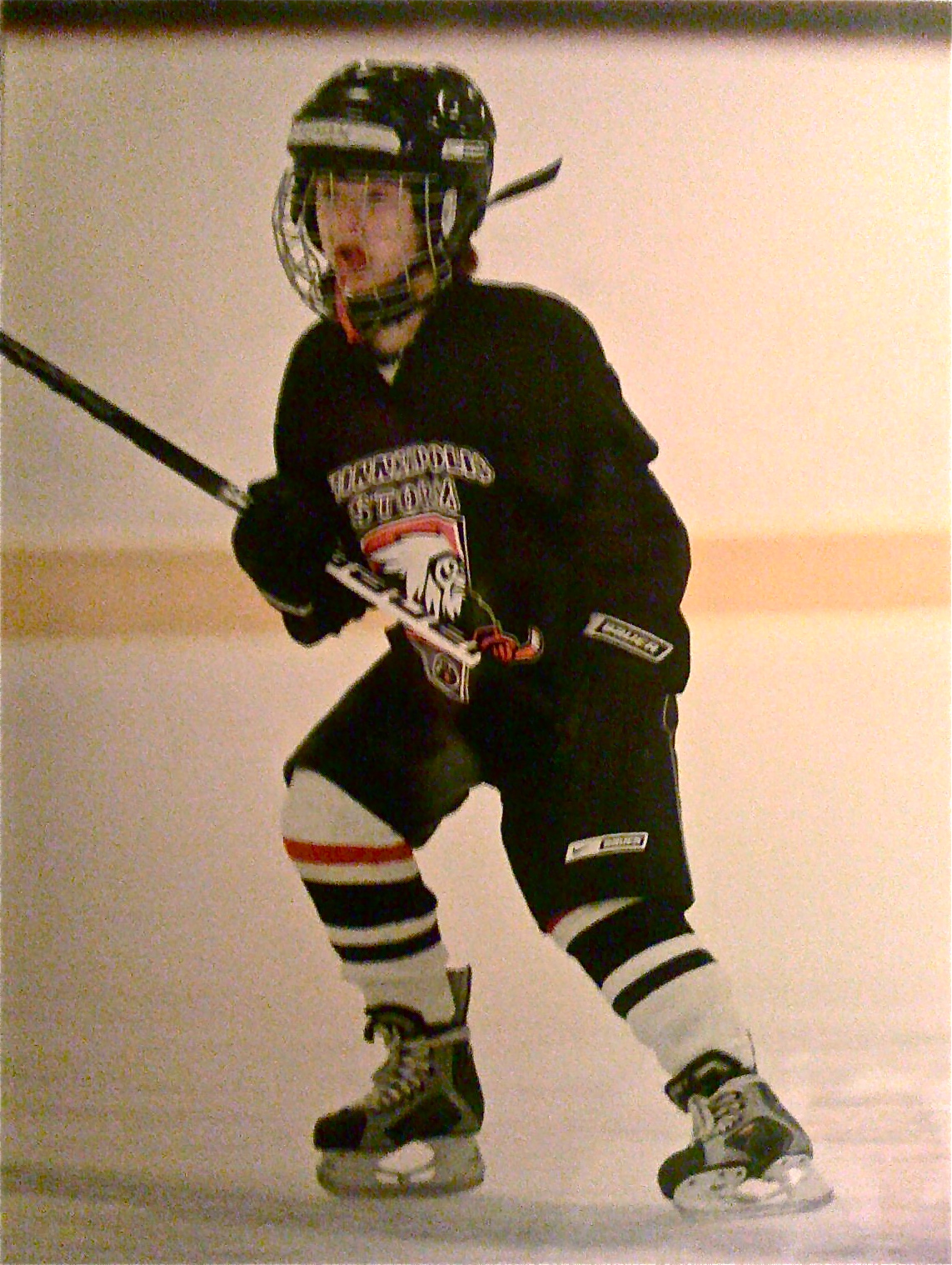
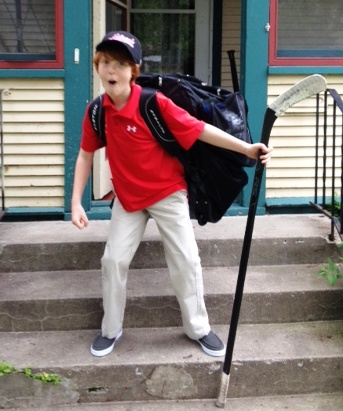
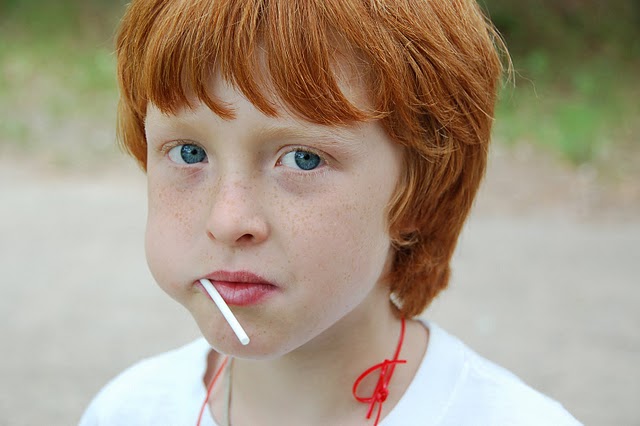
My 10 year old son comes out of the ice arena, swaggering despite the heavy hockey bag that he carries like a giant backpack. His hockey stick and waterbottle he wields before him like a rod and staff. I’m sitting on a picnic table in the sun and, yes, I am facebooking on my iPhone. His cheeks are flushed, his bright ginger hair is damp-dark with sweat. He has an announcement to make.
“I’ve got everyone but one kid on my team to be in favor of same-sex marriage. AND two of the coaches.”
He beams at me. I can feel my jaw as it drops.
I’ll be the first to admit that I’m a terrible hockey mom. I hate almost everything about the sport. I’ve got two sons who play, so I did put a decent amount of effort into learning the basic rules and terminology. I know what a “hat trick” is; I understand what it means when the refs call “icing” (and even the circumstances under which you would want to ice the puck). But hockey is like an onion – and not just because the pungent smell of the hockey gear makes your eyes water. As you peel back the layers of hockey, you find kids shunted into the penalty box for obscure rules and quotes from Herb Brooks’ Miracle on Ice speech.
My biggest problem is that I grew up in the Deep South, so my natural impulse when winter strikes is to hibernate. The whole concept of driving – in the cold – to sit – in the cold – to watch a sport played – on ice, in the cold – boggles my mind. People always talk about the crazy ice times, but that has not been our experience so far. Checking is not allowed yet, and fighting is against the rules. Besides the expense, though, my biggest annoyance has been the hockey moms.
Let me be clear – I LIKE the hockey moms on my sons’ teams. They are all urban Minneapolis moms like me who yell “Good job!” and “Nice try!” and “Better luck next time!” My only problem with them is that they look more stylish than me in their cold weather attire, as I tend to focus more on function over style when it comes to winter. It is the other teams’ hockey moms that bug me when, dressed from head to toe in team gear, they are yelling things like “Take him out!” and “Kill him!” or applauding a player who sneaks in an illegal check. I see them almost always wrapped in team logo polarfleece blankets with one or more little shivering siblings clinging to them, each with their own garishly custom spray-painted cap that says “I don’t have a life! My brother plays hockey.”
Going inside to watch hockey on a cold winter day is one thing. Going inside to watch hockey on a beautiful summer day is completely inconceivable to me. But here in Minnesota, hockey is a year round sport. Serious players play AAA from April to September and, unlike the regular season, players are not required to play where they live. There are kids on my 10 year old’s team from throughout the Twin Cities Metro and (more of the onion that is hockey culture) some kids who travel here for the weekend practices and games from Wisconsin (which isn’t so crazy) and Florida and Texas (which is absolutely nuts!)
But my two sons are way, way into hockey. They LOVE this sport! I respect that, so I suck it up and wash their stinky gear and drive them to the rink.
From Mini-Mites up until last winter, I went into the locker room when I took my boys to hockey – even though I have been banned from years from tying their skates because I “don’t do it right.” I stopped when my oldest son moved up to PeeWees – after the unfortunate incident when I burst into the locker room, my 6 year old daughter (with her pink jacket and sparkle ballet flats) in tow, only to find a gaggle of 12 year-olds in their underwear listening to loud music and talking trash. “Mom!” my son hissed, “I’m good.”
I accidentally wandered into the locker room once this summer. I was only there a moment, but I heard at least 6 of the 10 year old Squirts claim credit for the same goal. Who needs that level of testosterone in their lives?
Given my locker room abdication, I was completely floored to hear that the hockey team was having a discussion about same-sex marriage. Here is the story, from the perspective of my 10 year old: “One kid brought it up. He said it was gross, a man with a man or a woman with a woman.” I said,
“ARE YOU CRAZY? That’s their choice who they love. It doesn’t affect you. Why does it matter to you? No one can tell you who to love.”
That launched the discussion which later led to the purported locker room conversions. It is a timely discussion in Minnesota, where there is a proposed constitutional amendment on the November ballot: “Shall the Minnesota Constitution be amended to provide that only a union of one man and one woman shall be valid or recognized as marriage in Minnesota?” VOTE NO signs have sprouted throughout our neighborhood; they line the roads on the way to the hockey rink.
To be clear, there is already a Minnesota state law defining marriage as between one man and one woman. Most of the lesbian and gay couples that we know have to go down to Iowa or another state that recognizes same-sex marriage if they want to get married. But a law can be changed, hence the purported necessity of the proposed constitutional amendment.
Simon had been late getting to practice (my fault – more evidence for the Worst Hockey Mom title). A coach came in to hurry along the stragglers and Simon asked, “You’re voting no on the marriage amendment, right?” “I don’t know yet,” he admitted. Simon laid out his arguments again, to which the coach said, “You make a good point. I think I probably will vote No. Now get out on the ice.”
My son can be like a dog with a bone, so he brought it up again at the next practice. This time he was on time and so when he brought it up in the locker room when everyone was there. One kid, a player who Simon describes as a “tough guy” got really upset when the other kid described same-sex marriage as “gross”. He stood up, half his gear on, and said,
“That’s my family you are talking about! I have two moms and they are married. It hurts my feelings when you say that my family is gross!”
Well, that sure got the team’s attention. According to Simon, he was too emotional to say much more but Simon was able to pick up where he left off.
See? He’s got two moms. So what? Why should his family be treated any differently than yours?
Turns out that my 10 year old son is way smarter than I am. It is all about having the conversation. According to Minnesotans United for Families, sixty-seven percent of people with gay and lesbian friends VOTE NO if we talk to them about marriage.
This means that the single most important action you can take to defeat this hurtful amendment is to start conversations about the freedom to marry with your friends, family, and the people you see every day.
So maybe it is time that I reassess my thinking on hockey. Maybe I should admit that I don’t know a thing about those other hockey moms. Maybe I should spend a little less time blogging during hockey practice
or running laps before hockey games while the other moms sit around and talk.
Maybe it is time that I dispense with my arrogance, overcome my disdain. Maybe I need to step outside of my comfort zone and start engaging other parents in conversation.
I know there are at least a couple of hockey moms in the ice arena who would probably appreciate it if their marriage were legally recognized in the state of Minnesota.
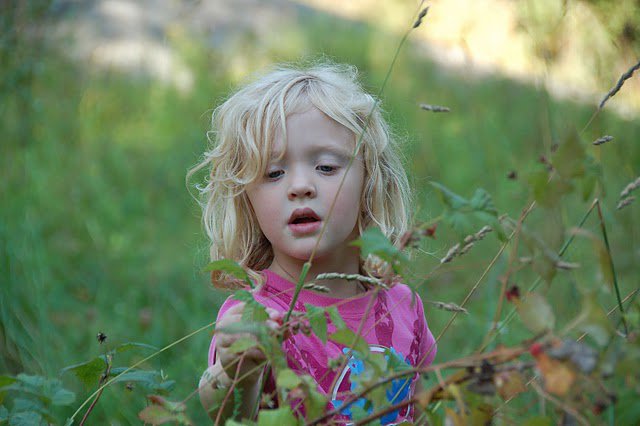
My daughter in Norway in August 2010. For many in Norway, the terrorist attacks on July 22, 2011 represent the loss of innocence.
On the morning of July 22 last year, I read the breaking news of a car bomb attack in Oslo, Norway. I clicked on the link to the NRK live coverage, forgetting that my three children rise and swarm, like mosquitoes from tall grass at dusk, at the slightest potentiality of a video.
“WHAT IS HAPPENING?” yelled my then-9-year-old son.
“It looks like a car bomb exploded in downtown Oslo.”
Gasps all around. We had been in downtown Oslo less than a year before. We had been in that part of town and I think we may even have walked down the street where the explosion damaged several government buildings.
“WAS ANYONE WE KNOW HURT?” screamed my then 6-year old daughter.
“I don’t know yet,” I replied. “Let me listen to what they are saying about it.”
I was trying to remain calm; I was struggling with a decision. As a parent, you have to make a choice about what horrific events you introduce to your children. And you have to decide – often on the spot – how to talk to them about tragedy and violence. You have to find the words to explain the evil that exists in the world while you simultaneously reassure them that, for the most part, they are safe. Obviously, this is not easy and there is no manual. But it is part of your job as a parent to help them make sense of life as a human on this planet.
“IT’S LIKE NORWAY’S 9/11!” blurted out my then-nearly-12-year-old son.
Presciently, in hindsight. It was that statement that decided me, that hardened my resolve. You see, like everyone else, I have a story to tell about 9/11. That’s a story for another day, but, suffice it to say, it committed me to engaging my children in a year-long discussion about the tragic events of July 22, 2011.
The Norwegian media were cautiously talking about how preliminary evidence indicated a terrorist attack. So we had a fruitful discussion (or at least what passes for a “fruitful discussion” when your kids are 6, 9 and 11) about 9/11 and the impact of those events on America. My children do not remember our country before 9/11. It was good to talk to them about the need for security, as well as the need to balance security with the protection of individual rights, including discrimination based on race and religion. They were engaged. They asked questions. Then, with the request to be kept informed of the emerging news of the Oslo bombing, they went on their way to do whatever it is that 6, 9 and 11 year old boys and girls do on a bright summer day.
But as the day went on, the news from Norway got dramatically worse. Eight people were killed and nearly two-thirds of the 300+ people in the government buildings were injured (and had it not been 3:30 pm on a Friday in the holiday month of July, there would certainly have been many more casualties). But the car bomb in Oslo was merely a distraction. Less than two hours later, right-wing extremist Anders Behring Brevik, dressed as a police officer in a fake uniform that he bought on the Internet, took the ferry to the island of Utøya in nearby Buskerud. There he killed 69 people – mostly under the age of 18 – at an summer camp for politically active young people in the AUF (Arbeidernes Ungdomsfylking), which is affiliated with Norway’s Arbeiderparti (Labor Party).
AUF describes itself as “Norway’s largest political party youth organization and champion for a more just world (“AUF er Norges største partipolitiske ungdomsorganisasjon og kjemper for en mer rettferdig verden”). Anders Behring Breivik carried out the massacre in cold blood, coming back to shoot again those who were lying injured, shooting kids in the water as they tried to swim to safety. He later claimed that he was trying to save Norway from Muslims world by attacking Social Democrats, Norwegian immigration policies and the concept of multi-culturalism.
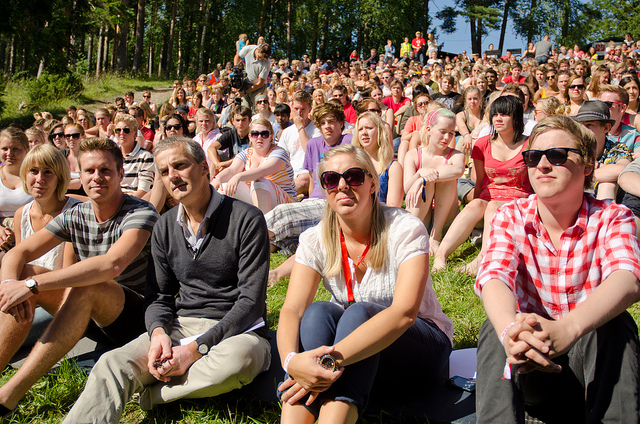
This photo of participants at the AUF summer camp on Utøya was taken July 21, 2011, the day before the massacre.
It was one thing to talk to my kids about car bombs and 9/11. It was something else entirely to talk to them about Utøya. I didn’t tell my kids right away about the massacre. I waited a few hours, sifting through the emerging stories of horror until the basic narrative was clear. When I did tell them, what they most wanted to know was:
“WHY?”
I said something about hatred, but there was really nothing I could say by way of explanation. Far too many lost their lives on July 22, 2011. And Anders Behring Breivik’s hateful, violent acts stole not just the future of scores of young people, but also the innocence of a peaceful nation. Just as we demarcate contemporary US history as pre- and post-9/11, so for Norway is tjueandre juli (22 July).
Luckily for me as a parent, stories began quickly emerging about what happened on Utøya. Amazing stories of luck and bravery. Young people not much older than my own children who showed great presence of mind in an unthinkable situation. Leadership and sacrifice. These are stories – and there are many – that deserve more space than I have to give here. But we followed these stories in the days and months following 22 July. They gave us hope. They showed us that ordinary people – most of them still kids – could do extraordinary things.
There is much in our interactions with the world that we cannot control. We can control, however, how we act; how we REact to events and actions by others. This is a lesson I strive to teach my children. I don’t always provide a good role model, but Norwegian Prime Minister Jens Stoltenberg certainly did. I’ve been reading the speeches of Jens Stoltenberg this summer. From the beginning, he encouraged Norwegians not to give way to fear and hate and prejudice. He urged Norwegians to react to the attacks of 22 July by being MORE welcoming to the outsider, to the foreigner. Invite him in for cake and coffee, the Prime Minister suggested. Invite her to take a walk. Get to know one another.
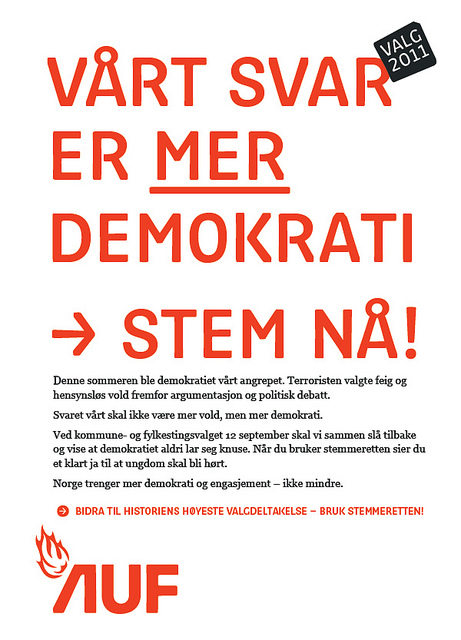
When local elections were held in September 2011, fear was not used as a campaign tactic in Norway. I showed my kids the AUF campaign materials which said, “This summer, our democracy was attacked. The terrorist chose cowardice and ruthless violence over argument and political debate. Our answer is not more violence, but more democracy.”
I’ve heard people say that Norway’s response to July 22 was simplistic. Idealistic. Naive. Maybe it wouldn’t work in other countries. But if you doubt that words matter, let me tell you what happened after the trial of Anders Behring Breivik began on April 16, 2012. Breivik had testified that a particular song, Barn av regnbuen (Children of the Rainbow) by well-loved Norwegian folk singer Lillebjørn Nilsen, with its concept of living together in a multicultural Norway, was brainwashing children into supporting immigrants. This is a song that Mr. Breivik, apparently, detests.
Folksinger Lillebjørn Nilsen and a crowd of 40,000 sing Barn av regnbuen (Children of the Rainbow) at the trial of Anders Behring Breivik in Oslo (Source: NRK)
This is a song that I learned many years ago. It is actually a Pete Seeger song called My Rainbow Race, translated into Norwegian by Lillebjørn Nilsen. I did a rough translation of the lyrics of Barn av regnbuen in a blog post in April. The song’s title comes from the verse:
Sammen skal vi leve
hver søster og hver bror.
Små barn av regnbuen
og en frodig jord.
Together we will live
every sister and every brother.
Small children of the rainbow
and a flourishing world.
One night last week, I heard my now-10-year-old son singing in his bed. He was singing Barna av regnbuen. He sang the whole song, the refrain and every last verse. And then he sang it again.
There will be many tributes on July 22, 2012. Remembrances and roses to honor the innocents who lost their lives one year ago, the survivors who will never be the same again. Add to them this tribute, from a kid in a bunkbed half a world away. A kid who, hopefully, has learned something from the tragedy of 22 July.
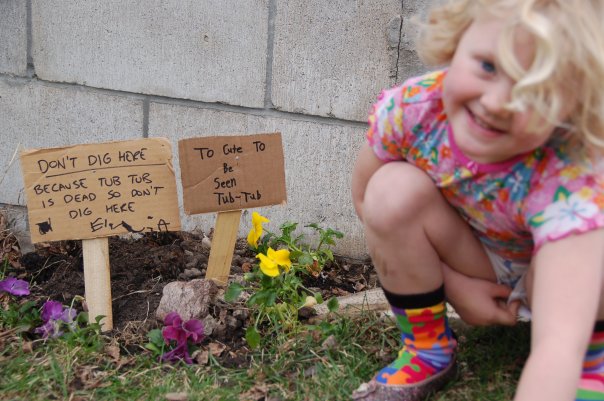
The recent demise of Fat Stanley was met with far fewer tears than that of Kevin Bacon (the gerbil) and definitely far less anguish than that of Tub-Tub, our first dearly departed rodent pet. It did however, necessitate a discussion about death with my three children. The easiest answer to the question “Where is Stanley now?” would have been to describe a dwarf hamster heaven, where Stanley roams freely among a vast surfeit of yogurt treats and well-oiled wheels. While it was somewhat tempting to give them an easy and soothing answer, I can not in good conscience pitch that pablum to my kids. You see, in my line of work, I talk to people about death all the time.
As a human rights lawyer, my job is to document human rights abuses. So there have been many days over the course of my career when I have asked people to describe to me in very precise detail how someone they loved died. In one week alone in 2007, I took statements from more than 45 Liberian refugees at Buduburam Refugee Settlement in Ghana for Liberia’s Truth and Reconciliation Commission. The very first person I interviewed at Buduburam was a teacher. The teacher was wearing a pink polo shirt that was remarkably clean and crisp, given the hot, dusty conditions on the camp. He had come into the Refugee Welfare Office, where we were piloting the interview process, to watch a football match on the TV. When I asked if he wanted to give a statement, he said, “Sure. Why not?”
It was late May and the equatorial sun had beat down relentlessly all day long. As we went into one of the private offices to do the interview, however, a pleasantly cool late afternoon breeze was coming through the barred window. I discovered later that the location of the camp was very close to the Prime Meridian, as well as the notional center of the world – 0°, 0°. The sun sets early and fast near the equator. As we talked, the shafts of light from the setting sun were low and long, glinting off the gold in his round, wire-framed glasses.
I had an interview protocol to follow and certain biographical data to collect. We talked about what he did in Liberia, where he had lived. It was going well. We established a rapport, buzzing through the facts of his life. I’ve done many similar interviews with the survivors of human rights abuses. You know immediately when a question is going to cause someone to break down. But the trigger questions are not always the obvious ones and usually you can only tell as you ask the question. As you see the pain in their eyes, the anguish in the lines of their mouth. The moment I asked the teacher if he had ever been married, I knew. I knew we would both soon be crying.
People who have experienced trauma and loss often think it is behind them, that they have put it in the past. But of course, that is never really possible. The teacher and his fiance were not yet married when the fighting came to Monrovia in July 1990. When Charles Taylor’s NPFL rebels came to their neighborhood, they separated the men from the women. She talked back. He yelled for her to hold her tongue, to just cooperate! He didn’t know if she heard him. The teacher had been herded into the back of a pick-up truck with other young men. It was from that vantage point – above and unable to help – that he saw the rebel hit her with the butt of his rifle. He knocked her to the ground, turned the gun around and shot her. The whole thing happened fast, so fast. Then the truck pulled away.
There was much more to his story. He escaped the rebels eventually, made his way onto a leaky tanker with thousands of other refugees, made it to safety in Ghana. Got a teaching job and lived in a refugee camp for 17 years. But those parts of his story came later, after he had wiped the tears from his glasses. After we took the time to honor the memory of his fiance. To dedicate his statement to her, so that her story would not be lost among all the others in the terrible Liberian civil war.
As a parent, I know there is a natural impulse to try to shield our children from the sad and terrible details of both life and death. I believe each parent has to make his or her own decision about what is best for their children, so I am not presuming to give advice. I do believe in God and the potential of an afterlife, but I have no idea what actually happens after you die. But I know that bad things – terrible things – happen all the time and, as my kids grow into their tweens and teens, I think I would be doing a disservice to them not to be honest about that. And I am absolutely certain that, like the teacher, you carry your loved ones in your heart long after they leave this life. The best thing you can do when you lose someone you love is to keep their memory close and honor them in whatever way you feel is right.
Sometime shortly after my third child was born, I gave up trying to be the perfect parent. I made peace with the fact that the best I can do is try – try as hard as possible – to do my best. I stopped obsessively reading parenting books and desperately seeking “expert” advice on how to do things like talk to my kids about serious issues like death. I started following my own parenting guidestar. For lack of a better way to put it, I started listening to my gut instincts.
So when my 9 year old son asked me to tell him a story from my work, I looked at him silently for a while as I listened to that little voice inside my head. It was telling me that he was ready to hear the story of Victoria.
Victoria was the last refugee I interviewed at Buduburam on that trip in 2007. She was a poised and intelligent young woman who rushed back to the camp from her classes at nursing school in Accra in order to give her statement. We sat outside, away from the buildings on the edge of the camp, face to face with each other on white plastic chairs set on the hard-packed red dirt. Victoria’s mother had died when she was young, so as a child in Liberia she had lived alone with her father. Her story began later than the teacher’s; two civil wars raged in Liberia between 1989 and 2003. She was only 8 or 9 – the same age as my son – when the fighting reached her house.
Her father told her to hide in the bushes by the side of the house while he went out to talk to the rebels. She lay on her belly in the bushes, saw the rebels argue with her father. She watched as they shot him in the head and he fell to the ground, unmoving. The rebels went into the house and took food and anything of value. But they didn’t find Victoria in her hiding place and eventually they lit the house on fire and left. “I didn’t know what to do,” Victoria told me. “My father never moved so I knew he was dead. I just didn’t know what to do next. So I stayed in the bushes, crying, near my father’s body all night.” The next day, as the sun rose, she kissed her father goodbye and went to a neighbor’s house. The neighbor brought Victoria with her to Ghana.
After Victoria told me her story and left for her home, I sat for a long time on that white plastic chair, on the edge of a refugee camp near the latitudinal and longitudinal center of the world. A cool breeze stirred the sweat-damp hair on the back of my neck as the sun sank rapidly. The sunset was brilliant with colors – the muted pink of an impossibly crisp polo shirt, the bright orange of my small son’s hair, the deep purple of a bruise left by a rifle butt.
My son had listened to the story quietly. I hadn’t been sure how he would react, so it was a surprise when he said. “That was interesting. I feel sorry for Victoria. It is sad that all of that happened to her. But she found a way to survive without her dad. The neighbor and other people took care of her. It kind of makes me less afraid of what would happen if you died.”
The kid makes good point. One which I hadn’t thought of before I told him about Victoria. Talking to my kids about death is also talking to them about life and how to live it.
So here’s to you, Fat Stanley.
And to you, Kevin Bacon.
I honor your memory and the time you spent with us.
Conventional wisdom holds that to survive in Minnesota, you must embrace winter. Perhaps that explains the view from my kitchen:
In case you are wondering: that is a hockey rink. That’s right – a backyard rink. This winter, we decided to build a hockey rink in our backyard.
You might ask why anyone in their right mind would turn their entire backyard into a hockey rink? Well, we’ve got a couple of reasons:
The rationale for the backyard rink is that the kids will be able to just go right out the back door and skate anytime. Fresh air is better than screentime and all that. Ten minutes of skating is better than fighting with your brother, yada yada yada. We thought it might be nice to have a project that the family could work on together over winter break. Kind of like Swiss Family Robinson but with fewer pirates and more cocoa.
But what about the grass, you ask? Well, we aren’t fancy here. We’ve never really bonded with our “Freedom Lawn” of broadleaf and dandelions. We don’t, frankly, have a very good record on lawncare. This was the view from our front porch last summer:
By now, you are probably on pins and needles, waiting to hear about the logistics of building a backyard rink. You can buy a rink-in-a-box or you can google “how to build your own rink”, which is what we did. Here is how we (and by “we”, I mean my husband) built ours.
First, you build the boards. (Allow extra time for extra trips to Home Depot.)
Next you cover your backyard with a giant sheet of plastic. This one was custom-made to fit our backyard from the patio to the apple tree. Yes, there are companies that specialize in this sort of thing. AND they survived the recession!
Then you add water. Freeze.
Add more water. Freeze.
Then you wait.
And wait.
And wait some more.
Are we crazy? No, definitely not. If we were crazy, we would also be building one of these suckers:
Instead, we’ve got one of these:
It is customary in Minnesota to greet people in the winter with a cheerful: “Cold enough for ya?” But it has been unseasonably warm this year and all the people who claim to “just LOVE the change of seasons!” are freaking out. The record-breaking warmth has also thrown a meteorological monkeywrench into our backyard rink plans. The whole “water freezing” part has not been working so well in 40 degree weather.
Now that we’ve got our backyard rink built, we believe that Old Man Winter will come. The low tonight is predicted to be in the single digits. Promising signs this morning that he is on his way:
I’m hopeful that very soon – maybe even by the time you read this – the view from my kitchen window will be my kids and their friends, skating around in our own backyard rink. I’ll be inside, making the cocoa.
Happy New Year! It’s been one year since I started my Human Rights Warrior blog. Here is a post I wrote recently for Open Salon on The New Year’s Resolution I Kept. It pretty much sums up the way I feel about my first year of blogging. Now, onwards into 2012!
It all began, as so many things do, with a misunderstanding. I was putting my son Simon to bed one night when he said,
“Mommy … What’s it like to be a human rights warrior?”
“But sweetie, I’m not a human rights warrior. I’m a human rights lawyer.”
He waited a couple of seconds – this kid has an uncanny sense of comedic timing – before wrinkling up his little nose and saying skeptically,
“What’s a LAWYER?”
I’ll never know what kind of weapons he thought I was secretly carrying in my briefcase because my description of my actual job put him right to sleep. But this bedtime exchange got me thinking. For more than 15 years, I’ve worked with survivors of human rights abuses. My job is to document and bring to light stories of unbearable loss from every corner of the world. I have observed the absolute worst aspects of human nature, the dark side in each of us that we would rather not acknowledge.
You might think that this would make me pessimistic about the world in general and Homo sapiens in particular, but the impact has been quite the opposite. It has been my privilege to bear witness to the very best characteristics of humanity – our capacity to overcome adversity, to hope, to forgive. I’ve heard inspiring acts of courage; seen the precious gift of faith.
While I have many stories from my experiences in human rights work, I realized – after this one comment from a very small person – that most of them had never been shared with anybody. Stories of human rights abuses don’t exactly lend themselves to pleasant cocktail party conversation. How do you convey the complex political and social conditions that lead to human rights abuses, honor the victims, and avoid grossing people out with the horrible details – all in a two-minute elevator speech? And how do you even stop talking about injustice once you start?
So how was I going to figure out a way to talk about it with my kids?
That “Human Rights Warrior” discussion took place more than five years ago. This is my son Simon today.
What did I do about my conundrum for four long years? Exactly nothing. But I didn’t stop thinking about it. As a parent, I am challenged to distill my experiences into something that Simon – along with his older brother and his younger sister – can understand and profit from. I kept turning it around in my head like it was my mental Rubic’s cube, impossible to put down but incredibly hard to solve.
I don’t believe in New Year’s resolutions. If something is important enough to do, you should make the promise to yourself to do it whether it is May Day or Halloween or January 1. But with my long history of inertia on this topic, I needed more motivation. In 2011, I resolved, I will think more intentionally about what I’ve learned from my work in human rights and I will take action t0 pass these lessons along to my kids.
A friend had suggested writing about my experiences as a way of processing them. So on New Year’s Day 2011, I started writing my thoughts down. Randomly at first, in one of my kids’ old wide-rule spiral notebooks, which I had misplaced by January 3. I moved to writing on my laptop and jotting notes on my iPhone. When I reached the point where I felt I had some stuff that was good enough to share, I started a blog. My sweet husband gave me a domain name for my birthday: Human Rights Warrior.
I don’t consider myself much of a blogger, much less a writer. I write only at the outermost corners of my life, on the UB313 of my solar system. Often I find myself writing in odd places, like the hockey rink when one of my boys has practice.
It doesn’t really matter, though, because now I’m thinking about it all the time. Writing down my thoughts has forced me to focus on making the connections between the experiences I’ve had in human rights and things in their lives. My neurons are firing like a toddler with DHA omega-3 enriched milk in her sippy cup. Putting it in words crystallizes both the good and the bad, making it easier for me to talk about them with my kids.
It has also brought back so many memories. I didn’t realize how many people I still hold in my heart. Ma Fatu, who lost her own family in the Liberian conflict but made a new family with orphaned young people in Buduburam Refugee Settlement. My former asylum client, bravely recounting her gang-rape by Kenyan police as her husband sat beside her in agonized silence. A couple in Peru, who after being released from more than 10 years of unlawful detention, recounted their story while holding their newborn infant daughter, who never left their arms. These are people who will never be nominated for a Nobel Peace Prize, but I feel that I am honoring them for their strength and courage when I tell my my children about them.
Are my kids listening? Not really. Maybe. Who knows? Like the healthy lunches I send with them to school, my job is just to pack the lunchbox not to force it down their throats.
Last week, though, as he was going to bed, Simon said to me, “Mom, can you tell me some stories about your work?” I could. So I did.
I kept my New Year’s resolution in 2011. I am a Human Rights Warrior.
Photos of European Parliament Member Licia Ronzulli with her daughter keep popping up on my Facebook news feed and Pintrest. My friends are mostly moms, so I speculate that they had an emotional reaction when they first saw the photo of MEP Ronszulli with her baby. I know that I did. I cheered and teared up a little, almost simultaneously. Then I stopped and asked myself, “Why?”
The photo of Ms. Ronzulli at work with her baby is not a new – it was taken in September 2010. While this photo caused a splash in Europe in 2010, it took a while for it to catch on here. That’s about right – as a country, the US is generally well behind Europe in terms of policies that support mothers.
Although she doesn’t bring her daughter to the European Parliament regularly, there are other photos of Ms. Ronzulli and the now-toddler Vittoria. During a vote on the Eurozone debt crisis on February 15, 2012, reporters snapped several photos of Vittoria with her mom at the European Parliament.
The media coverage I have seen has focused on the cutesy (“awwwwwww”) or “hilarious” aspects of the photos. That’s too bad. I think the media missed the opportunity to talk about WHY American moms like me are cheering for Ms. Ronzulli.
Here are a few reasons:
1) Ms. Ronzulli’s employer, the European Parliament, has rules that allow women to take their baby with them to work. Most American women do not have that option.
2) The photos perfectly symbolize the work-family balance that all of us working moms struggle with every day. The fact that, according to media reports, the photo of Ms. Ronzulli with her infant was taken during a vote on proposals to improve women’s employment rights makes it all the more poignant.
3) Ms. Ronzulli is showing the world that childbirth does not automatically flip the offswitch on our female brains. Women continue to be productive employees even after they become mothers. The Daily Mail, which ran the February 2012 photo in an article titled “Does my vote count, mummy?”, describes the 36-year old Ronzulli as seeming “in complete control in spite of having her baby on her lap throughout.” Why is this such a surprise? I know that I, for one, have become better at multitasking and more efficient at doing my work since I had my first child.
4) In the 2010 photo, it appears that Ms. Ronzulli is choosing to keep her 7 week old infant with her as much as possible. In my experience, that’s important for babies who are still so little. Yet 6 weeks is the typical maternity leave in the U.S. That doesn’t mean that it is paid leave, however. The U.S. is also one of only a handful of countries with no national law mandating paid time off for new parents.
5) Ms. Ronzulli was entitled to a parenting leave, but chose to take only 1 month of it. She makes the point that it is about personal choice. In 2010, she told The Guardian “It’s a very personal choice. A woman should be free to choose to come back after 48 hours. But if she wants to stay at home for six months, or a year, we should create the conditions to make that possible,” she said. Amen, sister!
6) She looks GOOD! I know I never looked that good 7 weeks after labor and delivery, but many of my friends very quickly looked like their pre-baby selves again. I certainly didn’t look my best when I was the sleep-deprived parent of a toddler, but the world didn’t end. Moms like a little reminder now and then that a having a baby doesn’t slam the door on our ability to look and feel good. Sometimes it sure feels like that, but really it’s just a temporary setback.
7) Ms. Ronzulli probably didn’t have to nurse baby Vittoria sitting on a toilet in the ladies room. That’s something I had to do at some point or other with all three of my babies here in America.
So thank you, Licia Ronzulli, for giving us American moms something to cheer for today and a reminder of what we need to continue to work towards tomorrow!
Human Rights Day is December 10! The date was chosen to honor the United NationsGeneral Assembly‘s adoption on 10 December 1948 of the Universal Declaration of Human Rights (UDHR), the first global statement of international human rights principles. Here are some ideas for simple yet meaningful ways for your family to celebrate the rights and responsibilities that we all share as human beings.
1. Learn about the Universal Declaration of Human Rights. Check out the UDHR plain language version or the Amnesty International UK book We Are All Born Free (15 of the illustrated pages of the book can be found on The Guardian’s website if you want to look at them online or print them out). You can also watch a short video together and talk about it with your kids. My kids loved this animated video version of the UDHR even back when they couldn’t understand what the words meant. For a more historical view, check out The Story of Human Rights.
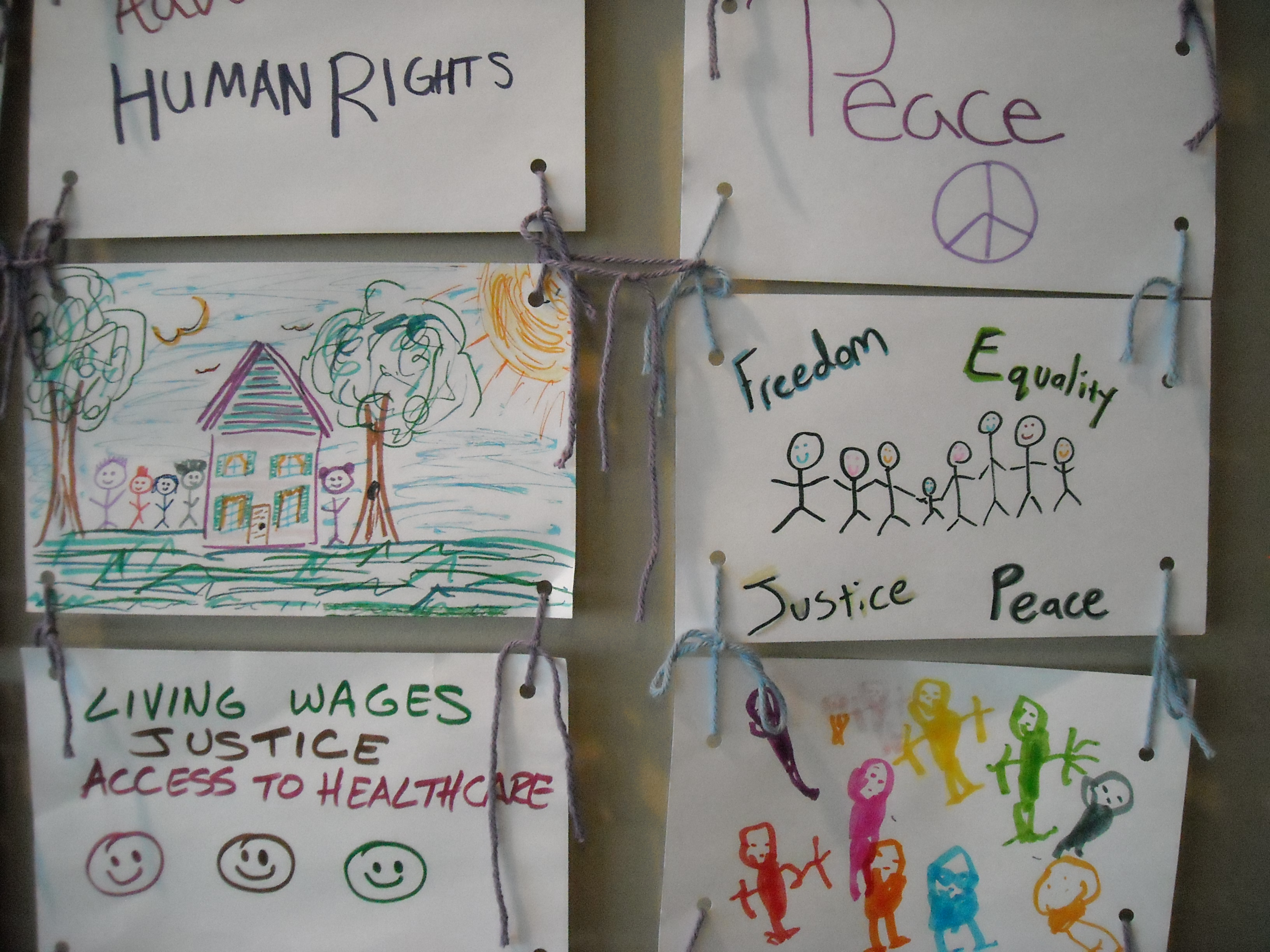
2. Exercise your right to freedom of expression!Draw pictures together of the rights and freedoms that are important to you. You can make your own family “Human Rights Tapestry” by drawing on index cards and using a hole punch to make holes in each corner. Use yarn to tie together the cards to make a tapestry. (See the picture above of the Human Rights Tapestry conceived of by Chanida Phaengdara Potter and created by visitors to The Advocates for Human Rights‘ booth at the Minnesota State Fair.) You can alsomake posters or collages together. Help your kids write a poem or story about human rights. Older kids can even make a video!
3. Listen to some human rights music with your kids. Here are a few suggestions, but you might also want to check out the folk music songbook Rise Up Singing. The book contains the chords and lyrics for more than the 1200 songs on a wide variety of social justice issues.
If I Had a Hammer – Pete Seeger Really, anything by Pete Seeger. Pete is my own personal antidote to Barney.
Free to Be You and Me – Marlo Thomas & Friends In my opinion, one of the best things about being a kid in the 70s.
The Preamble – Schoolhouse Rock Did you know that the U.S. Constitution is one of the first documents to establish universal principles of human rights?
Star Wars Main Title/Rebel Blockade Runner– John Williams People say Star Wars was a Western set in space, but I see it as a movie about the fight for human rights against the Empire.
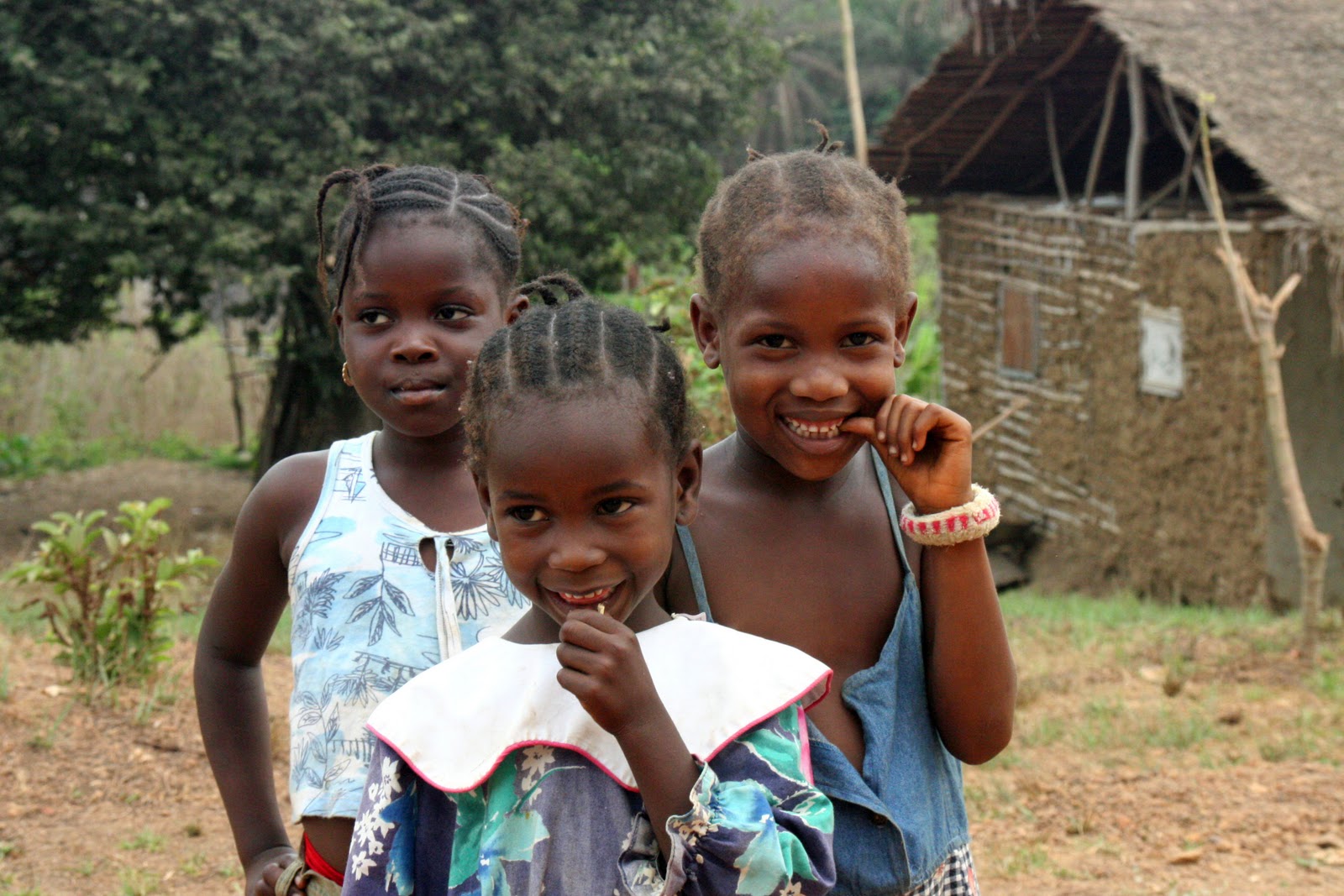
4. Same and Different. I started doing this activity in my childrens’ classrooms and really learned a lot from the kids about tolerance and respect. Show your kids a photo and have them point out what they see in the picture that is the same in their lives and what is different. Here’s an example but more can be found on my blog post Same and Different:
photo by Dulce Foster
The kids’ responses: ”I like that bracelet.” ”I sometimes wear my hair in braids, too.” “They have dark skin and I have white skin.” ”We have different trees here, like conifers.” ”We have snow here right now.” ”Is that corn growing behind them? Because I LOVE to eat corn, too.” ”Is that a house? It’s not like my house.” ”You couldn’t live in that house in Minnesota. You would get too cold.”
5. Let your kids use their screen time to learn about human rights! Play games and quizzes on the UN cyberschoolbus. Check out these free, downloadable video games:
Stop Disasters! Learn how to respond to different humanitarian disasters.
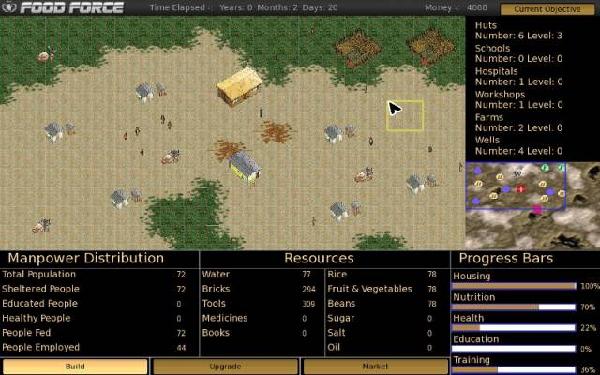
Food Force Gamers ages 8-16 undertake 6 virtual missions to stop world hunger. Download the game in English, French, Norwegian, Portuguese, Korean, etc. (I’ll be testing newly launched Food Force 2 with my 12 year old gamer son. Something tells me he’s going to kick my butt at saving the world!)
Photo from Food Force 2
6. Talk to someone you know who is from another country. Where are they from? What was their life like there? What language did they speak? Did they go to school? What do they miss? What do they like about their new country?
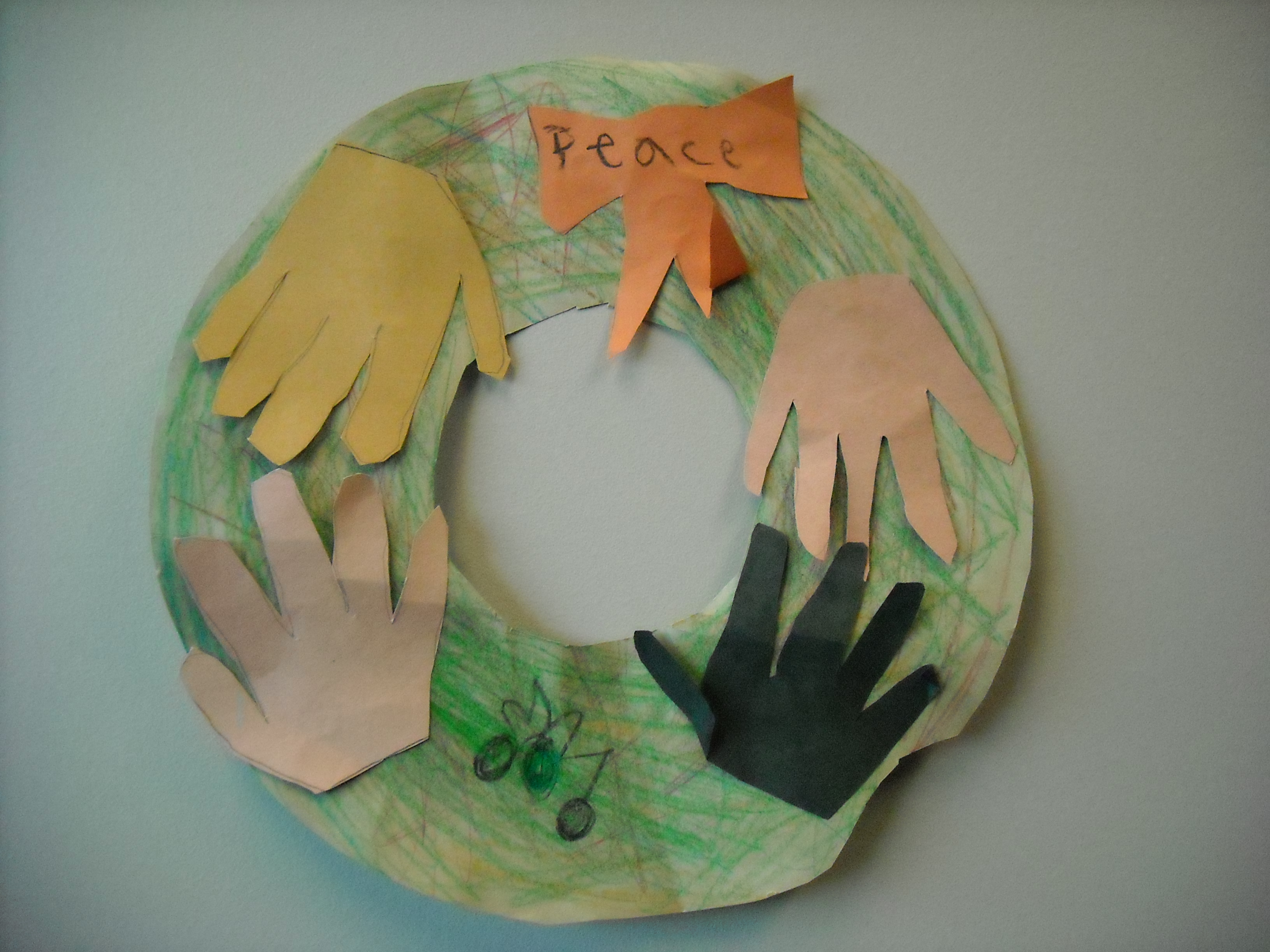
7. Make a Helping Hands Wreath to symbolize the responsibility we all have to help each other. Trace your hands on different color construction paper. Cut out the hand shapes and glue or staple them on a paper plate to make a wreath.
8. Act out a skit with puppets. You can use any puppets or even make your own paper bag or sock puppets. This skit is from RAISING CHILDREN WITH ROOTS, RIGHTS, & RESPONSIBILITIES , but you can also write your own skit, using a problem that your children have had to deal with themselves.
Example skit: Puppet 1: Hi everybody, my name is Jan.Puppet 2: Hi, everybody! I’m Sam, and I’m building a bridge. (Puppet is working with blocks.) Jan: Hey, Sam, I need those blocks for the airport I’m building. (Jan takes some blocks.) Sam: Hey! Don’t do that! You’re taking away my right to play! (Puppets tussle over a block.)
Discussion: What do you think Jan could have done differently? Has anyone ever interfered with your play? How did that make you feel?
“Can you do a different ending to the story?” Choose children to act out the play again with the puppets, but coach them in some respectful ways to play together to share, take turns, or use other solutions they think of themselves.
“I know you can act very respectfully and responsibly toward each other. In fact, I’ve seen ________________________ (give examples of a time when acted responsibly).
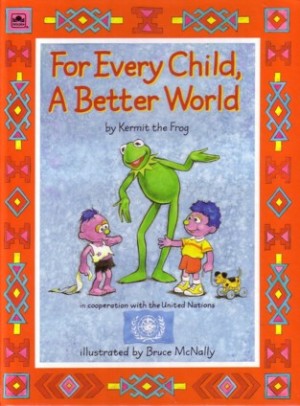
9.Read a book about human rights. There are so many, but for young children, I like Horton Hears a Who by Dr. Seuss, The Giving Tree by Shel Silverstein, Giving Hand, For Every Child, A Better World by Kermit the Frog. (Yes, I have a thing for Kermit.)
10. Take action! Teach your kids that they really can make a difference in the world. Collect food and bring it to a local foodshelf. Write a letter or sign a petition on behalf of a prisoner of conscience. Volunteer to help serve a meal at a homeless shelter. Raise money from friends or neighbors for UNICEF or another organization working on human rights. (Remember to Trick-or-Treat for UNICEF next Halloween.) Check out additional service learning ideas for kids in grades K-12 at 160 Ways To Help The World
ADDITIONAL RESOURCES: You’re on your way to a great Human Rights Day! If you are a classroom teacher or homeschooling your kids (or if you just want to dig deeper), you can find tons more ideas through the following resources:
I first heard about “The Sharing Table” when my son came home from kindergarten and exclaimed, “No snack for me today! I had three hot dogs – plus my home lunch.” I pictured the Oscar Wienermobile pulling up at his school, tossing hot dogs like Mardi Gras beads. “Where did you get three hot dogs?” “The Sharing Table, of course.”
The concept is simple. If there is something in your school lunch that you don’t like, you leave it on the table. If there is something in the school lunch that you want more of, or – if you are like my children – you would like to supplement to your home lunch, well, you can just help yourself. I couldn’t find any official Minneapolis Public Schools food policy, so I quizzed the kids.
Me: “So, how did you find out about The Sharing Table?”
Oldest son (age 12): “Duh! It is right next to the Allergy Aware Table. You can’t miss it.” (This one has a peanut allergy.)
Youngest son (age 9): “I didn’t really know about it, but then I think the Lunchroom Teacher told us at some point. The Lunchroom Teacher is kind of mean. If you forget your lunch, you go to The Sharing Table.”
Daughter (age 6 1/2): “It’s right there! Kids put their grapes there. I like it when I can get the ‘mandrigan’ oranges. Sometimes I take something and put it in my lunchbox for a snack later.”
All three agreed that the only real rules were that the items on the Sharing Table had to be from the school lunch, i.e. pre-packaged. Sometimes the pre-packaged school lunches bum me out. When I was growing up in Louisiana, the lunches were not pre-packaged. They were made in the cafeteria kitchen by large African-American women who always seemed to be stirring giant stainless steel pots and having a grand old time. The East Baton Rouge Parish schools offered up jambalaya, shrimp creole, crawfish etouffee, cornbread, buttery rolls, yams, succotash, John Marzetti casserole, iced spice cake – for only 90 cents a lunch. My high school cafeteria had both a “hot lunch” side and a gumbo/salad bar/milkshake side.
Those East Baton Rouge Parish school lunches were some of the best in the world. The melamine compartment lunch trays (which I recall as being pastel green, orange, yellow, and blue) came back to the kitchen clean as a whistle – except when greens were served. Nobody EVER touched the greens. The greens remained on the trays in the perfect ice cream scooper-formed mounds in which they were served. The rumor was that the greens were actually grass and, in fact, there was some circumstantial evidence to support the hypothesis. Not only did they look exactly like grass, but I myself observed over years – at Magnolia Woods Elementary, at Wildwood Elementary, at Glasgow Middle Magnet – that greens were always on the menu THE DAY AFTER the janitors mowed. At Baton Rouge Magnet High, where students came from all over the parish, we did an informal survey and discovered that this was happening in all the school cafeterias. Harbinger of the locovore movement? Or just coincidence? You be the judge. All I know is that nobody EVER touched the greens.
One greens day when I was a sophomore in high school, I brought my lunch tray back to the kitchen. My tray was clean, except for the greens. On the conveyor belt, there was a long line of trays with ice cream scoop mounds of greens waiting to be dumped. The cafeteria lady who was spraying down the trays looked me in the eye and said,
“Y’all is wasting perfectly good greens. Y’all must not know what it’s like not having enough to eat.”
Y’all, in case you don’t know, can be used both in the singular as well as the plural. I understood exactly what she was saying that day – she meant both. The only possible response to this was, “Yes, ma’am.”
By which I meant, “I’m sorry.”
Last year 65% of kids in grades K-8 qualified for free and reduced lunch. I think The Sharing Table is a fine way to make sure that all of these kids get enough to eat. At my kids’ schools they also have R.O.T., where the kids have to sort the remains of their lunches into recycling, organics, and trash. I think that’s a good idea, too.
This Thanksgiving I am thankful for the many blessings in my life: for my family, my health, the opportunity to do good work. I rediscovered my love of writing this year and I’m grateful for that, too. I’m thankful to that long-ago Baton Rouge High School lunchlady. And I’m also thankful for The Sharing Table. My children are learning lessons at school that are not in any curriculum. They are learning a lifestyle of avoiding waste and paying attention to what happens to their garbage. They are learning, by giving and taking equally, that if you have more than you need, you should share it. If you need more than you have, you can take it without questions or shame. It’s not political, it’s just about being together in a community. Today I am thankful that I am not alone in raising these children to be good citizens of their community.
Throwdown* Crawfish Etouffe
1 lb. crawfish tail meat (can also use shrimp or catfish)
2-3 teaspoons Tony Cacherie’s Creole seasoning (if you don’t have that, use 2 tsp. salt, 2 tsp. garlic powder and 1/2 tsp. cayenne)
1/2 stick of butter
1 medium yellow onion, chopped
2 bunches scallions (green onions), chopped
2 stalks celery, chopped
2 cloves garlic, minced
1 can Rotel Tomatoes (diced tomatoes with green chiles)
1 can Campell’s Cream of Mushroom soup (the TRUE secret of Cajun cooking!)
Mix seasoning with crawfish and put in refrigerator for 30 minutes.
Over medium-high heat, melt the butter in a heavy pot. Add the chopped onions, celery and garlic and saute until the yellow onion is translucent. Add the seasoned crawfish and mix real good. After about a minue, add the can of soup (no water) and stir. Then add the Rotel tomatoes and mix. Lower the heat, cover the pot, and cook the rice. Stir the etoufee often and simmer over low heat for 20 minutes. Season to taste with more Tony’s.
*The lazy version
JOHN MARZETTI CASSEROLE
Not my recipe, but I ate a whole lot of it and make it for my family now. I do wonder how a dish from Ohio became such a mainstay on the EBRP public school lunch menu. Here is the source for this version of the recipe.
3 tbsp. olive oil
1 large onion, chopped
¾ lb. mushrooms, cleaned and sliced
2 lbs. lean ground beef
3 ½ cups tomato sauce
1 ½ lbs. cheddar cheese, shredded
1 lb. elbow macaroni, cooked and drained
In skillet, saute onion in oil until limp, about 3 minutes. Add mushrooms and fry until juices are released, about 5 minutes. Add beef and cook, stirring, breaking up clumps, until no longer red. Remove from heat and mix in tomato sauce and all but 1 cup of cheese. Transfer to greased 9- by 13-inch baking dish and add macaroni. Toss gently to mix. Scatter remaining cheese on top. Bake, uncovered, in 350-degree oven until browned and bubbling (35 to 40 minutes). Serves 10 to 12.




















 The Human Rights Warrior

You must be logged in to post a comment.