Talking To My Kids About Death

Pet Graveyard

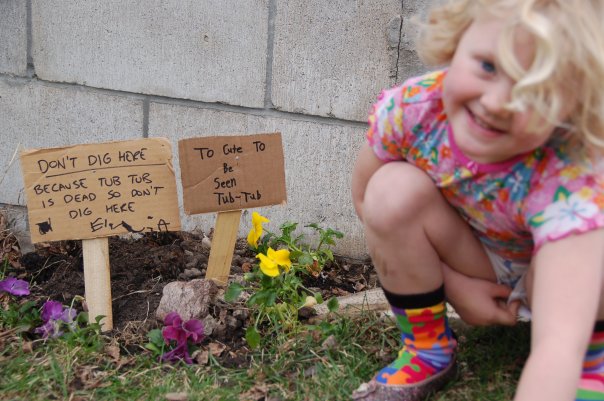
The recent demise of Fat Stanley was met with far fewer tears than that of Kevin Bacon (the gerbil) and definitely far less anguish than that of Tub-Tub, our first dearly departed rodent pet.  It did however, necessitate a discussion about death with my three children.   The easiest answer to the question “Where is Stanley now?” would have been to describe a dwarf hamster heaven, where Stanley roams freely among a vast surfeit of yogurt treats and well-oiled wheels.  While it was somewhat tempting to give them an easy and soothing answer, I can not  in good conscience pitch that pablum to my kids.  You see, in my line of work, I talk to people about death all the time.

As a human rights lawyer, my job is to document human rights abuses.   So there have been many days over the course of my career when I have asked  people to describe to me in very precise detail how someone they loved died.  In one week alone in 2007, I took statements from more than 45 Liberian refugees at Buduburam Refugee Settlement in Ghana for Liberia’s Truth and Reconciliation Commission.  The very first person I interviewed at Buduburam was a teacher.  The teacher was wearing a pink polo shirt that was remarkably clean and crisp, given the hot, dusty conditions on the camp.  He had come into the Refugee Welfare Office, where we were piloting the interview process, to watch a football match on the TV.  When I asked if he wanted to give a statement, he said, “Sure.  Why not?”

It was late May and the equatorial sun had beat down relentlessly all day long.  As we went into one of the private offices to do the interview, however, a pleasantly cool late afternoon breeze was coming through the barred window.  I discovered later that the location of the camp was very close to the Prime Meridian, as well as  the notional center of the world – 0°, 0°.  The sun sets early and fast near the equator.  As we talked, the shafts of light from the setting sun were low and long, glinting off the gold in his round, wire-framed glasses.

I had an interview protocol to follow and certain biographical data to collect.  We talked about what he did in Liberia, where he had lived.  It was going well.  We established a rapport, buzzing through the facts of his life.  I’ve done many similar interviews with the survivors of human rights abuses. You know immediately when a question is going to cause someone to break down.  But the trigger questions are not always the obvious ones and usually you can only tell as you ask the question.  As you see the pain  in their eyes, the anguish in the lines of their mouth.   The moment I asked the teacher if he had ever been married, I knew.  I knew we would both soon be crying.

People who have experienced trauma and loss often think it is behind them, that they have put it in the past.  But of course, that is never really possible.  The teacher and his fiance were not yet married when the fighting came to Monrovia in July 1990.  When Charles Taylor’s NPFL rebels came to their neighborhood, they separated the men from the women. She talked back.  He yelled for her to hold her tongue, to just cooperate!  He didn’t know if she heard him.  The teacher had been herded into the back of a pick-up truck with other young men.  It was from that vantage point – above and unable to help – that he saw the rebel hit her with the butt of his rifle.  He knocked her to the ground, turned the gun around and shot her.  The whole thing happened fast, so fast.  Then the truck pulled away.

There was much more to his story.  He escaped the rebels eventually, made his way onto a leaky tanker with thousands of other refugees, made it to safety in Ghana.  Got a teaching job and lived in a refugee camp for 17 years.  But those parts of his story came later, after he had wiped the tears from his glasses.  After we took the time to honor the memory of his fiance.  To dedicate his statement to her, so that her story would not be lost among all the others in the terrible Liberian civil war.

As a parent, I know there is a natural impulse to try to shield our children from the sad and terrible details of both life and death.  I believe each parent has to make his or her own decision about what is best for their children, so I am not presuming to give advice.  I do believe in God and the potential of an afterlife, but I have no idea what actually happens after you die.  But I know that bad things – terrible things – happen all the time and, as my kids grow into their tweens and teens, I think I would be doing a disservice to them not to be honest about that.  And I am absolutely certain that, like the teacher, you carry your loved ones in your heart long after they leave this life.  The best thing you can do when you lose someone you love is to keep their memory close and honor them in whatever way you feel is right.

Sometime shortly after my third child was born, I gave up trying to be the perfect parent.  I made peace with the fact that the best I can do is try – try as hard as possible – to do my best.  I stopped obsessively reading parenting books and desperately seeking “expert” advice on how to do things like talk to my kids about serious issues like death.   I started following my own parenting guidestar.  For lack of a better way to put it, I started listening to my gut instincts.

So when my 9 year old son asked me to tell him a story from my work, I looked at him silently for a while as I listened to that little voice inside my head. It was telling  me that he was ready to hear the story of Victoria.

Victoria was the last refugee I interviewed at Buduburam on that trip in 2007.  She was a poised and intelligent young woman who rushed back to the camp from her classes at nursing school in Accra in order to give her statement.  We sat outside, away from the buildings on the edge of the camp, face to face with each other on white plastic chairs set on the hard-packed red dirt.  Victoria’s mother had died when she was young, so as a child in Liberia she had lived alone with her father.  Her story began later than the teacher’s; two civil wars raged in Liberia between 1989 and 2003.  She was only 8 or 9 – the same age as my son – when the fighting reached her house.

Her father told her to hide in the bushes by the side of the house while he went out to talk to the rebels.  She lay on her belly in the bushes, saw the rebels argue with her father.  She watched as they shot him in the head and he fell to the ground, unmoving.  The rebels went into the house and took food and anything of value.  But they didn’t find Victoria in her hiding place and eventually they lit the house on fire and left.   “I didn’t know what to do,” Victoria told me.  “My father never moved so I knew he was dead.  I just didn’t know what to do next.   So I stayed in the bushes, crying, near my father’s body all night.”   The next day, as the sun rose, she kissed her father goodbye and went to a neighbor’s house.  The neighbor brought Victoria with her to Ghana.

After Victoria told me her story and left for her home, I sat for a long time on that white plastic chair, on the edge of a refugee camp near the latitudinal and longitudinal center of the world.  A cool breeze stirred the sweat-damp hair on the back of my neck as the sun sank rapidly. The sunset was brilliant with colors – the muted pink of an impossibly crisp polo shirt, the bright orange of my small son’s hair, the deep purple of a bruise left by a rifle butt.

My son had listened to the story quietly.  I hadn’t been sure how he would react, so it was a surprise when he said.  “That was interesting.  I feel sorry for Victoria.  It is sad that all of that happened to her.  But she found a way to survive without her dad.  The neighbor and other people took care of her.  It kind of makes me less afraid of what would happen if you died.”

The kid makes good point.  One which I hadn’t thought of before I told him about Victoria.   Talking to my kids about death is also talking to them about life and how to live it.

So here’s to you, Fat Stanley.
And to you,  Kevin Bacon.


I honor your memory and the time you spent with us.
The Importance of Educating Girls


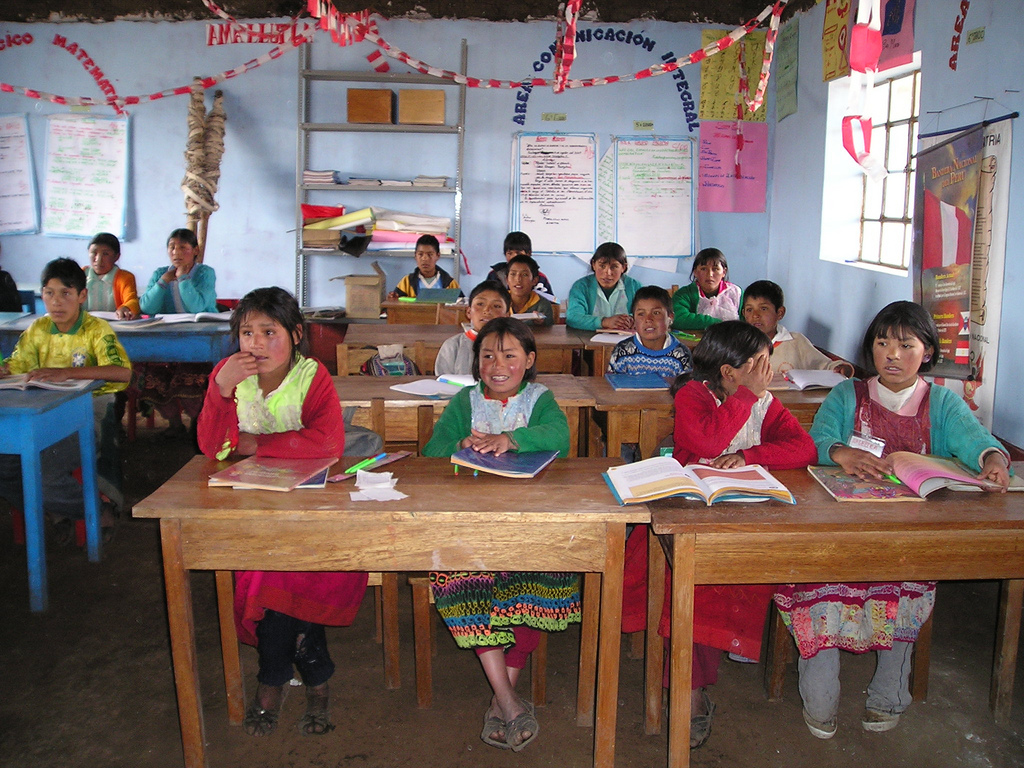
Fifth grade class in Chuchoquesera, Peru

When I visited the classroom pictured above in the Peruvian highlands back in 2004, I noticed that slightly more than half of the students were girls. I remarked on this fact to the human rights activist who was giving us the tour of this Quechua-speaking indigenous community.  He smiled sadly and said,

“Yes, but this is fifth grade.  In sixth grade, children go to a lower secondary school that is farther away.  Most of the girls won’t go.  It takes too long to walk there and they are needed to help at home, so the parents won’t let them go.  Besides, most of them will be married soon.”

Unfortunately, this is a situation of gross inequality for girls that is repeated in communities throughout the world.

In the United States, where education is both compulsory and free, we often forget that the right to education is not meaningfully available in many parts of the world – especially for girls.  The UN estimates that there were more than 67 million primary school-age and 73 million lower secondary school-age children out of school worldwide in 2009.  In addition, an estimated 793 million adults lack basic literacy skills. The majority of them are women.

Since then, I have visited classrooms and asked questions about girls’ access to education in countries on several continents.  This is a photo I took at Buduburam Refugee Settlement in Ghana.

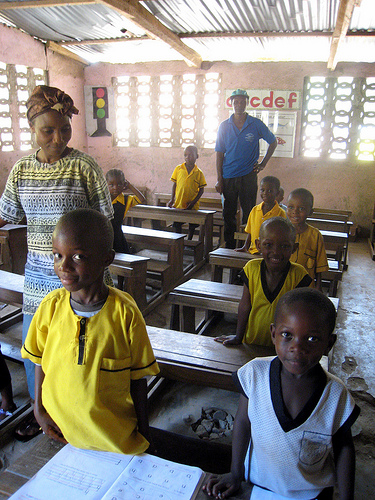
Kindergarten class, Buduburam Refugee Settlement, Ghana

Boys far outnumbered girls in this classroom, illustrating another of the problems for girls in accessing education.  When resources are scarce, parents will often choose to spend the money on school fees for their sons rather than their daughters.

There are many good reasons to ensure access to education for girls, however. Educating girls is one of the strongest ways to improve gender equality.  It is also one the best ways to promote economic growth and development.

“Investing in girls is smart,” says World Bank President, Robert Zoellick. “It is central to boosting development, breaking the cycle of intergenerational poverty, and allowing girls, and then women—50 percent of the world’s population—to lead better, fairer and more productive lives.”

Ensuring equal access to education for all girls by 2015 is part of the United Nations’ Millennium Development Goals, making this issue a major focus of work by the United Nations (for more info, check out the UN Girls’ Education Initiative site), the World Bank and many international non-governmental organizations.   October 11  has been designated as the International Day of the Girl Child to draw attention to the topic.
Nepal
On a much smaller scale, the Sankhu-Palubari Community School in Nepal is doing its part to encourage gender parity in education and  increase literacy rates.  The school works in partnership with The Advocates for Human Rights (the non-profit where I work) to prevent child labor and improve the lives and well-being of the neediest children in this community in the Kathmandu Valley. I travel there regularly to monitor progress at the school.
 cropped-spcs-program1.jpg
 For several years, the school has successfully met goals for gender parity among students in both the primary and lower secondary grades. For the 2011-2012 school year, 147 of the 283 students in pre-school through eighth grade are girls. Additionally, and perhaps more significantly, 15 of the 31 students in ninth and tenth grade are young women.
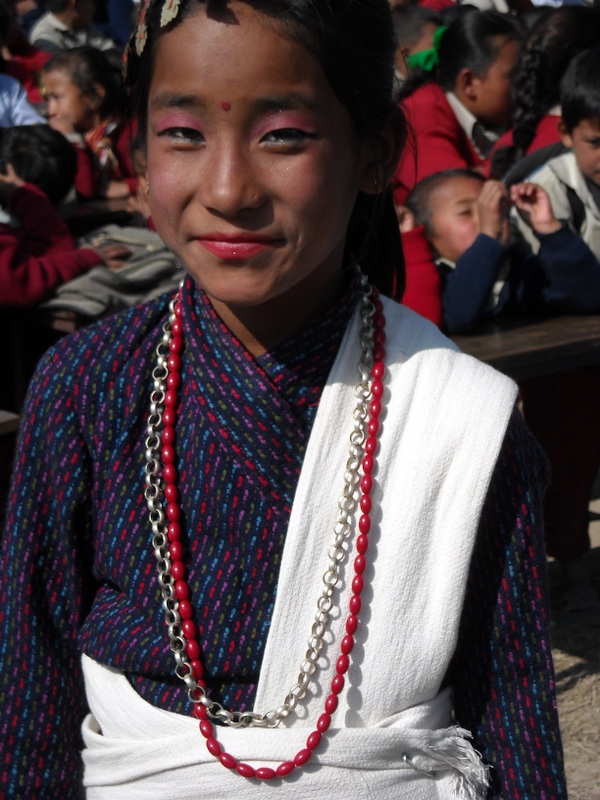
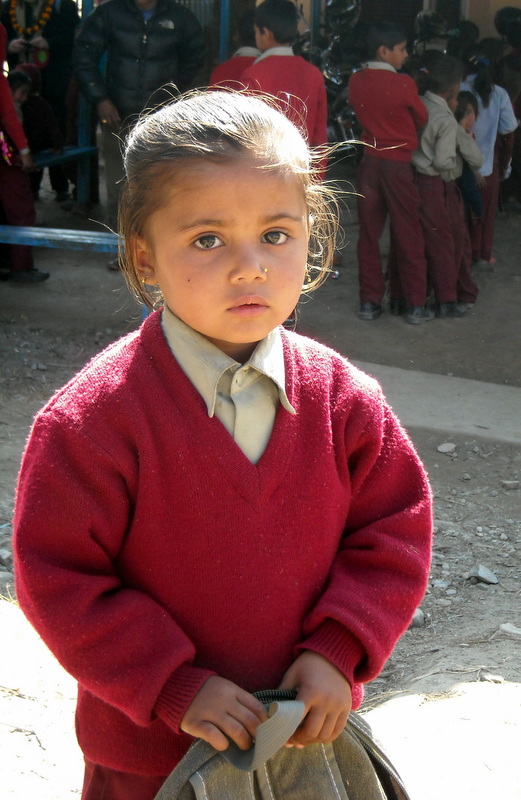
Pre-K student at Sankhu-Palubari Community School, Nepal

Most of the students’ families work in agriculture.  They are farmers with little or no money to spare on school fees, uniforms and supplies.   Many of them are from disadvantaged groups such as the Tamang and Newari.  Indigenous group with their own cultures and languages, the indigenous students must learn Nepali as well as English when they come to school.  Frequently, the adults in the family are illiterate.
 

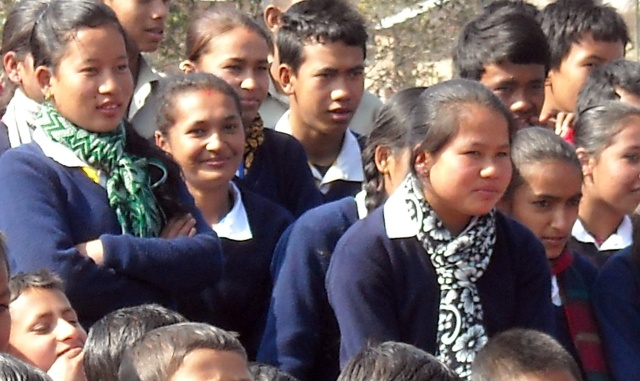
 9th Grade students at SPCS

How has the teaching staff managed this success at keeping girls in school?  Since the school’s founding in 1999, the teachers have conducted outreach to parents and worked hard to encourage female students to attend and stay in school in spite of societal pressure to get married or enter domestic work. It took more than 10 years, but their efforts have paid off.  While girls worldwide generally are less likely to access, remain in, or achieve in school, 52% of the students in K-8th grades at the Sankhu-Palubari Community School this year are girls. And a girl is at the top of the class in most of the grades at SPCS.

The impact of the school both on the individual students and on the community over the past 12 years has been profound.  When I was there in March of 2011, we interviewed approximately 60% of the parents of SPCS students.  It was clear to me that parents value the education that their children are receiving and, seeing the value, have ensured that the younger siblings are also enrolled in school rather than put to work.  Twelve years ago, there were many students in the area out of school but now most are attending school. I could also see the physical benefits that the students derived from attending school when they stood next to their parents.  Even the 5th grade girls towered over their parents, illustrating the simple cause-and-effect of adequate nutrition, wellness checkups, and not having to work in the fields from a very young age.

The Sankhu-Palubari Community School may be a small school in a remote valley, but it is a place where the human right to education is alive and well, providing a better future for these children.  In particular, the effect that these girls have on their community, their country and – hopefully, the world – will be thrilling to watch.


This post was originally written for World Moms Blog.
Photo credit for photo to Dulce Foster

Same and Different

Each February, my kids’ schools have special programming for National African American Parent Involvement Day.  The activities are different every year, but in 2008 there was a parent-led component that involved reading the class a book and facilitating a classroom discussion about diversity.  I signed up to be the parent volunteer in Simon’s kindergarten and Sevrin’s second grade class.  I had a great picture book (by no less than Kermit the Frog!) about children’s rights that I had picked up at the UN bookstore years before; my kids liked it, so their classmates probably would.  Easy peasy, right?  But that’s where, brakes squealing, I slammed head-on into a solid brick wall. 


I just had no idea how to facilitate the discussion or talk about human rights in a way that was simple enough for them to understand.  Fortunately, I got some help from people who are smarter than me about things like this – teachers.  You could never in a million years get a lawyer to summarize an argument in just three words, but teachers can and do.  Thanks to my sons’ classroom teachers and Kathy Seipp from our Education Program, the theme for my parent-led discussion was “Same and Different”.  


In February 2008, I had just returned from Liberia, a West African country emerging from more than a decade of violent conflict. I picked a few photos of people and scenes from Liberia and had them blown up and mounted on foam core.  The plan was that I would hold up a photo and have the kids point out what they saw in the picture that was the same in their lives and what was different.   


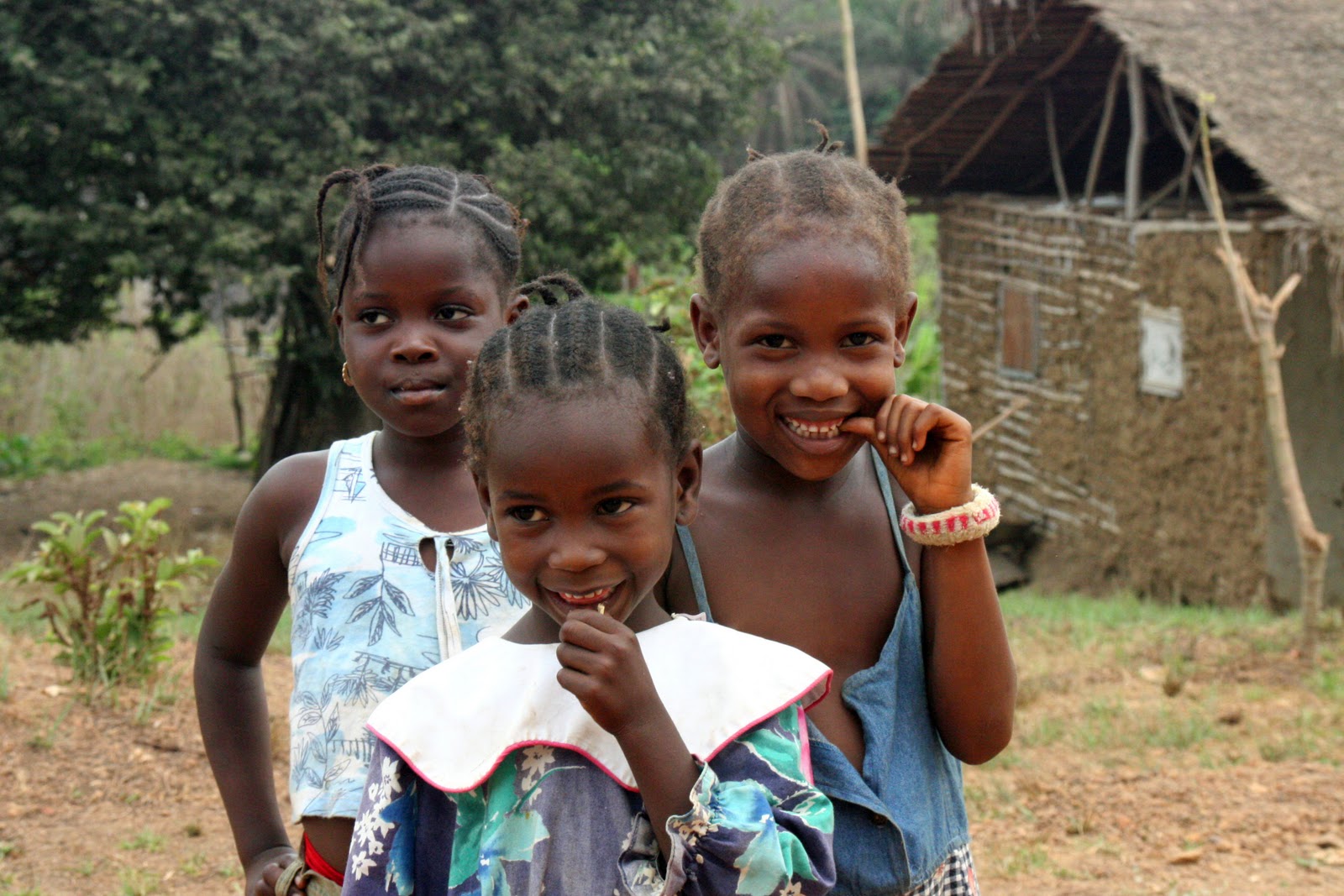
It was really and truly amazing to hear what the kids had to say.  But before I tell you, take a look at the picture and think about what you see that is the same and different from your own life: 

photo by Dulce Foster

Here are some of the things the kids said:  “I like that bracelet.”  “I sometimes wear my hair in braids, too.” “They have dark skin and I have white skin.”  “We have different trees here, like conifers.”  “We have snow here right now.”  “Is that corn growing behind them?  Because I LOVE to eat corn, too.”  “Is that a house? It’s not like my house.”  “You couldn’t live in that house in Minnesota.  You would get too cold.”


Here is another one:  

photo by Dulce Foster

“I think they are brothers and sisters who love each other.”  “I think they are cousins.  I love my cousins, too.”  “It must be very hot there. We can only wear clothes like that in summer.”  “Do they have seasons?” “Hey! I have flip flops just like that!”


One more time:

street scene in Monrovia, 2008

“How do they carry those big things on their heads?  We can’t do that!”  “There is a lot of trash on the street.”  “We have that same blue cooler.  We take it with us when we go camping.” “We have windows, too, but there is no glass in their windows.”  “They have electric wires like we do.”  “That’s so funny that they are using the wheelbarrows to carry things.  We only use our wheelbarrow in the garden.”


Each picture offered many more opportunities to talk about “same and different” than I had imagined.  For example, “I have flip flops just like that” (same) but those may be the only pair of shoes the kid owns (different).  The “no glass in the windows” comment led to a discussion of mosquitos (same) and malaria (different).  They do have power lines like us, but there is no electricity running through them.  At the time, only a  tiny area of Monrovia had electric power; the rest of the country relied on generator power – at best.  I told them about seeing the the dozens of kids huddled around the bases of the 5 or 6 working streetlights in Monrovia, doing their homework.  “Just like Abraham Lincoln,” breathed one particularly precocious second grader. 

The book I read is called For Every Child, A Better World.  It’s a UN Publication/Muppet Press collaboration which is now out of print but you can still find used copies online. If you follow the link  For Every Child, A Better World, you’ll see the format:  “Every child needs food to eat, but sometimes there isn’t enough to go around.”  I’ve done this “Same and Different” presentation several times now in kindergarten, 1st and 2nd grade classrooms. Every time, I walk away surprised by how these very young kids are able to understand and express the concept of basic human rights.  If they get it so completely, what is wrong with us adults?


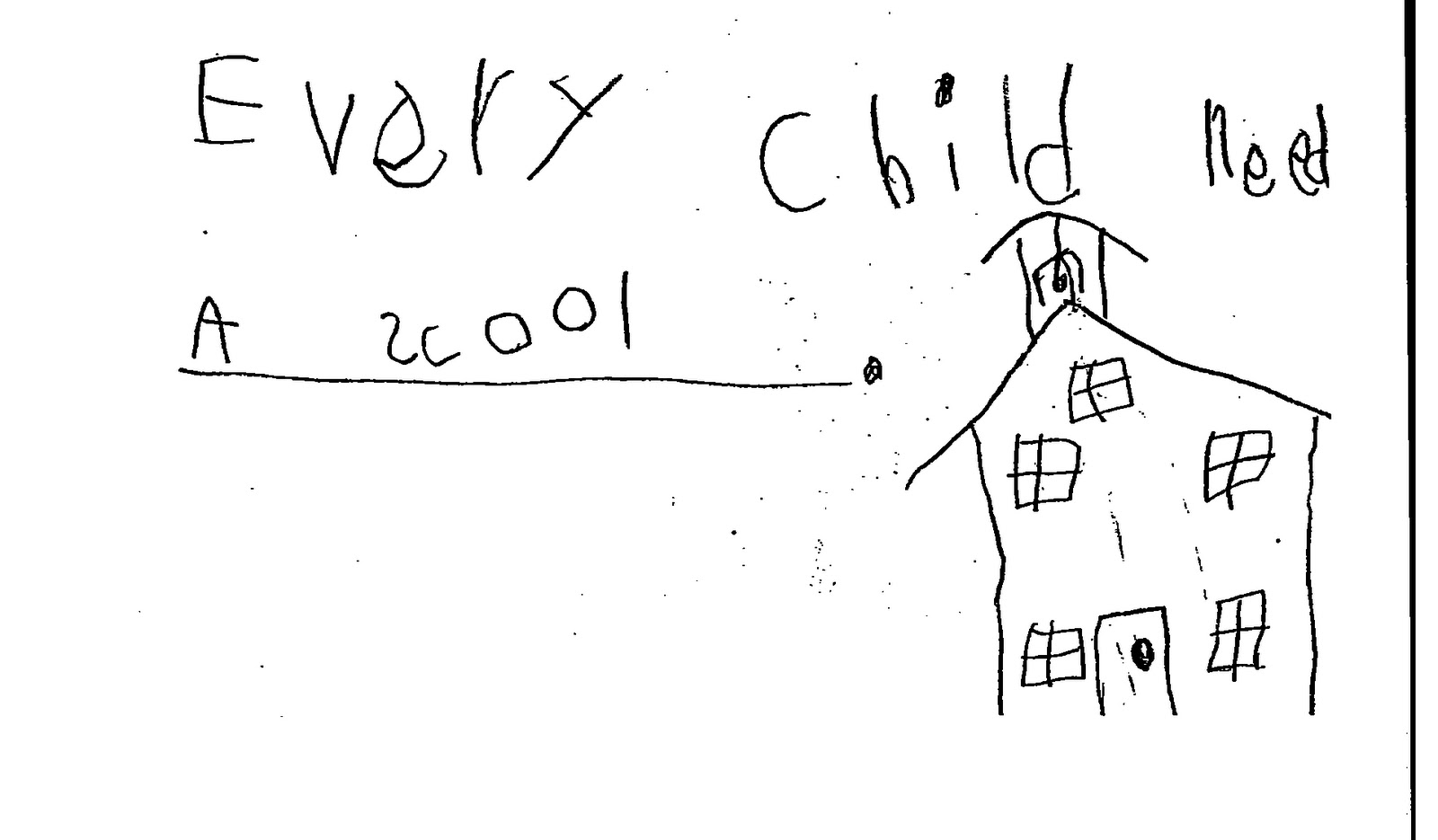
Simon’s kindergarten teacher, however, really took the “Same and Different” theme to the next level.  For several weeks, she incorporated “Same and Different” into various classroom activities, including one assignment to draw and write about something that they thought that every child needs.  She sent me copies of all of the drawings so I’ll end with a few.  Of course, my favorite is the one I posted at the top of this blog entry: “Every child needs peace.”