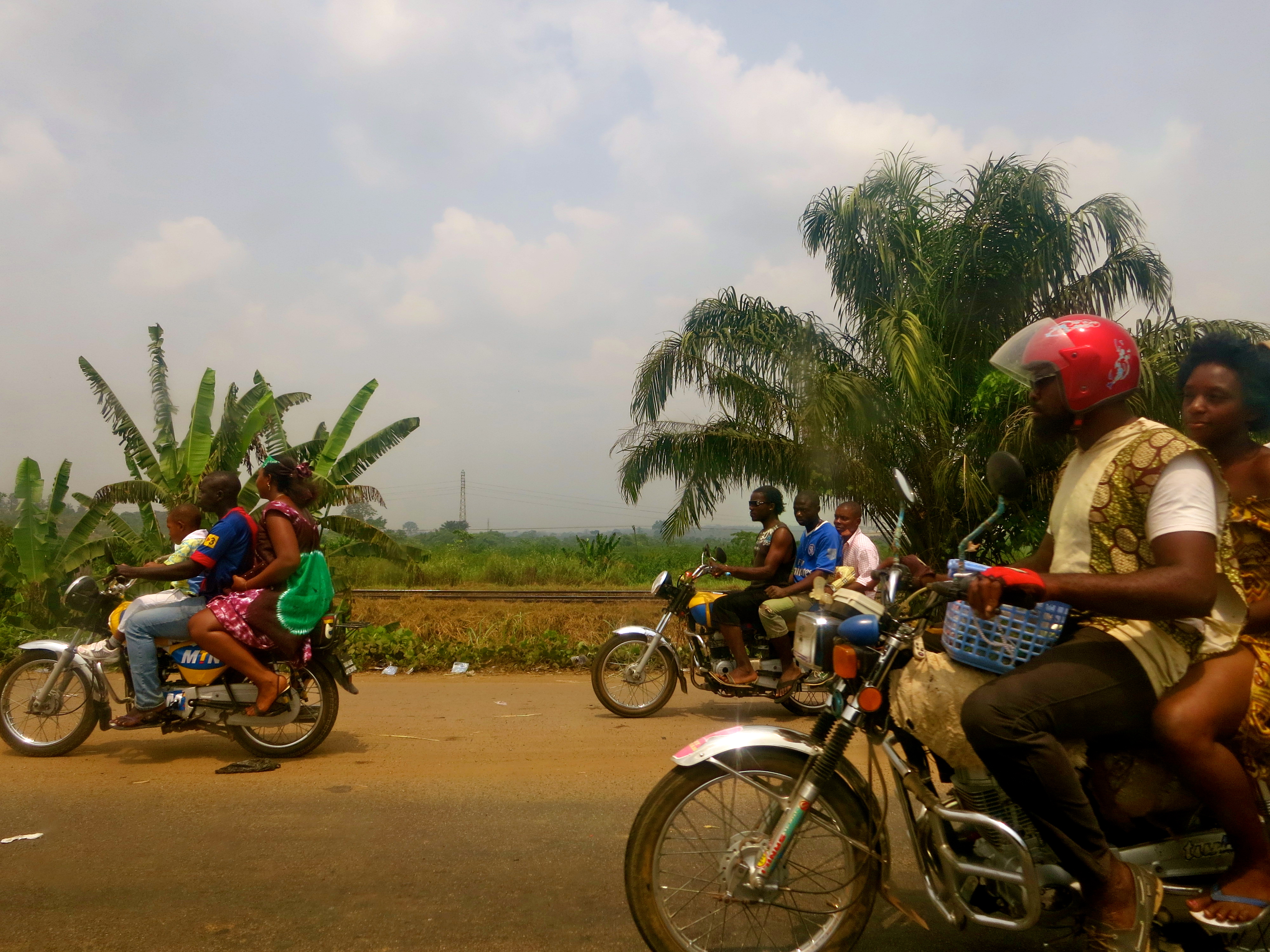
Motorcycle taxis speed toward Douala, Cameroon’s major port and commercial center.
Just getting around can be an adventure in and of itself in many parts of the world. In Cameroon, the motorcycle taxis are used by many people to get around the city of Douala. Most motorcycle taxis carry two passengers, but a few times I saw three passengers. I took this photo from the back of a taxi speeding in the opposite direction. There were hundreds of motorcycle taxis heading into the city, so I just snapped a couple photos at random. I was shocked that this photo captured the scene as well as it did!
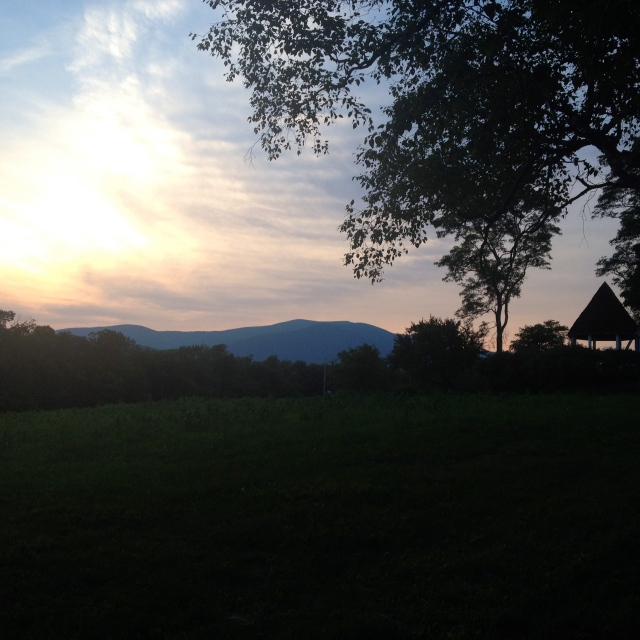
Atlantic Ocean – looking east from South Carolina, USA
Atlantic Ocean – looking west from Rabat. Morocco
When you look out at the ocean, do you ever wonder who is on the other side? I do! So when we were at the beach in South Carolina, I felt compelled to look it up. Turns out that Morocco is directly across the Atlantic from South Carolina. I had recently been to Morocco, so I could vividly picture what was on the ocean as I walked along the shore.
For this week’s Photo Challenge: Dialogue, we are asked to bring two photos into dialogue. The first photo, taken on Sullivan’s Island, South Carolina, looks directly east across the Atlantic Ocean towards Morocco. The second photo, taken in Rabat, looks directly west towards South Carolina. The photographic dialogue even reflects the time difference; the first photo was taken in the early morning, which is afternoon in Morocco.
Sometimes we need a reminder that our beautiful world is really not so big after all. And that often our connections can be greater than our differences.
What to find out what’s on the other side of the ocean from where you are? The Washington Post published a quick reference – check it out here!
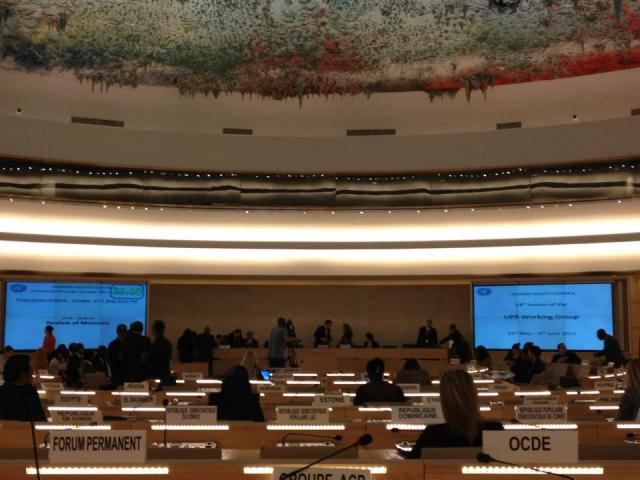
Inaugurated on 18 November, 2008 in honor of the 60th anniversary of the Universal Declaration of Human Rights, the “Human Rights and Alliance of Civilizations” room (better known as Room XX) is the home of the United Nations Human Rights Council at the Palais des Nations in Geneva. Part of my work involves advocacy at the United Nations’ human rights mechanisms, so Room XX is a place I visit regularly. (Photos are not allowed, but I snuck these photos with my phone anyway.)
At the UN Human Rights Council in Geneva, Switzerland
Spanish abstract artist Miquel Barceló created a a massive work of art for the ceiling of the room with paint composed of pigments from around the world. More than 30 tons of paint were sprayed on the 1,500-square-meter dome ceiling, with the many layers of paint creating a textured rainbow of stalactites. Depending on where you are in the room, the colors of the stalactites change based on perspective.
Barceló describes his work in this way:
“All of it is a sea upside down, but it is also a cave.
The complete union of opposites,the ocean surface of the Earth and its most concealed cavities.”
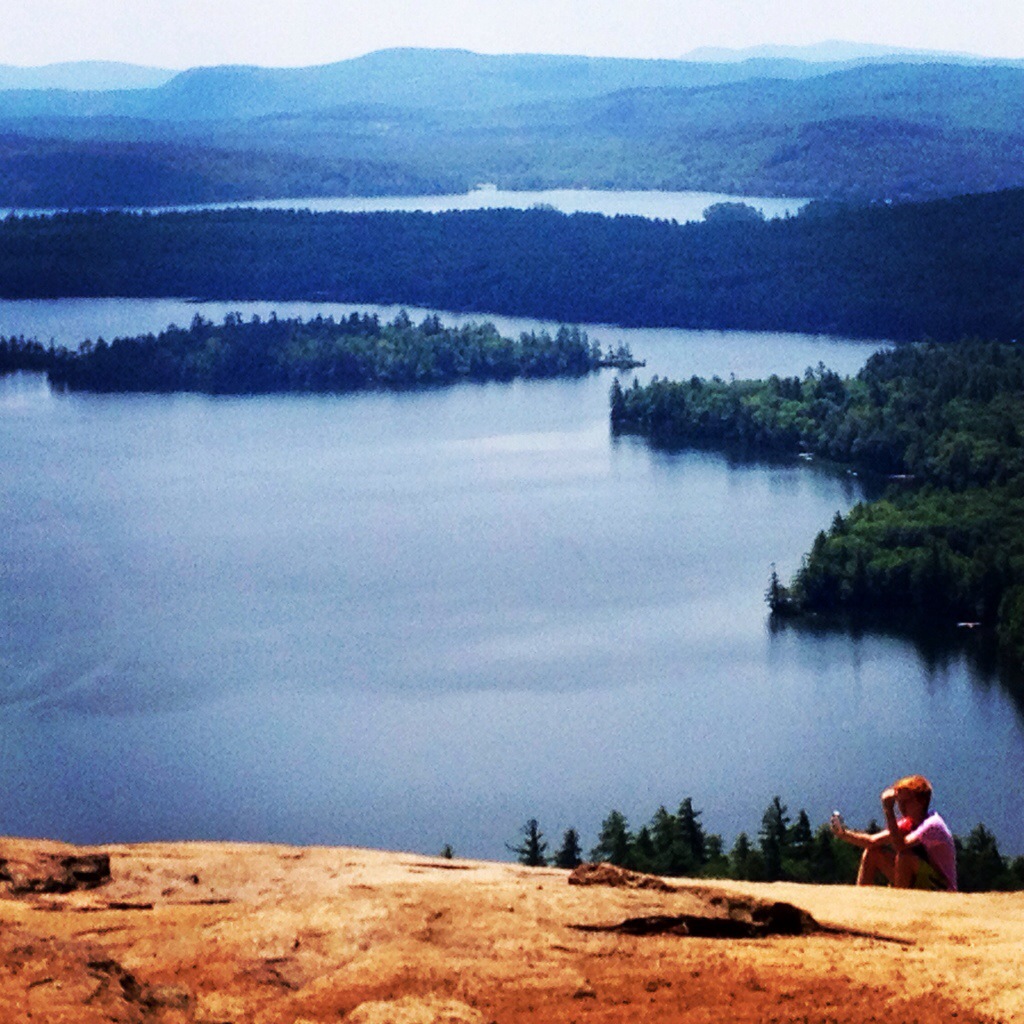
We’re on summer vacation in New Hampshire, as we do. Last week, I climbed Rattlesnake Mountain with my son Simon and daughter Eliza. A short hike with a phenomenal view of Squam Lake (of “On Golden Pond” fame). To me, this photo of my son taking a selfie at the summit- all blues and greens and heat and sweat and joy in summiting – is all about summer.
As I told my kids, “Remember this scene in January.”
There are few voices that embed themselves in your heart and brain and deep-down soul like the voice of Maya Angelou. Of all her poems, the one that has embedded itself most deeply in my soul is the one that this grand dame of literature wrote for the fiftieth anniversary of the United Nations. The first stanza incorporates language from the United Nations Charter. The rest is pure Maya Angelou – the gorgeous description, the unwillingness to shy away from the ugliness that was part of her life and remains part of all human existence.
She was so brilliant! She will be missed, but we are better for her time – and her words – on this small and lonely planet.
A Brave and Startling Truth
by Maya Angelou
We, this people, on a small and lonely planet.
Traveling through casual space
Past aloof stars, across the way of indifferent suns
To a destination where all signs tell us
It is possible and imperative that we learn
A brave and startling truth.
And when we come to it
To the day of peacemaking
When we release our fingers
From fists of hostility
And allow the pure air to cool our palms.
When we come to it
When the curtain falls on the minstrel show of hate
And faces sooted with scorn are scrubbed clean
When battlefields and coliseum
No longer rake our unique and particular sons and daughters
Up with the bruised and bloody grass
To lie in identical plots in foreign soil.
When the rapacious storming of the churches
The screaming racket in the temples have ceased
When the pennants are waving gaily
When the banners of the world tremble
Stoutly in the good, clean breeze.
When we come to it
When we let the rifles fall from our shoulders
And children dress their dolls in flags of truce
When land mines of death have been removed
And the aged can walk into evenings of peace
When religious ritual is not perfumed
By the incense of burning flesh
And childhood dreams are not kicked awake
By nightmares of abuse.
When we come to it
Then we will confess that not the Pyramids
With their stones set in mysterious perfection
Nor the Gardens of Babylon
Hanging as eternal beauty
In our collective memory
Not the Grand Canyon
Kindled into delicious color
By Western sunsets.
Nor the Danube, flowing its blue soul into Europe
Not the sacred peak of Mount Fuji
Stretching to the Rising Sun
Neither Father Amazon nor Mother Mississippi who, without favor,
Nurture all creatures in the depths and on the shores
These are not the only wonders of the world.
When we come to it
We, this people, on this minuscule and kithless globe
Who reach daily for the bomb, the blade and the dagger
Yet who petition in the dark for tokens of peace
We, this people on this mote of matter
In whose mouths abide cankerous words
Which challenge our very existence
Yet out of those same mouths
Come songs of such exquisite sweetness
That the heart falters in its labor
And the body is quieted into awe.
We, this people, on this small and drifting planet
Whose hands can strike with such abandon
That in a twinkling, life is sapped from the living
Yet those same hands can touch with such healing, irresistible tenderness
That the haughty neck is happy to bow
And the proud back is glad to bend
Out of such chaos, of such contradiction
We learn that we are neither devils nor divines.
When we come to it
We, this people, on this wayward, floating body
Created on this earth, of this earth
Have the power to fashion for this earth
A climate where every man and every woman
Can live freely without sanctimonious piety
Without crippling fear.
When we come to it
We must confess that we are the possible
We are the miraculous, the true wonder of this world





 The Human Rights Warrior
You must be logged in to post a comment.