
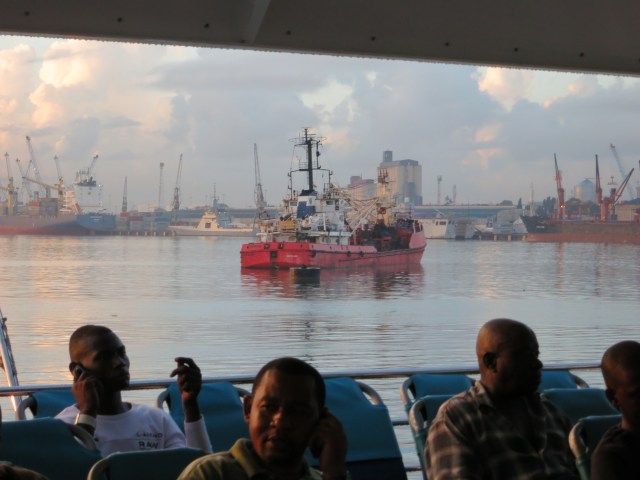



In response to The Daily Post’s weekly photo challenge: “Afloat.”
"There is some good in this world…and it's worth fighting for." ~ J.R.R. Tolkien

In response to The Daily Post’s weekly photo challenge: “Afloat.”
In Kathmandu this week, I happened to pass this “Wall of Hope”.
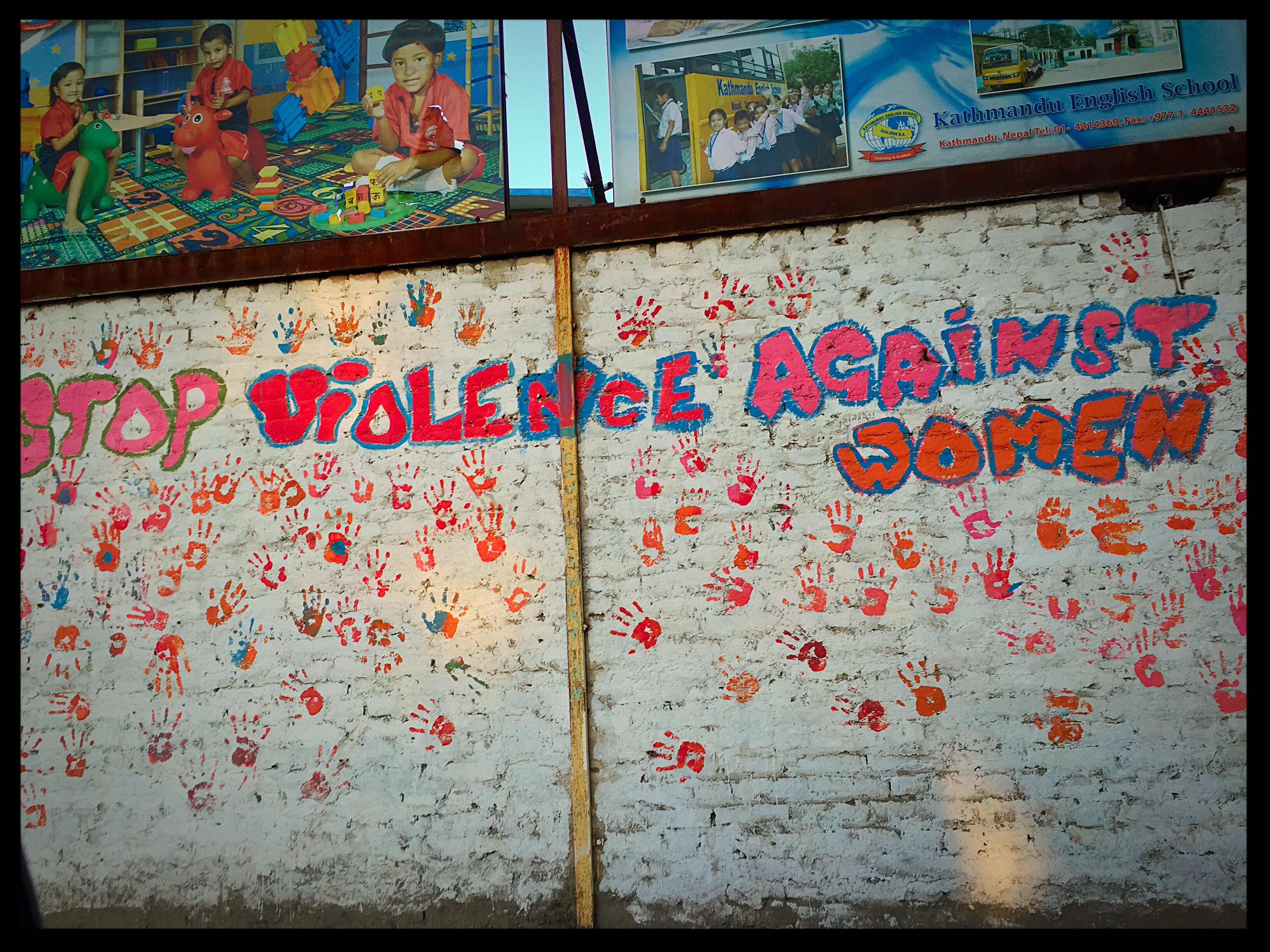
In Nepal, as everywhere, a good reminder that:
 In response to The Daily Post’s weekly photo challenge: “Wall.”
Reggae band SOJA partnered with UNICEF’s Out-of-School Children initiative to produce the video “Shadow” to draw attention to the importance of education for all of the world’s children. Globally, an estimated 58 million children of primary school age and 63 million young adolescents are not enrolled in school. Like the girl in this video, many of them are girls. Yet data demonstrates that reaching the most marginalized children may initially cost more but also yields greater benefits. This video was filmed in Jigjiga, in the Somali region of Ethiopia, where 3 million children remain out of school. For more on global trends regarding out-of-school children, visit the UNICEF website.
In many parts of the world, marginalized girls must often drop out of school to get married before they are able to complete their education. But there has been some good news recently about efforts to raise the age of marriage and eliminate child marriage:
MALAWI’s National Assembly has unanimously passed a bill that raises the minimum age for consent to marriage from 16 (or 15 with parental consent) to 18 years of age. While this will end legal child marriage in the country with one of the highest rates of child marriage in the world, more work will need to be done to sure that the law is implemented.
And INDONESIA’s government is preparing a bill to raise the legal age of marriage for girls to 18 years of age. While the legal age of marriage for females is currently 16, marriage at a younger age is legal with parental consent and judicial approval. According to data from the Health Ministry in 2010, 41.9 percent of girls between the ages of 15 and 19 were married. (P.S. The minimum age for boys to marry is 19.)
The UNITED ARAB EMIRATES has announced that it will set up a “gender balance” council to promote equality and opportunities for women in the workforce. Despite the fact that more Emirati women than men graduate from universities in the UAE, their participation in the workforce is limited by social and legal boundaries.
In further signs that SOMALIA is finally emerging from conflict, President Obama has nominated the first U.S. Ambassador to Somalia in 24 years.
The government of TANZANIA is launching the One Million Solar Homes initiative to bring reliable solar-powered electricity to its citizens by the end of 2017. The initiative will affect 10% of the population and create 15,000 jobs.
Finally, in a bit of human rights history, BBC Mundo ran a story this week about the treatment of Latin Americans (particularly Peruvians) of Japanese descent during World War II. Japanese people began migrating to Peru in considerable numbers at the end of the 1800s, seeking opportunities to work in the mines and on sugar plantations. By the 1940s, an estimated 25,000 people of Japanese descent lived in Peru; many were successful professionals and business owners. After the attack on Pearl Harbor, the US government asked a dozen Latin American countries, among them Peru, to arrest its Japanese residents. In addition to arrests, about 2,200 Japanese-Latin Americans were forcibly deported to the US.
Records from the time suggest the US authorities wanted to take them to the US and use them as bargaining chips for its nationals captured by Japanese forces in Asia.
As many as 4,000 men, women and children were interned during World War Two in the Crystal City camp in Texas run by the US Immigration and Naturalization Service. Most of the detainees were of Japanese descent, although some German and Italian immigrants were also held there.
Of the 2,200 Latin Americans of Japanese descent to be interned in the US, 800 were later sent to Japan as part of prisoner exchanges. After World War Two ended, another 1,000 were deported to Japan after their Latin American home countries refused to take them back.
In 1988, then-President Ronald Reagan signed the Civil Liberties Act and apologised on behalf of the US government for the internment of Japanese-Americans. Under the act, the government paid tens of thousands of survivors of the camps $20,000each in reparation. But Japanese-Latin Americans did not qualify for the payments because they had not been US citizens or permanent residents of the US at the time of their internment. They filed a class-action suit and 10 years later, the US government agreed to pay them $5,000 each.
A weekly roundup of the human rights news items that I’m following that I think deserve a little more attention.
More than 1000 Muslims formed a human shield around a synagogue in Oslo, NORWAY on February 21 in response to an attack on a synagogue in Denmark last weekend. Chanting “No to anti-Semitism, no to Islamophobia,” an estimated 1200-1400 Norwegian Muslims formed a “ring of peace” around the synagogue, offering symbolic protection for the city’s Jewish community. See video coverage on the NRK website here. One of the speakers in the video is 17-year-old Hajrah Asrhad, one of the event’s organizers.
Children began returning to classrooms in LIBERIA this week after seven months of closure due to the Ebola epidemic. Education is key to development and improving human rights, so the schools are being reopened but UNICEF and its partners are putting in place safety measures to minimize the potential risk of transmission of the virus. Safety measures, including taking children’s temperatures when they arrive to school and making them wash their hands before entering the classroom, have been successfully used in GUINEA, where more than 1.3 million children have returned to school since January. Nearly all of Guinea’s more than 12,000 schools are now open, and school attendance is at 85 per cent of pre-Ebola attendance, according to data collected by the Ministry of Education and UNICEF. Following Guinea’s experience, UNICEF has worked closely with the Liberian government and local communities to develop similar safety protocols. Teachers have been trained to implement and monitor the safety measures, soap and other hygiene materials have been distributed.
Beginning last summer, UNICEF collaborated with Liberian musicians to conduct mass mobilization campaigns on Ebola prevention nationwide. In case you missed it, here is one example from August 2014:
The International Labour Organization (ILO) spotlighted recent progress in the fight against child labour in KOSOVO, where children as young as 10 are forced to work on garbage dumps or in the fields harvesting grapes and onions, risking their health. Since March 2013, members of the Kosovo Chamber of Commerce are obliged to observe the ILO’s four fundamental labour principles, including the elimination of child labour. So far, 40 members of the Chamber of Commerce have adopted codes of conduct on combating child labour in their supply chains and communities. In addition, occupational safety and health issues will be mainstreamed into the compulsory education (grades 8-9) and upper secondary school curricula.
They’re joining others outraged by the murder of 20-year-old Ozgecan Aslan who was abducted on 11 February and killed for apparently trying to prevent a bus driver from raping her.
In the UNITED STATES, a federal jury has awarded $14 million in compensatory and punitive damages to five Indian guest workers who were defrauded and exploited in a labor trafficking scheme engineered by Gulf Coast marine services company Signal, an immigration lawyer and an Indian labor recruiter who lured hundreds of workers to a MISSISSIPPI shipyard with false promises of permanent U.S. residency. The trial was the first in a series of cases spearheaded by the Southern Poverty Law Center that together comprise one of the largest labor trafficking cases in U.S. history.
In the aftermath of Hurricane Katrina, Signal used the U.S. government’s H-2B guest worker program to import nearly 500 men from India to work as welders, pipefitters and in other positions to repair damaged oil rigs and related facilities. Under the guest worker program, workers are not allowed to change jobs if they are abused but face the loss of their investment if they are fired or quit.
The plaintiffs in this case are Jacob Joseph Kadakkarappally, Hemant Khuttan, Padaveettiyl, Sulekha and Palanyandi Thangamani. Each paid the labor recruiters and a lawyer between $10,000 and $20,000 or more in recruitment fees and other costs after recruiters promised good jobs, green cards and permanent U.S. residency for them and their families. Most sold property or plunged their families deeply into debt to pay the fees.
When the men arrived at Signal shipyards in Pascagoula, MISSISSIPPI, they discovered that they wouldn’t receive the green cards or permanent residency that had been promised. Signal also forced them each to pay $1,050 a month to live in isolated, guarded labor camps where as many as 24 men shared a space the size of a double-wide trailer. None of Signal’s non-Indian workers were required to live in the company housing. An economist who reviewed Signal’s records estimated the company saved more than $8 million in labor costs by hiring the Indian workers at below-market wages.
Pro bono legal representation was provided in this case by Southern Poverty Law Center, Crowell & Moring, LLP, the American Civil Liberties Union, the Asian American Legal Defense and Education Fund, Sahn Ward Coschignano & Baker, and the Louisiana Justice Institute.
An estimated 93 million children (1 in 20 up to age 14) worldwide live with a moderate or severe disability. #Draw Disability is a new global campaign launched by the United Nations Secretary-General’s Global Education First Initiative (GEFI), in partnership with the Global Observatory for Inclusion (GLOBI) and theUnited Nations Global Education First Initiative Youth Advocacy Group (GEFI-YAG).
The campaign has two main objectives: 1) To encourage dialogue and raise awareness on disability and related issues among teachers and learners within educational environments. 2) To create a global art project focused on disability. Schools from all over the planet are encouraged to get involved in the project. Teachers can use the #DrawDisability guidelines to promote critical reflections and awareness on disability within the classroom (guidelines are available in Spanish, French and English). Children with and without disabilities are encouraged to #DrawDisability. Drawings can portray their understanding and feelings towards disability and related issues, such as accessibility, inclusion and discrimination.
All drawings received will be uploaded and displayed on a website and shared on social networks using the hashtag #DrawDisability. Early submissions by April 1, 2015 are highly encouraged as selected drawings will be showcased at the World Education Forum in May 2015 in Incheon, SOUTH KOREA, and the Conference of States Parties to the Convention on the Rights of Persons with Disabilities (COSP-CRPD) in June 2015 New York, USA. The final deadline for all submissions will be July 15, 2015. Check out submission information here.

The Weekly Photo Challenge theme this week is Rule of Thirds. I often choose to place the subject off-center when taking photographs and have plenty of photos from my travels. But this challenge made me think of my third child – my sweet daughter. She is truly beautiful, both inside and out. The “Rule of Thirds” with her is that she constantly surprises me with her thoughtfulness, intelligence, resourcefulness and creativity.
Here are two different photos of Eliza at my parents’ cabin. The lake in the background is the same, but the photos were taken at different times of day and at different times of the year.

A weekly roundup of the human rights news items that I’m following that I think deserve some more attention.
“>here.
Former military chiefs and politicians implicated in the deaths of thousands through Operation Condor will finally face justice in ITALY. After decades of impunity, those responsible for the wave of political violence that swept Latin America under the dictatorships of 1970s and 1980s will be tried in court this week in Rome, Italy. Thirty-three people have been formally charged for their links to the operation, which left 50,000 people dead, 30,000 disappeared, and 400,000 jailed. Among those killed were 23 Italian citizens, which is why Italy’s justice system is now ruling on the case, opened in 1999.
A new UNITED Nations human rights report analyzing the problem of attacks against girls trying to access education found that schools in at least 70 different countries were attacked in between 2009 and 2014, with many attacks specifically targeting girls, parents and teachers advocating for gender equality in education. “The educational rights of girls and women are often targeted due to the fact that they represent a challenge to existing gender and age-based systems of oppression.”
MENG LIM took the bench as superior court judge for the Tallapoosa judicial circuit, becoming the first Asian American elected as superior court judge in GEORGIA, UNITED STATES. Lim escaped atrocities in his homeland of CAMBODIA as a child and overcame challenges of being refugee in rural Georgia to become a successful lawyer and judge.
The Office of the Special Rapporteur for Freedom of Expression of the Inter-American Commission on Human Rights (IACHR) celebrated WORLD RADIO DAY on February 13 to highlight the main role this media plays in the whole American hemisphere as a vehicle for freedom of expression and information, and as a source of information for the peoples and the communities.
In the UNITED STATES, February is Black History Month. While I believe that Black History IS American History, this annual observance of the contributions of African-Americans to our nation always provides an opportunity for me to learn more about people and events in our past. Here are some of the things I have learned so far this month:
On June 30, 1974, ALBERTA WILLIAMS KING was was shot and killed while she was playing the organ at Ebenezer Baptist Church in Atlanta, Georgia. She was the mother of Dr. Martin Luther King, Jr., so the story of her assassination has been overshadowed by her son’s legacy. Read more about Alberta Williams King here.
ELLA FITZGERALD, one of our nation’s greatest jazz icons, was confined as an orphaned teenager for more than a year in a reformatory called the New York State Training School for Girls. She and the other girls were treated harshly; “she had been held in the basement of one of the cottages once and all but tortured”. While there was an excellent music program and choir at the institution, Ella Fitzgerald was not allowed to sing in it – the choir was all white. Read more about this chapter of Ella Fitzgerald’s life here and here.
MIKKI KENDALL started a new crowdsourced project to prove that people of color are part of history. She created the hashtag #HistoricPOC and turned to social media.
“I encouraged fellow users to post pictures of people of color (POC) throughout history. Whether they posted family photos or links to famous images, I wanted there to be an easily accessible visual historic record.” People began posting family photos, photos of heroes, photos of events – the resulting tapestry of personal narratives is both beautiful and inspirational. #HistoricPOC shows the interconnected reality of our history that everyone needs to see. I hope it endures well beyond this February! Read more about #HistoricPOC here and here.
Here’s the weekly roundup of the human rights news items that I followed this week that I thought did not get enough attention.
First, a little bit of good news from the United Nations.
The United Nations High Commissioner for Human Rights has been collaborating with businesses and individuals to innovate better solutions to assist refugees. The collaboration with IKEA to replace tents with flat-pack, solar-powered housing units is providing dramatically improved housing, particularly by providing safe and secure housing for women and children. One long-term problem for UNHCR has been documentation of refugees, particularly since it involved writing things down on paper. This week I read about a potential solution. Through a collaboration with UPS, UNHCR recently announced that it has been piloting UPS UNHCR ReliefLink – a new system for storing and transmitting information about refugees based on the technology that UPS uses for tracking packages that holds huge potential. Check out these and other innovation stories on the UNHCHR Innovation website.
Appeals judges at the International Criminal Tribunal for the former YUGOSLAVIA upheld genocide convictions of two senior Bosnian Serbs for their roles in the 1995 Srebrenica massacre, the first final judgment for genocide by the international tribunal. Vujadin Popovic and Ljubisa Beara were high-ranking security officers with the Bosnian Serb army that overran Muslim forces and thinly armed U.N. troops in the Srebrenica enclave in July 1995 and subsequently murdered some 8,000 Muslim men and boys, Europe’s worst massacre since World War II.
In late 2013, the United Nations launched an initiative called Human Rights up Front to enhance the role of human rights in all of its work. Through this initiative, there has been an increasing recognition that human right violations as the first sign of conflict. This week, UN Deputy Secretary General Jan Eliasson gave a speech that very much reflects my own views on the integrated nature of development, conflict and human rights.
“There is no peace without development, and there is no development without peace, and none of the above without respect for human rights and the rule of law,” said Eliasson.
Human rights abuses are often the early indicators of escalating conflict. The international community usually has the information about what is happening, but is slow to respond. So it is significant that the United Nations is acknowledging that the world should should learn from past mistakes and take preemptive action BEFORE mass atrocities take place. I love this quote from Eliasson”
“We should act when we hear the vibrations on the ground.”
February 6 was the third annual International Day of Zero Tolerance for Female Genital Mutilation. Female genital mutilation (FGM) comprises all procedures that involve altering or injuring the female genitalia for non-medical reasons. It reflects deep-rooted inequality between the sexes and is recognized internationally as a violation of the human rights of girls and women. The UN estimates that more than 40 million girls and women alive today have undergone some form of FGM. If current trends continue, more than 15 million girls will be cut by 2020; more than 86 million additional girls worldwide will be subjected to the practice by 2030. The UN states that, although this harmful traditional practice has persisted for over a thousand years, programmatic evidence suggests that FGM can end in one generation.
This year, the UN is focusing is on health care workers. Although the practice of FGM cannot be justified by medical reasons, in many countries it is executed more and more often by medical professionals. This constitutes ones of the greatest threats to the abandonment of the practice.
For the first time ever, a court in EGYPT has sentenced a doctor to prison for the female genital mutilation (FGM) of a 13-year-old girl that resulted in her death. Soheir al-Batea died in June 2013 after undergoing an FGM procedure carried out by Dr. Raslan Fadl. A court in Mansour handed down not guilty verdicts for the doctor as well as the girl’s father for ordering the procedure in November 2014. But Egypt’s Justice Ministry reportedly contacted the court to say it was “displeased with the judgment”, resulting in a retrial. Fadl was sentenced at retrial to the maximum sentence of two years’ imprisonment; the father was sentence to three months’ house arrest. A ban on FGM has been in place since 2007 in Egypt, yet this is the first time the law has been implemented.
While FGM is most prevalent in Africa and the Middle East, it is also practiced in Asia, Latin America, Western Europe, North America, Australia and New Zealand. This week, a new report from the Population Reference Bureau came out discussing the potential risk of girls and women in the UNITED STATES for undergoing FGM. In 2013, there were up to 507,000 U.S. women and girls who had undergone FGM or were at risk of the procedure, according to PRB’s preliminary data analysis. This figure is more than twice the number of women and girls estimated to be at risk in 2000 (228,000).
And in the UNITED KINGDOM, the trial of a British doctor accused of performing female genital mutilation recently began in the United Kingdom’s first prosecution of an outlawed practice. Dr. Dhanuson Dharmasena allegedly performed FGM in November 2012 on a 24-year-old woman soon after she gave birth to her first child at North London’s Whittington Hospital. The woman in the U.K. case, referred to as “AB” in court, reportedly underwent FGM as a 6-year-old in Somalia, when a section of her labia was sewn together, leaving only a small hole for menstrual blood and urine but too small for safely giving birth. Defibulation, or re-opening the vagina, is commonly needed for FGM survivors about to give birth, and was required in AB’s case during delivery. But AB allegedly underwent re-infibulation, or sewing the labia together again after giving birth. The stitching or re-stitching together of the labia is an offense under section 1 of the United Kingdom’s Female Genital Mutilation Act 2003.
Other human rights news you may have missed this week:
In THAILAND, more than a dozen government officials are facing prosecution on the charge of human trafficking. According to Thailand’s junta officials, senior policemen and a navy officer are among the officials, who are detained and being prosecuted for human trafficking. It is significant that government officials are being prosecuted as it shows the connection between corruption and human trafficking in Thailand, a country well known for it problems with trafficking.
Single, mostly young women from CAMBODIA are increasingly being trafficked to CHINA as brides. China’s one-child policy has resulted in many more there are more single men than women, and as those men age, they seek marriageable women. For years, traffickers met that demand with women from Vietnam. But Vietnam has recently tightened its marriage rules and waged an information campaign to combat the problem. For traffickers, Cambodia has emerged as an attractive alternative. With fewer regulations and no awareness among Cambodian women about the risks, business has been easy. The going rate for a foreign bride is between $10,000 and $15,000.
A court in SPAIN has ruled that a deaf couple can adopt a baby who can hear, after they appealed against the decision by social services to only consider them for the adoption of a deaf child. In their review of the prospective parents’ suitability for adoption, social services said the parents were not “the best option” for a hearing child, as the child’s development would be affected. But in its ruling, the court established that the couple are indeed able to raise a child from a young age regardless of whether he or she is deaf or not, after considering research that shows how hearing children who also know sign language have greater-than-average visuospatial skills, and that “under no circumstances does learning sign language inhibit cognitive development”. Two Spanish organisations, CNSE and Fescan, which uphold the rights of deaf people welcomed “[the] landmark ruling, as it recognises the right of people with disabilities to form a family on an equal footing with other citizens,” and that “being a deaf mother or father does not hinder the education or happiness of a child, be they biological or adopted.”
Finally, I’ve long been a believer in humor as a tool for human rights change. So I very much enjoyed the #MugabeFalls viral memes this week. When ZIMBABWE’s notorious authoritarian “President for Life” Robert Mugabe tripped during a public appearance, he wasn’t hurt but he denied he had fallen. His security reportedly demanded that photographers delete the images of him falling. Thanks to social media and the internet, it was already to late. Internet users responded to the attempted censorship by posting parody pictures of Mugabe in different scenarios – including surfing and dancing – and by using the hashtag #MugabeFalls. The results were pure internet gold!
Humor – A powerful tool against dictatorships! You can see many more hilarious examples in the articles below:
http://www.theguardian.com/world/2015/feb/05/mugabe-falls-comedy-memes-of-zimbabwes-president-viral
http://www.buzzfeed.com/hayesbrown/mugabe-got-me-straight-tripping#.smqYD2VMz

The stupa at Swayambhunath (also known as the Monkey Temple) in Kathmandu, Nepal.
In response to The Daily Post’s weekly photo challenge: “Scale.”
For Kahl Wallis and other Indigenous Australians, January 26 is not AUSTRALIA Day – they call it “Survival Day”. “It’s definitely an important day for us. A day of survival, of remaining culturally strong and passing down our stories,” says Wallis. “It’s a day to remember our people and the struggle – the continuing struggle.” Kahl and his band the Medics, a Brisbane alt-rock band, released a new track this week on Survival Day called Wake Up (available for free download on SoundCloud). When asked about the songs first two lines – “you are not dissolvable / you cannot be erased” – Wallis told The Guardian, “What I’m trying to say in that intro is that we will never lose our culture and spirit. We might be in the cities, we might be far away from home, but we will still maintain our culture and identity and fight for our freedom.”
In one of the largest demobilizations of child soldiers ever, United Nations officials said on January 27 that they had secured the release of 3,000 child soldiers in SOUTH SUDAN. The first 280 children, ages 11 to 17, were released from the ranks of the South Sudan Democratic Army (SSDA) Cobra Faction, turning in their weapons and fatigues on Tuesday in the village of Gumuruk. The rest of the children will disarm over the next several weeks. Many of the children, who are members of the Murle ethnic group, have never been to school as they have been fighting for years for a rebel militia. Unicef is now trying to reunite the children with their families, and will then introduce them to education and training programs.
Google apologized and implemented a fix to take out anti-gay slurs from its translation tool. Translating from English into Spanish, French or Portuguese, the web version of Google Translate results included insults. More than 50,000 people signed a petition with All Out. leading to Google’s quick response and apology. If you see any Google Translate issues still popping up, email the AllOut team at info@allout.org
For the first time ever in the UNITED STATES, there will be an ad that draws attention to domestic violence aired during the National Football League’s Super Bowl. The ad was released this week ahead of Super Bowl Sunday.
In the ad, which is reportedly based on a real-life story, a woman calls 911 but pretends to order a pizza so that her abuser is not aware of what she is doing. It ends with the words: “When it’s hard to talk, it’s up to us to listen.” It was created by the advertising firm Grey New York for the NFL and No More, a coalition of groups dedicated to fighting domestic violence and sexual assault. The NFL donated Super Bowl airtime for the PSA and paid its production costs. Earlier this week, Sports Illustrated decided to run a domestic violence PSA of its own, after initially deciding against it. The 15-second video portrays an uniformed football player tackling an unprotected woman.
The Church of ENGLAND consecrated its first female bishop in a ceremony on January 26. The Right Reverend Libby Lane, 48, was made Bishop of Stockport in front of more than 1,000 people. After decades of argument over women’s ordination, the Church formally adopted legislation last November to allow women to become bishops.
In EL SALVADOR, a woman known “Guadalupe” was granted pardon by El Salvador’s Parliamentary Assembly after being imprisoned for suffering a miscarriage. In 2007 “Guadalupe” received a 30 year jail sentence after authorities wrongly suspected she had terminated her pregnancy. She was only 18 years old at the time. Amnesty International called the pardon a “triumph of justice” that “gives hope to the other 15 women languishing in jail on similar charges.
The Senate of the DEMOCRATIC REPUBLIC OF CONGO voted to eliminate a measure in an electoral law that critics say would have prolonged the president’s time in power. The lower house voted last week to require a census before next year’s presidential election, raising concerns that it was merely a ploy to delay that vote and keep President Joseph Kabila in power. Kabila has been in office since 2001 and term limits prevent him from running again. The vote in the lower house prompted large demonstrations against the measure and led to the Senate’s action. A parliamentary committee must now reconcile the bills from the two houses of Parliament before a final version can be voted on.
I’ll end with a beautiful, inspirational advertisement from a campaign that came out last June, so wasn’t new to me. But I totally teared up watching it tonight during the Super Bowl with my daughter sitting next to me and my husband yelling “That is AWESOME!”

As I write this, there are seven teens asleep in my basement. My son and his friends came back from their high school dance in high spirits last night. Laughing and joking loudly, they boisterously descended on my kitchen, devouring everything within reach (even some chips that I thought I had hidden pretty well). These guys were the human equivalent of an invading colony of army ants, foraging insatiably through my refrigerator.
Now these boy-men are dead to the world, asleep in a puppy pile on my basement floor. And I have to be honest – I am loving every single thing about these teens. In fifteen plus years of parenthood, I have grown accustomed to – perhaps, in some ways, inured to – the many and diverse aspects of wonder in babies and children. But I find myself surprised and overjoyed at the sheer beauty of teenagers today.
My friend Doug describes my feelings perfectly:
I continue to be dumbfounded, flummoxed, and gobsmacked by my kids, in all sorts of great ways.
The conventional wisdom is that teens are “challenging”. And, no question about it, there are challenging aspects of parenting teens. But I think teens get a bit of a bad rap in our society. I know I’ve had many people say to me over the years, as I struggled with sleep deprivation, no “me” time, etc. etc.:
“Just WAIT until you have teens!”
But now I am starting to wonder. I wonder if it could be possible that I was misinterpreting these statements for all these years? Instead of a dire warning of impending misery (based perhaps on my then-existent sleep deprived misery coupled with a tired, old societal cliche), is it possible that what they actually were trying to say to me was:
“Hang in there, it WILL get better! Teenagers are the BEST!
Because now that my oldest son is 15 and a freshman in high school, I am finding that this stage of parenting is a comparative cakewalk. Here are a few reasons why:
Teens have the capacity for So! Much! Joy! The photo above, which my son took of his high school sailing teammates at practice last fall, illustrates what I mean. Teens can make anything fun. Sure, there are pretty major hormonal changes and brain development going on that help explain this facet of teen behavior. But I also think that teens are just not afraid to show it when they are having fun. Somewhere along the way, most adults seem to lose the capacity for emotion that they had as teens. We keep it in, stuff it down, don’t laugh out loud. Living with a teenager is a good reminder that sometimes you just need to turn up the music and dance around wildly.
You can reason with them. This will come as a pleasant surprise to parents who have spent more than a decade living with toddlers and young children. And I say this as a mother who freely admits to having resorted to Tootsie Pop bribery – believe me, one day your child will in fact become a rationale human being. Stuck in a situation that he would (no doubt) have preferred NOT to be in recently, my teen son summed it up like this:
“I understand what you are saying. I understand why I should do this. I’m just frustrated, that’s all.”
Then he sucked it up and did what he had to do for his family.
The social relationships of today’s teen reflects a lot more equality. My son is friends with both girls and boys. Heterosexual, homosexual, bisexual. I don’t know about transgender yet but I have no doubt that he wouldn’t give a rip. My teen and those he hangs out with just don’t seem to care that much. This is a huge step forward from when I was a teen myself. Sure, there is still plenty of drama. But things seem to be, somehow, just a little bit less – fraught. And so much more accepting. I would be lying if I didn’t tell you that I think that is totally great.
Teens can contribute. Carrying in groceries, washing dishes, shoveling snow – it struck me recently that my teen son is doing a lot to help keep the wheels of of our unwieldy family of of five moving forward. This is huge! A total sea change from the days of constant care and feeding of babies and small children when the parents are always, always DOING for the kids. Sure, you often have to remind a teen to do a chore. But if you give them the challenge of responsibility, by and large, they will accept it.
They expose you to new – and sometimes wonderful – things. My son introduced me to Avicii way before his music made it to the mainstream; that was just the beginning of the new music he has exposed me to. The other day, I was doing laundry and I heard him in his room playing his guitar and singing “The Man Who Can’t Be Moved”. I had never heard of The Script or this song before. But before suddenly, I was loading the dryer with tears in my eyes.
But it’s not just music. My teen curates movie and program selections us (his lame parents) based on our tastes. His recent recommendation of It’s Always Sunny in Philadelphia to his dad was spot on. I’m sure I would never have even heard about the growing popularity of eSports if not for the influence of my teen, who competes for his high school Starleague team. I’ve also learned several iPhone tricks that I would never have figured out on my own. And, by the way, my in-house teen tech support can’t be beat!
Teens are more connected to the global community. My son, who plays eSports, routinely chats online with teens in other countries. Thanks to his fantasy geopolitics team, he knows much more about what is going on in Iran and Ukraine than I do. Part of this is without question due to changes in global society and technology that have made our world smaller and more interconnected for all of us. But I think this increased connection across borders can only be good for the future of our planet, particularly when it comes to solving big problems (like, say, human rights abuses.) I am hopeful that this is the generation that begins to truly live out Rev. Dr. Martin Luther King, Jr.’s words: “Injustice anywhere is a threat to justice everywhere. We are caught in an inescapable network of mutuality, tied in a single garment of destiny. Whatever affects one directly, affects all indirectly.”
Teens know how to find the information they need. Today’s teens came of age in the era of Google – they know how to use a search engine. But I am referring to more than just their search skills. What I mean is that this is a generation that has a unique attitude towards information as being infinitely accessible and independently attainable. Information is easily and immediately obtained, disputes are easily settled. Pearl Harbor happened on Dec. 7, 1940 or 41? (1941) Pizza dough is two weeks old and slightly gray? (edible) Who wrote the Art of War? (Sun Tze) What are the requirements for an out-of-state resident to get a driver’s license in New Hampshire? (this one for my nephew Eli, another great teen.) In a sense, this attitude makes them a generation of empowered autodidacts.
Teenagers are downright hilarious. My son, his friends, and the other teens in my life crack me up. They make me laugh all the time. They have mastered puns; they have evolved into excellent purveyors of sarcasm. They get (and make) jokes that reference popular culture – even when the popular culture being referenced occurred well before they were born. (For example, they totally got it when I described them during their kitchen rampage as “Gremlins who had been doused in water and fed after midnight”.)
And they can be so very creative in their humor! For their vocabulary homework for Spanish class, my son and his friends made this video. The assignment was not to make a video; the assignment was to come up with a dialogue that involved specific Spanish vocabulary. But remember my point about how teens can make anything fun?
Teens give you the gift of revisiting things that you’ve done before – but with a new perspective. Here’s just one example: If I didn’t live with a teen, I may never have gone back and re-read books that I read in high school. Classics – books like The Giver, Of Mice and Men, and To Kill A Mockingbird – where I fully recall the plot and the major characters but not the details. The author’s tone, poignant quotes, turns of phrase that knock your socks off. All the things that really make these books classics? These I had forgotten. I was surprised to discover how much my perspective has changed on some of these books, my opinions shifting and resettling after years of life experience. I empathize with some characters that I used to have nothing but disdain for; I’ve lost patience with others that I used to love. When my son gets a new reading assignment, I now see it as an opportunity. I started re-reading Romeo & Juliet because my son, describing the priceless hilarity of his teacher reading 500-year-old bawdy humor out loud to the class, reminded me that “Shakespeare was a BOSS!”
Although not yet fully formed, you can see in a teen glimmers of the person that he or she will become. Teens today have opinions and they speak up for themselves. (My son has even shared his opinion on this blog before.) They are not afraid to like something just because the LIKE it, even it it is not the current thing. I was surprised that one of the first songs my son taught himself on guitar was Semisonic’s Closing Time – from 1998, the year before he was born.
Perhaps because they are more open and expressive than previous generations have been, you can catch glimpses of today’s teens’ developing inner selves. Between this and his external behavior, I feel like I can truly see the proto-adult that is growing in my adolescent son – and I really, REALLY like him. The guy who stays cool in a pinch. The guy who doesn’t hold a grudge. The guy who can be counted on to be there for his friends. The guy who always walks the girl home at night (for safety reasons). I look forward to watching him grow into the wonderful adult that I can now say that I feel sure he will become.
My middle son turns 13 in two weeks.
With him, I’m looking forward to discovering the beauty of teens all over again.
Closing time
Open all the doors and let you out into the worldClosing time
Every new beginning comes from some other beginning’s end
Yeah.
 The Human Rights Warrior
You must be logged in to post a comment.