Soup Season

Like most mothers, I spend a good deal of time preparing meals for my family. Most mornings find me in the kitchen, making lunches as the sky lightens from deep blue to pink, and so on to sweet orange. Brilliant shafts of sunlight are spilling through the back door by the time I pack the lunchboxes into my kids’ backpacks. Honestly, I don’t always love this part of my parenting job description. While I want my kids to eat healthy meals, meeting this inexorable human requirement for sustenance can be grindingly tedious. So it comes as a welcome break in the routine when I travel for work, as I did to Nepal last month.

When I travel to developing countries, however, I am always reminded that I actually spend very little time in the kitchen compared to women worldwide. Surveys in a wide range of countries have shown that women provide 85 – 90 percent of the time spent on household food preparation.According to the Bureau of Labor Statistics, American women in my demographic spend just over 60 minutes on food prep and just over 30 minutes on cooking every day. Indian women, by contrast, average 191 minutes, while Mexican women spend 373 minutes and Turkish women spend 377 minutes on unpaid domestic work like food preparation and cooking. When you add to this the time spent gathering fuel and fetching water, the numbers shoot up even more – up to 5 hours in some African countries. So I really have nothing to complain about.

The other thing that always strikes me when I return home to the United States is how much food we waste in this country. According to a recent study, Americans throw away forty percent – nearly half – of their food every year, waste worth roughly $165 billion annually. In other words, the average American family of four ends up throwing away an equivalent of up to $2,275 annually in food. It’s hard not to feel how wrong that is when you have just returned from interviewing young people who only get one meal a day; a mother who hasn’t eaten for 36 hours because she gave her refugee camp rations to her children. And hunger remains a problem right here in our own country. If we reduced the losses in the U.S. food supply by just 15 percent, according to the National Resources Defense Council, we would save enough to feed 25 million Americans annually.

This American habit of wasting food is of relatively recent acquisition – there has been a 50 percent jump in U.S. food waste since the 1970s. So this is not a problem created by my Grandma Edna’s generation, who survived the Great Depression by saving and using every bit of food they could. (She even saved the bacon drippings, using them to make her Cornflake Cookies.) This is a problem for which MY generation, those of us who grew up in the 70s and 80s, must acknowledge some responsibility.

There are some good tips out there for reducing food waste in your home: making (and keeping to) a shopping list, buying only the amount you need, freezing things before they go bad (bread, cheese, avocados, bananas), composting, using up leftovers. I do these things, but my major focus is on the leftovers. I make chili with the leftovers from Taco Night, enchiladas with leftover chicken. There’s a kind of analytical beauty to finding a repurposing solution, the same feeling you get from fitting all the pieces into a puzzle. But mostly I want to model for my kids the economy, the efficiency, the responsibility to avoid wasting food when so many don’t have enough. What I want my children to understand is that the small personal choices they make, both to act and NOT to act in certain ways, can have an impact on others. Small acts of personal economy are, in fact, a way of showing that you care about the world and the other people in it.

The task of using up leftovers is infinitely easier during Soup Season. The sad, wilted veggies on the bottom of the crisper meet old parmesan cheese rinds in Minestrone Soup. Leftover mashed potatoes are transformed into Potato-Cheese Soup (or, equally delicious, Potato Soup with Pesto). Corn is scraped off the cob for Southwestern Corn Chowder. The bottom-of-the-bag salad spinach adds a beautiful green tint to Winter Vegetable Soup (my family’s favorite).

So when I returned from Nepal last week to find that the evenings had turned chilly and, consequently, that the kitchen counter was piled high with end-of-summer tomatoes, I knew exactly what I had to do.

Welcome Soup Season with Tomato Basil Soup and Grilled Cheese Sandwiches!

Here’s my recipe so you can welcome Soup Season, too. Bon appetit!

Tomato Basil Soup

1/4 cup olive oil

3 medium onions (about 3 cups chopped)

3-4 garlic cloves, chopped or pressed

1/2 cup fresh basil, chopped + up to another 1/2 cup chopped for serving

1/2 tsp salt and freshly ground pepper

bay leaf

3 lbs fresh tomatoes, chopped (including skins and seeds) (can also use canned tomatoes -2 28 oz cans whole tomatoes in juice, cut up)

32 oz container of chicken or vegetable broth

In soup pot, saute onions in oil until golden. Add garlic, basil, salt and bay leaf. Saute another 2-3 minutes. Take out bay leaf and add tomatoes and broth. (If I have any leftover tomato paste, I add a couple of tablespoons here; if I have leftover tomato sauce, I add up to a cup of it, too.) Bring to a boil and cook for 10-20 minutes (use the shorter time if you want the tomato taste to be more fresh.) Adjust seasoning (I don’t use much salt, so you may want to add more.) Let cool for a few minutes and then puree the soup with an immersion blender or in batches in a regular blender. When soup is smooth, add additional chopped basil. Serve hot or cold.

Options:

Roasted Tomato Basil Soup: Toss the tomatoes, onions and garlic with olive oil and roast at 400 degrees for 40 minutes. Follow the rest of the recipe.

Pasta: On this particular night, I added leftover cheese tortellini to the soup but sometimes I add 1/2 to 1 cup of cooked elbow macaroni.

Cream: If you like your tomato soup creamy, it works to substitute out one cup of broth for milk or cream. Add cream after pureeing.

Cheese: I have added each of the following depending on what I am trying to use up (but not at the same time): 1 cup crumbled feta, 1 cup shredded parmesan, 4 oz fresh chevre (goat cheese)

Grilled cheese sandwiches: My grilled cheese depends entirely on what I have on hand. I’ve made delicious open-faced sandwiches with artisan bread and aged gouda, but on this night we had cheddar on whole-wheat bread. Until the cheddar ran out and I switched to provolone – which I actually thought tasted better.

NEPAL: Visiting the Sankhu-Palubari Community School

Some students walk – up to 2 hours each way – to the Sankhu-Palubari Community School to access their right to education.

I’ve been in Nepal for the past ten days with a team of staff and volunteers.  We are here to visit the Sankhu-Palubari Community School (SPCS) in the rural Kathmandu Valley.  The Advocates for Human Rights, the organization I work for, has supported the school since it was founded in 1999 to prevent child labor, encourage gender parity in education, and improve the lives and well-being of the most disadvantaged children in the area.  The school in Palubari village is only about 40 km outside of Kathmandu, but the peaceful, green valley in which it is nestled feels worlds away. The drive out is nerve-wracking (in the terrible Kathmandu traffic), then bone-jarring (on the bumpy, rutted roads). But the sight of these bright, alert children makes it all worthwhile.

In the United States, where education is both compulsory and free, we often forget that the right to education is not meaningfully available in many parts of the world – especially for girls.  The UN estimates that there were more than 67 million primary school-age and 73 million lower secondary school-age children out of school worldwide in 2009.  In addition, an estimated 793 million adults lack basic literacy skills. The majority of them are women.

Most of the students’ families work in agriculture.  They are farmers with little or no money to spare on school fees, uniforms and supplies.   Frequently, the adults in the family are illiterate. Many of them are from marginalized groups such as the Tamang. An indigenous group with their own culture and language, the Tamang students must learn Nepali as well as English when they come to school.  A pre-K program was added in 2011 to provide pre-literacy eduction to better prepare the students for school.

This week, The Advocates’ team has been conducting a site visit which includes interviewing students in grades 5 through 10 about their experiences at the school and their plans for the future.  It has been a treat to interview these kids and learn more about their lives, their hopes, their dreams for the future.

We’ve been inspired to hear from so many of the girls about their commitment to getting a good education. Since the school’s founding in 1999, the teachers have conducted outreach to parents and worked hard to encourage female students to attend and stay in school in spite of societal pressure to get married, work in the fields or enter domestic work.
Their efforts have definitely paid off.  While girls worldwide generally are less likely to access, remain in, or achieve in school, 52% of the students in K-8th grades at the school this year are girls. And a girl is at the top of the class in every single grade at SPCS.
Students had so much to tell us about their hopes and dreams for the future.  Some wanted to be doctors and nurses. Some wanted to be teachers. Some even wanted to be professional football (soccer) players! (Football is very popular here in Nepal, especially among boys. The Nepali national football championship is coincidentally going on right now in Kathmandu.  The national police team has won for the past three years.)  This student demonstrated for me his prowess at left forward.
The Sankhu-Palubari Community School may be a small school in a remote valley, but it is a place where the human right to education is alive and well, providing a better future for these children.  The impact that they have on their community, their country and – hopefully, the world – will be thrilling to watch.
Pre-K students enjoying their noodles at lunch.
7th graders in one of my English conversation practice small groups.
THIS POST WAS ORIGINALLY PUBLISHED IN THEADVOCATESPOST.
PHOTO CREDITS:  Robin Phillips, Jennifer Prestholdt and Laura Sandall
Jennifer Prestholdt is the Deputy Director of The Advocates for Human Rights

The Other Greek Crisis: Xenophobia and Mass Detention

Landing at Elefthérios Venizélos in Athens, you can’t miss the sprawling blue and gold IKEA near the airport.  While tourists arriving  in Greece may recognize the siren call of cheap and trendy furniture, they are not likely to notice that there are also detention centers in Athens.  The brand-new Amygdaleza migrant detention center was opened in April in western Athens, shortly before the election. There are plans to build many more detention camps – and quickly.  Greek police reported this week that they have arrested thousands and temporarily detained more than 17,000 migrants, mostly from Asia and Africa, since August 4, 2012.

I traveled to Greece for the first time in May.  I was there briefly and only as a tourist. I stayed in tourist areas, encountering very few Greeks who didn’t work in the tourism industry. Perhaps this is an occupational hazard, but I can’t help but look for human rights violations – even when I’m on vacation.   So I listened carefully when my brother, who had been living in Greece for some months, mentioned that recently the government had started arresting, detaining and deporting migrants.  In fact, the first 56 migrants arrived at the new Amygdaleza migrant detention center on April 29 – only a week before the national election. Undocumented migration had become a major issue in the May 6 election, with several parties pledging to crack down on migrants. Based largely on this issue, the far-right Golden Dawn party gained seats in Parliament for the first time.

While Greece may be idyllic for the foreigners who are tourists, many migrants and asylum seekers have a very different experience.

Since the early 2000s, Greece has been a major entry point to the west and Europe for migrants and asylum seekers from Asia and Africa.  Many of them cross the border with Turkey, which up until August was fairly porous.  By some estimates, a million immigrants live in Greece, which has a population of barely 11 million.  Add to this demographic change the deepening economic crisis and rising social tension and you get a volatile situation in which undocumented migrants and asylum seekers have become the targets of xenophobia.  According to a July 2012 report from Human Rights Watch, “Xenophobic violence has reached alarming proportions in Greece, particularly in the capital city of Athens.”

None of this was apparent to me when I was a tourist in Athens in May.  Even the economic crisis in Greece was surprisingly – shockingly, in fact – invisible.  I tried asking a couple of people about it.  People seemed annoyed with the politicians, but unconcerned that Greece would leave the Euro zone.   The waitress at the take-out place where I got my Greek salad just rolled her eyes when I asked about it.  “Try a FIX Hellas,” she said, proffering a pale Greek beer in a clear plastic cup.  “You can walk around with it.”  So I walked around Plaka like I was on Bourbon Street, thinking about the ironic name of my beverage. Lots of people were shopping.  The Barbie store was doing a particularly brisk business.

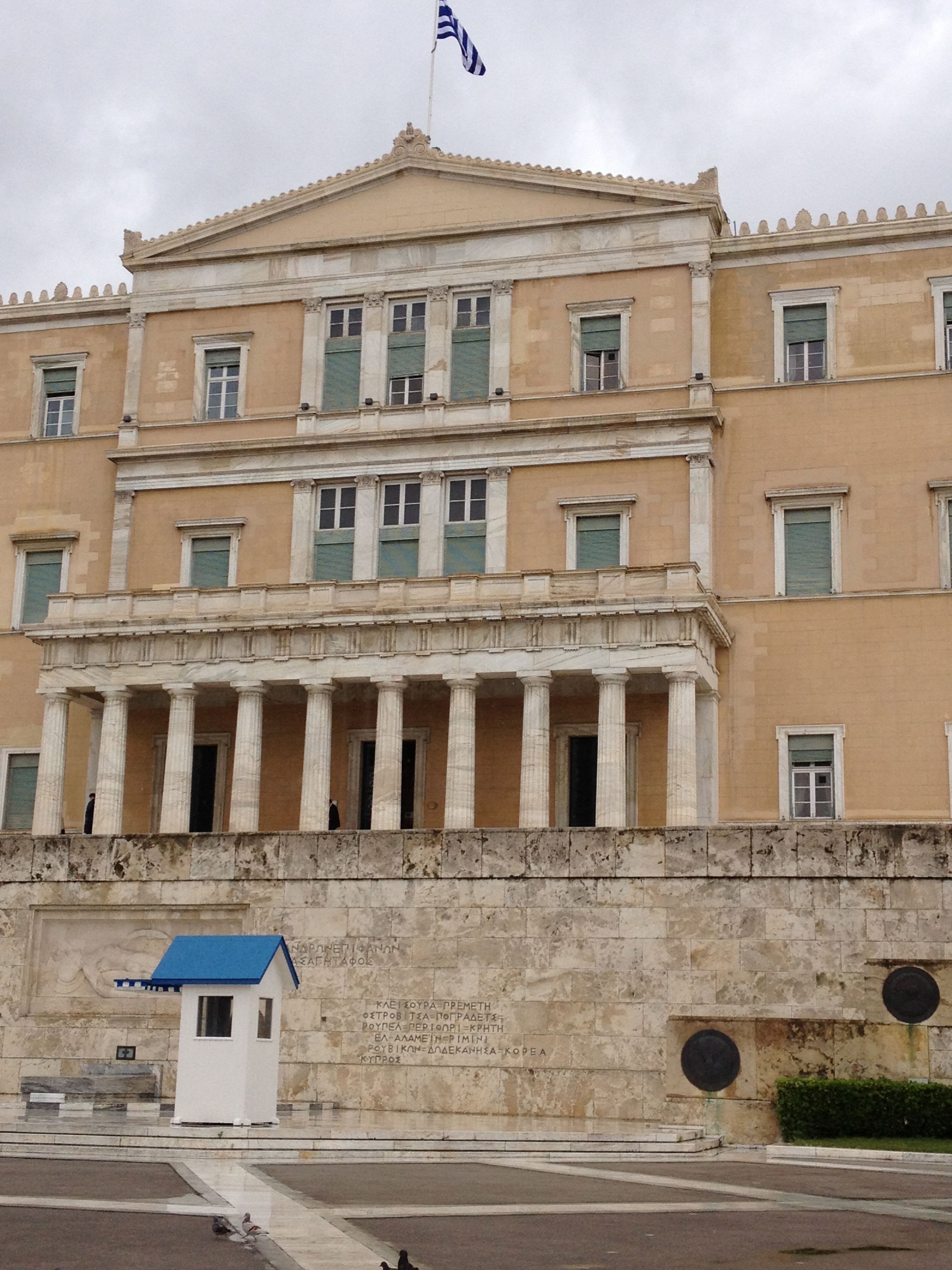
Later, I walked over to the Parliament.  Even though it was the middle of a workday, it was as still as a tomb.  I started to understand the Greek frustration with politicians.

I followed the news on the “other Greek crisis” after my return.  In early August, there was a mass crackdown on “irregular migrants”.  Greek authorities deployed 4,500 police around Athens to arrest and detain more than 7,000 migrants in less than 72 hours.    In another example of ironic naming, the Greek authorities called the operation Zeus Xenios after the Greek god of  hospitality and guests.  The Greek office of the United Nations High Commissioner for Human Rights expressed concern that legitimate refugees and genuine asylum seekers could be among those who are summarily deported, but the round-ups have continued.  On September 5, Greek police reported that 17,000 migrants have been temporarily detained in these round-ups, with 2,144 of them arrested. One of the concerns is that the ongoing sweeps target suspected migrants based on little more than their physical appearance; the proportion of temporarily detained to arrest numbers seem to bear that out.  In addition to the problem of arbitrarily detaining migrants, visits to some of the migrant detention centers have documented inhuman and degrading conditions. 

Of course Greece has the right to control migration, to set and enforce their country’s immigration laws.  But Greek authorities must comply with their international and European human rights obligations.  Above all, they should not arrest, detain, and deport foreigners based on appearance or ethnicity – in contrast to the the welcome received by an American tourist like me.  The left-wing main opposition Syriza party has been critical of the crackdown and claims that the migration issue is being used to divert attention from the more difficult and unpopular issues of the economic crisis and the spending cuts that the EU and IMF require in exchange for assistance out of the economic quagmire.  From my limited observation of the situation in Greece, I have to agree.

Hockey Moms

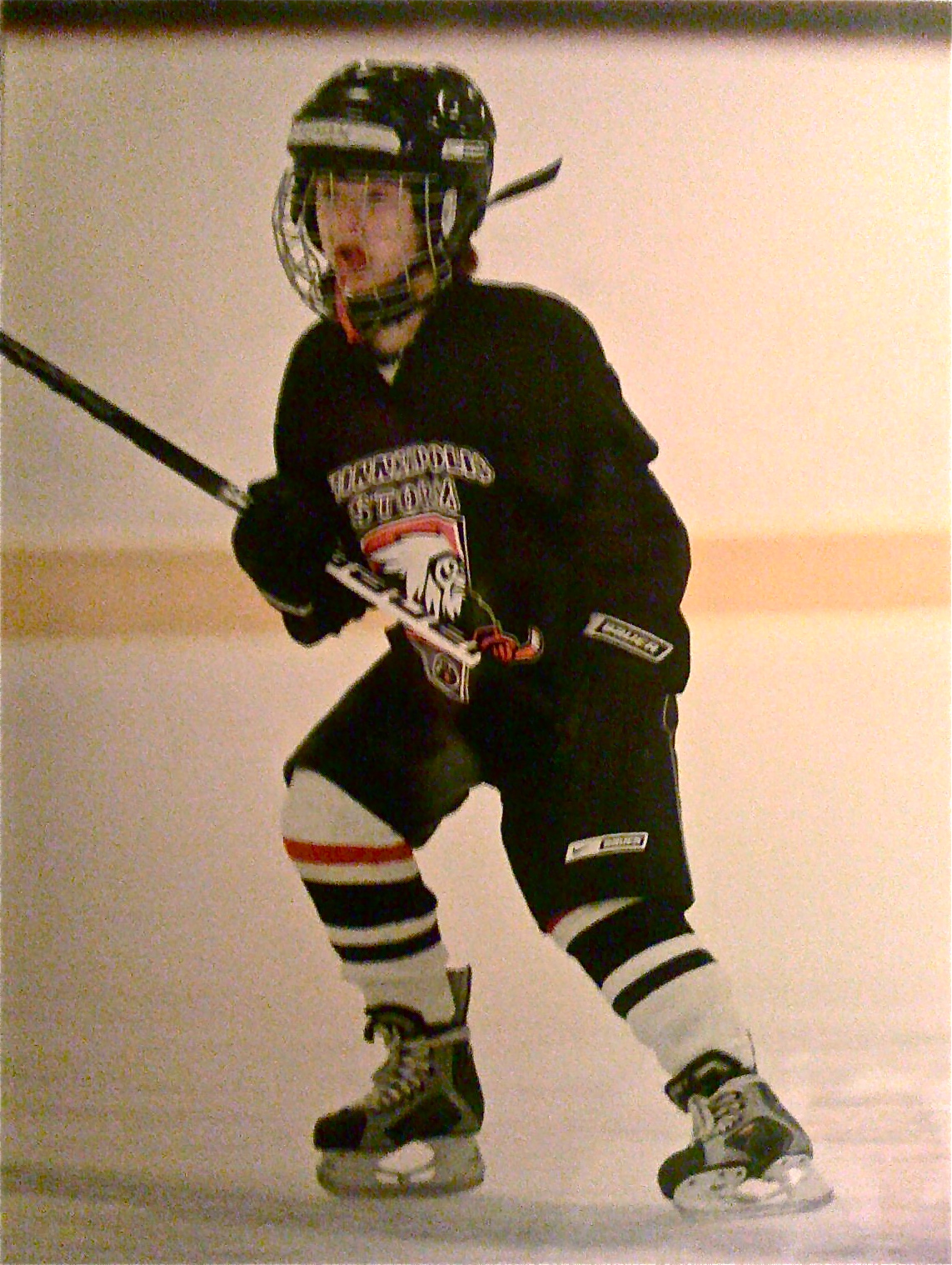
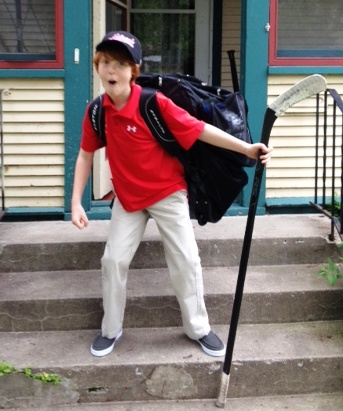
My 10 year old son comes out of the ice arena, swaggering despite the heavy hockey bag that he carries like a giant backpack. His hockey stick and waterbottle he wields before him like a rod and staff.  I’m sitting on a picnic table in the sun and, yes, I am facebooking on my iPhone. His cheeks are flushed, his bright ginger hair is damp-dark with sweat.  He has an announcement to make.

“I’ve got everyone but one kid on my team to be in favor of same-sex marriage.  AND two of the coaches.”

He beams at me. I can feel my jaw as it drops.

I’ll be the first to admit that I’m a terrible hockey mom.  I hate almost everything about the sport.  I’ve got two sons who play, so I did put a decent amount of effort into learning the basic rules and terminology.  I know what a “hat trick” is; I understand what it means when the refs call “icing” (and even the circumstances under which you would want to ice the puck).  But hockey is like an onion – and not just because the pungent smell of the hockey gear makes your eyes water. As you peel back the layers of hockey, you find kids shunted into the penalty box for obscure rules and quotes from Herb Brooks’  Miracle on Ice speech.

My biggest problem is that I grew up in the Deep South, so my natural impulse when winter strikes is to hibernate.  The whole concept of driving – in the cold – to sit – in the cold – to watch a sport played – on ice, in the cold – boggles my mind.  People always talk about the crazy ice times, but that has not been our experience so far. Checking is not allowed yet, and fighting is against the rules. Besides the expense, though, my biggest annoyance has been the hockey moms.

Let me be clear – I LIKE the hockey moms on my sons’ teams.  They are all urban Minneapolis moms like me who yell “Good job!” and “Nice try!” and “Better luck next time!”  My only problem with them is that they look more stylish than me in their cold weather attire, as I tend to focus more on function over style when it comes to winter.  It is the other teams’ hockey moms that bug me when, dressed from head to toe in team gear, they are yelling things like “Take him out!” and “Kill him!” or  applauding a player who sneaks in an illegal check. I see them almost always wrapped in team logo polarfleece blankets with one or more little shivering siblings clinging to them, each with their own garishly custom spray-painted cap that says “I don’t have a life! My brother plays hockey.”

Going inside to watch hockey on a cold winter day is one thing.  Going inside to watch hockey on a beautiful summer day is completely inconceivable to me.  But here in Minnesota, hockey is a year round sport.  Serious players play AAA from April to September and, unlike the regular season, players are not required to play where they live.  There are kids on my 10 year old’s team from throughout the Twin Cities Metro and  (more of the onion that is hockey culture) some kids who travel here for the weekend practices and games from Wisconsin (which isn’t so crazy) and Florida and Texas (which is absolutely nuts!)

But my two sons are way, way into hockey.  They LOVE this sport!  I respect that, so I suck it up and wash their stinky gear and drive them to the rink.

From Mini-Mites up until last winter, I went into the locker room when I took my boys to hockey – even though I have been banned from years from tying their skates because I “don’t do it right.”  I stopped when my oldest son moved up to PeeWees  – after the unfortunate incident when I burst into the locker room, my 6 year old daughter (with her pink jacket and sparkle ballet flats) in tow, only to find a gaggle of 12 year-olds in their underwear listening to loud music and talking trash.   “Mom!” my son hissed, “I’m good.”

I accidentally wandered into the locker room once this summer.  I was only there a moment, but I heard at least 6 of the 10 year old Squirts claim credit for the same goal.  Who needs that level of testosterone in their lives?
Given my locker room abdication, I was completely floored to hear that the hockey team was having a discussion about same-sex marriage. Here is the story, from the perspective of my 10 year old:  “One kid brought it up. He said it was gross, a man with a man or a woman with a woman.”  I said,

 “ARE YOU CRAZY?  That’s their choice who they love. It doesn’t affect you. Why does it matter to you? No one can tell you who to love.”

That launched the discussion which later led to the purported locker room conversions.  It is a timely discussion in Minnesota, where there is a proposed constitutional amendment on the November ballot:  “Shall the Minnesota Constitution be amended to provide that only a union of one man and one woman shall be valid or recognized as marriage in Minnesota?”   VOTE NO signs have sprouted throughout our neighborhood; they line the roads on the way to the hockey rink.

To be clear, there is already a Minnesota state law defining marriage as between one man and one woman.  Most of the lesbian and gay couples that we know have to go down to Iowa or another state that recognizes same-sex marriage if they want to get married.  But a law can be changed, hence the purported necessity of the proposed constitutional amendment.

Simon had been late getting to practice (my fault – more evidence for the Worst Hockey Mom title). A coach came in to hurry along the stragglers and Simon asked, “You’re voting no on the marriage amendment, right?”  “I don’t know yet,” he admitted.  Simon laid out his arguments again, to which the coach said, “You make a good point.  I think I probably will vote No.  Now get out on the ice.”

My son can be like a dog with a bone, so he brought it up again at the next practice.  This time he was on time and so when he brought it up in the locker room when everyone was there.  One kid, a player who Simon describes as a “tough guy” got really upset when the other kid described same-sex marriage as “gross”.  He stood up, half his gear on, and said,
“That’s my family you are talking about! I have two moms and they are married.  It hurts my feelings when you say that my family is gross!”
Well, that sure got the team’s attention. According to Simon, he was too emotional to say much more but Simon was able to pick up where he left off.
See?  He’s got two moms.  So what? Why should his family be treated any differently than yours?

Turns out that my 10 year old son is way smarter than I am.  It is all about having the conversation.  According to Minnesotans United for Families, sixty-seven percent of people with gay and lesbian friends VOTE NO if we talk to them about marriage.

This means that the single most important action you can take to defeat this hurtful amendment is to start conversations about the freedom to marry with your friends, family, and the people you see every day.

So maybe it is time that I reassess my thinking on hockey.  Maybe I should admit that I don’t know a thing about those other hockey moms. Maybe I should spend a little less time blogging during hockey practice

or running laps before hockey games while the other moms sit around and talk.

Maybe it is time that I dispense with my arrogance, overcome my disdain.  Maybe I need to step outside of my comfort zone and start engaging other parents in conversation.

I know there are at least a couple of hockey moms in the ice arena who would probably appreciate it if their marriage were legally recognized in the state of Minnesota.

PHOTO ESSAY: Cartooning for Peace

Cartoon by Kianoush

In May, I was in Geneva to participate in the United Nations’ Universal Periodic Review of Morocco and India.  I went for a run one day along Quai Wilson on Lake Geneva and discovered an exhibition of political cartoons. The exhibition was sponsored by Cartooning for Peace/Dessins pour la paix, an initiative conceived of by French political cartoonist Plantu and launched at the United Nations in 2006.  The goal of Cartooning for Peace is to promote better understanding and mutual respect between people of different faiths and cultures.  Cartooning for Peace also works to promote freedom of expression and to protect the rights of cartoonists.

Cartooning for Peace and the City of Geneva created the new International Prize for Editorial Cartoons to honor cartoonists for their talent, outstanding contribution and commitment to the values of tolerance, freedom and peace. On May 3, 2012  – the World Day of Press Freedom – the prize was awarded for the first time to four Iranian political cartoonists.

Cartoon by Mana Neyestani

The exhibition Dessins Pour La Paix  2012 displayed the work of the award-winning Iranian artists Mana Neyestani, Kianoush,  Firoozeh Mozaffari and Hassan Karimzade.

In addition, the exhibition included dozens of political cartoons by cartoonists around the world on the themes of freedom of expression, the Arab spring and the rights of women.

The exhibition in Geneva ran from May 3 to June 3, 2012.  The full catalogue of the cartons featured in the exhibit is now available online.

Take a stroll with me along Quai Wilson and witness the power of the cartooning for peace!

ARAB SPRING 

FREEDOM OF EXPRESSION

ET LES FEMMES? (AND THE WOMEN?)

Photo credits to Amy Bergquist

Originally posted on 8/7/12 on

The Advocates for Human Rights’  blog

The Advocates Post.

The Lessons of 22 July

My daughter in Norway in August 2010.
For many in Norway, the terrorist attacks on July 22, 2011 represent the loss of innocence.

On the morning of July 22 last year, I read the breaking news of a car bomb attack in Oslo, Norway.  I clicked on the link to the NRK live coverage, forgetting that my three children rise and swarm, like mosquitoes from tall grass at dusk, at the slightest potentiality of a video.

“WHAT IS HAPPENING?” yelled my then-9-year-old son.

“It looks like a car bomb exploded in downtown Oslo.”

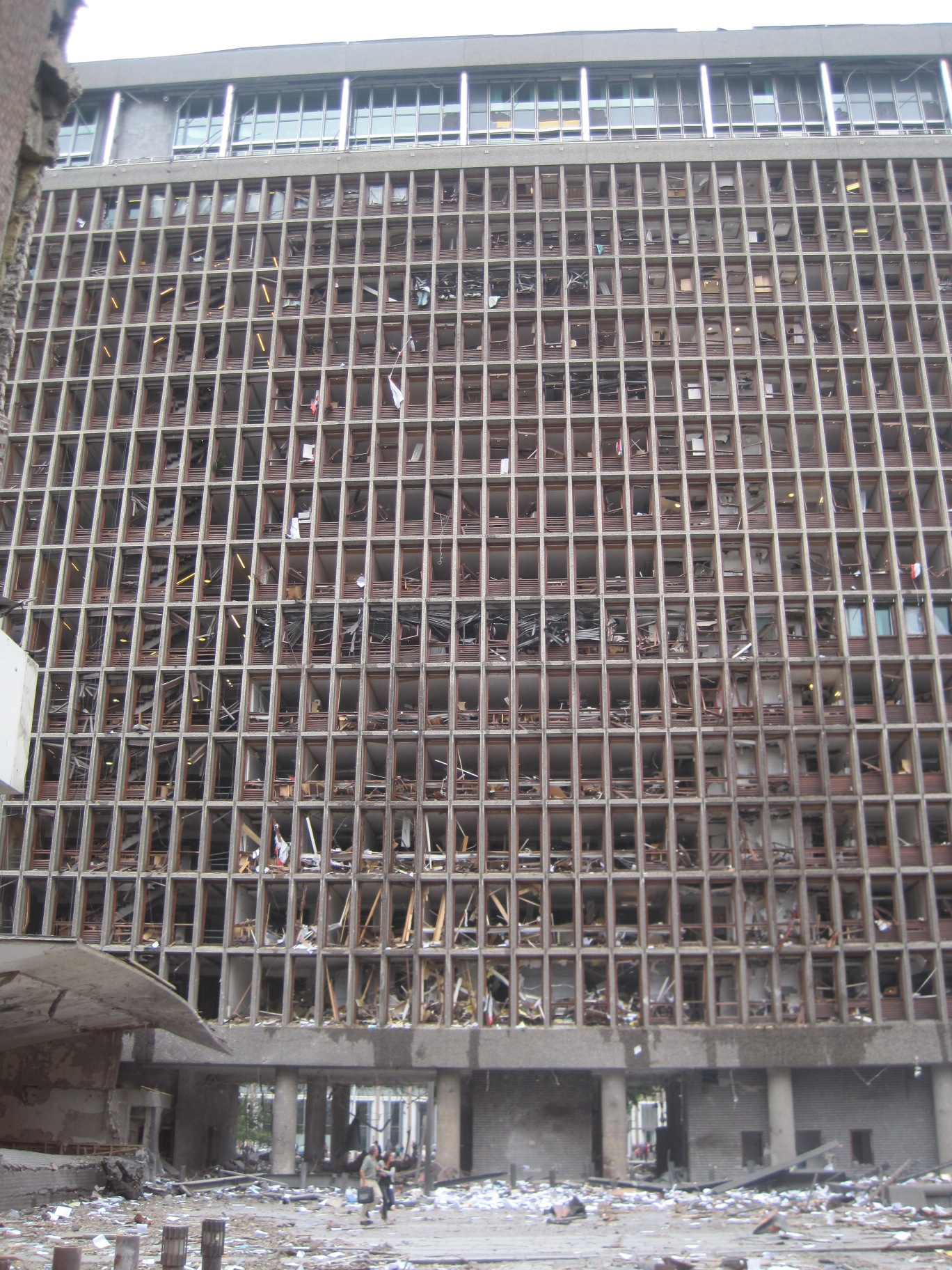
Gasps all around. We had been in downtown Oslo less than a year before.   We had been in that part of town and I think we may even have walked down the street where the explosion damaged several government buildings.

Damage to government building on July 22, 2011

Image Source

“WAS ANYONE WE KNOW HURT?” screamed my then 6-year old daughter.

“I don’t know yet,” I replied.  “Let me listen to what they are saying about it.”

I was trying to remain calm; I was struggling with a decision. As a parent, you have to make a choice about what horrific events you introduce to your children.  And you have to decide – often on the spot – how to talk to them about tragedy and violence.  You have to find the words to explain the evil that exists in the world while you simultaneously reassure them that,  for the most part, they are safe.  Obviously, this is not easy and there is no manual.  But it is part of your job as a parent to help them make sense of life as a human on this planet.

“IT’S LIKE NORWAY’S 9/11!” blurted out my then-nearly-12-year-old son.

Presciently, in hindsight.  It was that statement that decided me, that hardened my resolve.  You see, like everyone else, I have a story to tell about 9/11.  That’s a story for another day, but, suffice it to say, it committed me to engaging my children in a year-long discussion about the tragic events of July 22, 2011.

The Norwegian media were cautiously talking about how preliminary evidence indicated a terrorist attack.   So we had a fruitful discussion (or at least what passes for a “fruitful discussion” when your kids are 6, 9 and 11) about 9/11 and the impact of those events on America. My children do not remember our country before 9/11.  It was good to talk to them about the need for security, as well as the need to balance security with the protection of individual rights, including discrimination based on race and religion.  They were engaged.  They asked questions.  Then, with the  request to be kept informed of the emerging news of the Oslo bombing, they went on their way to do whatever it is that 6, 9 and 11 year old boys and girls do on a bright summer day.

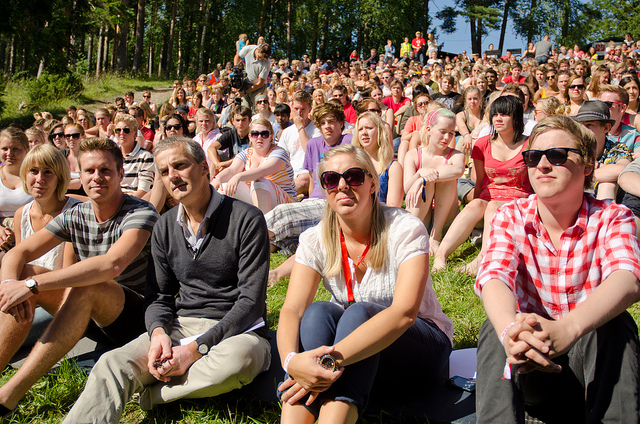
But as the day went on, the news from Norway got dramatically worse.  Eight people were killed and nearly two-thirds of the 300+ people in the government buildings were injured (and had it not been 3:30 pm on a Friday in the holiday month of July, there would certainly have been many more casualties).  But the car bomb in Oslo was merely a distraction.  Less than two hours later, right-wing extremist Anders Behring Brevik, dressed as a police officer in a fake uniform that he bought on the Internet, took the ferry to the island of Utøya in nearby Buskerud.  There he killed 69 people – mostly under the age of 18 – at an summer camp for politically active young people in the AUF (Arbeidernes Ungdomsfylking), which is affiliated with Norway’s Arbeiderparti (Labor Party).

AUF describes itself as “Norway’s largest political party youth organization and champion for a more just world (“AUF er Norges største partipolitiske ungdomsorganisasjon og kjemper for en mer rettferdig verden”).  Anders Behring Breivik carried out the massacre in cold blood, coming back to shoot again those who were lying injured, shooting kids in the water as they tried to swim to safety.  He later claimed that he was trying to save Norway from Muslims world by attacking Social Democrats, Norwegian immigration policies and the concept of multi-culturalism.

This photo of participants at the AUF summer camp on Utøya was taken July 21, 2011, the day before the massacre.

Image source: AUF

It was one thing to talk to my kids about car bombs and 9/11.  It was something else entirely to talk to them about Utøya. I  didn’t tell my kids right away about the massacre.  I waited a few hours, sifting through the emerging stories of horror until the basic narrative was clear.  When I did tell them, what they most wanted to know was:

“WHY?”

I said something about hatred, but there was really nothing I could say by way of explanation.  Far too many  lost their lives on July 22, 2011. And Anders Behring Breivik’s hateful, violent acts stole not just the future of scores of young people, but also the innocence of a peaceful nation.  Just as we demarcate contemporary US history as pre- and post-9/11, so for Norway is tjueandre juli (22 July).

Luckily for me as a parent, stories began quickly emerging about what happened on Utøya. Amazing stories of luck and bravery. Young people not much older than my own children who showed great presence of mind in an unthinkable situation.  Leadership and sacrifice.  These are stories – and there are many – that deserve more space than I have to give here.  But we followed these stories in the days and months following 22 July.  They gave us hope. They showed us that ordinary people – most of them still kids – could do extraordinary things.

There is much in our interactions with the world that we cannot control. We can control, however, how we act; how we REact to events and actions by others.  This is a lesson I strive to teach my children.  I don’t always provide a good role model, but Norwegian Prime Minister Jens Stoltenberg certainly did. I’ve been reading the speeches of Jens Stoltenberg this summer.  From the beginning, he encouraged Norwegians not to give way to fear and hate and prejudice. He urged Norwegians to react to the attacks of 22 July by being MORE welcoming to the outsider, to the foreigner. Invite him in for cake and coffee, the Prime Minister suggested.  Invite her to take a walk. Get to know one another.

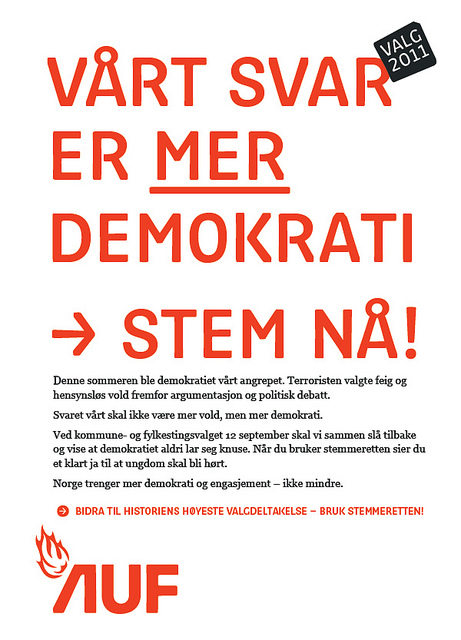
When local elections were held in September 2011, fear was not used as a campaign tactic in Norway.  I showed my kids the AUF campaign materials which said, “This summer, our democracy was attacked.  The terrorist chose cowardice and ruthless violence over argument and political debate.  Our answer is not more violence, but more democracy.”

“Our answer is MORE democracy – Vote Now!”

Image Source

I’ve heard people say that Norway’s response to July 22 was simplistic.  Idealistic. Naive. Maybe it wouldn’t work in other countries.  But if you doubt that words matter, let me tell you what happened after the trial of Anders Behring Breivik began on April 16, 2012.  Breivik had testified that a particular song, Barn av regnbuen (Children of the Rainbow) by well-loved Norwegian folk singer  Lillebjørn Nilsen, with its concept of living together in a multicultural Norway, was brainwashing children into supporting immigrants.  This is a song that Mr. Breivik, apparently, detests.

So, shortly thereafter, in a chilly spring rain in a square near the courthouse in Oslo, a crowd of more than 40,000 people joined Mr. Nilsen in singing Barn av regnbuen.  Many more were singing the song at the same time in smaller communities around the country. Norwegians throughout the country sang it as a form of protest against hatred. They sang it so loud that it could be heard in the courtroom.

Once again, I clicked on a link to a video from Oslo.  Together, my children and I watched this video.

Folksinger Lillebjørn Nilsen and a crowd of 40,000 sing Barn av regnbuen (Children of the Rainbow) at the trial of Anders Behring Breivik in Oslo (Source: NRK)

This is a song that I learned many years ago.  It is actually a Pete Seeger song called My Rainbow Race, translated into Norwegian by Lillebjørn Nilsen.   I did a rough translation of the lyrics of Barn av regnbuen in a blog post in April. The song’s title comes from the verse:

Sammen skal vi leve
hver søster og hver bror.
Små barn av regnbuen
og en frodig jord.

Together we will live
every sister and every brother.
Small children of the rainbow
and a flourishing world.

One night last week, I heard my now-10-year-old son singing in his bed.  He was singing Barna av regnbuen.  He sang the whole song, the refrain and every last verse.  And then he sang it again.

There will be many tributes on July 22, 2012.  Remembrances and roses to honor the innocents who lost their lives one year ago, the survivors who will never be the same again.  Add to them this tribute,  from a kid in a bunkbed half a world away.  A kid who, hopefully, has learned something from the tragedy of 22 July.

India’s Politics Without Principles

Raj Ghat,  Mahatma Ghandi Memorial

New Delhi, India

Note:  This essay was originally published on The Advocates Post.

Last year, on my first trip to India, I visited Raj Ghat in New Delhi.   Raj Ghat (or Rajghat) is the Mahatma Gandhi Memorial and, as Gandhi has long been one of my human rights heroes, I was glad to have this opportunity to pay my respects to the man whose lessons of non-violence and human rights have had such an impact on our world.  Gandhi is known of the “Father of the Nation” because of his pivotal role in India’s independence movement.  But how far has Gandhi’s beloved India come in fulfilling his vision for humanity?  From Raj Ghat, I went to directly a meeting with Indian human rights activists. They told us that, while important reforms have been made recently to protect the human rights of its 1.21 billion citizens, India still has a long way to go to adequately protect the rights of its religious minorities.

Gandhi was cremated at Raj Ghat on the Yamuna River on January 31, 1948, the day after he was assassinated. Raj Ghat is  a solemn space, a large, walled enclosure purposefully left open to the air and the white-hot sun of central India. It is set within an even larger park, with flagstone paths and shade trees – grandeur and greenery that surprised me in a city as crowded as Delhi.  Yet Raj Ghat itself is true to the simple life that Gandhi himself chose.  As you walk around the upper level, on a path bordered by flowers and creeping vines, you can see the square platform in the center that marks the site of Gandhi’s cremation. The black marble is so smooth that it reflects and extends the eternal flame that burns at one end of the monument, like a torch lighting the way forward in the dark of night.  The red soil of his dear homeland surrounds the marble samadhi, as in life Gandhi rejected the green lawns of the English colonialists, choosing instead to leave the grounds of his residences in their natural state.

To enter Raj Ghat, you must remove your shoes.  This is a sign of respect, one that I honor, but I admit to never having pictured myself meeting my idol in sock feet.  It was in sock feet, however, that, in the cool shade of the thick stone walls, I walked the perimeter of the memorial.  On the walls of the memorial are quotes from Gandhi, inscribed in the many languages of the Indian people as well as other world languages. Raj Ghat is a contemplative place; in concert with this, visitors are encouraged to circle the memorial three times.  My first time around, near the marble platform,  I stopped short.  Before me, inscribed in black on the red sandstone wall, were words of deep truth.  Gandhi was a prolific writer who first published his “Seven Social Sins” in 1926 in Young India, one of several newspapers he edited.

Seven Social Sins

Quoted by Mahatma Gandhi in “Young India”, 1925

Gandhi’s Seven Social Sins – complicated concepts remarkably expressed with a few simple words – remain apt nearly 100 years later.  They are:

POLITICS WITHOUT PRINCIPLES

WEALTH WITHOUT WORK

PLEASURE WITHOUT CONSCIENCE

KNOWLEDGE WITHOUT CHARACTER

COMMERCE WITHOUT MORALITY

SCIENCE WITHOUT HUMANITY

WORSHIP WITHOUT SACRIFICE

Mahatma Gandhi’s words have stayed with me.  Unlike the numerous foreign dignitaries who visit Raj Ghat, I did not receive a khadi scroll imprinted with the Seven Social Sins.  But they are written in my heart as distinctly as they are carved on the sandstone wall of Raj Ghat. Certainly, the words were fresh in my mind later that afternoon at a meeting with Indian human rights activists. Over cups of masala tea, these human rights defenders told us about the alarming rise in discrimination and violence against religious minorities – particularly Muslims and Christians – in various states across India, including Gujarat, Orissa and Karnataka. While discrimination and violence against Muslims has long been a problem in India (including communal attacks targeting Muslims in Gujarat in 2002 that killed nearly 2000 and displaced as many as 140,000), these courageous human rights activists have documented the increasingly systematic discrimination and violence in the name of counter-terrorism since a series of bombings in 2007 and 2008.  One group, Act Now for Harmony and Democracy (ANHAD), published a report in 2011 containing the testimony of scores of Indian Muslims at a People’s Tribunal on the Atrocities Committed Against Muslims in the Name of Fighting Terrorism.  As they described their experiences, as well as the impunity enjoyed by security forces and non-state actors that targeted religious minorities in the name of counter-terrorism, I thought again of Gandhi.   Allowing human rights abuses to be committed against a broad category of in the name of fight against terrorism is indeed practicing “Politics Without Principles”.

Later in 2011, and partly as a result of what we learned at this meeting, The Advocates for Human Rights made a submission to the Human Rights Council for the 2012 Universal Periodic Review (UPR) of India.  Our submission, made jointly with the Indian American Muslim Council in the US and the Jamia Teacher Solidarity Association (along with input from other Indian human rights organizations) in India, addresses India’s failure to comply with its international human rights obligations to protect members of minority groups. Major human rights challenges in India today include extrajudicial executions committed by security personnel as well as non-state actors, arbitrary and unlawful detentions, torture and cruel, inhuman and degrading treatment of terrorism suspects in police custody, and harassment of human rights defenders (including lawyers who defend Muslims accused of terrorist acts), whistleblowers and journalists.

Additionally, our submission highlights the failure of the Indian government to adequately investigate and effectively prosecute perpetrators of these human rights violations against members of minority groups.  The UN Special Rapporteur on freedom of religion or belief reported in 2009 that the Indian government’s failure to adequately investigate and prosecute individuals and government officials involved in human rights violations exacerbates tension between India’s political and religious groups.  Discrimination against religious minorities extends to all facets of life, including access to education, employment and housing.  Religious minorities also face violence and discrimination due to state level “Freedom of Religion Acts”, which fail to clearly define an “improper conversion” – a lack of clarity which gives the authorities the power to accept or reject the legitimacy of a conversion.

Under the UPR, the human rights record of every member of the UN is reviewed once every four and one-half years.  Indiawas one of the first countries to be reviewed in 2008 following the creation of this new human rights mechanism. I was in Geneva on May 24 for the Second Universal Periodic Review of India. The Indian government sent a large, 20 member  delegation, headed by the Attorney General and including representatives from several ministries, and clearly viewed the UPR process as both serious and important.  The Human Rights Council is a human rights mechanisms designed to be an interactive dialogue between governments.  I was gratified to see Human Rights Council delegates from 20 countries address the issues raised in our submission, including the recommendation from the United States to “Ensure that laws are fully and consistently enforced to provide adequate protections for members of religious minorities…”

The Human Rights Council made 169 recommendations toIndia, but the government chose not to adopt them at the June 2012 session. Instead, they government promised to respond “in due time” but no later than September 2012.


India’s large and religiously diverse population makes it one of the most pluralistic societies in the world. The Indian Constitution provides all citizens with the “right to equality before the law,” the right to “the prohibition of discrimination on grounds of religion, race, caste, sex or place of birth”, and the “right to freedom of speech and expression”. Further, it specifies that “no person who is arrested shall be detained in custody without being informed, as soon as may be, of the grounds for such arrest” and that every person arrested be presented to the nearest magistrate within 24 hours of the arrest.

India has made great progress in setting up a domestic legal framework to protect human rights and must be commended for that. India must now end the practice of  “Politics Without Principles” and implement and effectively enforce these laws in a manner that protects the rights of members of its religious minority communities.

Statue of Gandhi at the United Nations

Geneva, Switzerland

Cutting The Head Off The Snake

The Special Court for Sierra Leone  today sentenced former Liberian President Charles G. Taylor to 50 years in prison for his role in the Sierra Leonean conflict in the 1990s.   Mr. Taylor helped fuel bloody conflicts between 1989 and 2003, not only in Liberia and Sierra Leone, but also throughout the sub-region of West Africa.  For thousands – if not millions – of West Africans, May 30 will now mark the anniversary of accountability.

Eight years ago, in May 2004, I was in Sierra Leone to monitor the efforts that were being made to bring justice and reconciliation to that shattered country.  In August of the previous year,  Charles Taylor had resigned as President and exited Liberia for temporary asylum in Nigeria, the result of a deal brokered to end Liberia’s brutal civil war.  His infamous last words as he boarded the plane were, “God willing, I will be back.” Almost everyone I talked to in Sierra Leone expressed fear of a return to chaos and war in the region if Mr. Taylor did not stand trial.  As one person explained,

“We have a saying in West Africa.  If you cut off the head of the snake, it is then only a rope.  That’s why Taylor must go.”

Mr. Taylor was indicted on seventeen counts of war crimes and crimes against humanity by the Special Court for Sierra Leone (SCSL), a United Nations-sponsored “hybrid” war crimes tribunal based on international and Sierra Leonean law that had strong support (including $20 million appropriated by Congress) from the United States.  The charges against Mr. Taylor included aiding and abetting the most serious of human rights abuses:  killings, torture, mutilation, rape and other forms of sexual violence, sexual slavery, conscription of children, abduction and forced labor perpetuated by Sierra Leonean rebel forces that Mr. Taylor actively supported.  Not to mention the part about fueling the conflict by trading arms for diamonds.

Special Court for Sierra Leone

Under construction in Freetown, Sierra Leone in May 2004 (Photo by Jennifer Prestholdt)

Yet, even after trials began at the Special Court for Sierra Leone, Mr. Taylor remained in Nigeria, immune from justice.  Even worse, he appeared to continue to meddle with affairs in Liberia.  Impunity for Mr. Taylor was an affront to the thousands of victims and their families.  Fortunately, international pressure finally resulted in Mr. Taylor being taken into custody and brought to the SCSL for trial in 2006.  Due to concerns about security and the potential destabilizing impact of holding the trial in West Africa, Mr. Taylor’s trial was moved to The Netherlands to a chamber borrowed from the International Criminal Court.  (Mr. Taylor complained bitterly about the food he was served.)

I interviewed Sierra Leonean staff members of the SCSL in The Netherlands about the Taylor case in 2008.  Their estimates at the time about the length of the trial proved far too optimistic. The trial, which included testimony from more than 100 witnesses in addition to the defendant (who testified during 81 trial days), took twice as long as planned.

When I traveled to Liberia in February 2008, I asked people about what they thought about the Taylor trial.  Many Liberians did not seem to understand that Mr. Taylor was being tried for crimes committed in Sierra Leone, not Liberia.  When I pointed out the distinction, most seemed not to care.  In general, the Liberians I talked to just seemed relieved that he was behind bars – and that those bars were controlled by the international community.  When I mentioned the analogy to cutting the head off a snake, I was uniformly met with wise nods of agreement.

The verdict of the Special Court for Sierra Leone in late April of this year marked a historic moment in international justice – the first conviction of a serving head of state on 11 counts of war crimes and crimes against humanity.    The sentence today of 50 years (which was consistent with the previous sentences of Sierra Leonean commanders tried by the SCSL) essentially means that Mr. Taylor will spend the rest of his life in prison.

Holding Charles Taylor accountable for the war crimes that he aided and abetted in Sierra Leone is important, but we must never forget the remaining impunity for the war crimes that he is responsible for in Liberia.  Liberian civilians were subjected to massive human rights abuses, exercised with direct command responsibility by Mr. Taylor’s National Patriotic Front of Liberia (NPFL) and, after his election in 1997, the Liberian security forces and paramilitary Anti-Terrorist Unit (ATU) .  Of a pre-war Liberian population of 3 million, an estimated 250,000 were killed and 1.5 million displaced, with tens of thousands of refugees forced to flee West Africa for safety in the United States.

I spent three years working with the Truth and Reconciliation Commission of Liberia, taking statements in the United States, United Kingdom and Buduburam Refugee Settlement in Ghana.  The statement giver’s account of violence below is representative of the scope of the human rights abuses and level of brutality suffered by many Liberians:

At the initial stages of the war, I moved to Ninth Street in Sinkor, Monrovia…  The children were outside cleaning the yard. Suddenly they ran inside and said that they saw armed men coming. Moments later, Taylor’s men busted  in. One of them said, “This is the dog I’m looking for.” He told us to come outside. Myself, my ten children, and my wife obeyed.

The NPFL [commander] knew me…He had run against me in an election… before the war. He said to me, “You cheated me during the election, but now I am in power. I will teach you a lesson you will never forget.” He told his NPFL boys to take my eldest daughter into the house. She was 11
thirteen years old. They dragged her inside and dragged me in after her. [The commander] raped my daughter in front of me. My father (my daughter’s grandfather) was still in the house. He rushed at the NPFL men, trying to stop the rape. One of the men – I don’t know his name – shot and killed my [father] right there.
[The commander] then brought me and my daughter back outside. He said, “I’m going to show you what I came here for.” He beat the children with the butt of his gun. He made two of my sons, who were seventeen and twenty, drink dirty water with the urine of one of the NPFL men in it. When the twenty year old refused, he shot him in the foot. [The commander] stabbed my other son, who was eighteen, in the elbow with his bayonet.

He then began to beat my wife. He told her to lay on her back and stare at the sun. [The commander] said, “You will eat your husband’s heart very soon.” He took the daughter who had been raped. [The commander] held her and said, “I want you to know how you all will die.” He ordered one of his men to cut off my daughter’s head. She was beheaded in front of our eyes.

They dragged me over to lay beside her body. [The commander] said, “You will be the next one.” Then I heard heavy shooting. ECOMOG was coming. The NPFL scattered.  Before [the commander] left, he made a remark. He said, “Anywhere in
Liberia I meet you or your family, I will kill you.”

Will it make a difference that the international community has now “cut off the head of the snake”? I do, in fact, think it will.  Our international justice system is still in its infancy.  As of yet, it is neither swift nor strong; neither peremptory nor comprehensive.  But with the sentencing of Charles Taylor, not only can West Africans be confident in the knowledge that one individual who wrought destruction will not do so again, but we can all have hope that one day, as a matter of practice, all perpetrators of gross human rights abuses and war crimes will be held accountable.

Today at the United Nations Human Rights Council

A Day at the United Nations Human Rights Council

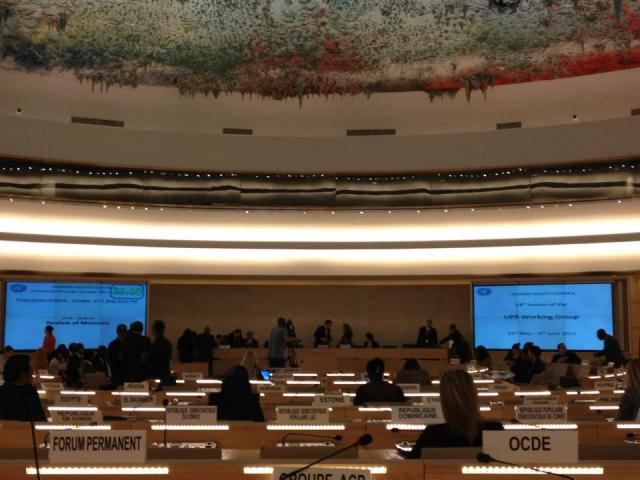
Today I am at the Human Rights Council in Geneva for the Universal Periodic Review of Morocco. (Photos are not allowed, but I snuck this one with my iPhone.) Along with colleagues from The Advocates for Human Rights and Global Rights, we have been lobbying the Human Rights Council delegates on the issues of violence against women and the death penalty/conditions of detention in Morocco.

Countries from Botswana to Bangladesh have raised the issue of women’s rights, with particularly, strong pressure coming from Belgium, Estonia, Spain, Switzerland, and Thailand to pass a comprehensive law to protect women from violence. In response to criticism of Article 475 of the Moroccan penal code (which I wrote about previously in Amina Filali and Violence Against Women), which essentially allows a man to escape prosecution for rape of a minor if he marries her, the Justice Minister noted that this law was “traditional” but currently “under study.” Shortly after he made that statement, the Netherlands and Norway made strong recommendations to revise the penal code and pass a new law to protect women from violence and ensure equality.

Argentina, Austria, France, Italy and Spain are among those countries who have called on Morocco to abolish the death penalty and commute all death sentences to life. Hungary even declared they would be “happy to share” their own recent experience in abolishing the death penalty.

The Universal Periodic Review is a new human rights mechanism, the result of recent UN reform. Morocco was one of the first countries reviewed in 2008, and is now one of the first countries to return for a second UPR review. Today I see the Moroccan government standing up before its peers -the governments of other nations – and answering questions on what they are doing to protect human rights for all in their country. It is encouraging to see the governments taking the process seriously.  At the end of the day, there was palpable relief on the face of the Minister of Justice and the other members of the delegation. Whether or not the UPR is a human rights mechanism that works in the long run, I think that the accountability I am seeing today is both good and necessary.

Afterword

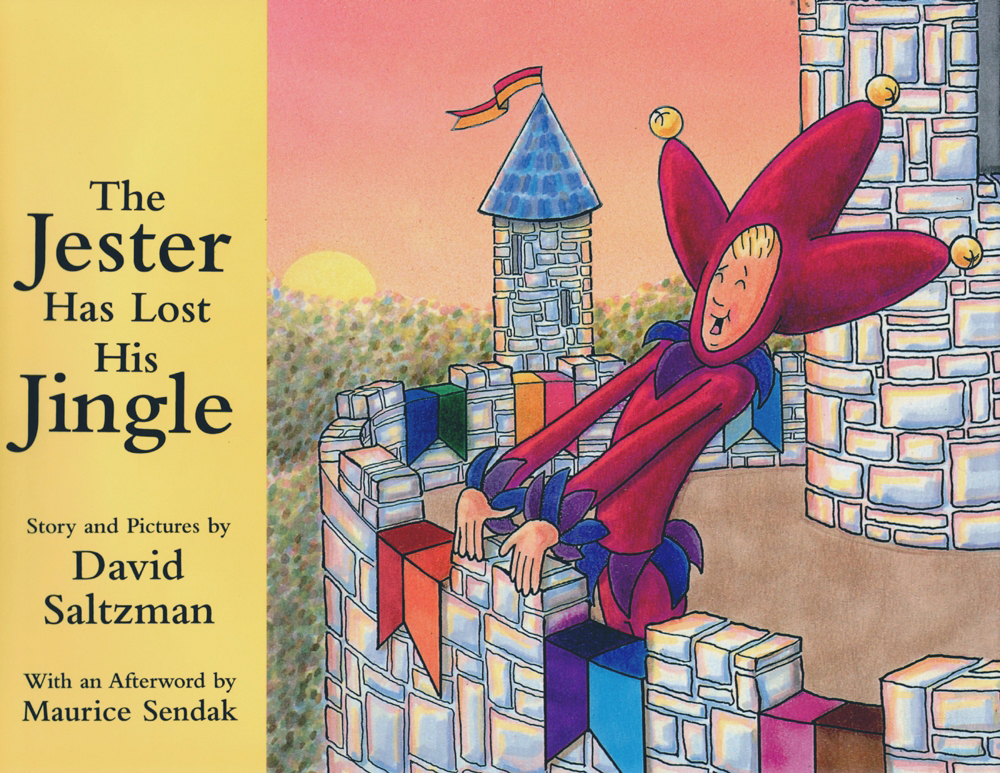
For his senior project, my talented college friend Dave Saltzman wrote and illustrated a children’s book.  He did this during a time when he was being treated for cancer.  Dave was diagnosed with Non-Hodgkin’s lymphoma during the fall of our senior year; he died a year and a half later, 11 days short of his 23rd birthday.  Somehow, through it all, he managed to remain not just upbeat, but JOYFUL.  He poured his energy, boundless even when his body was fighting cancer,  into this book.  The story didn’t really grab me – it seemed too facile – but the intricately detailed, jewel-toned illustrations certainly did.  Later, I realized that Dave was hoping that other kids with cancer would read this story and feel hope.  But at the time, it just never occurred to me that Dave would actually die.

I remember walking through the gallery at Dave’s senior art show, where the pages of his book were framed and displayed.  The colorful illustrations seemed to refract off the white walls of the gallery, sparkling like an indoor rainbow.  They were the sunlight of a bright young life, reflected through the jewel-toned pages of a children’s book.

Dave’s book The Jester Has Lost His Jingle was later published with an afterword by Maurice Sendak.  The two met only briefly, when Sendak came to Yale to give a presentation.  Dave hung around afterwards to get his autograph. He told me about it later, but another friend, Jackie, was there.  She described the meeting like this:  “The two spoke and laughed and I was just thrilled to be in the presence of two such delightful and talented souls. I’ve long been a huge fan of Sendak’s work, but in my mind Dave always understood Sendak best.”

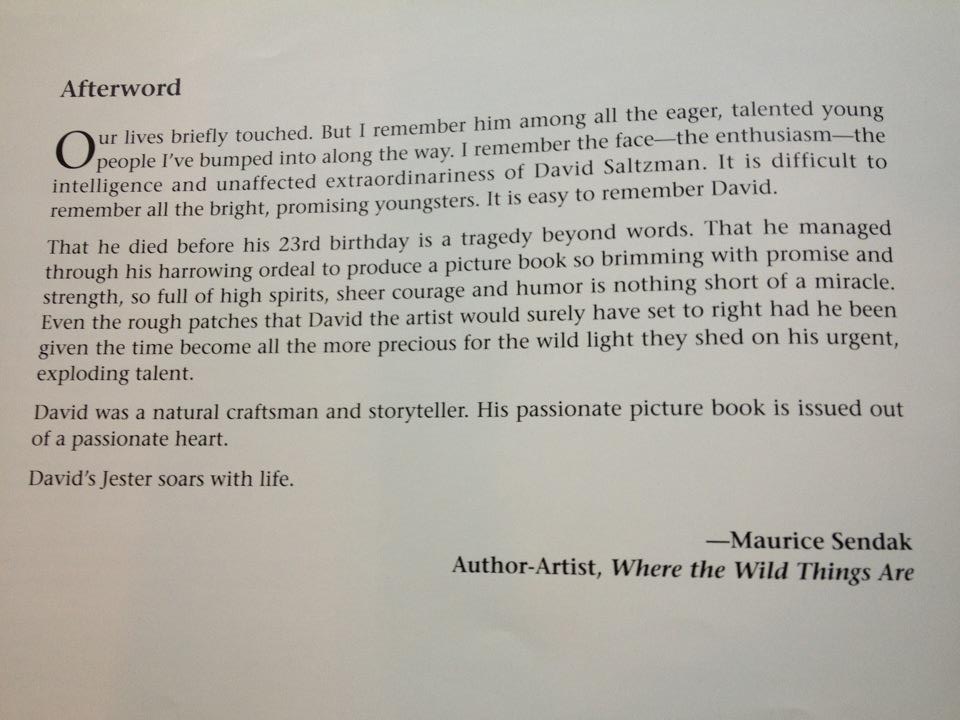
As important as Where The Wild Things Are was to my childhood – so important that it was one of the few  books I brought to with me to college  – Maurice Sendak was most important to me because of these words:

Image

Afterword 

Our lives briefly touched.  But I remember him among all the eager,talented young people I’ve bumped into along the way.  I remember the face – the enthusiasm- the intelligence and unaffected extraordinariness of David Salzman.  It is difficult to remember all the bright, promising youngsters.  It is easy to remember David.

That he died before his 23rd birthday is a tragedy beyond words. That he managed during his harrowing ordeal to produce a picture book so brimming with promise and strength, so full of high spirits, sheer courage and humor is nothing short of a miracle.  Even the rough patches that David the artist would surely have set right had he been given the time become all the more precious for the wild light they shed on his urgent, exploding talent.

David was a natural craftsman and storyteller. His passionate picture book is issued out of a passionate heart.

David’s Jester soars with life.

– Maurice Sendak

Author-Artist, Where The Wild Things Are 

When the news of Sendak’s death was announced this week, Deb (another college friend) had this to say, “I’ve been wondering what wonderful, amazing and wacko things we would have read in Dave’s obituary, had he reached the ripe old age that Sendak did.”

I’d like to think that these two talents are now together, not as the old and the young or the fame secured and the potential lost.  I picture them both as equals, working together in the sunlight and collaborating on wonderful, amazing, wacko new projects.

Image

Image Source

Maurice Sendak (1928-2012)

 Image

David Saltzman (1967-1990)